
The foods that help with diarrhea all share one quality: they are easy on an irritated gut. Most short bouts of diarrhea come from a virus and clear up within a few days on their own, so the point of eating during an episode is not to cure anything. It is to stay hydrated, replace the water and salts you are losing, and give your digestive system simple fuel while it settles [NIDDK].
Fluids come before food. Diarrhea drains water and electrolytes, and it is dehydration, not the loose stools themselves, that sends most people to the hospital, especially young children and older adults [WHO, 2006]. Once you can keep liquids down, the 20 foods below can make recovery more comfortable. None of them is a drug, and a couple of popular “remedies” can backfire, so the safety section near the end is worth your time.
Fluids first: rehydration before food
If you do one thing, replace lost fluid. For most healthy adults, water, broth, and diluted juice are enough for mild cases. When losses are heavier, or for children and older adults, an oral rehydration solution (ORS) works better than water alone because the mix of sugar and salt helps your intestine pull water back in [AAFP, 2017]. Commercial ORS sachets and ready-made products take the guesswork out of the ratios and are the safest choice for kids.
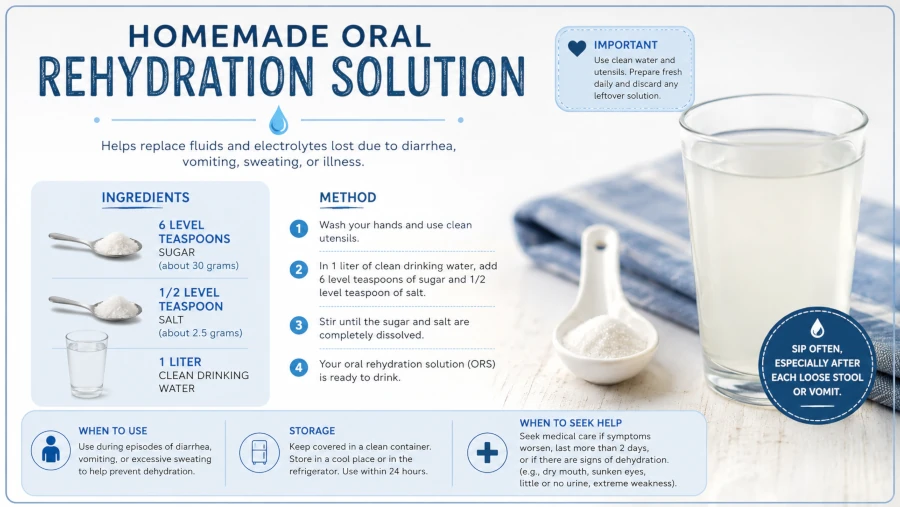
A widely used home version is 1 liter (about 4½ cups) of clean water, 6 level teaspoons of sugar, and ½ level teaspoon of salt. Measure carefully, too much salt can make things worse, and use commercial ORS for infants and young children whenever you can [WHO, 2006].
Good fluids while you recover:
- Oral rehydration solution (store-bought or the recipe above)
- Vegetable or clear broth, which adds sodium and other minerals
- Water and weak, unsweetened herbal teas
- Diluted fruit juice (cut it 1:1 with water; undiluted juice is often too sugary)
- Breast milk or formula for infants, offered as usual and more often [AAP]
How food actually helps
When food helps with diarrhea, it usually works in one of three plain ways:
- Soluble fiber and pectin absorb water in the gut and add bulk, so stools firm up. Bananas, oats, applesauce, and cooked carrots are the classic examples.
- Bland, low-fiber starches such as white rice and tapioca are easy to digest and give you energy without irritating the bowel.
- Fluid and electrolyte replacement matters because potassium, sodium, and other minerals leave the body in watery stool.
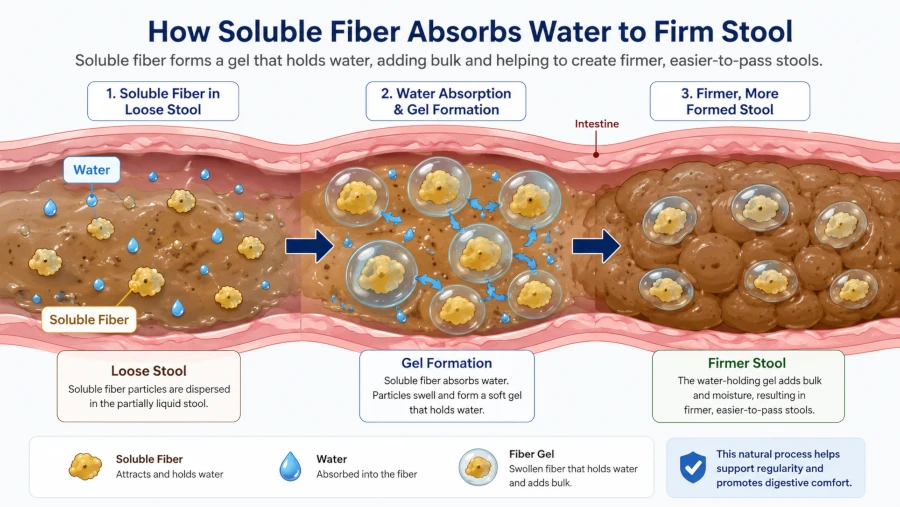
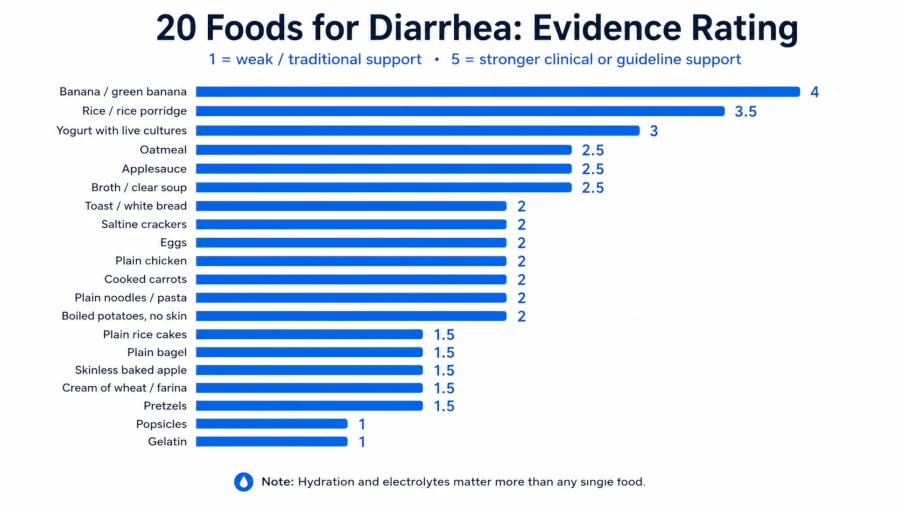
Be realistic about what any single food can do. The evidence behind most “anti-diarrhea” foods is modest, and a lot of it comes from traditional use rather than clinical trials. Your body does most of the work on its own; food and fluids mainly keep you nourished and comfortable while it recovers [NIDDK].
The 20 foods that help with diarrhea
Gentle starches that are easy to digest
These are the most dependable choices. Plain white rice is low in fiber, easy to digest, and adds bulk to stool; rice water works too. Oats supply soluble fiber that can soak up water in the gut, cooked with water rather than milk and eaten in small portions. Tapioca is a bland, low-fiber starch that delivers easy calories, especially cooked in broth.
Ripe bananas are gentle on the gut and pair pectin with potassium, a mineral lost in heavier bouts. Apples are best as unsweetened applesauce or baked, where the pectin helps and the skin’s rough fiber is gone. Cooked, peeled carrots (or a smooth carrot soup) are a soft, soluble-fiber vegetable that has long been used for upset stomachs. Chestnuts and carob round out the group: both are starchy and low in fat, and carob pod, rich in pectin and tannins, has been studied in a handful of small trials for infant diarrhea, though the evidence is limited.
Lactose-free drinks when dairy is the trigger
Some people digest lactose poorly for days or weeks after a stomach bug [NIDDK]. If cow’s milk seems to make things worse, unsweetened soymilk or almond milk can stand in without the lactose. Tiger-nut horchata is a traditional digestive drink, but watch the added sugar, which can loosen stools further.
One important safety point the older version of this article got wrong: plant-based “milks” are not substitutes for breast milk or infant formula. Giving almond, soy, or rice drinks to a baby in place of formula can cause serious malnutrition. If a doctor suspects a cow’s-milk-protein allergy or lactose problem in an infant, they may recommend a specific soy-based infant formula, which is a different product from the soymilk you buy as a beverage.
Soft, mucilage-rich foods
Okra and ripe papaya are soft and mild. Okra is rich in mucilage, a soluble fiber that may coat and soothe the gut lining; papaya is easy to digest when fully ripe. Evidence here is mostly traditional, so treat them as gentle options rather than treatments. Skip green (unripe) papaya during pregnancy.
Traditional astringent fruits
Several fruits have a long folk history as “binding” foods because of their tannins: quince (usually cooked, as a paste), pomegranate, loquat, sapote, and bilberry. Human evidence for stopping diarrhea is limited, and a few details matter for safety. With bilberry, only the dried berries are traditionally used as an astringent; fresh bilberries can have the opposite, mild laxative effect. Pomegranate and sapote are high in sugar when eaten as juice or in large amounts, which can work against you.
Persimmon deserves a special caution. Its tannins are most astringent when the fruit is unripe, but eating large amounts of unripe persimmon can, in rare cases, form a hard mass in the stomach called a bezoar, a risk that is higher in people who have had stomach surgery or who have slow stomach emptying. If you eat persimmon at all while recovering, choose ripe fruit and keep the portion small.
Yogurt and probiotics: what the evidence really shows
Plain, live-culture yogurt is a reasonable food while you recover, and many people who are mildly lactose-intolerant tolerate it because the cultures pre-digest some of the lactose. But the popular claim that probiotics shorten infectious diarrhea has weakened. A large 2020 Cochrane review of 82 trials and more than 12,000 people concluded that probiotics probably make little or no difference to whether diarrhea lasts 48 hours or longer [Cochrane, 2020]. Enjoy yogurt if it appeals to you, but don’t expect it to cut an illness short.
Quick reference: the 20 foods at a glance
| Food | Why it may help | How to eat it | Evidence |
| White rice | Low fiber, easy to digest; adds bulk to stool | Plain boiled; rice water | Reasonable |
| Oats | Soluble fiber may absorb water in the gut | Cooked with water, small portions | Reasonable |
| Tapioca | Bland, low-fiber starch for easy calories | Cooked in broth or water | Limited |
| Banana (ripe) | Pectin plus potassium lost in diarrhea | Ripe; mash for children | Reasonable |
| Apple | Pectin; cooked is gentler than raw with peel | Unsweetened applesauce, baked | Reasonable |
| Carrot (cooked) | Soluble fiber; soft, bland vegetable | Peeled, well-cooked, or as soup | Reasonable |
| Chestnut | Starchy, low-fat, mild tannins | Cooked or pureed | Limited |
| Carob | Pod rich in pectin and tannins | Carob flour as warm porridge | Limited |
| Soymilk | Lactose-free stand-in for cow’s milk | Unsweetened; not infant formula | Useful if lactose is the trigger |
| Almond milk | Lactose-free and light | Unsweetened; not infant formula | Tolerance, not a cure |
| Tiger nut (horchata) | Traditional digestive drink | Watch added sugar | Limited / traditional |
| Okra | Mucilage (soluble fiber) soothes the gut | Lightly cooked | Limited / traditional |
| Papaya (ripe) | Soft and easy to digest | Ripe only; avoid green in pregnancy | Limited / traditional |
| Quince | Pectin and astringent tannins | Cooked or as paste | Limited / traditional |
| Persimmon | Tannins are astringent | Ripe only, small amounts (bezoar caution) | Limited; safety caveat |
| Pomegranate | Traditional astringent fruit | Small amounts; juice is sugary | Limited / traditional |
| Loquat | Soft, mineral-rich | Ripe; gentle first food | Limited / traditional |
| Bilberry (dried) | Dried berries astringent; fresh can loosen | Dried only | Limited / traditional |
| Sapote | Soft, starchy fruit | Ripe | Limited / traditional |
| Yogurt (live cultures) | Probiotics; partly digested lactose | Plain, unsweetened | Mixed evidence |
“Reasonable” means the food is easy to digest and supported by mainstream dietary guidance. “Limited” or “traditional” means it is gentle and widely used, but human evidence for stopping diarrhea is thin.
Foods and drinks to limit while you recover
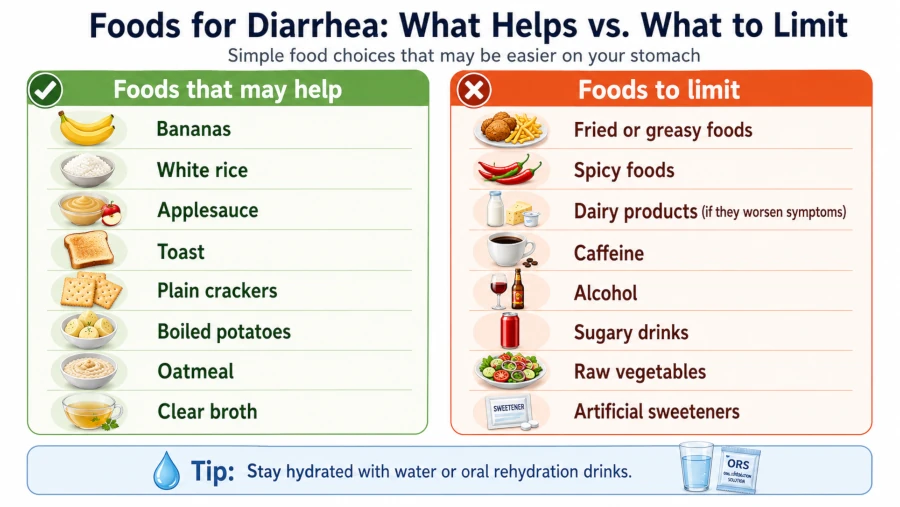
What you avoid can matter as much as what you eat. While symptoms last, the NIDDK suggests cutting back on [NIDDK]:
- Fatty or fried foods, including pizza and fast food
- Caffeinated drinks such as coffee, tea, and some sodas
- Alcohol
- Foods and drinks high in simple sugars, like sweetened beverages and some fruit juices
- Sugar alcohols found in sugar-free gum and candy (sorbitol, xylitol)
- Milk and dairy with lactose, if they seem to make symptoms worse
If your upset is centered higher up, with burning or stomach-lining pain, you may also want foods that are gentle on the stomach lining. For acute diarrhea, though, most experts no longer recommend a strict, narrow diet or fasting [NIDDK].
What about the BRAT diet?
You have probably heard of BRAT, bananas, rice, applesauce, and toast. Those foods are fine and gentle, but the American Academy of Pediatrics no longer recommends limiting a sick child to them. Because BRAT foods are low in protein, fat, and overall nutrition, the strict diet doesn’t give a recovering gut what it needs, and some experts think it may even drag symptoms out [AAP].
The current advice is simpler: once appetite returns, go back to a normal, age-appropriate diet, ideally within about 24 hours, including a mix of fruits, vegetables, lean protein, yogurt, and complex carbohydrates [AAP]. Use the BRAT foods as easy first bites if that feels better, then broaden out.
Safety, special cautions, and who should be careful
Infants and young children
Keep offering breast milk or formula, and use a commercial oral rehydration solution rather than plain water or sugary sports drinks for fluid replacement. Do not put a child on a fasting or BRAT-only diet. Over-the-counter anti-diarrhea medicines are not recommended for children under 2 and can be harmful in older children, so ask a pediatrician before using them [AAP].
Pregnancy and breastfeeding
Focus on fluids and bland foods, and skip green papaya and large amounts of herbal preparations. If diarrhea is severe, bloody, or lasts more than a day or two, contact your provider, since dehydration affects both you and the baby.
Kidney disease and potassium
Several foods on this list, bananas, potatoes, and some fruits, are high in potassium. That is helpful for most people but a problem if you have kidney disease or take medicines that raise potassium. Follow the limits your care team has given you.
Weakened immune systems
If your immune system is suppressed, talk to your doctor before taking probiotic supplements, since there is a small risk of infection. Plain yogurt as a food is generally fine.
Realistic expectations
Most acute diarrhea improves in one to three days. Food choices make recovery more comfortable and keep you nourished; they rarely shorten the illness dramatically. If nothing is improving, that is a signal to check in with a clinician rather than to keep trying new foods.
When to call a doctor
Get medical advice promptly if you or someone you are caring for has any of these [Mayo Clinic]:
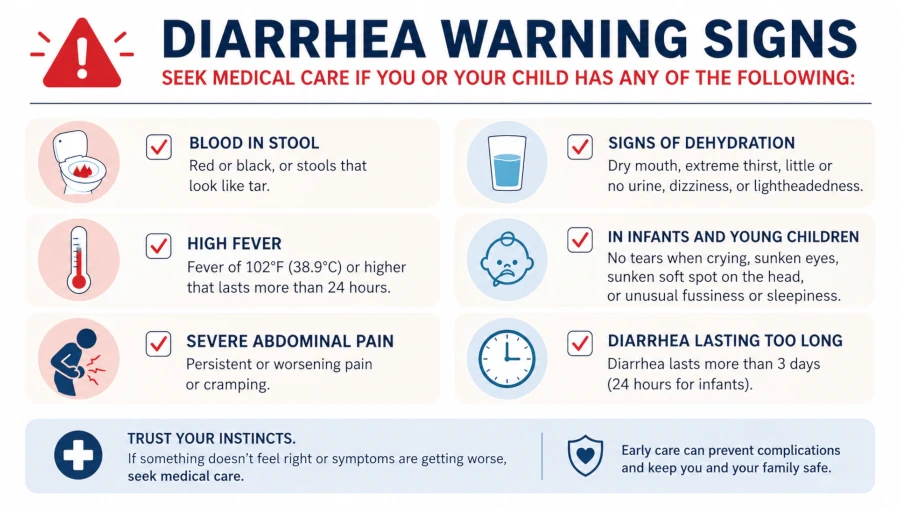
- Diarrhea lasting more than 2 days in an adult (or 24 hours in a child)
- Blood in the stool, or black, tarry stools
- A fever of 102°F (39°C) or higher
- Severe abdominal or rectal pain
- Signs of dehydration: very dark urine or little urination, extreme thirst, dizziness, dry mouth, sunken eyes, or no tears in a child
- Diarrhea after recent travel, a course of antibiotics, or a hospital stay
For an infant, a frail older adult, or anyone with a chronic illness, call sooner rather than later, dehydration can develop quickly in these groups.
| Health Disclaimer This article is for education and general information only. It is not a substitute for professional medical advice, diagnosis, or treatment, and it should not be used to manage a medical emergency. Always talk with a qualified healthcare provider about your own situation, especially if you are pregnant or breastfeeding, are caring for an infant or young child, have a chronic condition such as kidney disease or a weakened immune system, or take prescription medicines. If you have warning signs such as blood in the stool, a high fever, severe pain, or signs of dehydration, seek medical care right away. |
Frequently Asked Questions
What is the single best thing to have when you have diarrhea?
Fluids with electrolytes. For most adults, water, broth, and diluted juice cover mild cases; an oral rehydration solution is better for heavier losses and for children. Food comes second, and bland starches like rice, oatmeal, applesauce, and bananas are good first choices.
Does the BRAT diet still work?
BRAT foods (bananas, rice, applesauce, toast) are gentle and fine to eat, but the strict diet is no longer recommended because it lacks protein, fat, and nutrients. Use those foods as easy first bites, then return to a normal, balanced diet within about a day.
Should I take probiotics or eat yogurt?
Plain yogurt is a reasonable food, and some people tolerate it even when other dairy bothers them. But recent high-quality research found that probiotics probably do little to shorten infectious diarrhea, so think of yogurt as nourishment rather than a treatment, and ask your doctor first if your immune system is weakened.
Do I need to avoid all dairy?
Not necessarily. Some people digest lactose poorly for a while after a stomach bug. If milk seems to worsen symptoms, switch to lactose-free or plant-based options for a few days, then reintroduce dairy as you feel better.
Is it okay to just not eat for a while?
A short dip in appetite is normal, and you don’t need to force food. What you should not do is deliberately fast or skip fluids. Keep sipping rehydration fluids, and eat when you feel ready.
References
- World Health Organization. Oral Rehydration Salts (ORS): low-osmolarity formulation. 2006. → View source
- National Institute of Diabetes and Digestive and Kidney Diseases (NIDDK). Eating, Diet, & Nutrition for Diarrhea. → View source
- American Academy of Pediatrics, HealthyChildren.org. Diarrhea in Children: What Parents Need to Know. → View source
- Mayo Clinic. Diarrhea – Symptoms & Causes. → View source
- Collinson S, Deans A, Padua-Zamora A, et al. Probiotics for treating acute infectious diarrhoea. Cochrane Database of Systematic Reviews. 2020;(12):CD003048. → View source
- Gregorio GV, et al. Polymer-based oral rehydration solution for treating acute watery diarrhoea (review summary). American Family Physician. 2017;96(11):700. → View source
