
Sundew is a tiny carnivorous bog plant that European herbalists have reached for to calm coughs for centuries, and it still shows up in cough syrups and teas today. The short version on the sundew plant: lab studies show its compounds can relax smooth muscle and dampen inflammation, but human research is thin, so no one can honestly promise it will quiet your cough. If you try it, think of it as a traditional option for a dry, tickly cough in an adult, not a treatment for whooping cough, asthma, or a chest infection.

What is the sundew plant?
Round-leaved sundew (Drosera rotundifolia L.) grows in acidic bogs and poor fens, usually among Sphagnum moss, across much of the Northern Hemisphere, including North America, where it is native rather than introduced [Baranyai & Joosten, 2016; Thieme review, 2025]. Its rounded leaves sit in a flat rosette close to the ground, covered in sticky, glistening hairs that look like drops of morning dew. That shine is a trap. Small insects land, stick, and are slowly digested, which gives the plant nutrients that waterlogged bog soil cannot supply [Thieme review, 2025].
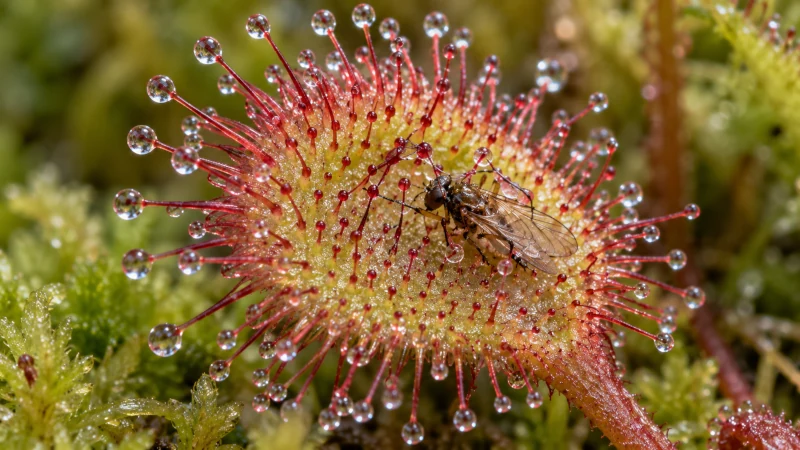
| Quick facts | |
| Scientific name | Drosera rotundifolia L. |
| Family | Droseraceae (the sundew family) |
| Other names | Round-leaved sundew, common sundew; sold in herbal medicine as Droserae herba |
| Habitat | Wet, acidic, nutrient-poor bogs and fens |
| Part used | The above-ground plant |
| Conservation | Protected in most European countries since the 1980s |
Why sundew became a cough herb
People have gathered wild sundew as a remedy for coughs and lung complaints since medieval times [Baranyai & Joosten, 2016]. Herbalists recommended it for dry coughs, bronchitis, whooping cough, asthma and “bronchial cramps,” and in Europe liquid sundew preparations are still often combined with thyme in cough syrups for adults and children [PeaceHealth, 2015]. Germany’s Commission E, the expert panel that assessed herbal medicines for that country’s regulators, listed sundew for spasmodic and irritable coughs [Altmeyer’s Encyclopedia].
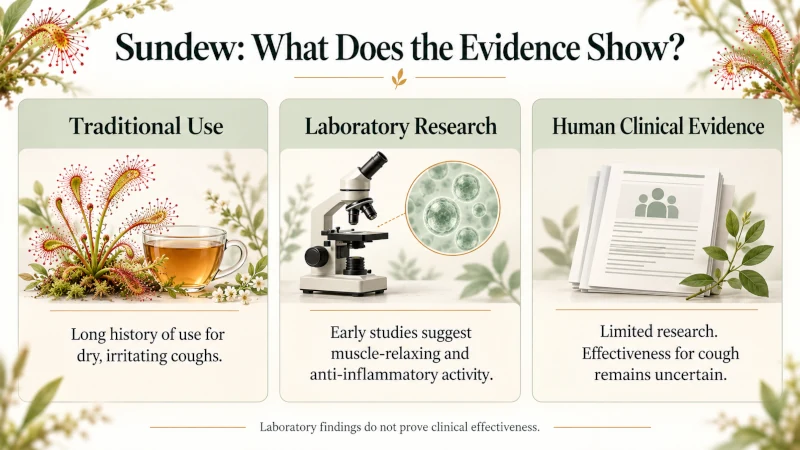
A long history tells you people found it worth using. It does not tell you how well it works, or for whom. That takes research, and here the record is much shorter.
Sundew plant benefits: what the research actually shows
Most of the interest centres on two groups of compounds: flavonoids such as hyperoside, quercetin and isoquercitrin, and a class of pigments called naphthoquinones [Krenn et al., 2004; Thieme review, 2025]. Nearly everything known about what they do comes from test tubes and animal tissue.
Muscle-relaxing and anti-inflammatory effects (lab evidence)
In a 2004 lab study, water and alcohol extracts of round-leaved sundew relaxed strips of guinea-pig intestinal muscle, apparently by acting on a muscarinic receptor that helps control smooth-muscle contraction. The same extracts blocked human neutrophil elastase, an enzyme released during inflammation. Interestingly, the flavonoids, not the naphthoquinones, seemed responsible: the pure naphthoquinones did nothing in the anti-inflammatory test [Krenn et al., 2004].
That gives a plausible reason sundew might ease a spasmodic cough. It is a mechanism, though, not proof that a cup of tea does the same inside your chest.
Effects on airway cells
A 2021 study applied a highly diluted sundew extract to cultured human bronchial lining cells for three to six hours. The cells stayed healthy, and dozens of genes involved in tissue repair, detoxification and immune signalling changed activity. The researchers suggested sundew might support the airway lining’s self-repair [Arruda-Silva et al., 2021]. A cell line in a dish is a long way from a person with a cough, so treat this as an early clue.
What about the antibacterial claims?
You will often read that sundew is “proven effective” against strep, staph and pneumococcus. The evidence we could find does not support that wording. In a 2022 lab study, extracts of two European sundew species stopped multidrug-resistant E. coli from forming biofilms, the slimy colonies bacteria build to protect themselves. But across the concentrations tested, the extracts showed no direct antibacterial activity; they did not kill the bacteria [Gerschler et al., 2022].
Interesting science, then, but sundew is not an antibiotic. Strep throat, pneumonia and whooping cough are bacterial infections that need a diagnosis and, often, prescription treatment.
The human evidence
This is the weak link. A 2025 review of round-leaved sundew describes only a modest number of human studies and calls for more research [Thieme review, 2025]. A monograph based on the Natural Medicines rating system rates the evidence as insufficient for cough, asthma and bronchitis [RxList, 2026], and a second consumer monograph gives sundew one star (traditional use, minimal scientific evidence), pointing to a single study showing cough relief [PeaceHealth, 2015]. We did not find large, modern randomized trials of sundew on its own.
If you want herbs with a stronger paper trail for cough, thyme combinations have more clinical data. See our guide to herbs for the lungs and what the evidence shows.
Evidence at a glance
| Use | Evidence | What it means for you |
| Dry, irritating cough (adults) | Traditional use; lab data; very little human research | A reasonable short-term option to try; don’t expect a drug-level effect. |
| Antispasmodic / anti-inflammatory | Lab and animal tissue only | Plausible mechanism, unproven in people. |
| “Antibacterial” | Lab only; blocks biofilm, did not kill bacteria | Not a substitute for antibiotics. |
| Whooping cough | Traditional use only | Needs a doctor’s diagnosis and treatment. |
| Asthma | Traditional use only | Never use it in place of prescribed inhalers. |
| Bronchitis | Insufficient evidence | Rest, fluids and honey have better support. See what to eat and drink with bronchitis. |
Which sundew is actually in your product?
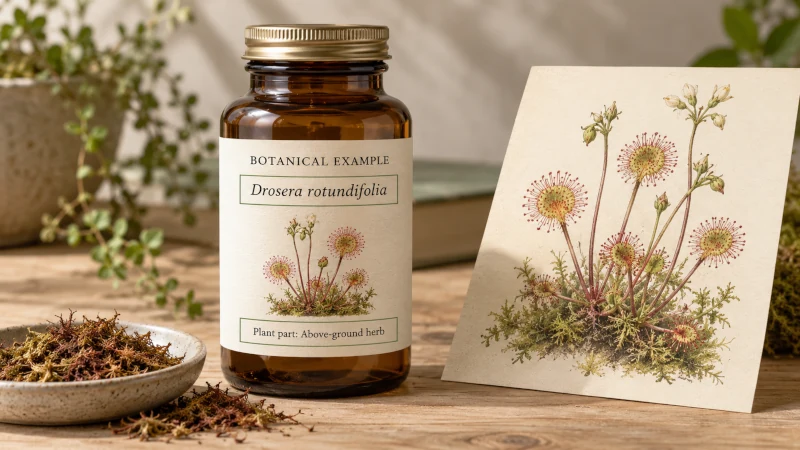
Here is a twist most shoppers never hear about. Because so much of its bog habitat has been lost, round-leaved sundew has been protected in most European countries since the 1980s, which cut wild supplies to the herbal-medicine industry. Growing it commercially has proved slow and costly [Baranyai & Joosten, 2016]. As a result, many products now rely on Asian or African sundew species, which contain lower levels of the active compounds [Greifswald Mire Centre]. In the 2022 biofilm study, four commercial sundew products needed roughly two to four times the concentration of fresh European sundew extract to achieve the same effect [Gerschler et al., 2022].
Two practical points follow. Check the label for the species and plant part. And don’t harvest wild sundew yourself; it is protected in many places, and bog populations recover slowly.
You may also see “Drosera” on homeopathic products, labelled with X or C potencies. These are extreme dilutions, and they are a different thing from an herbal tea or tincture. This article covers the herbal plant.
How to use sundew
There is no scientifically established dose range for sundew [RxList, 2026]. One consumer monograph lists about 3 grams of dried herb a day as tea for adults and children over 12, or 0.5 to 1 mL of tincture three times a day [PeaceHealth, 2015]. If you use a commercial syrup or tea, follow the label rather than improvising.
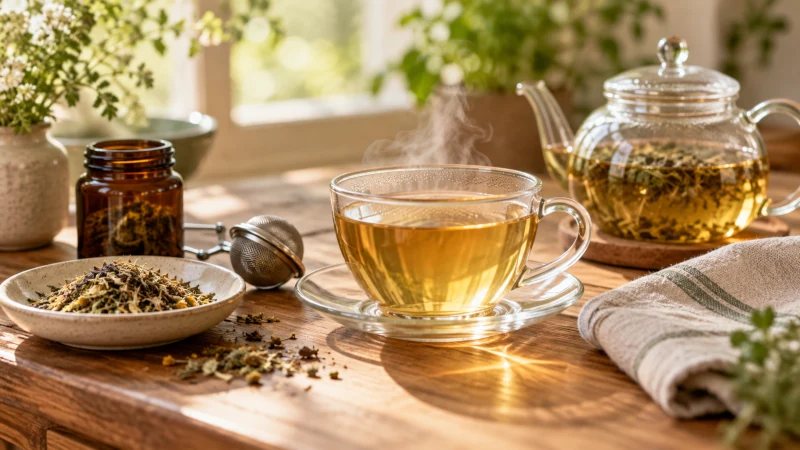
- As a tea: pour just-boiled water over the dried herb, cover, and steep for 5 to 10 minutes before straining. Our guide to preparing herbal infusions and tinctures walks through each step.
- As a tincture: tinctures contain alcohol. They are not suitable for children, and they are a concern if you have liver disease, a history of alcohol use disorder, or take medicines that shouldn’t be combined with alcohol.
- Keep it short: use it for a passing cough, not as a long-term habit, and stop if the cough isn’t improving or any warning sign below appears.
Side effects, interactions, and who should avoid sundew
Taken by mouth in usual amounts, sundew is rated possibly safe for most adults [RxList, 2026], though higher amounts may irritate the stomach and gut in some people [PeaceHealth, 2015]. Because so few people have been studied, “no problems reported” is not the same as “proven safe.”
On drug interactions, the sources are thin rather than reassuring. One monograph found no reported interactions with medicines but notes that unknown interactions may exist [PeaceHealth, 2015]; the other lists no interaction data at all [RxList, 2026]. If you take regular medication, run it past a pharmacist first.
Skip sundew, or check with a clinician first, if you:
- are pregnant or breastfeeding. There isn’t enough safety information, and both monographs advise avoiding it [RxList, 2026; PeaceHealth, 2015]
- want to give it to a child. Talk to your pediatrician first, and don’t give children tinctures
- have a sensitive stomach or a digestive condition
- have liver disease or avoid alcohol (tinctures)
- have asthma. Sundew is not a substitute for your inhaler; our natural asthma relief guide explains what can sensibly sit alongside medical treatment
When a cough needs a doctor, not an herb
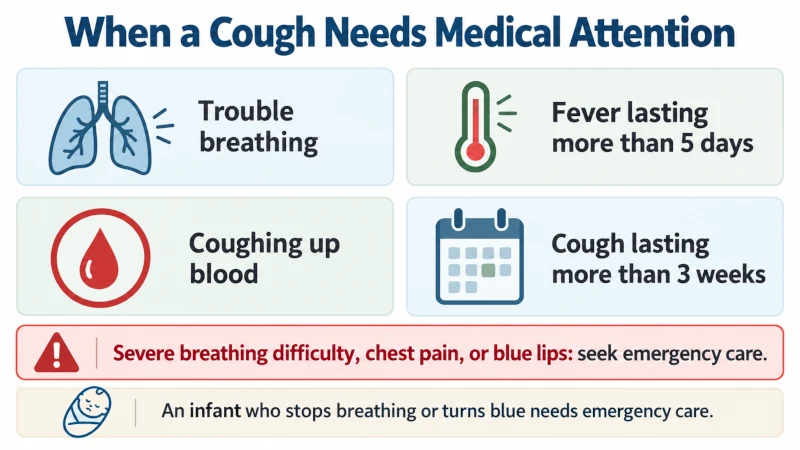
Most chest colds clear within three weeks. See a healthcare professional if you have [CDC, 2026]:
- a fever lasting more than 5 days, or 104°F (40°C) or higher
- mucus with blood in it
- shortness of breath or trouble breathing
- symptoms lasting more than 3 weeks
- repeated bouts of bronchitis
- a baby under 3 months old with a fever of 100.4°F (38°C) or higher
Be especially alert to whooping cough. Babies with it may not cough at all; instead, they can stop breathing or turn blue, which is an emergency. Anyone with a prolonged, persistent, exhausting cough should see a doctor promptly, and if someone in your home has whooping cough, ask your doctor about preventive antibiotics [American Lung Association, 2024]. For severe breathing difficulty, chest pain or bluish lips, call 911.
| HEALTH DISCLAIMER: This article is for general education only and is not medical advice. It is not a substitute for diagnosis or treatment by a qualified healthcare professional. Sundew has not been shown to cure, prevent or treat any disease. Talk to your doctor or pharmacist before using sundew if you are pregnant or breastfeeding, are considering it for a child, have a chronic condition such as asthma or liver disease, or take regular medication. Seek medical care promptly for any of the warning signs above. |
Frequently Asked Questions
What is the sundew plant used for?
Traditionally, sundew (Drosera rotundifolia) is used for dry, spasmodic coughs, often in herbal syrups combined with thyme. Lab studies support anti-inflammatory and muscle-relaxing effects, but human evidence is limited.
Does sundew really work for coughs?
Possibly, but it is not well proven. Lab data are encouraging, while monographs rate the human evidence as insufficient or minimal [RxList, 2026; PeaceHealth, 2015]. Honey and thyme combinations have more clinical support.
Is sundew safe for children?
There is no established dose, so check with your pediatrician before giving any sundew product to a child. Don’t give children alcohol-based tinctures.
Can sundew treat whooping cough or asthma?
No. Whooping cough is a bacterial infection that needs medical diagnosis and treatment, and sundew should never replace asthma inhalers.
Can I pick wild sundew to make tea?
It’s best not to. Round-leaved sundew is protected in most of Europe and in many other areas, and bog habitats recover slowly [Baranyai & Joosten, 2016]. Buy a labelled product instead.
Is homeopathic Drosera the same as sundew tea?
No. Homeopathic Drosera is extremely diluted, while teas and tinctures contain measurable plant material. The research and safety information above apply to the herbal plant.
References
- Baranyai B, Joosten H. Biology, ecology, use, conservation and cultivation of round-leaved sundew (Drosera rotundifolia L.): View source
- Krenn L, Beyer G, Pertz HH, et al. In vitro antispasmodic and anti-inflammatory effects of Drosera rotundifolia. View source
- Arruda-Silva F, Bellavite P, Marzotto M. Low-dose Drosera rotundifolia induces gene expression changes in 16HBE human bronchial epithelial cells. View source
- Gerschler S, Guenther S, Schulze C. Antibiofilm activity of sundew species against multidrug-resistant Escherichia coli strains. International Journal of Molecular Sciences. View source
- Drosera rotundifolia (L.), the round-leaved sundew [review]. View source
- RxList. Sundew: Health Benefits, Side Effects, Uses, Dose & Precautions. View source
- PeaceHealth (Healthnotes/TraceGains). Sundew. View source
- Altmeyer’s Encyclopedia. Drosera herba. View source
- Greifswald Mire Centre, University of Greifswald. Paludiculture on raised bog sites. View source
- American Lung Association. Pertussis Symptoms and Diagnosis. View source
- Centers for Disease Control and Prevention. Chest Cold (Acute Bronchitis) Basics. View source


