
You don’t need a cleanse, a kit, or a 21-day challenge to detox from sugar. What you need is to cut back on added sugar — the kind stirred into drinks, cereals, sauces and snacks — and get through a few uncomfortable days while your habits catch up. Your liver and kidneys already handle the actual detoxing. There’s no compelling evidence that cleanse products remove toxins from the body, and some carry real risks [NCCIH, 2025].

Most of us have plenty of room to cut. American adults and children both average about 17 teaspoons of added sugar a day [CDC, 2026]. That’s nearly three times the American Heart Association’s limit for women [AHA, 2024].
What “Detox from Sugar” Actually Means
The target is added sugar, not all sugar. The sugars that occur naturally in whole fruit, plain milk and vegetables aren’t counted as added sugars, and they come packaged with fiber, water or protein. Added sugars are the ones put into food during processing or cooking: table sugar, syrups, honey, and sugars from concentrated fruit or vegetable juice [FDA, 2026].
That last part catches people out. Honey and maple syrup count as added sugar by the FDA’s definition. Swapping white sugar for honey changes the flavor — it doesn’t take the sugar off your tally, or off the label. For a fuller breakdown, see our guide to natural and added sugars.
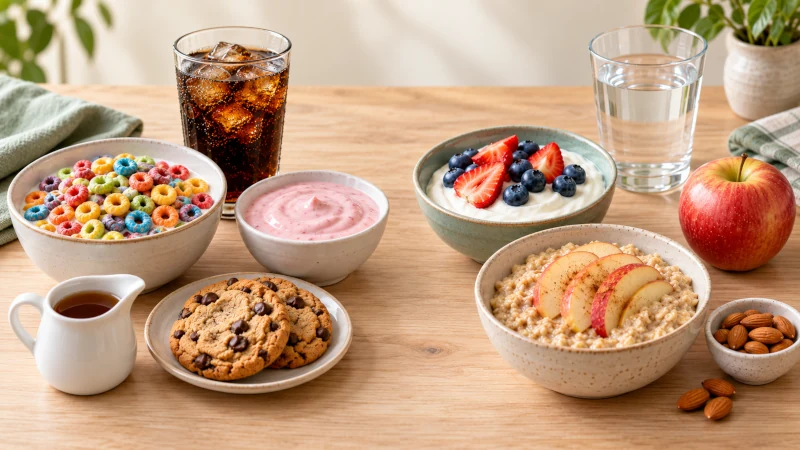
| Cut back on | Lean on instead |
| Regular soda, sweet tea, energy drinks, sweetened coffee drinks | Water, sparkling water, unsweetened tea or coffee |
| Flavored yogurt, sweetened cereal, granola and snack bars | Plain yogurt with fruit, oatmeal, eggs |
| Cookies, cakes, pastries, candy | Whole fruit, nuts, cheese |
| Honey, syrups and agave used freely | Small amounts, by choice, counted toward your limit |
| Sauces and dressings with a sweetener near the top of the ingredient list | Versions you’ve checked on the label, or made at home |
How Much Added Sugar Is Too Much?
The official answer got stricter this year. The Dietary Guidelines for Americans, 2025–2030, published in January 2026, state that no amount of added sugar is recommended as part of a healthy diet. As a practical ceiling, they say a single meal should contain no more than 10 grams. For children, the guidelines advise avoiding added sugar through early childhood and recommend none through age 10 [DGA, 2026].
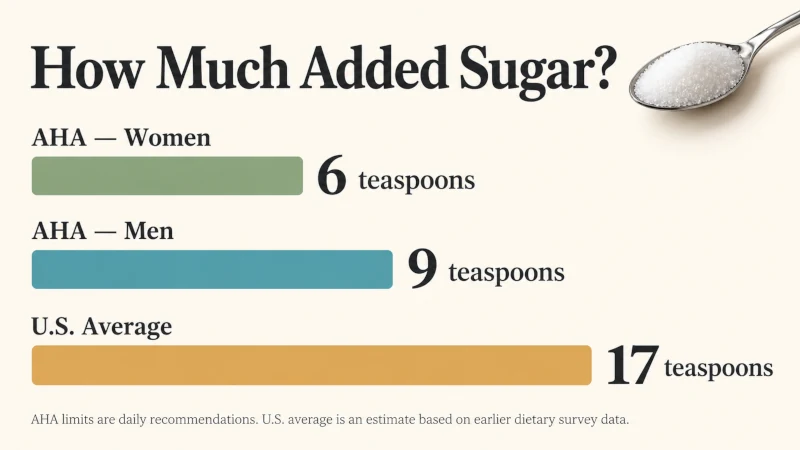
Other benchmarks you’ll see:
- American Heart Association: no more than about 6 teaspoons (100 calories) a day for women and 9 teaspoons (150 calories) for men [AHA, 2024].
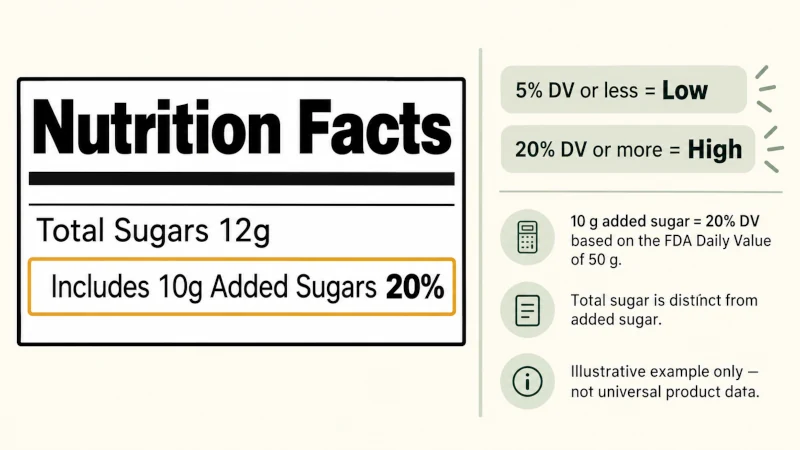
- Nutrition Facts label: the Daily Value for added sugars is 50 grams, based on a 2,000-calorie diet [FDA, 2026].
Labels list sugar in grams. Dividing by four gives you a rough teaspoon count. If you want the longer story on what years of excess sugar can do, our overview of the health effects of too much sugar covers it.
Is Sugar Actually Addictive?
Probably not in the way drugs are — though it can certainly feel that way.
The idea took off from rat studies. When rats got sugar on an intermittent schedule, available for a few hours and then withheld, they binged and showed behavioral and brain changes that resembled dependence [Avena et al., 2008]. A 2016 review found those behaviors appeared only under that on-again, off-again setup, not when rats had sugar freely. The reviewers concluded the evidence for sugar addiction in humans is not compelling, and suggested the pull may come from sweet taste and palatability rather than sugar acting like a drug [Westwater et al., 2016].
None of that makes your cravings imaginary. Cues are powerful: the afternoon slump, the office candy bowl, dessert after dinner because it’s always been dessert after dinner. Treating cravings as a habit to retrain, rather than an addiction to fight, gives you more to work with.
What to Expect in the First Few Days
Quitting sugary drinks can bring a rough patch. In a small study, 25 teenagers who normally drank at least three sugar-sweetened beverages a day switched to water and plain milk for three days. They reported more headaches, cravings, and drops in motivation and concentration. Symptoms were most noticeable on the first two days and less so by the third. Only the dip in motivation stayed statistically significant after the researchers corrected for multiple comparisons [Falbe et al., 2019].
Keep that in proportion. The study was tiny, had no comparison group, lasted three days, and couldn’t fully separate sugar from caffeine. There is no solid human research on how long sugar cravings last overall. If you read that cravings vanish in exactly 72 hours, or 10 days, or three weeks, treat it as a guess.
How to Detox from Sugar, Step by Step
1. Start with what you drink
Sugar-sweetened beverages are among the top sources of added sugar in the American diet [CDC, 2026], and they’re the easiest place to start because nothing on your plate has to change. Swap soda, sweet tea, energy drinks and sweetened coffee for water, sparkling water, or unsweetened tea and coffee. If plain water bores you, add citrus, cucumber or mint. Our guide to cutting salt and sugar without making food bland has more swaps like these.

2. Learn to read the label
The Nutrition Facts panel lists Added Sugars separately from Total Sugars, with a % Daily Value beside it. The FDA’s rule of thumb: 5% DV or less is low, and 20% or more is high [FDA, 2026]. Then check the ingredient list, which runs in order of weight. A sweetener near the front — sucrose, dextrose, any syrup, honey, concentrated juice — tells you the product leans heavily on it. Flavored yogurt, granola, breakfast cereal, bottled sauces and snack bars are the usual surprises.
3. Don’t let yourself get ravenous
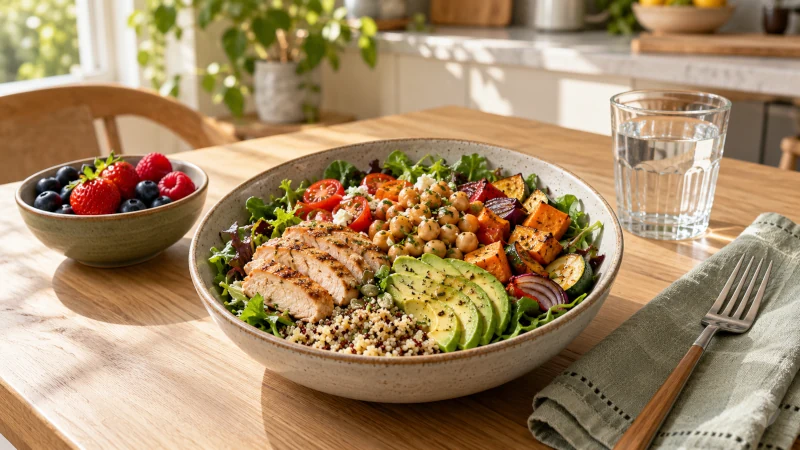
Cravings are hardest to resist on an empty stomach. Regular meals built around protein, vegetables, beans and whole grains make the 3 p.m. vending-machine run less likely. Nothing fancy is required: eggs or plain Greek yogurt with berries instead of sweetened cereal, fruit with lunch instead of cookies, a handful of nuts instead of candy.
4. Decide what to do about sweeteners
Swapping sugar for a zero-calorie sweetener is the most common shortcut, and the evidence on it is genuinely mixed.
- Safety: The FDA considers the high-intensity sweeteners it has approved, including aspartame and sucralose, safe for the general population under their conditions of use. It has not objected to purified stevia and monk fruit extracts marketed as generally recognized as safe. People with phenylketonuria (PKU) need to avoid or limit aspartame [FDA, 2017].
- Aspartame and cancer: The WHO’s cancer research agency classifies aspartame as “possibly carcinogenic” based on limited evidence. The WHO and FAO expert committee on food additives found the evidence not convincing and kept the acceptable daily intake at 40 mg per kilogram of body weight [American Cancer Society, n.d.].
- Usefulness: In 2023 the WHO advised against using non-sugar sweeteners to control weight, after finding no long-term benefit for body fat. The advice is conditional, doesn’t apply to people with diabetes, and the WHO acknowledged that links to disease in observational studies may be confounded [WHO, 2023]. The new U.S. guidelines also advise limiting foods and drinks with non-nutritive sweeteners [DGA, 2026].
- Gut bacteria: A much-cited 2014 study found saccharin, sucralose and aspartame caused glucose intolerance in mice through changes in gut bacteria. When seven people took saccharin for six days, four developed glucose intolerance [Suez et al., 2014]. Interesting, but too small to settle anything.
A sensible middle ground: diet soda can be a bridge off regular soda. The longer-term goal is getting used to less sweetness overall, not finding a replacement that tastes just as sweet.
5. Protect your sleep
A short night makes sugar harder to resist. In a brain-imaging study of 23 healthy young adults, one night without sleep made high-calorie foods more desirable. Activity dropped in frontal-lobe areas involved in decisions and rose in reward-related regions [Greer et al., 2013]. It was one night in a small group, but if your cravings spike after poor sleep, willpower probably isn’t the problem.
6. Plan for cravings and slip-ups
A craving usually loses steam if you give it a few minutes and something else to do: a short walk, a glass of water, brushing your teeth after dinner, leaving the kitchen. Notice what sets it off — a time of day, a stressful meeting, the coffee-shop line — and change one link in that chain.
If you eat the cake at a birthday party, eat the cake and enjoy it. One dessert doesn’t undo a week of better choices. If strict food rules have backfired on you before, a less rigid approach to eating may serve you better than another round of all-or-nothing.
7. Cold turkey or gradual?
No good study compares the two for sugar. Dropping sugary drinks all at once gives you a clean break. Tapering — half-sweet coffee this week, unsweetened next — may make the first days easier. Pick whichever you can keep doing.
What Benefits Can You Realistically Expect?
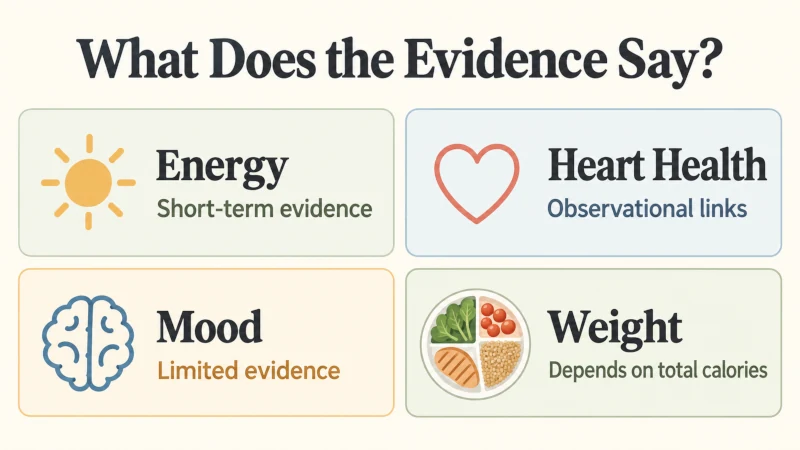
Some benefits rest on decent evidence; others are mostly hope. Here’s how they compare.
| Possible benefit | What the evidence shows | How strong? |
| Steadier energy | A meta-analysis of 31 studies in about 1,300 adults found sugar did not improve mood, and people who had it felt more tired and less alert within an hour [Mantantzis et al., 2019]. | Moderate for short-term effects. No studies track energy over weeks after cutting sugar. |
| Heart health | Among 31,147 U.S. adults, getting 10–24.9% of calories from added sugar was linked to a 30% higher risk of dying from cardiovascular disease than getting under 10%. At 25% or more, risk was about 2.75 times higher [Yang et al., 2014]. | Observational. Shows a link, not proof that cutting sugar prevents heart disease. |
| Mood | In the Whitehall II study, men eating more than 67 g a day of sugar from sweet foods and drinks were 23% more likely to develop a common mental disorder over five years than men eating under 39.5 g. No link was seen in women [Knüppel et al., 2017]. | Limited. One cohort, observational, results differ by sex. |
| Weight | Sugar provides calories without vitamins or minerals [AHA, 2024]. Cutting it lowers calorie intake only if you don’t replace those calories elsewhere. | Depends on what you eat instead. |
| Cancer | Cutting sugar is not a cancer treatment. Excess weight is the clearer link. See does sugar feed cancer? | No good evidence that a sugar detox treats or prevents cancer directly. |
Sugar Detox Myths Worth Dropping
- “Lemon water kick-starts your metabolism.” We found no good evidence for this. It’s fine if it helps you drink more water.
- “Fiber and water flush sugar out of your system.” Your body uses or stores the sugar you eat; it doesn’t rinse out. Fiber-rich foods are worth eating for other reasons.
- “You need a cleanse.” Federal researchers found no compelling evidence that detox programs remove toxins. Laxative-based cleanses can cause dehydration, and fasting on large amounts of water or tea can upset your electrolytes [NCCIH, 2025].
- “Artificial sweeteners are more addictive than sugar.” No research we reviewed supports this.
- “Honey and maple syrup are healthy swaps.” They’re still added sugars [FDA, 2026].
Who Should Talk to a Doctor First
Eating less added sugar is a reasonable goal for most adults. A few groups should loop in a professional before making big changes.
- People with diabetes or prediabetes, especially if you take insulin or other medicines that lower blood sugar. Changing what you eat can change how much medication you need, and people with diabetes should consult their care team before major diet changes [NCCIH, 2025]. Our guide to blood sugar levels explains the numbers and the warning signs of highs and lows.
- Anyone who is pregnant or breastfeeding. Cutting added sugar is fine; restrictive “detox” plans that cut calories are not. Ask your obstetric provider which sweeteners, if any, they’re comfortable with.
- Anyone with a history of disordered eating. A plan built around cutting foods out can be risky. Talk with your treatment team first. The National Alliance for Eating Disorders runs a free helpline at (866) 662-1235 on weekdays [National Alliance for Eating Disorders].
- Parents. The guidelines recommend no added sugar for children through age 10 [DGA, 2026], but children shouldn’t be put on restrictive detox plans. Talk to your pediatrician before major changes.
- People with phenylketonuria (PKU), who need to avoid or limit aspartame [FDA, 2017].
When cravings point to something else
Strong thirst and hunger are sometimes more than a habit. See a doctor if you notice you’re urinating more often, feeling unusually thirsty or hungry, losing weight without trying, or dealing with blurred vision, tiredness, slow-healing sores or frequent infections. These can be signs of diabetes. Type 1 diabetes can come on suddenly with nausea, vomiting and stomach pain, and can progress to diabetic ketoacidosis (DKA) [CDC, 2024]. If you have diabetes and feel very unwell, or have vomiting you can’t stop, get urgent care.
| HEALTH DISCLAIMER This article is for general education. It is not medical advice, a diagnosis or a treatment plan, and it can’t account for your health history or medications. Talk to your doctor, a registered dietitian or your pharmacist before making major changes to your diet — especially if you have diabetes or prediabetes, take medicines that affect blood sugar, are pregnant or breastfeeding, or have a history of disordered eating. Never adjust insulin or other diabetes medicines based on what you read here. If you have symptoms of very high or very low blood sugar, persistent vomiting, or confusion, seek emergency care. |
Frequently Asked Questions
How long does it take to detox from sugar?
Nobody has measured this well in adults. In a small study of teenagers who quit sugary drinks, withdrawal-type symptoms were strongest in the first two days and easing by day three [Falbe et al., 2019]. Beyond that, expect it to vary. What matters more is building habits you can keep.
Can I eat fruit on a sugar detox?
Yes. The sugar naturally present in whole fruit isn’t counted as added sugar [FDA, 2026]. Whole fruit also brings fiber and water, which makes it a useful stand-in when you want something sweet.
Is honey or maple syrup better than white sugar?
Not for this purpose. Both count as added sugars on the Nutrition Facts label [FDA, 2026]. Use them if you like the taste, but count them.
Are sugar withdrawal symptoms real?
Some people do feel worse for a few days — headaches, cravings and low motivation came up in the teen study above [Falbe et al., 2019]. Whether sugar causes true withdrawal the way drugs do is not established in humans [Westwater et al., 2016].
Should I switch to stevia or monk fruit?
They can help you move off sugar, and the FDA has not objected to purified versions sold as generally recognized as safe [FDA, 2017]. But the WHO advises against relying on non-sugar sweeteners for weight control [WHO, 2023], and the 2025–2030 guidelines advise limiting them [DGA, 2026]. Use them as a bridge, not a permanent substitute.
Will cutting sugar help me lose weight?
It can, if it lowers your total calories. Swapping sugary drinks for water is one of the simplest ways to do that. Replacing sweets with other high-calorie foods won’t change much.
References
- American Cancer Society. (n.d.). Aspartame and cancer risk. View source
- American Heart Association. Added sugars. View source
- Avena, N. M., Rada, P., & Hoebel, B. G. Evidence for sugar addiction: Behavioral and neurochemical effects of intermittent, excessive sugar intake. View source
- Centers for Disease Control and Prevention. Symptoms of diabetes. View source
- Centers for Disease Control and Prevention. Get the facts: Added sugars. View source
- Dietary Guidelines for Americans. View source
- Falbe, J., Thompson, H. R., Patel, A., & Madsen, K. A. Potentially addictive properties of sugar-sweetened beverages among adolescents. View source
- Greer, S. M., Goldstein, A. N., & Walker, M. P. The impact of sleep deprivation on food desire in the human brain. View source
- Knüppel, A., Shipley, M. J., Llewellyn, C. H., & Brunner, E. J. Sugar intake from sweet food and beverages, common mental disorder and depression: Prospective findings from the Whitehall II study. View source
- Mantantzis, K., Schlaghecken, F., Sünram-Lea, S. I., & Maylor, E. A. Sugar rush or sugar crash? A meta-analysis of carbohydrate effects on mood. View source
- National Alliance for Eating Disorders. What is an eating disorder helpline? View source
- National Center for Complementary and Integrative Health. “Detoxes” and “cleanses”: What you need to know. View source
- Suez, J., Korem, T., Zeevi, D., et al. Artificial sweeteners induce glucose intolerance by altering the gut microbiota. View source
- U.S. Food and Drug Administration. Aspartame and other sweeteners in food (high-intensity sweeteners). View source
- U.S. Food and Drug Administration. Added sugars on the Nutrition Facts label. View source
- Westwater, M. L., Fletcher, P. C., & Ziauddeen, H. Sugar addiction: The state of the science. View source
- World Health Organization. WHO advises not to use non-sugar sweeteners for weight control in newly released guideline. View source
- Yang, Q., Zhang, Z., Gregg, E. W., Flanders, W. D., Merritt, R., & Hu, F. B. Added sugar intake and cardiovascular diseases mortality among US adults. View source


