
A few plants can nudge your metabolism, but only a little. Among the herbs that speed up metabolism, green tea, coffee and chili peppers have the most human research behind them, and their effects add up to about a kilogram over a few months or roughly 74 fewer calories at a meal. None has been shown to drive meaningful weight loss on its own. Some popular “metabolism” herbs, especially seaweed and stimulant blends, carry real risks for your thyroid, liver or heart.

That doesn’t make them useless. It means they belong at the edge of the plan, not the center. Here’s what each one does, how strong the evidence is, and who should leave it alone.
Why metabolism is hard to speed up
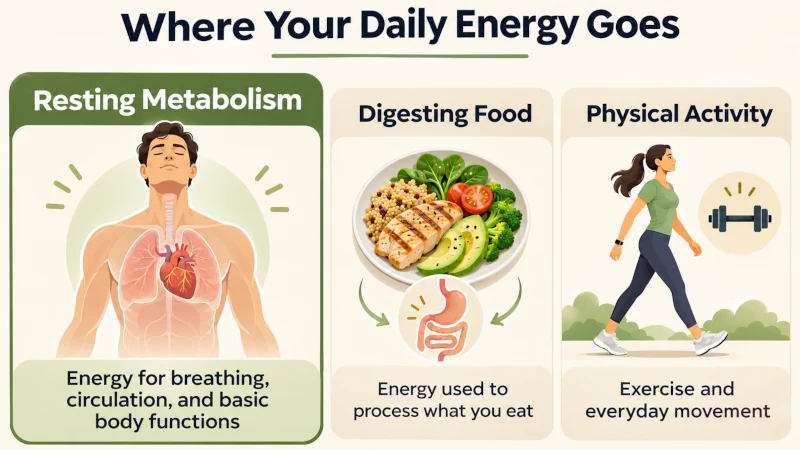
Metabolism is how your body turns food and drink into energy. Most of the calories you burn go to simply staying alive — breathing, circulating blood, repairing cells — and that resting rate depends mostly on your body size, how much muscle you carry, your sex and your age. Digesting food uses about 10% of the calories you eat. Everything else comes from movement, and everyday activity like walking, housework and fidgeting can account for anywhere from about 100 to 800 calories a day [Mayo Clinic, n.d.].
Mayo Clinic’s experts note that a slow metabolism is rarely the main reason people gain weight. Even conditions like an underactive thyroid seldom slow it enough to cause major weight gain [Mayo Clinic, n.d.]. So an herb would have to shift one of those big levers to make a visible difference — and that’s a high bar.
Lists of “metabolism herbs” also tend to blur three different things: plants that slightly raise calorie burn, plants that make you eat a little less, and plants that make you urinate more. Only the first is about metabolism. The third mostly moves water.
Herbs that speed up metabolism at a glance
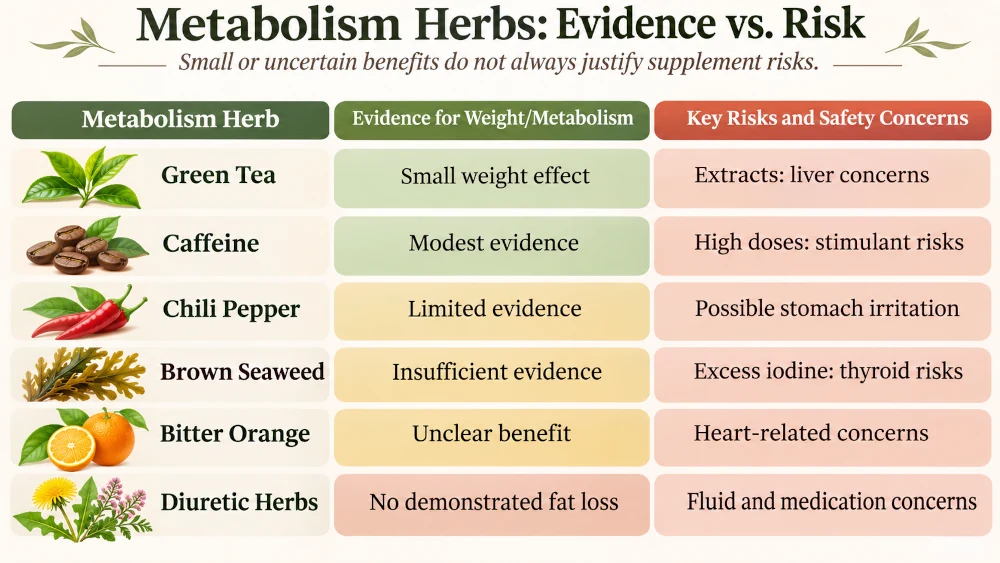
| Herb or compound | Proposed action | Best human evidence | Verdict |
| Green tea (catechins + caffeine) | Slightly higher energy use | Cochrane review: 18 trials, 1,945 people, 12–13 weeks; effect small and not clinically important [Jurgens et al., 2012] | Weak; brewed tea is fine, extracts carry liver risk |
| Caffeine (coffee, tea) | Stimulant | Long-term observational data: slightly less weight gain over 12 years [NIH ODS, 2026] | Modest, mostly observational |
| Chili peppers (capsaicin) | Lower appetite, small heat effect | Meta-analysis: about 74 fewer calories per meal; body weight not measured [Whiting et al., 2014] | Limited |
| Brown seaweed (bladderwrack, kelp) | Iodine for the thyroid; fucoxanthin | One trial of a combination product [NIH ODS, 2026] | Insufficient; real thyroid risk |
| Bitter orange (synephrine) | Stimulant | Small, conflicting studies of blends [NCCIH, 2024] | Unclear; heart safety concerns |
| Diuretic herbs (e.g., dandelion) | More urine | Traditional use only | Water loss, not fat loss |
Green tea: the most-studied herb, with a small effect
Green tea gets more attention than any other plant on this list because it supplies two compounds that might raise energy use: catechins (such as EGCG) and caffeine. The best summary of the evidence is a Cochrane review of 15 weight-loss trials and 3 weight-maintenance trials involving 1,945 adults with overweight or obesity. The studies ran 12 to 13 weeks. People taking green tea preparations lost slightly more weight than those on placebo, but the difference was not statistically significant and the reviewers judged it too small to be clinically important, and the results for waist size and BMI looked the same [Jurgens et al., 2012].
The NIH Office of Dietary Supplements adds some useful detail. The average extra loss was just under a kilogram, and the trials run outside Japan showed no significant benefit at all. Catechins on their own had no effect on body weight; catechins paired with caffeine did a little better than caffeine alone [NIH ODS, 2026]. That pattern suggests much of green tea’s modest effect may come from its caffeine.
Brewed tea vs. green tea extract
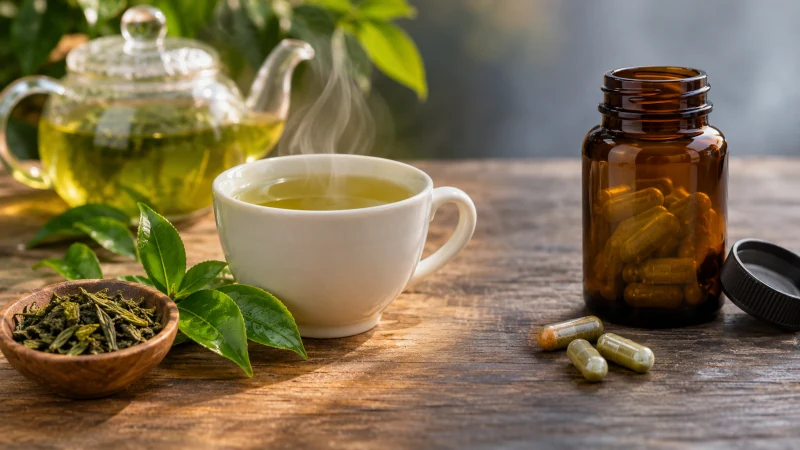
This distinction matters more than anything else about green tea. No safety concerns have been reported for green tea drunk as a beverage by adults [NCCIH, 2025]. Concentrated extracts are a different story. In a 12-month trial, some women taking green tea extract developed raised liver enzymes, and dozens of case reports have linked extracts to liver damage. Taking extracts with food is advised if you use them at all [NIH ODS, 2026]. People with a particular immune-related gene variant — present in an estimated 5% to 15% of Americans — appear especially prone to this injury, and there is no easy way to know whether you carry it [NCCIH, 2025].
Green tea can also interact with medicines. High intakes may lower blood levels of the beta-blocker nadolol, extract may reduce levels of the cholesterol drug atorvastatin, and an interaction with raloxifene (an osteoporosis drug) has been reported [NCCIH, 2025].
What to do: If you enjoy green tea, drink it. Skip high-dose extract capsules, particularly if you have liver problems or take prescription medicines.
Coffee and caffeine

Coffee isn’t usually thought of as an herb, but caffeine is a plant compound and the main active ingredient in many “natural” fat burners. Short-term trials of caffeine-containing combination products suggest a possible modest effect. Over the long run, the evidence is observational: in one large dataset, men and women who increased their caffeine intake gained about 0.4 kg less over 12 years than those who didn’t [NIH ODS, 2026]. That’s a rounding error, not a weight-loss strategy.
The FDA and the European Food Safety Authority consider up to 400 mg a day safe for healthy adults. Toxic effects can start around 15 mg per kilogram of body weight, roughly 1,000 mg for a 150-pound adult, and stacking caffeine with other stimulants raises the risk [NIH ODS, 2026]. Teenagers should keep it much lower; the American Medical Association suggests no more than 100 mg a day for adolescents [NIH ODS, 2026].
What to do: Add up every source before trying a metabolism supplement. Many contain caffeine under names like guarana, kola nut or green coffee, on top of your morning coffee.
Chili peppers and capsaicin
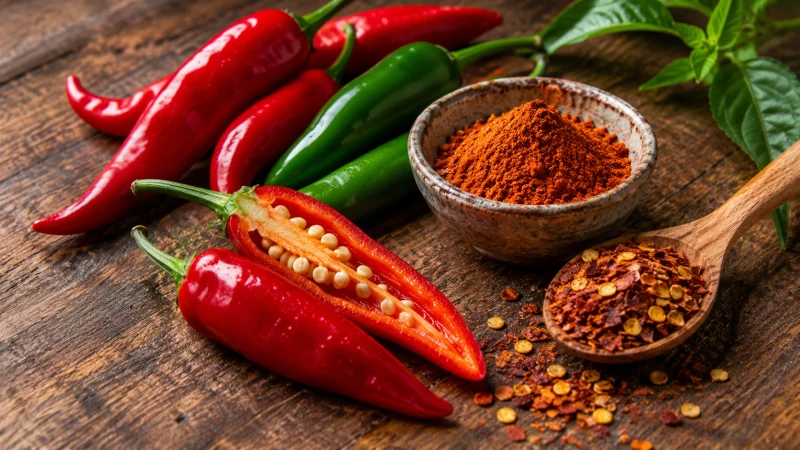
Capsaicin, the compound that makes chili peppers hot, seems to work more on appetite than on calorie burn. A meta-analysis pooling 8 trials and 191 participants found that taking capsaicinoids before a meal cut the calories eaten at that meal by about 74. The studies varied widely, and the authors suggested a minimum dose of about 2 mg was needed [Whiting et al., 2014]. Those trials didn’t measure body weight. In a later 12-week trial, 4 mg a day of capsaicinoids lowered calorie intake, but weight didn’t change significantly, and some participants had stomach upset [NIH ODS, 2026].
What to do: Cooking with chili, cayenne or hot sauce is a reasonable way to make lighter meals more satisfying. Capsaicin capsules haven’t earned a place in a weight-loss plan, and people with reflux or a sensitive stomach may find them hard to tolerate.
Bladderwrack and kelp: the iodine problem
Brown seaweeds such as bladderwrack (Fucus vesiculosus) and kelp have long been sold for weight loss and a “sluggish thyroid” because they contain iodine, which the thyroid uses to make its hormones. The trouble is the dose. Iodine in commercial seaweed ranges from about 16 to nearly 3,000 micrograms per gram, so you can’t tell how much a product delivers [NIH ODS Iodine, n.d.]. The safe upper limit for adults is 1,100 micrograms a day [NIH ODS Iodine, n.d.].
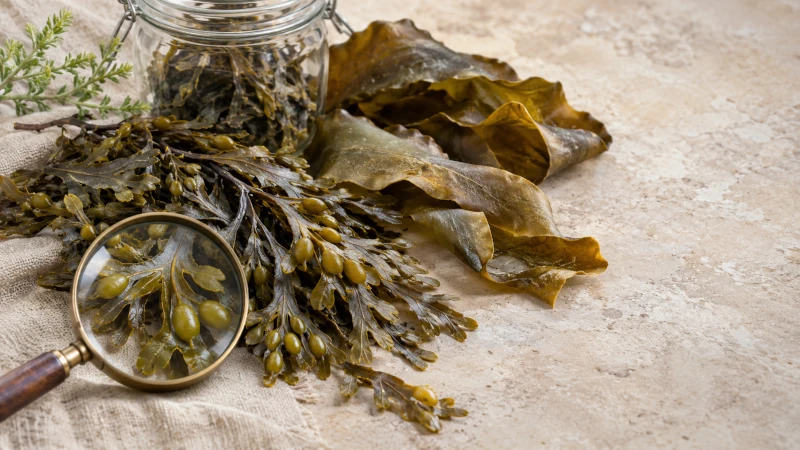
Too much iodine doesn’t speed up a healthy thyroid in a controlled way. It can cause goiter, an underactive thyroid, an overactive thyroid, or thyroid inflammation, and people with autoimmune thyroid disease can react to intakes that are safe for everyone else [NIH ODS Iodine, n.d.]. The National Institute of Diabetes and Digestive and Kidney Diseases warns that kelp and other seaweeds may cause or worsen hypothyroidism, mainly in people with Hashimoto’s disease [NIDDK, n.d.]. High-dose iodine taken with antithyroid medicines such as methimazole can push thyroid function too low [NIH ODS Iodine, n.d.].
What about fucoxanthin, the pigment in brown seaweed? Only one human trial exists, and it tested a product that also contained pomegranate-seed oil, so the results can’t be credited to seaweed. Its safety hasn’t been well studied [NIH ODS, 2026].
What to do: Eating seaweed as part of meals now and then is different from taking concentrated supplements. If you suspect a thyroid problem, get it tested instead of self-treating with seaweed — and if you have thyroid disease or are pregnant, ask your doctor before using any iodine-containing product.
Bitter orange and “fat burner” blends
Bitter orange contains synephrine, a stimulant structurally similar to ephedrine. Its effect on weight is unclear: studies were small, usually tested multi-ingredient products, and disagreed with each other. Abnormal heart rhythms, heart attacks and strokes have been reported in people taking bitter orange products, though most of those products contained several ingredients. The NCAA bans synephrine, and an FDA analysis found illegal synthetic stimulants in several bitter orange products. It may not be safe during pregnancy or breastfeeding [NCCIH, 2024].
That last point applies to the whole category. Ephedra was banned by the FDA after serious harms, and “ephedra-free” products may simply swap in similar stimulants or high doses of caffeine. The FDA has also found weight-loss supplements secretly containing prescription drug ingredients [NCCIH, 2017]. Supplements don’t need FDA approval before they’re sold, so the label may not tell you what’s in the bottle [NIH ODS, 2026].
Diuretic and “detox” herbs: water, not fat
Herbs such as dandelion and juniper have a traditional reputation for increasing urine. If one makes the scale drop overnight, you’ve lost water. Your body replaces it as soon as you drink, and no fat has gone anywhere. Some herbal traditions also recommend multi-day “depurative” cleanses for obesity, gout or skin conditions; there’s no good evidence that these work, and gout in particular needs medical treatment.
If you have kidney disease, heart failure or high blood pressure, or you already take a prescription diuretic, check with your doctor before adding a water-pill herb.
Fiber is a related but different idea. Plants rich in soluble fiber, like psyllium, swell with water in the gut and can help you feel full. That’s an appetite effect, not a metabolic one — useful, but honestly labeled.
What raises the calories you burn
Because resting metabolism tracks muscle mass, the most reliable “metabolism booster” is the one nobody can bottle. Mayo Clinic suggests at least 150 minutes a week of moderate aerobic activity, such as brisk walking, or 75 minutes of vigorous activity, plus strength training for all major muscle groups at least twice a week. More activity — around 300 minutes a week — may help with losing weight or keeping it off [Mayo Clinic, n.d.]. The NIH’s review of weight-loss supplements reaches the same conclusion: diet, fewer calories and physical activity are the basis for lasting weight loss, and the evidence for most supplement ingredients is limited or inconsistent [NIH ODS, 2026].
Small daily movement counts too. Taking stairs, standing more and walking during calls all add to that 100–800-calorie range of non-exercise activity [Mayo Clinic, n.d.]. A cup of green tea or a spicy dinner can sit alongside those habits; it can’t replace them.

Who should avoid metabolism herbs and supplements
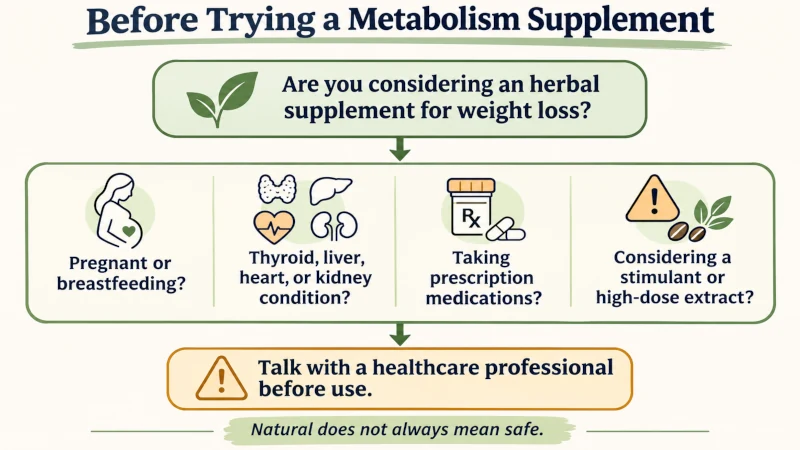
- Pregnant or breastfeeding: Keep caffeine moderate — high intake while breastfeeding can make babies fussy and sleep poorly [NCCIH, 2025]. Avoid bitter orange [NCCIH, 2024]. Don’t self-dose iodine from seaweed; ask your clinician how much you need [NIDDK, n.d.].
- Thyroid disease, or taking thyroid or antithyroid medicine: Avoid kelp, bladderwrack and iodine supplements unless your doctor recommends them [NIH ODS Iodine, n.d.] [NIDDK, n.d.].
- Liver disease: Avoid green tea extract [NIH ODS, 2026].
- Heart disease, high blood pressure or heart rhythm problems: Avoid stimulant products, including bitter orange and high-caffeine blends [NCCIH, 2024] [NIH ODS, 2026].
- Diabetes: Talk to your provider first [NIH ODS, 2026]. Some plants, such as fenugreek, may modestly lower blood sugar, which can add to the effect of diabetes medicines. Herbs should never replace prescribed diabetes treatment.
- Taking prescription medicines: Ask a pharmacist about interactions — green tea alone affects nadolol, atorvastatin and raloxifene [NCCIH, 2025].
- Teenagers, and anyone with a history of an eating disorder: Stimulant and diuretic products are easy to misuse [NCCIH, 2017].
When to see a doctor
See a healthcare professional if you lose weight without trying, or if you notice signs of an underactive thyroid: tiredness, weight gain, feeling cold more easily than others, dry skin or thinning hair, a slower heart rate, or low mood. These symptoms often develop slowly and aren’t specific enough to diagnose on their own, so a blood test is the way to know [NIDDK, n.d.].
Stop the product and seek urgent care if you develop chest pain, a racing or irregular heartbeat, fainting or severe shortness of breath after taking a stimulant supplement, or yellowing of the skin or eyes, dark urine or upper-right belly pain after taking green tea extract or another herbal product.
| HEALTH DISCLAIMER: This article is for general education and is not a substitute for advice, diagnosis or treatment from a qualified healthcare professional. Herbal products and supplements can cause side effects and interact with medicines. Talk with your doctor or pharmacist before using any herb or supplement for weight loss — especially if you are pregnant or breastfeeding, have a thyroid, liver, heart or kidney condition, have diabetes, or take prescription medication. |
Frequently Asked Questions
What is the best herb to speed up metabolism?
Green tea and caffeine-containing plants such as coffee have the most research, but the effect is small — under a kilogram on average in green tea trials lasting about three months [NIH ODS, 2026]. Brewed tea is the safer choice; concentrated extracts have been linked to liver injury [NCCIH, 2025].
Does green tea burn belly fat?
There’s no good evidence that it targets belly fat. In the Cochrane review, green tea preparations produced no clinically meaningful change in weight, and waist measurements showed the same pattern [Jurgens et al., 2012].
Is it safe to take kelp for a slow metabolism?
Not without medical advice. Kelp’s iodine content varies enormously, and too much iodine can make the thyroid underactive or overactive [NIH ODS Iodine, n.d.]. If you think your thyroid is slow, ask for a blood test.
Can herbal diuretics help me lose weight?
They can lower the number on the scale by removing water, but that water returns once you drink. They don’t reduce body fat.
How long do metabolism herbs take to work?
Most green tea trials lasted 12 to 13 weeks, and even then the extra weight loss was small [Jurgens et al., 2012]. If a product promises fast results, treat that as a warning sign — the FDA has found weight-loss supplements spiked with prescription drugs [NCCIH, 2017].
References
- Jurgens TM, Whelan AM, Killian L, Doucette S, Kirk S, Foy E. Green tea for weight loss and weight maintenance in overweight or obese adults. View source
- Mayo Clinic Staff. Metabolism and weight loss: How you burn calories. Mayo Clinic. View source
- National Center for Complementary and Integrative Health. Bitter Orange. View source
- National Center for Complementary and Integrative Health. Green Tea. View source
- National Center for Complementary and Integrative Health. Weight Control. View source
- National Institute of Diabetes and Digestive and Kidney Diseases. Hypothyroidism (Underactive Thyroid). View source
- NIH Office of Dietary Supplements. Dietary Supplements for Weight Loss: View source
- NIH Office of Dietary Supplements. Iodine: Fact Sheet for Health Professionals. View source
- Whiting S, Derbyshire EJ, Tiwari B. Could capsaicinoids help to support weight management? A systematic review and meta-analysis of energy intake data. Appetite. View source


