
If you want to boost your energy levels naturally, the most reliable gains don’t come from a supplement or an energy drink — they come from sleep, movement, food, and water, in roughly that order of impact. The marketing around “natural energy” points at pills and powders, but the strongest evidence sits with everyday habits that cost nothing.
This guide separates what’s well supported from what’s oversold: the handful of changes that consistently help, the foods and nutrients that matter (and when they don’t), an honest read on popular supplements, and the warning signs that mean your tiredness deserves a doctor’s visit rather than a lifestyle tweak.
The habits that boost your energy levels naturally
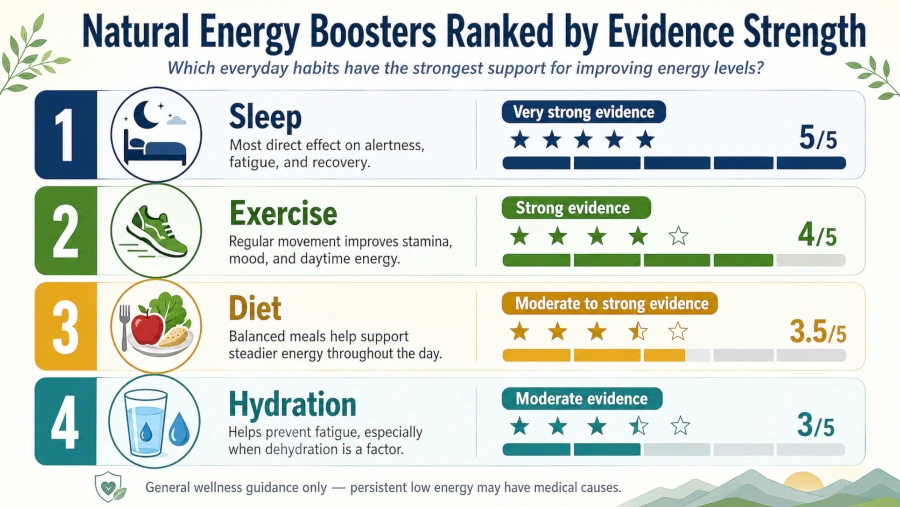
Four habits do most of the work. None are glamorous, which is partly why they get skipped in favor of quick fixes.
Sleep is the foundation
Short sleep is the most common reason healthy people feel wiped out. The CDC and the American Academy of Sleep Medicine say adults need at least seven hours a night, yet in 2024 about 30% of US adults reported getting less [CDC, 2024]. If you run on six hours and wonder why coffee stops working by 2 p.m., this is usually the first thing to fix.
A few changes help more than the rest: keep the same wake-up time every day, including weekends; get bright light soon after waking; and keep the last hour before bed dark, cool, and screen-free [Harvard Health, 2024]. They sound minor. Over a couple of weeks they often outperform any supplement.
Move, even when you don’t feel like it
It seems backwards that spending energy creates more of it, but the research here is unusually consistent. In a University of Georgia trial, 36 sedentary adults with ongoing fatigue did about 20 minutes of exercise three times a week for six weeks. Low-intensity activity — roughly an easy walk — cut their fatigue by about 65% and raised their energy by about 20%, and the benefit wasn’t explained by improved fitness [Puetz et al., 2008]. You feel more energetic well before you get measurably fitter.
So you don’t need a punishing workout. A 10- to 20-minute walk counts, and for this particular goal, gentler sessions beat grinding ones.
Drink enough water
Mild dehydration shows up as tiredness before it shows up as thirst. In controlled studies at the University of Connecticut, losing just over 1% of body weight in fluid — easy on a busy day — increased feelings of fatigue and tension in both women [Armstrong et al., 2012] and men [Ganio et al., 2011]. These were small studies (around 25 people each), so hold the size of the effect loosely — but the direction is clear and the fix is cheap. Most people do fine using thirst and urine color as a guide rather than chasing a fixed glass count.
Eat to steady your blood sugar
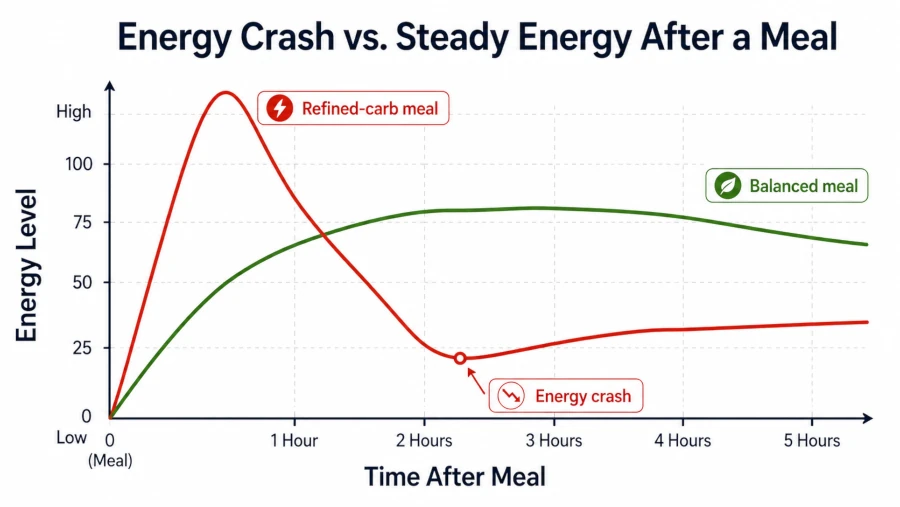
A big, refined-carb meal gives a quick lift and a matching slump. Pairing carbohydrates with protein, fiber, and a little fat slows digestion and smooths the rise and fall. That’s the real mechanism behind “energy foods” — not a magic nutrient, but steadier blood sugar and no mid-afternoon crash [Cleveland Clinic, 2024]. Smaller, more frequent meals suit some people; balanced plates at regular times suit most.
Foods that support steady energy
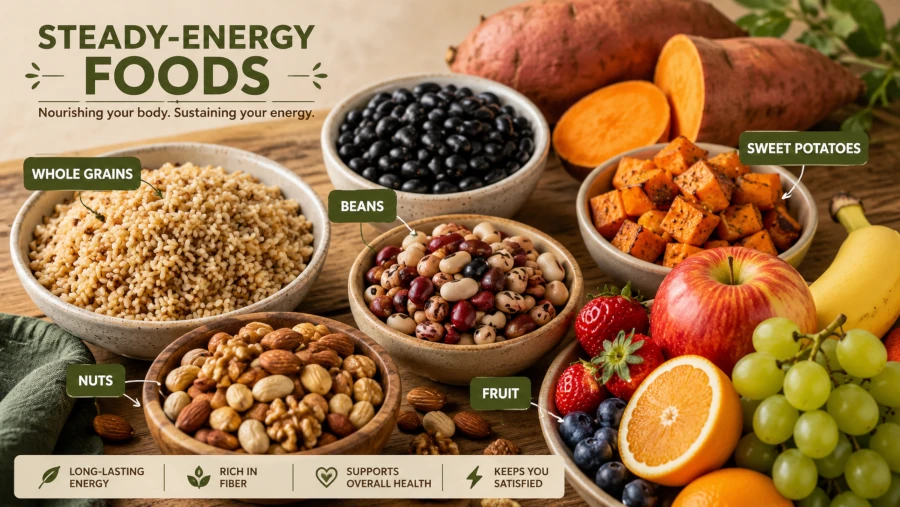
No food delivers a caffeine-style jolt, despite the headlines. What the foods below share is slow-releasing carbohydrate, fiber, or protein that keeps blood sugar steadier through the day.
| Food | Why it helps | An easy way to use it |
| Oats and whole grains | Slow-digesting carbs plus fiber for fuel that lasts | Overnight oats; swap white bread for whole-grain |
| Beans and lentils | Protein, fiber, and complex carbs in one | Add to soups, salads, or grain bowls |
| Sweet potatoes | Complex carbs with fiber, gentler than white potato | Roast as a side a few nights a week |
| Nuts and seeds | Healthy fat and protein that blunt sugar spikes | A small handful as a mid-afternoon snack |
| Fruit with a protein | Natural sugars buffered by fiber and protein | Apple with peanut butter; berries with yogurt |
| Eggs, fish, poultry, dairy | Protein for fullness and steadier energy | Build a meal around one of them |
One thing to cut rather than add: large amounts of added sugar and refined grains. They’re the most reliable cause of the spike-and-crash pattern people blame on “low energy.”
Vitamins and minerals: fix a shortfall, don’t chase a boost
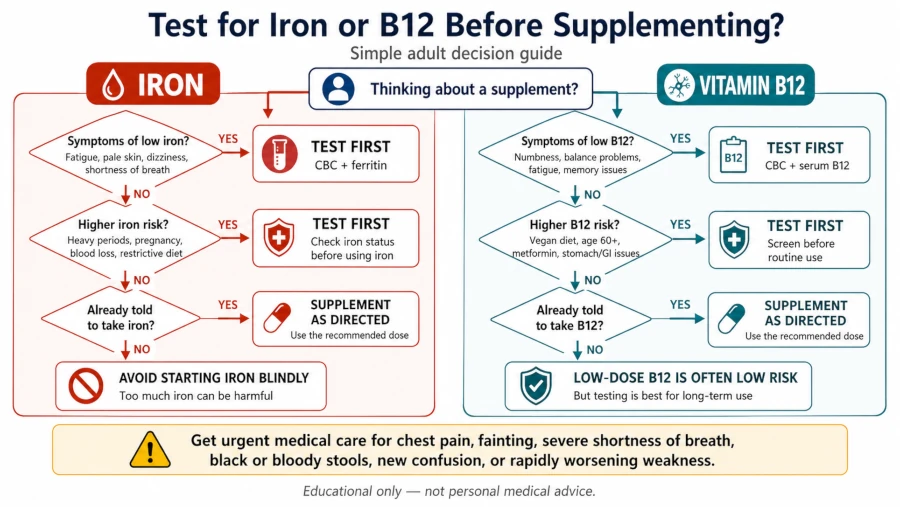
B vitamins, iron, and magnesium genuinely matter for energy — your cells can’t turn food into usable fuel (the molecule ATP) without them [Kennedy, 2016]. But supplement labels gloss over the catch: topping up a nutrient you already have enough of doesn’t add energy. The benefit comes from correcting a real shortfall.
Iron is the clearest example. Iron deficiency — with or without anemia — causes fatigue, weakness, and trouble concentrating, because your blood carries less oxygen [NIH ODS, 2023]. Correcting it can be transformative, but only if you’re actually low. It’s common in people who menstruate, in pregnancy, in vegetarians, and in frequent blood donors. Don’t start iron on a hunch: too much causes constipation and nausea, and people with conditions like hemochromatosis can be harmed by it. Ask for a ferritin blood test first.
Vitamin B12 deficiency causes an anemia that leaves people tired and weak, and it’s more likely if you’re over 60, vegan or vegetarian, or on acid-reducing or diabetes drugs long term [NIH ODS]. As with iron, a supplement helps if you’re deficient and does little if you’re not.
Magnesium supports hundreds of reactions, including energy production, and a true deficiency can contribute to fatigue. Most people can cover their needs through magnesium-rich foods — leafy greens, nuts, seeds, beans, and whole grains — before reaching for a pill.
Caffeine, used well
Caffeine works. It blocks the brain signal that builds sleepiness, which is why a coffee sharpens alertness for a few hours. The trade-offs are predictable: drink it too late and it erodes the sleep you actually need; lean on it daily and tolerance creeps up. Keep it to the morning and early afternoon, and treat it as a tool rather than a foundation. If you need it just to function every day, that’s usually a sleep-debt signal, not a caffeine deficiency.
Supplements and adaptogens: a realistic look
This is where claims outrun evidence. The herbs marketed for energy — ashwagandha, rhodiola, ginseng, maca — are sold with a lot of confidence and studied with a lot less rigor.
Take rhodiola, one of the better-researched options. A systematic review found 11 trials testing it for physical and mental fatigue and concluded the results were contradictory, with most studies carrying a high risk of bias — meaning the apparent benefits may not hold up [Ishaque et al., 2012]. Ashwagandha and ginseng sit in a similar place: some short trials report less fatigue or stress, but the studies are small, the doses and extracts vary, and long-term safety data are thin. None of that makes them useless. It does mean you should expect a modest effect at best and treat dramatic “energy transformation” claims with suspicion.
CoQ10 and B-complex “energy” supplements are popular too. Both take part in energy metabolism, but in well-nourished people without a deficiency there’s little evidence they raise everyday energy.
Side effects, interactions, and who should avoid them
Natural doesn’t mean risk-free. A few cautions worth knowing:
- Ashwagandha can cause stomach upset and drowsiness, may shift thyroid hormone levels, and has been linked in rare cases to liver injury. Avoid it alongside thyroid medication, sedatives, and immunosuppressants.
- Rhodiola can cause jitteriness or irritability in some people.
- Ginseng may lower blood sugar (a concern with diabetes medication) and can interact with blood thinners such as warfarin.
- Iron and other high-dose supplements carry their own risks, as above — test before you treat.
If you’re pregnant or breastfeeding, skip ashwagandha, rhodiola, ginseng, and maca: there isn’t enough safety data, and some are traditionally discouraged in pregnancy. Stop herbal supplements at least two weeks before any surgery, and tell your doctor and pharmacist about everything you take — interactions with prescription drugs are the real hazard. Supplements also aren’t tightly regulated, so quality and dose vary between brands.
What realistic results look like
Set expectations honestly. These changes don’t work like a switch. Better sleep, regular movement, and steadier meals tend to pay off over one to three weeks, not the same afternoon. The gains are cumulative — doing two or three together does more than any one alone. And there’s a ceiling: these habits restore energy you’ve lost to poor routines. They won’t push you above your normal baseline, and they can’t override an untreated medical cause.
When low energy is a medical issue
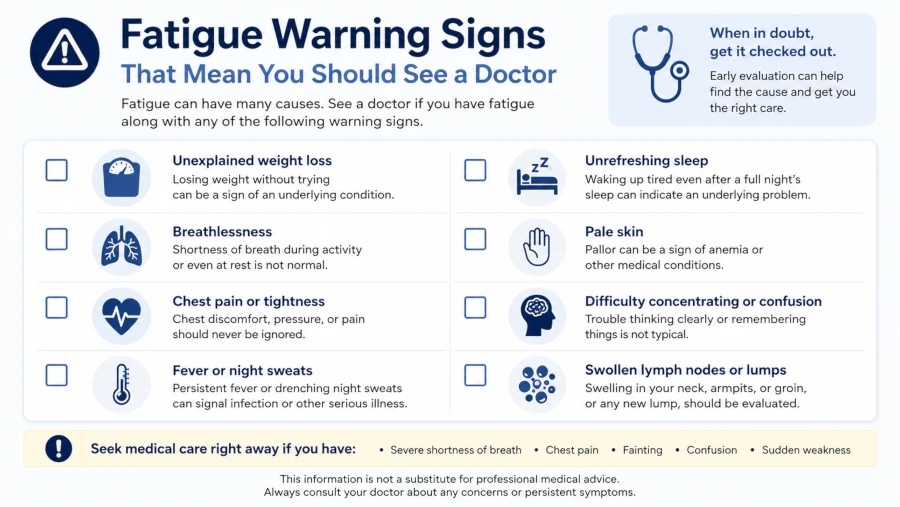
Most everyday tiredness responds to better habits. When it doesn’t, that’s a signal — not a reason to try a stronger supplement.
See a doctor if fatigue:
- lasts more than two to four weeks despite decent sleep and routine,
- comes with unexplained weight loss, shortness of breath, a racing or pounding heart, or pale skin,
- arrives with low mood, loss of interest, or trouble functioning,
- or is severe enough to interrupt work, driving, or daily life.
Persistent fatigue can point to things a lifestyle change won’t fix: iron-deficiency anemia, thyroid problems, sleep apnea, diabetes, depression, or medication side effects — all common, and all treatable once identified.
Seek urgent care for fatigue with chest pain, fainting, severe breathlessness, confusion, or one-sided weakness. These can signal something serious and shouldn’t wait.
| Health disclaimer This article is for general education and is not medical advice. It is not a substitute for diagnosis or treatment from a qualified clinician. Talk to your doctor before starting any supplement or making major changes — especially if you are pregnant or breastfeeding, manage a chronic condition, or take prescription medication. If your symptoms are severe or persistent, seek care promptly. |
Frequently asked questions
What’s the fastest way to feel more energetic right now?
A short walk, a glass of water, and a few minutes of daylight beat a sugary snack, and the lift lasts longer without a crash. Caffeine works for a few hours but borrows against the sleep you’ll need later.
Do energy supplements actually work?
Mostly only when they correct a real deficiency, such as low iron or B12. Adaptogens like rhodiola and ashwagandha show modest, inconsistent effects in small studies. If you’re already well-nourished, expect little from an “energy” pill.
Which vitamin is best for tiredness?
There’s no single answer. Low iron and low B12 are the deficiencies most clearly tied to fatigue, but they help only if you’re actually low — which is worth a blood test rather than a guess.
How long until lifestyle changes improve my energy?
Usually one to three weeks of consistent sleep, movement, and balanced meals — not the same day. The effects build as the habits stack up.
When should I see a doctor about being tired all the time?
If fatigue lasts more than a few weeks despite good sleep, or comes with weight loss, breathlessness, a racing heart, or persistent low mood. Those point to causes a supplement can’t fix.
References
- CDC, National Center for Health Statistics. Short Sleep Duration and Sleep Difficulties Among Adults: United States, 2024. NCHS Data Brief. → View source
- CDC. Sleep: Adults Sleep Facts and Stats. → View source
- Puetz TW, Flowers SS, O’Connor PJ. A randomized controlled trial of the effect of aerobic exercise training on feelings of energy and fatigue in sedentary young adults with persistent fatigue. Psychother Psychosom. 2008;77(3):167–174. → View source
- Armstrong LE, Ganio MS, Casa DJ, et al. Mild dehydration affects mood in healthy young women. J Nutr. 2012;142(2):382–388. → View source
- Ganio MS, Armstrong LE, Casa DJ, et al. Mild dehydration impairs cognitive performance and mood of men. Br J Nutr. 2011;106(10):1535–1543. → View source
- Kennedy DO. B Vitamins and the Brain: Mechanisms, Dose and Efficacy — A Review. Nutrients. 2016;8(2):68. → View source
- NIH Office of Dietary Supplements. Iron: Fact Sheet for Consumers. Updated 2023. → View source
- NIH Office of Dietary Supplements. Vitamin B12: Fact Sheet for Consumers. → View source
- Ishaque S, Shamseer L, Bukutu C, Vohra S. Rhodiola rosea for physical and mental fatigue: a systematic review. BMC Complement Altern Med. 2012;12:70. → View source
- Harvard Health Publishing. 9 tips to boost your energy — naturally. → View source
- Cleveland Clinic. Power Up: 10 Ways To Boost Your Energy Naturally. → View source
