
If you found this page after watching an “ice hack” video, here is the answer first: there is no published clinical trial showing that Alpilean pills, as a product, help people lose weight. The idea the product is built on, that a low “inner body temperature” causes weight gain, doesn’t match what researchers find when they actually measure people. And of its six plant ingredients, none has strong human evidence for weight loss, while one of them, bitter orange, carries real safety questions.
That doesn’t mean everyone who tried it imagined their results. People who start a supplement often change how they eat at the same time. But if you’re deciding whether to spend money on Alpilean, the details matter: which ingredients have any human data, how large the effects were, and who could be harmed.
What Alpilean is, and what it promises
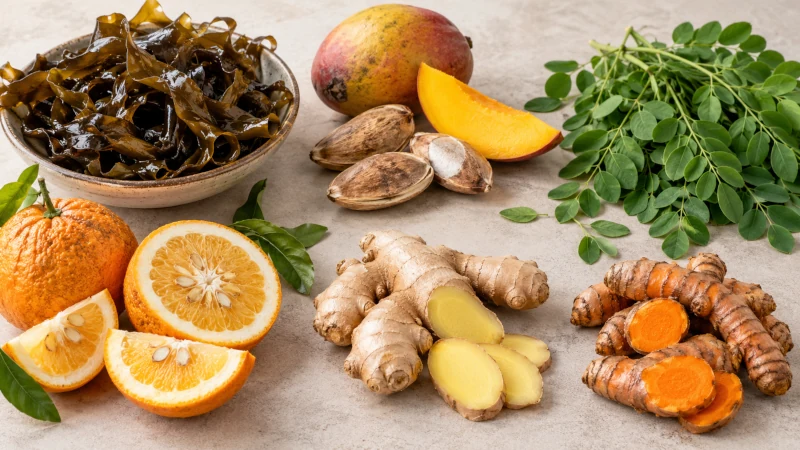
Alpilean is a capsule dietary supplement sold online. Its listed formula is six plant-derived ingredients: golden algae (a source of fucoxanthin), dika nut (African mango seed), drumstick tree leaf (moringa), bigarade orange (bitter orange), ginger root, and turmeric root [Newsweek, 2023]. The sales pitch is that people carrying extra weight have a low inner body temperature, and that this blend raises it so the body burns more calories [Newsweek, 2023].
When nutrition researchers looked at the references the seller cites, they pointed out that the papers were studies of single ingredients, not trials of this combination in one pill [Newsweek, 2023]. We searched as well and could not find a published trial of the finished product. We also couldn’t verify a label listing how much of each ingredient a capsule contains, which makes it impossible to compare a dose of Alpilean with the doses used in research.
The “inner body temperature” claim doesn’t hold up
Everything else about Alpilean rests on this claim, so it deserves a direct test.
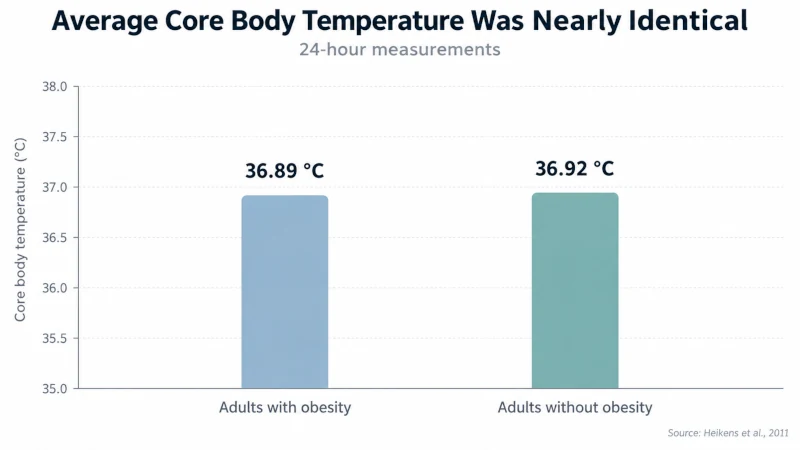
In one U.S. study, adults swallowed wireless capsules that recorded their core temperature continuously for 24 hours. Average temperature was essentially the same in the 46 people with obesity and the 35 without it: 36.89 °C versus 36.92 °C. Their daily temperature curves didn’t differ either. The researchers’ conclusion was that obesity is not generally associated with a lower core body temperature [Heikens, 2011].
A much larger Swiss study of 4,224 adults pointed the other way from the ads. In men and in women past menopause, a higher body temperature went along with a higher BMI and a bigger waist. In women before menopause, there was no clear link once other factors were accounted for [Bastardot, 2019]. According to Newsweek’s reporting, this is the same paper Alpilean’s own marketing has cited [Newsweek, 2023].
So the studies disagree on whether people with obesity run the same temperature or slightly warmer. Neither found them running colder, which is the premise the product needs. An earlier version of this page also claimed that metabolism drops 13% for every degree of lost body temperature. We couldn’t find a source for that number, and it has been removed.
Alpilean pills ingredients: what the research shows
Golden algae (fucoxanthin)
Fucoxanthin is a pigment found in brown seaweed and some algae. Lab and animal studies suggest it may raise energy use and limit fat storage. In people, there is one trial: 110 premenopausal women with obesity took a product combining brown seaweed extract (2.4 mg of fucoxanthin a day) with pomegranate-seed oil for 16 weeks while eating 1,800 calories a day, and they lost more weight than the placebo group [NIH ODS, 2026].
One trial, of a two-ingredient product, can’t tell you what fucoxanthin does alone. The NIH Office of Dietary Supplements calls the research insufficient to draw firm conclusions and notes its safety hasn’t been rigorously studied [NIH ODS, 2026]. We ran into the same gap between what was tested and what is sold when we reviewed Siberian pine nut oil and its appetite claims.
Dika nut (African mango)
Of the six ingredients, this one has the most human data, and it still isn’t much. The best-known trial gave 102 adults with overweight or obesity in Cameroon either 150 mg of an Irvingia gabonensis seed extract or a placebo before lunch and dinner for 10 weeks. The extract group ended with lower weight, body fat, and waist size [NIH ODS, 2026].
The catch, as the Office of Dietary Supplements points out, is that the few trials that exist were small and short, used very different doses, and were all run by the same authors [NIH ODS, 2026]. A systematic review of three trials reached a similar verdict: until better-quality trials exist, African mango can’t be recommended as a weight-loss aid [Onakpoya, 2013].
Reported side effects are mostly mild: headache, trouble sleeping, and gas. There is also one published case of kidney failure in a person who already had chronic kidney disease [NIH ODS, 2026].
Drumstick tree leaf (moringa)
Moringa leaves are a nutritious everyday food in many parts of the world. As a weight-loss ingredient, though, most of the support comes from cells and lab animals. A 2021 systematic review of moringa and obesity included 36 studies, of which only a handful involved people, and those human studies looked at short-term measures like BMI, cholesterol, and blood sugar after meals [Redha, 2021].
A 2026 meta-analysis of randomized trials reported that moringa had no meaningful effect on body weight or BMI, though it did lower blood pressure [Samarin, 2026]. If you take blood pressure medication, that’s one more reason to mention any moringa-containing product to your prescriber.
Bigarade orange (bitter orange)
This is the ingredient to take seriously. Bitter orange fruit contains p-synephrine, a compound structurally similar to ephedrine. After the FDA banned ephedra in supplements in 2004, bitter orange became a common replacement in weight-loss products [NCCIH, 2024].
Whether it helps with weight is unclear. The studies are small, usually test products with several ingredients, and reach conflicting results [NCCIH, 2024]. One review concluded synephrine raises resting metabolic rate and energy use; a separate systematic review called the weight-loss evidence contradictory and weak [NIH ODS, 2026].
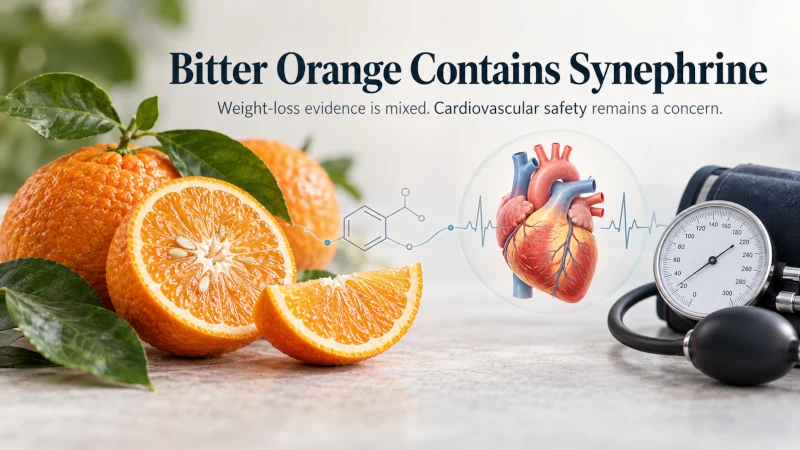
The safety picture is more concerning. Abnormal heart rhythms, heart attacks, and strokes have been reported in people taking bitter orange products, although most of those products contained multiple ingredients, so bitter orange’s exact role is uncertain [NCCIH, 2024]. Studies on heart rate and blood pressure are split. In one, a single 900 mg dose standardized to 54 mg of synephrine raised heart rate and blood pressure for up to five hours in healthy adults; in another, a supplement providing 20 mg of synephrine a day for eight weeks did not [NIH ODS, 2026]. Combining stimulants like this with caffeine can intensify side effects [NIH ODS, 2026].
Quality is a separate problem. When FDA researchers tested 59 bitter orange supplements, only 5 of the 23 that listed a synephrine amount came close to their label, and six contained synthetic stimulants that aren’t legal in supplements [NCCIH, 2024]. Alpilean has been marketed as stimulant-free, yet the NCAA lists synephrine (bitter orange) as a banned stimulant [NCCIH, 2024]. We don’t know how much synephrine a dose of Alpilean delivers.
Turmeric and ginger
Both are familiar kitchen spices, and neither has good evidence as a weight-loss aid. The National Center for Complementary and Integrative Health (NCCIH) says there isn’t enough evidence to definitively conclude that turmeric or curcumin helps any health condition, with the most promising early signals in knee osteoarthritis [NCCIH, 2025a]. Ginger’s best-supported use is easing nausea in pregnancy; weight loss isn’t among the uses NCCIH reports evidence for [NCCIH, 2025b].
At food-like amounts, both are generally well tolerated. Two exceptions: liver damage has been reported with turmeric products designed for higher absorption, and turmeric supplements may be unsafe during pregnancy [NCCIH, 2025a]. Ginger can cause heartburn, stomach upset, and diarrhea [NCCIH, 2025b].
Evidence at a glance
| Ingredient | Human evidence for weight loss | Evidence grade | Main safety note |
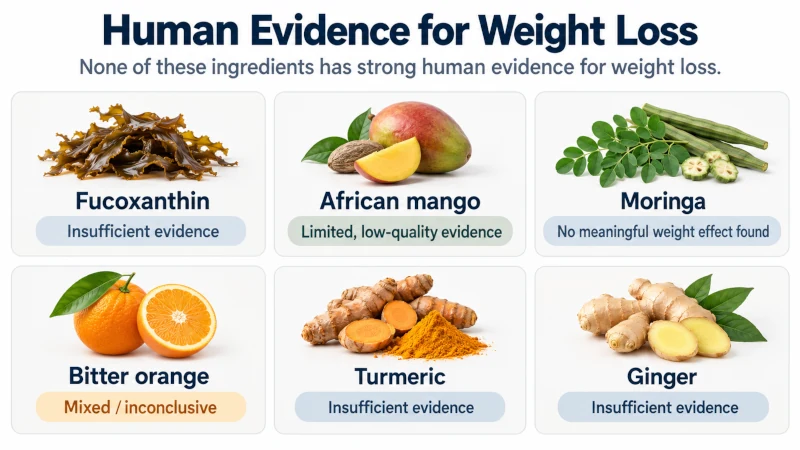
| Golden algae (fucoxanthin) | One 16-week trial, combined with pomegranate-seed oil [NIH ODS, 2026] | Insufficient | Not rigorously studied in people |
| Dika nut (African mango) | Three small, short trials from one research group [NIH ODS, 2026; Onakpoya, 2013] | Limited, low quality | Headache, poor sleep, gas; one kidney-failure case in a person with kidney disease |
| Moringa leaf | Mostly lab and animal work; a meta-analysis found no weight effect [Redha, 2021; Samarin, 2026] | Insufficient (no effect seen) | Lowered blood pressure in trials |
| Bitter orange | Small, conflicting trials, mostly of combination products [NCCIH, 2024] | Mixed / inconclusive | Heart rhythm and blood pressure concerns; mislabeled and adulterated products found; may be unsafe in pregnancy |
| Turmeric | No good evidence for weight [NCCIH, 2025a] | Insufficient | Liver injury with high-absorption forms; may be unsafe in pregnancy |
| Ginger | Not established for weight [NCCIH, 2025b] | Insufficient | Heartburn, stomach upset, diarrhea |
| Alpilean (whole product) | No published trial found | No evidence | Combined effects and doses untested |
Side effects, interactions, and who should avoid Alpilean
Because the product itself hasn’t been studied, nobody can give you a reliable list of its side effects. The best anyone can do is add up its ingredients. That suggests a possibility of stomach upset, heartburn, gas, headache, or trouble sleeping [NCCIH, 2025b; NIH ODS, 2026]. The more serious risks trace mainly to bitter orange (heart rate and blood pressure) and to concentrated turmeric (the liver) [NCCIH, 2024; NCCIH, 2025a].
No one has tested this blend alongside common medications. NCCIH advises anyone taking any medicine to talk with a health care provider before using bitter orange, turmeric, or ginger, because some herbs and medicines interact in harmful ways [NCCIH, 2024; NCCIH, 2025a; NCCIH, 2025b]. Be especially careful about stacking Alpilean with coffee, energy drinks, pre-workout powders, or other “fat burners,” since caffeine can amplify the effects of stimulants such as synephrine [NIH ODS, 2026].
Skip Alpilean if you…
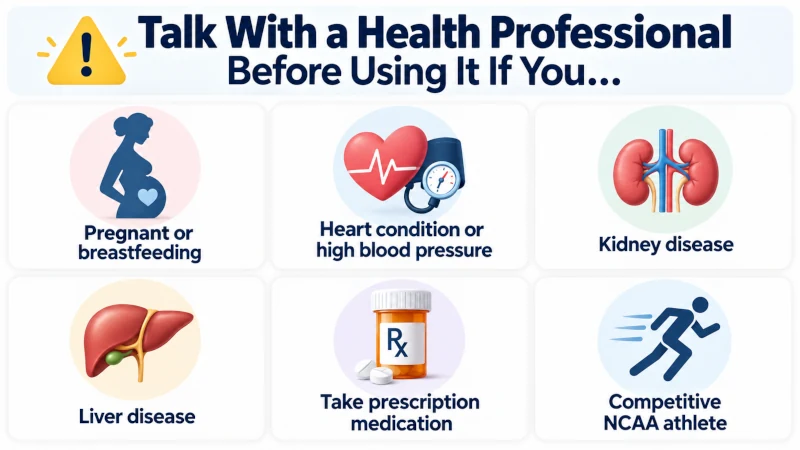
- are pregnant or breastfeeding. Bitter orange may not be safe in either situation and might reduce milk production, and turmeric supplements may be unsafe in pregnancy [NCCIH, 2024; NCCIH, 2025a].
- have heart disease, an irregular heartbeat, or high blood pressure [NCCIH, 2024; NIH ODS, 2026].
- have chronic kidney disease [NIH ODS, 2026].
- have liver disease or have had liver trouble with a turmeric product [NCCIH, 2025a].
- take prescription medication, especially for diabetes, blood pressure, or heart rhythm, unless your prescriber or pharmacist has reviewed it [NIH ODS, 2026].
- compete in NCAA sports, which bans synephrine [NCCIH, 2024].
- are under 18. There is no safety data on this product in teenagers or children.
Marketing claims to check before you buy
“FDA approved.” The FDA does not approve dietary supplements for safety or effectiveness, and many can be sold without even notifying the agency. Being made in an FDA-registered facility doesn’t mean the facility or the product is approved, either [FDA, 2026]. The earlier version of this page repeated an “FDA-approved facilities” claim. It was wrong.
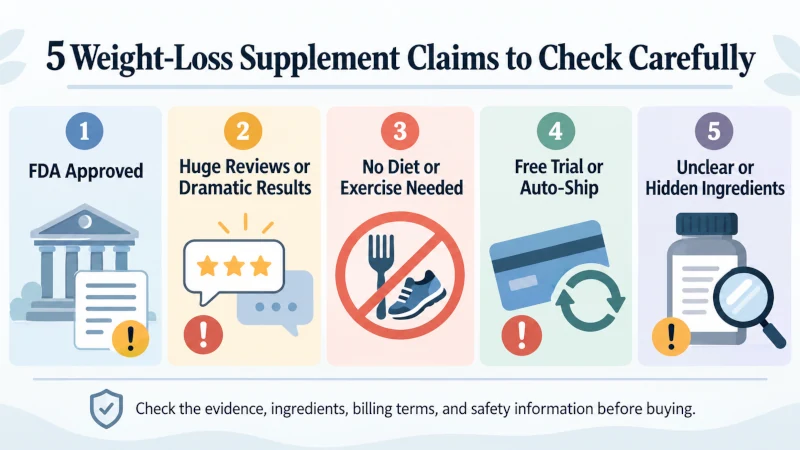
Huge customer numbers and star ratings. Figures like “92,000 customers” and “up to 34 pounds in three months” come from the seller, and we couldn’t verify them. The Federal Trade Commission warns that some marketers write or buy glowing reviews and use stock or altered before-and-after photos [FTC, 2025].
“No diet or exercise needed.” According to the FTC, there’s no way to lose weight without a sensible diet and regular exercise, and claims that a pill alone will do it are false [FTC, 2025].
“Free” trials and auto-ship. The FTC says many people who signed up for free trials of weight-loss products ended up billed for recurring shipments they didn’t want [FTC, 2025]. Read the billing terms before you enter a card number.
Hidden ingredients. Across the category, weight-loss supplements are a recurring source of products tainted with undeclared drugs; they made up 27% of the most serious class of FDA supplement recalls between 2004 and 2012 [NIH ODS, 2026; FTC, 2025]. That is a risk with the category, not a finding about Alpilean specifically.
What actually helps
Health experts agree that changing your eating pattern, eating fewer calories, and moving more are the basis of long-term weight loss [NIH ODS, 2026]. It’s less exciting than a capsule, but it’s where the measurable results are. For specifics, our guide to 12 foods that boost your metabolism puts numbers on what food can and can’t do for your metabolic rate. If your midsection is the concern, how to lose stubborn belly fat without surgery and how to get a flat stomach cover the habits with real evidence behind them.

If your doctor has mentioned prediabetes, the lifestyle steps that bring blood sugar levels down have far stronger trial support than any ingredient in this formula. And if you’ve made real changes and the scale still won’t move, a clinician can check for medical causes and talk through prescription options.
When to talk to a doctor
Talk with your doctor or pharmacist before starting any weight-loss supplement if you take prescription medicine or have high blood pressure, diabetes, or liver or heart disease [NIH ODS, 2026]. If you’re already taking Alpilean:
- Call 911 for chest pain or pressure, fainting, severe shortness of breath, or signs of a stroke such as face drooping, arm weakness, or trouble speaking.
- Stop and call your doctor promptly for a racing or irregular heartbeat, new high blood pressure readings, or possible signs of liver damage: fatigue, nausea, poor appetite, dark urine, or yellowing skin or eyes [NCCIH, 2025a].
- Book a visit if you’re losing weight without trying, or gaining weight despite genuine changes. Both can point to a medical problem a supplement won’t fix.
| Health Disclaimer: This article is general health information, not medical advice, and it can’t account for your history, medications, or conditions. Alpilean is a dietary supplement, not a treatment for obesity or any other disease, and the FDA does not review supplements for safety or effectiveness before they are sold. Talk with your doctor, pharmacist, or a registered dietitian before using any weight-loss supplement, especially if you are pregnant or breastfeeding, take prescription medication, or have heart, kidney, liver, or blood pressure problems. Stop using it and seek care if you notice chest pain, a racing or irregular heartbeat, or signs of liver trouble, and call 911 in an emergency. |
Frequently Asked Questions
Do Alpilean pills work?
There’s no published trial of Alpilean itself, so there’s no direct evidence that it works [Newsweek, 2023]. Of its six ingredients, only African mango has more than a single human weight-loss trial, and those trials were small and of low quality [NIH ODS, 2026].
Is Alpilean FDA approved?
No. The FDA doesn’t approve dietary supplements for safety or effectiveness, and a factory being registered with the FDA isn’t an approval of the factory or its products [FDA, 2026].
What are the side effects of Alpilean?
The product hasn’t been studied, so its side effects aren’t documented. Based on its ingredients, stomach upset, heartburn, headache, and poor sleep are plausible. Bitter orange has been linked to heart rhythm and blood pressure problems, and high-absorption turmeric to liver injury [NCCIH, 2024; NCCIH, 2025a; NIH ODS, 2026].
Does the “ice hack” for weight loss work?
The “ice hack” is a marketing name for taking Alpilean; it has nothing to do with ice [Newsweek, 2023]. Its premise, that people with obesity run cold, isn’t supported: careful measurements found no lower core temperature with obesity [Heikens, 2011].
Is Alpilean stimulant-free?
It’s marketed that way, but it contains bitter orange, a source of synephrine, which the NCAA lists as a banned stimulant [NCCIH, 2024]. How much synephrine a dose contains isn’t something we could verify.
Can I take Alpilean while pregnant or breastfeeding?
It isn’t a good idea. Bitter orange may be unsafe in pregnancy and while breastfeeding, and turmeric supplements may be unsafe in pregnancy [NCCIH, 2024; NCCIH, 2025a]. Talk with your obstetric clinician about safer approaches.
References
- National Institutes of Health, Office of Dietary Supplements. Dietary Supplements for Weight Loss — Fact Sheet for Health Professionals. View source
- National Center for Complementary and Integrative Health. Bitter Orange: Usefulness and Safety. View source
- National Center for Complementary and Integrative Health. Turmeric: Usefulness and Safety. View source
- National Center for Complementary and Integrative Health. Ginger: Usefulness and Safety. View source
- U.S. Food and Drug Administration. Is It Really ‘FDA Approved’? View source
- Federal Trade Commission, Consumer Advice. The Truth Behind Weight Loss Ads. View source
- Heikens MJ, Gorbach AM, Eden HS, Savastano DM, Chen KY, Skarulis MC, Yanovski JA. Core body temperature in obesity. Am J Clin Nutr. 2011;93(5):963–967. doi:10.3945/ajcn.110.006270. PMID 21367952. View source
- Bastardot F, Marques-Vidal P, Vollenweider P. Association of body temperature with obesity. The CoLaus study. Int J Obes. 2019;43:1026–1033. doi:10.1038/s41366-018-0218-7. View source
- Onakpoya I, Davies L, Posadzki P, Ernst E. The efficacy of Irvingia gabonensis supplementation in the management of overweight and obesity: a systematic review of randomized controlled trials. J Diet Suppl. 2013;10(1):29–38. doi:10.3109/19390211.2012.760508. PMID 23419021. View source
- Ali Redha A, Perna S, Riva A, et al. Novel insights on anti-obesity potential of the miracle tree, Moringa oleifera: a systematic review. J Funct Foods. 2021;84:104600. doi:10.1016/j.jff.2021.104600. View source
- Samarin MM, Sheikhhossein F, Khalilkhaneh AH, et al. The effect of Moringa oleifera on body weight and blood pressure: a systematic review and meta-analysis of randomized controlled trials. Food Sci Nutr. 2026;14(5). doi:10.1002/fsn3.71899. View source
- Thomson J. ‘Ice Hack’ Weight Loss Supplements ‘Not Convincing,’ Dieticians Say. Newsweek. January 31, 2023. View source


