
GlucoTrust is a capsule supplement sold online for “healthy blood sugar,” and the honest answer to whether it works is that nobody knows. The finished product has never been tested in a published clinical trial, and the seller doesn’t print how much of each ingredient is inside [BuyerGuard Health, 2026]. A few of its ingredients have been studied on their own, and two of them — chromium and gymnema — show small effects in people with type 2 diabetes. That’s a long way from proof that this capsule will do anything for you.
If you’re reading a GlucoTrust review because your blood sugar is high, start here: no supplement has evidence strong enough to replace diabetes treatment, and some can make medication-related lows more likely [NCCIH, 2023]. The rest of this page covers what’s actually on the ingredient list, how strong the research is for each one, and the safety issues most GlucoTrust pages leave out.
What GlucoTrust Is (and What the Seller Tells You)
GlucoTrust is sold in bottles of 30 capsules through affiliate websites. The seller’s current order page says to take one capsule a day before bed and ties the formula to deeper sleep; older label artwork from an earlier bottle said one capsule daily with food. When BuyerGuard Health checked on September 28, 2026, one bottle cost $69 plus shipping, with discounts for three or six bottles, and a 60-day guarantee that requires you to mail the product back at your own cost before a refund [BuyerGuard Health, 2026].
Who makes it is less clear than it should be. Older labels named Maximum Edge Nutrition, but the current seller pages name no company at all, and the seller’s own terms say its claims “have not been clinically proven or evaluated by the FDA” [BuyerGuard Health, 2026]. When we checked glucotrust.com on October 16, 2026, the domain was listed for sale. None of this proves the product is bad. It does mean you’re buying something with less accountability than a typical store-brand supplement.
GlucoTrust Ingredients and the Evidence Behind Each One
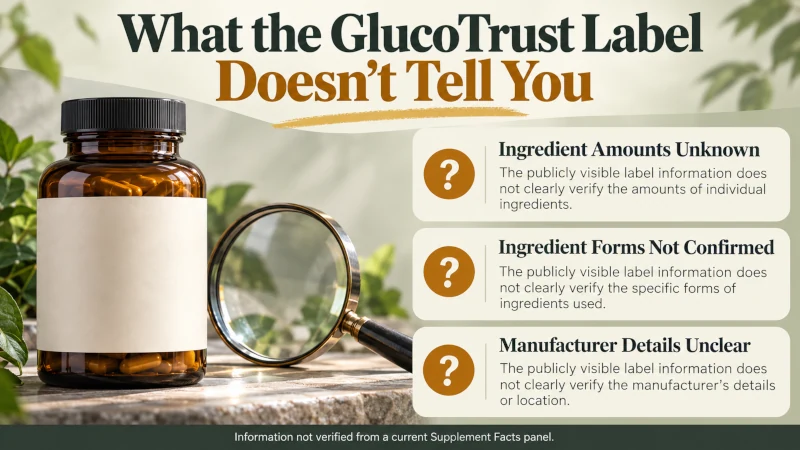
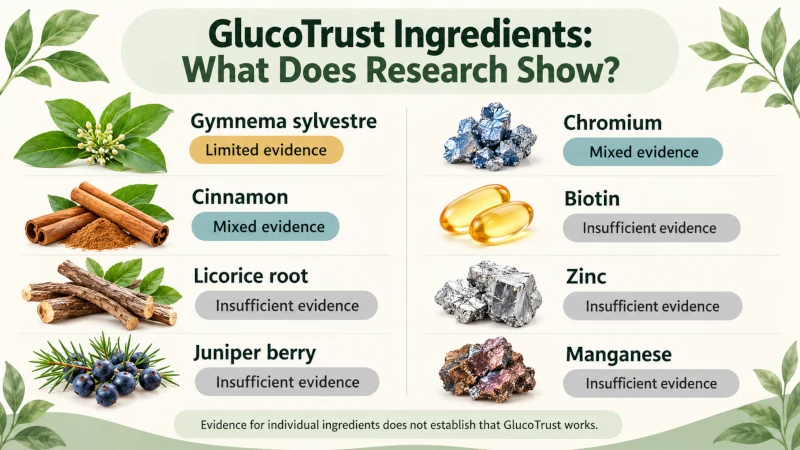
The seller names eight ingredients — gymnema sylvestre, biotin, chromium, manganese, licorice root, cinnamon, zinc and juniper berries — plus “a blend of 15 herbs” it doesn’t identify. There is no Supplement Facts panel on the current sales pages, so the amounts, forms and cinnamon species are unknown [BuyerGuard Health, 2026]. That matters: the studies below used specific doses, and there’s no way to tell whether a GlucoTrust capsule contains anything close.
| Ingredient | Human evidence for blood sugar | Main safety point |
| Gymnema sylvestre | Limited. Small, mostly older studies in type 2 diabetes; effectiveness not established | Rare reported liver injury; may add to diabetes medicines |
| Chromium | Mixed. Slight drops in fasting glucose and HbA1c in diabetes; clinical value unclear; no benefit without diabetes | Low blood sugar risk with insulin or metformin; reduces levothyroxine absorption |
| Cinnamon | Mixed. Lower fasting glucose in some trials, no clear HbA1c change | Cassia type contains coumarin — a liver concern for sensitive people |
| Licorice root | Insufficient. Not enough quality evidence for any condition | Glycyrrhizin can cause irregular heartbeat; risky with high blood pressure, heart or kidney disease |
| Biotin | Insufficient for blood sugar | Can cause falsely high or low lab results, including heart and thyroid tests |
| Zinc | Insufficient evidence reviewed for this page | Adult upper limit 40 mg/day from all sources |
| Manganese | Insufficient | Adult upper limit 11 mg/day from all sources |
| Juniper berry | Insufficient — no human blood-sugar trials found | Safety at supplement doses not established in the sources reviewed |
| “Blend of 15 herbs” | Cannot be assessed — ingredients not named | Unknown |
Sources for the table are cited in the sections that follow.
Gymnema sylvestre
Gymnema is a climbing vine used in Ayurvedic medicine, and its leaves contain compounds that temporarily blunt the taste of sweetness. A 2021 meta-analysis pooled 10 studies with 419 people with type 2 diabetes and found lower fasting glucose, post-meal glucose and HbA1c after supplementation [Phytother Res, 2021]. The catch is in how that was measured: results were compared with participants’ own starting values, not with a placebo group, which tends to inflate apparent benefits.
The NIH’s LiverTox database sums up the human trials as showing mild drops in fasting glucose, with overall effectiveness for diabetes not demonstrated. It also notes that gymnema products are poorly standardized, long-term safety isn’t well documented, and there have been rare reports of liver injury, though usually with weak attribution to the herb itself [LiverTox, 2024].
Chromium
Chromium has the most research of anything on the list, and it’s genuinely mixed. A 2019 review summarized by the NIH Office of Dietary Supplements covered 58 trials and found chromium lowered fasting glucose and HbA1c slightly in people with diabetes, but the clinical significance is unclear. Supplements don’t appear to help people without diabetes, and the American Diabetes Association has said the evidence is too weak to recommend chromium for blood sugar control [ODS, 2022].
An older systematic review found an average HbA1c improvement of about 0.6 percentage points in type 2 diabetes — but larger effects showed up mostly in poor-quality studies [Balk et al., 2007]. The FDA allows chromium picolinate only a heavily qualified claim, describing any link to reduced diabetes risk as “highly uncertain” [ODS, 2022].
Cinnamon
A meta-analysis of 10 randomized trials (543 people with type 2 diabetes) found cinnamon doses of 120 mg to 6 g a day lowered fasting glucose by about 25 mg/dL, but did not significantly change HbA1c, the longer-term measure doctors care most about. The trials varied so much that the authors couldn’t say what dose or duration might help [Allen et al., 2013]. NCCIH’s position is blunter: it’s unclear whether cinnamon supplements help diabetes at all, partly because many studies don’t say which cinnamon species was used [NCCIH, 2024].
Species matters for safety too. Cassia cinnamon, the most common type in North America, contains coumarin, which can be a problem for people with liver disease when taken in larger amounts over time [NCCIH, 2024]. GlucoTrust doesn’t say which kind it uses.
Licorice root
Licorice is the ingredient that most deserves a closer look, and it’s the one sales pages tend to praise. NCCIH says there isn’t enough high-quality evidence to support licorice for any health condition. Its compound glycyrrhizin can cause serious effects, including irregular heartbeat and cardiac arrest, especially in large amounts or with long-term use — and even small amounts have been linked to severe reactions in people with high blood pressure, heart or kidney conditions, or a high-salt diet [NCCIH, 2025].
Deglycyrrhizinated licorice (DGL), which has the glycyrrhizin removed, appears much safer. GlucoTrust doesn’t disclose which form it uses or how much is in each capsule. Licorice can also interact with corticosteroids [NCCIH, 2025].
Biotin, zinc, manganese and juniper berry
Biotin is a B vitamin, and the main practical concern is not its effect on blood sugar but on lab tests. Biotin above recommended intakes can produce falsely high or low results on common blood tests, including thyroid tests and troponin, a test used to diagnose heart attacks. The FDA has reported a death linked to a falsely low troponin result in someone taking high-dose biotin [ODS, 2022]. If you take any biotin-containing supplement, tell whoever orders your bloodwork.
Zinc and manganese are essential minerals with well-defined adult upper limits: 40 mg a day for zinc and 11 mg a day for manganese, counting food, drinks and supplements together [ODS Zinc; ODS Manganese]. Because GlucoTrust doesn’t disclose amounts, there’s no way to know how close it gets you if you also take a multivitamin. Our guide to foods rich in zinc covers how much most people already get from diet. We found no human trials of juniper berry for blood sugar.
Does GlucoTrust Work?
There is no published evidence that it does. BuyerGuard Health searched PubMed, Europe PMC, Crossref and ClinicalTrials.gov and found no trial of the finished product [BuyerGuard Health, 2026]. Research on individual ingredients can’t fill that gap, for two reasons: the doses in GlucoTrust are unknown, and an ingredient that helps at 400 mg may do nothing at 40 mg.
The broader picture isn’t encouraging either. NCCIH’s review of diabetes supplements finds weak evidence of possible benefit for a few — chromium, cinnamon and berberine among them — but small, inconsistent studies and “no clear conclusions.” For most supplements, there’s no evidence of benefit at all, and NCCIH says there’s no reliable evidence that any herbal supplement can control diabetes [NCCIH, 2023].
Realistic expectations, then: if GlucoTrust contains meaningful amounts of chromium and gymnema, a small nudge in fasting glucose for someone with type 2 diabetes is possible. A noticeable change in how you feel, weight loss, better sleep or “balanced hormones” — all claims on the sales page — have no supporting evidence that we could find.
Side Effects and Drug Interactions
“No side effects because it’s natural” appears on many GlucoTrust promotions. The ingredient research says otherwise:
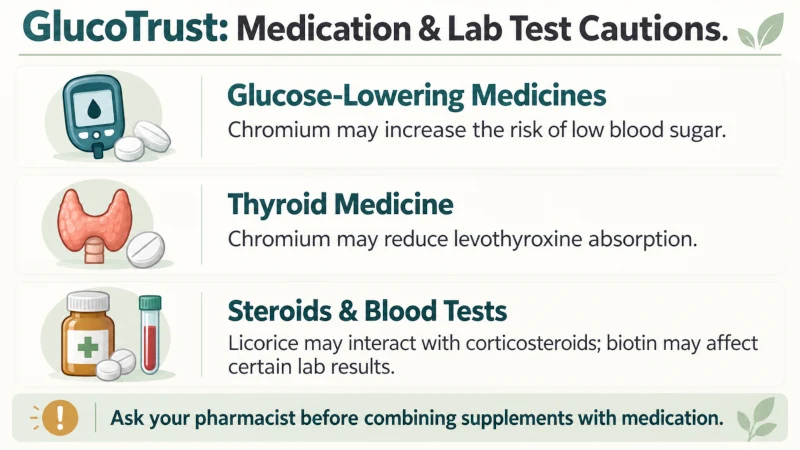
- Low blood sugar with diabetes medicines. Chromium may increase insulin sensitivity and could raise the risk of hypoglycemia with insulin, metformin or other glucose-lowering drugs [ODS, 2022]. Herbal supplements such as cinnamon can also cause unwanted effects when combined with diabetes drugs [NCCIH, 2023].
- Thyroid medication. Taking chromium at the same time as levothyroxine reduced levothyroxine absorption in a small study [ODS, 2022].
- Steroids and heart rhythm. Licorice interacts with corticosteroids, and glycyrrhizin can disturb heart rhythm [NCCIH, 2025].
- Misleading lab results from biotin, as described above [ODS, 2022].
- Digestive upset and headache. Gymnema side effects can include nausea, stomach discomfort, diarrhea, headache and rash [LiverTox, 2024]; chromium supplements may cause stomach pain and bloating [NCCIH, 2023].
- Kidney and liver concerns. Kidney damage has been linked to some diabetes supplements — a particular worry because diabetes is the leading cause of kidney disease [NCCIH, 2023]. Rare liver injury has been reported with gymnema [LiverTox, 2024].
Who Should Skip GlucoTrust
Given the unknown doses, these groups have the most to lose and should not take GlucoTrust without a clinician’s explicit go-ahead — and in most cases shouldn’t take it at all:
- People who are pregnant or breastfeeding. Large amounts of licorice in pregnancy are considered unsafe and have been linked to earlier delivery; little is known about licorice during breastfeeding [NCCIH, 2025]. Larger amounts of Ceylon cinnamon in pregnancy are also considered unsafe [NCCIH, 2024].
- Anyone with high blood pressure, heart disease or kidney disease, because of glycyrrhizin in licorice [NCCIH, 2025].
- People with liver disease (cassia cinnamon, gymnema) [NCCIH, 2024; LiverTox, 2024].
- Anyone taking insulin, a sulfonylurea, metformin or levothyroxine, unless their prescriber is monitoring them [ODS, 2022].
- People with upcoming blood tests, because of biotin [ODS, 2022].
Older adults on several medicines are especially exposed to the low-blood-sugar risk; our guide to type 2 diabetes in seniors explains why. And the most important point for everyone: never take GlucoTrust, or any supplement, instead of prescribed diabetes treatment [NCCIH, 2023].
When to Call Your Doctor — and When to Get Help Now
Talk to your doctor or pharmacist before starting GlucoTrust if you have diabetes, prediabetes, or take any regular medication. Bring the bottle, or a screenshot of the sales page, so they can see the ingredient list.
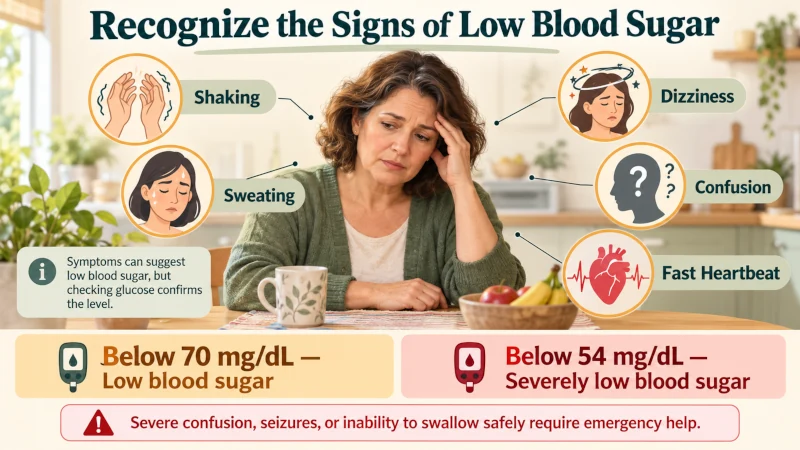
If you take a glucose-lowering medicine, know the signs of a low. Blood sugar below 70 mg/dL is considered low, and symptoms can include a fast heartbeat, shaking, sweating, anxiety, irritability or confusion, dizziness and hunger. Below 54 mg/dL is severe — you may faint, have a seizure or need someone else to treat you [CDC, 2024]. Our hypoglycemia food list shows exactly what to eat to bring a low back up.
| Get urgent help if: Someone is confused, having a seizure, or too unwell to treat a low themselves — call 911 or your local emergency number [CDC, 2024]. You notice yellowing of the skin or eyes, unusual fatigue or loss of appetite after starting a supplement. These were the symptoms in the documented gymnema liver-injury case [LiverTox, 2024]. Stop the product and contact a doctor promptly. You develop a racing, pounding or irregular heartbeat, which licorice’s glycyrrhizin can cause [NCCIH, 2025]. For what counts as dangerously high blood sugar, see our blood sugar levels guide. |
What Actually Moves Blood Sugar
The evidence for lifestyle change is far stronger than for any capsule. A 2019 review of seven studies with more than 4,000 participants found that programs combining weight loss, more physical activity and a fiber-rich diet lower in saturated fat reduced the risk of developing type 2 diabetes, with benefits lasting years after the program ended. For people with prediabetes, sustained programs like these can return blood sugar to normal [NCCIH, 2023].

That means the $69 a month is probably better spent on food. Our list of diabetic-friendly foods that help control blood sugar is a practical place to start. If you’re still curious about chromium or gymnema, ask your doctor about a single-ingredient product with the dose printed on the label — at least then you and your care team know what you’re taking.
How to Spot Misleading Diabetes-Supplement Marketing
In 2021 the FDA and FTC sent warning letters to 10 companies selling supplements with diabetes claims. Under federal law, any product intended to cure, treat, mitigate or prevent disease is a drug — even if it’s labeled a dietary supplement — and the FDA had not evaluated those products for effectiveness, dosing, interactions or side effects [FDA, 2021]. GlucoTrust was not among them, and we found no FDA warning letter naming it.
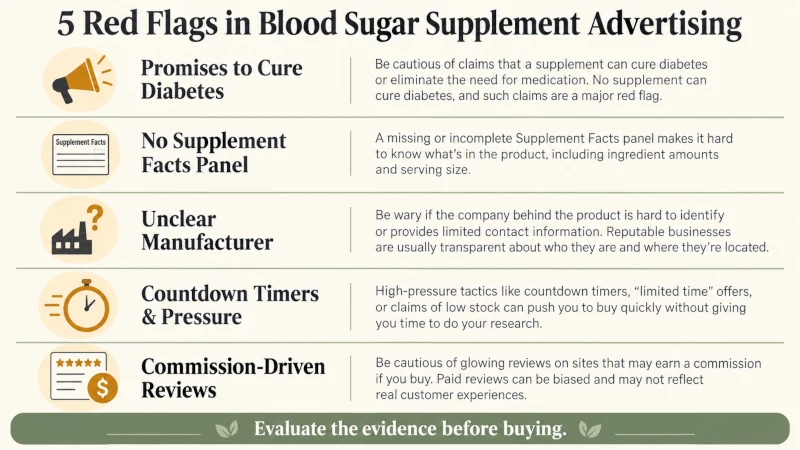
NCCIH flags phrases such as “natural diabetes cure” and “replace your diabetes medicine” as signs of illegally marketed products [NCCIH, 2023]. Other warning signs worth noticing: no named manufacturer, no Supplement Facts panel, countdown timers and “today only” prices, and reviews that appear only on sites earning a commission.
| HEALTH DISCLAIMER: This article is for general information and education. It is not medical advice and is not a substitute for diagnosis or treatment from a qualified healthcare professional. GlucoTrust is a dietary supplement; it has not been evaluated by the FDA to diagnose, treat, cure or prevent any disease. Do not start, stop or change any diabetes medication, including insulin, based on this page. Talk to your doctor or pharmacist before taking any supplement, especially if you are pregnant or breastfeeding, have high blood pressure, heart, kidney or liver disease, or take prescription medicines. If you have signs of severe low blood sugar, call emergency services. Natural Health Message may receive compensation from some companies mentioned on this site. See our Advertising Disclosure. |
Frequently Asked Questions
Is GlucoTrust FDA approved?
No. Dietary supplements are not approved by the FDA before they’re sold, and GlucoTrust’s own terms say its claims have not been clinically proven or evaluated by the FDA [BuyerGuard Health, 2026; NCCIH, 2025].
Can I take GlucoTrust with metformin or insulin?
Only with your prescriber’s knowledge. Chromium may add to the glucose-lowering effect of metformin and insulin, raising the risk of a low [ODS, 2022], and GlucoTrust doesn’t disclose how much chromium it contains.
Does GlucoTrust contain berberine?
Not according to the seller’s current order page, which names gymnema, biotin, chromium, manganese, licorice root, cinnamon, zinc and juniper berry [BuyerGuard Health, 2026]. Some reviews online list berberine, but it isn’t among the ingredients the seller names.
How long does GlucoTrust take to work?
There’s no data to answer that, because the product hasn’t been studied. Ingredient trials ran from several weeks to several months [Allen et al., 2013; ODS, 2022]. If you try it, check your readings and HbA1c with your care team rather than judging by how you feel.
Is GlucoTrust legit?
It appears to be a real product that ships, but several things are worth weighing: the current sales pages name no manufacturer, no Supplement Facts panel is published, refunds require returning the product at your expense, and look-alike sites exist [BuyerGuard Health, 2026]. We can’t verify the quality of what’s in the bottle.
References
- BuyerGuard Health. GlucoTrust Review, Price & Buying Guide. View source
- National Center for Complementary and Integrative Health. Diabetes and Dietary Supplements: What You Need To Know. View source
- U.S. Food and Drug Administration. FDA and FTC Send Warning Letters to 10 Companies for Illegally Selling Dietary Supplements Claiming to Treat Diabetes. View source
- NIH Office of Dietary Supplements. Chromium: Fact Sheet for Health Professionals. View source
- Balk EM, Tatsioni A, Lichtenstein AH, Lau J, Pittas AG. Effect of chromium supplementation on glucose metabolism and lipids: a systematic review of randomized controlled trials. Diabetes Care. View source
- Allen RW, Schwartzman E, Baker WL, Coleman CI, Phung OJ. Cinnamon use in type 2 diabetes: an updated systematic review and meta-analysis. Ann Fam Med. View source
- National Center for Complementary and Integrative Health. Cinnamon: Usefulness and Safety. View source
- The effect of Gymnema sylvestre supplementation on glycemic control in type 2 diabetes patients: View source
- LiverTox: Clinical and Research Information on Drug-Induced Liver Injury. Gymnema. National Institute of Diabetes and Digestive and Kidney Diseases. View source
- National Center for Complementary and Integrative Health. Licorice Root: Usefulness and Safety. View source
- NIH Office of Dietary Supplements. Biotin: Fact Sheet for Health Professionals. View source
- NIH Office of Dietary Supplements. Manganese: Fact Sheet for Consumers. View source
- NIH Office of Dietary Supplements. Zinc: Fact Sheet for Consumers. View source
- Centers for Disease Control and Prevention. Low Blood Sugar (Hypoglycemia). View source


