
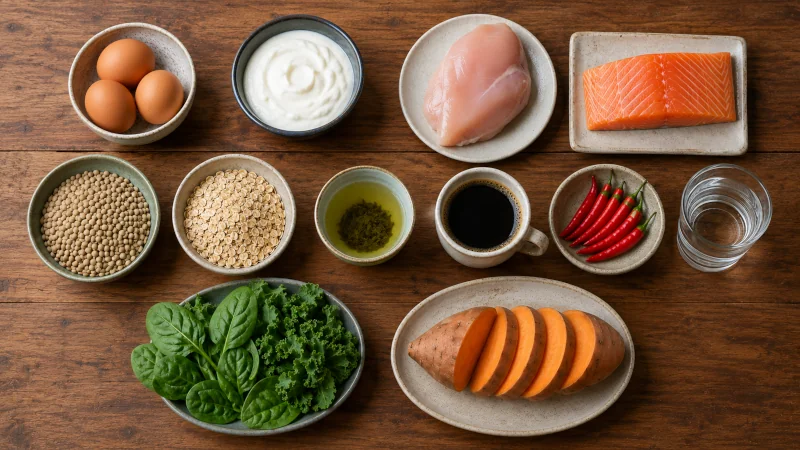
Foods that boost your metabolism are real, but the effect is usually smaller than headlines suggest. Daily metabolic rate is set mostly by your body size, muscle mass, age, sex, and activity. What you eat shifts the dial by a few percent, mainly through the energy your body spends digesting food and through a handful of compounds in things like coffee, green tea, and chili peppers. Used wisely, that few percent still matters — and the same foods that nudge metabolic rate also tend to support steady energy and lower hunger, which is the bigger payoff for most people.
Below are 12 foods with the strongest evidence behind them, what each one actually does, and who should be careful. The list deliberately swaps out marketing claims for measured effects from peer-reviewed studies and government health agencies.
What Does It Actually Mean to “Boost Your Metabolism”?
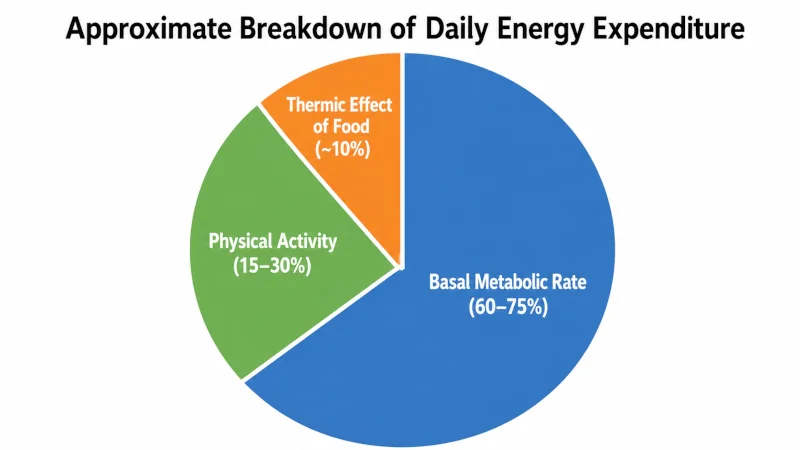
Metabolism is every chemical reaction your body runs to stay alive — turning food into energy, building tissue, removing waste. When people talk about “boosting metabolism,” they usually mean burning more calories. Total daily energy expenditure has three parts:
- Basal metabolic rate (BMR): the energy you burn at rest just to keep organs running. This is roughly 60–75% of total calories burned for most adults and depends mainly on body size, lean mass, age, and sex.
- Physical activity: both planned exercise and everyday movement (sometimes called NEAT — non-exercise activity thermogenesis). This is the most modifiable part for most people, ranging widely from about 15% in sedentary adults to 30%+ in active ones.
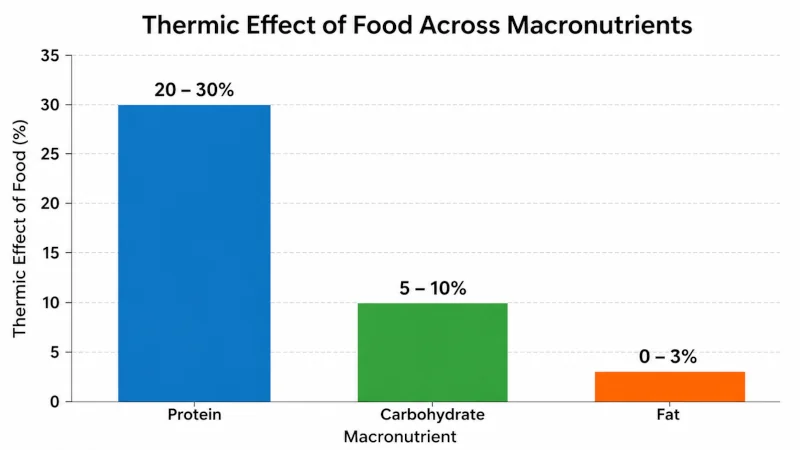
- Thermic effect of food (TEF): the energy used to digest, absorb, and store nutrients — about 10% of total intake for a mixed diet. Protein has the highest TEF (about 20–30% of its calories), carbohydrate sits around 5–10%, and fat is roughly 0–3% [Calcagno et al., 2019].
Food affects mainly that last 10%. Caffeine and a few other compounds can give a small, short-lived bump on top — typically a 3–11% rise in energy expenditure for a few hours [NIH ODS, 2024]. None of this is a substitute for the bigger levers: muscle mass, daily movement, and sleep.
How Food Influences Metabolic Rate (The Short Version)
A handful of mechanisms cover almost every honest “metabolism food” claim:
- High protein content: protein costs your body more energy to process than carbs or fat, and it preserves the muscle that drives your resting metabolic rate.
- Caffeine: mildly increases energy expenditure and fat oxidation in the hours after intake; the effect shrinks with regular use as tolerance develops.
- Catechins (mainly EGCG in green tea): appear to add a small thermogenic effect on top of caffeine, but typical daily amounts from drinking tea are modest.
- Capsaicin (in chili peppers): produces a small bump in resting metabolic rate and fat oxidation — about 30–50 kcal/day in pooled studies [Aghababaei et al., 2021].
- Water: drinking 500 ml of water is followed by a measurable rise in energy expenditure, mostly because the body warms the water and stretches the stomach [Boschmann et al., 2003].
- Fiber (especially beta-glucan in oats and barley): does not raise BMR directly, but slows glucose absorption, helps appetite, and supports overall metabolic health [Harvard Nutrition Source, 2024].
The list below is grouped roughly by mechanism, with stronger-evidence foods first.
Foods That Boost Your Metabolism: The Evidence-Tiered List
1. Eggs
A large egg packs about 6 g of high-quality protein and roughly 70 kcal. Protein has the highest thermic effect of any macronutrient, so swapping a refined-carb breakfast for eggs raises the energy your body spends digesting that meal [Calcagno et al., 2019]. Eggs also tend to keep people fuller for longer, which makes overeating later in the day less likely.
Evidence strength: strong for protein’s TEF; reasonable for eggs specifically as a satiating breakfast. Practical tip: two or three eggs with vegetables is a steadier choice than cereal or pastries.
2. Greek Yogurt and Other High-Protein Dairy
A standard 5–6 oz serving of plain Greek yogurt provides 15–18 g of protein — roughly double regular yogurt. In one tightly controlled trial of 23 adults, a whey-protein meal produced a 14.4% thermic response, compared with 6.6% for a high-carb meal [Acheson et al., 2011]. Skyr and cottage cheese give similar protein density.
Choose plain or lightly sweetened versions; flavored tubs often add 15–20 g of sugar per serving, which cancels much of the appetite benefit.
3. Chicken, Turkey, and Other Lean Poultry
A 4 oz (113 g) skinless chicken breast delivers about 25–30 g of protein for around 165 kcal. Lean poultry combines a high TEF with very little saturated fat. Roast, grill, or poach rather than frying — coatings and oils undo most of the metabolic advantage.
4. Salmon and Other Fatty Fish
Salmon, sardines, and mackerel provide complete protein plus long-chain omega-3 fatty acids (EPA and DHA). The protein contributes the usual TEF benefit; the omega-3s support cardiovascular and metabolic health through different pathways. Two servings of fatty fish a week is the broad public-health recommendation in most national guidelines.
Mercury caution: pregnant and breastfeeding people should follow FDA/EPA fish-consumption guidance and choose lower-mercury options (salmon, sardines, trout) over king mackerel, swordfish, and large tuna.
5. Lentils, Beans, and Other Legumes
Half a cup of cooked lentils delivers about 9 g of protein and 8 g of fiber. For plant-based eaters, legumes are the clearest way to keep protein TEF high while also pulling in slow-digesting fiber that flattens post-meal glucose spikes. For an in-depth read, see our guide to 19 diabetic-friendly foods.
6. Oats and Other Beta-Glucan Whole Grains
Oats are not a thermogenic food — they do not raise resting metabolic rate. They earn a spot on the list because beta-glucan, a soluble fiber, slows starch digestion and produces a noticeably flatter blood-glucose response than refined grains [Harvard Nutrition Source, 2024]. Steadier blood sugar means less of the rebound hunger that drives extra snacking later in the day. Steel-cut and rolled oats outperform instant packets for this effect.
More detail: Health Benefits of Oats.
7. Green Tea
Green tea contains two compounds that interact: caffeine and EGCG (the main catechin). Together they produce a small thermogenic effect — roughly a 4–5% rise in 24-hour energy expenditure in controlled studies, equivalent to about 80–100 extra kcal per day [Rudelle et al., 2007]. The effect is real, but small, and shrinks in habitual caffeine users.
Two to three brewed cups a day is the realistic way to capture this. High-dose green tea extract supplements have been linked to rare cases of liver injury and are not recommended outside of medical supervision [NIH ODS, 2024].
8. Coffee
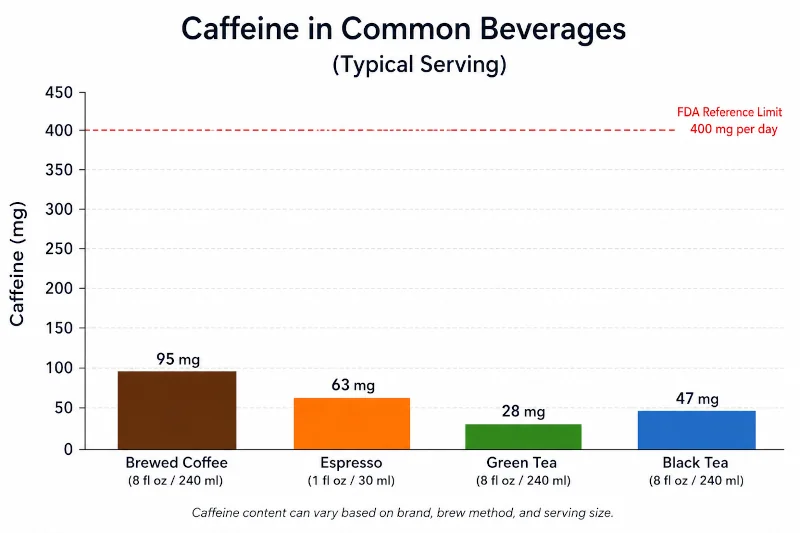
Caffeine increases energy expenditure and fat oxidation, with effects measurable for several hours after a typical 100–300 mg dose. The same dose-related caveats apply: regular drinkers see smaller bumps than first-time users, and the effect is not enough to drive meaningful weight loss on its own [NIH ODS, 2024]. Drink it black or with minimal added sugar — flavored coffee drinks can add 300–500 kcal that overwhelm the metabolic benefit.
The FDA considers up to 400 mg of caffeine per day (about 3–4 cups of brewed coffee) safe for most healthy adults. People with anxiety disorders, certain heart rhythm problems, or who are pregnant should check with their clinician about lower limits.
9. Chili Peppers (Capsaicin)
Capsaicin, the compound that gives chilis their heat, modestly increases resting metabolic rate. A 2020 meta-analysis of 13 randomized trials found capsaicinoids/capsinoids raised resting metabolic rate by about 34 kcal/day on average and increased fat oxidation [Aghababaei et al., 2021]. The effect is small but real, and it adds up if chili is a regular part of your cooking.
Capsaicin can aggravate reflux, IBS, and active gastritis. People with those conditions should test their tolerance carefully or skip this one. Topical or high-dose capsaicin supplements can cause burning sensations and gut upset.
10. Water
In the original 2003 study, drinking 500 ml (about 17 oz) of water raised metabolic rate by approximately 30% within 10–40 minutes, with the effect lasting about an hour [Boschmann et al., 2003]. About 40% of that came from the energy needed to warm the water from room temperature to body temperature. Later replications have found smaller effects [Brown et al., 2006], but most show some measurable rise.
The practical takeaway is simpler than the numbers: mild dehydration drags on energy and concentration, and people often eat when they’re actually thirsty. A glass of water before meals tends to help portion control without any special calculation.
11. Leafy Greens and Swiss Chard
Spinach, kale, Swiss chard, and similar leafy vegetables are very low in calories (about 20–35 kcal per cooked cup) but high in fiber, magnesium, folate, and iron. They don’t raise metabolic rate, but they let you eat a large volume of food for very few calories — useful for weight management. Magnesium specifically is a cofactor for hundreds of enzymatic reactions involved in energy production [NIH ODS — Magnesium, 2024]. Read more on Swiss chard’s nutritional profile.
12. Sweet Potatoes
A medium baked sweet potato has about 100 kcal, 4 g of fiber, and almost a full day’s vitamin A. The fiber slows glucose absorption and the volume produces strong satiety. Sweet potatoes are not low-carb, so they suit people with higher energy needs (active adults, people in recovery from illness, growing teenagers) better than someone on a very-low-carbohydrate plan. See the full health profile of sweet potatoes.
A Quick Comparison Table
| Food | Main mechanism | Approx. effect | Evidence |
| Eggs | Protein TEF + satiety | ~25% of protein calories spent on digestion | Strong |
| Greek yogurt | Protein TEF (whey + casein) | Whey meal ~14% TEF vs ~7% carb | Strong |
| Lean poultry | High protein, low fat | Same TEF mechanism as eggs/yogurt | Strong |
| Fatty fish | Protein + omega-3s | TEF + cardio-metabolic benefits | Strong |
| Legumes | Plant protein + fiber | TEF + flatter glucose response | Strong |
| Oats | Beta-glucan fiber | Lower post-meal glucose, longer satiety | Strong (for metabolic health) |
| Green tea | Catechins + caffeine | ~4–5% rise in 24-hr energy expenditure | Moderate |
| Coffee | Caffeine | Small short-term rise; tolerance reduces effect | Moderate |
| Chili peppers | Capsaicin | ~30–50 kcal/day extra in pooled trials | Moderate |
| Water | Water-induced thermogenesis + satiety | Short rise after 500 ml; effect size varies | Moderate, mixed |
| Leafy greens | Low energy density + micronutrients | Indirect — supports overall energy balance | Indirect |
| Sweet potatoes | Slow carbs + fiber + satiety | Indirect — steadier glucose and appetite | Indirect |
What Matters More Than Any Food on This List
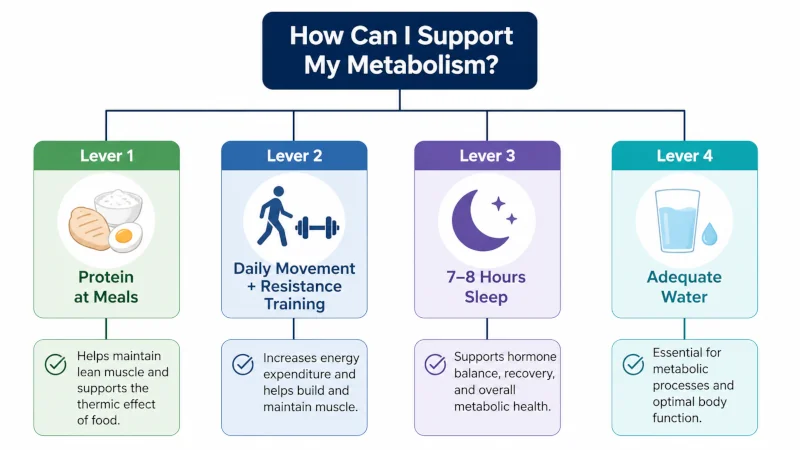
It is worth saying plainly: even the most generous read of every food above adds up to maybe 100–200 extra kcal a day, and only when you stack them. Three other levers move metabolism more, and they cost nothing:
- Muscle mass. Lean tissue burns more at rest than fat tissue does. Resistance training two or three times a week is the most reliable way to raise basal metabolic rate over months.
- Daily movement. Walking, taking stairs, gardening, fidgeting — what physiologists call NEAT — can vary by hundreds of calories per day between two people of the same size.
- Sleep. Short sleep is consistently linked to reduced insulin sensitivity and stronger hunger cues. Seven hours or more per night supports the same hormonal systems that food alone cannot fix.
For more on the foods-and-movement side of weight management, see 22 of the best foods to eat to lose weight and herbs that may support metabolism.
Who Should Be Cautious
- Pregnant or breastfeeding people: limit caffeine (most obstetric guidance is below 200 mg/day), choose lower-mercury fish, and skip concentrated green tea or capsaicin supplements unless your clinician approves.
- People taking medications: caffeine and green tea catechins can interact with stimulants, certain antidepressants, blood thinners, and thyroid medications. Capsaicin can intensify the burning effect of some skin medications and may interact with ACE inhibitors and blood-thinners.
- Reflux, IBS, ulcers, or active gastritis: chili peppers, coffee, and very high-protein meals can worsen symptoms in some people.
- Chronic kidney disease: higher protein intake should be reviewed with a nephrologist or renal dietitian rather than scaled up on your own.
- Eating disorder history: focusing on “boosting metabolism” can reinforce restrictive thinking. Work with a clinician or eating-disorder dietitian on goals instead.
When to Talk to a Healthcare Professional
Talk to your doctor or a registered dietitian if you have:
- Unexplained weight loss, persistent fatigue, or cold intolerance — these can signal thyroid disease, not just a “slow metabolism.”
- Diabetes or prediabetes, especially if you are adjusting carbohydrate intake or starting caffeine or green tea supplements.
- A history of arrhythmia, anxiety disorders, or cardiovascular disease before increasing caffeine.
- Pregnancy, breastfeeding, or planning to become pregnant.
- Symptoms that worsen with dietary changes — heartburn, abdominal pain, persistent diarrhea, or palpitations.
| HEALTH DISCLAIMER This article is for general educational and informational purposes only. It is not a substitute for professional medical advice, diagnosis, or treatment. The foods discussed produce small, measurable shifts in energy expenditure in research settings; they are not weight-loss treatments and they cannot replace the effects of exercise, sleep, or medication. Talk to a qualified healthcare provider before making major dietary changes — particularly if you are pregnant, breastfeeding, take prescription medications, have a chronic condition (diabetes, kidney disease, cardiovascular disease, thyroid disorders), or have a history of disordered eating. Never adjust prescribed medication on the basis of dietary changes alone. |
Frequently Asked Questions
Can certain foods really raise metabolism, or is that marketing?
Both. The effects are real but small. Protein, caffeine, catechins, capsaicin, and water all produce measurable rises in energy expenditure in controlled studies. The total daily impact is usually in the range of 50–200 kcal — enough to matter over months if you stack them, not enough to outrun a sustained calorie surplus.
Does eating six small meals a day “speed up” metabolism?
Meal frequency itself has very little effect on total daily energy burn. What matters is the total calories and protein over the day. The original review of the thermic effect of food specifically found no advantage to splitting meals into many small ones [Calcagno et al., 2019], and most people find three or four meals easier to plan and harder to over-snack between.
How much green tea or coffee would I actually need to see a difference?
Trial doses tend to be around 200–300 mg of caffeine and 250–400 mg of catechins per day — roughly two to four cups of brewed green tea, or one to two cups of strong coffee. Habitual caffeine users see smaller effects because of tolerance. High-dose extract supplements give bigger short-term changes but carry liver-injury risk and are not recommended without medical supervision.
Are “fat-burning” supplements a shortcut?
Mostly no. The NIH Office of Dietary Supplements reviewed the major ingredients — caffeine, green tea extract, capsaicin, garcinia, raspberry ketone, chromium, and more — and concluded that most weight-loss supplements have weak evidence, sometimes contain undisclosed stimulants, and a few have caused serious harm [NIH ODS, 2024]. Get caffeine and catechins from coffee and tea; get protein from food.
Will drinking ice-cold water burn more calories?
Slightly. The original research attributed about 40% of water-induced thermogenesis to warming the water to body temperature, so cold water has a marginal extra effect. Over a full day this is in the range of 20–40 kcal — too small to matter for weight loss, but not nothing.
References
- Pamplona-Roger, G. D. (2005). Encyclopedia of Foods and Their Healing Power, Vol. 2. Editorial Safeliz. (Reference book used for traditional-use background on chard, sweet potatoes, oats.) → View source
- Calcagno, M., Kahleova, H., Alwarith, J., Burgess, N. N., Flores, R. A., Busta, M. L., & Barnard, N. D. (2019). The Thermic Effect of Food: A Review. Journal of the American College of Nutrition, 38(6), 547–551. → View source
- National Institutes of Health, Office of Dietary Supplements. (2024). Dietary Supplements for Weight Loss — Health Professional Fact Sheet. U.S. Department of Health & Human Services. → View source
- Acheson, K. J., Blondel-Lubrano, A., Oguey-Araymon, S., Beaumont, M., Emady-Azar, S., Ammon-Zufferey, C., et al. (2011). Protein choices targeting thermogenesis and metabolism. American Journal of Clinical Nutrition, 93(3), 525–534. → View source
- Boschmann, M., Steiniger, J., Hille, U., Tank, J., Adams, F., Sharma, A. M., et al. (2003). Water-Induced Thermogenesis. Journal of Clinical Endocrinology & Metabolism, 88(12), 6015–6019. → View source
- Brown, C. M., Dulloo, A. G., & Montani, J. P. (2006). Water-induced thermogenesis reconsidered: the effects of osmolality and water temperature on energy expenditure after drinking. Journal of Clinical Endocrinology & Metabolism, 91(9), 3598–3602. → View source
- Aghababaei, F., Hadidi, M., Ezatpanah, S., Soltani, S. (2021). The effect of capsaicinoids or capsinoids in red pepper on thermogenesis in healthy adults: A systematic review and meta-analysis. Phytotherapy Research, 35(3), 1358–1377. → View source
- Ludy, M. J., Moore, G. E., & Mattes, R. D. (2012). The Effects of Capsaicin and Capsiate on Energy Balance: Critical Review and Meta-analyses of Studies in Humans. Chemical Senses, 37(2), 103–121. → View source
- Rudelle, S., Ferruzzi, M. G., Cristiani, I., Moulin, J., Macé, K., Acheson, K. J., & Tappy, L. (2007). Effect of a thermogenic beverage on 24-hour energy metabolism in humans. Obesity, 15(2), 349–355. → View source
- Harvard T.H. Chan School of Public Health, The Nutrition Source. (2024). Oats. → View source
- National Institutes of Health, Office of Dietary Supplements. (2024). Magnesium — Health Professional Fact Sheet. → View source
- National Institute of Diabetes and Digestive and Kidney Diseases (NIDDK). (2024). Health Information — Weight Management. U.S. Department of Health & Human Services. → View source
