
There are eight of them. That is the first thing worth knowing, because supplement labels and older nutrition guides sometimes list twelve, fifteen, or seventeen. The B complex vitamins recognised by nutrition science are thiamin (B1), riboflavin (B2), niacin (B3), pantothenic acid (B5), vitamin B6, biotin (B7), folate (B9) and vitamin B12. Everything else that carries a B number — B13, B15, B17 — never earned the title, and at least one of them is genuinely dangerous.
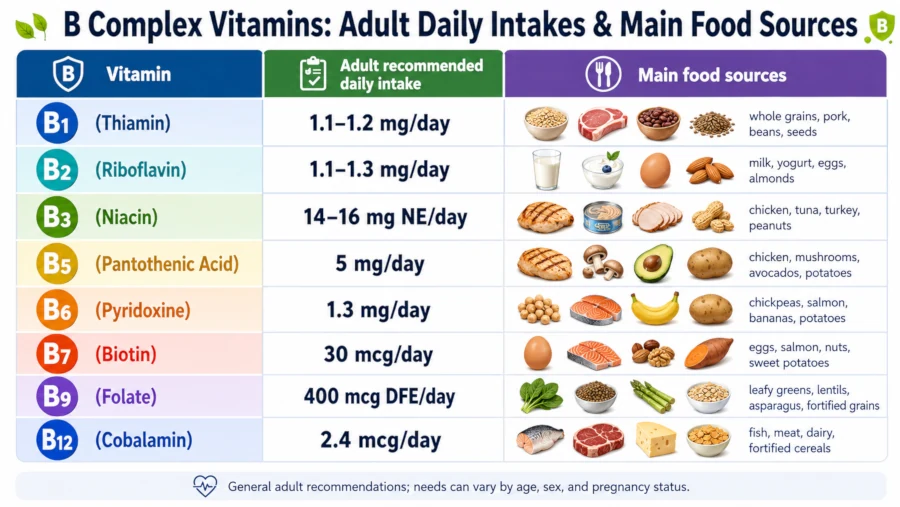
They are grouped together because they are all water-soluble and all work as coenzymes in energy metabolism, so your body handles them in broadly similar ways. That is a chemistry classification, not a dosing instruction. Each one has its own requirement, its own deficiency picture, and its own safety ceiling, and two of them can cause real harm at doses people buy over the counter.
Here is what each B vitamin does, how much you need, where to get it, and — the part most pages skip — where the risks actually are.
The eight B vitamins at a glance
Adult recommended intakes, from the U.S. Food and Nutrition Board figures published in the NIH Office of Dietary Supplements fact sheets. Values are for non-pregnant adults; pregnancy and breastfeeding raise most of them.
| Vitamin | Adult RDA / AI | Safe upper limit (supplements) | Everyday food sources |
| B1 — Thiamin | 1.2 mg men / 1.1 mg women | None set | Whole grains, pork, fish, fortified cereal |
| B2 — Riboflavin | 1.3 mg men / 1.1 mg women | None set | Milk, eggs, organ meats, mushrooms, spinach |
| B3 — Niacin | 16 mg NE men / 14 mg NE women | 35 mg (supplemental) | Poultry, beef, fish, peanuts, brown rice |
| B5 — Pantothenic acid | 5 mg | None set | Almost all foods; shiitake, avocado, eggs |
| B6 — Pyridoxine | 1.3–1.7 mg | 100 mg (U.S.); EFSA sets 12 mg | Poultry, fish, potatoes, non-citrus fruit |
| B7 — Biotin | 30 mcg | None set | Eggs, liver, salmon, seeds, sweet potato |
| B9 — Folate | 400 mcg DFE | 1,000 mcg (folic acid) | Leafy greens, beans, liver, enriched grain |
| B12 — Cobalamin | 2.4 mcg | None set | Meat, fish, dairy, eggs, fortified foods |
Sources: [NIH ODS fact sheets on thiamin, riboflavin, niacin, pantothenic acid, B6, biotin, folate and B12, 2021–2023]. “None set” means the Food and Nutrition Board found no evidence base for an upper limit, not that unlimited intake is proven safe.
Do you actually need a B complex supplement?
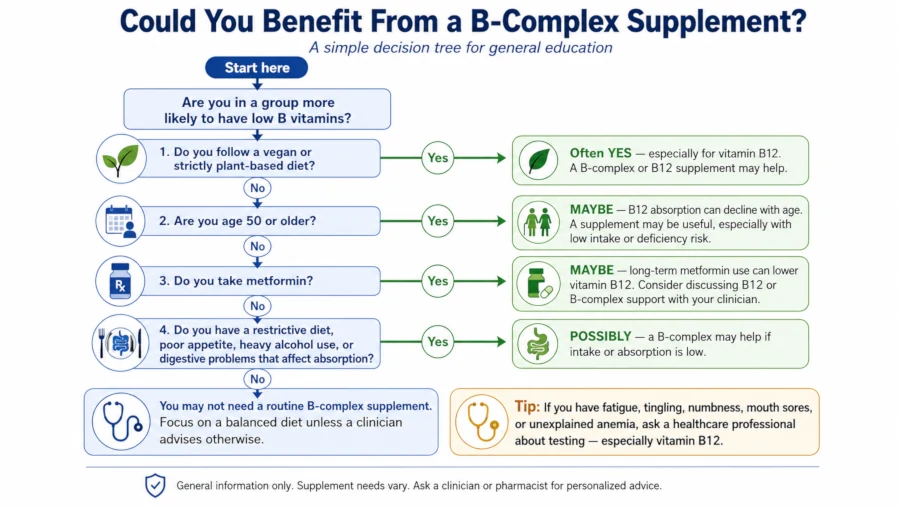
For most people eating a varied diet in a country that fortifies its grain supply, no. The NIH notes that only about 6% of the U.S. population falls below the average requirement for thiamin, and roughly 1% of adults fall short on niacin. Folate and riboflavin deficiencies are similarly rare.
There are real exceptions, and they are worth knowing because they are the situations where B vitamins stop being optional:
- People who drink heavily. Up to 80% of people with chronic alcohol use develop thiamin deficiency, because ethanol blocks absorption, depletes liver stores, and interferes with activation [NIH ODS on thiamin, 2023].
- Vegans and long-term vegetarians. Plant foods contain no vitamin B12 unless fortified. This is not a preference issue — it is a hard biochemical constraint, and it is covered in more detail in our guide to crucial nutrients in a vegetarian diet.
- Adults over 50. Reduced stomach acid makes food-bound B12 harder to release. The NIH advises people over 50 get most of their B12 from fortified foods or supplements [NIH ODS on vitamin B12, 2023].
- Anyone who could become pregnant. 400 mcg of folic acid daily, before conception, is one of the best-supported preventive recommendations in nutrition.
- People on metformin or long-term acid-suppressing drugs. Both reduce B12 absorption over time.
- After bariatric surgery, or with Crohn’s disease or coeliac disease. Malabsorption affects several B vitamins at once, and supplementation is usually part of standard follow-up care.
If none of those describe you, a B complex is unlikely to make you feel different. The claim that B vitamins give you energy applies to correcting a deficiency, not to topping up someone who already has enough. The NIH is blunt about this for B12 specifically: it does not improve energy or endurance in people who get enough from their diet.
The eight B complex vitamins, one at a time
Vitamin B1 (thiamin)
Thiamin is a cofactor for five enzymes in glucose, amino acid and lipid metabolism. Your body stores very little of it and it has a short half-life, so you need a steady supply.
Severe deficiency causes beriberi — peripheral neuropathy and wasting, occasionally progressing to heart failure. In wealthier countries the more common presentation is Wernicke-Korsakoff syndrome, which is about eight to ten times more frequent in people with chronic alcoholism. Untreated, up to 20% of people with Wernicke’s encephalopathy die [NIH ODS on thiamin, 2023]. This is a medical emergency treated with injected thiamin, not something to manage with a supplement bottle.
On Alzheimer’s disease: three small randomised trials of 3 g/day oral thiamin were assessed in a Cochrane review, which concluded the studies were too small and too thinly reported to draw any conclusion [Rodriguez-Martin et al., Cochrane, via NIH ODS]. Gram-level thiamin for dementia is an untested idea, not an established treatment.
Safety: the Food and Nutrition Board set no upper limit, because no adverse effects have been reported from high intakes. Absorption drops sharply above about 5 mg, which is probably why. Thiamin is not known to interact with medications, though furosemide and fluorouracil can both deplete it.
Vitamin B2 (riboflavin)
Riboflavin supports cell growth and energy release from food. Deficiency is very rare in well-fed populations; when it happens it shows up as cracked lips and mouth corners, sore throat, skin problems, hair loss, and in prolonged cases anaemia and cataract.
Migraine is the one supplement use with a real literature behind it, and the honest summary is mixed. Some studies show riboflavin may help prevent migraine attacks; others do not. Because side effects are minimal, the NIH notes some clinicians suggest trying it under medical guidance [NIH ODS on riboflavin, 2022]. That is a reasonable position, not a strong recommendation.
Practical note: your body absorbs no more than about 27 mg at a time, so the 100 mg tablets on the shelf are mostly producing bright yellow urine. Riboflavin has no known drug interactions and no established upper limit.
Vitamin B3 (niacin) — the one to be careful with
Niacin is the B vitamin most likely to cause harm, precisely because it works. At doses more than a hundred times the RDA, nicotinic acid genuinely shifts blood lipids: studies since the late 1950s show it raises HDL cholesterol by 10–30% and lowers LDL by 10–25% and triglycerides by 20–50% [NIH ODS on niacin, 2022].
The problem is that the lipid changes did not translate into fewer heart attacks. In HPS2-THRIVE, 25,673 adults already on a statin took 2 g/day extended-release nicotinic acid or placebo for a median of four years. Lipids improved. Major vascular events did not fall — and the niacin group had significantly more diabetes, gastrointestinal bleeding, brain bleeding, ulceration and skin reactions [HPS2-THRIVE, via NIH ODS]. A 2018 review of three trials found all-cause mortality was 10% higher on 1–3 g/day extended-release niacin plus statin than on statin alone. The American College of Cardiology and American Heart Association do not recommend niacin as an add-on to statin therapy. Our companion piece on supplements that help lower cholesterol covers where niacin now sits among the alternatives.
What high-dose niacin does at the doses people self-prescribe: 30–50 mg of nicotinic acid is usually enough to cause flushing — face, arms and chest turning red, with burning and itching. Unpleasant, not dangerous. At 1,000–3,000 mg/day the risks change character: blood pressure drops far enough to cause falls, insulin resistance and impaired glucose tolerance develop, vision can blur, and the liver can be damaged badly enough to cause hepatitis and acute liver failure. Extended-release forms are the most hepatotoxic.
Nicotinamide (niacinamide) does not cause flushing and has fewer side effects, but nausea, vomiting and liver toxicity appear around 3,000 mg/day. “Flush-free” inositol hexanicotinate is absorbed about 30% less well on average and does not appear to reproduce the lipid effects — if you are taking it for cholesterol, it is probably doing very little.
The supplemental upper limit for adults is 35 mg/day. That limit does not apply to people taking niacin under medical supervision, which is the only context in which gram doses belong.
Vitamin B5 (pantothenic acid)
Pantothenic acid is in almost every food, which is why deficiency is very rare outside a rare inherited disorder called pantothenate kinase-associated neurodegeneration. Severe deficiency causes burning and numbness in hands and feet, headache, fatigue, irritability, and gastrointestinal upset [NIH ODS on pantothenic acid, 2026].
The one active research question is pantethine, a form of B5 being studied for cholesterol and triglycerides. Results so far are described as promising but not settled. It has no known drug interactions, and no upper limit is set, though doses around 10,000 mg/day cause stomach upset and diarrhoea.
Vitamin B6 (pyridoxine) — the other one to watch
B6 is involved in more than 100 enzyme reactions and in brain development during pregnancy and infancy. Deficiency is uncommon in the U.S. but shows up in people on dialysis, after kidney transplant, in autoimmune conditions such as rheumatoid arthritis and inflammatory bowel disease, and in alcohol dependence [NIH ODS on vitamin B6, 2023].
The safety issue is nerve damage. Taking high amounts of B6 from supplements for a year or longer can cause severe sensory neuropathy, to the point of losing control of bodily movements. Symptoms usually resolve when the supplement stops, but not always. Other signs of excess include painful skin patches, extreme sun sensitivity, nausea and heartburn.
There is genuine disagreement about where the safe line sits. The U.S. upper limit for adults is 100 mg/day. In 2023 the European Food Safety Authority set a limit of 12 mg/day for all adults — an eightfold difference [NIH ODS on vitamin B6, 2023]. Neither figure is obviously wrong; the U.S. limit is older and the European review is more recent and more cautious. If you take a standalone B6 supplement, the conservative reading is the one worth following.
Where B6 has reasonable support: the American College of Obstetricians and Gynecologists recommends B6 supplements, under a doctor’s care, for nausea and vomiting in pregnancy. For premenstrual syndrome the evidence is weaker — some studies show reduced moodiness, irritability and bloating, but the NIH describes scientists as not yet certain. For cognitive function and cardiovascular disease, B vitamins lower homocysteine but do not reduce heart disease, stroke or dementia risk.
Interactions: B6 can worsen the seizures and nerve damage associated with cycloserine. Some epilepsy drugs and theophylline lower B6 levels, and low B6 can itself trigger seizures. Do not add B6 to an antiseizure regimen without your neurologist.
Vitamin B7 (biotin)
Biotin has a reputation for hair, skin and nails that the evidence does not support. The NIH states plainly that there is little scientific evidence behind those claims. A few small studies found that people with thin, brittle nails had harder nails on high-dose biotin, and there are case reports of improvement in a rare paediatric hair disorder — that is the extent of it [NIH ODS on biotin, 2021].
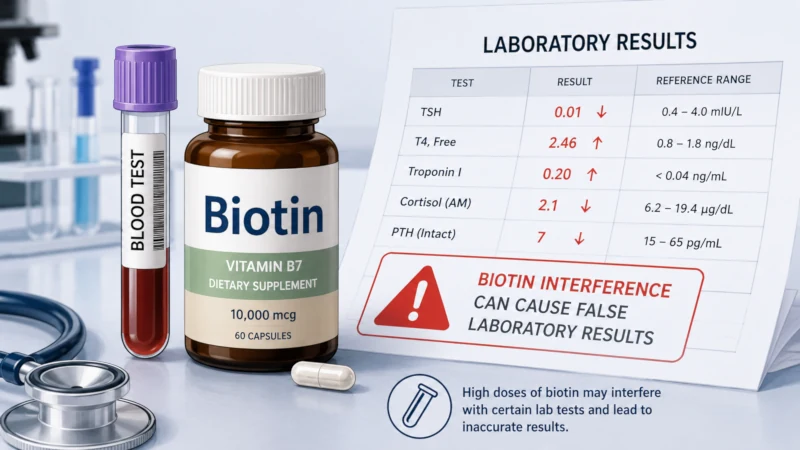
The genuinely important point about biotin is not a side effect — it is a laboratory problem. Supplements containing biotin above recommended amounts can cause false results on some lab tests, including thyroid hormone assays. Depending on the test, results can be falsely high or falsely low, which has led to misdiagnosis. If you take a hair-and-nails supplement, tell whoever orders your blood work, and expect to be asked to stop it for a few days beforehand.
Deficiency is very rare and causes thinning hair, a rash around the eyes, nose and mouth, brittle nails, and neurological symptoms. Long-term antiseizure medication can significantly lower biotin levels.
Vitamin B9 (folate and folic acid)
Folate is the form in food; folic acid is the synthetic form used in fortification and most supplements. The single strongest recommendation in this entire article belongs here: everyone who could become pregnant should take 400 mcg of folic acid daily, from supplements or fortified food, in addition to dietary folate [NIH ODS on folate, 2022]. About half of pregnancies are unplanned and the neural tube closes before most people know they are pregnant, which is why the advice is not “when you start trying.”
This holds even for people with an MTHFR C677T gene variant — the NIH specifies folic acid, not 5-MTHF, for that purpose, because folic acid is what the neural tube defect evidence was built on. Since U.S. fortification began in 1998, the number of babies born with neural tube defects has fallen.
Two cautions matter. First, large folate doses can mask a vitamin B12 deficiency: folate corrects the anaemia while the nerve damage continues untreated, and that damage to the brain, spinal cord and nerves can become permanent. Second, the relationship with cancer runs both ways — folate in food may reduce risk of several cancers, but high-dose folic acid taken after a cancer has started, particularly colorectal cancer, might accelerate it. Be careful about exceeding the 1,000 mcg upper limit, especially with a history of colorectal adenomas.
Interactions: folate supplements interfere with methotrexate when it is used for cancer, and interact in both directions with phenytoin, carbamazepine and valproate. Sulfasalazine reduces folate absorption.
Vitamin B12 (cobalamin)
B12 keeps blood and nerve cells healthy and is needed to make DNA. Your body stores 1,000 to 2,000 times a day’s intake, so deficiency can take years to appear — and then arrives as fatigue, pallor, palpitations, appetite and weight loss, numb or tingling hands and feet, balance problems, depression, confusion, poor memory, and a sore mouth or tongue [NIH ODS on vitamin B12, 2023].
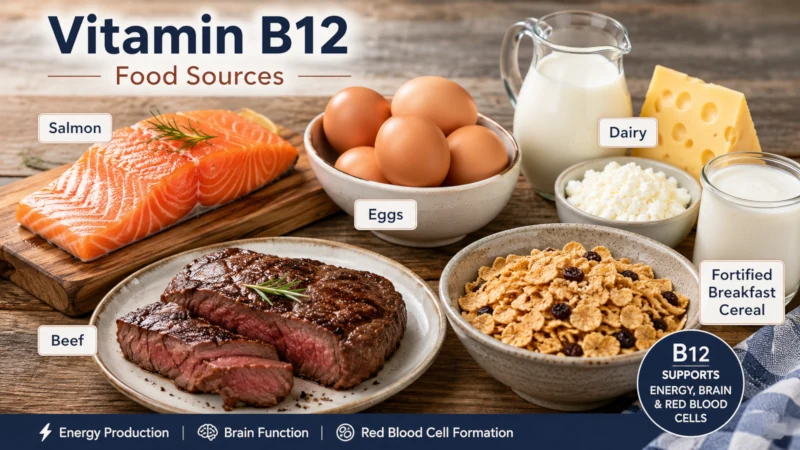
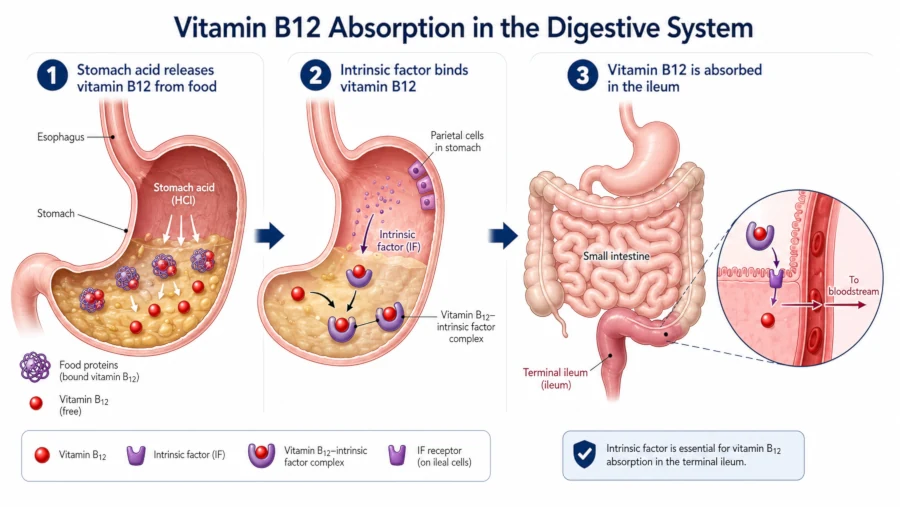
Absorption is the crux. Stomach acid frees B12 from food protein, then intrinsic factor — made by the stomach — carries it across the gut wall. People with pernicious anaemia cannot make intrinsic factor at all; people with atrophic gastritis, previous stomach or intestinal surgery, coeliac or Crohn’s disease, or simply age-related low stomach acid absorb it poorly. Deficiency affects between 3% and 43% of older adults depending on the population studied.
Pernicious anaemia is usually treated with injections, though the NIH notes very high oral doses might also be effective. That is a decision for your doctor, not a self-management project, because getting it wrong means progressive nerve damage.
On forms: research has not shown any supplemental form of B12 — cyanocobalamin, methylcobalamin, adenosylcobalamin, hydroxocobalamin, or sublingual — to be better than the others. Methylcobalamin is often marketed as superior; the evidence does not currently support paying more for it.
B12 has not been shown to cause harm even at high doses, and no upper limit is set. Metformin and acid-suppressing drugs (omeprazole, lansoprazole, cimetidine, ranitidine) reduce absorption over time.
Choline: adjacent to the B complex, but not a B vitamin
Choline is grouped with the B vitamins on many supplement labels and in older reference books. It is not one — it is an essential nutrient in its own right, needed for cell membranes, memory, mood and muscle control. Your liver makes a small amount; most comes from food [NIH ODS on choline, 2022].
It is worth including because most people in the U.S. fall short of the recommended 425 mg (women) or 550 mg (men) per day, even counting supplements. Eggs, meat, fish, dairy, cruciferous vegetables, beans, nuts and whole grains are the main sources. Low choline is linked to non-alcoholic fatty liver disease.
Two claims commonly attached to choline need correcting. Choline supplements have not been shown to improve cognition in healthy adults or in people with Alzheimer’s disease, Parkinson’s dementia or other memory problems. And the cardiovascular picture is genuinely mixed: some research suggests adequate choline supports heart health partly by lowering blood pressure, while other research suggests higher amounts may increase cardiovascular risk. Nobody should be presenting either direction as settled.
Excess causes a distinctive fishy body odour, vomiting, heavy sweating and salivation, low blood pressure and liver damage. The adult upper limit is 3,500 mg/day from all sources — which means the multi-gram doses sometimes recommended for memory sit above the safety ceiling.
The “B vitamins” that aren’t vitamins at all
Several compounds picked up B numbers in the mid-twentieth century and never lost them, mostly through supplement marketing. None is recognised as a vitamin, because none has been shown to be essential — no human deficiency disease exists for any of them.
| Compound | Status | What to know |
| B4 (adenine), B8 (inositol), B10 (PABA) | Not vitamins | Your body makes them or gut bacteria supply them. No established requirement, no deficiency state, no NIH fact sheet. Inositol has some early research in PCOS and anxiety; PABA is a UV filter with no established internal use. |
| B13 (orotic acid) | Not a vitamin | Never designated a vitamin. No established human requirement and no reliable dosing information. |
| B15 (pangamic acid) | Not a vitamin | Never had a consistent chemical identity — products sold under the name have contained different compounds. Not permitted as a dietary supplement ingredient in the U.S. |
| B17 (amygdalin / laetrile) | Not a vitamin — and dangerous | See below. This one causes cyanide poisoning. |
Why laetrile (“vitamin B17”) should not be in a B complex article as a nutrient
Amygdalin is a compound found in apricot kernels, raw nuts, lima beans and fruit pits. Laetrile is the semi-synthetic version marketed for cancer. The National Cancer Institute states that it has not been approved as a vitamin by the American Institute of Nutrition Vitamins, and calling it B17 does not change what it is: a molecule that releases hydrogen cyanide when your body breaks it down [NCI, Laetrile/Amygdalin PDQ, 2022].
On effectiveness, the record is clear. No controlled clinical trials of laetrile have been reported. In an NCI phase II study of 175 patients, cancer had progressed in about half by the end of treatment and in every patient within seven months of stopping. The FDA has not approved laetrile for cancer or any other condition [NCI, Laetrile/Amygdalin PDQ, 2022].
On safety, the listed side effects are nausea and vomiting, headache, dizziness, blue skin from lack of oxygen in the blood, liver damage, very low blood pressure, drooping eyelid, nerve damage affecting walking, fever, confusion, coma and death. Effects are worse when taken by mouth, and worse still when combined with raw almonds, crushed fruit pits, high-dose vitamin C, or foods including celery, peaches, bean sprouts and carrots. In the NCI phase I trial, two of six patients who ate raw almonds during oral treatment developed symptoms of cyanide poisoning.
Laetrile is manufactured in Mexico outside FDA regulation, so purity and content vary between batches. There is no safe self-administered dose and no nutritional reason to seek it out.
Safety: doses, interactions and who should check first
Upper limits worth remembering
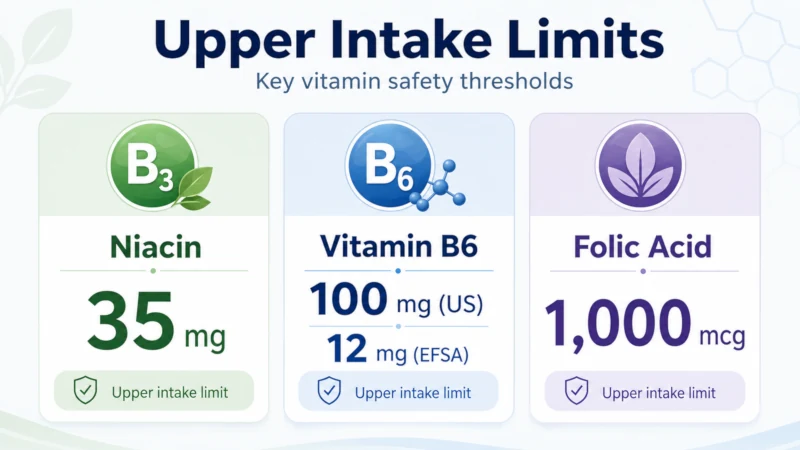
Only three B vitamins and choline have established tolerable upper intake levels for adults. These are the numbers that matter when you read a label:
- Niacin: 35 mg/day supplemental. Flushing starts around 30–50 mg; serious effects appear in the gram range.
- Vitamin B6: 100 mg/day in the U.S., 12 mg/day per EFSA (2023). Nerve damage is the concern.
- Folate: 1,000 mcg/day from folic acid in supplements and fortified food.
- Choline: 3,500 mg/day from all sources.
- Thiamin, riboflavin, pantothenic acid, biotin, B12: no upper limit set. That reflects an absence of reported harm, not a licence for unlimited dosing.
Medication interactions
| Medication | B vitamin affected | What happens |
| Metformin | B12 | Reduced absorption and lower blood levels over time |
| Proton pump inhibitors, H2 blockers | B12 | Less stomach acid means less B12 released from food |
| Phenytoin, carbamazepine, valproate | Folate, biotin | Drug lowers vitamin levels; folate supplements can also lower drug levels |
| Methotrexate (for cancer) | Folate | Folate supplements can interfere with the drug |
| Sulfasalazine | Folate | Reduced absorption, possible deficiency |
| Cycloserine | B6 | B6 may worsen drug-related seizures and nerve damage |
| Theophylline | B6 | Lowers B6 levels, which can cause seizures |
| Furosemide | Thiamin | Increased urinary thiamin loss |
| Statins | Niacin (high dose) | No added cardiovascular benefit; more serious adverse events |
| Isoniazid, pyrazinamide | Niacin | Blocks niacin production from tryptophan; pellagra risk |
| Any antidiabetes medication | Niacin (high dose) | Raises blood glucose; doses may need adjusting |
Pregnancy and breastfeeding
Requirements rise for every B vitamin during pregnancy and lactation, and a standard prenatal vitamin is designed around that. Three points are worth separating out:
- Folic acid at 400 mcg daily is recommended before conception and in early pregnancy — not once pregnancy is confirmed. During pregnancy the target rises to 600 mcg DFE.
- B6 for nausea and vomiting in pregnancy is recommended by ACOG, but under a doctor’s supervision rather than self-directed.
- Vegan and vegetarian pregnancy and breastfeeding need particular attention to B12, because a baby can be deficient even when the parent has no obvious symptoms.
Beyond that: high-dose single-nutrient B supplements are not appropriate in pregnancy without medical advice. Neither is any product marketed under the B13, B15 or B17 labels.
Who should talk to a clinician before starting
- Anyone taking a statin, metformin, an antiseizure drug, methotrexate, or a thyroid medication
- Anyone with liver disease, peptic ulcer, gout, diabetes or kidney disease considering high-dose niacin
- Anyone with a history of colorectal adenomas considering folic acid above 1,000 mcg
- Anyone pregnant, breastfeeding, or planning a pregnancy
- Anyone about to have blood tests while taking a biotin-containing supplement
- Anyone whose fatigue, numbness or memory change is the reason they are considering B vitamins in the first place — those symptoms deserve a diagnosis, not a guess
When symptoms need urgent attention
Some presentations are not supplement territory. Seek medical care promptly for:
- New or worsening numbness, tingling, burning or loss of sensation in hands or feet
- Difficulty walking, loss of balance, or loss of coordination
- Sudden confusion, disorientation, or memory loss — particularly alongside heavy alcohol use, where this can indicate Wernicke’s encephalopathy, a medical emergency
- Yellowing of the skin or eyes, dark urine, persistent nausea or right-sided abdominal pain while taking high-dose niacin — these suggest liver injury
- Fainting, chest pain, palpitations or severe shortness of breath
- Any suspected cyanide exposure from apricot kernels or laetrile: call 911 or Poison Control immediately
| HEALTH DISCLAIMER: This article is for general education and is not a substitute for professional medical advice, diagnosis or treatment. Vitamin deficiencies are diagnosed with blood tests, not from symptom lists, and several conditions described here look similar to one another while requiring different treatment. Do not start, stop or change any prescription medication based on this article. Talk to a doctor or pharmacist before adding any supplement — including ones marketed as natural — particularly if you are pregnant, breastfeeding, taking other medicines, preparing for surgery, or living with a chronic condition. If you have symptoms such as chest pain, severe shortness of breath, sudden weakness, confusion, slurred speech or facial drooping, call 911 immediately. |
Frequently Asked Questions
Should I take all the B vitamins together?
You do not need to. The idea that isolated B vitamins deplete the others is not supported by the NIH fact sheets, which describe no such effect. A B complex is a convenient format if you have a general reason to supplement, but there is nothing biochemically necessary about taking them simultaneously. If you have a specific identified deficiency — B12, for example — treating that specific deficiency is the point.
Will a B complex give me more energy?
Only if you are deficient. B vitamins are required to release energy from food, which is not the same as supplying energy. The NIH addresses this directly for B12: supplements do not improve energy, athletic performance or endurance in people who already get enough from their diet. Persistent fatigue is worth investigating properly rather than treating with a supplement.
Is it possible to take too much B complex?
Yes, for three of them. Niacin above 35 mg/day supplemental causes flushing and, in the gram range, liver injury and glucose problems. B6 taken at high doses for a year or more can cause severe nerve damage. Folic acid above 1,000 mcg can mask a B12 deficiency while nerve damage progresses. The others have no established upper limit — but “no limit set” means the evidence was insufficient to set one, not that any dose is proven safe.
Are there really seventeen B vitamins?
No. There are eight. The gaps in the numbering exist because compounds originally thought to be vitamins turned out not to be essential, and the numbers were retired. B13, B15 and B17 were never recognised at all. Amygdalin, sold as B17 or laetrile, releases cyanide and has caused deaths.
Do vegans definitely need a B12 supplement?
Effectively yes, unless they reliably eat B12-fortified foods every day. Plant foods contain no vitamin B12 naturally. Because the body stores enough for years, a deficiency can develop silently long before symptoms appear, and by the time neurological symptoms show up some damage may be permanent. This is one of the few supplement recommendations that is close to universal for a dietary group.
Is methylcobalamin better than cyanocobalamin?
The NIH states that research has not shown any form of supplemental B12 to be better than the others. Methylcobalamin, adenosylcobalamin, hydroxocobalamin, cyanocobalamin and sublingual forms all appear to work. If a methylated product is cheaper or you simply prefer it, fine — but the premium is not currently justified by evidence.
References
- National Institutes of Health, Office of Dietary Supplements. (2023). Thiamin: Fact Sheet for Health Professionals. NIH ODS. → View source
- National Institutes of Health, Office of Dietary Supplements. (2022). Riboflavin: Fact Sheet for Consumers. NIH ODS. → View source
- National Institutes of Health, Office of Dietary Supplements. (2022). Niacin: Fact Sheet for Health Professionals. NIH ODS. → View source
- National Institutes of Health, Office of Dietary Supplements. (2026). Pantothenic Acid: Fact Sheet for Consumers. NIH ODS. → View source
- National Institutes of Health, Office of Dietary Supplements. (2023). Vitamin B6: Fact Sheet for Consumers. NIH ODS. → View source
- National Institutes of Health, Office of Dietary Supplements. (2021). Biotin: Fact Sheet for Consumers. NIH ODS. → View source
- National Institutes of Health, Office of Dietary Supplements. (2022). Folate: Fact Sheet for Consumers. NIH ODS. → View source
- National Institutes of Health, Office of Dietary Supplements. (2023). Vitamin B12: Fact Sheet for Consumers. NIH ODS. → View source
- National Institutes of Health, Office of Dietary Supplements. (2022). Choline: Fact Sheet for Consumers. NIH ODS. → View source
- PDQ Integrative, Alternative, and Complementary Therapies Editorial Board. (2022). Laetrile/Amygdalin (PDQ) — Patient Version. National Cancer Institute. → View source
