
Here’s the short version: bananas are one of the most nutritious everyday fruits you can eat, and the benefits of eating bananas are real — but they’re more specific, and more grounded, than the “miracle fruit” lists suggest. A banana gives you potassium that helps counter the effects of a salty diet, fiber that steadies digestion, vitamin B6, and quick, portable energy in a wrapper you don’t even have to wash. What a banana won’t do is single-handedly prevent cancer, reverse heart disease, or cure an ulcer, and for a small group of people it’s actually a fruit to go easy on. This is what’s worth knowing.
What’s actually inside a banana
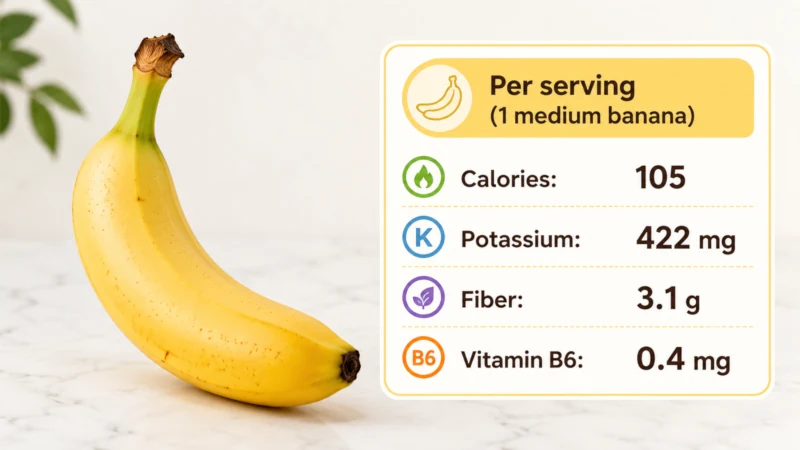
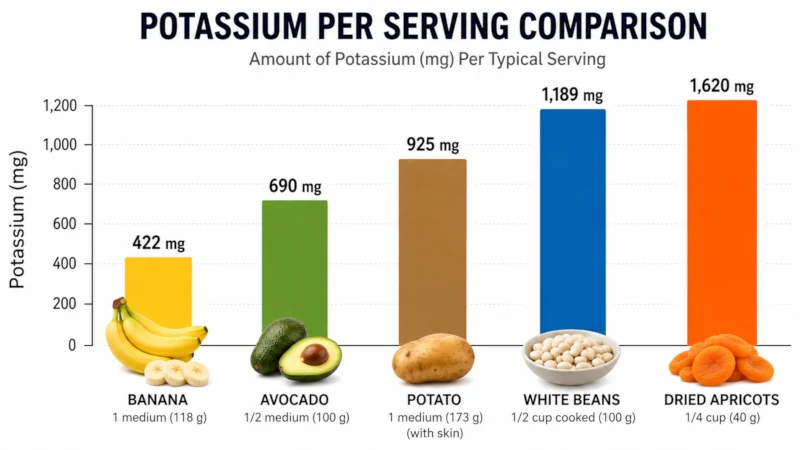
One medium ripe banana delivers roughly 110 calories, about 28 grams of carbohydrate, 3 grams of fiber, 1 gram of protein, almost no fat, and around 450 mg of potassium [Harvard T.H. Chan School of Public Health, 2024]. That potassium number is the headline: bananas are among the most reliable fruit sources of a mineral most people don’t get enough of. They’re not the single richest source — avocados, potatoes, white beans, and dried apricots all carry more per serving — but few of those are as cheap, as portable, or as likely to actually get eaten.
Bananas also bring vitamin C, magnesium, and a genuinely useful amount of vitamin B6. A medium banana has roughly 0.4 mg of B6, which is close to a third of the 1.3 mg an adult needs in a day [NIH Office of Dietary Supplements, 2023]. Among common fruits, that’s unusually high.
How ripeness changes everything
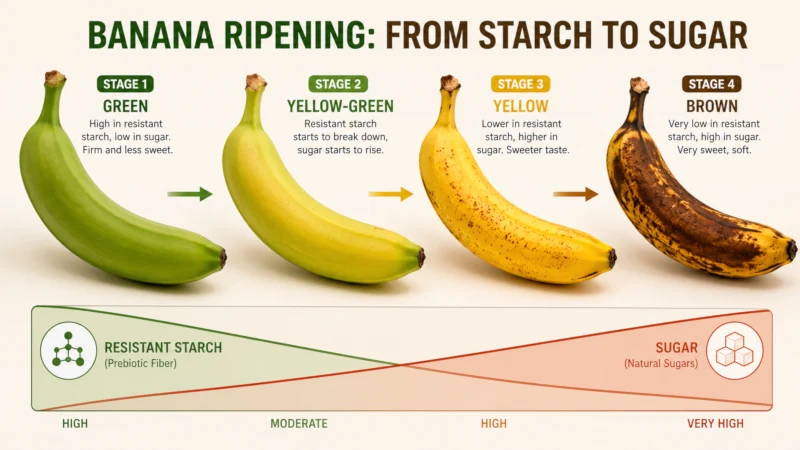
A green banana and a brown-speckled one are almost different foods. A green banana is mostly starch, much of it resistant starch — a carbohydrate that behaves more like fiber, resisting digestion in the small intestine and feeding beneficial gut bacteria instead [Harvard T.H. Chan School of Public Health, 2024]. As the banana ripens, that starch converts to simple sugars, which is why a spotty banana tastes sweeter. The calorie count barely changes; what changes is how fast the carbohydrate hits your bloodstream and how your gut handles it. That single fact explains most of what follows.
The benefits of eating bananas, graded by the evidence
Potassium and blood pressure (the strongest case)
This is where the evidence is best. Potassium and sodium work as a pair: sodium tends to raise blood pressure, and potassium helps blunt that effect and eases tension in blood vessel walls [Harvard T.H. Chan School of Public Health, 2024]. A large systematic review found that increasing potassium intake lowered blood pressure in adults and was linked to a lower risk of stroke, with the benefit concentrated in people who were eating too little potassium to begin with [Aburto et al., BMJ, 2013].
The honest framing matters here. That benefit comes from an overall eating pattern that’s high in potassium and low in sodium — the kind of pattern the DASH diet is built around — not from any single banana. A banana is a good building block for that pattern, especially as a swap for a salty processed snack.
It is not a treatment for high blood pressure, and it won’t replace medication if your doctor has prescribed it. If you’re building a heart-friendlier diet, it’s worth knowing which other foods are rich in this mineral (see this potassium-rich foods chart and a fuller look at what potassium does in the body), and which herbs and foods have real blood-pressure evidence behind them versus the many that don’t.
Digestion, resistant starch, and diarrhea
Bananas have a long-standing place in gentle-on-the-gut eating, and some of that reputation holds up well. They’re part of the old BRAT approach (bananas, rice, applesauce, toast) for settling the digestive system after a stomach upset, and they help replace potassium lost through diarrhea or vomiting [Harvard T.H. Chan School of Public Health, 2024].
The stronger, more surprising evidence is about green banana. Because cooked green banana is rich in resistant starch, it feeds gut bacteria that produce short-chain fatty acids, which help the colon absorb water and salt — exactly what you want when diarrhea won’t stop. In a double-blind randomized trial, adding cooked green banana to the diet of young children with severe dysentery meaningfully improved their recovery [Rabbani et al., 2009].
A 2025 systematic review pooling seven randomized trials and nearly 1,500 children found green banana significantly sped up recovery from diarrhea and reduced dehydration [green banana pediatric diarrhea meta-analysis, 2025]. Most of this research is in children in clinical settings, using cooked green banana as a dietary add-on alongside standard care and rehydration — not a claim that a ripe dessert banana cures an adult’s upset stomach. Still, it’s a real, well-studied effect, and it’s why bananas keep showing up on lists of foods that help with diarrhea.
One caveat in the other direction: an unripe banana’s resistant starch can cause gas and bloating in some people. If green bananas leave you uncomfortable, that’s why.
Steady energy and blood sugar — including diabetes
A banana is close to a designed pre-workout snack: easy carbohydrate, potassium, and a little fiber. On the blood-sugar question that trips up so many people, ripe bananas sit at a low glycemic index of about 51, and slightly under-ripe ones lower still, around 42, with a moderate glycemic load [Harvard T.H. Chan School of Public Health, 2024]. The resistant starch in less-ripe fruit slows how quickly sugar reaches the bloodstream.
For most people with diabetes or prediabetes, that means a banana can fit into the diet — the practical levers are portion size, ripeness (greener is gentler on blood sugar), and pairing it with protein or fat like nut butter or yogurt to blunt the rise. A very ripe banana on an empty stomach will raise blood sugar faster than a firmer one eaten with a handful of nuts. If you manage diabetes, it’s still worth checking how your own body responds and talking portions through with your clinician or dietitian.
Vitamin B6 and everyday nutrition
The B6 in bananas isn’t dramatic, but it’s dependable. Your body uses B6 in more than a hundred enzyme reactions, including making neurotransmitters and supporting normal immune function [NIH Office of Dietary Supplements, 2023]. Fruit isn’t usually where people get much B6, which makes the banana a quiet standout — a couple of bananas contribute a real share of the day’s requirement.
The weight-gain myth
Bananas show up on the occasional “worst foods” list, usually over sugar or calories. The data don’t support the worry. In an analysis of three large cohort studies following more than 133,000 adults for up to 24 years, higher fruit intake — bananas included — was associated with less weight gain over time, not more [Harvard T.H. Chan School of Public Health, 2024]. A whole banana is a hard way to overeat.
At a glance: how the claims hold up
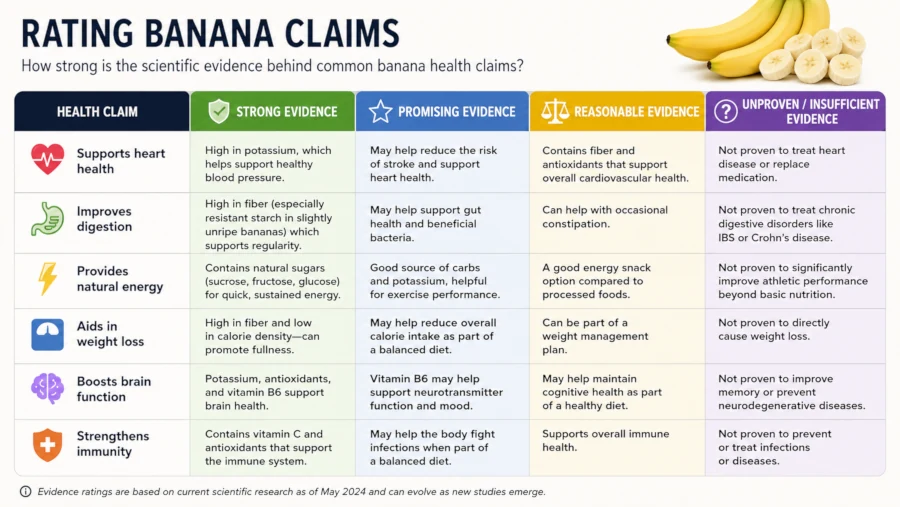
| Claim | Evidence | The honest read |
| Supports healthy blood pressure | Strong (as part of a diet) | Potassium-rich, low-sodium eating lowers BP and stroke risk; a banana helps, but doesn’t replace treatment. |
| Helps recovery from diarrhea | Promising | Cooked green banana (resistant starch) sped recovery in pediatric trials, as an add-on to standard care. |
| Fits a diabetes-friendly diet | Reasonable | Low-to-moderate glycemic index; portion, ripeness, and pairing matter. |
| Good source of B6 and potassium | Established | Solid everyday nutrition, especially for a fruit. |
| Cures ulcers | Mixed / unproven | Traditional use only; human evidence is limited and inconsistent. |
| Prevents cancer or reverses heart disease | Not supported | No single fruit does this. |
What bananas won’t do
Bananas are not a cure or a shield. A potassium-rich, low-sodium diet is linked to lower stroke risk at the population level [Aburto et al., BMJ, 2013], but no single fruit prevents heart attacks, reverses hardened arteries, or stops cancer, and it’s a disservice to suggest otherwise.
They don’t treat celiac disease. Bananas are naturally gluten-free and perfectly safe for people with celiac disease, and decades ago they were even part of an old therapeutic “banana diet.” But the only actual treatment for celiac disease is a strict, lifelong gluten-free diet — bananas are a fine food within it, not a therapy for it.
They won’t sedate you or relax your blood vessels through serotonin. Bananas contain tiny amounts of serotonin and the raw materials your body uses to make it, but the quantities are far too small to act as a calming agent or a meaningful vasodilator when you eat one.
The ulcer question is genuinely mixed. Bananas have traditionally been used in bland diets for stomach ulcers and indigestion, and some lab and animal work suggests protective effects, but human evidence is limited and inconsistent — some findings even point the other way. Treat “bananas soothe ulcers” as traditional and unproven rather than established, and don’t use them in place of proper treatment for a diagnosed ulcer.
Side effects, safety, and who should be careful
For most people, the realistic expectation is simple: bananas are a safe, healthy, everyday food, and the main “side effect” is a bit of gas from unripe ones or extra sugar from very ripe ones. A few groups should pay closer attention.
If you have kidney disease or take certain blood pressure medicines
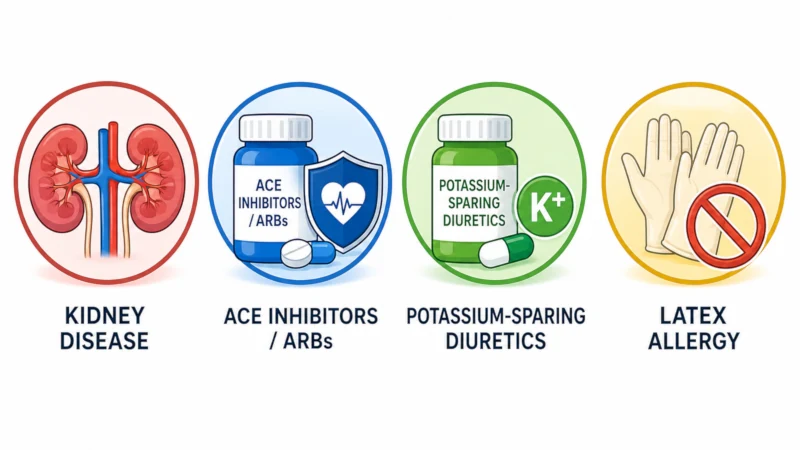
This is the most important caution, and it’s the one most banana articles get backwards. The same potassium that makes bananas helpful for most people is a problem for some. If you have advanced chronic kidney disease, your kidneys may not clear potassium well, and high-potassium foods can push blood levels into a dangerous range. The same risk applies if you take medicines that raise potassium — including ACE inhibitors, ARBs, and potassium-sparing diuretics. If any of that describes you, don’t treat bananas as a free food: ask your doctor or a renal dietitian how much potassium is safe for you. Older advice to load up on bananas during kidney failure is exactly wrong for many of these patients.
Allergies, pregnancy, and everyday cautions
Some people with a latex allergy react to bananas too, a cross-sensitivity sometimes called latex-fruit syndrome; if latex gloves or balloons cause you trouble, be alert to itching or swelling with bananas and check with an allergist. In pregnancy and breastfeeding, bananas are a safe, useful whole food and a good source of B6 and folate — just note that this refers to eating the fruit, not to taking high-dose B6 supplements, which are a separate decision for your clinician. And bananas aren’t a cure for cramps: they contribute potassium, but muscle cramps have many causes, and one banana isn’t a treatment.
When to talk to a professional. If diarrhea in a child or older adult comes with signs of dehydration — very little urine, sunken eyes, lethargy, no tears — or lasts more than a couple of days, that needs medical attention, with or without bananas. If you have kidney disease, get personalized potassium guidance rather than following general advice. And if you have diabetes and aren’t sure how fruit fits your plan, a registered dietitian can tailor it far better than any article.
HEALTH DISCLAIMER: This article is for general education and isn’t a substitute for advice from a qualified healthcare professional. Bananas are a food, not a medicine, and they don’t diagnose, treat, cure, or prevent any disease. If you have kidney disease, take medication that affects potassium, are managing diabetes, or are pregnant or breastfeeding, talk with your doctor, pharmacist, or a registered dietitian before making big changes to your diet. If you or someone else shows signs of severe dehydration or another medical emergency, seek urgent care right away.
Frequently Asked Questions
Is it OK to eat a banana every day?
For most people, yes. A banana a day fits comfortably into a healthy diet and contributes potassium, fiber, and B6 [Harvard T.H. Chan School of Public Health, 2024]. The main exceptions are people who need to limit potassium because of kidney disease or certain medications — they should get a personalized limit from their clinician.
Are bananas good or bad for blood sugar?
Bananas have a low-to-moderate glycemic index, roughly 42 when slightly green and around 51 when ripe [Harvard T.H. Chan School of Public Health, 2024]. Most people with diabetes can include them by watching portion size, leaning toward less-ripe fruit, and pairing with protein or fat.
Do bananas actually help with diarrhea?
There’s solid evidence that cooked green banana, which is rich in resistant starch, helps children recover from diarrhea faster as a dietary add-on to standard care [green banana pediatric diarrhea meta-analysis, 2025]. Ripe bananas are also gentle and help replace lost potassium, which is why they feature in bland recovery diets.
Which is healthier, a green banana or a ripe one?
Neither is “healthier” overall — they’re different. Green bananas have more resistant starch (better for gut bacteria and steadier blood sugar) but can cause gas; ripe bananas are sweeter, easier to digest, and give faster energy. Calories stay about the same.
Can bananas lower blood pressure?
Not on their own, but they help. A diet high in potassium and low in sodium is linked to lower blood pressure and stroke risk [Aburto et al., BMJ, 2013], and bananas are an easy way to add potassium — as part of that pattern, not as a substitute for prescribed treatment.
Who should avoid or limit bananas?
Mainly people with advanced kidney disease or those on potassium-raising medicines (ACE inhibitors, ARBs, potassium-sparing diuretics), who should ask their doctor about safe amounts. People with a latex allergy should also watch for cross-reactions.
References
- Harvard T.H. Chan School of Public Health, The Nutrition Source. Bananas. Updated 2024. View source
- National Institutes of Health, Office of Dietary Supplements. Vitamin B6: Fact Sheet for Consumers. Updated 2023. View source
- Institute of Medicine / NIH. Dietary Reference Intakes — Vitamin B6 (RDA 1.3 mg for young adults). View source
- Aburto NJ, et al. Effect of increased potassium intake on cardiovascular risk factors and disease: systematic review and meta-analyses. BMJ. 2013;346:f1378. View source
- Rabbani GH, et al. Green banana reduces clinical severity of childhood shigellosis: a double-blind, randomized, controlled clinical trial. Pediatr Infect Dis J. 2009. PMID 19319017. View source
- The Role of Green Banana in the Dietary Management of Children with Diarrhea: A Systematic Review and Meta-Analysis. 2025. View source
- USDA FoodData Central. Bananas, raw (FDC 173944). View source
