
Contents
Medical disclaimer
This article about beet juice timing for blood pressure is for educational purposes only and is not medical advice. If you have high blood pressure, heart disease, kidney disease, are pregnant, or take prescription medications, talk with a qualified clinician before changing treatment or adding supplements.
Quick answer

For most people, beet juice timing works best when you take it about 2–3 hours before the time you want the biggest effect, because the nitrate → nitrite → nitric oxide pathway takes time.[1] That means:
• Morning dose if you want better daytime readings
• Evening dose if your biggest issue is high morning blood pressure
• 2–3 hours pre-exercise if you’re using it around workouts[1]
Consistency beats perfect timing: same dose, same time, same BP routine for 1–2 weeks makes patterns easier to see.
Why timing matters
Beets are rich in dietary nitrate. Your body converts nitrate to nitrite (partly with help from oral bacteria), and then to nitric oxide (NO), which helps blood vessels relax.[5] Because that process isn’t instant, you’re more likely to see an effect later—often hours after you drink it.[1]
Important: strong antibacterial mouthwash can reduce the oral bacteria involved in nitrate conversion. Some studies found this blunts nitrate-to-nitrite conversion and can be associated with higher blood pressure.[5][6] So during a beet-juice timing test, keep mouthwash habits consistent.
Morning vs night
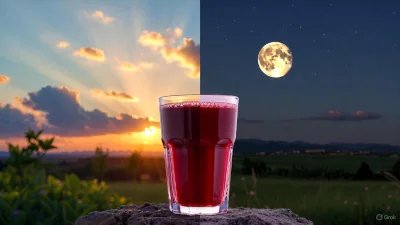
There’s no universal “best time.” Pick the option you can repeat most days, then measure averages. Some studies track blood pressure changes across many hours (including a full day), which supports the idea that timing and daily routine can matter.[2]
Morning
Good fit if you want better midday/afternoon readings and an easy habit.
Common watch-outs:
- If it upsets your stomach, take it with food.
- Keep caffeine timing consistent while testing (coffee can muddy the signal).
- Don’t check BP right after rushing around—sit and rest first.
Night
Good fit if your biggest issue is high morning blood pressure or you tolerate it better with dinner.
Common watch-outs:
- Finish it ~2–3 hours before bed if reflux or bathroom trips bother you.
- Dinner salt/alcohol can raise BP—keep those steady during your test.
- Late-night snacking and poor sleep can overwhelm small effects.
Before exercise timing (optional)
If you’re using beet juice around workouts, a simple starting rule is 2–3 hours pre-exercise.[1] Avoid judging the effect using immediately post-workout BP readings—exercise changes blood pressure on its own. Instead, compare resting readings taken when you’re calm and seated.
Timing options (what to try first)
| Timing choice | When to drink it | Best for | Watch-outs | Tracking tip |
| Morning | With breakfast; expect peak later | Daytime support + routine consistency | Nausea if empty stomach; caffeine confounds | Keep coffee timing the same each day |
| Evening (dinner) | With dinner; not too late | Better tolerance with food | Dinner salt/alcohol confounds | Keep dinner pattern steady during test |
| Night (before bed) | Finish ~2–3 hours before lying down | High morning BP patterns | Reflux; late snacking | Track sleep quality + morning BP |
| Before exercise | 2–3 hours pre-workout | Exercise days + BP routine | Hard for early workouts | Compare only resting readings |
14-day timing test plan
This is the fastest way to learn what works for YOU. The goal is to compare averages, not one “perfect” reading.
Home BP basics: same arm, feet flat, back supported, rest 5 minutes, no talking. Take 2 readings one minute apart and average them.
14-day test plan
| Days | What you do | What to record | What counts as a win |
| 1–4 (baseline) | No beet juice. Measure AM + PM. | AM avg, PM avg, sleep notes | A stable baseline average |
| 5–9 (Timing A) | Same dose, same timing daily (morning OR night). | AM avg, PM avg, side effects | Lower multi-day average vs baseline with good tolerance |
| 10–14 (Timing B) | Switch timing, keep the dose the same. | AM avg, PM avg, sleep quality | Better overall average than Timing A, fewer side effects |

Safety notes
- If you take blood pressure meds, nitrates for chest pain, or PDE-5 inhibitors (e.g., sildenafil), talk to a clinician first (low-BP risk).
- Stop and get medical advice if you feel dizzy, faint, unusually weak, or your BP drops too low.
- Beets are relatively high in oxalate; if you’ve had calcium-oxalate kidney stones, ask your clinician what’s safe.
- Beeturia (pink/red urine or stool) can happen and is usually harmless.
Frequently Asked Questions
- How long does it take to work? Many people aim for a 2–3 hour window after drinking beet juice.[1]
- Morning or night—which is better? Whichever you can do consistently. Use the 14-day plan to compare averages.[2]
- Do I need to avoid mouthwash? Don’t change dental care without guidance. But for a clean timing test, keep mouthwash habits consistent because antibacterial rinses can affect nitrate conversion.[5][6]
Next Reads
- Nitric oxide for blood pressure
- Beetroot juice for blood pressure
- Does mouthwash reduce nitric oxide
- Nitric oxide foods
References
- [1] Rowland SN, et al. Influence of acute dietary nitrate supplementation timing on nitrate metabolism, central and peripheral blood pressure and exercise tolerance in young men. Eur J Appl Physiol. 2024. https://pubmed.ncbi.nlm.nih.gov/38040982/
- [2] Kukadia S, et al. A Double-Blind Placebo-Controlled Crossover Study of the Effect of Beetroot Juice Containing Dietary Nitrate on Aortic and Brachial Blood Pressure Over 24 h. Front Physiol. 2019. (PMC) https://pmc.ncbi.nlm.nih.gov/articles/PMC6369216/
- [3] Benjamim CJR, et al. Nitrate Derived From Beetroot Juice Lowers Blood Pressure in Patients With Arterial Hypertension: Systematic Review and Meta-Analysis. Front Nutr. 2022. https://pubmed.ncbi.nlm.nih.gov/35369064/
- [4] Grönroos R, et al. Effects of beetroot juice on blood pressure in hypertension according to European Society of Hypertension Guidelines: a systematic review and meta-analysis. 2024. https://www.sciencedirect.com/science/article/pii/S0939475324002369
- [5] Alzahrani HS, et al. The role of dietary nitrate and the oral microbiome on blood pressure. Clin Exp Pharmacol Physiol. 2021. https://pubmed.ncbi.nlm.nih.gov/33280615/
- [6] Bondonno CP, et al. Antibacterial mouthwash blunts oral nitrate reduction and increases blood pressure in treated hypertensive men and women. Am J Hypertens. 2015. https://pubmed.ncbi.nlm.nih.gov/25359409/
- [7] Joshipura K, et al. Over-the-counter mouthwash use, nitric oxide and hypertension risk. Blood Press. 2020. (PMC) https://pmc.ncbi.nlm.nih.gov/articles/PMC7125030/
Last updated: 2025-12-29