
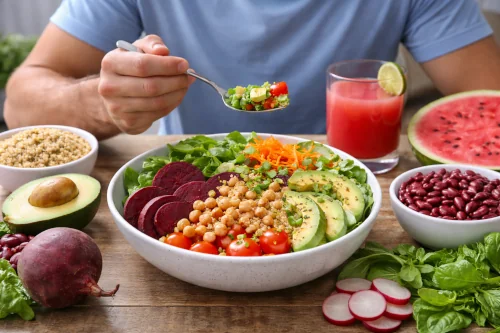
Nitric oxide foods are mostly nitrate-rich vegetables — leafy greens like arugula and spinach, root vegetables like beets, and crunchy options like celery and radish. Your body converts some of the nitrate in these foods into nitrite and then into nitric oxide, a signaling molecule your blood vessel lining uses to help arteries relax. [Olas, 2024]
Eating more of these vegetables is a sensible food-first habit and may modestly support blood pressure in some people. It is not a replacement for prescribed medication or a clinician’s treatment plan, and the American Heart Association’s current high blood pressure guidance treats healthy eating as one part of management, not the whole plan. [AHA, 2025]
If your goal is blood pressure support, the most useful starting point is not a supplement. It is a grocery routine: leafy greens most days, beets a few times a week if you enjoy them, and a consistent way of measuring your blood pressure at home so you can tell what’s signal and what’s noise.
What nitric oxide foods actually are
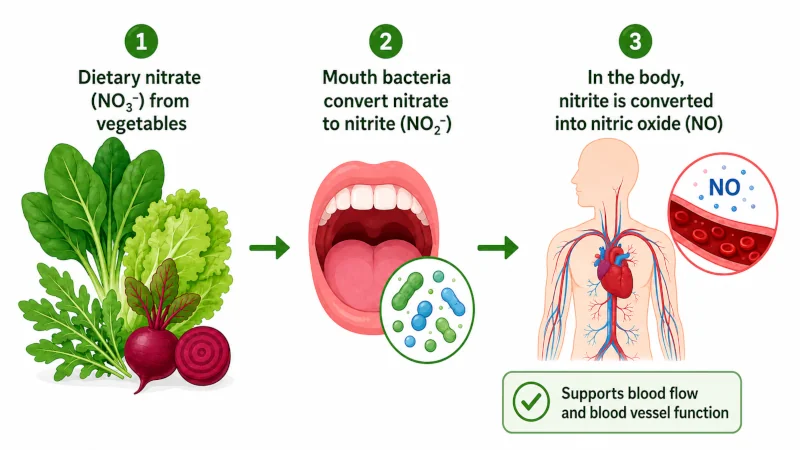
Food does not contain a useful dose of nitric oxide itself. Vegetables provide nitrate. After you eat nitrate-rich produce, bacteria living on the back of your tongue convert part of that nitrate into nitrite. Your body then uses nitrite as part of the nitrate–nitrite–nitric oxide pathway, especially in low-oxygen tissue conditions. [Olas, 2024]
That mouth step matters. It explains why oral hygiene products and vegetables end up in the same conversation, and it is why a practical list of “nitric oxide foods” really means a list of nitrate-rich vegetables. For the home measurement side of the same picture, see nitric oxide and blood pressure tracking.
Best nitric oxide foods to put on your grocery list
Leafy greens and beets are the practical core. The Olas review of nitrate-rich vegetables identifies arugula, spinach, lettuce, celery, radishes, and beetroot as the highest-nitrate everyday produce. Nitrate levels in any specific bunch of greens depend on soil, sun exposure, storage, and how the food was prepared, so the ranking is a starting point — not a guarantee for the bag in your fridge. [Olas, 2024]
| Food group | Examples | Easy way to use it | Beginner target |
| Leafy greens | Arugula, spinach, lettuce, spring mix | Salad base; stir into eggs, soup, beans, or pasta near the end of cooking | Generous serving most days |
| Beetroot | Roasted beets, shredded raw beets, cooked beets | Bowls or salads; keep a cooked batch in the fridge | A few times per week if you enjoy it |
| Crunchy vegetables | Celery, radishes | Snacks, salads, sandwiches, grain bowls | Rotate for variety |
| Other greens | Bok choy and similar leafy vegetables | Stir-fries, soups, side dishes | Choose what you’ll actually eat |
| Herbs and add-ons | Parsley and other fresh herbs | Scatter over meals for flavor and extra plant variety | Add-on, not the main serving |
Beets help, but they are not mandatory. Leafy greens can carry the habit. For people who actually want to use beets, red beet health benefits has prep ideas that survive a normal week.
What the research actually shows about nitrate-rich foods and blood pressure
The evidence is real but the practical effect is modest. A 2025 GRADE-assessed systematic review and dose-response meta-analysis pooled 75 randomized controlled trials with 1,823 participants and found dose-dependent increases in plasma nitrate and nitrite levels after dietary nitrate intake, along with reductions in blood pressure and improvements in vascular-health markers. [Norouzzadeh et al., 2025]
The headline number: for each additional millimole of nitrate, medium-term systolic blood pressure dropped by a weighted mean of 0.48 mm Hg (95% CI: −0.71, −0.25), with smaller but consistent reductions seen in the acute and short-term analyses. Diastolic blood pressure showed a smaller per-mmol reduction (about 0.12 mm Hg). [Norouzzadeh et al., 2025]
Two honest caveats sit alongside those numbers. The effect per millimole is small, and most trials used measured nitrate doses or concentrated beetroot products rather than a normal mixed diet, so translating a meta-analysis estimate to “a bowl of arugula at lunch” is rough. Individual response also varies — some people see a meaningful drop, others don’t.
Use this evidence for what it supports: nitrate-rich vegetables are a reasonable part of a heart-healthy eating pattern and may help some people. Don’t use it to delay care, stop medication, or assume a high reading will correct itself. The AHA treats diet as one part of high blood pressure management, alongside accurate measurement and medical treatment when needed. [AHA, 2025]
How to eat more nitrate-rich vegetables without overthinking it
The most useful plan is the one you’ll repeat on an ordinary Wednesday. Pick one default meal and one backup. A large arugula or spring-mix salad at lunch works. So does spinach stirred into scrambled eggs, soup, lentils, or any one-pan dinner near the end of cooking.
| Meal | Simple option | Why it’s realistic |
| Breakfast | Eggs or tofu scramble with a handful of spinach | Adds greens without changing the whole meal |
| Lunch | Arugula or spring-mix bowl with beans, chicken, or fish | Makes leafy greens a reliable default |
| Snack | Celery and radishes with hummus or yogurt dip | Keeps crunchy vegetables easy to reach |
| Dinner | Bok choy stir-fry, or greens stirred into soup | Works for people who dislike salads |
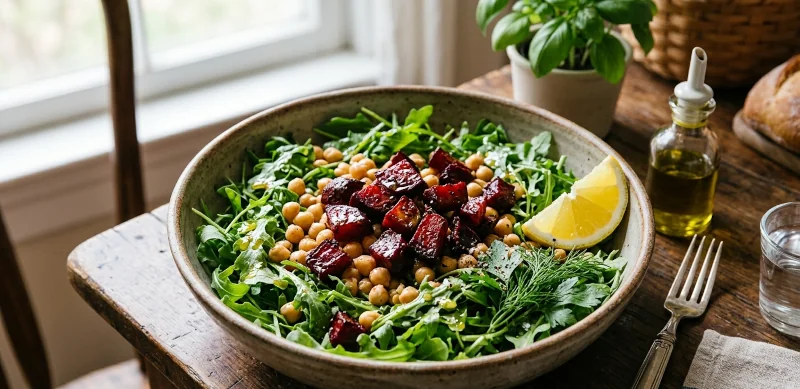
| Batch prep | Roast beets once and reuse them in bowls for 3–4 days | Makes beetroot convenient instead of aspirational |
Food is one part of the picture. Activity, sleep, smoking cessation, and other daily habits do their own work. See lifestyle habits that support nitric oxide for the companion routine.
A simple 14-day food-first experiment
A short tracking window helps you judge whether a routine is workable. It can’t prove that a single food caused a change in your blood pressure. Keep your medication, caffeine routine, and usual exercise pattern steady unless your clinician tells you to change them.
| Timing | What to do | What to track |
| Days 1–7 | Keep your usual diet stable. Measure blood pressure at consistent times. | Readings, medication timing, symptoms, and unusual events (poor sleep, a heavy restaurant meal). |
| Days 8–21 | Add one generous serving of leafy greens most days. Add beets two or three times a week if you enjoy them. | Keep the same blood-pressure routine. Note whether the food plan is easy enough to continue. |
| After day 21 | Review the trend rather than the best or worst single number. | Share the log with your clinician if readings stay high, fall too low, or cause symptoms. |
Don’t judge the experiment by one blood pressure reading
Blood pressure changes minute to minute. A single number can be moved by stress, talking, caffeine, cuff position, or poor cuff fit. The American Heart Association recommends an automatic upper-arm monitor and two readings one minute apart at every measurement session. [AHA, 2025]
If you’re tracking food changes, look at the pattern over days rather than reacting to one spike or dip. For a step-by-step home routine, see nitric oxide and blood pressure tracking.

Mouthwash, oral bacteria, and nitric oxide
The nitrate pathway depends partly on nitrate-reducing bacteria in the mouth. In a small randomized crossover trial of 15 adults already being treated for hypertension, three days of antibacterial mouthwash use was associated with a 2.3 mm Hg increase in systolic blood pressure compared with the water control (95% CI: 0.5, 4.0). [Bondonno et al., 2015] A separate longitudinal cohort study from the San Juan Overweight Adults Longitudinal Study reported that people using over-the-counter mouthwash twice a day or more had a higher incidence of hypertension than non-users (incidence rate ratio 2.17; 95% CI: 1.27, 3.71). Observational research cannot prove that mouthwash caused the hypertension. [Joshipura et al., 2020]
Do not stop a dentist-recommended rinse on your own, especially if you use it for gum disease, infection risk, or a specific oral-health condition. Ask your dentist what type of rinse you use, how often you need it, and whether a different approach would be appropriate. For the longer explanation, read mouthwash, oral bacteria, and nitric oxide.
Safety notes and who should talk to a clinician first
Vegetables are a food-first choice, but some readers need a personalized plan. Talk with your clinician or a registered dietitian before making a major change if you have chronic kidney disease, are following a potassium restriction, are receiving dialysis, have a history of calcium oxalate kidney stones, or take blood-pressure medicines and have episodes of dizziness or fainting.
Leafy greens can contain meaningful potassium. The National Kidney Foundation notes that most people with chronic kidney disease do not automatically need to limit leafy greens, but the right amount depends on the stage of disease, the type of dialysis, and lab results. The foundation also flags that spinach and Swiss chard are high in oxalates, which matters for some calcium oxalate stone formers. [National Kidney Foundation, 2023]
If you’re thinking about beetroot powders, concentrated juices, or amino-acid products, read the separate guide on nitric oxide supplements for blood pressure. A concentrated supplement is not the same decision as adding vegetables to meals.
When to seek urgent care for a blood pressure reading
Food changes are not an urgent-care plan. The American Heart Association advises calling 911 if your blood pressure is higher than 180 and/or 120 mm Hg and you have symptoms such as chest pain, shortness of breath, back pain, numbness, weakness, a change in vision, or difficulty speaking. [AHA, 2025] If a reading is higher than 180 and/or 120 mm Hg without those symptoms, wait one minute, take it again, and contact your health care professional promptly if it remains high. [AHA, 2025]
| Health disclaimer: This article about nitric oxide foods is for educational purposes only. It does not diagnose, treat, cure, or prevent disease, and it is not a substitute for medical care. Do not stop or change blood-pressure medication based on a food experiment. Talk with a qualified clinician before making major dietary changes if you have kidney disease, heart disease, are pregnant or breastfeeding, have a history of fainting or low blood pressure, are following a prescribed dietary restriction, or have questions about possible medication interactions. |
Frequently Asked Questions
Do I need beet juice to support nitric oxide?
No. Beetroot is one option, but leafy greens like arugula, spinach, and lettuce also fit a food-first approach. Beet juice is more concentrated than a serving of vegetables, so readers with kidney disease, a potassium restriction, or blood-pressure symptoms should ask a clinician before using it regularly.
Can I cook nitrate-rich vegetables?
Yes. Raw salads are convenient, but cooked greens are useful too. Choose the preparation that keeps you eating vegetables consistently. If you have kidney disease and need to monitor potassium, ask your kidney dietitian whether raw or cooked portions fit your plan.
Should I avoid vegetables because nitrates are linked to cancer concerns?
No. Nitrate-rich vegetables shouldn’t be lumped together with processed meat. The World Health Organization’s processed-meat classification covers meat transformed by salting, curing, fermentation, smoking, or similar processes — a different category from fresh produce. A vegetable-rich diet remains a sensible choice. [WHO, 2015]
How quickly can nitrate-rich foods change blood pressure?
Some research measures effects within hours, others after days or weeks. Your home reading can move for many reasons. Use a consistent measurement routine and review a trend over weeks instead of expecting one meal to produce a reliable result.
What if I dislike salads?
Use spinach in eggs or soup, cook bok choy in a stir-fry, snack on celery and radishes, or add roasted beets to a warm grain bowl. The goal is a repeatable vegetable habit, not a specific recipe.
References
- Norouzzadeh M, Hasan Rashedi M, Ghaemi S, et al. Plasma nitrate, dietary nitrate, blood pressure, and vascular health biomarkers: a GRADE-assessed systematic review and dose-response meta-analysis of randomized controlled trials. Nutrition Journal. 2025;24:47. → View source
- Olas B. The Cardioprotective Role of Nitrate-Rich Vegetables. Foods. 2024;13(5):691. → View source
- American Heart Association. 2025 AHA/ACC/AANP/AAPA/ABC/ACCP/ACPM/AGS/AMA/ASPC/NMA/PCNA/SGIM Guideline for the Prevention, Detection, Evaluation and Management of High Blood Pressure in Adults — Guideline Hub. → View source
- American Heart Association. Home Blood Pressure Monitoring. Last reviewed Aug 14, 2025. → View source
- American Heart Association. Understanding Blood Pressure Readings. Last reviewed Aug 14, 2025. → View source
- Bondonno CP, Liu AH, Croft KD, Considine MJ, Puddey IB, Woodman RJ, Hodgson JM. Antibacterial Mouthwash Blunts Oral Nitrate Reduction and Increases Blood Pressure in Treated Hypertensive Men and Women. American Journal of Hypertension. 2015;28(5):572–575. → View source
- Joshipura K, Muñoz-Torres F, Fernández-Santiago J, Patel RP, Lopez-Candales A. Over-the-counter mouthwash use, nitric oxide and hypertension risk. Blood Pressure. 2020;29(2):103–112. → View source
- National Kidney Foundation. Leafy Green Vegetables. Last updated January 2, 2023. → View source
- World Health Organization. Cancer: Carcinogenicity of the consumption of red meat and processed meat. October 26, 2015. → View source
