

If you’re dealing with constant worry, a heavy low mood, or both at once, here’s the most important thing to know first: anxiety and depression are among the most common health conditions in the country, and they respond well to treatment. You can feel better. Most people who get the right help do.
The numbers make the “you’re not alone” part concrete. In a given year, an estimated 19.1% of U.S. adults have an anxiety disorder, and about 1 in 3 will experience one at some point in life [NIMH]. In 2021, roughly 21 million U.S. adults — about 8.3% — had at least one major depressive episode [NIMH, 2023]. Anxiety and depression are common, they’re medical conditions rather than personal failings, and effective care exists.
This guide walks through how the two differ, how to recognize them, when a symptom means “get help now,” and which treatments have real evidence behind them — told straight, without the miracle-cure framing.
Anxiety and depression are different conditions that often travel together
They’re distinct, but they overlap so often that clinicians expect to see them together.
What anxiety looks like
Feeling anxious before a test, a deadline, or a hard conversation is normal and usually passes. An anxiety disorder is different: the worry doesn’t go away, shows up across many situations, and can get worse over time [NIMH, 2024]. It’s less about a single fear and more about a persistent state of dread, tension, and bracing for something to go wrong. Anxiety disorders include generalized anxiety disorder, panic disorder, social anxiety disorder, and specific phobias [NIMH, 2024].
What depression looks like
Everyone feels sad or flat sometimes, and those feelings usually lift. Depression is a medical condition in which low mood or a loss of interest and pleasure lasts for weeks and interferes with how you sleep, eat, work, and function [NIMH, 2024]. It isn’t weakness, and it isn’t something a person can simply decide their way out of.
Why they overlap
Anxiety and depression frequently occur together, and NIMH specifically funds research into how anxiety overlaps with other conditions, including depression [NIMH, 2024]. Living with relentless anxiety is exhausting and can pull mood down; deep depression often comes wrapped in worry and agitation. That overlap matters for treatment, because several of the most effective approaches help both at once.
Symptoms: how to tell what you’re dealing with
Symptoms cluster differently, even where they overlap. The lists below are for recognition, not self-diagnosis — only a qualified professional can diagnose either condition.
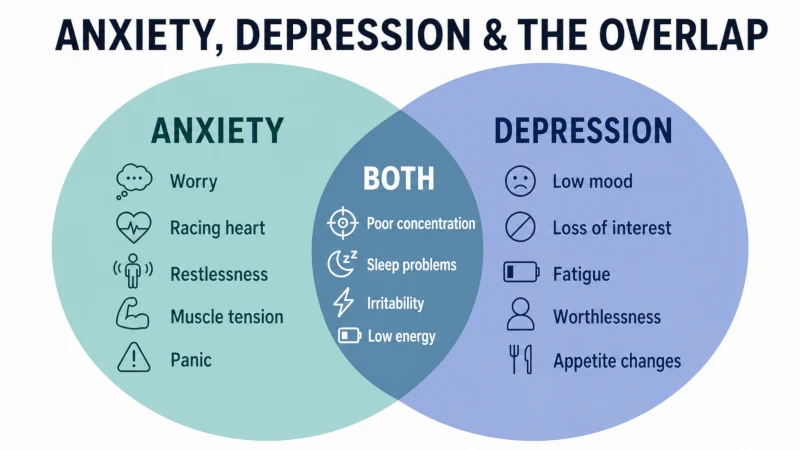
Common signs of anxiety
Persistent, hard-to-control worry; restlessness or feeling on edge; a racing or pounding heart; muscle tension; trouble concentrating; irritability; and sleep that won’t come because your mind won’t settle. In panic disorder, people have sudden, intense surges of fear with physical symptoms such as chest tightness, shortness of breath, or dizziness [NIMH, 2024].
Common signs of depression
Persistent sadness or emptiness; losing interest in things you used to enjoy; fatigue; changes in sleep or appetite; trouble concentrating or making decisions; feelings of worthlessness or guilt; and, in some people, thoughts of death or self-harm [NIMH, 2024]. Depression can also show up physically — as low energy, aches, or slowed movement — which is one reason it’s sometimes missed.
A side-by-side comparison
| Anxiety | Depression | Overlap you might feel | |
| Core experience | Excessive worry, fear, dread | Low mood, loss of interest and pleasure | Both drain energy and focus |
| Typical thoughts | “Something bad is going to happen” | “Nothing matters / I’m worthless” | Trouble concentrating; poor sleep |
| Body signs | Racing heart, tension, restlessness | Fatigue, appetite/sleep changes, slowness | Sleep problems in both directions |
| Red-flag symptom | Panic attacks that limit daily life | Thoughts of self-harm or suicide | Feeling unable to keep yourself safe |
If your experience doesn’t fit neatly in one column, that’s expected — many people land in the middle. What matters is whether symptoms are persistent and interfering with your life, not which label fits best.
What causes anxiety and depression?
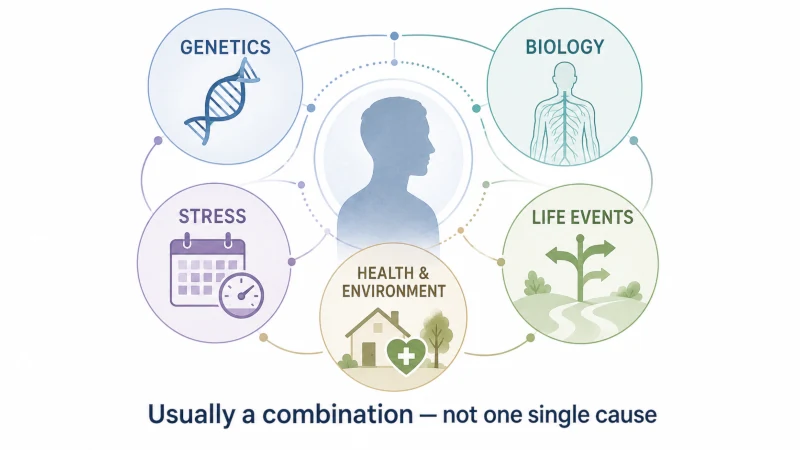
There’s no single cause, and the older idea that either condition comes down to a simple “chemical imbalance” is too tidy. Research points to a mix of genetic, biological, environmental, and psychological factors that interact differently in each person [NIMH, 2024]. Family history, chronic stress, trauma, medical illness, and major life changes can all raise risk. The practical takeaway: you didn’t cause this by not trying hard enough, and understanding the cause isn’t a prerequisite for getting effective help.
Red flags: when to get help right away
Most anxiety and depression can be handled through your primary care doctor or a mental health professional on a normal timeline. Some situations can’t wait.
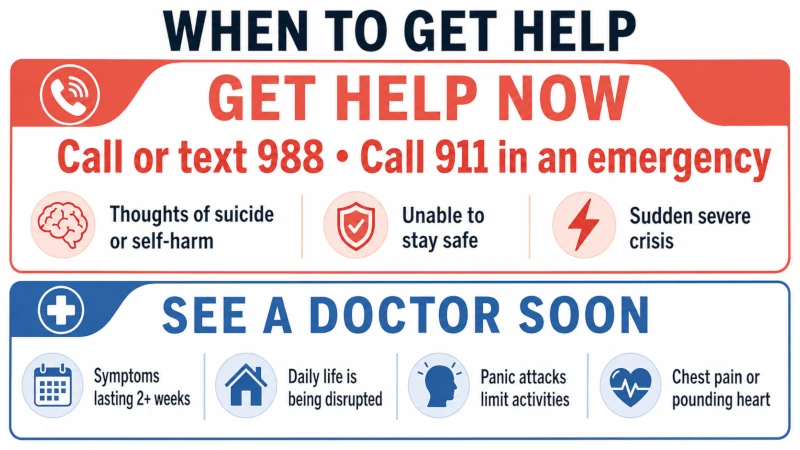
Get help immediately — call or text 988, or call 911 — if you or someone else:
- Has thoughts of suicide or self-harm, or feels unable to stay safe
- Has a specific plan to hurt themselves, or has already done so
- Is experiencing a sudden, severe crisis or a sharp worsening of mood
- Cannot care for themselves — not eating, not functioning, not safe alone
The 988 Suicide & Crisis Lifeline is available by call or text, 24/7, and in a life-threatening emergency you should call 911 [NIMH, 2024].
See a doctor soon — within days, not months — if:
- Low mood, loss of interest, or persistent anxiety lasts more than two weeks
- Symptoms are interfering with work, relationships, or daily life
- Panic attacks are starting to limit where you go or what you do
- Anxiety comes with chest pain, a pounding heart, tremor, sudden weight change, or other physical symptoms — these can have medical causes worth ruling out
Reaching out early tends to make treatment shorter and easier. Waiting rarely does.
Treatments that actually work
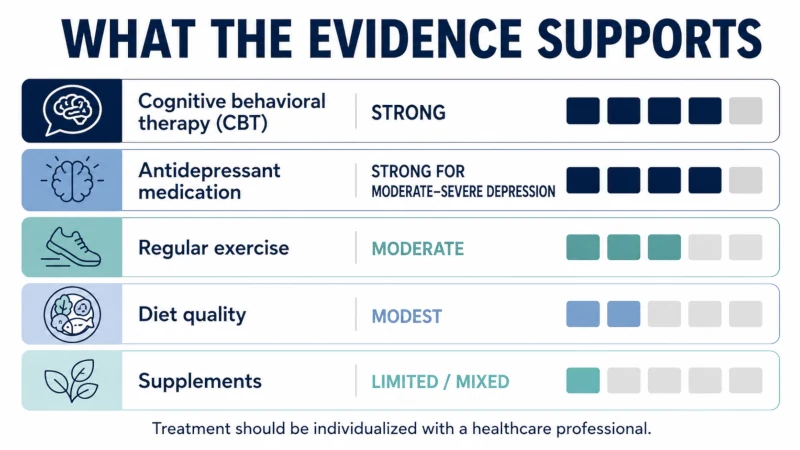
Here’s the encouraging part. Both conditions are highly treatable, and the main options have strong evidence. One gap worth naming: in 2021, only about 61% of U.S. adults with major depression received treatment in the past year [NIMH, 2023]. Many people who could feel better simply haven’t started yet.
Cognitive behavioral therapy (CBT) is the most-studied psychological treatment for both anxiety and depression, and it works. A large meta-analytic review found strong effects of CBT across major depression and the main anxiety disorders — with effect sizes in the large range, and still meaningful after adjusting for publication bias [Cuijpers et al., 2016]. CBT helps you identify and shift the thought and behavior patterns that keep worry or low mood running, and it gives you tools you keep after therapy ends. For anxiety specifically, approaches that gradually and safely face feared situations are a core, effective ingredient.
Medication
For moderate to severe depression, antidepressants help. A landmark network meta-analysis pooling 522 trials and roughly 116,000 adults found that all 21 antidepressants studied were more effective than placebo for acute major depression, though they differed in how well they worked and were tolerated [Cipriani et al., 2018]. SSRIs are commonly used first because they tend to be better tolerated. A few honest expectations:
- Give it time. Antidepressants usually take several weeks to show their full effect.
- Side effects are common early on — nausea, sleep or appetite changes, and sexual side effects are among the most frequent — and often ease over the first weeks.
- Don’t stop abruptly. Stopping suddenly can cause withdrawal-like symptoms; changes should be made with your prescriber.
- Watch the early weeks closely. Some people — particularly those under 25 — can feel more agitated or have more distressing thoughts when first starting. Anyone beginning an antidepressant should be monitored, and should contact their prescriber right away if they feel worse.
- Interactions matter. Antidepressants can interact with other medications and supplements. Tell your doctor and pharmacist everything you take, including over-the-counter products and herbs like St. John’s wort.
- Pregnancy and breastfeeding call for an individualized conversation with your doctor, weighing the risks of untreated illness against medication risks.
Therapy and medication together
For many people, especially with more severe or persistent symptoms, the combination of therapy and medication works better than either alone. There’s no single right answer — the best plan depends on your symptoms, your history, your preferences, and what you can access. That’s a conversation to have with a doctor, not a decision to make from a website.
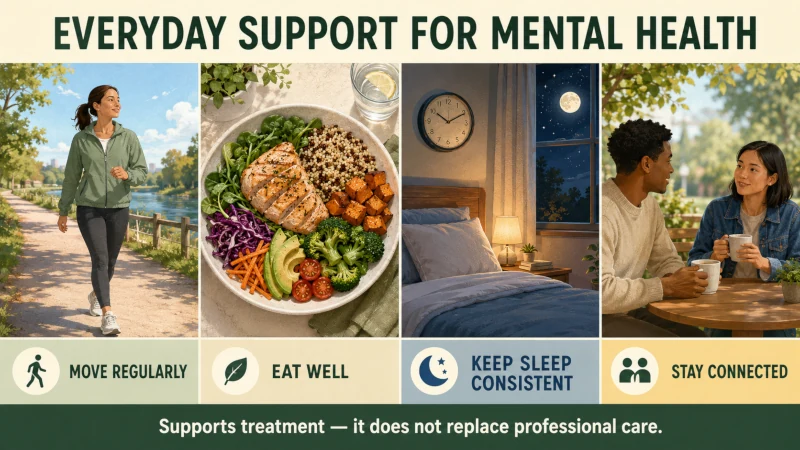
Everyday steps that support treatment (but don’t replace it)
Lifestyle changes aren’t a substitute for professional care when symptoms are moderate or severe. Think of them as levers that make everything else work better.
Movement and exercise
This is one of the stronger lifestyle findings. An overview of systematic reviews found that physical activity produced medium reductions in symptoms of both depression and anxiety compared with usual care [Singh et al., 2023]. You don’t need a gym or a marathon plan — regular movement you’ll actually keep doing is what counts, and on a low-energy day, a short walk still counts.
Food and diet
Diet quality plays a supporting role, and the evidence is honest but modest. A meta-analysis of 16 randomized trials found that improving diet significantly reduced depressive symptoms, though the effect was small — and, notably, it did not find a significant effect on anxiety symptoms [Firth et al., 2019]. So a nutritious, mostly whole-food pattern is a reasonable, low-risk support for mood, but it’s not a treatment on its own. If you want practical starting points, see our evidence-based guides to foods that may help with depression and foods that reduce stress.
Sleep, alcohol, and connection
Poor sleep worsens both anxiety and depression, so protecting a consistent sleep schedule is worth the effort. Alcohol is a common trap — it can feel calming in the moment but tends to worsen anxiety and disrupt sleep over time. And social connection, even in small doses, buffers against both conditions. None of these is a cure, but each removes weight from the scale.
A word on supplements
Some supplements have modest evidence for stress and mild anxiety, but marketing usually runs ahead of the science, and supplements can interact with prescription medicines. They are not a substitute for therapy or medication when symptoms are moderate to severe. If you’re considering this route, our overview of supplements for anxiety and stress lays out what’s supported and what to skip — and talk to a doctor or pharmacist before combining anything with a prescription.
Special situations: children, pregnancy, and older adults
Children and teens. Anxiety and depression are common in young people too — in 2021, an estimated 20.1% of U.S. adolescents aged 12–17 had a major depressive episode [NIMH, 2023]. Signs can look different in kids: irritability, withdrawal, physical complaints, or a drop in school performance. Age-appropriate therapy is effective, and a pediatrician or primary care doctor is a good first stop.
Pregnancy and postpartum. Anxiety and depression around pregnancy are common and treatable, and both undertreated illness and medication carry considerations — which is exactly why this calls for an individualized plan with your doctor rather than a one-size-fits-all rule.
Older adults. Depression is not a normal part of aging, and in older adults it can be mistaken for a medical problem, or vice versa. New low mood, fatigue, or memory changes in later life deserve a medical check rather than a wait-and-see approach.
Anxiety and depression are two of the most treatable conditions in medicine. Whatever combination of therapy, medication, and daily support turns out to fit you, the step that matters most is the first one: telling a doctor, or someone you trust, what you’ve been carrying. For a broader look at related conditions, see our overview of mental health disorders.
| Health Disclaimer This article is for educational and informational purposes only and is not a substitute for professional medical advice, diagnosis, or treatment. Anxiety and depression are medical conditions that should be evaluated by a qualified professional. Always talk with your doctor — and, for supplements or medication questions, your pharmacist — before starting, stopping, or changing any treatment, especially if you are pregnant, breastfeeding, take other medications, or have another health condition. If you are in crisis or having thoughts of harming yourself, call or text 988 (the Suicide & Crisis Lifeline) or call 911 right away. |
Frequently Asked Questions
What’s the difference between anxiety and depression?
Anxiety centers on excessive, persistent worry and fear, often with a racing heart and tension. Depression centers on lasting low mood and loss of interest or pleasure, often with fatigue and changes in sleep and appetite. They’re distinct conditions, but they share symptoms like poor concentration and disrupted sleep, and they frequently occur together [NIMH, 2024].
Can you have anxiety and depression at the same time?
Yes, and it’s common. The two overlap so often that NIMH specifically studies how anxiety co-occurs with depression [NIMH, 2024]. Having both doesn’t mean your situation is hopeless — several effective treatments, including CBT, help with both at once [Cuijpers et al., 2016].
Do anxiety and depression go away on their own?
Sometimes mild, situational symptoms ease as circumstances change. But when low mood or persistent anxiety lasts more than two weeks or interferes with daily life, it’s worth seeing a doctor rather than waiting it out — treatment tends to be more effective and shorter when started early [NIMH, 2024].
What’s the most effective treatment?
There’s no single best answer for everyone. CBT has strong evidence for both conditions [Cuijpers et al., 2016], antidepressants help for moderate to severe depression [Cipriani et al., 2018], and for many people the combination works best. Regular exercise adds a meaningful, evidence-backed boost [Singh et al., 2023]. The right plan depends on your symptoms and preferences — decide it with a doctor.
When should I go to the ER instead of waiting for an appointment?
If you have thoughts of harming yourself, feel unable to stay safe, or are in a severe crisis, treat it as an emergency: call or text 988, or call 911 [NIMH, 2024]. Also seek prompt care for anxiety that comes with chest pain or a pounding heart, since those symptoms can have medical causes worth ruling out.
References
- National Institute of Mental Health. Any Anxiety Disorder (statistics; data from NCS-R, 2001–2003). → View source
- National Institute of Mental Health. Major Depression (statistics; 2021 NSDUH; last updated July 2023). → View source
- National Institute of Mental Health. Depression (health topic; last reviewed December 2024). → View source
- National Institute of Mental Health. Anxiety Disorders (health topic; last reviewed December 2024). → View source
- Cipriani A, Furukawa TA, Salanti G, et al. Comparative efficacy and acceptability of 21 antidepressant drugs for the acute treatment of adults with major depressive disorder: a systematic review and network meta-analysis. Lancet. 2018;391(10128):1357–1366. doi:10.1016/S0140-6736(17)32802-7. → View source
- Cuijpers P, Cristea IA, Karyotaki E, Reijnders M, Huibers MJH. How effective are cognitive behavior therapies for major depression and anxiety disorders? A meta-analytic update of the evidence. World Psychiatry. 2016;15(3):245–258. doi:10.1002/wps.20346. → View source
- Singh B, Olds T, Curtis R, et al. Effectiveness of physical activity interventions for improving depression, anxiety and distress: an overview of systematic reviews. Br J Sports Med. 2023;57:1203–1209. doi:10.1136/bjsports-2022-106195. → View source
- Firth J, Marx W, Dash S, et al. The effects of dietary improvement on symptoms of depression and anxiety: a meta-analysis of randomized controlled trials. Psychosom Med. 2019;81(3):265–280. doi:10.1097/PSY.0000000000000673. → View source
