
If you are holding two canisters that look almost identical, here is the difference in one line: wheat bran is mostly fiber, and wheat germ is mostly nutrition. They come from opposite parts of the same grain, they do different jobs, and swapping one for the other will not give you what you were after. That is the part of the wheat germ vs wheat bran question that trips people up.
The short answer
- Wheat bran is the outer coat of the kernel. It is about 43% fiber by weight, and that fiber is mostly insoluble. Reach for it when you want bulk and regularity.
- Wheat germ is the embryo — the part that would sprout. It carries most of the kernel’s protein, unsaturated fat, folate, thiamin, zinc, and magnesium. Reach for it when you want more nutrition per spoonful.
- Neither is gluten-free, and neither is a treatment for anything. They are ingredients.
Where each one comes from inside the grain
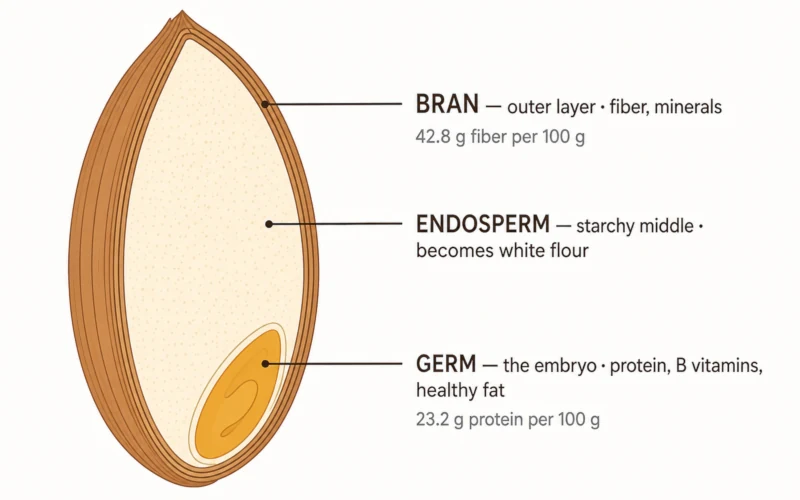
A wheat kernel has three parts. The bran is the fibrous outer layer. The endosperm is the large starchy middle. The germ is the small embryo tucked at one end. Milling white flour removes the bran and the germ and keeps the endosperm, which is why refined flour loses fiber, B vitamins, and iron even when it is later enriched [American Heart Association on whole vs. refined grains, 2024].
So when you buy wheat bran or wheat germ in a canister, you are buying a piece that was separated out during milling and sold on its own. If you would rather not think about parts at all, eating the whole wheat kernel and its products gives you all three together, in the proportions they naturally occur.
Wheat germ vs wheat bran: the nutrition side by side
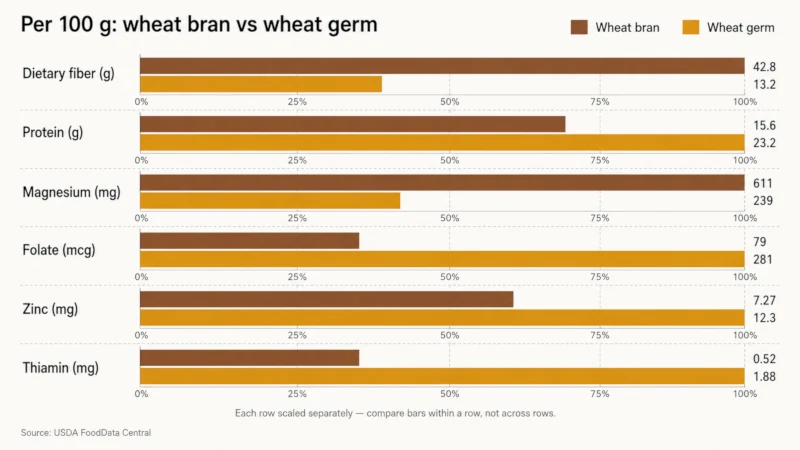
All figures are per 100 grams of the raw product, from USDA FoodData Central [USDA, Wheat bran, crude; USDA, Wheat germ, crude]. One hundred grams is far more than anyone eats at once — practical servings come after the table.
| Per 100 g | Wheat bran | Wheat germ |
| Calories | 216 | 360 |
| Protein | 15.6 g | 23.2 g |
| Total fat | 4.25 g | 9.72 g |
| Carbohydrate | 64.5 g | 51.8 g |
| Dietary fiber | 42.8 g | 13.2 g |
| Magnesium | 611 mg | 239 mg |
| Phosphorus | 1,010 mg | 842 mg |
| Iron | 10.6 mg | 6.26 mg |
| Zinc | 7.27 mg | 12.3 mg |
| Folate | 79 mcg | 281 mcg |
| Thiamin (B1) | 0.52 mg | 1.88 mg |
| Niacin (B3) | 13.6 mg | 6.81 mg |
| Selenium | 77.6 mcg | 79.2 mcg |
In real servings, using the USDA cup weights: a quarter cup of wheat bran is about 15 grams and delivers roughly 6 grams of fiber for about 31 calories. Two tablespoons of wheat germ is about 14 grams and delivers roughly 3 grams of protein, 1.8 grams of fiber, 39 micrograms of folate, and 33 milligrams of magnesium for about 50 calories.
Read the table as a division of labor rather than a scoreboard. Bran wins fiber and magnesium by a wide margin. Germ wins protein, folate, thiamin, and zinc. Neither one is the better product; they are answers to different questions.
What wheat bran is actually good for
Fiber, bulk, and regularity
Wheat bran is one of the standard examples of insoluble fiber — the type that does not dissolve in water, moves material through the digestive tract, and adds bulk to stool. That makes it useful for people who do not pass stool regularly [Mayo Clinic on dietary fiber, 2025]. This is the best-supported thing bran does, and it is a mechanical effect, not a medicinal one.
It also helps close a real gap. US adults are advised to get 22 to 34 grams of fiber a day depending on age and sex [NIDDK on eating and constipation], and most people fall short. A quarter cup of bran stirred into oatmeal or yogurt covers a quarter of that in one go.
Diets high in fiber overall are associated with lower risk of hemorrhoids, diverticulitis, and colorectal cancer [Mayo Clinic, 2025]. Worth being precise about what that means: those associations come from overall dietary patterns, not from trials showing that a spoonful of wheat bran prevents cancer. Adding bran is a reasonable way to raise your fiber intake. It is not a shield.
What wheat bran won’t do
If your goal is cholesterol, bran is the wrong lever. The fiber that helps lower LDL is the soluble kind found in oats, beans, flaxseed, and psyllium — wheat bran’s fiber is largely insoluble [Mayo Clinic, 2025]. Oat bran and psyllium are the better choices there.
And it will not fix a diet. Whole foods give you fiber alongside vitamins, minerals, and other compounds that an isolated bran supplement doesn’t. Bran is a supplement to a reasonable diet, not a substitute for one.
What wheat germ is actually good for
A lot of nutrition in a small scoop
Wheat germ is 23.2% protein and 9.72% fat by weight, and most of that fat is polyunsaturated — mainly linoleic acid, with a smaller amount of alpha-linolenic acid [USDA FoodData Central]. Two tablespoons meaningfully raise the folate, thiamin, magnesium, and zinc content of a bowl of anything, which is why it turns up in smoothies, pancake batter, and homemade granola.
Because it is roughly 10% fat, wheat germ goes stale faster than bran. Buy smaller containers, keep it sealed, and store it in the refrigerator once opened.
Vitamin E: the germ and the oil are not the same thing
Wheat germ has a reputation as a vitamin E food, and that reputation comes mostly from wheat germ oil, which is one of the richest food sources there is — a single tablespoon supplies 20.3 mg of alpha-tocopherol, about 135% of the Daily Value against an adult RDA of 15 mg [NIH Office of Dietary Supplements, Vitamin E]. The flakes are a much weaker source than the pressed oil, and USDA’s entry for raw wheat germ does not report an alpha-tocopherol value at all. Treat the oil and the flakes as two different products.
So which one should you buy?
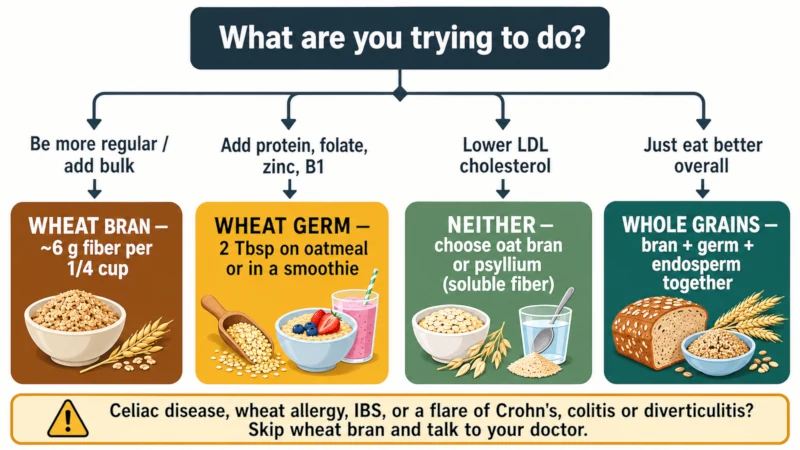
| If your goal is… | Choose | Why |
| More regularity, softer and bulkier stool | Wheat bran | Insoluble fiber, ~6 g per quarter cup |
| Closing a fiber gap in a low-fiber diet | Wheat bran | Highest fiber per calorie of the two |
| More protein, folate, thiamin, zinc without much bulk | Wheat germ | Nutrient-dense, mild flavor, blends easily |
| Lowering LDL cholesterol | Neither — oat bran or psyllium | Soluble fiber does that job; wheat bran’s is insoluble |
| The simplest overall upgrade | Whole grains | Bran, germ, and endosperm together, plus everything else in the food |
Recipes are the other common reason people ask. They are not interchangeable in baking either: wheat germ adds a soft nutty flavor and a little fat, while bran adds coarse texture and soaks up liquid. Substituting bran for germ in a muffin recipe will give you a drier, grittier muffin.
How much to use, and how to start
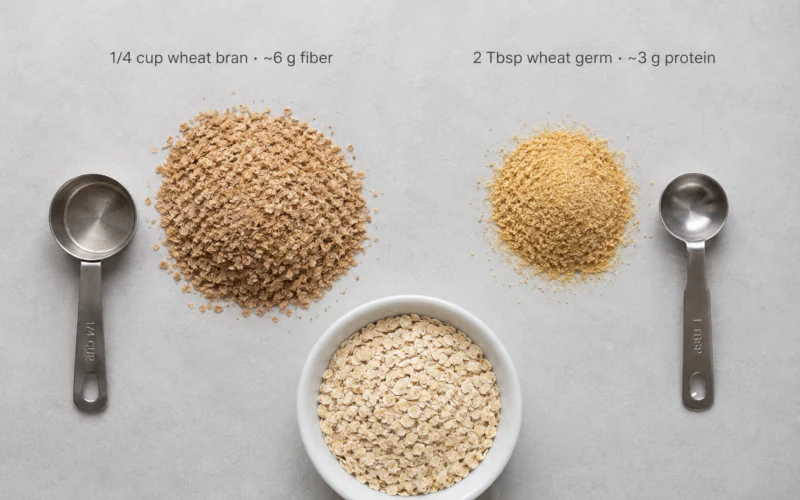
- Wheat bran: start at one tablespoon a day and build up over two or three weeks. A quarter cup a day is a common upper landing spot for most people.
- Wheat germ: two to four tablespoons a day is a typical amount. There is no reason to go higher.
- Go slowly and drink water. Adding too much fiber too quickly causes gas, bloating, and cramping, and fiber works best when it can absorb water [Mayo Clinic, 2025].
Easy places to put them: stirred into oatmeal or yogurt, blended into a smoothie, mixed into pancake or muffin batter, or scattered over a salad.
Safety, side effects, and who should skip these
Gluten and wheat allergy
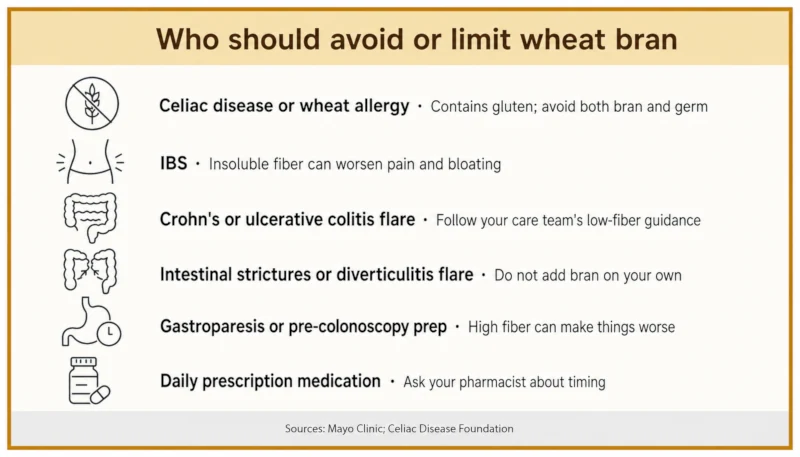
Both products come from wheat, so both contain gluten. Wheat and every derivative of wheat are listed as gluten-containing [Celiac Disease Foundation, sources of gluten]. If you have celiac disease, non-celiac gluten sensitivity, or a wheat allergy, neither one is an option — look at naturally gluten-free foods instead. Oat bran, psyllium, and ground flaxseed cover the fiber job.
Phytates and mineral absorption
Bran contains phytates, which bind minerals such as zinc in the gut and reduce how much you absorb — this is why zinc from whole grains and legumes is less available than zinc from animal foods [NIH Office of Dietary Supplements, Zinc]. For most people eating a varied diet, this is a footnote rather than a problem. It matters more if you are already low in iron or zinc, follow a vegetarian or vegan diet, or eat large amounts of bran daily. If that describes you, it is worth raising with a doctor or registered dietitian rather than guessing.
IBS, flares, and narrowed intestines
Wheat bran is a poor fit for an irritable bowel. Its insoluble fiber can increase pain and abdominal distension in sensitive people, and it appears on most IBS foods-to-avoid lists for that reason. Soluble fiber is generally the better-tolerated type.
There are also situations where a healthcare professional may ask you to eat less fiber, not more: after surgery involving the stomach or intestines, during flares of Crohn’s disease or ulcerative colitis, during a bout of diverticulitis, if you have intestinal strictures, during abdominal or pelvic radiation therapy, with gastroparesis, and before a colonoscopy [Mayo Clinic, 2025]. If any of those apply, do not add bran on your own.
Pregnancy and breastfeeding
Wheat bran and wheat germ are ordinary foods, and normal culinary amounts are not a special concern in pregnancy or breastfeeding unless you have celiac disease or a wheat allergy. Concentrated supplements are a different matter — wheat germ oil capsules, fiber supplements, and fermented wheat germ extracts have not been evaluated the way foods have. Check with your doctor before starting any of them.
One practical note that applies to everyone: if you take daily prescription medication, ask your pharmacist whether to leave a gap between the medication and a large fiber dose.
Red flags: when it isn’t a fiber problem
Constipation that responds to more fiber and water is usually just constipation. Some symptoms should not be self-treated. See a doctor promptly if you notice any of the following, which the American Cancer Society lists among the signs of colorectal cancer:
- A change in bowel habits — diarrhea, constipation, or narrowing of the stool — lasting more than a few days
- A feeling that you need to have a bowel movement that isn’t relieved by having one
- Rectal bleeding with bright red blood
- Blood in the stool, or stool that looks dark brown or black
- Cramping or abdominal pain
- Weakness and fatigue
- Unintended weight loss
Go to an emergency room or call 911 for severe, sudden abdominal pain, repeated vomiting, or a swollen abdomen with no stool and no gas passing — that pattern can mean a bowel obstruction and is not something to manage at home.
| Health Disclaimer: This article is for general education. It is not medical advice, and it is not a substitute for diagnosis or treatment from your own doctor. Wheat bran and wheat germ are foods, not treatments — neither one cures, prevents, or reverses any disease. Talk with a doctor or registered dietitian before adding a concentrated fiber source if you are pregnant or breastfeeding, take daily prescription medication, or live with a digestive condition such as IBS, Crohn’s disease, ulcerative colitis, diverticulitis, gastroparesis, or a known intestinal narrowing. If you have symptoms that worry you — especially bleeding, unexplained weight loss, or a bowel change lasting more than a few days — see a doctor rather than adjusting your fiber and waiting. |
Frequently Asked Questions
Can I use wheat bran instead of wheat germ?
Not really. In a recipe, bran will make the result drier and coarser because it absorbs liquid and adds no fat. Nutritionally you would be trading protein, folate, thiamin, and zinc for a large jump in fiber. If the recipe calls for wheat germ and you only have bran, ground flaxseed or almond meal is a closer stand-in.
Is wheat germ or wheat bran gluten-free?
Neither. Both come from wheat, and wheat and all of its derivatives contain gluten [Celiac Disease Foundation]. Anyone with celiac disease, gluten sensitivity, or a wheat allergy should avoid both.
Which one has more fiber?
Wheat bran, by a lot. Per 100 grams, bran has 42.8 grams of dietary fiber and germ has 13.2 grams [USDA FoodData Central].
How much wheat bran should I take for constipation?
Start at one tablespoon a day and increase gradually over two to three weeks, with plenty of water. Adding fiber too fast causes gas, bloating, and cramping [Mayo Clinic, 2025]. If constipation persists despite more fiber and fluid, that’s a conversation with your doctor rather than a reason to keep raising the dose.
Does wheat germ need to be refrigerated?
Once opened, yes. It’s about 10% fat [USDA FoodData Central], so it goes stale faster than bran. Buy smaller containers and keep it sealed in the fridge.
Is it better to just eat whole wheat instead?
For most people, yes. Whole grains contain the bran, germ, and endosperm together, and whole-grain intake is linked to lower risk of heart disease, stroke, and type 2 diabetes [American Heart Association, 2024]. Isolated bran or germ is a targeted top-up, not a replacement for that.
References
- U.S. Department of Agriculture, Agricultural Research Service. “Wheat bran, crude.” FoodData Central, SR Legacy (FDC ID 169722). 2019. View source
- U.S. Department of Agriculture, Agricultural Research Service. “Wheat germ, crude.” FoodData Central, SR Legacy (FDC ID 168892). 2019. View source
- Mayo Clinic Staff. “Dietary fiber: Essential for a healthy diet.” Mayo Foundation for Medical Education and Research. December 24, 2025. View source
- National Institute of Diabetes and Digestive and Kidney Diseases. “Eating, Diet, & Nutrition for Constipation.” NIH. Reviewed May 2018. View source
- American Heart Association. “Get to Know Grains: Why You Need Them, and What to Look For.” Reviewed June 25, 2024. View source
- National Institutes of Health, Office of Dietary Supplements. “Vitamin E — Health Professional Fact Sheet.” View source
- National Institutes of Health, Office of Dietary Supplements. “Zinc — Health Professional Fact Sheet.” View source
- American Cancer Society. “Colorectal Cancer Signs and Symptoms.” View source
- Celiac Disease Foundation. “Sources of Gluten.” View source
