
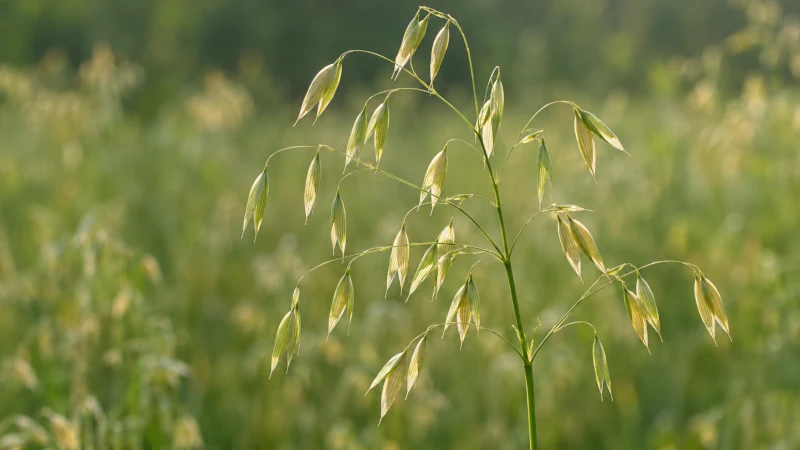
The oat plant, Avena sativa, is a cool-season cereal grass, and nearly every part of it turns up in a health product. The ripe grain becomes oatmeal and, milled very fine, the colloidal oatmeal in anti-itch baths and creams. The green tops cut before flowering are sold as oat herb or green oat. The dried stalks become oat straw tea. The evidence behind each is very different. Colloidal oatmeal is a recognized skin protectant with trial evidence behind it [FDA, 21 CFR 347.10] [Lisante et al., 2017]. Oat herb is accepted in Europe as a traditional remedy for mild stress and sleep, based on long use rather than trial results [EMA, 2019a].
This guide covers the plant itself: how it grows, which parts are used and when they’re picked, and what each can and can’t do. For oatmeal’s effects on cholesterol, blood sugar and digestion, see our guide to the health benefits of oats.
What the oat plant looks like
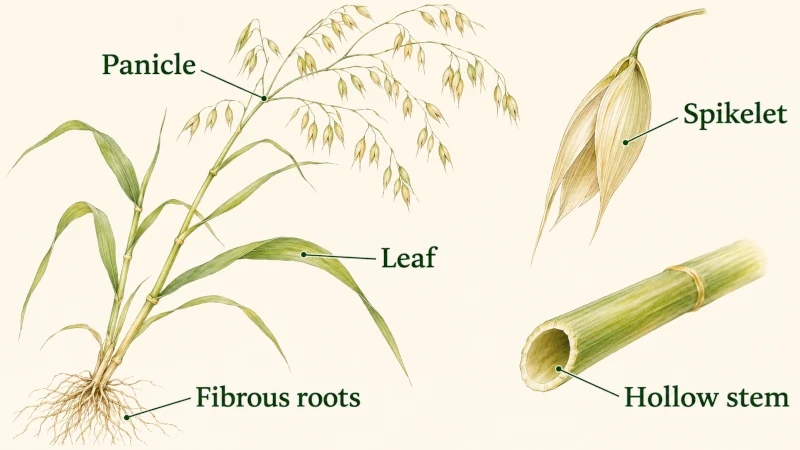
Oats are annual grasses in the grass family, Poaceae [Cornell University, n.d.]. Each plant lives a single season and stands about 60 cm to 1.5 m tall, with narrow, slightly rough leaves 20 to 40 cm long [Royal Horticultural Society, n.d.]. The stems are hollow and the roots fibrous [University of Arizona Cooperative Extension, n.d.].
Flowers and grain sit in a loose, open panicle with drooping branches, so a ripening oat head nods instead of standing stiff like wheat [Royal Horticultural Society, n.d.] [University of Arizona Cooperative Extension, n.d.]. Each dangling spikelet usually carries two flowers [University of Arizona Cooperative Extension, n.d.]. In British gardens oats flower from late spring into early summer, then the whole plant turns golden and dies back [Royal Horticultural Society, n.d.].
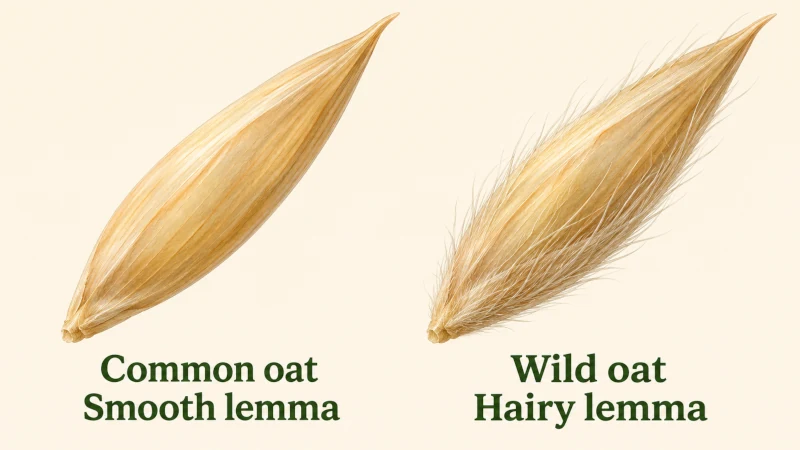
The common oat is easy to mix up with wild oat (Avena fatua), a weed that grows wherever oats are farmed. Check the lemma, the small bract wrapped around each grain: it’s smooth on the common oat and covered in long hairs on wild oat [University of Arizona Cooperative Extension, n.d.].
Where oats came from
Oats became a crop almost by accident. Wild oats grew as weeds among the wheat and barley of the Near East. As farming spread north and west into cooler, wetter Europe, the weed thrived and slowly became a crop in its own right [Harris, Oxford Plants 400, n.d.] [Cornell University, n.d.]. Sources disagree on when that happened. Oxford’s Plants 400 project puts it at about 4,000 years ago, while Cornell’s crop notes say the first millennium BC [Harris, Oxford Plants 400, n.d.] [Cornell University, n.d.]. The defining change was in the grain: domesticated oats hold their grains until harvest, where wild oats drop them as soon as they ripen [Harris, Oxford Plants 400, n.d.].
For most of their history oats fed animals more than people. Until fairly recently, horse feed was the main worldwide use [Cornell University, n.d.]. The plant still prefers cool, humid weather. It tolerates poor soils but needs more water than any major cereal except rice [Cornell University, n.d.].
Growing oats yourself
Oats are an easy garden plant, often sown in fall as a winter cover crop [NC State Extension, n.d.]. Give them full sun and soil that drains well. Sow seed 1 to 2 inches deep and allow at least ten weeks of cool weather [NC State Extension, n.d.]. Oat plants release compounds that hold back other seeds from sprouting, which helps them smother weeds. After an oat cover crop dies down, wait at least three weeks before sowing vegetables or flowers in the same bed [NC State Extension, n.d.].
Which parts of the oat plant are used
What you buy depends on which part was harvested, and when.
| Part | When it’s harvested | Typical products | Evidence and status |
| Oat herb (green oat) | Aerial parts, cut before flowering [EMA, 2019a] | Tea, pressed juice, liquid or dry extracts | EU traditional use for mild stress and sleep; a few small trials of branded extracts |
| Milky oat tops | Immature seed heads at the “milky” stage [7Song, 2012] | Fresh tincture | Herbal practice only |
| Oat straw | Stems and leaves, sometimes with immature heads, dried [7Song, 2012] | Tea, bath additive | Herbal practice only |
| Colloidal oatmeal | Ripe grain, dried and milled very fine [EMA, 2019b] | Bath powders, creams, lotions | FDA-recognized skin protectant; EU traditional use; pediatric trial |
| Grain and bran as food | Ripe grain | Oatmeal, oat bran | Strong for lowering LDL cholesterol |
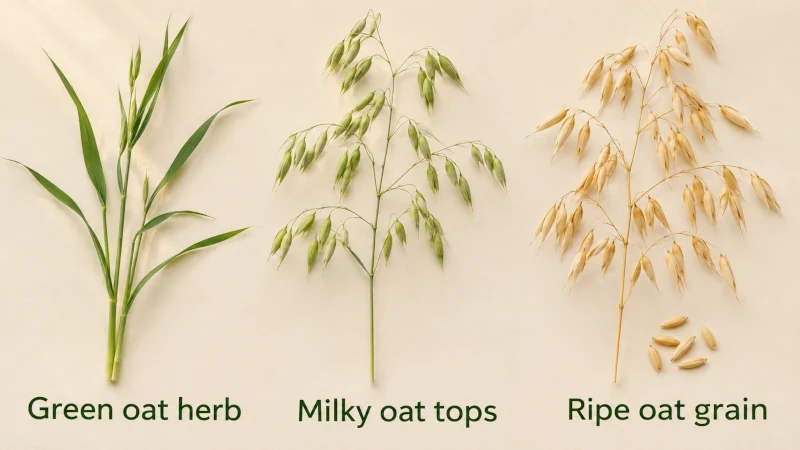
Labels are loose. “Oat straw” or “wild oats” on a tea often means a blend of dried stems, leaves and immature tops [7Song, 2012], so read the ingredient list as well as the name.
Oat herb and green oat for stress, sleep, and focus
The European Medicines Agency’s herbal committee (HMPC) accepts oat herb teas, juices and extracts as traditional herbal medicines to relieve mild symptoms of mental stress and to aid sleep [EMA, 2019a]. That status rests on at least 30 years of documented safe use, not on clinical trials, which the committee judged insufficient. The only experimental support it cited came from rats that showed less stress after seven weeks of oat herb in their feed [EMA, 2019a]. The committee limits these products to adults and adolescents over 12, and says to see a doctor if symptoms persist [EMA, 2019a].
Human research is thin and focuses on two branded green-oat extracts:
- In healthy adults aged 40 to 65 who felt their memory had slipped, a single 800 mg dose sped up performance across a set of timed thinking tasks [Kennedy et al., 2017].
- In a 29-day trial of 132 healthy adults, the 430 mg and 1,290 mg doses improved some measures of attention and multitasking, but the 860 mg dose did not. The highest dose also damped one physical stress response (sweat-gland activity) during a lab stressor. None of the doses changed mood [Kennedy et al., 2020]. The extract’s maker sponsored the study, and two of its employees were co-authors [Kennedy et al., 2020].
Taken together, that’s a small, plausible signal for short-term focus and a hint of a calmer stress response. Nothing yet shows that oat herb eases anxiety, depression or insomnia. If sleep is the problem, the habits and treatments in our guide to natural remedies for insomnia have far more support.
Milky oats and oat straw in herbal practice
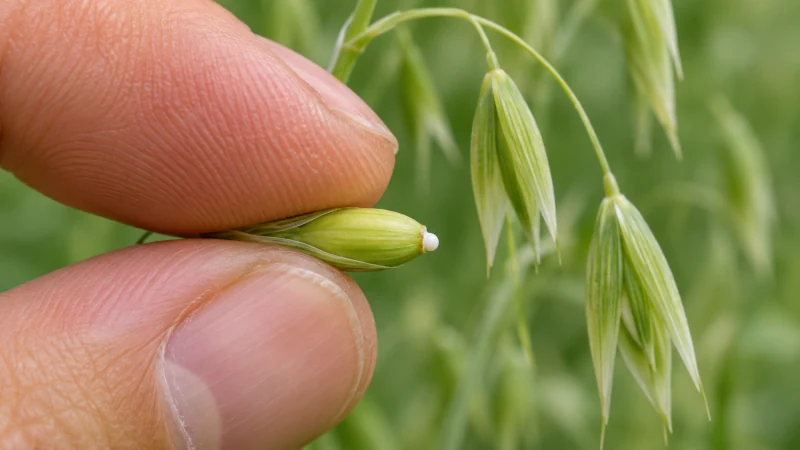
Western herbalists treat the oat plant as a slow “nerve tonic,” not a quick fix. The herbalist 7Song, director of the Northeast School of Botanical Medicine, describes milky oats as something taken regularly by people who feel depleted, scattered or irritable after long stress. 7Song also uses them for racing thoughts at bedtime [7Song, 2012].
Timing is the craft. Herbalists squeeze an immature seed head, and if a white, milky fluid comes out of the base, the tops are ready. They are stripped and tinctured fresh the same day [7Song, 2012]. The stems, leaves and leftover tops are dried for oat straw tea. Dry them thoroughly, because the stalks can mold in storage [7Song, 2012].
These accounts describe practice and experience, not tested results. MedlinePlus, which grades the evidence for oat products, finds no good scientific evidence for uses beyond cholesterol, heart disease and diabetes [MedlinePlus, 2026]. Some herbal sources go much further and recommend oat straw for bed-wetting, epilepsy, palpitations, kidney stones or eye complaints. Those problems need a medical diagnosis, and homemade herbal washes don’t belong in the eyes.
If you’re making tea or tincture at home, our guide on how to prepare herbs for medicinal use covers methods and safety.
Colloidal oatmeal: the oat plant’s best-supported medicine
The oat plant’s strongest medical credentials are on the skin. Colloidal oatmeal is ripe oat grain milled so fine it stays suspended in water. The FDA lists it as an active ingredient for over-the-counter skin protectants, at a minimum of 0.007% (or 0.003% combined with mineral oil) [FDA, 21 CFR 347.10]. In Europe, the HMPC accepts colloidal oatmeal creams and bath additives as traditional remedies for minor skin inflammation such as sunburn, and to help minor wounds heal, in both adults and children [EMA, 2019b].
There’s trial evidence as well. In a randomized, double-blind study of 90 children aged 6 months to 18 years with mild to moderate eczema, an over-the-counter 1% colloidal oatmeal cream did as well as a prescription barrier cream over three weeks, with no safety problems [Lisante et al., 2017].
Part of the effect may come from avenanthramides, antioxidant compounds found in oats. In laboratory experiments they damped inflammatory signals in skin cells and reduced itch [Sur et al., 2008]. That points to a mechanism, though no one has shown it explains the benefit people feel.
Not every source is convinced. The HMPC saw a possible effect on skin inflammation but couldn’t draw firm conclusions because the studies varied so much [EMA, 2019b]. MedlinePlus rates the evidence for dry skin as insufficient [MedlinePlus, 2026]. A fair reading is that colloidal oatmeal is good for short-term relief of itch and dryness and works as an add-on, but it doesn’t treat eczema itself [American Academy of Dermatology, n.d.]. Our eczema skincare routine shows where it fits, and best herbs for eczema compares it with other plant remedies.
How to take an oatmeal bath
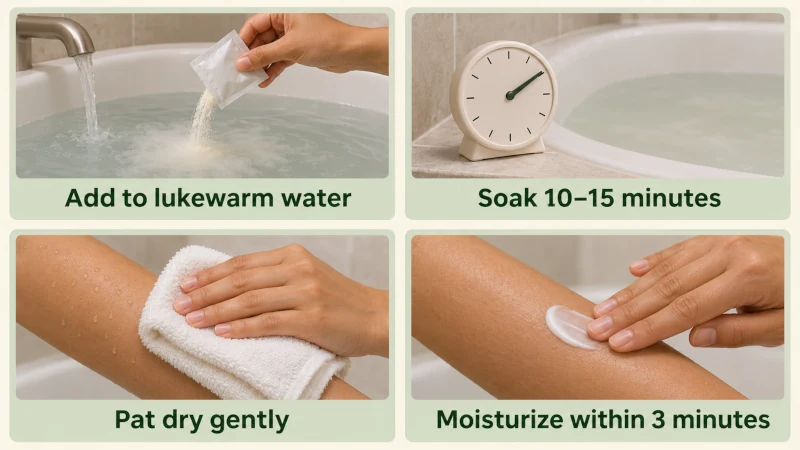
- Add a product labeled colloidal oatmeal to lukewarm running water [American Academy of Dermatology, n.d.].
- Soak for 10 to 15 minutes [American Academy of Dermatology, n.d.].
- Pat dry, leaving the skin slightly damp, and moisturize within 3 minutes [American Academy of Dermatology, n.d.].
- Take care getting out, because the tub gets slippery, and don’t let children eat the powder [American Academy of Dermatology, n.d.].
If skin symptoms last longer than a week despite oat products, see a health professional [EMA, 2019b]. For other gentle options for itchy skin, see herbs for skin issues.
The grain as food
The ripe grain is also the oat plant’s best-known food. Its soluble fiber, beta-glucan, lowers LDL cholesterol, and U.S. food-labeling rules set the qualifying amount at 3 g a day [FDA, 21 CFR 101.81]. Which oats to buy, portion sizes, blood-sugar effects and gluten concerns are all covered in our guide to oats and oatmeal.
Side effects and who should be careful
Skin reactions and allergy
Oat products on the skin can cause a rash in some people [MedlinePlus, 2026]. Reactions are most often reported in people with allergies or contact dermatitis, though how often they happen isn’t known [EMA, 2019b]. If you know you’re allergic to oats, avoid oat products in any form [7Song, 2012]. Stop using one if your skin gets redder, itchier or swollen.
Oat herb, oat straw, and milky oat products
No side effects had been reported when the HMPC assessed oat herb [EMA, 2019a], but that reflects a short record, not proof of safety. There’s little published data on interactions with medicines. Oats can lower blood sugar, and MedlinePlus rates their interaction with insulin and diabetes drugs as moderate [MedlinePlus, 2026]. If you take those medicines, check your glucose when you start any oat product and tell your pharmacist.
Celiac disease
People with celiac disease are often told to avoid oats because they’re commonly contaminated with wheat, barley or rye [MedlinePlus, 2026]. Oat straw and milky oat products can include seed heads, so unless a product is certified gluten-free, ask the maker whether it’s tested.
Pregnancy, breastfeeding, and children
Oats eaten as food are considered likely safe during pregnancy and breastfeeding [MedlinePlus, 2026]. The EMA summary for oat herb says nothing about pregnancy [EMA, 2019a], and there’s little safety data on concentrated oat straw, milky oat or green oat products. Talk to your clinician before using them. Oat herb medicines aren’t intended for children under 12 [EMA, 2019a], but colloidal oatmeal products are used in children [EMA, 2019b] [American Academy of Dermatology, n.d.]. Ask a pediatrician before using anything new on a baby’s skin.
If you harvest your own
Ask before gathering from a farm, and find out whether the field has been sprayed [7Song, 2012]. Make sure you have common oats rather than wild oat [University of Arizona Cooperative Extension, n.d.], and dry stalks fully so they don’t mold [7Song, 2012].
When to see a doctor
- Itchy or inflamed skin hasn’t improved after a week of oat products [EMA, 2019b], or it’s oozing, crusting, painful or spreading.
- Stress or sleep problems persist while you’re using oat herb [EMA, 2019a], or low mood or anxiety is affecting daily life.
- You take insulin or diabetes medicines and get shaky, sweaty or confused, or see frequent low readings.
- You have celiac disease and symptoms return after using an oat product.
Call emergency services for swelling of the face, lips or tongue, trouble breathing, or widespread hives after using an oat product.
| HEALTH DISCLAIMER: This article is for general education and isn’t a substitute for advice from a qualified health professional who knows your history. Talk to your doctor or pharmacist before using oat herb, oat straw, milky oat or green oat products if you are pregnant or breastfeeding, take regular medication (especially for diabetes), have celiac disease or a known oat allergy, or are treating a child. Don’t stop or change a prescribed treatment based on anything you read here. |
Frequently Asked Questions
What’s the difference between oat herb, oat straw, and milky oats?
They’re all parts of the same oat plant harvested at different times. Oat herb, or green oat, is the leafy top cut before flowering [EMA, 2019a]. Milky oats are immature seed heads picked while they still release a milky fluid, and oat straw is the dried stem and leaf [7Song, 2012].
Is Avena sativa the same as wild oats?
No. Wild oat (Avena fatua) is a related weed; you can tell it apart by the long hairs on the bract around each grain [University of Arizona Cooperative Extension, n.d.]. Confusingly, some tea makers label common oat straw as “wild oats” [7Song, 2012].
Does oat straw tea help with stress or sleep?
Europe accepts oat herb as a traditional remedy for mild stress and sleep, based on long use rather than trials [EMA, 2019a]. Small studies of a green-oat extract found effects on focus but none on mood [Kennedy et al., 2020].
Is colloidal oatmeal safe for children?
Colloidal oatmeal products are used in adults and children [EMA, 2019b]. A trial in children from 6 months old found no safety problems with a 1% cream [Lisante et al., 2017]. Check with a pediatrician before treating a baby.
Can I grow oats to make my own tea?
Yes. Oats grow readily from seed in full sun and well-drained soil [NC State Extension, n.d.]. Herbalists harvest the tops at the milky stage and dry the stems and leaves for tea [7Song, 2012].
References
- American Academy of Dermatology Association. “Home remedies: What can relieve itchy eczema?” View source
- Cornell University, Soil and Crop Sciences Section. “Oats (Avena sativa).” View source
- European Medicines Agency, Committee on Herbal Medicinal Products. “Avenae herba – herbal medicinal product” (oat herb). View source
- European Medicines Agency, Committee on Herbal Medicinal Products. “Avenae fructus – herbal medicinal product” View source
- U.S. Food and Drug Administration. 21 CFR 101.81, Health claims: soluble fiber from certain foods and risk of coronary heart disease. View source
- U.S. Food and Drug Administration. 21 CFR 347.10, Skin protectant active ingredients, paragraph (f) colloidal oatmeal. View source
- Harris S. “Avena sativa L. (Poaceae), common oats.” Oxford Plants 400, University of Oxford Botanic Garden & Harcourt Arboretum, Oxford University Herbaria and Department of Plant Sciences. View source
- Kennedy DO, Jackson PA, Forster J, Khan J, Grothe T, Perrinjaquet-Moccetti T, Haskell-Ramsay CF. Acute effects of a wild green-oat (Avena sativa) extract on cognitive function in middle-aged adults: a double-blind, placebo-controlled, within-subjects trial. View source
- Kennedy DO, Bonnländer B, Lang SC, Pischel I, Forster J, Khan J, Jackson PA, Wightman EL. Acute and chronic effects of green oat (Avena sativa) extract on cognitive function and mood during a laboratory stressor in healthy adults. View source
- Lisante TA, et al. Efficacy and safety of an over-the-counter 1% colloidal oatmeal cream in the management of mild to moderate atopic dermatitis in children: a double-blind, randomized, active-controlled study. View source
- MedlinePlus (U.S. National Library of Medicine), drawing on the Natural Medicines Comprehensive Database. “Oats.” View source
- North Carolina State University Extension. “Avena sativa.” Extension Gardener Plant Toolbox. View source
- Royal Horticultural Society. “Avena sativa (oat)” plant profile. View source
- 7Song (Jacqueline Cote), Northeast School of Botanical Medicine. “Avena: A Monograph on Oats as Medicine.” View source
- Sur R, Nigam A, Grote D, Liebel F, Southall MD. Avenanthramides, polyphenols from oats, exhibit anti-inflammatory and anti-itch activity. View source
- University of Arizona Cooperative Extension, Yavapai County. “Avena sativa – common oat.” Yavapai County Native and Naturalized Plants. View source


