
If you’re reading about this herb because you heard it can flush out kidney stones or ease aching joints, here’s the honest answer up front: no human study shows gravel root works for either, and the plant contains compounds that can damage your liver [WebMD, n.d.]. Gravel root — sold as Joe-Pye weed, kidney root, or purple boneset — has a long and genuinely interesting history in North American herbal medicine. That history is real. The evidence that it’s safe to swallow is not.
If you already have a bottle at home, the safety section is the part to read before your next dose.
What is gravel root?
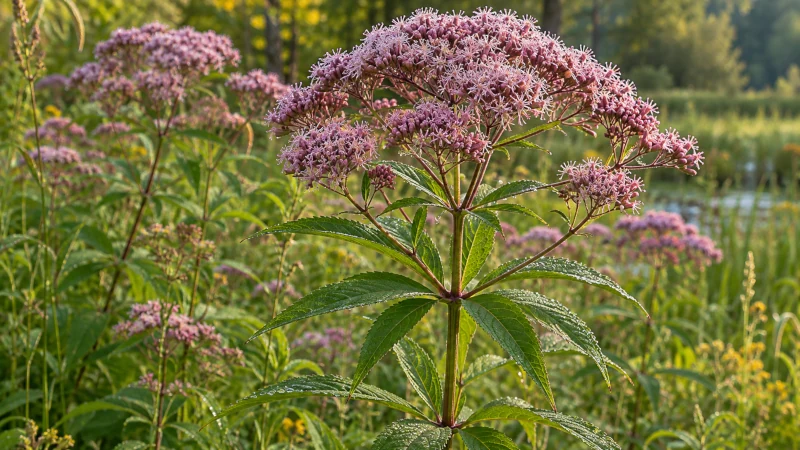
Gravel root is the root and rhizome of Eutrochium purpureum, a tall wildflower native to eastern and central North America and a member of the daisy family, Asteraceae [Missouri Dept. of Conservation, n.d.]. Older herb books and many supplement labels still use its former name, Eupatorium purpureum. Around 2000, DNA evidence convinced botanists that Joe-Pye weeds deserved their own genus, so they were moved to Eutrochium — and you may also run into the in-between name Eupatoriadelphus [Missouri Dept. of Conservation, n.d.]. RxList lists a dozen more common names, including kidney root, purple boneset, queen of the meadow, and trumpet weed [RxList, n.d.].
That naming tangle has a practical side. There are five Eutrochium species, all called some kind of Joe-Pye weed [Missouri Dept. of Conservation, n.d.], so a label that just says “Joe-Pye weed” doesn’t tell you exactly which plant is inside.
How to recognize it
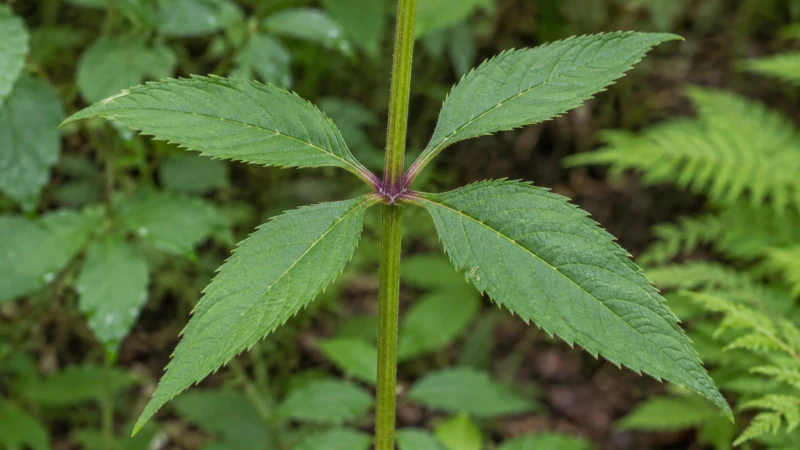
Sweet Joe-Pye weed usually stands 3 to 7 feet tall. Its long, sharply toothed, lance-shaped leaves grow in whorls of three or four around a stem that is purplish only at the leaf joints. From July into September it carries big, dome-shaped clusters of small, fragrant, mauve-pink flowers [Missouri Dept. of Conservation, n.d.]. Look for it in moist ground — bottomland woods, stream banks, wet meadows — where it feeds bees, butterflies, and hummingbirds late in the season [Prairie Restorations, n.d.].
Where the names come from
“Gravel root” points to the job it was given: easing kidney stones and other kidney and urinary complaints [Missouri Dept. of Conservation, n.d.]. “Joe Pye” is murkier. The Missouri Department of Conservation traces it most likely to a Mohican leader known as Joseph Shauquethqueat, who lived in western Massachusetts in the 1700s and became linked with the plant, possibly for treating fevers. The department is candid that little about the story is known for sure [Missouri Dept. of Conservation, n.d.].
How gravel root was traditionally used
Native American healers used Joe-Pye weed for kidney stones and other urinary problems, for fevers including typhus, and as a general tonic. European Americans in New England apparently used it during a typhus outbreak [Missouri Dept. of Conservation, n.d.]. Later herbal practice kept the urinary focus and added rheumatism and gout [RxList, n.d.; Naturopathic Herbalist, 2011].
Practitioner monographs still describe it as a diuretic and a “renal stone solvent” for urinary gravel [Naturopathic Herbalist, 2011]. RxList adds uses you might not expect: making people vomit or sweat, and treating fever from malaria, dengue, or typhus [RxList, n.d.].
All of this is history, not proof. A remedy can stay in use for centuries because it seemed to help, because the problem would have cleared anyway, or because nothing better existed. Kidney stones are a good example of that trap — small stones can pass on their own, so whatever someone was drinking at the time tends to get the credit.
What research on gravel root actually shows
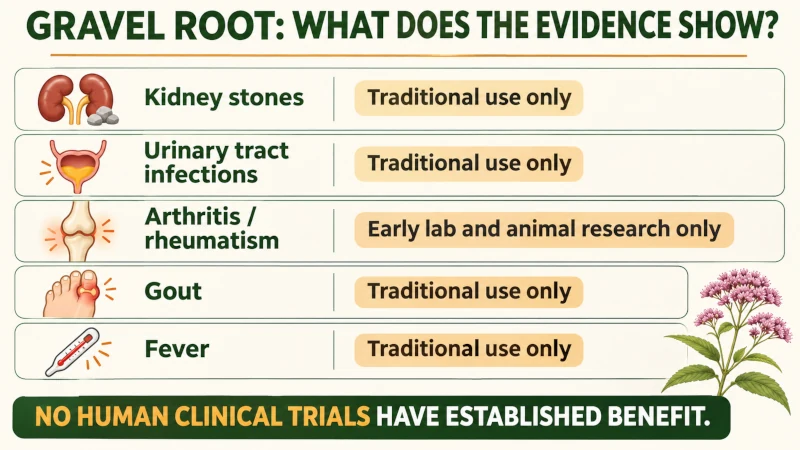
Very little. The Natural Medicines database, which licenses its herb monographs to both WebMD and RxList, rates gravel root as having insufficient evidence for every common use: kidney and urinary stones, urinary tract infections, arthritis-type pain, gout, and fever [WebMD, n.d.; RxList, n.d.]. WebMD states that there is no good scientific evidence behind these uses [WebMD, n.d.].
The lab work that does exist comes from one researcher and never reached human trials. In 1998, Solomon Habtemariam, then at the University of Strathclyde, isolated a compound from the root — later called cistifolin — that blocked certain cell-adhesion molecules involved in inflammation in cell cultures. Given by mouth to rats at 10 and 50 mg/kg, it reduced chemically induced paw swelling, with a bigger effect at the higher dose [Habtemariam, 1998]. A 2001 follow-up found cistifolin blocked a second adhesion pathway in cells, while three other compounds extracted from the same root showed no activity [Habtemariam, 2001].
That’s a real lead for anti-inflammatory chemistry. It isn’t evidence that gravel root tea helps arthritis or gout, because nobody has tested that in people — and none of this research looked at kidney stones at all.
| Traditional use | What the evidence shows | Evidence grade |
| Kidney stones / urinary “gravel” | No human trials; no lab studies on stones | Traditional use only |
| Urinary tract infections | No human trials | Traditional use only |
| Arthritis / rheumatism | One isolated compound reduced inflammation in cells and rats | Early lab and animal data only |
| Gout | No human trials | Traditional use only |
| Fever | No human trials | Traditional use only |
Sources: [WebMD, n.d.; RxList, n.d.; Habtemariam, 1998; Habtemariam, 2001]
The safety problem: pyrrolizidine alkaloids
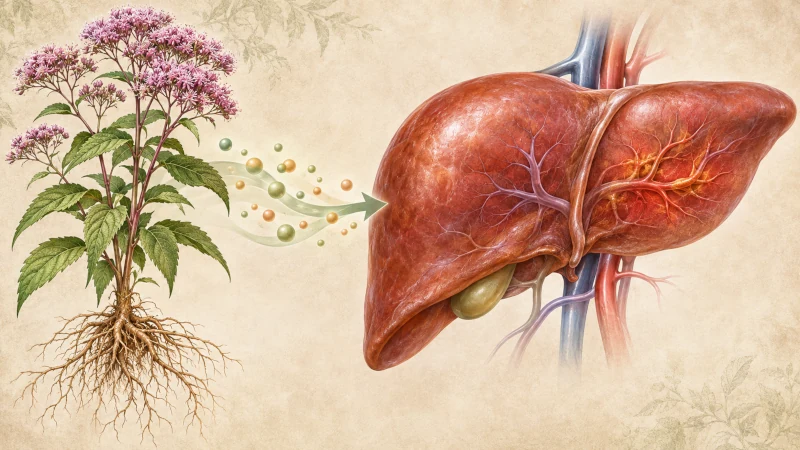
This is the part that matters most. Gravel root contains hepatotoxic pyrrolizidine alkaloids, or PAs — natural plant toxins that can block blood flow in the small veins of the liver and cause liver or lung damage [WebMD, n.d.]. RxList adds that these PAs might also cause cancer and birth defects [RxList, n.d.]. Herbal practitioners recognize the problem too: one clinical monograph warns that internal use, particularly long-term, may harm the liver [Naturopathic Herbalist, 2011].
Because of the PAs, the Natural Medicines database rates any gravel root product that isn’t certified and labeled “hepatotoxic PA-free” as likely unsafe to take by mouth. Even for products that carry that label, there isn’t enough reliable information to call them safe, and the database’s advice is to avoid use. Putting it on broken skin is also rated likely unsafe, because the alkaloids absorb quickly through damaged skin [WebMD, n.d.].
There’s a further catch: you can’t see PA levels on a label. In comfrey, another PA plant, the alkaloid content varies with the part used, the plant’s age, and when it was harvested [LiverTox, 2022]. Supplements aren’t reviewed by the FDA for safety or effectiveness before they’re sold, and words like “certified” or “standardized” on a bottle don’t guarantee quality on their own [NCCIH, 2019].
Comfrey is the cautionary tale here. Taken by mouth, it can cause severe liver injury, and oral comfrey has been banned or restricted in most countries [LiverTox, 2022]. Gromwell, another traditional “stone” herb, carries a similar PA concern.
Warning signs of PA liver injury
Most of what doctors know about PA poisoning in people comes from comfrey and contaminated herbal teas, not gravel root specifically. In those cases, NIH’s LiverTox database describes injury that usually shows up within one to two months of starting the product [LiverTox, 2022]. Watch for:
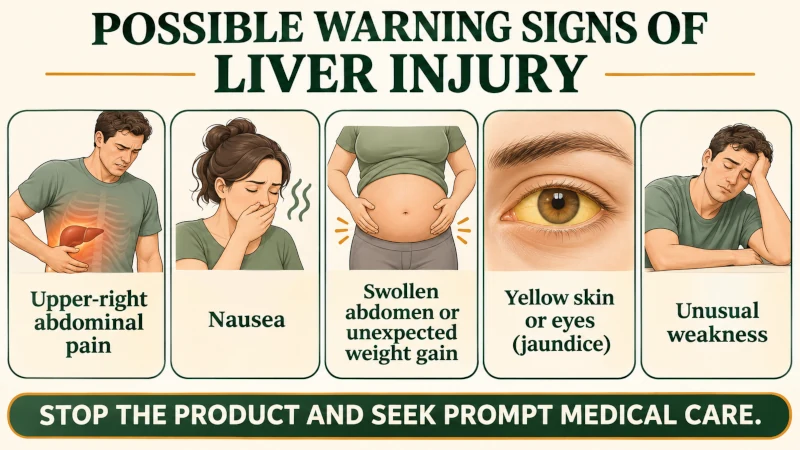
- pain in the upper right side of your abdomen
- nausea
- weight gain or a swollen belly from fluid buildup
- yellowing of your skin or the whites of your eyes
- unusual weakness
The injury can turn into sudden liver failure, or it can creep in slowly. Infants appear especially susceptible [LiverTox, 2022]. If any of these appear after using gravel root or a blend containing it, stop the product and call a doctor promptly. Bring the bottle with you.
Gravel root side effects, interactions, and who should avoid it
Side effects
Liver toxicity is the serious one. Gravel root can also trigger allergic reactions in people sensitive to the daisy family, which includes ragweed, chrysanthemums, marigolds, and daisies [WebMD, n.d.]. Since it was historically given to make people vomit and sweat [RxList, n.d.], stomach upset is plausible too; if it happens, stop.
Medication interactions
The Natural Medicines database flags two moderate interactions [WebMD, n.d.; RxList, n.d.]:
- Lithium. Gravel root may act like a water pill and reduce how well your body clears lithium, which can push lithium to levels that cause serious side effects.
- Drugs that speed up liver enzymes (CYP3A4 inducers) — for example carbamazepine (Tegretol), phenobarbital, phenytoin (Dilantin), rifampin, and rifabutin (Mycobutin). The liver turns gravel root’s alkaloids into harmful byproducts, and these drugs may make that happen faster. LiverTox likewise notes that enzyme inducers such as phenobarbital increase PA toxicity [LiverTox, 2022].
Prescription diuretics aren’t listed as a formal interaction in that monograph, but because gravel root may have a water-pill effect, ask your pharmacist before combining them.
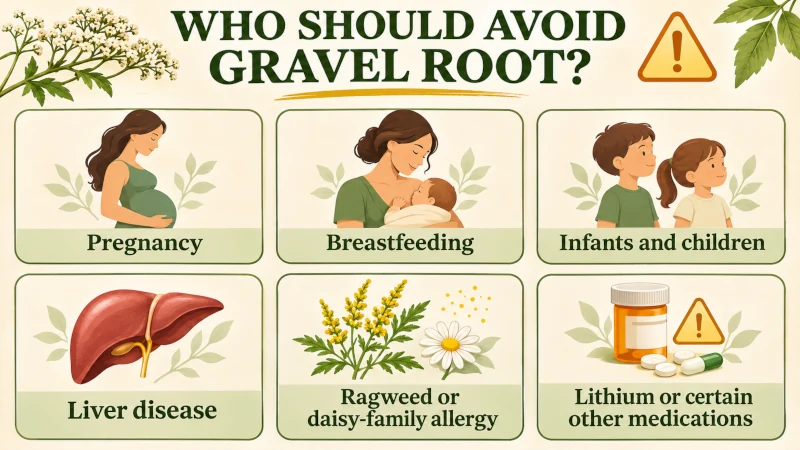
Who should not use gravel root
- Anyone pregnant. Rated likely unsafe; PA-containing products might cause birth defects and liver damage [WebMD, n.d.]. A practitioner monograph also lists pregnancy as a contraindication [Naturopathic Herbalist, 2011]. Some herbal sources recommend gravel root for menstrual problems or childbirth — skip that advice.
- Anyone breastfeeding. PAs can pass into breast milk and might harm a nursing infant [WebMD, n.d.].
- Infants and children. Infants appear particularly vulnerable to PA injury [LiverTox, 2022].
- People with liver disease. The PAs might make it worse [WebMD, n.d.].
- People allergic to ragweed or other daisy-family plants [WebMD, n.d.].
- Anyone taking lithium or a CYP3A4-inducing drug (above).
Is there a safe gravel root dose?
No one has established one. The Natural Medicines database says there isn’t enough scientific information to set an appropriate dose range [WebMD, n.d.]. Some herbal references do give tincture and tea amounts from traditional practice [Naturopathic Herbalist, 2011], but those numbers describe how the herb has been used, not amounts shown to be safe. With PA plants, the reported liver injuries are largely tied to regular, repeated intake — daily tablets or several cups of tea [LiverTox, 2022].
So the sources genuinely disagree. Practitioner monographs treat gravel root as a usable herb with standard doses; the drug-safety database behind WebMD and RxList rates most products likely unsafe and advises avoiding all of them. Given what’s known about PAs, we side with caution. If you and a qualified practitioner still decide to use it, the minimum is a product certified hepatotoxic PA-free, used briefly, with your doctor aware you’re taking it.
If you’re dealing with kidney stones or a urinary problem
The tools with real evidence behind them are less exotic than an herbal root. Drinking enough liquid, mainly water, is the single most important step for preventing kidney stones; keeping sodium under about 2,300 mg a day helps, and getting the right amount of calcium from food can actually block stone-forming substances in your gut [NIDDK Diet, 2017]. Our guide to foods that raise kidney stone risk goes through the details by stone type.
If you want an herbal option for repeat urinary infections, cranberry has by far the most testing in people, though only for prevention in certain groups. The evidence and its limits are laid out in our guide to herbal remedies for the urinary system.
When to get medical care right away
See a health care professional right away if you have [NIDDK Symptoms, 2017]:
- sharp pain in your back, side, lower abdomen, or groin
- pink, red, or brown blood in your urine
- a constant need to urinate, or pain when you urinate
- trouble urinating, or only passing small amounts
- cloudy or bad-smelling urine
- nausea, vomiting, fever, or chills alongside any of these
These can mean a kidney stone or something more serious [NIDDK Symptoms, 2017]. For a broader look at which urinary system diseases need a doctor rather than a home remedy, see our overview.
Growing Joe-Pye weed instead
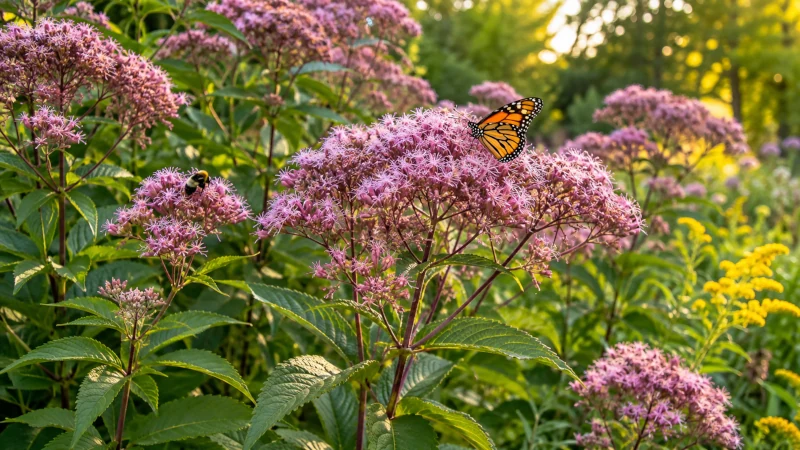
Gravel root may earn its keep best in the garden. Sweet Joe-Pye weed is easy to grow in moist, rich soil, makes a statement planted in groups, and draws butterflies and other pollinators from midsummer into fall. Deer tend to leave it alone, and along streams its roots help hold soil during high water [Missouri Dept. of Conservation, n.d.].
The species itself is common — by far the most common Joe-Pye weed in Missouri — but some relatives aren’t. Missouri ranks a variety of spotted Joe-Pye weed as critically imperiled [Missouri Dept. of Conservation, n.d.]. Buy nursery-grown plants rather than digging them from the wild.
| HEALTH DISCLAIMER: This article is for general education and isn’t medical advice, diagnosis, or treatment. Gravel root contains compounds that can harm the liver, and no safe dose has been established. Don’t use it — or any blend that contains it — to treat kidney stones, a urinary infection, gout, or any other condition without talking to your doctor or pharmacist first, and never in place of treatment for a diagnosed condition. If you’re pregnant, breastfeeding, caring for a child, have liver disease, or take prescription medicines (especially lithium or seizure medicines), these cautions apply directly to you. If you have severe pain, fever with urinary symptoms, or yellowing of your skin or eyes, get medical care promptly. |
Frequently Asked Questions
Does gravel root dissolve kidney stones?
There’s no evidence it does. The idea comes from traditional use, and no human trial or lab study has tested gravel root on stones [WebMD, n.d.]. Fluids and diet changes matched to your stone type are what lower risk [NIDDK Diet, 2017]; severe pain, blood in your urine, or fever needs a doctor.
Is gravel root the same as Joe-Pye weed?
Gravel root is sweet Joe-Pye weed, Eutrochium purpureum (formerly Eupatorium purpureum). But “Joe-Pye weed” is used for five related species [Missouri Dept. of Conservation, n.d.], so check the Latin name on any product.
Is gravel root tea safe to drink?
Not as a home remedy. Gravel root contains liver-toxic pyrrolizidine alkaloids, and products not certified hepatotoxic PA-free are rated likely unsafe. Even certified products lack enough safety data, so the advice is to avoid it [WebMD, n.d.].
Can I take gravel root while pregnant or breastfeeding?
No. It’s rated likely unsafe in pregnancy because PA-containing products might cause birth defects and liver damage, and PAs can pass into breast milk [WebMD, n.d.].
Does gravel root help arthritis or gout?
Only lab and rat studies of one isolated compound suggest anti-inflammatory activity [Habtemariam, 1998; Habtemariam, 2001]. There are no human trials, and the evidence is rated insufficient for both uses [WebMD, n.d.].
What are the signs gravel root could be harming my liver?
In PA poisoning cases, the usual pattern is upper-right belly pain, nausea, and weight gain or swelling from fluid, followed by yellowing of the skin or eyes — typically within one to two months of starting the product [LiverTox, 2022]. Stop it and see a doctor promptly.
References
- WebMD. Gravel Root — Uses, Side Effects, and More. Content licensed from Therapeutic Research Center (Natural Medicines). View source
- RxList. Gravel Root: Health Benefits, Side Effects, Uses, Dose & Precautions. Natural Medicines Comprehensive Database content. View source
- Habtemariam S. Cistifolin, an integrin-dependent cell adhesion blocker from the anti-rheumatic herbal drug, gravel root (rhizome of Eupatorium purpureum). View source
- Habtemariam S. Antiinflammatory activity of the antirheumatic herbal drug, gravel root (Eupatorium purpureum): further biological activities and constituents. View source
- National Institute of Diabetes and Digestive and Kidney Diseases. Comfrey. In: LiverTox: Clinical and Research Information on Drug-Induced Liver Injury. View source
- Missouri Department of Conservation. Joe-Pye Weeds (Eutrochium spp.). Field Guide. View source
- Prairie Restorations, Inc. Eutrochium purpureum (Sweet Joe-Pye Weed). View source
- Marciano M. Eupatorium purpureum (Gravel Root). The Naturopathic Herbalist. View source
- National Institute of Diabetes and Digestive and Kidney Diseases. Symptoms & Causes of Kidney Stones. View source
- National Institute of Diabetes and Digestive and Kidney Diseases. Eating, Diet, & Nutrition for Kidney Stones. View source
- National Center for Complementary and Integrative Health. Using Dietary Supplements Wisely. View source


