
For most everyday queasiness, the first thing to take is small, frequent sips of a clear drink, followed by a few bites of plain, starchy food once you can manage it. Beyond that, what to take when nauseous depends on why you feel sick. Ginger is the best-studied natural option, with its strongest support in pregnancy. For motion sickness, an over-the-counter antihistamine taken before you travel beats ginger. And in post-surgery studies, simply sniffing an alcohol prep pad worked surprisingly well.

Some nausea is a symptom that needs a doctor, not a remedy. If you have chest pain, severe belly pain, blood in your vomit, or you can’t keep fluids down, skip to the warning signs near the end of this guide.
What to take when nauseous: a quick guide by cause
Start with the row that matches your situation. Evidence ratings reflect the sources cited below, not tradition.
| If your nausea is from… | Best-supported first step | Evidence and caveats |
| A stomach bug or general upset | Small sips of clear fluid often; bland, starchy food once vomiting settles [MedlinePlus, 2025; Mayo Clinic, n.d.] | Standard medical advice. The main risk is dehydration. |
| Car, boat, or air travel | Dimenhydrinate or meclizine, taken 30–60 minutes before the trip [MedlinePlus, 2026; MedlinePlus, 2018] | Probably effective (moderate-certainty evidence); drowsiness is common [Karrim et al., 2022]. Most ginger studies for motion sickness were negative [NCCIH, 2025]. |
| Early pregnancy | Small, frequent plain meals; ginger foods or drinks; wrist acupressure [NHS, 2024] | Low-quality evidence for every option, including ginger and vitamin B6 [Matthews et al., 2015]. Ask your prenatal provider about medicine. |
| Recovering from surgery | Ask your care team; sniffing isopropyl alcohol and wrist acupressure both have trial support [Hines et al., 2018; Lee et al., 2015] | Moderate-certainty evidence that alcohol inhalation eases nausea faster than standard antiemetics [Hines et al., 2018]. |
| Chemotherapy | Your oncology team’s anti-nausea plan | Ginger as an add-on is uncertain [NCCIH, 2025]; inhaled peppermint oil has small, early support [NCCIH, 2025b]. |

Start with fluids, plain food, and fewer triggers
When your stomach is turning, a big glass of water can make it worse. Small amounts of clear liquid taken often go down more easily, and MedlinePlus lists this as the first home step for adults [MedlinePlus, 2025]. Cold, clear, or slightly sour drinks are often easier to tolerate, and an oral rehydration solution helps if you’ve been vomiting [Mayo Clinic, n.d.].
Once vomiting has stopped, Mayo Clinic suggests waiting about six hours before trying solid food, then starting with bland options such as crackers, toast, or gelatin and working up from there [Mayo Clinic, n.d.]. The NHS recommends plain, starchy, low-fat foods — bread, rice, crackers, pasta — eaten in small portions [NHS, 2024]. Fatty and spicy foods are the ones to put off.

Triggers matter more than people expect. Strong smells, smoke, heat, stuffy rooms, and flickering screens can all keep nausea going, and resting rather than pushing through usually helps [Mayo Clinic, n.d.]. If cooking smells set you off, cold food is a reasonable workaround [NHS, 2024].
Ginger: the best-studied natural option
Ginger has earned more of its reputation than most kitchen remedies, but the evidence is narrower than the hype. The National Center for Complementary and Integrative Health (NCCIH) says research shows ginger may help nausea and vomiting in pregnancy. For nausea from chemotherapy or after surgery, NCCIH calls the benefit uncertain, and most studies of ginger for motion sickness haven’t found it helpful [NCCIH, 2025].
Cochrane’s review of treatments for early-pregnancy nausea is more cautious still: it describes the evidence for ginger as limited and inconsistent, while noting that several recent trials favored ginger over placebo. Its broader conclusion is that no pregnancy-nausea treatment has high-quality evidence behind it — which doesn’t mean they don’t work, only that the studies aren’t strong enough to say for sure [Matthews et al., 2015].
How to use it
Ginger tea made from fresh, grated root, ginger candies or chews, and ginger in food are the simplest ways to try it. Capsules give a measured dose, which matters if you want to match study amounts — our full guide to the ginger plant covers forms and doses in detail. Ginger ale is a soft drink first. Check the label, and treat it as a cold, fizzy drink rather than a reliable ginger dose.

Side effects, interactions, and pregnancy
Taken by mouth, ginger can cause heartburn, abdominal discomfort, diarrhea, and mouth or throat irritation [NCCIH, 2025]. Memorial Sloan Kettering flags a possible increase in bleeding risk when ginger supplements are combined with blood thinners such as warfarin, although a systematic review found the evidence inconclusive. It also advises stopping ginger supplements two weeks before surgery and avoiding them if you have gallstones [Memorial Sloan Kettering, 2022].
Pregnancy is where reputable sources genuinely disagree. NCCIH says ginger supplements may be safe in pregnancy if you check with your provider first [NCCIH, 2025]. Memorial Sloan Kettering advises avoiding ginger supplements during pregnancy and breastfeeding because human safety data are limited [Memorial Sloan Kettering, 2022]. Food and tea amounts are the less controversial end of that range. For breastfeeding, NCCIH notes that little is known [NCCIH, 2025].
Over-the-counter medicines for nausea
Motion sickness: dimenhydrinate and meclizine
If you know a car ride, ferry, or flight will make you sick, an antihistamine is the most reliable thing to take. A 2022 Cochrane review found antihistamines are probably effective at preventing motion sickness in real-world travel, with moderate-certainty evidence. They also tend to make people drowsy [Karrim et al., 2022].
Timing is the part people get wrong. These medicines work best before symptoms start.
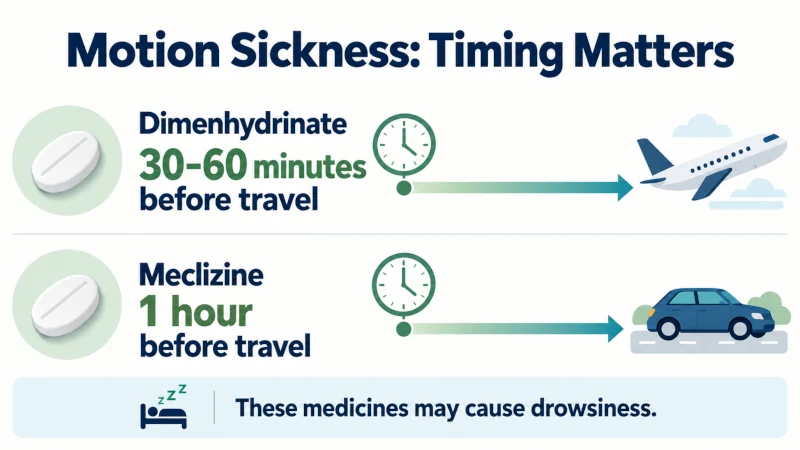
- Dimenhydrinate (Dramamine): take the first dose 30 minutes to an hour before you travel. Avoid alcohol, and don’t drive until you know how it affects you. It isn’t for children under 2 unless a doctor says so, and it can make young children hyperactive rather than sleepy [MedlinePlus, 2026].
- Meclizine (Bonine, Dramamine Less Drowsy, Antivert): take it one hour before travel; doses can be repeated every 24 hours if needed. Drowsiness and dry mouth are the common side effects [MedlinePlus, 2018].
Check with a pharmacist first if you have glaucoma, an enlarged prostate or trouble urinating, or asthma or another breathing condition, or if you’re pregnant or breastfeeding. MedlinePlus says adults 65 and older usually shouldn’t take either drug because safer options exist [MedlinePlus, 2026; MedlinePlus, 2018].
Non-drug habits help too. The CDC suggests sitting in the front of a car or driving yourself, choosing a seat over the wing on a plane or a central cabin on a ship, and keeping your eyes on the horizon [CDC, n.d.].
Bismuth subsalicylate (Pepto-Bismol)
Bismuth subsalicylate is labeled for upset stomach, heartburn, and diarrhea in people 12 and older [MedlinePlus, 2016]. It’s a reasonable choice when queasiness comes with indigestion or loose stools. Because it’s a salicylate — a chemical cousin of aspirin — skip it if you’re allergic to aspirin, and ask your doctor first if you take a blood thinner or medicine for diabetes, arthritis, or gout. A black tongue or dark stool is a harmless side effect that fades after you stop [MedlinePlus, 2016]. Talk to a doctor before giving it to a child or teenager who is vomiting or has flu-like symptoms [MedlinePlus, 2016].
When a prescription makes more sense
For long trips, Mayo Clinic notes a prescription scopolamine patch is an option worth asking about [Mayo Clinic, n.d.]. In pregnancy, a combination of vitamin B6 and doxylamine exists; Cochrane found only limited evidence for it and for B6 alone in mild-to-moderate nausea, so this is a conversation for your prenatal provider rather than a self-started supplement [Matthews et al., 2015]. Anyone with nausea that keeps coming back needs a diagnosis, not a stronger over-the-counter product.
Sniffing an alcohol pad (and where peppermint fits)
This one sounds like a hospital myth, but it has real data behind it. In a 2018 Cochrane review of aromatherapy for nausea after surgery, inhaling isopropyl alcohol (rubbing alcohol) reduced nausea faster than standard anti-nausea drugs and reduced the need for rescue medicine, with moderate-certainty evidence [Hines et al., 2018]. To try it, hold an alcohol prep pad an inch or so below your nose and take a few slow breaths. Never drink it, and keep it away from flames.
Peppermint is less clear-cut, and the sources point in different directions depending on the setting. In the same Cochrane review, peppermint oil did not beat placebo for post-surgery nausea (low-certainty evidence) [Hines et al., 2018]. But NCCIH reports that a small amount of research suggests inhaled peppermint oil can reduce nausea in people getting chemotherapy [NCCIH, 2025b]. Sniffing peppermint is low-risk for most adults, but menthol should never be inhaled by or applied to the face of a baby or small child, because it can affect their breathing [NCCIH, 2025b]. Our peppermint evidence guide covers the oil’s better-supported uses.
Wrist acupressure
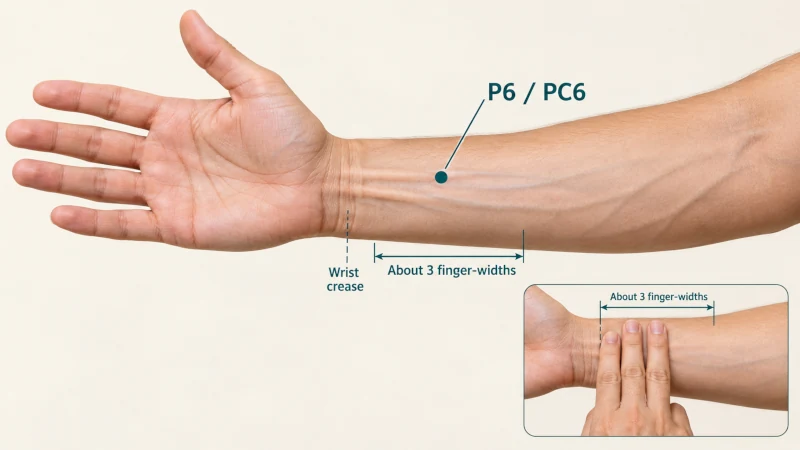
Acupressure bands press on a point on the inner wrist, called P6 or PC6, about three finger-widths above the crease. For nausea after surgery, the evidence is fairly large: a 2015 Cochrane review of 40 trials found wrist-point stimulation reduced nausea compared with sham treatment, and performed about as well as anti-nausea drugs — though the reviewers rated the sham-comparison evidence as low quality [Lee et al., 2015]. For pregnancy, Cochrane found the evidence for P6 acupressure limited [Matthews et al., 2015], though the NHS lists it as something to try [NHS, 2024]. Bands are cheap and have few downsides, which makes them a reasonable experiment.
Nausea in pregnancy
Pregnancy nausea is common, and the practical advice is consistent across sources. The NHS suggests resting, eating small, frequent meals of plain starchy food, having dry toast or a plain biscuit before you get up, choosing cold foods if smells bother you, sipping fluids little and often, and trying ginger foods or drinks or wrist acupressure. It also advises checking with a pharmacist before taking ginger supplements [NHS, 2024].
Contact your midwife, doctor, or prenatal provider if you’re vomiting and also have very dark urine or haven’t urinated in more than 8 hours, can’t keep food or fluids down for 24 hours, feel very weak or faint when standing, have belly pain or a fever, see blood in your vomit, or are losing weight. These can be signs of hyperemesis gravidarum, a severe form of pregnancy sickness that can cause dehydration and may need hospital treatment [NHS, 2024].
Popular remedies with little evidence
Plenty of remedies circulate as nausea cures without much behind them. A few are harmless; a few can backfire.
- Chamomile, fennel, cardamom, cinnamon, and cumin teas. Warm, mild teas may feel soothing, and that has value. But we couldn’t find good human evidence that any of them treats nausea. Fennel’s better-supported use is easing gas and bloating, which is a different problem.
- Cloves. Clove for nausea has traditional, not clinical, support, and concentrated clove oil carries real risks.
- Licorice root. Real licorice contains glycyrrhizin, which can raise blood pressure and lower potassium. It’s a poor choice to take casually for an upset stomach.
- Apple cider vinegar, aloe vera juice, and activated charcoal. These appeared on the previous version of this page. We removed them: none has reliable evidence for nausea, acidic vinegar can irritate an already upset stomach, and oral aloe can cause cramping.
For a broader, evidence-ranked look at stomach herbs, see our guide to herbs for stomach issues.
When nausea needs a doctor
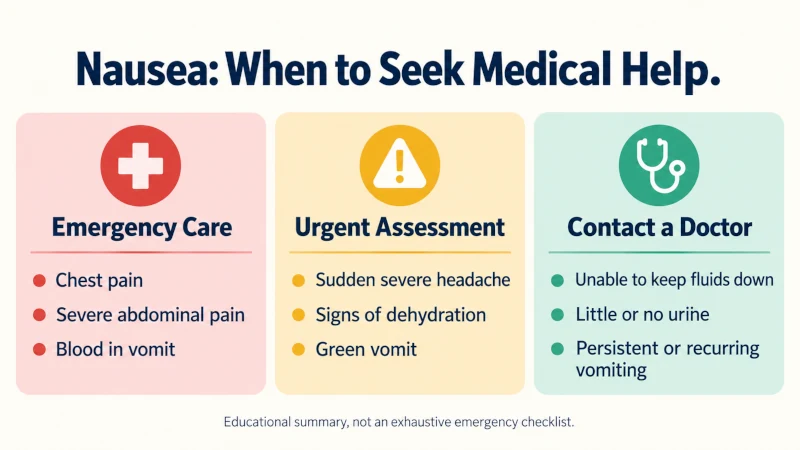
Call 911 or go to an emergency room if nausea or vomiting comes with chest pain, severe belly pain or cramping, blurred vision or confusion, a high fever with a stiff neck, fecal material or odor in the vomit, or rectal bleeding [Mayo Clinic, n.d.]. Also get emergency help if you think the vomiting is from poisoning, or if your vomit contains blood or dark material that looks like coffee grounds [MedlinePlus, 2025].
Go to urgent care the same day — and have someone else drive — if you have a sudden or severe headache unlike your usual ones, signs of dehydration such as extreme thirst or dizziness when you stand, or green vomit [Mayo Clinic, n.d.].
Call your doctor if you can’t keep fluids down for 12 hours, haven’t urinated in 8 hours, or have vomited three or more times in a day [MedlinePlus, 2025]. Mayo Clinic also advises an appointment if vomiting lasts more than two days in an adult, 24 hours in a child under 2, or 12 hours in an infant; if nausea keeps returning for more than a month; or if you’re losing weight without trying [Mayo Clinic, n.d.].
| HEALTH DISCLAIMER: This article is for general education and is not medical advice, diagnosis, or treatment. Nausea can be a symptom of conditions that need medical care. Over-the-counter medicines and herbal products can cause side effects and interact with prescription drugs. Talk with a doctor or pharmacist before using them if you are pregnant or breastfeeding, are giving them to a child, are 65 or older, take a blood thinner or other daily medication, or have a chronic health condition. If you have warning signs such as chest pain, severe abdominal pain, blood in your vomit, or signs of dehydration, seek medical care promptly. |
Frequently Asked Questions
What is the fastest thing to take for nausea?
For nausea after surgery, sniffing an isopropyl alcohol pad eased symptoms faster than standard anti-nausea drugs in Cochrane-reviewed trials [Hines et al., 2018]. At home, the quickest low-risk steps are fresh air, slow sips of a cold clear drink, and lying back with your head raised. For travel, the fastest fix is prevention: take dimenhydrinate or meclizine before you leave [MedlinePlus, 2026; MedlinePlus, 2018].
Does Dramamine help with nausea that isn’t from motion sickness?
Dimenhydrinate (Dramamine) and meclizine are labeled for motion sickness, and that’s where the evidence is [Karrim et al., 2022; MedlinePlus, 2026; MedlinePlus, 2018]. Nausea from a stomach bug, migraine, or medication has different causes, so ask a pharmacist before using them off-label, and see a doctor if nausea is unexplained or lasts more than a couple of days [Mayo Clinic, n.d.].
Is ginger ale good for nausea?
Cold, carbonated drinks like ginger ale can be easier to sip when you feel sick [Mayo Clinic, n.d.], but it’s a soft drink, not a measured ginger dose. If you want to try ginger itself, ginger tea or ginger candy is a more direct route; the CDC says ginger candy may help with motion sickness, while NCCIH notes most motion-sickness studies of ginger were negative [CDC, n.d.; NCCIH, 2025].
What should I eat when I feel nauseous?
Small amounts of plain, starchy, low-fat food — crackers, toast, rice, plain pasta — are usually easiest [NHS, 2024]. If you’ve been vomiting, wait about six hours before solids, then build up slowly, and put off fatty or spicy meals [Mayo Clinic, n.d.].
Can I take something for nausea while pregnant?
Start with food changes, ginger foods or drinks, and wrist acupressure [NHS, 2024]. Ask your prenatal provider before taking any supplement or medicine, including ginger capsules and vitamin B6, since evidence for all of these is limited and expert sources differ on ginger supplements [NCCIH, 2025; Matthews et al., 2015; Memorial Sloan Kettering, 2022].
REFERENCES
- National Center for Complementary and Integrative Health. “Ginger: Usefulness and Safety.” NIH; View source
- Matthews A, Haas DM, O’Mathúna DP, Dowswell T. “Interventions for nausea and vomiting in early pregnancy.” View source
- Memorial Sloan Kettering Cancer Center. “Ginger.” About Herbs, Botanicals & Other Products; View source
- National Center for Complementary and Integrative Health. “Peppermint Oil: Usefulness and Safety.” NIH; View source
- Hines S, Steels E, Chang A, Gibbons K. “Aromatherapy for treatment of postoperative nausea and vomiting.” View source
- Lee A, Chan SKC, Fan LTY. “Stimulation of the wrist acupuncture point PC6 for preventing postoperative nausea and vomiting.” View source
- Karrim N, Byrne R, Magula N, Saman Y. “Antihistamines for motion sickness.” View source
- MedlinePlus (U.S. National Library of Medicine). “Dimenhydrinate.” View source
- MedlinePlus (U.S. National Library of Medicine). “Meclizine.” View source
- MedlinePlus (U.S. National Library of Medicine). “Bismuth Subsalicylate.” View source
- MedlinePlus Medical Encyclopedia. “Nausea and vomiting – adults.” View source
- Mayo Clinic. “Nausea and vomiting: When to see a doctor.” View source
- Centers for Disease Control and Prevention, Travelers’ Health. “Motion Sickness.” View source
- NHS. “Vomiting and morning sickness.” View source


