
Cloves do one thing well enough to show up in clinical trials: they numb. In a randomized study of 73 adults, a clove gel dulled the sting of a needle in the gum about as well as a standard 20% benzocaine gel [Alqareer et al., 2006], and European regulators accept clove oil as a traditional short-term remedy for toothache from a cavity [EMA, 2011]. Most of the other health benefits of cloves you’ll see listed — balancing blood sugar, killing germs, settling digestion — come from test tubes, animal studies, or a single tiny pilot trial.
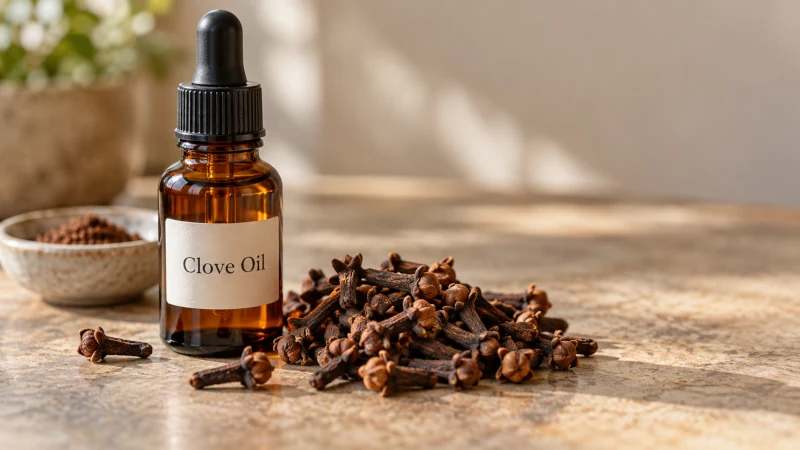
There’s a catch worth knowing up front. The concentrated oil that makes cloves useful for tooth pain has also put toddlers in hospital with liver failure after they swallowed a few teaspoons [Janes et al., 2005]. So the practical rule is simple: enjoy cloves in food freely, treat clove oil like a medicine, and keep the bottle where children can’t reach it.
What cloves are, and why eugenol matters
Cloves are the dried, unopened flower buds of Syzygium aromaticum, a tree in the myrtle family native to the Maluku Islands (the Moluccas) of eastern Indonesia. The hunt for them helped drive centuries of the spice trade; today they’re also grown in India, Sri Lanka, Madagascar and Zanzibar [Cortés-Rojas et al., 2014].
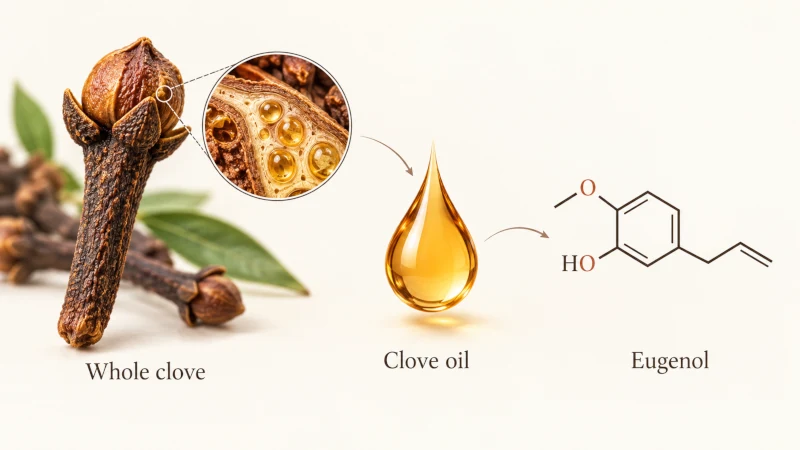
Nearly everything cloves do medically traces back to their essential oil. The buds can hold up to about 18% oil, and eugenol makes up the large majority of it, with smaller amounts of eugenol acetate and beta-caryophyllene [Cortés-Rojas et al., 2014]. Eugenol gives cloves their warm, tongue-numbing bite. It’s also behind both the benefits and the risks below.
The health benefits of cloves, graded by evidence
Toothache relief: the one benefit with trial data
This is where cloves earn their reputation. In the 73-person trial, both a homemade clove gel and benzocaine gel reduced needle-stick pain compared with placebo, and the two didn’t differ from each other [Alqareer et al., 2006]. A 2024 randomized trial in 60 children aged 7 to 11 found clove oil performed about as well as 20% benzocaine gel before a dental injection [Khalouf et al., 2024]. That was in a dental clinic, applied by a pediatric dentist — not a home remedy for kids.
Regulators read this evidence differently, and you should know both views. The European Medicines Agency lists clove oil as a traditional herbal medicine for temporary relief of toothache caused by a cavity, meaning the listing rests on long-standing use rather than proof from modern trials [EMA, 2011]. A 2020 review of newer research found nothing that justified changing that [EMA, 2020]. In the US, eugenol isn’t on the FDA’s list of recognized over-the-counter oral pain relievers; benzocaine, menthol and phenol are [FDA, 2022].
What that means for you: clove oil can take the edge off a toothache for a few hours. It won’t fix the cavity, infection or cracked tooth causing it. The EU monograph itself calls it a provisional measure and says to see a dentist as soon as possible [EMA, 2011]. And because an abscessed tooth can stop hurting while the infection keeps spreading [MedlinePlus, 2026b], numbing the pain is never a reason to skip that appointment.
Sore mouth and minor gum irritation
The EMA also recognizes mouthwashes containing 1–5% clove oil as a traditional remedy for minor inflammation of the mouth or throat in adults, for no more than a week [EMA, 2011]. In lab work, clove oil and eugenol are active against oral bacteria [EMA, 2020] — but no one has shown that a clove rinse prevents gum disease or cavities. Brushing with fluoride toothpaste, flossing and regular cleanings remain what prevents tooth decay [MedlinePlus, 2026a].
Antioxidant and antimicrobial effects: strong in the lab, unproven in people
Cloves are among the most polyphenol-rich foods ever measured, and in lab tests clove extracts and oil show strong antioxidant activity and inhibit a wide range of bacteria and fungi. Eugenol has even stopped the growth of H. pylori, the stomach bacterium behind many ulcers, in a dish [Cortés-Rojas et al., 2014].
Those are real findings. They’re also cell-culture, food-science and animal results. Nobody has shown that eating cloves prevents infections, ulcers or chronic disease in people, so read “antioxidant powerhouse” as a description of the spice’s chemistry, not a health outcome.
Blood sugar: one small, early study
Thirteen healthy or prediabetic adults took 250 mg a day of a water-soluble clove bud extract for 30 days. Blood sugar two hours after lunch dropped by roughly 13–17 mg/dL by day 12, and pre-meal readings fell only in the six people who started higher [Mohan et al., 2019].
Hold that loosely. There was no control group and no blinding, the product was a standardized extract rather than kitchen cloves, and the extract’s manufacturer funded the work and employed two of the authors [Mohan et al., 2019]. It’s a reason to run a proper trial. It isn’t a reason to change diabetes treatment — and if you take glucose-lowering medicine, check with your clinician before adding a clove supplement.
Digestion, gas and nausea: tradition, not trials
Herbal tradition calls cloves a warming digestive spice that eases gas, wakes up the appetite and settles nausea. We couldn’t find good-quality human trials testing any of those uses. If nausea is your problem, ginger has far better evidence — see our guide to what ginger actually helps. Our overview of herbs for the digestive system covers other traditional options, and the best foods for gut health focuses on foods with stronger research behind them.
One thing has changed from earlier versions of this page: we no longer suggest drops of clove oil in water for nausea or vomiting. The EU monograph covers clove oil only for use in the mouth, and swallowed oil is how most serious poisonings happen [EMA, 2011].
The aphrodisiac reputation
Medieval and Renaissance herbalists prized cloves as an aphrodisiac. We aren’t aware of any well-designed human trial showing cloves improve sexual function or stamina. If that’s what brought you here, our review of herbs for male stamina looks at options that have actually been tested in people.
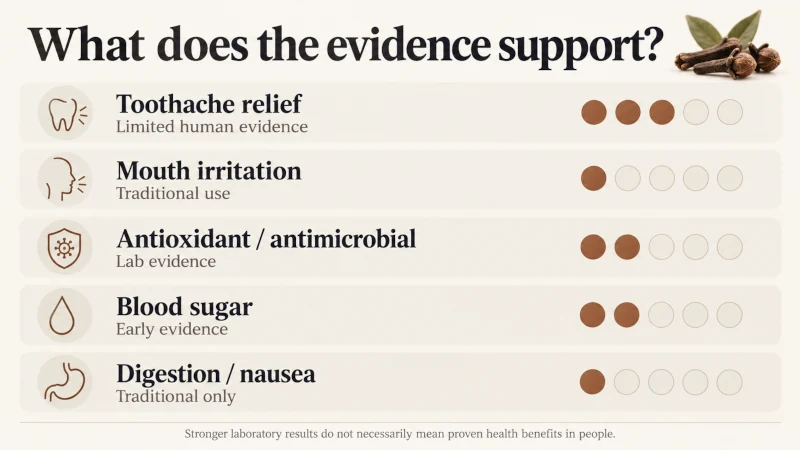
Table — Clove benefits at a glance
| Use | What the evidence shows | Strength |
| Temporary toothache relief (clove oil on the tooth) | Small randomized trials: numbing similar to benzocaine. EU accepts traditional use; not an FDA-recognized OTC ingredient. | Limited but real (human trials) |
| Minor mouth or throat irritation (diluted rinse) | EU traditional-use listing; lab antibacterial data only. | Traditional |
| Antioxidant / antimicrobial | Strong lab activity; no human outcome data. | Lab and animal only |
| Blood sugar | One 13-person, uncontrolled, industry-funded pilot of an extract. | Early / insufficient |
| Digestion, gas, nausea | Long traditional use; no good trials found. | Traditional only |
| Aphrodisiac | No trials found. | Insufficient |
How to use cloves safely
In food and tea
Whole or ground cloves in cooking are the easy, low-risk way to enjoy them, and you need very little — a single clove can flavor a whole pot. Steeping two or three whole cloves in a cup of hot water makes a fragrant tea. At those amounts you’re getting a culinary dose, not a medicinal one, so enjoy it for the taste.
You may still see older guides, including previous versions of this page, recommending clove oil drops, fluid extracts or capsules by mouth several times a day. We’ve removed that advice. No authoritative source we found supports swallowing clove oil, and overdose can cause liver failure and seizures [EMA, 2011] [MedlinePlus, 2025].
For a toothache (adults only)
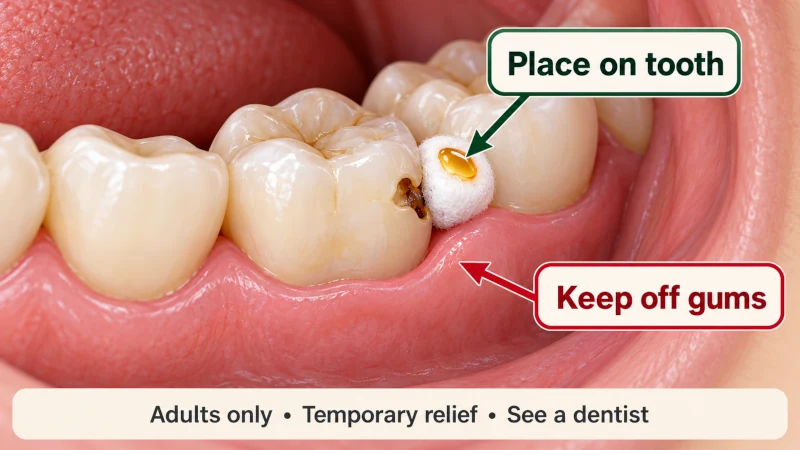
This follows the European monograph, the most detailed official guidance available [EMA, 2011]:
- Use clove oil or a dental gel made with it. Soak a small piece of cotton and place it right on the decayed part of the tooth.
- Keep it off your gums, cheek and tongue. Clove oil can irritate soft tissue and cause allergic reactions.
- If you need to, repeat after 20 minutes, then every 2 hours.
- Don’t swallow it, and don’t use it for more than a week.
- Book a dentist. This is a stopgap, not treatment.
Chewing or holding a whole clove next to the sore tooth is the gentler folk version. There’s no trial data on it, but it’s far less concentrated than the oil.
Clove side effects and safety
Cloves as a spice cause problems for very few people. Clove oil is a different product — concentrated enough that a few teaspoons can be dangerous. The side effects reported with dental use are mouth irritation and allergic reactions [EMA, 2011].
Clove oil poisoning
Swallowing clove oil can cause drowsiness, seizures, coma, fast or shallow breathing, low blood sugar and liver failure. As little as 10 mL can seriously harm an adult, and less can harm a child [MedlinePlus, 2025]. In children under 2, 5–10 mL has caused life-threatening illness [EMA, 2011]. Published cases include a 15-month-old who developed fulminant liver failure after swallowing 10 mL [Janes et al., 2005] and a child who suffered coma, fits, bleeding problems and liver damage [Hartnoll et al., 1993].
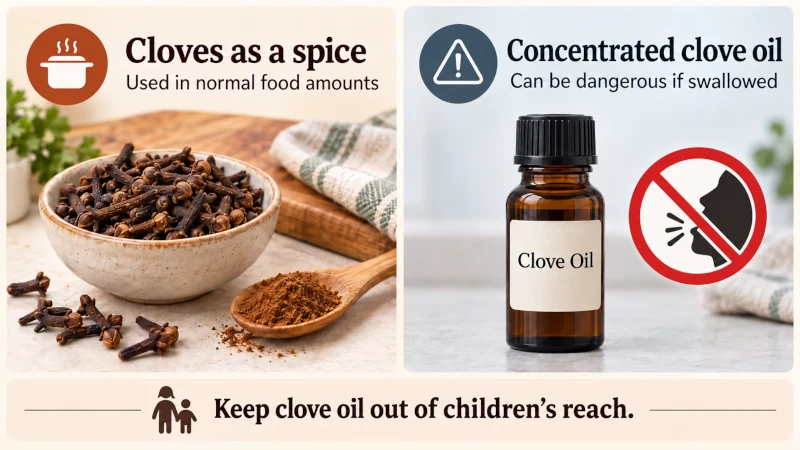
Liver injury usually appears 12 to 24 hours after ingestion [LiverTox, 2019], so a child who seems fine at first still needs to be seen. If someone swallows clove oil, call Poison Help at 1-800-222-1222 (US) or your local emergency number right away, and don’t make them vomit unless told to [MedlinePlus, 2025]. Store clove oil like medicine, in a child-resistant spot.
Who should avoid clove oil
- Children and teens under 18. The EU monograph doesn’t recommend it because safety hasn’t been established [EMA, 2011]. Never give clove oil to babies or toddlers, including on the gums for teething.
- Pregnant or breastfeeding people. Safety hasn’t been established, so use isn’t recommended [EMA, 2011].
- Anyone allergic to cloves, eugenol or Peru balsam [EMA, 2011].
- People with liver disease, as a precaution given clove oil’s liver toxicity in overdose — ask your doctor first.
- People with gastritis or a stomach ulcer. Cooking amounts are unlikely to matter, but very spicy food bothers some people, and clove oil shouldn’t be swallowed. Our guide to foods to eat with gastritis covers gentler choices.
Medication interactions: where sources disagree
The EU monograph lists no reported interactions for clove oil used in the mouth [EMA, 2011]. Laboratory research, though, suggests compounds in clove oil can reduce platelet clumping [Srivastava & Malhotra, 1991 — UNVERIFIED], which is why some drug-interaction references flag a theoretical bleeding risk with blood thinners. We found no confirmed human cases.
A sensible middle path: cooking amounts aren’t a concern. If you take warfarin, apixaban, clopidogrel, daily aspirin or another blood thinner, have a bleeding disorder, have surgery coming up, or take diabetes medicine, ask your pharmacist before using clove supplements, extracts or oil regularly.
When a toothache needs a dentist, not cloves
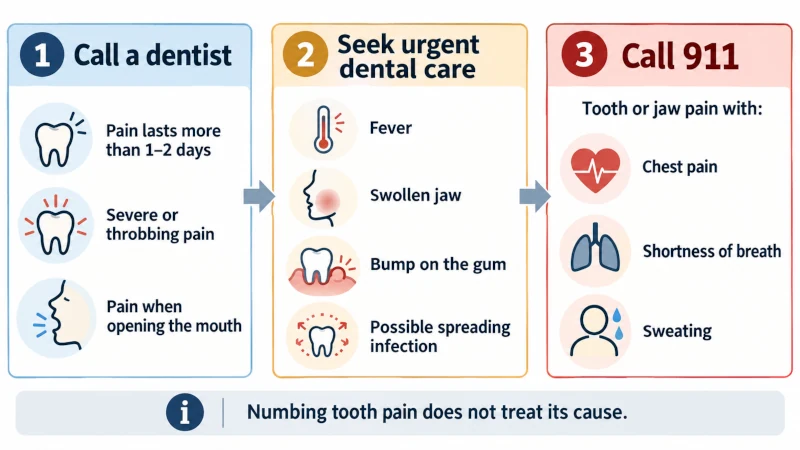
MedlinePlus advises getting care if your toothache is severe, lasts longer than a day or two, or comes with fever, an earache, or pain when you open your mouth wide [MedlinePlus, 2026a]. Contact a dentist about a throbbing toothache that won’t go away or a pimple-like bump on the gum, and treat a swollen jaw as a very serious sign of a spreading infection [MedlinePlus, 2026b].
Tooth or jaw pain can occasionally be a sign of a heart attack [MedlinePlus, 2026a]. If it comes with chest pain, shortness of breath or sweating, call 911.
| Health Disclaimer: This article is for general education and isn’t a substitute for advice, diagnosis or treatment from a dentist, doctor or pharmacist. Cloves and clove oil are not proven treatments for any disease. Clove oil is toxic if swallowed in larger amounts and is not recommended for anyone under 18 or during pregnancy or breastfeeding. Talk to a health professional before using clove supplements or oil if you take blood thinners or diabetes medicine, have liver disease, or have surgery planned. If someone has swallowed clove oil, call Poison Help (1-800-222-1222 in the US) or emergency services right away. |
Frequently Asked Questions
Is clove oil good for a toothache?
It can temporarily numb the pain. Small trials found clove preparations dulled oral pain about as well as benzocaine gel [Alqareer et al., 2006] [Khalouf et al., 2024], and EU regulators accept it as a traditional short-term toothache remedy [EMA, 2011]. It doesn’t treat the cause, so see a dentist.
Is it safe to eat cloves every day?
Using cloves as a spice in normal cooking amounts is a long-standing food practice with no notable safety signals in the sources we reviewed. The serious risks come from concentrated clove oil, especially if swallowed [MedlinePlus, 2025].
Can I put clove oil on my baby’s gums for teething?
No. Clove oil isn’t recommended for anyone under 18 [EMA, 2011], and small amounts swallowed by toddlers have caused liver failure [Janes et al., 2005]. Ask your pediatrician or dentist about safe teething relief.
Do cloves lower blood sugar?
Maybe slightly, but the evidence is one small, uncontrolled, industry-funded pilot study of a clove extract [Mohan et al., 2019]. Don’t use cloves in place of diabetes treatment, and check with your clinician before trying supplements.
What should I do if a child swallows clove oil?
Call Poison Help at 1-800-222-1222 (US) or emergency services immediately, even if the child seems fine — liver damage can show up 12–24 hours later [MedlinePlus, 2025] [LiverTox, 2019].
References
- European Medicines Agency, Committee on Herbal Medicinal Products. Community herbal monograph on Syzygium aromaticum (L.) Merill et L. M. Perry, floris aetheroleum. View source
- European Medicines Agency, HMPC. Addendum to assessment report on Syzygium aromaticum, floris aetheroleum. View source
- U.S. Food and Drug Administration. Over-the-Counter Monograph M022: Oral Healthcare Drug Products for OTC Human Use. View source
- Alqareer A, Alyahya A, Andersson L. The effect of clove and benzocaine versus placebo as topical anesthetics. J Dent. View source
- Khalouf H, Karkoutly M, Almonakel MB. Effectiveness of clove oil as a topical anesthetic during inferior alveolar nerve block: a randomized, single-blinded, active-controlled clinical study. View source
- Cortés-Rojas DF, de Souza CRF, Oliveira WP. Clove (Syzygium aromaticum): a precious spice. Asian Pac J Trop Biomed. View source
- Mohan R, Jose S, Mulakkal J, Karpinsky-Semper D, Swick AG, Krishnakumar IM. Water-soluble polyphenol-rich clove extract lowers pre- and post-prandial blood glucose levels in healthy and prediabetic volunteers: an open label pilot study. View source
- MedlinePlus Medical Encyclopedia. Eugenol oil overdose. View source
- MedlinePlus Medical Encyclopedia. Toothaches. View source
- MedlinePlus Medical Encyclopedia. Tooth abscess. View source
- LiverTox: Clinical and Research Information on Drug-Induced Liver Injury. Eugenol (Clove Oil). View source
- Janes SEJ, Price CSG, Thomas D. Essential oil poisoning: N-acetylcysteine for eugenol-induced hepatic failure and analysis of a national database. View source
- Hartnoll G, Moore D, Douek D. Near fatal ingestion of oil of cloves. Arch Dis Child. View source
- Srivastava KC, Malhotra N. Acetyl eugenol, a component of oil of cloves (Syzygium aromaticum L.) inhibits aggregation and alters arachidonic acid metabolism in human blood platelets. Prostaglandins Leukot Essent Fatty Acids. View source


