
Most people can eat within a few hours of a tooth extraction — once the numbness has worn off and the bleeding has settled, you can start on soft, lukewarm foods. The bigger question is how you eat for the next week, because the real goal after an extraction is protecting the small blood clot that forms in the socket. Disturb it, and you risk a painful complication called dry socket.

So knowing when you can eat after tooth extraction is really about pacing: soft foods first, then easing back to your normal diet as the area heals. Here’s how to do it without setting your recovery back.
When can I eat after tooth extraction? Hour by hour and day by day
The clot that fills the socket is what your gum and bone heal over. It usually stabilizes over the first 24 hours, which is why the first day carries the most restrictions.
| Timeframe | What you can eat | What to avoid |
| First 1–2 hours | Nothing yet — keep firm pressure on the gauze until bleeding slows | Eating or drinking while the gauze is in |
| Rest of day 1 | Cool or lukewarm soft foods: yogurt, applesauce, smooth soup, mashed potato | Hot food and drinks, straws, chewing near the site, alcohol |
| Days 2–3 | More soft options: scrambled eggs, oatmeal, well-cooked pasta, soft fish | Crunchy, hard, chewy, spicy, and very acidic foods |
| Days 4–7 | Gradually reintroduce firmer foods as comfort allows, chewing on the other side | Anything that stings or forces you to chew hard over the socket |
| Week 2 onward | Most people are back to a normal diet | Whatever still feels tender — let comfort be your guide |
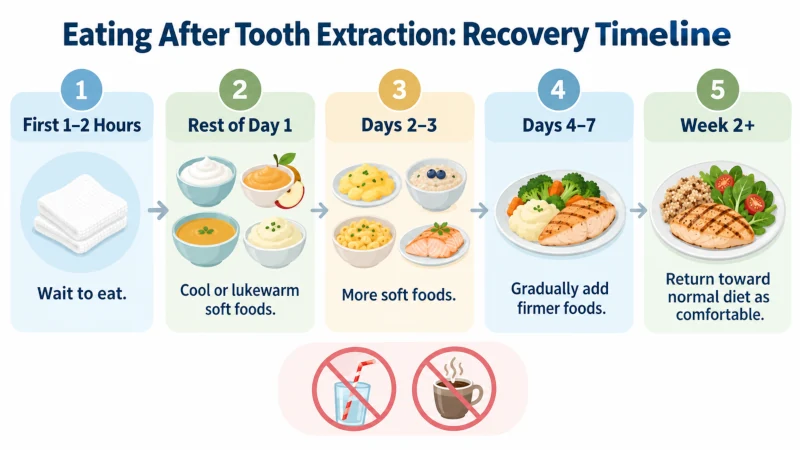
Two rules matter more than the exact clock. Wait until the anesthetic has fully worn off before you eat, or you can bite your cheek or tongue without feeling it. And keep food and drinks lukewarm on day one — the UCLH oral surgery team advises avoiding hot food and drink while the anesthetic wears off because you can burn your mouth without realizing it [UCLH NHS].
What to eat after a tooth extraction
Soft, nourishing, and easy to eat without much chewing is the whole brief for the first few days. NHS oral surgery guidance suggests soft foods such as pasta, mashed potato, scrambled egg, and soup for the first few days [UCLH NHS]). Good options:
- Smooth soups and broths. Warm (not hot) chicken or vegetable broth is soothing and hydrating. Let it cool to lukewarm.
- Yogurt. Plain, smooth yogurt goes down without chewing. Skip anything with seeds, granola, or fruit chunks.
- Applesauce. Smooth, unsweetened applesauce is gentle and easy.
- Mashed potato. Soft and filling; a little milk or butter makes it easier to eat. If you’re curious about the nutrition, here’s more on the health benefits of potatoes.
- Scrambled eggs. Soft, protein-rich, and easy to chew gently after the first day.
- Pudding, custard, and smoothies eaten with a spoon. Cold and easy — just no straw.

Healing tissue draws on protein and vitamin C for collagen and repair, so it’s worth working some nutrition into those soft meals rather than living on jello. Blend a smoothie with yogurt and soft fruit, or stir mashed avocado into eggs. Getting enough vitamin C from foods supports the collagen your body uses to close the wound — though whole foods, not megadoses, are what you’re after.
Foods and habits that can disrupt healing
Some things are worth avoiding for the first several days because they can irritate the site or dislodge the clot.
- Crunchy and hard foods — chips, nuts, popcorn, hard candy, crusty bread. Sharp fragments can lodge in the socket, and hard bites can knock the clot loose.
- Chewy or tough meats like steak. Softer proteins — fish, eggs, slow-cooked chicken — are easier for now.
- Spicy and acidic foods — hot sauce, citrus, tomato-based sauces. These can sting the open wound during early healing.
- Straws. The suction can pull the clot out of the socket, and the Cleveland Clinic recommends skipping straws for at least a week after extraction [Cleveland Clinic, 2025].
- Hot drinks and alcohol on the first day, and very hot food while your mouth is numb.

The consistent thread here is the blood clot. Nearly every “don’t” on this list — straws, vigorous rinsing, crunchy food, smoking — comes back to keeping that clot in place.
Protect the blood clot: what dry socket is and why it hurts
Dry socket, known medically as alveolar osteitis, happens when the blood clot at the extraction site fails to form, dissolves, or is dislodged before the wound heals, leaving the underlying bone and nerves exposed [Mayo Clinic, 2023]. It’s the most common complication after an extraction, and it’s genuinely painful — a deep, throbbing ache that can radiate to your ear, eye, or neck, often with a bad taste or bad breath [Mayo Clinic, 2023].
- Timing. Pain from dry socket typically shows up one to three days after the extraction. If you’ve made it past day five without it, you’re generally in the clear [Cleveland Clinic, 2025].
- How common. It affects roughly 2–5% of extractions overall, but the risk is much higher for lower wisdom teeth — one review puts the rate around 30% for impacted lower third molars [Cleveland Clinic, 2025] [StatPearls, 2023].
- Who’s more at risk. Smoking, difficult or surgical extractions, poor oral hygiene, and estrogen-containing birth control pills all raise the odds [StatPearls, 2023] [Mayo Clinic, 2023].
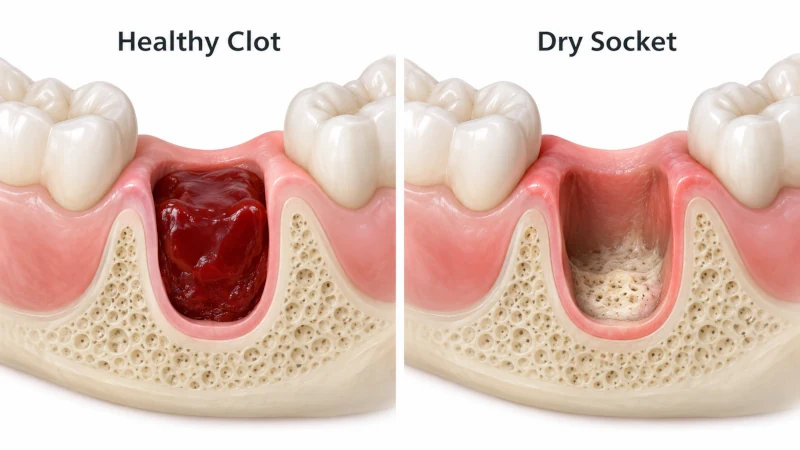
Dry socket isn’t dangerous, but it needs treatment — your dentist can clean and dress the socket to relieve the pain. If a deep ache sets in a couple of days after your extraction and over-the-counter painkillers aren’t touching it, call your dental office.
When can you smoke after a tooth extraction?
If you smoke, this is the single highest-impact thing you can control. People who smoke are more than three times as likely to develop dry socket as those who don’t [Cleveland Clinic, 2025]. Two separate mechanisms are at work: chemicals in tobacco slow healing, and the sucking action of drawing on a cigarette can pull the clot out of the socket [Mayo Clinic, 2023].
At an absolute minimum, avoid smoking for the first 48 hours, since it delays healing and can bring on pain [UCLH NHS]. Longer is better — staying off cigarettes through the first several days of healing gives the socket its best chance. The same suction caution applies to vapes and, technically, to anything you draw on.
A tooth extraction is an unusually good moment to quit for good — you’re already through the hardest day or two of not smoking. If you want a practical framework, this guide on how to stop smoking walks through quit-day planning and the FDA-approved options, including nicotine replacement. Ask your dentist or doctor before starting nicotine gum or lozenges right after surgery, since chewing and suction near the site are exactly what you’re trying to avoid.
Caring for the extraction site
Eating well is one piece. A few other habits round out a smooth recovery.
Leave the area alone for the first 24 hours. Don’t rinse, spit, or poke at the socket for the first day — that’s how the clot gets disturbed [UCLH NHS].
Then start gentle salt-water rinses. From about 24 hours on, a warm salt-water rinse — roughly a teaspoon of salt in a glass of warm (not hot) water — helps keep the area clean. Swish gently, don’t swirl forcefully, and do it a few times a day, especially after eating, for about a week [UCLH NHS]. Keep brushing your other teeth normally, just steer clear of the extraction site itself [ADA]. Once the socket has closed over, ordinary oral care resumes; if you’re interested in gum health more broadly, this overview of herbs for teeth and gums sorts what has evidence from what doesn’t.

Manage pain and swelling. Some soreness is normal for a few days. An over-the-counter pain reliever usually handles it — follow the label, and take anything your dentist prescribed exactly as directed. For swelling, a cold cloth or ice pack against the cheek helps in the first day or so [ADA].
Take it easy. Skip strenuous exercise for at least 24 hours; physical exertion can restart bleeding [UCLH NHS]. Rest, keep your head slightly elevated, and give your body a day to settle.
As the tenderness fades over the following week, you can ease back to your usual meals. There’s no need to keep eating like a patient once the socket feels comfortable — a return to balanced everyday nutrition is part of healing too.
When to call your dentist
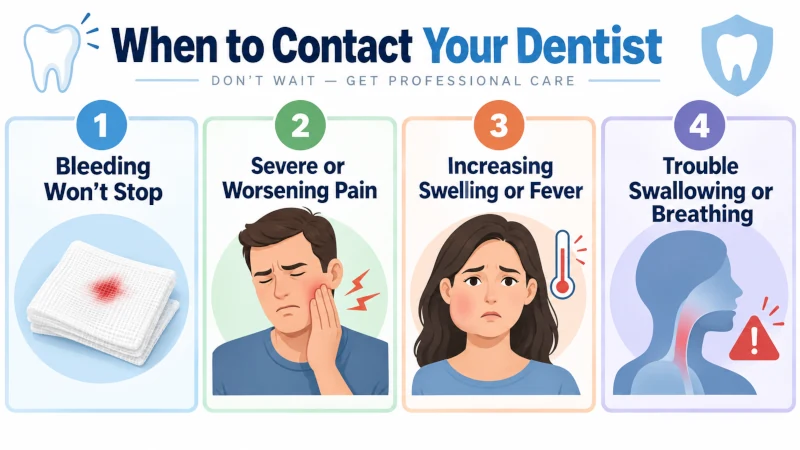
Most extractions heal without a hitch, but a few signs mean you should get in touch rather than wait it out:
- Bleeding that won’t stop. A little oozing on day one is normal. Bite firmly on clean gauze for 30 minutes; if heavy bleeding continues beyond an hour, contact your dentist [UCLH NHS].
- Severe or worsening pain, especially pain that starts or spikes two to three days after the extraction and isn’t relieved by painkillers — a classic dry socket signal [Cleveland Clinic, 2025].
- Signs of infection: increasing swelling, pus, a fever, or a bad taste that won’t go away [ADA].
- Numbness that doesn’t fade, trouble swallowing or breathing, or swelling that spreads — treat these as urgent and seek care promptly.
When in doubt, call. Dental offices expect these questions, and catching a problem early is far easier than managing it late.
| HEALTH DISCLAIMER: This article is general information, not a substitute for advice from the dentist or oral surgeon who did your extraction. Your care team knows the details — how difficult the extraction was, your health history, and any medications you take — and their instructions take priority over anything here. If you’re pregnant, breastfeeding, managing a bleeding disorder, taking blood thinners, or on any regular medication, check with your dentist or doctor before taking new pain relievers or changing your routine, and call them if anything about your recovery worries you. |
Frequently Asked Questions
Can I eat right after a tooth extraction?
Not immediately. Keep pressure on the gauze until the bleeding settles, and wait for the numbness to wear off so you don’t accidentally bite your cheek or tongue — usually a few hours. Then start with soft, lukewarm foods.
How long do I need to eat soft foods?
Plan on soft foods for the first few days, then ease back toward your normal diet over about a week as the area feels more comfortable [UCLH NHS].
When can I drink through a straw again?
Wait at least a week. The suction from a straw can pull the clot out of the socket and trigger dry socket [Cleveland Clinic, 2025].
What if food gets stuck in the socket?
It’s common and usually harmless. After the first 24 hours, rinse gently with warm salt water rather than poking at the site. If you notice increasing pain, swelling, or a bad taste that won’t clear, call your dentist.
When can I smoke or vape after an extraction?
Avoid it for at least 48 hours, and longer is better. Smoking makes dry socket more than three times as likely, both from the chemicals and the sucking action [Cleveland Clinic, 2025]; [Mayo Clinic, 2023].
References
- American Dental Association (ADA), MouthHealthy — “Extractions.” View source
- Mayo Clinic — “Dry socket — Symptoms and causes” (reviewed July 18, 2023). View source
- Cleveland Clinic — “Dry Socket” (reviewed May 5, 2025). View source
- Rohe C, Schlam M. “Alveolar Osteitis.” StatPearls, NCBI Bookshelf (updated May 29, 2023). View source
- University College London Hospitals NHS Foundation Trust — “Dental extractions: post-operative instructions.” View source


