
If your tooth is throbbing and there’s a bottle of clove oil in the cabinet, here’s the honest answer up front: clove oil can numb the area for a short while, and that is about the limit of what essential oils can do for a toothache. None of them treat the cause. Of all the essential oils for toothache you’ll see recommended online, clove is the only one with meaningful human research behind it, and even that research mostly tested clove on the gum before a needle stick or as a product a dentist placed, not on an aching tooth at home.

What reliably helps while you wait for a dentist is less exotic. The American Dental Association’s 2024 guideline names over-the-counter pain relievers, ibuprofen or naproxen alone or combined with acetaminophen, as first-line treatment for a toothache when you can’t get dental care right away [ADA guideline, 2024].
| The short version: Clove oil (mostly eugenol) can briefly numb the gum. Small trials found it worked about as well as 20% benzocaine gel against needle-stick pain. Nobody has properly tested it on home toothaches.No essential oil fixes what’s causing the pain. Decay, a cracked tooth, gum disease, or an abscess needs a dentist.Peppermint, tea tree, eucalyptus, frankincense, lavender, and cinnamon oils have no clinical trials for toothache. Several irritate the mouth, and some are dangerous if swallowed.While you wait: an NSAID such as ibuprofen, taken as the label directs, is the evidence-based first step.Swelling around your eye or neck, or trouble breathing, swallowing, or speaking, is an emergency. |
Why an oil can’t fix a toothache
A toothache is a symptom. The NHS lists the usual culprits as tooth decay, a dental abscess, a cracked or damaged tooth, a loose or broken filling, gum disease, an infection around a tooth that’s coming through, and teeth grinding [NHS, 2024]. A drop of oil on the gum can’t fill a cavity, mend a crack, or drain an abscess.
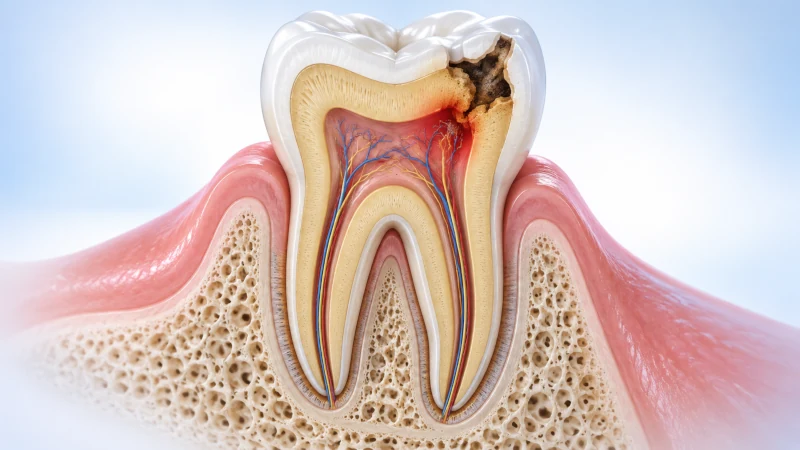
Numbing products are a bridge to treatment, and their labels say so. FDA labeling rules for over-the-counter oral pain relievers tell people to see a dentist or doctor if mouth pain hasn’t improved in seven days, or sooner if swelling, rash, or fever develops [FDA, 2022]. For toothache, the NHS sets a shorter clock: see a dentist if it lasts more than two days [NHS, 2024].
Clove oil: the one essential oil with real evidence
Clove oil is mostly eugenol, roughly 70% to 90% according to the NIH’s LiverTox database, and clove preparations were once common in dentistry [LiverTox, 2019]. Eugenol still turns up in some temporary dental dressings and cements that dentists place [Reddy et al., 2025].
What the studies actually tested
- Adults, needle-stick pain. In a randomized, subject-blinded trial of 73 adult volunteers, a homemade clove gel applied to the gum reduced the pain of two needle sticks about as well as 20% benzocaine gel, and both beat placebo [Alqareer et al., 2006].
- Children, dental injections. A 2024 trial in 60 children aged 7 to 11 found dentist-applied clove oil matched 20% benzocaine gel for reducing pain during a lower-jaw nerve-block injection [Khalouf et al., 2024].
- Dentist-placed eugenol products. A 2025 systematic review rated the evidence for eugenol in dental pain as moderate certainty, based on three trials of eugenol pastes and dressings used by dentists for dry socket, emergency pulp treatment, and pulpitis. Most studies in the review carried some or high risk of bias [Reddy et al., 2025].

None of these tested someone dabbing clove oil on their own aching tooth. Regulators have flagged the same gap. In 1991 the FDA proposed moving eugenol out of the “safe and effective” category for over-the-counter toothache products, citing its potential to damage living tooth pulp and the lack of controlled trials for toothache relief [Pink Sheet, n.d.]. Today, eugenol is not on the FDA’s list of recognized active ingredients for over-the-counter oral pain relievers; benzocaine and menthol are [FDA, 2022]. LiverTox likewise notes that neither eugenol nor clove extracts are approved in the United States for any medical condition [LiverTox, 2019].
The fair reading: clove oil can probably numb your gum briefly. Whether it eases a real toothache at home hasn’t been studied, and it isn’t risk-free in the mouth. If you’re curious about cloves more broadly, our guide to the history and traditional uses of cloves covers the spice itself.
| Use | Evidence grade |
| Clove gel or oil on the gum before a dental injection | Limited but consistent (small randomized trials) |
| Eugenol products placed by a dentist (dressings, pastes) | Moderate certainty, per one 2025 review |
| Clove oil on a toothache at home | Insufficient (not directly tested) |
| Clove oil to treat infection or decay | No supporting human evidence |
Other essential oils for toothache: what the evidence says
Popular lists pad out clove with peppermint, tea tree, eucalyptus, frankincense, lavender, and cinnamon. A 2025 systematic review of plant-based treatments for dental pain didn’t include a single clinical trial of any of them [Reddy et al., 2025]. Here’s what is known.
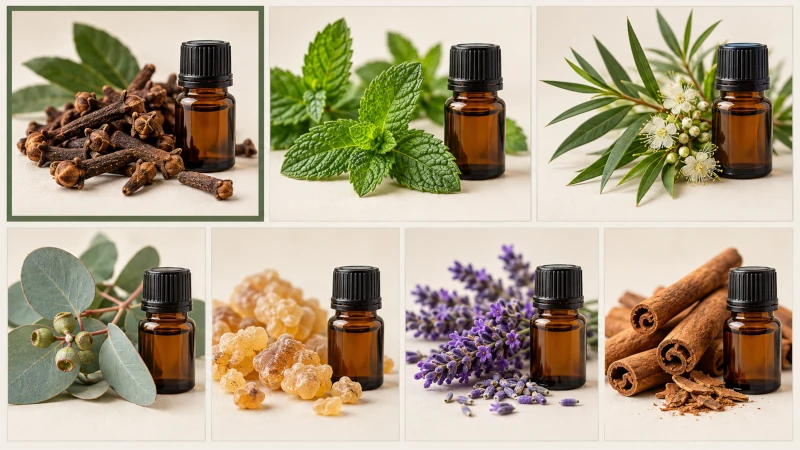
| Oil | Toothache evidence | What we do know | Main caution |
| Peppermint | None | Menthol, its main compound, is an FDA-recognized ingredient in measured over-the-counter oral pain products. That is not the same as dabbing peppermint oil on a tooth. | Can irritate skin and mouth. Never apply near the face of an infant or young child. |
| Tea tree | None | Low-strength tea tree mouthrinses are promoted for gum inflammation, plaque, and bad breath, but the NIH calls their effectiveness uncertain. | Never swallow it. Swallowed tea tree oil has caused confusion, unsteadiness, and coma. |
| Eucalyptus | None | It appears in some over-the-counter sore-gum products and mouthwashes. | Swallowed eucalyptus oil can cause poisoning, including seizures. |
| Frankincense | None | No dental pain trials found in our review. | Safety in the mouth is unknown. |
| Lavender | None | The NIH says it’s unclear whether lavender aromatherapy helps pain, though some people report feeling better. | Can cause allergic skin reactions; may add to the effect of sedatives. |
| Cinnamon | None | Cinnamon oil and cinnamaldehyde are among the most common causes of allergic contact stomatitis. | Burning, swelling, and sores inside the mouth. |
Sources for the table: [FDA, 2022]; [NCCIH Peppermint, 2025]; [NCCIH Tea Tree, 2025]; [MedlinePlus Eucalyptus]; [Poison Control]; [NCCIH Lavender, 2025]; [Tremblay & Avon, 2008].
Peppermint and lavender do have better-supported uses elsewhere. Our peppermint benefits guide covers IBS and tension headaches, and our lavender benefits guide covers its calming effects. If a few breaths of lavender help you feel calmer while you wait for an appointment, that’s a reasonable comfort measure. It won’t touch the tooth.
Brand labels like “therapeutic grade” don’t change any of this. Essential oil products are loosely regulated, makers usually don’t have to prove they work, and it can be hard to know exactly what’s in the bottle [Poison Control].
If you try clove oil: how to use it more safely
No clinical guideline gives a tested dilution for home use in the mouth, so treat precise “drops per teaspoon” recipes online as guesswork. If you decide to try clove oil anyway:
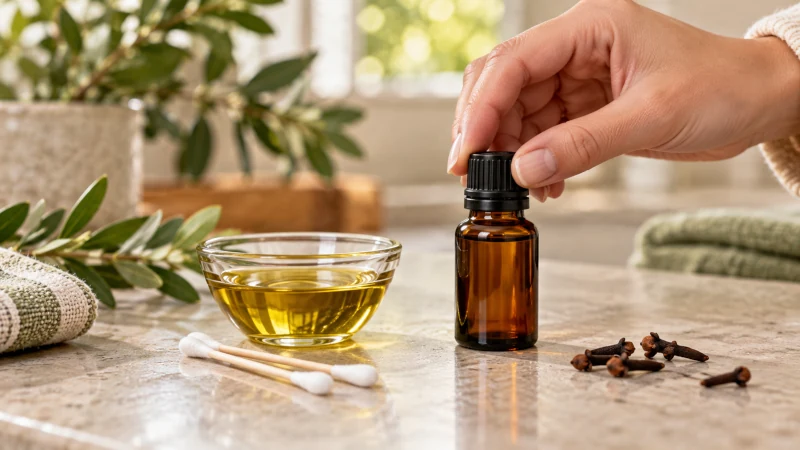
- Dilute it. Mix a drop into an edible carrier oil such as olive or coconut oil rather than using it straight. Poison Control recommends diluting essential oils in a carrier to avoid reactions from direct contact [Poison Control].
- Use a tiny amount, placed carefully. Dab it on the sore tooth and the gum right around it with a cotton swab. Don’t pack it into a cavity or soak your gums.
- Don’t swallow it. Spit out any excess. As little as 10 milliliters of clove oil can seriously harm an adult, and smaller amounts can harm a child [MedlinePlus, 2025].
- Stop if it burns. New burning, white patches, or sores suggest irritation or allergy. Eugenol allergy has caused painful gums and mouth ulcers [LiverTox, 2019].
- Treat it as a bridge for a day or two. Book the dentist anyway.
- Lock the bottle away from children. The reported cases of liver failure from clove oil have been in infants who swallowed oil their parents were using [LiverTox, 2019].
Oil pulling and DIY rinses
Oil pulling means swishing a spoonful of edible oil around your mouth, sometimes with essential oils added. The American Dental Association says no reliable studies show it reduces cavities or improves oral health, and it doesn’t recommend the practice [ADA MouthHealthy, n.d.]. It certainly won’t reach an inflamed nerve inside a tooth, and adding essential oils raises the risk of swallowing them. Homemade essential-oil “mouthwashes” carry the same problem; tea tree in particular should never be swallowed [NCCIH Tea Tree, 2025].
A plain warm salt-water rinse is the gentler home option. The NHS suggests half a teaspoon of salt in a glass of warm water, rinsed and spat out, for adults only, since children may swallow it [NHS, 2024]. For long-term prevention, brushing with fluoride toothpaste and cleaning between your teeth do the heavy lifting. Our look at what prebiotic toothpaste can and can’t do explains why fluoride still matters.
What actually helps toothache pain while you wait
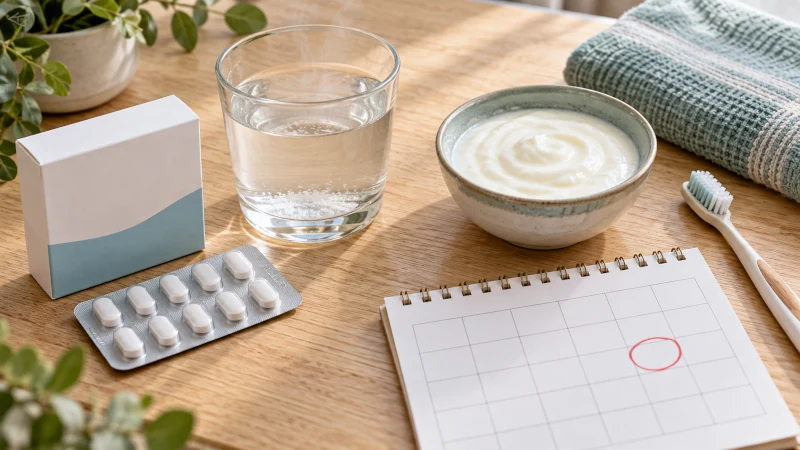
- An over-the-counter pain reliever. The ADA guideline recommends an NSAID such as ibuprofen or naproxen, alone or combined with acetaminophen, as first-line treatment for toothache when dental care isn’t immediately available. It found NSAIDs likely give better pain relief, with a more favorable safety profile, than opioids [ADA guideline, 2024]. Follow the label, and ask a pharmacist first if you’re pregnant, take blood thinners, or have stomach, kidney, or heart problems.
- A pharmacy numbing gel. The NHS lists pain-relieving mouth gels as an option [NHS, 2024]. Benzocaine is an FDA-recognized ingredient for these products; the label warns against use if you’re allergic to “caine” anesthetics, against use for more than seven days without a dentist’s advice, and to consult a dentist or doctor before using it in children under 2 [FDA, 2022].
- Small comforts. Eat soft foods, chew on the other side, skip very sweet, very hot, or very cold foods, and don’t smoke [NHS, 2024].
Who should avoid essential oils for tooth pain
- Children. Poison Control advises locking up or discarding essential oils in homes with young children, noting that children’s thin skin and immature livers may make them more vulnerable [Poison Control]. Peppermint oil should never go near an infant’s or young child’s face because inhaled menthol can cause serious side effects [NCCIH Peppermint, 2025].
- Pregnant or breastfeeding people. Little is known about the safety of medicinal amounts of peppermint or lavender during pregnancy or breastfeeding [NCCIH Peppermint, 2025]; [NCCIH Lavender, 2025]. We found no reliable safety data for clove oil in pregnancy. Ask your dentist or prenatal provider before putting concentrated oils in your mouth.
- People with allergies or a sensitive mouth. Eugenol allergy can mimic burning mouth syndrome [LiverTox, 2019], and cinnamon is a frequent cause of contact reactions inside the mouth [Tremblay & Avon, 2008].
- People taking medications. Essential oils may interact with medicines [Poison Control], and lavender may add to the effect of sedatives [NCCIH Lavender, 2025]. Check with a pharmacist.
- Anyone likely to swallow it by accident, including people who are very drowsy or have trouble swallowing.
When to see a dentist or get emergency care
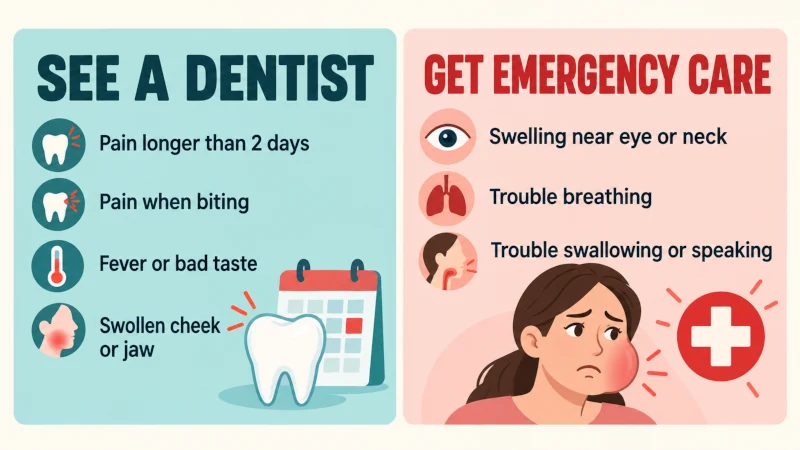
See a dentist soon if your toothache [NHS, 2024]:
- lasts more than 2 days
- doesn’t go away with painkillers
- comes with a high temperature, pain when you bite, red gums, or a bad taste in your mouth
- comes with a swollen cheek or jaw
Go to the emergency room, and don’t drive yourself, if you have toothache and [NHS, 2024]:
- the area around your eye or your neck is swollen
- swelling in your mouth or neck makes it hard to breathe, swallow, or speak
If someone swallows an essential oil, call Poison Help at 1-800-222-1222 in the U.S. right away, and don’t make them vomit unless poison control or a clinician tells you to [MedlinePlus, 2025].
| HEALTH DISCLAIMER: This article is for general education and is not a substitute for professional dental or medical advice, diagnosis, or treatment. Clove oil and other essential oils are not FDA-approved treatments for toothache, and they cannot treat decay, infection, or a damaged tooth. Never swallow essential oils, and keep them away from children. Talk with a dentist, doctor, or pharmacist before using essential oils in your mouth, especially if you are pregnant or breastfeeding, caring for a child, have allergies, or take any medication. If you have facial or neck swelling, fever with tooth pain, or trouble breathing, swallowing, or speaking, seek emergency care right away. See our full medical disclaimer. |
Frequently Asked Questions
What is the best essential oil for toothache?
Clove oil is the only one with human research behind it, and that research is limited. Small trials found clove gel or oil numbed the gum about as well as 20% benzocaine gel before a dental injection [Alqareer et al., 2006]; [Khalouf et al., 2024]. It hasn’t been properly tested on toothaches at home, and it won’t treat the cause.
Can I put clove oil directly on my tooth?
Dilute it first and use only a tiny amount. Clove oil can irritate the gums, eugenol allergy can cause mouth ulcers [LiverTox, 2019], and the FDA has raised concerns that eugenol may damage living tooth pulp [Pink Sheet, n.d.]. Never swallow it.
Does peppermint oil help a toothache?
There are no clinical trials of peppermint oil for toothache. Its main compound, menthol, is an FDA-recognized ingredient in measured over-the-counter oral pain products [FDA, 2022], which is a better bet than homemade peppermint drops. Never use peppermint oil near a baby’s or young child’s face [NCCIH Peppermint, 2025].
Can essential oils cure a tooth infection?
No. An infected tooth or abscess needs a dentist. Get seen promptly if you have fever, pain when you bite, a bad taste, or a swollen cheek or jaw, and go to the emergency room if swelling reaches your eye or neck or makes it hard to breathe or swallow [NHS, 2024].
Is clove oil safe during pregnancy?
We found no reliable safety data on clove oil in pregnancy, and the NIH notes little is known about medicinal amounts of other oils such as peppermint and lavender during pregnancy or breastfeeding [NCCIH Peppermint, 2025]; [NCCIH Lavender, 2025]. Ask your dentist or prenatal provider about pain relief options.
References
- Carrasco-Labra A, Polk DE, Urquhart O, et al. Evidence-based clinical practice guideline for the pharmacologic management of acute dental pain in adolescents, adults, and older adults. View source
- Alqareer A, Alyahya A, Andersson L. The effect of clove and benzocaine versus placebo as topical anesthetics. View source
- Khalouf H, Karkoutly M, Almonakel MB. Effectiveness of clove oil as a topical anesthetic during inferior alveolar nerve block: a randomized, single-blinded, active-controlled clinical study. View source
- Reddy MS, Ramachandra SS, Shetty SR, et al. Analgesic efficacy of phytotherapeutic agents in dental pain management: View source
- National Institute of Diabetes and Digestive and Kidney Diseases. Eugenol (Clove Oil). View source
- MedlinePlus Medical Encyclopedia. Eugenol oil overdose. View source
- MedlinePlus Medical Encyclopedia. Eucalyptus oil overdose. View source
- U.S. Food and Drug Administration. Final Administrative Order OTC000028, OTC Monograph M022: Oral Healthcare Drug Products for Over-the-Counter Human Use. View source
- The Pink Sheet. View source
- National Center for Complementary and Integrative Health. Tea Tree Oil: Usefulness and Safety. View source
- National Center for Complementary and Integrative Health. Peppermint Oil: Usefulness and Safety. View source
- National Center for Complementary and Integrative Health. Lavender: Usefulness and Safety. View source
- NHS. Toothache. View source
- American Dental Association, MouthHealthy. Oil Pulling. View source
- Poison Control (National Capital Poison Center). Essential oils: Poisonous when misused. View source
- Tremblay S, Avon SL. Contact allergy to cinnamon: View source


