
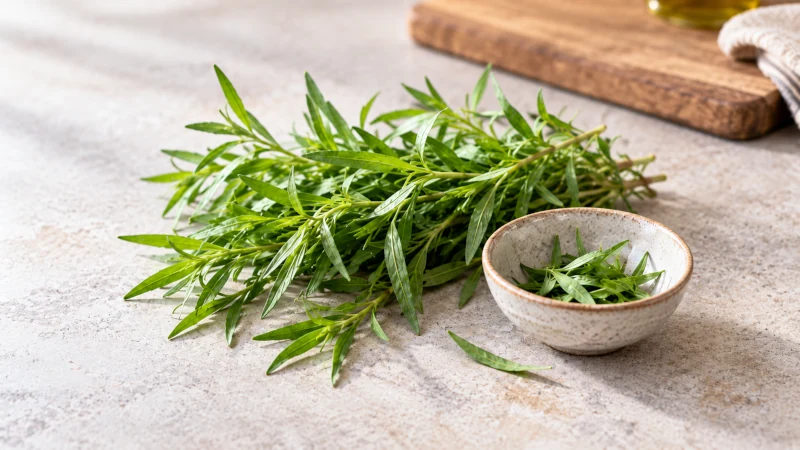
Tarragon is better known for flavoring roast chicken and béarnaise sauce than for medicine. But if you searched for its health benefits, you deserve a straight answer, so here it is: as a food, tarragon is a flavorful, very low-calorie herb carrying antioxidant plant compounds, and it has a long history in traditional medicine for digestion and appetite. The one benefit with actual human trial data behind it is blood sugar — and even that comes from specific concentrated extracts, not the pinch you keep in the spice rack. Most other tarragon plant benefits you’ll read about come from lab dishes and mice, not people.
That gap between promise and proof is the whole story with this herb, and it’s worth understanding before you buy a supplement or start brewing daily infusions. There’s also a genuine safety point most listicles skip, and you should know it.
What tarragon actually is
Tarragon (Artemisia dracunculus) is a perennial herb in the daisy family, Asteraceae — the same botanical clan as ragweed, chamomile, and marigolds, which matters later for allergies. It grows to roughly 60–80 cm with slender, lance-shaped leaves and small yellowish flower heads [Ekiert et al., 2021].
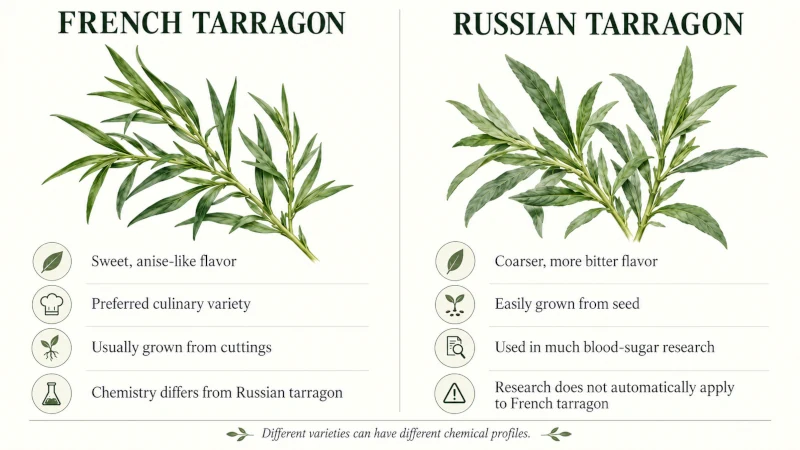
Two versions are sold, and they aren’t interchangeable. French tarragon is the prized culinary type, with a sweet anise-like aroma; it’s sterile and grown from cuttings. Russian tarragon is coarser and more bitter, easy to grow from seed, and — importantly — it’s the type behind most of the blood-sugar research [Obolskiy et al., 2011]. Their chemistry differs enough that findings from one don’t automatically apply to the other.
The plant is native to Central Asia and spread west through Europe over centuries; French cuisine adopted it enthusiastically, which is why it anchors classic blends like fines herbes.
Tarragon nutrition, briefly
Because tarragon is used in small amounts, its nutrition barely registers in a meal. A tablespoon of dried tarragon has about 5 calories and supplies small amounts of manganese and iron, plus a trace of potassium [Healthline, 2019, citing USDA data]. Nobody eats enough tarragon for these numbers to move your daily intake meaningfully.
What’s more interesting is what gives the herb its color and aroma: polyphenols such as caffeoylquinic acids and flavonoids, which behave as antioxidants in laboratory tests [Obolskiy et al., 2011]. That’s the chemistry doing the work in the research below — not the vitamins.
Tarragon plant benefits, graded by evidence
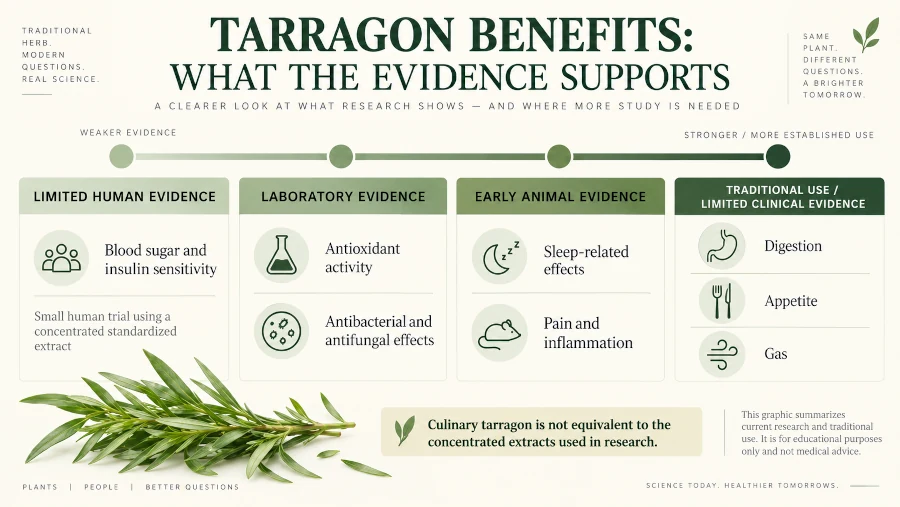
Here’s the honest hierarchy, from best-supported to traditional.
Blood sugar and insulin sensitivity — promising but limited
This is the most credible benefit, and the reason tarragon shows up in diabetes research at all. In a small randomized, double-blind, placebo-controlled trial, 24 adults with impaired glucose tolerance took 1,000 mg of an Artemisia dracunculus preparation before breakfast and dinner for 90 days. The tarragon group saw significant reductions in HbA1c, total insulin secretion, and the insulin area-under-the-curve, along with a drop in systolic blood pressure and a rise in HDL (“good”) cholesterol; the placebo group didn’t change [Méndez-Del Villar et al., 2016].
That fits a larger body of animal and cell research. A standardized Russian-tarragon extract known as PMI-5011 has repeatedly improved glucose uptake and insulin signaling in diabetic mice and in muscle cell cultures, and reviews of this work describe a plausible biological mechanism [Obolskiy et al., 2011; Ekiert et al., 2021].
The catch matters as much as the finding. The human trial had only 24 people and ran for three months, so it’s a signal, not a settled conclusion. And it used a concentrated, standardized extract — not the dried leaf you cook with. Sprinkling tarragon on your eggs is not a blood-sugar treatment, and no one should stop or adjust diabetes medication on the strength of this.
Antioxidant activity — early, mostly in the lab
Tarragon’s polyphenols neutralize free radicals in test-tube assays, which is the basis for most “antioxidant herb” claims [Obolskiy et al., 2011; Ekiert et al., 2021]. This is real chemistry, but antioxidant activity in a dish doesn’t reliably translate into a health outcome in a person. Treat it as a reason tarragon is a wholesome addition to food, not as a therapy.
Antibacterial and antifungal effects — laboratory findings
Tarragon extracts and essential oil have slowed the growth of bacteria and fungi in laboratory studies, including foodborne organisms [Obolskiy et al., 2011; Ekiert et al., 2021]. This helps explain its traditional use as a food preservative and seasoning. It does not mean tarragon can treat an infection in your body — that’s a leap the evidence doesn’t make.
Digestion, appetite, and gas — traditional use
Long before any lab work, tarragon was used to stimulate appetite, ease an over-full stomach, and settle digestion, and it’s still valued that way in several herbal traditions [Ekiert et al., 2021]. This is where the herb’s folk reputation is strongest and its clinical evidence is thinnest — human trials for digestion specifically are lacking.
As a warm infusion or a seasoning that makes food more appealing, it’s a reasonable, low-risk thing to try, with realistic expectations. Tarragon isn’t the strongest option for most digestive complaints, though — for a fuller picture see which herbs actually help with stomach issues and which to skip, and if a bloated, irritated stomach keeps recurring, what you eat usually matters more than any single herb (gastritis foods to avoid).
Sleep, pain, and inflammation — early animal signals
Mouse studies have reported sedative-like and anti-inflammatory effects from tarragon, and reviews note traditional use as a mild sleep aid and pain reliever [Ekiert et al., 2021]. These are genuinely early findings. There’s no good human evidence that tarragon improves sleep or relieves pain, so it belongs in the “interesting, unproven” column.
Traditional uses to treat with caution
Older herbals — including the source behind the original version of this article — describe tarragon as an emmenagogue (to bring on menstruation) and a vermifuge (to expel intestinal worms). Both are traditional claims without solid human evidence, and the first is also a reason for pregnant women to be careful (more below). If you’re dealing with a suspected parasite, self-treating with herbs is the wrong move; see the guidance on herbs for parasites — what works and what’s dangerous and talk to a clinician, because a real infection needs a real diagnosis.
How to use tarragon safely
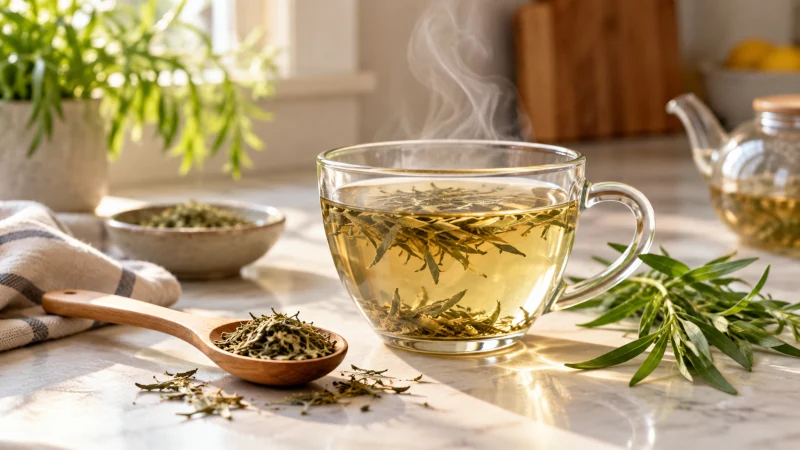
For the vast majority of people, the safe and sensible way to enjoy tarragon is as food. A few grams in a dish, folded into a sauce, dressing, omelet, or with fish and chicken, carries essentially no risk and all of the flavor.
As a mild digestive tea, a traditional preparation is an infusion of the dried leaves in hot water, taken as a warm cup around mealtimes. Keep it occasional rather than a daily habit, for reasons the safety section explains.
One thing you should not do is swallow tarragon essential oil by the drop. Older remedies (again, including the original article) recommended taking several drops of the essence internally each day. That advice is outdated and potentially unsafe: the essential oil is a concentrated source of estragole, the compound behind tarragon’s main safety concern. Essential oils are for aroma and diluted external use, not for drinking.
Safety, side effects, and who should avoid tarragon
Tarragon as a culinary herb has a long, reassuring track record. The cautions below apply mainly to concentrated forms — essential oil, strong extracts, supplements, and heavy daily infusions — and to specific groups.
The estragole issue. Tarragon essential oil can be 40–85% estragole (French tarragon is especially high) [Ekiert et al., 2021]. Estragole is a genotoxic carcinogen in rodents, and European regulators advise keeping human exposure “as low as practically achievable.” Everyday culinary use delivers only small amounts and is considered low risk; the concern is concentrated or habitual exposure from oils and extracts [EMA/HMPC, 2021]. This is the single best reason to enjoy tarragon as a seasoning rather than as a daily medicine.
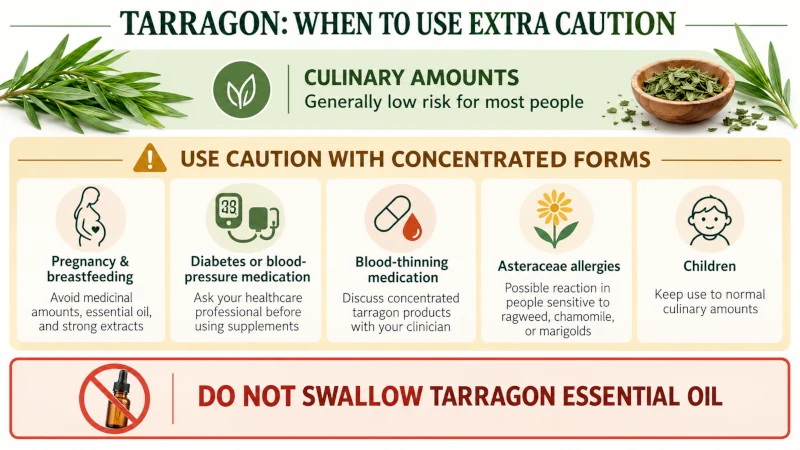
Pregnancy and breastfeeding. Normal amounts in food are fine. But medicinal doses, essential oil, and strong extracts are not recommended in pregnancy — both because of tarragon’s traditional menstruation-stimulating reputation and because European guidance specifically advises against estragole-containing herbal products above a very low threshold for pregnant and breastfeeding women [EMA/HMPC, 2021]. When in doubt, keep it to the spice rack.
Blood-sugar and blood-pressure medications. Because concentrated tarragon extracts have lowered blood glucose and blood pressure in studies [Méndez-Del Villar et al., 2016], combining a supplement with diabetes or blood-pressure medication could theoretically push those numbers too low. If you take either, talk to your prescriber before using a tarragon supplement, and don’t change any medication on your own.
Blood-thinning medication. Tarragon extract has shown anti-clotting activity in laboratory studies, and the plant contains coumarin-type compounds [Obolskiy et al., 2011]. This is a theoretical rather than a proven interaction, but if you take warfarin or another anticoagulant, mention any tarragon supplement to your doctor.
Allergies. Because tarragon is in the daisy (Asteraceae) family, people allergic to ragweed, marigolds, chamomile, or related plants may react to it.
Children. Keep children to culinary amounts only; European guidance sets a very low estragole ceiling for kids [EMA/HMPC, 2021], which concentrated products can exceed.
When to see a healthcare professional
Herbs manage comfort; they don’t diagnose or cure. See a professional rather than reaching for tarragon if you have persistent or severe abdominal pain, unexplained weight loss, blood in your stool, ongoing vomiting, signs of a parasitic infection, a fever that won’t quit, or blood sugar you’re trying to control. Get urgent care for any sudden severe reaction — trouble breathing, facial or throat swelling, hives, or dizziness — which can signal a serious allergic response. If you’re pregnant, breastfeeding, managing a chronic condition, or taking prescription medication, run any herbal supplement past your clinician first.
| Health Disclaimer: This article is for general education and information only. It is not medical advice and is not a substitute for diagnosis, treatment, or guidance from a qualified healthcare professional. Herbal products can interact with medications and are not appropriate for everyone. If you are pregnant, breastfeeding, have a medical condition, or take any medication, talk with your doctor or pharmacist before using tarragon in medicinal amounts, as a supplement, or as an essential oil. If you think you may have a medical emergency, seek urgent care. |
Frequently Asked Questions
Is tarragon good for blood sugar?
Early evidence suggests it may help modestly. A small 90-day human trial and several animal and cell studies found that concentrated Artemisia dracunculus extracts improved measures like HbA1c and insulin sensitivity. But those studies used standardized extracts, not the culinary herb, and the human data are limited. Tarragon is not a substitute for diabetes treatment.
Is tarragon safe to eat every day?
In normal cooking amounts, yes, for most people. The safety cautions apply to concentrated forms — essential oil, strong extracts, supplements, and heavy daily teas — because of a compound called estragole. Pregnant and breastfeeding women should avoid medicinal amounts.
What is estragole and should I worry about it?
Estragole is a natural compound concentrated in tarragon essential oil. It causes cancer in rodents at high doses, and regulators advise keeping human exposure low. Everyday culinary amounts are considered low risk; the concern is concentrated oil and habitual extract use.
Can I take tarragon essential oil internally?
No. Don’t swallow drops of tarragon essential oil, even though some older remedies suggested it. The oil is a concentrated estragole source. Enjoy tarragon as a food or, occasionally, as a mild tea instead.
What’s the difference between French and Russian tarragon?
French tarragon is the culinary variety, with a sweet, anise-like flavor. Russian tarragon is coarser and more bitter and is the type behind most blood-sugar research. Their chemistry differs, so you can’t assume a benefit from one applies to the other.
References
- Ekiert H, Świątkowska J, Knut E, et al. (2021). “Artemisia dracunculus (Tarragon): A Review of Its Traditional Uses, Phytochemistry and Pharmacology.” Frontiers in Pharmacology, 12:653993. DOI: 10.3389/fphar.2021.653993. View source
- Obolskiy D, Pischel I, Feistel B, Glotov N, Heinrich M. (2011). “Artemisia dracunculus L. (Tarragon): A Critical Review of Its Traditional Use, Chemical Composition, Pharmacology, and Safety.” Journal of Agricultural and Food Chemistry. DOI: 10.1021/jf202277w. View source
- Méndez-Del Villar M, Puebla-Pérez AM, Sánchez-Peña MJ, et al. (2016). “Effect of Artemisia dracunculus Administration on Glycemic Control, Insulin Sensitivity, and Insulin Secretion in Patients with Impaired Glucose Tolerance.” Journal of Medicinal Food. PMID: 27097076; DOI: 10.1089/jmf.2016.0005. View source
- European Medicines Agency, Committee on Herbal Medicinal Products (HMPC). (2021, Rev. 1). “Public statement on the use of herbal medicinal products containing estragole.” View source
- Healthline. (2019). “8 Surprising Benefits and Uses of Tarragon.” Secondary source; used only for the nutrition summary, which cites USDA data. View source


