
Every cup of green, black, oolong, or white tea comes from a single shrub, Camellia sinensis. The honest summary of tea plant health benefits is good news with limits. As an everyday drink, tea looks safe for most adults and is linked to a modestly lower risk of dying from heart disease and stroke. It is not a proven cancer preventive, though, and the concentrated green tea extracts sold as supplements carry risks the drink itself doesn’t [NCCIH, 2025] [Inoue-Choi et al., 2022].

Most of tea’s real downsides come from caffeine, and those are easy to manage once you know how much is actually in your cup.
What the tea plant is
The tea plant is an evergreen shrub in the Theaceae, the tea family. Its genus, Camellia, was once called Thea, which is why older herbals list the plant as Thea sinensis [Britannica]. Today it goes by Camellia sinensis, and only the leaves and young buds are used.
People in China first cultivated it thousands of years ago, and evidence of its use for health goes back about 3,000 years [NCCIH, 2025]. Legend credits the emperor Shen Nung with discovering tea in 2737 BCE. A Portuguese missionary wrote the first European account in 1560, and a London coffee house was selling tea as a health drink by 1657 [Serafini et al., 2011].
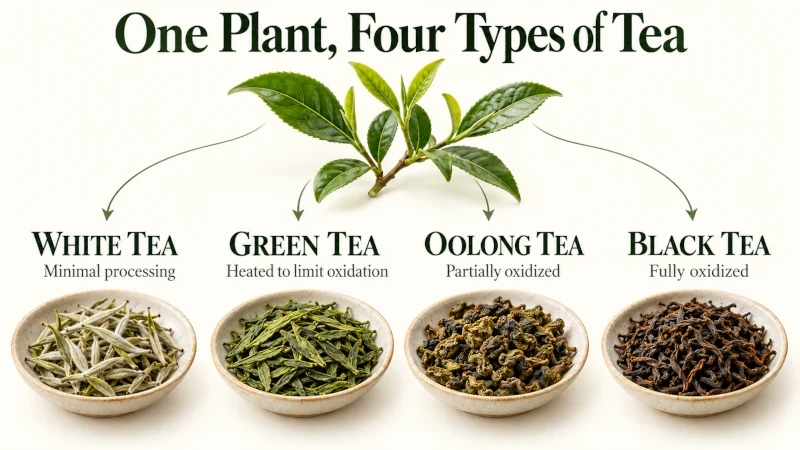
Processing, not the plant, decides what lands in your mug. Green tea leaves are steamed or pan-fried and dried without fermenting; oolong is partly fermented; black tea is fully fermented [NCCIH, 2025]. White tea comes from buds picked before they open [Serafini et al., 2011].
| Quick facts | |
| Botanical name | Camellia sinensis (older synonym: Thea sinensis) |
| Family | Theaceae (the tea family) |
| Part used | Leaves and young buds |
| Main teas | Green, oolong, black, white |
| Key compounds | Caffeine; catechins such as EGCG; theaflavins and thearubigins (mostly in black tea) |
What’s in a cup: caffeine, catechins, and tannins
Tea’s best-studied compounds are polyphenols, especially a group called catechins. Epigallocatechin gallate (EGCG) is the most plentiful catechin in green tea. In black tea, fermentation turns much of it into theaflavins and thearubigins, which is part of why the two teas taste, and may act, differently [Serafini et al., 2011]. Tea also carries caffeine and a little theobromine, the same family of stimulant found in cocoa [Serafini et al., 2011].
Caffeine drives tea’s day-to-day effects, and there’s less of it than many people assume. Older books call it “theine,” but your body handles it exactly like caffeine from any other source [FDA, 2024]. Here are FDA’s typical figures for a 12-ounce serving:
| Drink (12 fl oz) | Typical caffeine |
| Green tea | 37 mg |
| Black tea | 71 mg |
| Caffeinated soft drink | 23–83 mg |
| Brewed coffee | 113–247 mg |
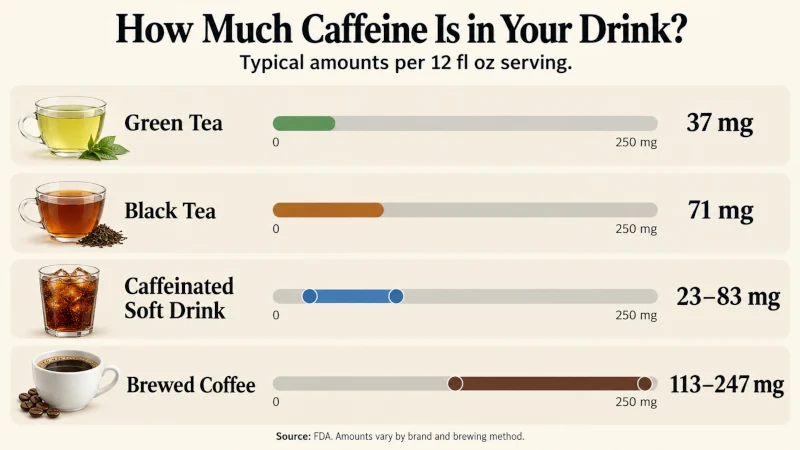
Source: [FDA, 2024]. Actual amounts vary with brand, how much leaf you use, and how long it steeps. Decaf tea has less caffeine but still contains some.
Tea plant health benefits: what the evidence shows
The research on tea is huge, and its quality is uneven. Here is where each claim actually stands.
Heart health and longevity
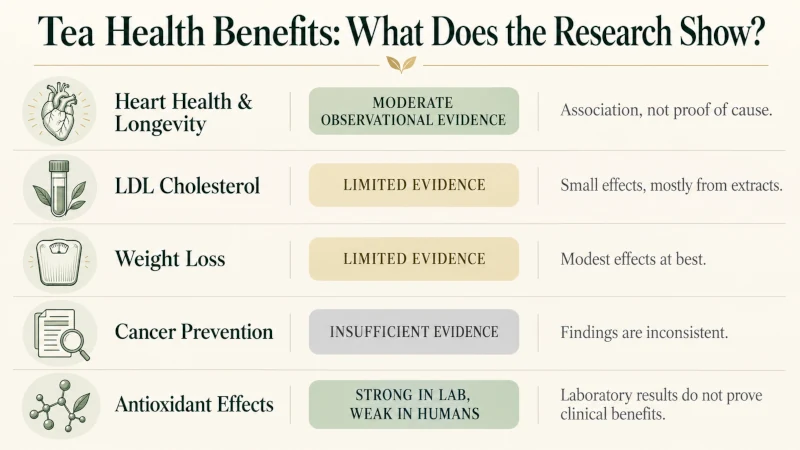
Evidence: moderate, from large observational studies. This is tea’s strongest case. In the UK Biobank, which followed 498,043 adults aged 40 to 69 for about 11 years, people who drank two or more cups a day, mostly black tea, had a 9% to 13% lower risk of dying from any cause than people who drank none. They also had a lower risk of death from cardiovascular disease, ischemic heart disease, and stroke, and the link held whether or not they added milk or sugar or liked their tea hot [Inoue-Choi et al., 2022]. In Asian populations, green tea has been tied to lower coronary heart disease risk; that pattern hasn’t shown up in Western studies [NCCIH, 2025].
The catch is that these studies show an association, not cause and effect. Tea drinkers may differ from non-drinkers in ways researchers can’t fully adjust for, and the UK study didn’t measure cup size or strength [Inoue-Choi et al., 2022]. Regular tea can sit comfortably in a heart-healthy diet. It doesn’t replace blood pressure or cholesterol treatment.
Cholesterol and weight
Evidence: limited; small effects, mostly from extracts. In randomized trials, green tea products lowered total and LDL (“bad”) cholesterol slightly, with no effect on HDL or triglycerides. Most of those trials used extract supplements rather than brewed tea [NCCIH, 2025]. The catechins and caffeine in green tea may have a modest effect on body weight, but results depend on the product and how active you are [NCCIH, 2025]. Don’t count on tea to move the scale by itself.
Cancer prevention
Evidence: insufficient and inconsistent in people. Tea’s reputation as a cancer fighter comes largely from lab and animal work, where catechins slow tumor growth [Serafini et al., 2011]. Human results are far shakier. A 2020 Cochrane review pooled 142 studies, including 11 randomized trials and observational data on more than 1.1 million people, and found the results inconsistent, with only limited evidence that green tea lowers overall cancer risk or the risk of any specific cancer [Filippini et al., 2020].
For some cancers, including esophageal, prostate, and urinary tract cancers, cohort studies and case-control studies pointed in opposite directions. Most of the research came from Asian populations who drink a lot of green tea, which limits how far the findings travel. The extract trials also logged side effects such as stomach upset and raised liver enzymes [Filippini et al., 2020].
Antioxidant and anti-inflammatory claims
Evidence: strong in the lab, weak in humans. Drinking tea briefly raises the antioxidant capacity of your blood. But most human studies found little or no change in markers of fat oxidation, and only slight effects on inflammation markers such as C-reactive protein and IL-6 [Serafini et al., 2011]. Many lab studies used catechin concentrations far higher than a cup of tea can deliver. “Rich in antioxidants” describes what’s in the cup; it doesn’t prove a benefit in your body.
The one FDA-approved medical use
A prescription ointment made from a specific green tea extract (sinecatechins) is FDA-approved for external genital and perianal warts [NCCIH, 2025] [Serafini et al., 2011]. It’s a regulated drug applied to the skin. Brewed tea and homemade preparations aren’t substitutes.
| Claim | Evidence strength | What it means for you |
| Lower risk of death from heart disease and stroke | Moderate (large observational cohorts) | Fine as part of a healthy diet; not a treatment |
| Lower LDL cholesterol | Limited (small effect, mostly extracts) | Don’t use in place of prescribed care |
| Weight loss | Limited (modest at best) | Depends on product and activity |
| Cancer prevention | Insufficient / inconsistent | Not a proven preventive |
| Antioxidant and anti-inflammatory effects | Strong in lab; weak in humans | Lab results don’t reliably translate |
| Genital warts (prescription ointment) | Established (FDA-approved drug) | Prescription only |
| Diarrhea remedy; eye baths | Traditional only; current guidance advises against | See the next section |
Two traditional uses to retire
Older herbals recommended tea’s tannins for diarrhea and tea decoctions as eye baths for conjunctivitis. Neither holds up.
Diarrhea. Current advice runs the other way. The National Institute of Diabetes and Digestive and Kidney Diseases lists drinks with caffeine, including coffee, tea, and some soft drinks, among the things to avoid during acute diarrhea [NIDDK, 2024]. If you’re recovering from a stomach bug, put fluids first; our guide to foods that help with diarrhea covers what actually helps.
Pink eye (conjunctivitis). No good evidence supports rinsing your eyes with tea. CDC’s home-care advice is cold compresses, artificial tears, and leaving contact lenses out until symptoms clear [CDC, 2024]. See a healthcare provider if you have eye pain, light sensitivity, blurred vision that doesn’t clear when you wipe away discharge, intense redness, symptoms that worsen or don’t improve, or a weakened immune system. A newborn with signs of pink eye should see a doctor right away [CDC, 2024]. If you aren’t sure what’s causing a red eye, our guide to eye allergies vs. pink eye walks through the differences.
Side effects and how much is too much
For most adults, FDA cites 400 mg of caffeine a day as an amount not generally linked to negative effects [FDA, 2024]. Using FDA’s typical values, that works out to a little over five 12-ounce mugs of black tea, or about ten of green tea, before counting coffee, soda, or chocolate. People vary a lot in how sensitive they are, and some medical conditions and medicines make caffeine hit harder [FDA, 2024].
Too much caffeine can cause a fast heart rate, palpitations, higher blood pressure, trouble sleeping, anxiety, jitters, an upset stomach, nausea, and headaches [FDA, 2024]. If tea seems to push your blood pressure up or upset your stomach, cut back and see whether it helps. Our guides to foods and drinks that raise blood pressure and eating well with gastritis cover both in more depth.
The old warning that tea is “addictive like any drug” overstates things. Daily caffeine does create habit, and quitting abruptly can bring headaches and fatigue, but FDA notes that caffeine withdrawal isn’t dangerous. If you want to cut back, taper over several days [FDA, 2024].
Let it cool. The International Agency for Research on Cancer classifies drinking very hot beverages, above 65 °C (149 °F), as probably carcinogenic to humans because of links to esophageal cancer [IARC, 2018]. The issue is temperature, not tea; our yerba mate guide gives the same advice for mate.
Iron. Polyphenols in some plant foods reduce absorption of nonheme iron, the type found in plants and fortified foods, though in a typical varied diet the effect on iron status is small [ODS, 2025]. Tea is rich in polyphenols [Serafini et al., 2011]. If you have iron deficiency or are being treated for it, ask your clinician whether to drink tea between meals rather than with them.
Medication interactions
Brewed tea in normal amounts rarely causes trouble, but green tea, especially in large amounts or as an extract, can interact with some medicines [NCCIH, 2025]:
- Nadolol (a beta-blocker for high blood pressure and heart problems): high doses of green tea lowered blood levels and effectiveness of the drug.
- Atorvastatin (a cholesterol drug): green tea extract can lower blood levels.
- Raloxifene (used for osteoporosis): drinking green tea alongside it reduced how much of the drug reached the bloodstream in an NIH-funded study.
Green tea may interact with other medicines too, and some drugs make people more sensitive to caffeine [NCCIH, 2025] [FDA, 2024]. If you take a prescription regularly, ask your pharmacist before adding green tea supplements or drinking large amounts of tea.
Green tea extract supplements and your liver
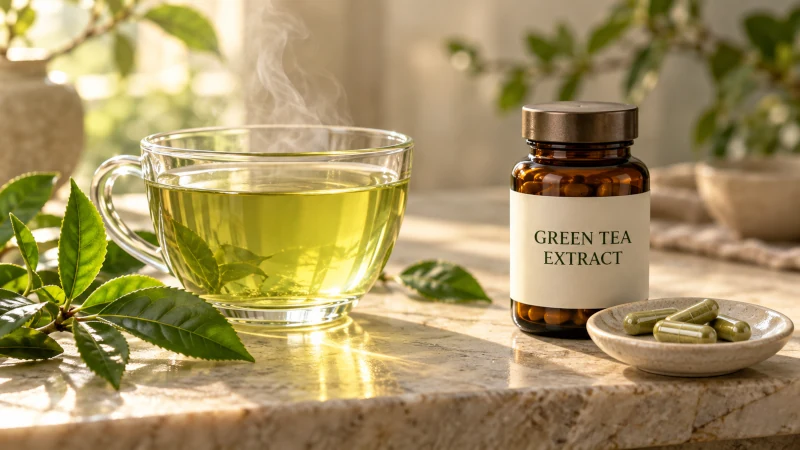
Drinking green tea hasn’t been tied to liver damage; in population surveys, regular drinkers actually tend to have slightly lower liver enzyme levels [LiverTox, 2020]. Extracts are a different story. More than 100 cases of clinically apparent liver injury have been linked to green tea extract, usually appearing 1 to 6 months after someone starts the product. Most people recover after stopping, but some cases have led to liver failure, transplant, or death. A small number of cases have followed heavy drinking of tea infusions [LiverTox, 2020].
People with a particular immune-system gene variant, carried by an estimated 5% to 15% of Americans, appear to be especially susceptible [NCCIH, 2025]. Extract supplements can also cause nausea, constipation, abdominal discomfort, and higher blood pressure [NCCIH, 2025]. Green tea extract shows up in many weight-loss products, sometimes alongside other ingredients [LiverTox, 2020]. If you develop yellowing of your skin or eyes, abdominal pain, nausea, or unusual fatigue while taking one, stop it and contact a doctor promptly.
Pregnancy and breastfeeding
You don’t have to give up tea, but you do need to count it. The American College of Obstetricians and Gynecologists concludes that moderate caffeine, under 200 mg a day, doesn’t appear to be a major factor in miscarriage or preterm birth; whether higher amounts raise miscarriage risk is still unsettled [ACOG, 2010; reaffirmed 2023]. Two 12-ounce mugs of black tea come to about 142 mg by FDA’s typical figures, so coffee or soda on the same day adds up fast.
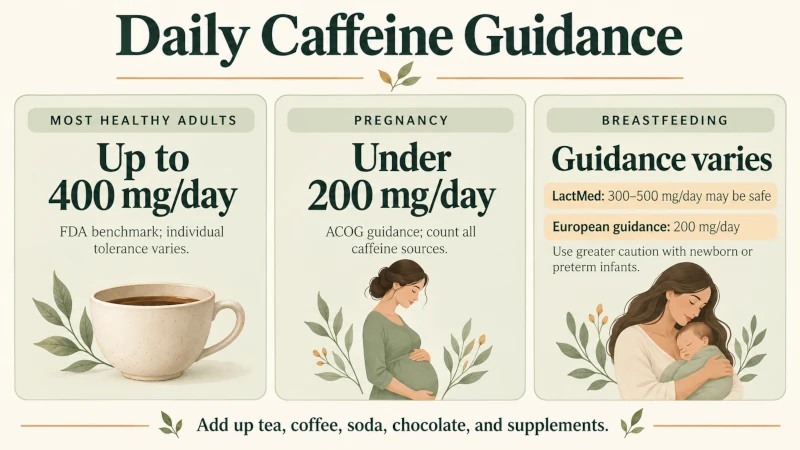
Caffeine reaches breast milk quickly. The sources disagree on a limit: the NIH’s LactMed database says 300 to 500 mg a day might be safe for most nursing mothers, while European authorities set a likely safe level of 200 mg [LactMed, 2026]. Fussiness, jitteriness, and poor sleep have been reported in babies whose mothers took in very large amounts, roughly 10 or more cups of coffee a day. Preterm and newborn babies clear caffeine very slowly, so their mothers should aim lower [LactMed, 2026].
Talk with your healthcare provider before taking any green tea extract supplement while pregnant or breastfeeding [NCCIH, 2025].
Who should cut back or check first
- People who are sensitive to caffeine or who struggle with anxiety or insomnia [FDA, 2024].
- People with high blood pressure, palpitations, or heart rhythm problems, since caffeine can raise heart rate and blood pressure [FDA, 2024].
- People with reflux, gastritis, or ulcers who notice tea makes symptoms worse.
- Anyone taking nadolol, atorvastatin, raloxifene, or other regular medicines [NCCIH, 2025].
- Anyone who has had liver injury from a supplement; LiverTox advises avoiding products that might contain green tea extract after such an episode [LiverTox, 2020].
- Children: caffeinated drinks should be avoided under age 2, and too much caffeine in children and teens can cause a racing heart, anxiety, and sleep problems [FDA, 2024].
- People who are pregnant or breastfeeding: count your total caffeine (see above).
How to make tea work for you
- Count caffeine, not cups. A big mug can hold far more than 12 ounces, and strong brews carry more caffeine. Add up tea, coffee, and soda together.
- Choose the drink over the pill. The reassuring safety record belongs to brewed tea; the liver cases cluster around extracts [LiverTox, 2020].
- Let it cool before you sip. Skip drinking it scalding hot [IARC, 2018].
- Watch what you add. Bottled and sweetened teas can carry a lot of sugar; check the label.
- Protect your sleep. If tea keeps you up, move your last cup earlier or switch to decaf, remembering decaf still has a little caffeine [FDA, 2024].

When to see a healthcare professional
Talk to a clinician if you have symptoms of too much caffeine, such as palpitations, a racing heart, or persistent insomnia, even after cutting back [FDA, 2024]. Get prompt care for yellowing skin or eyes, abdominal pain, or unusual fatigue while using a green tea supplement [LiverTox, 2020], and for the eye warning signs listed above [CDC, 2024]. Call 911 or go to an emergency room for chest pain, fainting, or severe shortness of breath. If you’re pregnant, breastfeeding, or take regular medication, ask before starting any green tea supplement [NCCIH, 2025].
| HEALTH DISCLAIMER: This article is for general education and isn’t a substitute for professional medical advice, diagnosis, or treatment. Tea can affect blood pressure, sleep, and how some medicines work, and green tea extract supplements have been linked to rare but serious liver injury. If you are pregnant or breastfeeding, take prescription medicine, have a heart, liver, or stomach condition, or are caring for a child, talk with your doctor or pharmacist before using tea or tea supplements for health purposes. Never delay or disregard medical advice because of something you read here. |
Frequently Asked Questions
Is green tea healthier than black tea?
Green tea has more EGCG and has been studied more [Serafini et al., 2011], but the largest recent study linking tea to longer life involved mostly black tea drinkers [Inoue-Choi et al., 2022]. For an everyday drinker, there’s no clear winner; pick the one you enjoy.
How many cups of tea a day is safe?
Most healthy adults can stay under FDA’s 400 mg caffeine benchmark with about five 12-ounce mugs of black tea or ten of green, counting all other caffeine too [FDA, 2024]. If you’re pregnant, keep total caffeine under 200 mg [ACOG, 2010; reaffirmed 2023].
Can drinking tea prevent cancer?
Not as far as current evidence shows. A large Cochrane review found inconsistent results and only limited evidence of benefit from green tea [Filippini et al., 2020].
Are green tea extract pills better than drinking tea?
They’re more concentrated, not proven better, and they carry a rare but real risk of liver injury that brewed tea doesn’t share [LiverTox, 2020] [NCCIH, 2025].
Is it safe to drink tea while breastfeeding?
In moderation, generally yes. LactMed suggests 300 to 500 mg of caffeine a day may be safe for most mothers, while European authorities use 200 mg; aim lower if your baby was born early or is a newborn [LactMed, 2026].
References
- National Center for Complementary and Integrative Health. Green Tea: Usefulness and Safety. View source
- U.S. Food and Drug Administration. Spilling the Beans: How Much Caffeine Is Too Much? View source
- American College of Obstetricians and Gynecologists. Moderate Caffeine Consumption During Pregnancy. View source
- Drugs and Lactation Database (LactMed). Caffeine. National Institute of Child Health and Human Development. View source
- Filippini T, Malavolti M, Borrelli F, et al. Green tea (Camellia sinensis) for the prevention of cancer. View source
- LiverTox: Clinical and Research Information on Drug-Induced Liver Injury. Green Tea. National Institute of Diabetes and Digestive and Kidney Diseases. View source
- Serafini M, Del Rio D, Yao DN, Bettuzzi S, Peluso I. Health Benefits of Tea. In: Benzie IFF, Wachtel-Galor S, eds. View source
- Inoue-Choi M, Ramirez Y, Cornelis MC, et al. Tea Consumption and All-Cause and Cause-Specific Mortality in the UK Biobank: A Prospective Cohort Study. Ann Intern Med. View source
- IARC Working Group. Drinking Coffee, Mate, and Very Hot Beverages. View source
- Centers for Disease Control and Prevention. How to Treat Pink Eye. View source
- NIH Office of Dietary Supplements. Iron: Fact Sheet for Health Professionals. View source
- National Institute of Diabetes and Digestive and Kidney Diseases. Eating, Diet, & Nutrition for Diarrhea. View source
- Encyclopaedia Britannica. Theaceae. View source


