
The best foods to eat with gastritis are gentle, easy-to-digest choices that won’t irritate an inflamed stomach lining — cooked vegetables, oats, bananas, lean protein and live-culture yogurt among them. But here’s the part most lists leave out: food alone rarely cures gastritis. Most cases come from a cause that needs treating, such as an H. pylori infection or regular use of certain painkillers [NIDDK]. The right diet can keep you more comfortable and support healing while that cause is dealt with — not replace it.
Two different things often get blended together here: foods that are simply easy on a sore stomach, and the smaller group with real research behind them for gastritis and H. pylori. They are worth telling apart.
What gastritis is — and why food can’t fix it alone
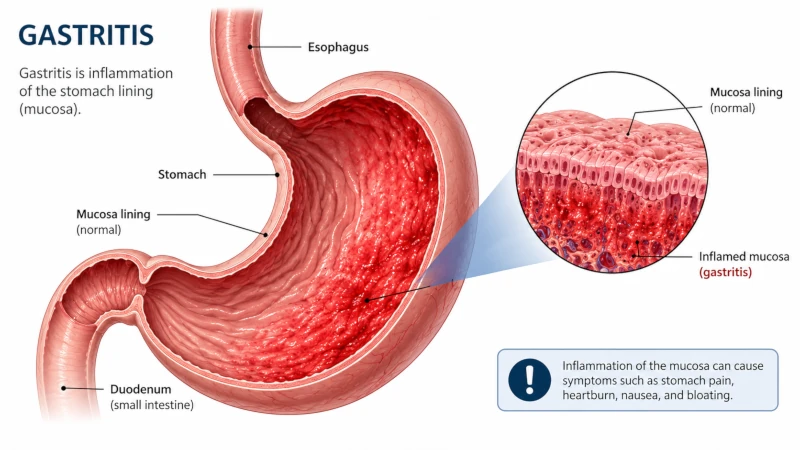
Your stomach lining, called the mucosa, is a soft barrier that protects the stomach wall from acid, enzymes and microbes. Gastritis is inflammation of that lining [Cleveland Clinic, 2026]. It comes in two patterns. Acute gastritis appears fast and usually settles once its trigger is gone. Chronic gastritis builds slowly, can last for years, and sometimes causes no symptoms at all.
What’s driving the inflammation matters more than what’s on your plate. The usual causes:
- H. pylori, a stomach bacterium — the most common cause worldwide and the one most likely to need antibiotics.
- NSAID painkillers — ibuprofen, naproxen and aspirin can wear down the protective lining, especially when taken regularly.
- Heavy alcohol use — can inflame and erode the lining directly.
- Less often — autoimmune disease, bile reflux, and severe physical stress from major burns, surgery or critical illness. [NIDDK] [Mayo Clinic, 2024]
Because diet doesn’t cause most gastritis, it can’t reverse it either [NIDDK]. What food can do is lower irritation, ease burning and nausea, and give your stomach an easier job while medicine or time does the real work.
Typical symptoms are a burning or gnawing ache in the upper belly, nausea, feeling full quickly, and indigestion. Plenty of people feel nothing at all [Mayo Clinic, 2024].
Foods to eat with gastritis: the gentle core
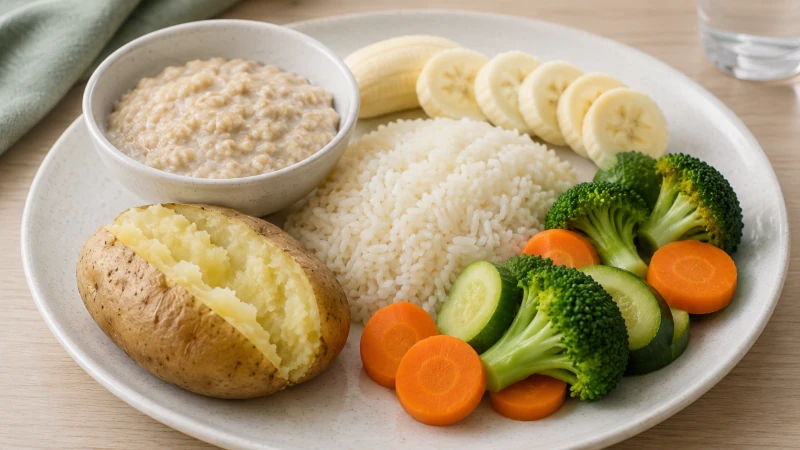
When the lining is inflamed, aim for low-irritation, easy-to-digest food. None of these heal the stomach by themselves. They are simply unlikely to make things worse, and they are easy to keep down on a rough day.
| Food | Why it is gentle | Best way to prepare it |
| Potatoes | Soft, starchy, low in acid and fat | Boiled, baked or mashed — not fried |
| Oats | Smooth; soluble fiber forms a soft gel | Plain porridge; add banana, not citrus |
| White rice | Bland, low fiber, easy to digest | Plain and well cooked |
| Ripe bananas | Soft, low acid, gentle pectin fiber | Raw, when fully ripe |
| Carrots, squash, zucchini | Soft once cooked; far less harsh than raw | Steamed or pureed |
| Avocado | Soft, low acid, easy-to-tolerate fats | Plain or lightly mashed |
| Skinless chicken, fish, eggs | Low-fat protein that digests easily | Baked, grilled or poached |
| Cooked apple / applesauce | Gentler than raw apple; soluble pectin | Stewed or as unsweetened sauce |
These overlap heavily with the bland-diet staples people reach for during any upset stomach, and that’s the point. Plain boiled potatoes and stewed apples are among the gentlest places to start. Cooking, peeling and pureeing all cut the work your stomach has to do — the raw, fried or acidic version of the same food can sting, so preparation often matters as much as the food itself.
Foods with real research behind them
A few foods have been studied specifically for gastritis or for H. pylori. The evidence is encouraging in spots and thin in others.
Broccoli sprouts
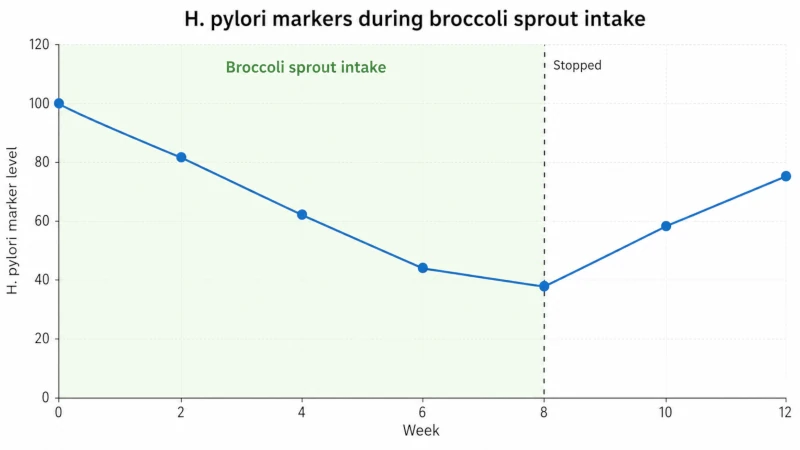
Broccoli sprouts are packed with sulforaphane, a compound that kills H. pylori in the lab. In a 2009 University of Tsukuba trial, 50 infected adults ate either 100 grams of fresh broccoli sprouts or alfalfa sprouts every day for two months. The broccoli-sprout group ended up with lower markers of H. pylori and stomach inflammation — but those markers drifted back up within two months of stopping [Yanaka et al., 2009]. The takeaway: broccoli sprouts seem to suppress the bacteria, not eliminate it, and the benefit fades once you stop. A useful addition to the plate, not a stand-in for the antibiotics that actually clear an infection.
Fermented and probiotic foods
Live-culture yogurt, kefir, sauerkraut and kimchi carry probiotics. On their own they won’t clear H. pylori. Paired with standard antibiotic treatment, though, they modestly improve the odds of clearing it and ease the drugs’ side effects. A meta-analysis of 21 trials and 3,814 people found probiotics raised eradication rates (a relative improvement of about 12 percent) and cut treatment-related side effects such as diarrhea [Lv et al., 2015]. Saccharomyces boulardii and Lactobacillus strains have the strongest support. If you’re being treated for H. pylori, ask your doctor whether adding a probiotic makes sense.
Everyday plants and whole grains
Outside the bland basics, the eating pattern most often recommended for chronic gastritis is the unglamorous one: built around vegetables, non-citrus fruit, beans and whole grains, with less fried and processed food [NIDDK]. The fiber feeds gut bacteria, and the overall pattern is easier on the stomach than a heavy, fatty diet. Other foods that support gut health fit the same mold. This is general support rather than a targeted fix, but it’s the day-to-day habit most likely to pay off over time.
Foods and drinks to limit
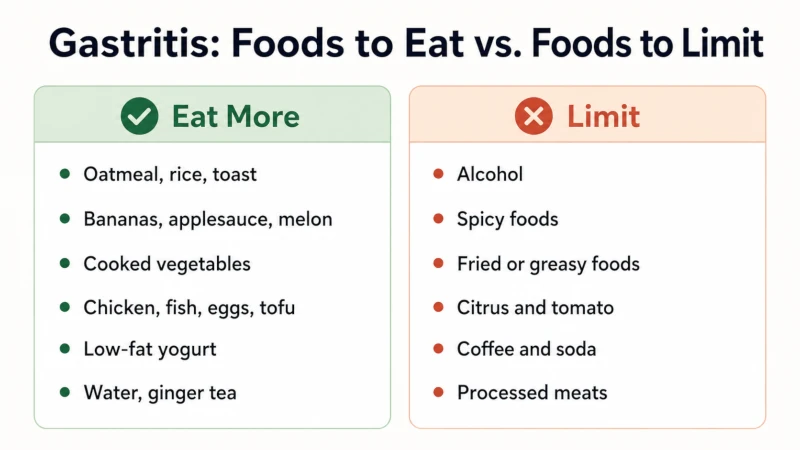
There’s no universal gastritis blacklist, because triggers differ from person to person [Mayo Clinic, 2024]. A handful are still worth easing off while your stomach settles.
- Alcohol — the clearest one to cut. Heavy drinking can inflame and erode the lining outright [NIDDK].
- Coffee and caffeine — can raise stomach acid and bother some people; decaf is gentler but not always neutral.
- Very spicy food — hot peppers and heavy pepper aggravate symptoms for some.
- Acidic foods — citrus, tomatoes and their juices can sting an inflamed lining.
- Fried and fatty foods — slow to digest and quick to trigger discomfort.
- Big, heavy meals — smaller, more frequent meals are usually easier than three large ones.
Note “limit,” not “never.” Apart from alcohol, most of this comes down to your own tolerance, which a one- or two-week food-and-symptom diary will reveal better than any list [Mayo Clinic, 2024]. If you want the fuller rundown, our companion guide on gastritis foods to avoid goes deeper.
One more that isn’t food: the painkiller in your cabinet can matter more than anything you eat. Regular ibuprofen, naproxen or aspirin is a leading cause of gastritis. Don’t quit a prescribed medicine on your own, but do ask your doctor whether an NSAID is part of the problem [NIDDK].
Eating through a flare
On a bad day, scale back instead of pushing through. Smaller meals every few hours beat three big ones. Keep it plain — porridge, rice, banana, soup, steamed vegetables — and drift back toward your normal diet as things calm down. Drink water rather than coffee, soda or alcohol. Try not to lie down right after eating, and leave a couple of hours before bed. None of this cures the cause, but it takes the edge off while the lining heals [NIDDK].
What the evidence shows — and what it doesn’t
It’s worth being plain about how strong the evidence really is, because a lot of gastritis advice online overpromises.
| Claim you will see | What the evidence actually says |
| “Certain foods cure gastritis” | No good evidence. Gastritis is treated by fixing the cause — antibiotics for H. pylori, stopping NSAIDs, acid-reducing medicine. Food supports comfort and healing only. |
| “Broccoli sprouts fight H. pylori” | Early human evidence from one small 2-month trial. They appear to suppress the bacteria, not clear it, and the effect fades after you stop. |
| “Probiotics help with H. pylori” | Moderate evidence — but as an add-on to antibiotics, raising eradication rates and easing side effects. Not a stand-alone treatment. |
| “Bland, low-fat, smaller meals ease symptoms” | Consistent expert guidance. Reasonable and low-risk, though it eases symptoms rather than curing the condition. |
| “Cabbage juice, aloe and other ‘miracle’ remedies” | Mostly lab or anecdotal reports. Not enough solid human evidence to recommend as treatment. |
Safety, side effects and who should take care
Most foods here are ordinary and safe. A few cautions are worth flagging.
- Concentrated supplements aren’t the same as the food. Broccoli-sprout extract or high-dose sulforaphane capsules are stronger and less studied for safety than the sprouts themselves — check with a clinician before taking any supplement for gastritis.
- Probiotic supplements are usually well tolerated, but anyone seriously ill or immunocompromised should ask a doctor first.
- Pregnancy and breastfeeding: everyday whole foods are fine, but don’t start herbal remedies or concentrated supplements without medical advice.
- Medication interactions: if you’re on prescription medicine — including an H. pylori course — ask before adding supplements, since some can interfere.
- Iron tablets can occasionally irritate the lining themselves [NIDDK]. If they upset your stomach, raise it with your doctor rather than stopping a prescribed dose.
Red flags: when to get help fast
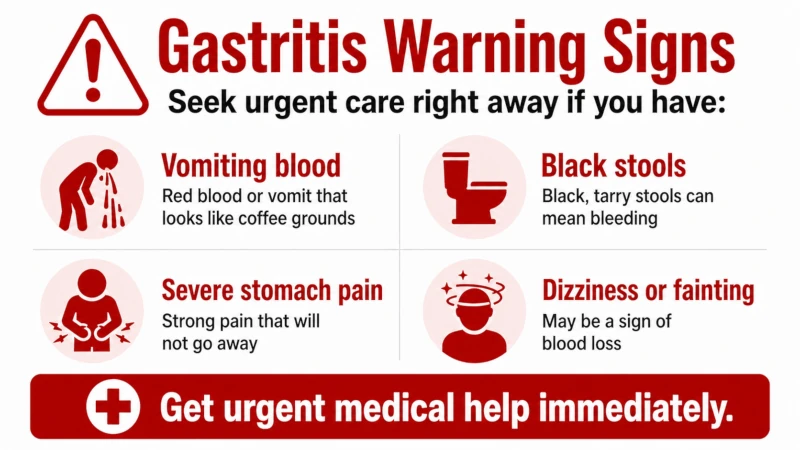
Some symptoms suggest bleeding or something more serious and need prompt medical care. Seek urgent help for:
- Vomiting blood, or vomit that looks like coffee grounds
- Black, tarry or bloody stools
- Severe or constant stomach pain
- Dizziness, weakness or breathlessness, which can signal blood loss [Mayo Clinic, 2024]
Book a non-urgent appointment if gastritis-type symptoms last more than a week, keep returning, or start after a new medicine — especially a painkiller [Mayo Clinic, 2024]. Diet supports recovery; diagnosing and treating the cause is a job for a healthcare professional, who can test for H. pylori and look at the lining directly if needed.
| Health Disclaimer This article is for general education and information only. It is not medical advice and is not a substitute for diagnosis or treatment from a qualified health professional. Gastritis has several causes, and the right treatment depends on yours. Do not start, stop or change any medicine or supplement based on this page alone. If you are pregnant, breastfeeding, taking prescription medicine, or living with a chronic condition, talk to your doctor before changing your diet or trying herbal or natural remedies. If you have severe pain, are vomiting blood, or notice black or bloody stools, seek medical care right away. |
Frequently Asked Questions
Can certain foods cure gastritis?
No. Food can ease symptoms and support healing, but gastritis is cleared by treating its cause — antibiotics for H. pylori, stopping the painkiller behind it, or acid-reducing medicine. Diet is a helper, not a cure.
Is yogurt good for gastritis?
Plain, live-culture yogurt is gentle and, as part of your probiotic intake, may help alongside H. pylori treatment. Choose plain and lower-fat, and skip the very sweet, heavily flavored versions.
Are bananas and rice good for gastritis?
Yes. Both are classic gentle foods — soft, low in acid and easy to digest — which makes them easy to tolerate during a flare.
Should I cut out coffee?
Coffee raises stomach acid and bothers many people with gastritis. Cut back and see whether your symptoms improve; decaf is gentler but not always trouble-free.
How long does gastritis take to heal?
Acute gastritis often settles within days to a couple of weeks once the trigger is removed. Chronic gastritis, especially from H. pylori, needs treatment and can take longer. If symptoms drag on beyond a week, see a doctor.
References
- National Institute of Diabetes and Digestive and Kidney Diseases (NIDDK). Eating, Diet, & Nutrition for Gastritis & Gastropathy. → View source
- National Institute of Diabetes and Digestive and Kidney Diseases (NIDDK). Treatment of Gastritis & Gastropathy. → View source
- Mayo Clinic. Gastritis — Symptoms and causes. 2024. → View source
- Cleveland Clinic. Gastritis: What It Is, Symptoms, Causes & Treatment. 2026. → View source
- Yanaka A, Fahey JW, Fukumoto A, et al. Dietary sulforaphane-rich broccoli sprouts reduce colonization and attenuate gastritis in Helicobacter pylori-infected mice and humans. Cancer Prev Res. 2009;2(4):353-360. → View source
- Lv Z, Wang B, Zhou X, et al. Efficacy and safety of probiotics as adjuvant agents for Helicobacter pylori infection: a meta-analysis. Exp Ther Med. 2015;9(3):707-716. → View source
