
Greater burnet has been used to stop bleeding for a very long time, and the reason is easy to see: the root is packed with tannins, the same astringent compounds that make strong tea pucker your mouth. What the research has not done is prove that drinking it or dabbing it on stops bleeding in people. The honest picture of greater burnet is a plant with real chemistry, a lot of promising lab and animal work, one sizable but low-quality body of Chinese clinical trials, and very little safety data.
If you came here wondering whether greater burnet works for bleeding, diarrhea, hemorrhoids or skin, the short answer is: possibly a little, for minor problems, with no guarantee — and never in place of medical care for anything that is actually bleeding.
What greater burnet is (and isn’t)
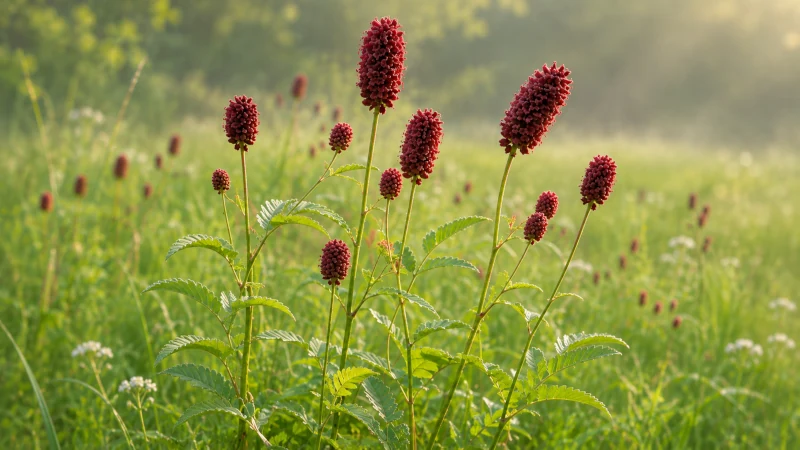
Greater burnet, also called great burnet, is Sanguisorba officinalis L., a perennial in the rose family [POWO, 2026]. It is native across the temperate Northern Hemisphere — much of Europe, Russia, Central and East Asia, and parts of North America from Alaska and British Columbia to Maine [POWO, 2026]. It favors wet grasslands, hillside meadows and pastures, grows roughly 30–120 cm tall, and carries dense, dark red flower heads 1–7 cm long, mostly from July to October [Zhou et al., 2021].
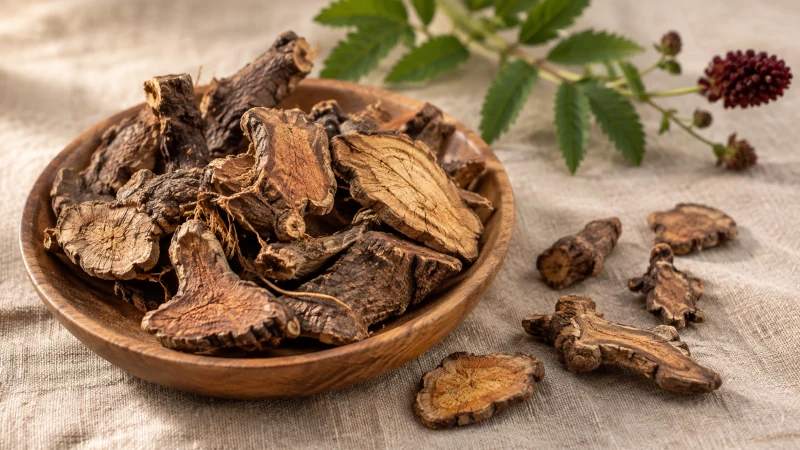
In China the dried root is the herbal medicine Di Yu (Sanguisorbae Radix), listed in the Chinese Pharmacopoeia; in Korea and Japan it is Zi-Yu, and the Polish Pharmacopoeia also lists the rhizome and root [Zhou et al., 2021].
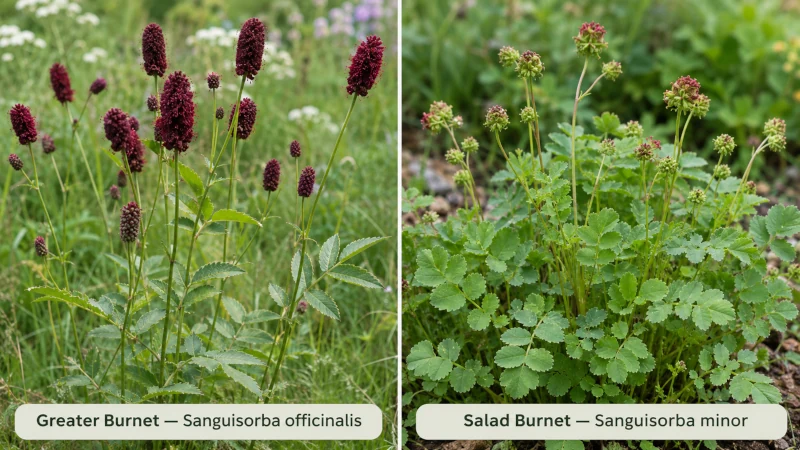
It is not the same plant as salad burnet (Sanguisorba minor), the small cucumber-flavored herb sold for salads. The two are related but chemically different, and most of the pharmacology research is on greater burnet. If you have the kitchen herb in your garden, our guide to salad burnet benefits is the page you want.
| Feature | Greater burnet |
| Botanical name | Sanguisorba officinalis L. (Rosaceae) |
| Other names | Great burnet; Di Yu (China); Zi-Yu (Korea, Japan) |
| Native range | Temperate Northern Hemisphere |
| Habitat | Wet grassland, hillside meadow, pasture |
| Height / flowers | 30–120 cm; dense dark red heads, July–October |
| Part used medicinally | Mainly the root and rhizome |
Sources: [POWO, 2026](powo); [Zhou et al., 2021](zhou)
What’s inside the plant
More than 270 compounds have been identified across the Sanguisorba genus, mostly flavonoids, triterpenoids, phenolic acids, sterols and lignans [Zhou et al., 2021]. For greater burnet, three groups matter most:
- Tannins and related polyphenols — including ellagic acid, gallic acid and catechins. These bind proteins on skin and mucous membranes, which is the basis of the astringent, “tightening” effect.
- Triterpenoid saponins — especially ziyuglycoside I and II, which researchers have singled out in hemostatic and anticancer lab work.
- Polysaccharides — some of which, oddly enough, show anticoagulant activity in the lab (more on that below).
The aerial parts appear to carry more polyphenols than the root [Zhou et al., 2021], although tradition centers on the root.
Greater burnet benefits, graded by the evidence
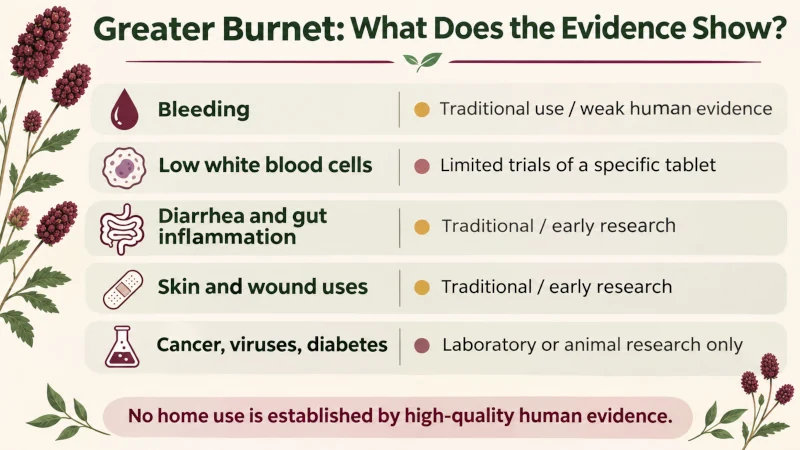
| Use | Best evidence available | Grade |
| Stopping bleeding | Mouse studies; lab assays; Cochrane review of low-quality trials of multi-herb formulas | Traditional / weak |
| Low white blood cells during chemo or radiation | 41 Chinese RCTs of a burnet-root tablet, mostly low quality | Limited (product-specific) |
| Diarrhea, colitis | Traditional use; mouse colitis; small trials of multi-herb formulas | Traditional / early |
| Burns, wounds, skin | Traditional use; lab antibacterial work; one small cosmetic trial | Traditional / early |
| Cancer, viruses, diabetes, brain | Cells and rodents only | Lab only |
Bleeding: a traditional use with weak human proof
Stopping bleeding is the plant’s oldest job, and it is still used that way in China, Korea, Japan, Siberia and Europe. In TCM the root is often charred before use. In a mouse study, both raw and charred root shortened bleeding and clotting times, with the charred form working better at the same dose; separately, ziyuglycoside I showed hemostatic activity in a laboratory assay [Zhou et al., 2021].
Human evidence is thin. A Cochrane review of Chinese herbs for bleeding hemorrhoids found nine trials with 1,822 patients. Some formulas that included burnet root alongside other herbs eased bleeding and other symptoms in the short term, but the trials were few and generally low quality, and the reviewers concluded the evidence was not strong enough to change practice [Gan et al., 2010]. Because burnet was always one ingredient among several, those trials cannot tell you what burnet does on its own.
There is also a genuine contradiction in the lab data. Polyphenol–polysaccharide fractions from the same plant showed anticoagulant activity, mediated through heparin cofactor II [Zhou et al., 2021]. So greater burnet contains compounds that push clotting in opposite directions. Which effect wins in a person drinking a tea is simply unknown.
For hemorrhoids specifically, the habits with the best support are fiber, fluids and not straining; the herbs for hemorrhoids, ranked by evidence puts burnet’s tannin relatives in context.
Low white blood cells during cancer treatment
This is where most of the human data sits, and it is about a specific Chinese drug product, not a homemade tea. Diyushengbai tablets, whose main ingredient is burnet root, are used in China for leukopenia — low white blood cell counts — caused by chemotherapy or radiotherapy.
A 2022 meta-analysis pooled 41 randomized trials with 3,793 patients and found higher white cell counts and less white-cell suppression with the tablet than with comparison treatments [Xu et al., 2022]. The weaknesses are serious, though. Only 8 of the 41 trials described how they randomized, none reported allocation concealment or blinding, 26 did not report adverse events, and three of the authors worked for the tablet’s manufacturer [Xu et al., 2022]. Most comparisons were against other Chinese white-cell drugs rather than the standard growth-factor treatment used in the US.
If you are going through cancer treatment, do not add burnet or any herbal product on your own. Bring it to your oncology team, who can check it against your regimen.
Diarrhea and gut inflammation
Across Asia, greater burnet is used for diarrhea, chronic intestinal infections and duodenal ulcers [Zhou et al., 2021]. The astringent mechanism is plausible: tannins tighten the gut lining and may reduce fluid loss. In mice with chemically induced colitis, an extract reduced inflammation without obvious damage to the liver, heart or kidneys, and two small Chinese trials of multi-herb formulas containing burnet root were run in ulcerative colitis [Zhou et al., 2021].
None of that amounts to a tested treatment for diarrhea in people. For an ordinary bout of loose stools, fluids and simple food do more good than any herb — see foods that help with diarrhea. Ulcerative colitis, Crohn’s disease and bloody diarrhea need a doctor, not a decoction.
Burns, wounds, skin, and the mouth
In China, greater burnet has been used for more than two thousand years on burns, scalds and slow-healing wounds [Zhou et al., 2021]. In the lab, ethanol extracts inhibited MRSA, and root extracts showed broad antibacterial activity [Zhou et al., 2021]. The only human data on skin is cosmetic: a small randomized, double-blind study in 21 Japanese women tested a root extract for anti-wrinkle effects [Zhou et al., 2021].
Gargles and mouth rinses for sore throats and mouth inflammation are part of the European tradition, but untested for this plant. If you want a tannin rinse with regulatory backing, oak bark is the better-documented choice — see oak bark uses and safety limits and the wider guide to herbs for teeth and gums.
Lab-only findings
Extracts and isolated compounds from greater burnet have killed or slowed many cancer cell lines, blocked hepatitis B and HIV in cell cultures, protected neurons in rodent stroke models, and lowered blood sugar in diabetic mice [Zhou et al., 2021]. The review authors themselves note that the anticancer results lack adequate animal confirmation. None of this has been shown in people. Greater burnet is not a treatment for cancer, viral infection or diabetes.
How greater burnet is used — and what to skip
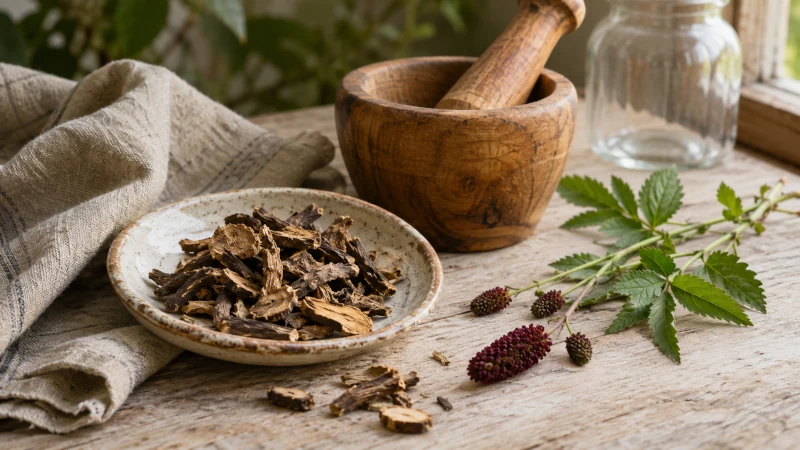
There is no evaluated, standardized home dose for greater burnet. A search of the European Medicines Agency’s herbal documents turns up no monograph for it, unlike oak bark, which has one. That leaves you without a tested safe amount or duration.
Some herbal sources recommend strong root decoctions — around 100 g of root per litre of water, several cups a day. That is a heavy tannin load taken by mouth, with no safety testing at that level. Skip it.
If you still want to use the plant, the lower-risk approaches are:
- On the skin: a cooled decoction as a short-term compress on intact, minor irritation. Not on deep, dirty or large wounds, and not on serious burns.
- In the mouth: a short-term rinse or gargle that you spit out rather than swallow.
- As a product: buy from a supplier that identifies the species correctly, since greater and salad burnet are easy to mix up.
Some older herbal texts also recommend burnet as a vaginal wash for discharge or vaginitis. Don’t. Doctors advise against douching of any kind; it disturbs the vagina’s normal bacteria and is linked to bacterial vaginosis, pelvic inflammatory disease and pregnancy problems [OWH, 2025]. Unusual discharge, itching or odor needs a check-up.
Side effects, interactions, and who should avoid it
Safety research on greater burnet is limited. No harmful alkaloids have been found in it, and published reports of human toxicity are scarce, but the review authors say a proper safety assessment has never been done [Zhou et al., 2021]. “Not reported” is not the same as “safe.”
Side effects seen so far. In the Diyushengbai trials, the few that reported adverse events mostly described mild stomach discomfort, upper abdominal pain and acid reflux. One trial recorded liver and kidney impairment in both the tablet and control groups, which the authors could not attribute to the tablet because patients were also on chemotherapy [Xu et al., 2022].
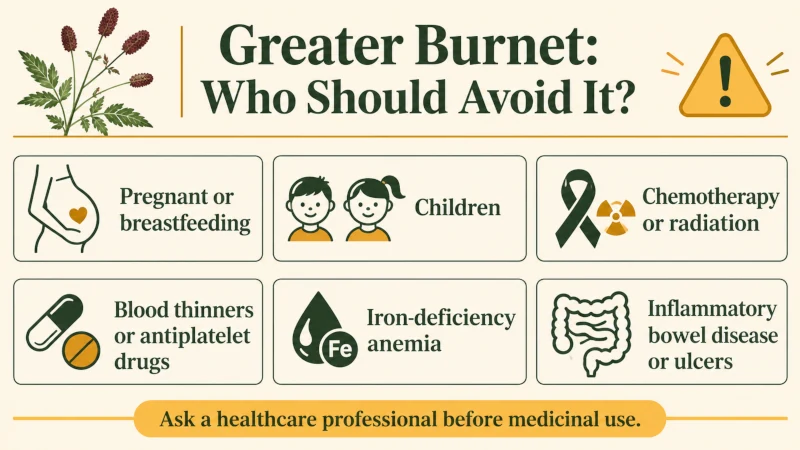
Iron. Polyphenols reduce absorption of nonheme iron, the form in plant foods and most iron supplements [NIH ODS]. If you have iron-deficiency anemia, are pregnant, or take iron, keep strong burnet preparations away from iron-containing meals and supplements.
Blood thinners and antiplatelet drugs. Because the plant has both clot-promoting and anticoagulant fractions in lab work [Zhou et al., 2021], nobody can predict its effect with warfarin, a DOAC, aspirin or clopidogrel. Ask your prescriber first. Tell your surgeon about any herbal product before an operation, since some supplements raise bleeding risk [NCCIH, 2019].
Other medicines. Herbal supplements can interact with prescription drugs, and the FDA does not review them for safety or effectiveness before they are sold [NCCIH, 2019]. Check with a pharmacist if you take anything regularly, especially chemotherapy.
Skip medicinal greater burnet altogether if you are:
- Pregnant or breastfeeding — there is no safety data, and most herbal supplements have never been tested in pregnancy or nursing [NCCIH, 2019]
- Giving it to a child — no pediatric data exists
- Having chemotherapy or radiation, unless your oncology team agrees
- Taking blood thinners or antiplatelet drugs, unless your prescriber agrees
- Living with iron-deficiency anemia
- Managing inflammatory bowel disease or a peptic ulcer without your doctor’s input
When to see a doctor instead
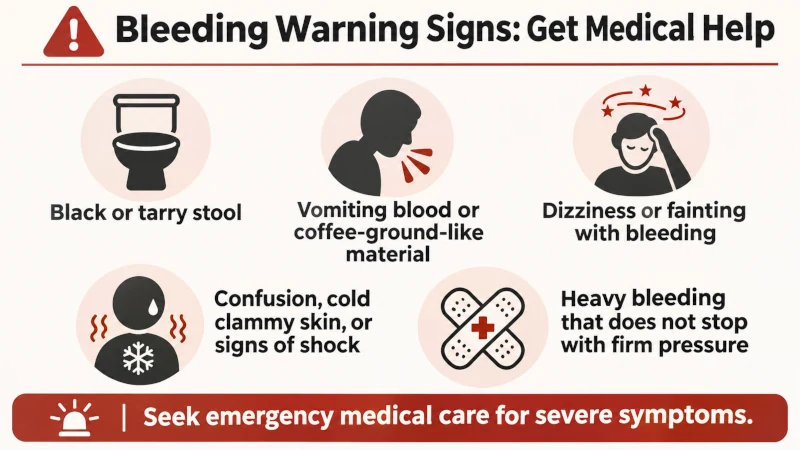
A herb reputed to stop bleeding is a poor substitute for finding out why you are bleeding.
Get emergency help for black or tarry stool, vomit that is bright red or looks like coffee grounds, fainting or dizziness with bleeding, or signs of shock: confusion, a fast heart rate, pale or clammy skin, cold hands and feet [NIDDK, 2024b]. Call 911 for a wound that bleeds heavily or won’t stop after 10 minutes of firm pressure [MedlinePlus, 2025].
See a doctor promptly for:
- Rectal bleeding you haven’t had checked. Hemorrhoids are a common cause, but so are polyps, colitis and colorectal cancer [NIDDK, 2024b; NIDDK, 2016].
- Diarrhea lasting more than 2 days, six or more loose stools a day, high fever, severe abdominal or rectal pain, stools with blood or pus, or signs of dehydration [NIDDK, 2024a].
- Any diarrhea in a baby under 12 months, or diarrhea lasting more than a day in a child [NIDDK, 2024a].
- A wound that is deep, on the face, from a bite or rusty object, shows infection (warmth, redness, swelling, pus, a red streak), or if your tetanus shot is more than 10 years old [MedlinePlus, 2025].
| HEALTH DISCLAIMER: This article is for general education. It is not medical advice and does not replace diagnosis or treatment from a qualified healthcare professional. Greater burnet has not been tested in good-quality human trials for any home use, and herbal products vary in strength and identity. Do not use it to treat bleeding, ongoing diarrhea, wounds, burns or any medical condition in place of proper care. If you are pregnant or breastfeeding, giving an herb to a child, having cancer treatment, taking blood thinners or other prescription medicines, or managing a chronic condition, talk to your doctor or pharmacist first. Seek urgent care for heavy bleeding, black or bloody stool, or signs of shock. |
Frequently Asked Questions
Is greater burnet the same as salad burnet?
No. Greater burnet is Sanguisorba officinalis, a tall meadow plant used medicinally; salad burnet is Sanguisorba minor, a small culinary herb. They are related and both contain tannins, but they differ chemically, and research on one does not transfer to the other. Salad burnet has its own guide.
Does greater burnet really stop bleeding?
Not reliably in people, as far as the evidence shows. Mouse studies and lab assays show hemostatic activity, but other compounds in the plant act as anticoagulants in the lab, and human trials of burnet-containing formulas for hemorrhoid bleeding were few and low quality [Gan et al., 2010; Zhou et al., 2021]. Any bleeding worth worrying about needs a doctor.
Can I drink greater burnet tea for diarrhea?
It has a long traditional use for diarrhea, and the tannin mechanism is plausible, but no good trial has tested it on its own. For a short bout, fluids come first. See a doctor if diarrhea lasts more than two days, is bloody, or comes with high fever [NIDDK, 2024a].
Is greater burnet safe during pregnancy?
There is no safety data. Avoid medicinal preparations while pregnant or breastfeeding [NCCIH, 2019].
What is Diyushengbai, and should I take it during chemo?
It is a Chinese tablet made mainly from burnet root, used to raise white cell counts during cancer treatment. A meta-analysis of 41 mostly low-quality Chinese trials found benefits, with no blinding reported and several authors employed by the maker [Xu et al., 2022]. Don’t start it yourself — ask your oncologist.
References
- Gan T, Liu Y-d, Wang Y, Yang J. Traditional Chinese Medicine herbs for stopping bleeding from haemorrhoids. View source
- MedlinePlus Medical Encyclopedia. Cuts and puncture wounds. View source
- National Center for Complementary and Integrative Health (NCCIH). Using Dietary Supplements Wisely. View source
- NIDDK. Symptoms & Causes of Diarrhea. View source
- NIDDK. Symptoms & Causes of GI Bleeding. View source
- NIDDK. Hemorrhoids. View source
- NIH Office of Dietary Supplements. Iron — Fact Sheet for Health Professionals. View source
- Office on Women’s Health, US HHS. Douching. View source
- Plants of the World Online. Sanguisorba officinalis L. Royal Botanic Gardens, Kew. View source
- Xu X, Li H, Hu X, Liu J, Zhao F, Xie K, Wang J. The Efficacy and Safety of Diyushengbai Tablet on Preventing and Treating Leukopenia Caused by Radiotherapy and Chemotherapy Against Tumor: View source
- Zhou P, Li J, Chen Q, et al. A Comprehensive Review of Genus Sanguisorba: View source


