
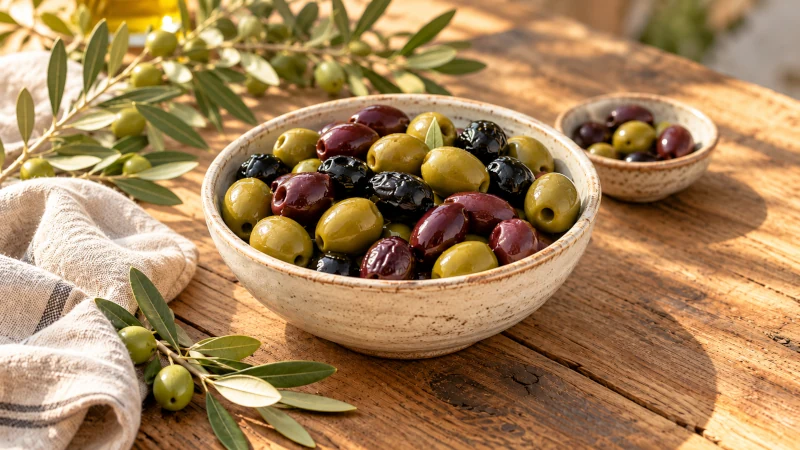
Yes. For most people, olives are a genuinely good food: a handful gives you mostly heart-friendly monounsaturated fat, a little fiber, vitamin E and a family of plant compounds that researchers find interesting. The real catch is salt, which comes from the brine that makes olives edible. And many of the olive benefits you read about online come from olive oil research, not from the olives in your salad. Here is what the evidence actually supports, how green and black olives differ, and how to enjoy them without blowing your sodium budget.
What’s actually in an olive
Olives are the fruit of Olea europaea, and unlike most fruit they are mainly fat. That fat is mostly monounsaturated, chiefly oleic acid, the same fat that gives olive oil its reputation [Rocha et al., 2021]. If you want the fuller chemistry, our guide to olive oil’s fatty acids and benefits covers it.
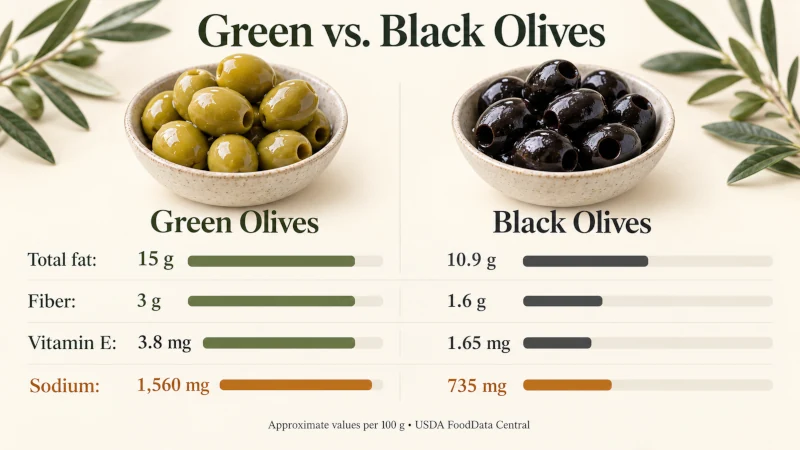
Here is how the two most common supermarket types compare, using USDA data [USDA, 2026a] [USDA, 2026b]. A 30-gram serving is roughly a small handful; the per-serving figures are simple arithmetic from the per-100-gram values.
| Per 100 g | Ripe black olives (canned) | Green olives (pickled) |
| Calories | 116 kcal | about 145 kcal |
| Total fat / monounsaturated | 10.9 g / 7.7 g | about 15 g / 11 g |
| Fiber | 1.6 g | about 3 g |
| Protein | 0.8 g | about 1 g |
| Vitamin E | 1.65 mg | about 3.8 mg |
| Calcium | 88 mg | about 50 mg |
| Iron | 6.3 mg | about 0.5 mg |
| Sodium | 735 mg | about 1,560 mg |
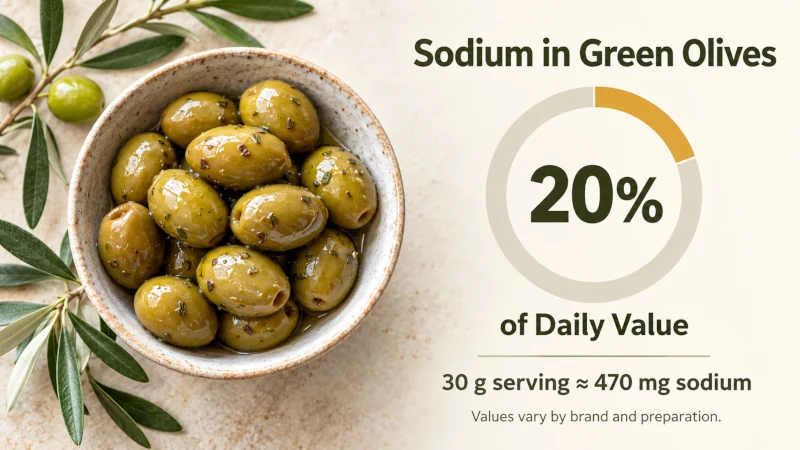
| Sodium in a 30 g serving | about 220 mg (≈10% of the Daily Value) | about 470 mg (≈20% of the Daily Value) |
A few things stand out. Olives are not a meaningful protein source, and their fiber is modest: a small handful of green olives gives you about a gram. The iron figure for canned black olives looks impressive, but California-style ripe olives are treated with an iron compound, ferrous gluconate, during processing [Charoenprasert & Mitchell, 2012], which likely explains most of it. And sodium is the number that matters most for many readers, which is why it gets its own section below.
Olive benefits: what the evidence supports
Researchers have studied olive oil intensively. Whole table olives, much less so. A 2021 review of table olives and health noted that human studies on table olives themselves are scarce, so most claims rest on what olives contain rather than on trials of people eating them [Rocha et al., 2021].
Heart health: a strong case, but mostly for olive oil
The best-supported benefit comes from the fat. In 2018 the FDA allowed a qualified health claim for oils with at least 70% oleic acid, olive oil included: supportive but not conclusive evidence suggests that about 1½ tablespoons (20 grams) a day may reduce the risk of coronary heart disease, provided it replaces fats higher in saturated fat and doesn’t add calories [FDA, 2018].
The PREDIMED trial in Spain followed 7,447 adults at high cardiovascular risk for a median of 4.8 years. People assigned to a Mediterranean diet supplemented with extra-virgin olive oil had fewer heart attacks, strokes and cardiovascular deaths than those on a reduced-fat control diet (hazard ratio 0.69) [Estruch et al., 2018]. The original 2013 paper was retracted and republished in 2018 after problems with randomization at some sites were found; the reanalysis reached the same conclusion.
Neither of these is about olives. Olives deliver the same kind of fat in smaller amounts, plus a lot of salt, so the fair conclusion is that olives fit well in a Mediterranean-style pattern rather than that they protect your heart on their own. Our heart-healthy diet guide and our piece on foods for healthy arteries put olives and olive oil in that wider context.
Plant compounds: real, but processing decides how much you get
Fresh olives are almost inedibly bitter because of a compound called oleuropein. Curing breaks it down, and one of the products is hydroxytyrosol, the main phenolic compound in most table olives and the one with the most research behind its antioxidant and anti-inflammatory activity [Rocha et al., 2021] [Charoenprasert & Mitchell, 2012].
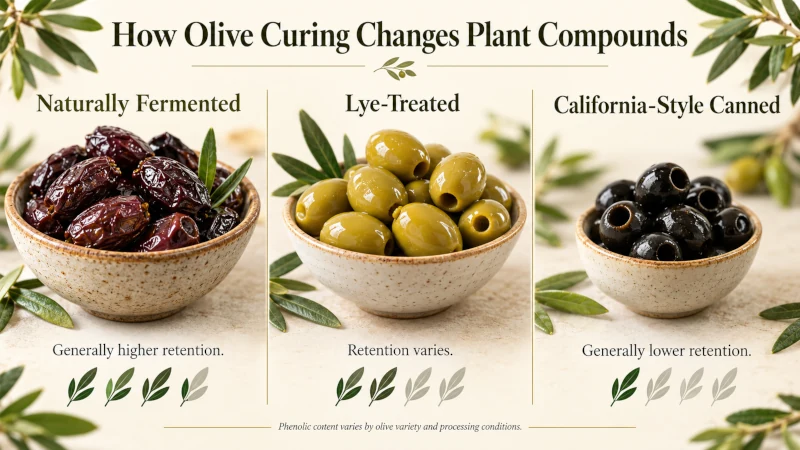
How much survives depends on the curing style. A UC Davis review found that naturally fermented Greek-style black olives keep far more phenolic compounds than lye-treated olives, and that California-style canned black olives have the least [Charoenprasert & Mitchell, 2012]. The same review is candid that most of the evidence for health effects of these compounds comes from cell and animal studies, with few human trials. So: real compounds, plausible mechanisms, limited proof that eating olives changes health outcomes.
Blood sugar: one trial, and it used olive leaf extract
You may see olives linked to better blood sugar control. The study usually behind that claim tested capsules of olive leaf extract, not olives. In a New Zealand crossover trial, 46 overweight middle-aged men took either the extract (51 mg oleuropein and about 10 mg hydroxytyrosol a day) or a placebo for 12 weeks each. Insulin sensitivity improved by about 15% on the extract, though blood pressure, cholesterol and body composition did not change [de Bock et al., 2013]. It is a single small trial in one group of men, and it says nothing direct about eating olives.
Brain health: an association, not proof
In the French Three-City study of 6,947 older adults, people who used olive oil for both cooking and dressing had slower decline in visual memory over four years than non-users. There was no clear difference for verbal fluency, and the authors themselves said the finding needs confirming [Berr et al., 2009]. This was an observational study of olive oil use, so it can’t show cause and effect, and it doesn’t tell us anything specific about olives.
Digestion and the gallbladder: traditional uses
Traditional herbal texts describe olives as an appetite stimulant before meals, a mild laxative and a “cholagogue” that helps the gallbladder empty. We couldn’t find good human research testing any of these for olives specifically. The closest mainstream guidance is from the NIH: healthy fats such as olive oil help the gallbladder contract and empty regularly as part of normal digestion [NIDDK, Gallstones: Eating & Nutrition]. That is a reason to include some healthy fat in meals, not a treatment.
If you have gallstones, our guide to foods to eat with gallstones explains what diet can and can’t do. For regularity, fiber from a wider range of foods does far more than olives can; see nine foods for healthy digestion.
Olive benefits at a glance
| Claim | Strength of evidence | What it means for you |
| Monounsaturated fat supports heart health when it replaces saturated fat | Moderate (FDA qualified claim; large trials of olive oil) | Olives are a reasonable swap for saltier, fattier processed snacks, in small portions |
| Mediterranean diet with olive oil lowers cardiovascular events | Moderate to strong for the diet pattern (PREDIMED) | Olives fit the pattern; the trial didn’t test olives |
| Olive phenolics (hydroxytyrosol) protect health | Early: mostly lab and animal studies | Interesting, unproven from eating olives |
| Better blood sugar control | Limited: one small trial of leaf extract | Not a reason to eat olives or take extract |
| Slower cognitive decline | Limited: observational, olive oil | Association only |
| Appetite, laxative, gallbladder “cleansing” | Traditional use; no good human evidence for olives | Don’t rely on olives for these |
Green vs. black olives
Green olives are picked before they ripen; black olives are either left to ripen on the tree or, in the case of California-style canned olives, darkened during processing. You’ll often read that black olives are more nutritious. The USDA numbers show a trade-off instead: pickled green olives have more fat, fiber and vitamin E, while canned ripe olives have more calcium and iron and about half the sodium [USDA, 2026a] [USDA, 2026b].
For plant compounds, curing style matters more than color. Naturally fermented, Greek-style black olives such as many Kalamatas tend to retain the most phenolics; mild canned black olives retain the least [Charoenprasert & Mitchell, 2012]. If you enjoy a stronger, slightly bitter flavor, that’s usually a sign more of these compounds survived.
The catch: sodium
Olives get their saltiness from brine, and it adds up. The Daily Value for sodium is less than 2,300 mg a day, Americans average about 3,400 mg, and diets high in sodium raise the risk of high blood pressure, a major cause of heart disease and stroke [FDA, Sodium in Your Diet]. A small handful of green olives can supply around a fifth of a day’s limit.
A few practical ways to keep olives in your diet without the salt taking over:
- Check the label. The FDA’s rule of thumb is that 5% of the Daily Value per serving is low and 20% or more is high [FDA, Sodium in Your Diet]. Brands vary a lot.
- Rinse them. Draining and rinsing canned foods removes some sodium [FDA, Sodium in Your Diet].
- Count them as a flavor, not a side. Five or six chopped olives can season a whole salad or pasta dish.
- Mind the calories, too. Olives are energy-dense, so portions matter if you’re managing your weight.
Easy ways to eat olives
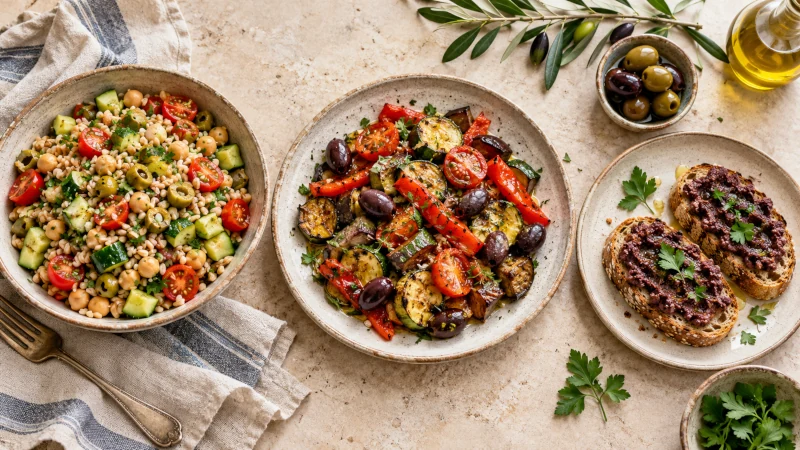
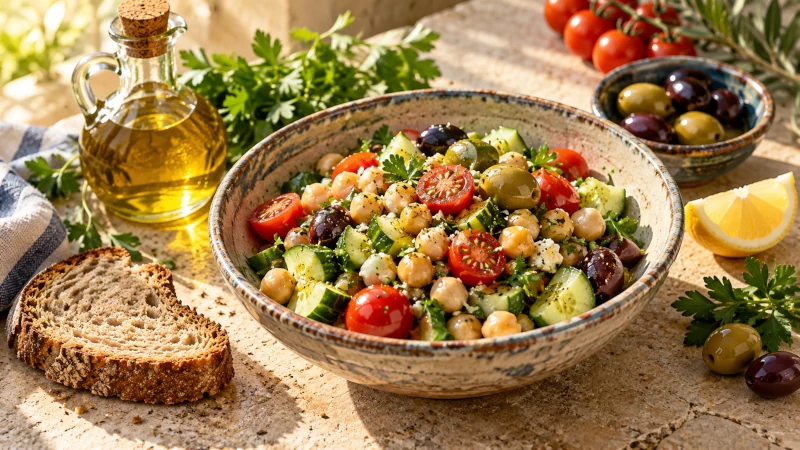
Olives work best where a little goes a long way: tossed into a grain or bean salad, scattered over roasted vegetables, folded into a tomato sauce, or blended into tapenade, a paste of ripe olives that makes a strong spread for whole-grain toast. Pairing them with vegetables and legumes is the most Mediterranean way to use them, and it’s the eating pattern that has the evidence behind it.
Curing olives at home: use a tested method
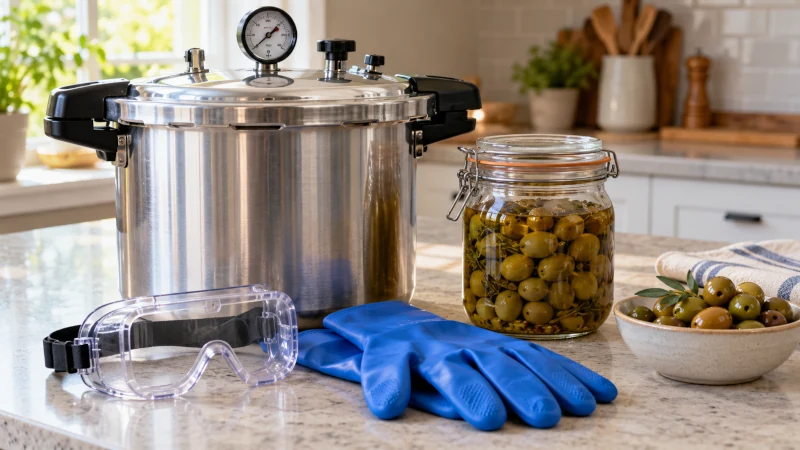
Raw olives straight from the tree are too bitter to eat, so they must be cured. Some herbal sources give quick home recipes using caustic soda (lye). Please don’t improvise. University of California food-safety guidance warns that lye can cause severe burns and permanent injury, that only 100% pure sodium hydroxide should be used, and that it must never touch aluminum, tin or galvanized containers [Yada et al., 2007].
There is a second, less obvious risk. Lye-cured olives that aren’t fermented are a low-acid food, and improperly home-canned olives have caused botulism. They must be processed in a pressure canner, never a boiling-water bath, or kept refrigerated as the tested recipe directs [Yada et al., 2007]. Follow the UC guide, Olives: Safe Methods for Home Pickling step by step, and never taste olives that are moldy, soft or smell off.
Who should be careful
- People told to limit sodium, including those with high blood pressure, heart failure or kidney disease. Olives can still fit, but count them, rinse them and choose lower-sodium brands.
- Anyone considering olive leaf extract. Lab and animal studies suggest it can add to the effects of blood pressure and blood sugar medicines; how much this matters in people isn’t known, but Memorial Sloan Kettering advises against taking it if you use blood pressure medicine, insulin or other diabetes drugs [MSK, Olive Leaf, 2023]. Talk to your doctor or pharmacist first.
- Pregnancy and breastfeeding. We found no evidence that olives eaten as an ordinary food are a concern during pregnancy, but their sodium still counts toward your daily total. We found no reliable safety data for olive leaf extract during pregnancy or breastfeeding, so skip the supplement unless your clinician approves it.
- Allergies. Olive tree pollen can cause severe respiratory allergy [MSK, Olive Leaf, 2023]. If you notice itching, swelling or hives after eating olives, stop and check with a doctor.
Get urgent care if:
- You develop double or blurred vision, drooping eyelids, slurred speech, trouble swallowing or breathing, or muscle weakness after eating home-preserved food. Botulism is a medical emergency; go to the emergency room without waiting [CDC, Botulism].
- You have gallbladder pain lasting several hours, or pain with fever or chills, yellowing of the skin or eyes, or tea-colored urine and pale stools [NIDDK, Gallstones: Symptoms].
| HEALTH DISCLAIMER: This article is for general education and isn’t a substitute for advice, diagnosis or treatment from a qualified health professional. Olives are a food, not a treatment for any disease. If you have high blood pressure, kidney disease, gallbladder problems or diabetes, take prescription medicines, or are pregnant or breastfeeding, talk with your doctor, pharmacist or a registered dietitian before making significant diet changes or starting any olive leaf or other supplement. |
Frequently Asked Questions
How many olives can I eat a day?
There’s no official limit; the practical ceiling is your sodium budget. About 30 grams of green olives (a small handful) carries roughly 470 mg of sodium, close to 20% of the Daily Value [USDA, 2026b] [FDA, Sodium in Your Diet]. If you’re watching salt, think of olives as a garnish and count them toward your daily total.
Do olives have the same benefits as olive oil?
Not exactly. They share the same type of fat, but the heart-health evidence, including the FDA qualified claim and the PREDIMED trial, is about olive oil [FDA, 2018] [Estruch et al., 2018]. Olives give you less of that fat per serving, plus fiber and a lot more salt.
Are black olives healthier than green olives?
Neither wins outright. Green olives have more fat, fiber and vitamin E but about twice the sodium; canned black olives have more calcium and iron [USDA, 2026a] [USDA, 2026b]. For plant compounds, naturally cured olives beat mild canned ones [Charoenprasert & Mitchell, 2012].
Can I eat olives if I have high blood pressure?
Usually yes, in small amounts. Choose lower-sodium brands, rinse them, and keep the portion to a few olives so they fit inside your daily sodium target [FDA, Sodium in Your Diet]. If your doctor has set a stricter limit, follow that.
Are olives good for weight loss?
No food causes weight loss on its own. Olives are fairly calorie-dense, about 35 to 45 calories in a small handful, but their flavor means a few can make a meal more satisfying [USDA, 2026a] [USDA, 2026b]. Portion size is what matters.
Is olive leaf extract safe?
It may lower blood pressure and blood sugar, which could add to the effects of medicines for those conditions [MSK, Olive Leaf, 2023]. Evidence for benefits is limited to small studies [de Bock et al., 2013]. Check with your doctor or pharmacist before trying it, especially if you take prescription drugs.
References
- U.S. Department of Agriculture, Agricultural Research Service. Olives, ripe, canned (small–extra large). View source
- U.S. Department of Agriculture, Agricultural Research Service. Olives, pickled, canned or bottled, green. View source
- U.S. Food and Drug Administration. FDA completes review of qualified health claim petition for oleic acid and the risk of coronary heart disease. View source
- U.S. Food and Drug Administration. Sodium in your diet. Nutrition Education Resources & Materials. View source
- Estruch R, Ros E, Salas-Salvadó J, et al. Primary prevention of cardiovascular disease with a Mediterranean diet supplemented with extra-virgin olive oil or nuts. View source
- Charoenprasert S, Mitchell A. Factors influencing phenolic compounds in table olives (Olea europaea). View source
- Rocha J, Borges N, Pinho O. Table olives and health: View source
- de Bock M, Derraik JGB, Brennan CM, et al. Olive (Olea europaea L.) leaf polyphenols improve insulin sensitivity in middle-aged overweight men: a randomized, placebo-controlled, crossover trial. View source
- Berr C, Portet F, Carriere I, et al. Olive oil and cognition: results from the Three-City Study. View source
- National Institute of Diabetes and Digestive and Kidney Diseases. Eating, diet, & nutrition for gallstones. View source
- National Institute of Diabetes and Digestive and Kidney Diseases. Symptoms & causes of gallstones. View source
- Memorial Sloan Kettering Cancer Center. Olive leaf. About Herbs. View source
- Yada S, Harris LJ, York G, Vaughn R. Olives: Safe Methods for Home Pickling. View source
- Centers for Disease Control and Prevention. Botulism: signs and symptoms. View source


