If you want to build healthy blood through what you eat, the short version is this: load up on iron-rich foods like lentils, beans, tofu, and leafy greens, eat them alongside vitamin C, and make sure you’re also getting enough vitamin B12 and folate. Those last two are easy to forget, but without them your body can’t finish making red blood cells no matter how much iron you take in. The best foods for healthy blood do two jobs at once — they supply the raw materials and they help you absorb them.
This guide walks through which foods genuinely help, why pairing matters more than any single “superfood,” and when food alone isn’t enough.
What healthy blood actually needs from your diet
Red blood cells carry oxygen from your lungs to the rest of your body, and they wear out and get replaced constantly. To make them, your bone marrow needs a steady supply of three nutrients in particular: iron, vitamin B12, and folate (vitamin B9). Iron forms the core of hemoglobin, the protein that actually grips oxygen. B12 and folate are needed to build the cells themselves.
When iron runs low, you get iron-deficiency anemia — the most common form worldwide. When B12 or folate run low, you get a different problem: your marrow produces oversized, poorly functioning red blood cells, a condition called megaloblastic or macrocytic anemia [Cleveland Clinic, 2022]. The practical takeaway is that “blood-building” eating isn’t only about iron. It’s about all three.
Heme vs. nonheme iron: why the source matters
Not all dietary iron behaves the same way. There are two forms, and your gut treats them very differently.
Heme iron comes from meat, poultry, and seafood. It’s absorbed relatively efficiently, and other foods in the meal don’t interfere with it much. Nonheme iron comes from plants — beans, lentils, tofu, leafy greens, nuts, and fortified grains — as well as from eggs and dairy. It’s more abundant in most diets but absorbed less readily, and its uptake swings a lot depending on what else is on your plate [NIH ODS, 2025].
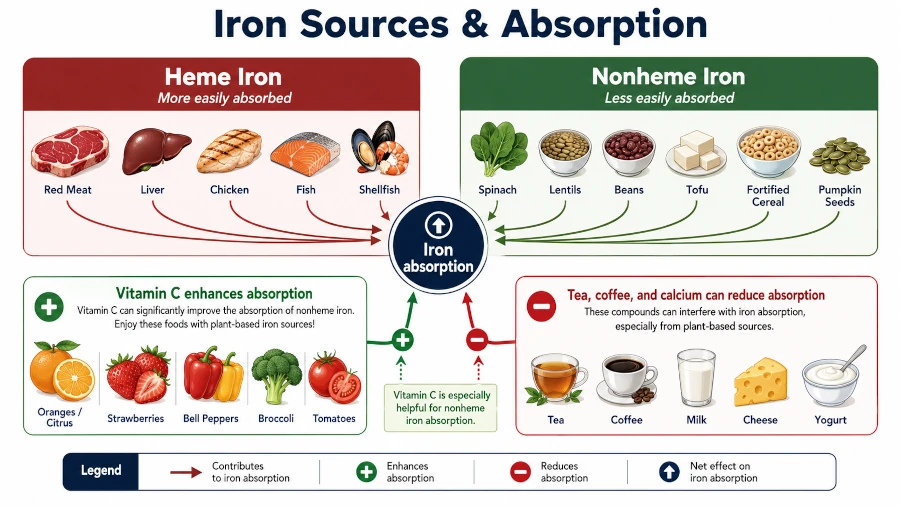
That difference shows up in the numbers. The National Institutes of Health estimates iron bioavailability at roughly 14–18% from mixed diets that include meat, seafood, and vitamin C, but only about 5–12% from vegetarian diets. Because of this, the recommended iron intake for people who don’t eat meat is about 1.8 times higher than for people who do [NIH ODS, 2025].
None of this means you need meat to build healthy blood. Plenty of people maintain perfectly healthy blood on plant-based diets. It does mean that if you rely on plant foods, you have to be a bit more deliberate — pairing iron with vitamin C, and keeping an eye on B12.
The vitamin C trick that actually works
Here’s the single most useful habit for anyone eating plant iron: add vitamin C to the same meal. Vitamin C (ascorbic acid) enhances the absorption of nonheme iron, and it can offset some of the compounds in plant foods that otherwise block it [NIH ODS, 2025]. This is the real reason the old advice to squeeze lemon over lentils or beans has stuck around — the vitamin C in lemon helps your body pull more iron out of the meal.
You don’t need a supplement. Good vitamin C partners include citrus, bell peppers, broccoli, strawberries, kiwi, tomatoes, and melon [Mayo Clinic, 2025]. A few realistic combinations:
- Lentil soup with a squeeze of lemon, or a side of tomato
- Tofu stir-fry with broccoli and bell peppers
- Spinach salad with strawberries or orange segments
- Beans with salsa
Meat, poultry, and seafood also boost nonheme iron absorption when eaten in the same meal, so a small amount of animal protein alongside plant iron does the same favor [NIH ODS, 2025].
What quietly blocks iron absorption
Some foods pull in the other direction. Phytates (found in grains and beans) and certain polyphenols (in tea, coffee, and some legumes and cereals) reduce nonheme iron absorption. Calcium can lower absorption of both heme and nonheme iron [NIH ODS, 2025]. This is why a strong cup of tea or coffee right alongside an iron-rich meal isn’t ideal if you’re trying to raise your iron.
Two caveats keep this in perspective. First, these effects are strongest for nonheme iron and are largely smoothed out across a varied Western diet, so for most people they don’t make or break iron status [NIH ODS, 2025]. Second, foods like beans and whole grains are still genuinely good iron sources — the answer isn’t to avoid them but to pair them well and save the big mug of tea for between meals.
The best foods for healthy blood
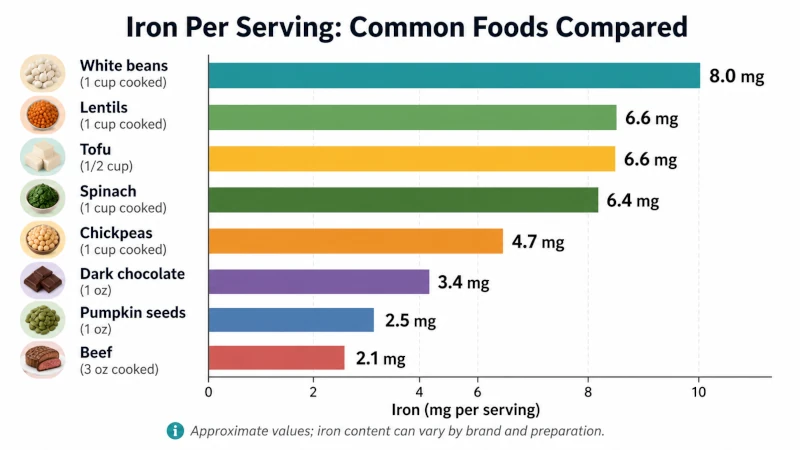
Below are solid, everyday sources of iron, with the amounts the NIH lists per typical serving. Notice that several plant foods hold their own against meat — the difference is mostly in absorption, which is exactly what the vitamin C pairing helps with.
| Food | Iron per serving | Notes |
| White beans, 1 cup canned | ~8 mg | One of the richest everyday plant sources |
| Lentils, ½ cup boiled | ~3 mg | High in folate too — a genuine two-in-one |
| Firm tofu, ½ cup | ~3 mg | Comparable to a serving of beef |
| Spinach, ½ cup boiled | ~3 mg | Good iron, but absorption is limited by its own polyphenols |
| Beef, 3 oz braised | ~2 mg | Heme iron, well absorbed |
| Chickpeas, ½ cup | ~2 mg | Pairs naturally with lemon and tomato |
| Kidney beans, ½ cup | ~2 mg | Versatile and inexpensive |
| Sardines, 3 oz canned | ~2 mg | Also supplies B12 |
| Baked potato, 1 medium | ~2 mg | Skin-on; also contributes vitamin C |
| Cashews, 1 oz | ~2 mg | A practical iron-bearing snack |
Iron values from the NIH Office of Dietary Supplements [NIH ODS, 2025].
A note on some popular “blood-building” foods: spinach is frequently called an iron powerhouse, and it does contain a respectable amount, but the NIH specifically points out that its iron is poorly absorbed because of naturally occurring polyphenols [NIH ODS, 2025]. It’s still worth eating — just don’t treat it as a cure on its own. Similarly, beets are often described as blood-building, but their iron content is modest and the evidence for any special marrow-stimulating effect beyond their basic nutrition is thin. Eat them because they’re nutritious, not because they’ll reverse anemia.
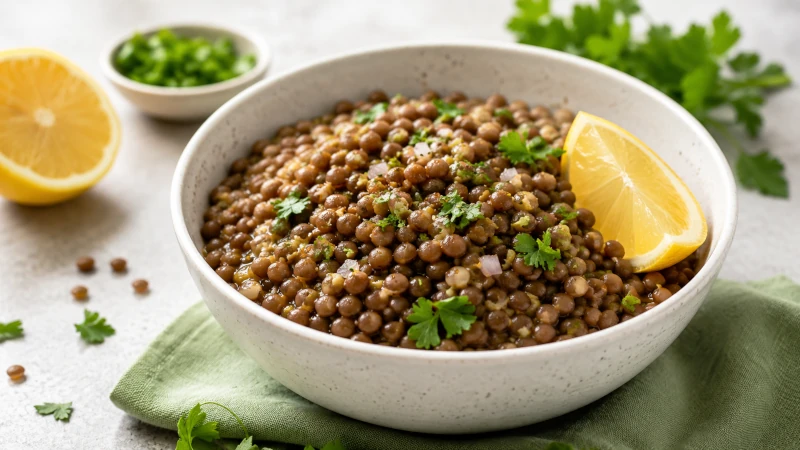
Lentils deserve a particular mention. They deliver iron and a large dose of folate in the same bowl, which is why they’re a staple recommendation for people at risk of anemia and during pregnancy. For a broader list, see our guide to foods for anemia.
Don’t forget B12 and folate
Iron gets all the attention, but a meaningful share of anemia comes down to vitamin B12 or folate, not iron [Cleveland Clinic, 2022]. If you’re tackling tiredness or pale skin by eating more iron and nothing improves, this is often why.
Folate (B9) is plentiful in dark leafy greens, beans, lentils, asparagus, broccoli, and citrus fruits [Cleveland Clinic, 2022]. If you eat plants, you’re probably getting plenty.
Vitamin B12 is the one to watch, because it occurs almost entirely in animal foods — meat, fish, eggs, and dairy — plus fortified foods like some cereals and plant milks [Cleveland Clinic, 2022]. Plants don’t reliably supply it. Vegans and many vegetarians need a fortified food or a supplement to cover it, and older adults absorb it less efficiently. Our overview of vitamin B12 foods covers the strongest sources in more detail.
A simple day of blood-building meals
You don’t need a special diet — just a bit of pairing. A day might look like:
- Breakfast: oatmeal or fortified cereal with strawberries and a few cashews
- Lunch: lentil and tomato soup with a squeeze of lemon, plus a leafy salad
- Snack: orange slices and a small handful of pistachios or cashews
- Dinner: tofu or fish stir-fried with broccoli and bell peppers over rice
Every iron source here lands next to a vitamin C source, and there’s enough variety to cover folate and B12 across the day.
Realistic expectations and who needs more
Food works, but it works gradually. Diet is excellent for prevention and for topping up borderline iron, and it’s the right first move for most people. What it can’t do is quickly correct an established, significant deficiency — that usually needs supplements or treatment under medical guidance, because raising depleted iron stores takes months.
Some people need noticeably more iron than others. The recommended daily intake is about 8 mg for adult men and women over 50, 18 mg for women aged 19–50 (who lose iron through menstruation), and 27 mg during pregnancy [NIH ODS, 2025]. People with heavy periods, pregnant people, frequent blood donors, vegetarians and vegans, and anyone with a condition that impairs absorption (such as celiac disease) all sit at higher risk of running low [Mayo Clinic, 2025].
Safety, supplements, and what to watch for
For most people, getting iron from food carries no real risk. Supplements are a different story and deserve care.
Side effects. Higher doses of supplemental iron — around 45 mg a day or more — commonly cause gastrointestinal upset, including nausea and constipation [NIH ODS, 2025].
More isn’t better. Your body has no efficient way to dump excess iron. Too much can build up and damage the liver and other organs, which is exactly why Mayo Clinic advises talking to a healthcare professional before starting iron supplements rather than self-prescribing [Mayo Clinic, 2025].
Interactions and absorption. Calcium supplements and calcium-rich foods can blunt iron absorption, so spacing them apart from iron-rich meals helps [NIH ODS, 2025]. If you take medication, ask a pharmacist about timing, since iron can interfere with the absorption of some drugs.
Pregnancy and breastfeeding. Iron needs rise substantially in pregnancy, and prenatal supplements are routinely used to prevent deficiency — but dose and timing should follow your prenatal provider’s guidance, not guesswork [Mayo Clinic, 2025].
Who should be cautious. Anyone with an iron-overload condition such as hemochromatosis, and anyone unsure why they’re anemic, should not take iron supplements without testing first. The cause matters as much as the number.
Red flags: when to see a professional
Mild iron-deficiency anemia can be so subtle you don’t notice it, but as it deepens the signs grow clearer: extreme tiredness, weakness, pale skin, shortness of breath, headaches, dizziness, cold hands and feet, brittle nails, a sore tongue, restless legs, or an unusual urge to chew ice or non-food items like dirt or clay [Mayo Clinic, 2025].
Get medical attention promptly if you have chest pain, a fast or irregular heartbeat, or shortness of breath, since untreated anemia can strain the heart and, in severe cases, lead to an enlarged heart or heart failure [Mayo Clinic, 2025]. Anemia in pregnancy needs attention too, as it’s linked to premature birth and low birth weight.
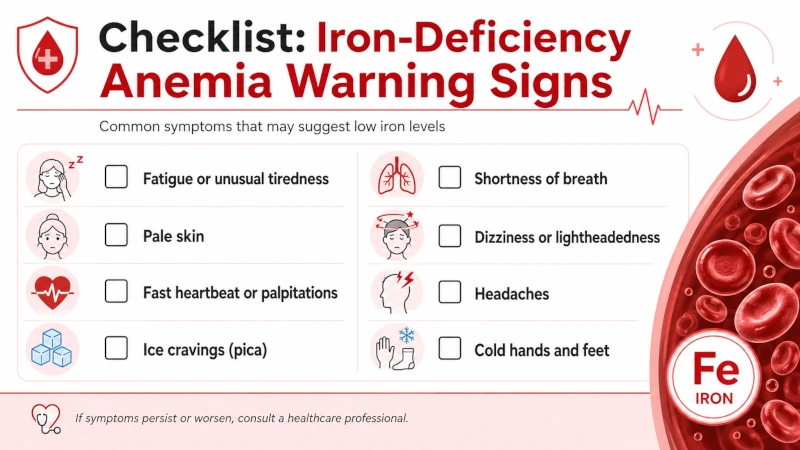
Most importantly: don’t diagnose or treat anemia on your own. Fatigue and pale skin have many causes, and iron deficiency itself can be a sign of something that needs investigating — heavy periods, or slow bleeding in the digestive tract from ulcers or other conditions [Mayo Clinic, 2025]. A simple blood test tells you whether your problem is iron, B12, folate, or something else entirely, and that determines the right fix. Food is a great foundation, but it isn’t a substitute for knowing what you’re treating.
| Health Disclaimer This article is for general education only and is not medical advice, diagnosis, or treatment. Foods and supplements discussed here are not a substitute for care from a qualified healthcare professional. Anemia has many possible causes, so do not self-diagnose or start iron or other supplements on your own — talk to your doctor, especially if you are pregnant or breastfeeding, take medication, or have an ongoing health condition. If you have chest pain, a rapid or irregular heartbeat, or shortness of breath, seek medical care promptly. |
Frequently Asked Questions
What foods build blood the fastest?
No food works overnight. Iron-rich foods like white beans, lentils, tofu, and lean red meat — eaten with a vitamin C source — give your body the materials to rebuild red blood cells, but raising low iron stores takes weeks to months. If you need a faster correction, that’s a conversation for your doctor, who may recommend a supplement.
Can I build healthy blood without eating meat?
Yes. Beans, lentils, tofu, leafy greens, nuts, and fortified grains all supply iron. Because plant (nonheme) iron is absorbed less efficiently, pair it with vitamin C and aim for a bit more overall. The one nutrient to plan for on a vegan diet is vitamin B12, which you’ll need from fortified foods or a supplement.
Does lemon really help with iron?
The vitamin C in lemon increases how much nonheme (plant) iron your body absorbs from the same meal, and it can offset some of the compounds in plant foods that block iron. A squeeze over lentils, beans, or greens is a simple, evidence-backed habit — though it boosts absorption rather than adding iron itself.
Are spinach and beets good for anemia?
Both are nutritious, but neither is a magic fix. Spinach contains iron that’s poorly absorbed because of its own polyphenols, and beets are only a modest iron source. Include them in a varied diet, but don’t rely on them alone to correct anemia.
When should I see a doctor instead of changing my diet?
See a healthcare professional if you have ongoing fatigue, pale skin, shortness of breath, a fast or irregular heartbeat, or cravings to chew ice or non-food items. These can signal anemia that needs testing. A blood test shows whether the cause is iron, B12, folate, or something else — which decides the right treatment.
References
- National Institutes of Health, Office of Dietary Supplements. “Iron — Health Professional Fact Sheet.” Updated 2025. View source
- Mayo Clinic. “Iron deficiency anemia — Symptoms & causes.” Reviewed Sep 20, 2025. View source
- Cleveland Clinic. “Vitamin Deficiency Anemia: Symptoms & Causes.” Reviewed Jul 22, 2022. View source
