

Being over 65 raises your risk of type 2 diabetes more than any earlier stage of life — which is exactly why watching a friend get diagnosed makes so many older adults wonder if they’re next. The honest answer: your odds really are higher now, but this is also one of the most manageable serious conditions you can face. About 28.8% of Americans aged 65 and older are living with diabetes [ADA, 2026], and more than half of this age group has prediabetes [CDC, 2026]. Type 2 diabetes is a genuine concern for seniors — but a diagnosis today comes with far more tools, and more reason for optimism, than it did a generation ago.
What follows is what actually matters after 65: why risk climbs with age, which symptoms get wrongly blamed on “just getting older,” how the condition is diagnosed and managed, and the one complication — low blood sugar — that older adults need to watch more carefully than younger people do.
Why type 2 diabetes climbs with age
Diabetes becomes more common as people get older. Among adults 65 and up, close to 3 in 10 have it — among the highest rate of any age group [ADA, 2026]. Age itself is a risk factor: the chance of developing type 2 diabetes rises noticeably after about age 35 and keeps climbing [Mayo Clinic, 2025].

But age is only part of the story, and the rest is where you have leverage. You’re more likely to develop type 2 diabetes if you carry excess weight (especially around the waist), aren’t physically active, have a parent or sibling with the disease, had gestational diabetes during a pregnancy, or are African American, American Indian, Asian American, Hispanic or Latino, or Pacific Islander [NIA, 2024] [NIDDK, 2024]. Some of these — age, family history, ethnic background — you can’t change. Others you can, and those are the ones worth your attention.
What’s actually going wrong
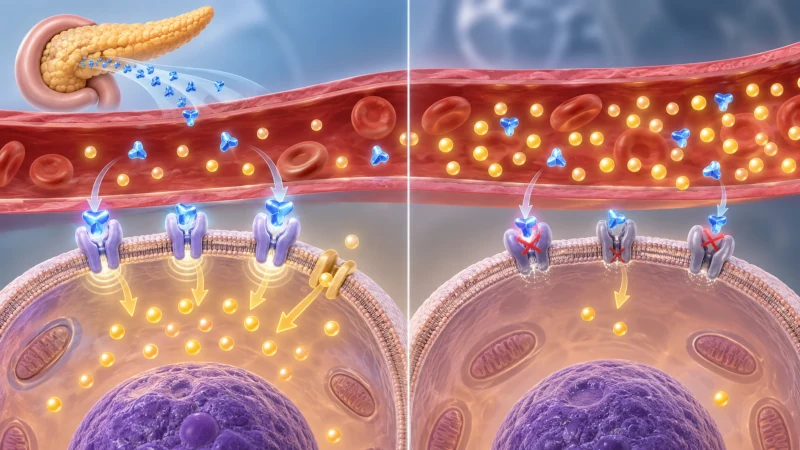
Your body turns most of what you eat into glucose, the sugar your cells burn for energy. To move that glucose out of your bloodstream and into your cells, you need insulin, a hormone made by the pancreas [NIA, 2024].
In type 2 diabetes, that system breaks down two ways at once: your cells stop responding to insulin the way they should — insulin resistance — and over time the pancreas can’t make enough to keep up [Mayo Clinic, 2025]. Glucose then builds up in the blood instead of fueling your body, and it’s those chronically high levels that cause harm down the line.
Prediabetes: the warning you can act on
Before type 2 diabetes there’s usually a stage called prediabetes, when blood glucose is higher than normal but not yet high enough for a diabetes diagnosis [NIDDK, 2024]. Millions of older Americans have it, and many don’t know [NIA, 2024].
This is the stage worth catching, because it’s the one you can still change. Losing a modest amount of weight and moving more can prevent or delay the slide into type 2 diabetes — in a large government trial, people who became more active and lost 5% to 7% of their body weight substantially lowered their chance of developing it [NIDDK, 2024]. Left alone, prediabetes often progresses [Mayo Clinic, 2025]. So a prediabetes result isn’t a sentence — it’s a window.

Symptoms that get blamed on aging
Type 2 diabetes is quiet. Symptoms come on slowly, and some people have none at all until a related problem shows up [Mayo Clinic, 2025] [NIDDK, 2024]. When they do appear, they can include more thirst and more frequent urination, more hunger (sometimes with unexplained weight loss), tiredness, blurred vision, cuts and sores that heal slowly, frequent infections, and numbness or tingling in the hands or feet [NIA, 2024] [Mayo Clinic, 2025].
Here’s the trap for older adults: it’s easy to write these off as normal aging. A cut that takes longer to heal, feeling more tired, needing the bathroom more often — any of these can look like ordinary getting-older changes when they’re actually signs of something treatable [NIA, 2024]. If you notice them, especially alongside the risk factors above, that’s a reason to talk to your doctor rather than shrug.
| What you might notice | Why it’s worth a check |
| More tired than usual | Fatigue is a common diabetes symptom, not only an age change [NIA, 2024] |
| Cuts or sores healing slowly | Slow healing can signal high blood sugar [NIA, 2024] |
| Urinating more often, more thirst | Classic early signs of diabetes [Mayo Clinic, 2025] |
| Blurred vision | Can reflect blood-sugar changes [Mayo Clinic, 2025] |
| Frequent infections (skin, urinary) | Recur more often with diabetes [NIDDK, 2024] |

How doctors diagnose it
You can’t diagnose diabetes at home; it takes a blood test ordered by a clinician [NIA, 2024]. Doctors use a few, and if one suggests diabetes they’ll often repeat it or run a second type to confirm [NIA, 2024].
| Test | What it measures | Notes |
| Fasting plasma glucose | Blood glucose at one moment | Usually morning, after about 8 hours without food [NIA, 2024] |
| A1C | Average blood glucose over ~3 months | No fasting needed; may be less accurate with certain conditions [NIA, 2024] |
| Random plasma glucose | Blood glucose at one moment | Any time of day, no fasting [NIA, 2024] |
| Oral glucose tolerance | Glucose before and 2 hours after a sugary drink | Two-step test; begins fasting [NIA, 2024] |

A note on the earlier version of this page: each test used to link to an Amazon product listing. Those have been removed. These are laboratory blood tests performed through your doctor — not products you buy and run on yourself — and presenting them as purchases was misleading.
Managing type 2 diabetes after 65
Type 2 diabetes is chronic, but it’s manageable, and plenty of people live long, full lives with it [NIA, 2024]. Management usually rests on three things.
Food
Many people with type 2 diabetes can keep their blood glucose in range largely through what and how much they eat [NIA, 2024]. That doesn’t mean a joyless diet — it means steady, balanced meals built around vegetables, whole grains, legumes, and lean protein. Our guide to diabetic-friendly foods has practical specifics.
Activity
Walking and other regular movement help lower blood glucose in older adults [NIA, 2024]. General guidance is roughly 150 minutes of moderate activity a week [Mayo Clinic, 2025], but anything beats nothing, and your care team can help you build something realistic for your body.
Medication, when needed
Some people manage with lifestyle alone; others need diabetes pills or insulin, often alongside medicines for blood pressure and cholesterol [NIA, 2024]. Needing medication isn’t a failure — it’s a normal part of managing the condition, and what you need can change over time. Most plans also include checking your glucose, and your doctor will tell you how often based on your treatment [NIA, 2024].

One thing to be clear about: there is no cure for type 2 diabetes [Mayo Clinic, 2025]. Diet, activity, and weight loss genuinely help manage it — and can sometimes reduce how much medication you need — but they aren’t a cure, and no food or supplement is. Be skeptical of anything that promises one.
The low-blood-sugar risk seniors need to watch
One part of diabetes care matters more for older adults than for younger ones: blood sugar going too low. Very high glucose (hyperglycemia) and very low glucose (hypoglycemia) both put your health at risk [NIA, 2024], and lows are a particular concern for seniors taking insulin or certain diabetes pills.
Signs of low blood sugar can include shakiness, sweating, confusion, irritability, or sudden weakness — and in older adults these are easy to mistake for something else. If you take insulin or a medication that can cause lows, ask your care team what your personal warning signs are, how to treat a low quickly, and how often to check. Our overview of blood sugar levels explains the highs and lows in more detail.

When poorly managed, diabetes adds up
Left untreated or poorly controlled, high blood glucose damages the body over years — the eyes, kidneys, nerves, feet, and heart are all vulnerable [NIA, 2024] [Mayo Clinic, 2025]. Diabetes also raises the risk of heart disease and stroke [Mayo Clinic, 2025], which is why blood pressure and cholesterol get managed alongside blood sugar, and why eating patterns that protect the heart matter here too.
This isn’t meant to frighten you — it’s the reason management matters. Good control lowers the risk of every one of these complications [Mayo Clinic, 2025]. Regular check-ups, yearly eye and kidney checks, and daily foot care are the unglamorous habits that keep problems away [NIA, 2024].
Red flags: when to get help
Most of diabetes care is routine. A few situations aren’t. Get medical help promptly if you or someone you care for has signs of very low blood sugar that don’t improve after eating or drinking something sugary (confusion, fainting, or a seizure need emergency care); a foot sore, blister, or infection that isn’t healing; or signs of very high blood sugar such as extreme thirst, frequent urination, nausea, and confusion.
Because diabetes can blunt or change how a heart attack or stroke feels, don’t wait out sudden chest discomfort, shortness of breath, one-sided weakness, or trouble speaking — call emergency services [Mayo Clinic, 2025]. For these, self-care is never enough.
Can you prevent it?

Not always — but often you can prevent or delay type 2 diabetes, and that’s where your effort pays off most [NIA, 2024]. The same steps that manage the disease lower the risk of getting it: staying active, eating well, and keeping weight in a healthy range [NIDDK, 2024]. If you already have prediabetes, those changes can push your numbers back toward normal [Mayo Clinic, 2025].
A sedentary routine works against you at any age, and starting to move — even a daily walk — is one of the most reliable things an older adult can do for blood sugar [NIA, 2024]. It’s rarely too late to help yourself.
| HEALTH DISCLAIMER: This article is for general education and information only. It is not medical advice and is not a substitute for diagnosis, treatment, or guidance from a qualified healthcare professional. Diabetes is a serious condition that needs ongoing care from your own clinicians, who set targets based on your health, age, and other conditions. Do not start, stop, or change any medication, insulin, or supplement based on this page. If you are pregnant, nursing, or have other medical conditions, talk with your doctor before making changes. If you think you may be having a medical emergency, call your local emergency number right away. |
Frequently Asked Questions
Is type 2 diabetes more serious in older adults?
It needs the same serious management at any age, but seniors face a few added considerations: symptoms are easier to miss, and low blood sugar from medication is a bigger risk. Regular check-ups help catch problems early [NIA, 2024].
Can type 2 diabetes be reversed in seniors?
There’s no cure [Mayo Clinic, 2025]. That said, recent-onset type 2 diabetes combined with meaningful weight loss can sometimes reduce how much medication a person needs, and prediabetes can often be pushed back toward normal with lifestyle change [NIDDK, 2024]. Any change to medication has to be made with your doctor — never on your own.
What counts as a normal blood sugar for a senior?
Targets are individual, and doctors sometimes set slightly less strict goals for older adults to avoid dangerous lows. Rather than relying on a single number from an article, ask your care team what your specific targets are.
How often should older adults get tested?
If you have symptoms or risk factors, ask your doctor about testing. People with prediabetes or a history of gestational diabetes generally need regular checks [NIDDK, 2024] [NIA, 2024].
Does everyone with type 2 diabetes need insulin?
No. Many older adults manage with diet and activity, or with pills; some need insulin. What you need can change over time [NIA, 2024].
References
- National Institute on Aging (NIA). Diabetes in Older People. Reviewed April 10, 2024. View source
- Centers for Disease Control and Prevention (CDC). National Diabetes Statistics Report. Jan 21, 2026. View source
- American Diabetes Association (ADA). Statistics About Diabetes. © 2026 (2023 data). View source
- Mayo Clinic. Type 2 diabetes — Symptoms & causes. Feb 27, 2025. View source
- National Institute of Diabetes and Digestive and Kidney Diseases (NIDDK). Symptoms & Causes of Diabetes. Reviewed October 2024. View source


