
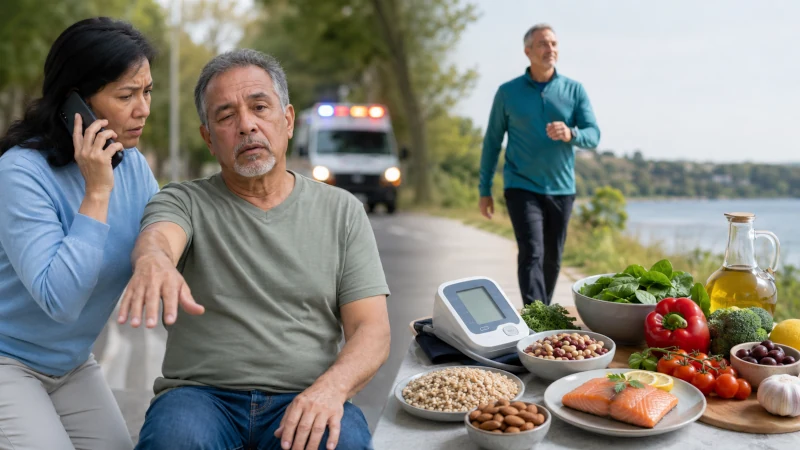
| IF THIS IS HAPPENING NOW: If someone near you has a suddenly drooping face, a weak arm, or slurred speech, call 911 immediately. A stroke is a medical emergency. No food, herb, tincture, or bath treats a stroke, and trying one wastes the minutes that decide how much of the brain survives. |
If you searched natural remedies for stroke because someone near you is drooping, slurring, or suddenly weak on one side, put the phone to better use and dial emergency services first. There is no home remedy — not cayenne pepper, not an herbal tincture, not a hot bath — that treats a stroke while it is happening. On average, about 1.9 million brain cells die every minute a stroke goes untreated [AHA, 2026]. The only thing that helps in those minutes is emergency medical care.
That is the hard part of the answer. The useful part: “natural” genuinely has a place with stroke — just not during the emergency. As many as 80% of strokes are considered preventable [AHA/ASA, 2024], and the changes that lower your risk the most are the unglamorous ones — blood pressure, diet, movement, not smoking. This article keeps those two things separate: what to do in the first minutes of a stroke, and what actually lowers your risk over the years. It is also honest about which supplements and herbs have evidence behind them and which are only circulating online.
First, the part that saves lives: call 911
A stroke happens when blood flow to part of the brain is cut off by a clot or a burst vessel, and the affected tissue starts to die within minutes. Speed is the whole game. Clot-dissolving drugs work best given within about 4.5 hours of the first symptom, and clot-removal procedures help selected patients up to 24 hours out when brain imaging shows tissue still worth saving [AHA/ASA, 2026]. Every one of those treatments happens at a hospital. Getting there fast is the single biggest thing you control.
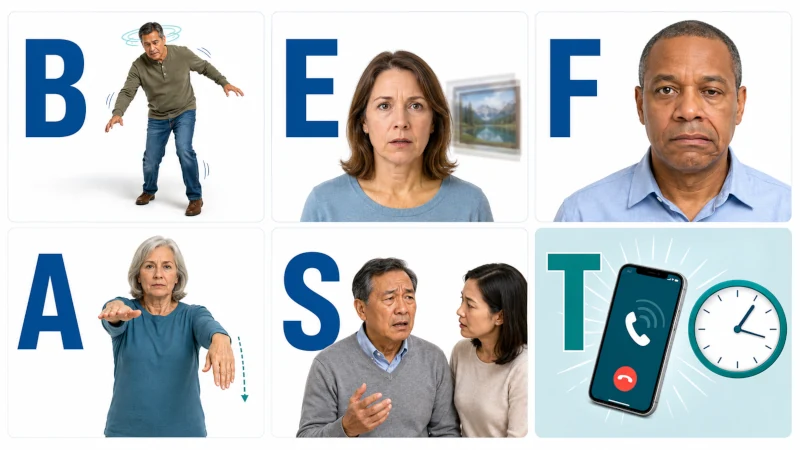
Use B.E. F.A.S.T. to spot a stroke [American Stroke Association]:
| Letter | What to check |
| B | Balance — sudden loss of balance, dizziness, or trouble walking |
| E | Eyes — sudden blurred or double vision, or loss of sight in one or both eyes |
| F | Face — ask for a smile; does one side droop? |
| A | Arms — ask them to raise both arms; does one drift down? |
| S | Speech — ask for a simple sentence; is it slurred or wrong? |
| T | Time — if you see any one of these, call 911 now and note the time symptoms began |
Two details matter. First, call 911 even if the symptoms disappear. A brief episode that clears on its own is often a transient ischemic attack (TIA), a warning stroke that can be followed by a major one within hours or days [American Stroke Association]. Second, call the ambulance rather than driving — paramedics start treatment on the way and alert the hospital stroke team before you arrive [AHA, 2026].
What not to do while you wait — including the popular “remedies”
This is where the old advice about stroke does real harm. While you wait for the ambulance, the safest thing is to keep the person comfortable and do very little to them.
- Don’t give food or drink. A stroke often impairs swallowing, so anything by mouth is a choking and aspiration risk [American Stroke Association]. This is exactly why the common instruction to spoon cayenne pepper stirred into water into a stroke victim is dangerous — a person who cannot swallow safely can inhale it.
- Don’t give pills — not even aspirin. About 1 in 8 strokes is a bleed rather than a clot, and aspirin can make a bleeding stroke worse. Let the hospital scan the brain first and decide [American Stroke Association].
- Skip the herbal tinctures. Lobelia, which appears in several traditional stroke recipes, is rated likely unsafe taken by mouth; toxic doses cause vomiting, a racing or slowing heartbeat, convulsions, and slowed breathing [Natural Medicines, via Drugs.com]. A drowsy, half-conscious person is the worst possible candidate for it.
- No hot baths, footbaths, mustard soaks, or enemas. Hot-water immersion of a person who may faint is a drowning and scald risk, and every one of these steps is time spent out of an ambulance. There is no evidence any of them changes the course of a stroke.
- Don’t let them “sleep it off” or drive themselves. Sudden sleepiness can be part of the stroke; waiting to “see if it passes” burns the treatment window.
| The honest headline: cayenne, ginkgo, bromelain, lobelia, black cohosh, and hot baths do not stop a stroke. Some are useless in the moment; a few are actively hazardous. The life-saving “remedy” is the phone. |
What a stroke actually is
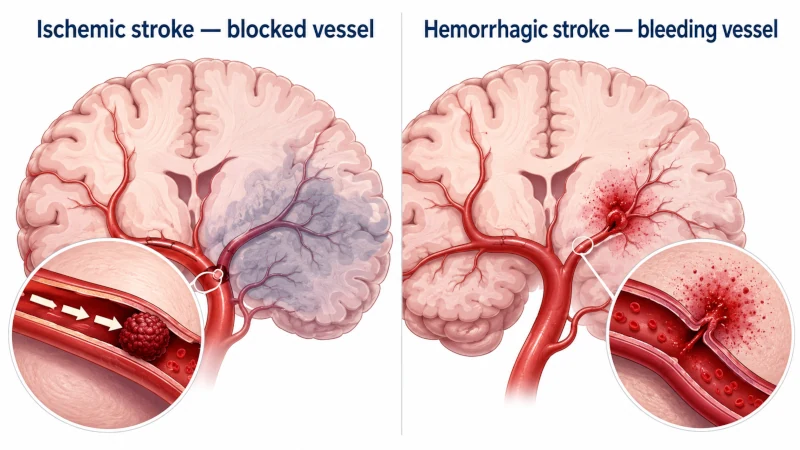
Knowing the type helps the rest of this make sense. About 87% of strokes are ischemic — a clot blocks an artery feeding the brain. The remaining ~13% are hemorrhagic — a weakened vessel bleeds [NHLBI, NIH]. A TIA is a temporary blockage that clears on its own but signals real danger ahead [American Stroke Association]. The reason “natural clot-busters” are a bad idea in the moment is that you cannot tell a clot from a bleed without a scan — and the wrong guess makes a bleed worse.
Where natural approaches genuinely help: lowering your risk
Here is the good news the emergency section can’t offer. Prevention is where lifestyle earns its keep, and the effects are large and well documented. These are drawn from the American Heart Association / American Stroke Association 2024 primary-prevention guideline [AHA/ASA, 2024] and its published summary [Bushnell et al., 2025].
Control your blood pressure — the single biggest lever
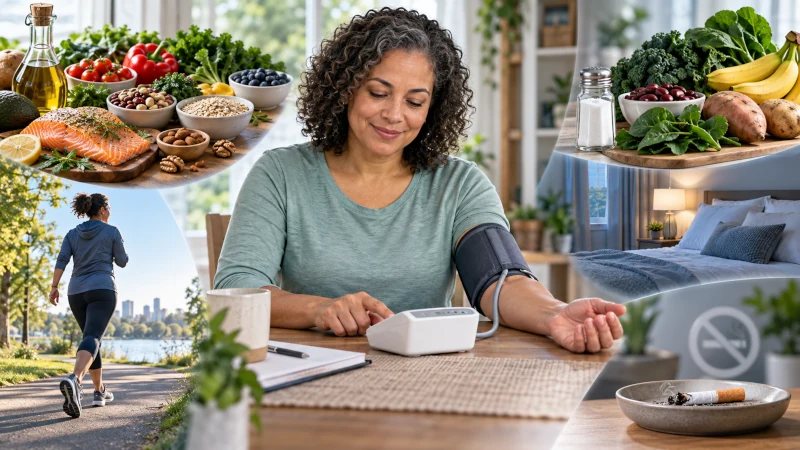
High blood pressure is the leading modifiable cause of stroke. In the guideline evidence, treating to a systolic target below 130 mm Hg cut strokes by about 26% relative to higher targets [Bushnell et al., 2025]. Most of what lowers blood pressure is “natural” — less sodium, more potassium from food, weight loss, and regular activity. Our guide to natural home remedies for high blood pressure puts millimeter-of-mercury numbers on each change, and there’s a companion list of foods that lower blood pressure.
Eat a Mediterranean-style pattern
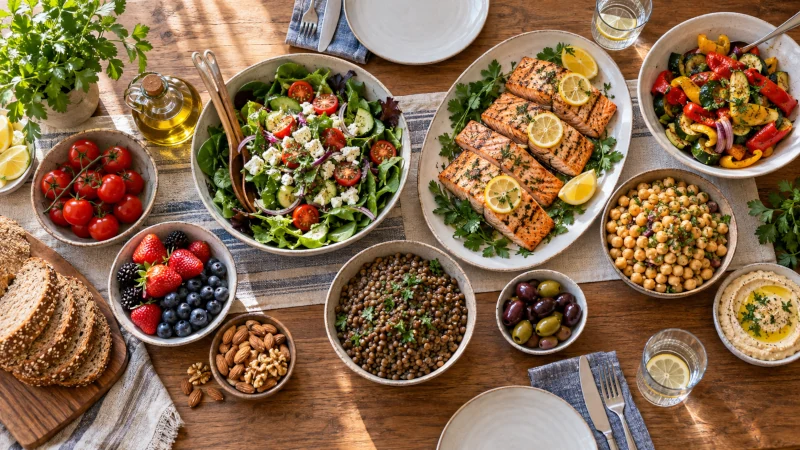
The 2024 guideline gives the Mediterranean diet its strongest (Class 1) recommendation. In the PREDIMED trial it was associated with roughly a 42% relative reduction in stroke — about a 1.5% absolute drop — in people at higher cardiovascular risk [Bushnell et al., 2025]. The pattern is simple: vegetables, fruit, whole grains, beans, nuts, fish, and olive oil, with less red and processed meat. See our roundup of heart-healthy foods that help prevent stroke for specifics.
Cut sodium, raise potassium — with one caution
Swapping regular salt for a potassium-enriched substitute reduced strokes by about 22% in a large trial of older adults with high blood pressure [Bushnell et al., 2025]. The caution matters: that benefit does not apply to people with kidney disease or those on potassium-sparing diuretics or ACE inhibitors/ARBs, for whom extra potassium can be dangerous. Ask your doctor before using a substitute. Our piece on electrolytes and blood pressure explains the balance.
Move, don’t smoke, drink less, sleep better
Aim for at least 150 minutes of moderate activity a week. Quitting tobacco and keeping alcohol low both lower stroke risk, and healthy sleep is now part of the AHA’s brain-health framework [AHA/ASA, 2024]. None of this requires a supplement.
Treat the medical drivers, too
Diabetes, high cholesterol, and atrial fibrillation each raise stroke risk, and they are managed with a clinician rather than herbs. Atrial fibrillation in particular usually needs a prescription blood thinner to prevent stroke — a decision to make with your doctor, and covered more in our overview of heart disease and what helps.
Supplements and herbs people ask about
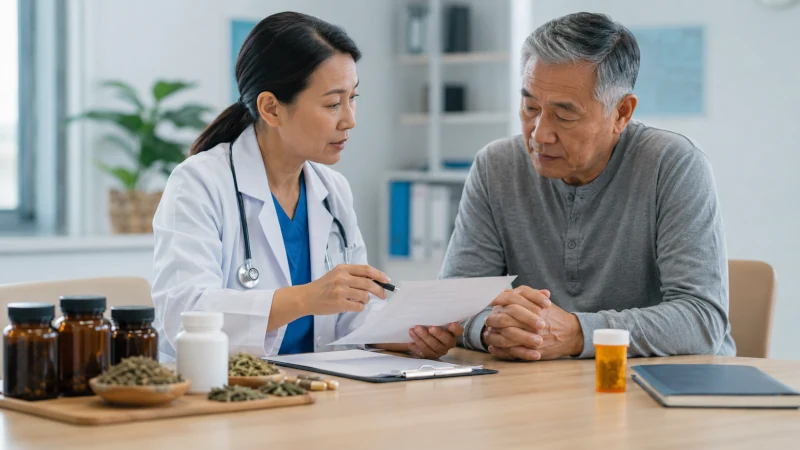
These come up on nearly every “natural remedies for stroke” list. Here is what the evidence actually shows, and the safety issues that matter. Treat this as reasons to talk with a doctor or pharmacist, not a shopping list — and if you have already had a stroke and take a blood thinner, several of these can raise your bleeding risk.
| Remedy | The claim | What the evidence shows | Safety notes |
| Ginkgo biloba | Improves brain blood flow; aids recovery | No conclusive evidence it helps any condition, and it does not reduce stroke or heart-attack risk; a possible role in rehab is unproven [NCCIH] | Can increase bleeding risk, especially with aspirin, warfarin, or other anticoagulants — a real concern after a stroke |
| Omega-3 / flaxseed (ALA) | Prevents clots and strokes | The 2024 guideline states long-chain omega-3 supplements are not effective for stroke risk reduction in people without existing cardiovascular disease [AHA/ASA, 2024] | Eating fish and plants as food is fine; high-dose supplements can thin the blood |
| Bromelain (pineapple enzyme) | Dissolves a brain clot; “15,000 mg” to prevent a second stroke | No clinical evidence it treats or prevents stroke; the high-dose “clot-dissolving” advice is unsupported and unsafe [Natural Medicines, via RxList] | Slows blood clotting and interacts with anticoagulant/antiplatelet drugs; avoid in pregnancy and before surgery |
| Cayenne / capsaicin | Stops or reverses a stroke | No human evidence it treats stroke | Given by mouth to someone who can’t swallow, it is a choking/aspiration hazard |
| Lobelia | Antispasmodic “tonic” for stroke | No evidence for stroke; rated likely unsafe by mouth [Natural Medicines, via Drugs.com] | Toxic doses cause convulsions, heartbeat changes, slowed breathing; avoid in pregnancy |
| Copper / CoQ10 | Prevents aneurysms; strengthens arteries | No reliable human evidence that supplementing prevents aneurysms or strokes | Skip self-dosing; get nutrients from a balanced diet unless a clinician advises otherwise |
Realistic expectations: no supplement in this table is a substitute for emergency care or for the prevention basics above. Because U.S. supplements aren’t reviewed for safety or effectiveness before sale, what’s on the label may not match what’s in the bottle. If you are pregnant or breastfeeding, treat herbal remedies as off-limits until a clinician clears them.
Recovering after a stroke
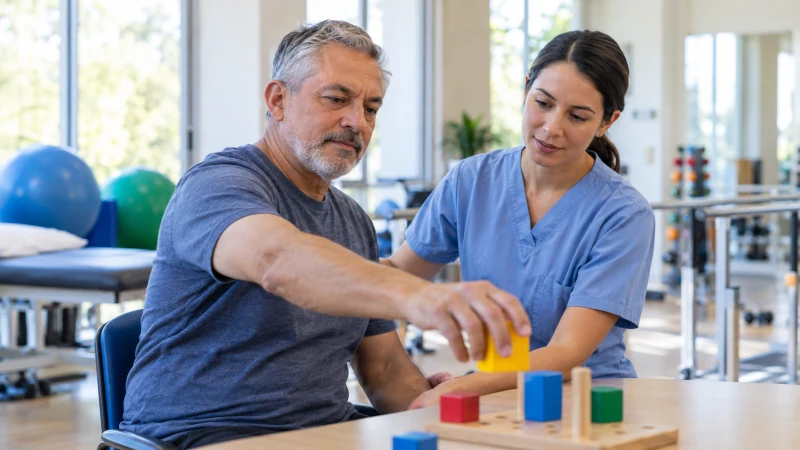
Recovery is real, and it runs through rehabilitation — physical, occupational, and speech therapy, often begun within 24 to 48 hours in the hospital and continued for months. People who take part in a focused rehab program do better than those who don’t, and gains can continue 12 to 18 months out [Mayo Clinic, 2026]. Alternative approaches such as herbal therapy and acupuncture are still being evaluated, not established [Mayo Clinic, 2026]. Because nearly 1 in 4 strokes happens in someone who has had one before [AHA, 2026], the prevention steps above — plus any medication your team prescribes — are the priority after a first stroke.
Red flags: when to get help now
Call 911 immediately for any sudden:
- numbness or weakness of the face, arm, or leg — especially on one side
- confusion, trouble speaking, or trouble understanding speech
- trouble seeing in one or both eyes
- trouble walking, dizziness, or loss of balance
- severe headache with no known cause
Call even if the symptoms fade — a TIA is still an emergency [American Stroke Association]. For a stroke, self-care is never enough: the right response is the emergency room, not the kitchen.
| HEALTH DISCLAIMER: This article is for general education and is not medical advice, diagnosis, or treatment. A stroke is a life-threatening emergency; if you suspect one, call 911 right away. Do not use home remedies, herbs, or supplements to treat a stroke, and do not give a person you suspect is having a stroke anything to eat, drink, or swallow. Talk to your doctor — or a pharmacist for supplement and interaction questions — before starting any supplement or herbal remedy, especially if you are pregnant or breastfeeding, have kidney disease, or take prescription medication such as a blood thinner. Never stop or change a prescribed medication on your own. |
Frequently Asked Questions
Can any natural remedy stop a stroke once it starts?
No. There is no food, herb, tincture, or bath that treats a stroke in progress. The only effective care is at a hospital, and it is time-sensitive — call 911 immediately [AHA/ASA, 2026].
Is it true that cayenne pepper can stop a stroke?
No. There is no human evidence for it, and giving cayenne in water to someone who may not be able to swallow risks choking and aspiration [American Stroke Association].
Does ginkgo prevent a second stroke?
It isn’t established. Ginkgo does not reduce stroke risk, and it can increase bleeding — a particular concern if you take aspirin or an anticoagulant after a stroke [NCCIH].
What’s the single best natural way to lower stroke risk?
Get your blood pressure into a healthy range. It’s the leading modifiable cause of stroke, and most of what lowers it — less sodium, more potassium from food, activity, weight loss — is lifestyle [AHA/ASA, 2024]. See our blood-pressure guide.
Is a mini-stroke (TIA) an emergency?
Yes. A TIA clears on its own but is a warning that a major stroke may follow soon. Call 911 even if the symptoms have already passed [American Stroke Association].
References
- American Stroke Association. Stroke Symptoms (B.E. F.A.S.T.). View source
- American Heart Association. Knowing stroke signs can save a life when every minute counts. 2026. View source
- American Stroke Association. Aspirin and Stroke. View source
- American Stroke Association. Types of Stroke and Treatment. View source
- National Heart, Lung, and Blood Institute (NIH). Stroke — Causes and Risk Factors. View source
- Bushnell C, et al. 2024 Guideline for the Primary Prevention of Stroke. Stroke (AHA/ASA), 2024. View source
- Future of Stroke Prevention: 7 Updates in the 2024 AHA/ASA Primary Prevention of Stroke Guideline. 2025 (PMC12277621). View source
- National Center for Complementary and Integrative Health (NIH). Ginkgo: Usefulness and Safety. View source
- Guidelines in Action: Extending the Treatment Window for Thrombolysis in Acute Ischemic Stroke. Stroke (AHA/ASA), 2026. View source
- Natural Medicines / Drugs.com. Lobelia: Uses, Side Effects, and Toxicity. View source
- Natural Medicines / RxList. Bromelain: Uses, Side Effects, and Interactions. View source
- Mayo Clinic. Stroke rehabilitation: What to expect as you recover. 2026. View source


