
If you want something natural that will quiet the ringing in your ears, here is the honest answer first: no herb, vitamin, or home remedy has been shown to reliably reduce tinnitus, and none has been shown to cure it. The National Institute on Deafness and Other Communication Disorders puts it plainly — vitamins, herbal extracts, and dietary supplements are widely advertised for ringing ears, and none of them has been proven effective (NIDCD tinnitus fact sheet, 2023).

That is the discouraging half, and most pages selling a natural tinnitus remedy will not tell you. The encouraging half is that it leaves you with more than you might think. Some causes of tinnitus can be corrected outright. Several drug-free approaches have genuine evidence behind them for the thing that matters most — how much the sound intrudes on your life. And a few popular remedies are worth skipping specifically because they carry risk without benefit.
What tinnitus actually is
Tinnitus is sound you perceive without an external source. Most people describe ringing, but it can also be buzzing, hissing, roaring, whistling, humming, clicking, or squealing, in one ear, both ears, or the head itself. It may be constant or come and go. In some people, moving the head, neck, or eyes changes the sound — that variant is called somatosensory tinnitus (NIDCD, 2023).
Surveys estimate that 10% to 25% of adults have it, and children get it too. Once it lasts three months or longer, it is considered chronic. Most people who have tinnitus have some degree of hearing loss, even when they have not noticed any. It is only rarely tied to a serious medical problem (NIDCD, 2023).
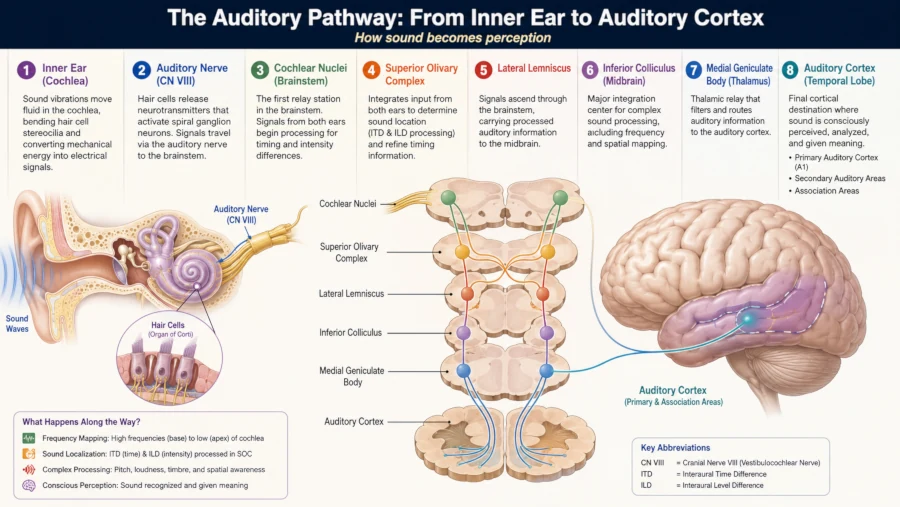
One detail explains a lot about why remedies aimed at the ear tend to disappoint. The leading theory is that damage in the inner ear changes the signal traveling to the parts of the brain that process sound, so although tinnitus seems to be happening in your ear, the phantom sound is generated by your brain (NIDCD, 2023). A capsule cannot reach that.
Start by finding out what is driving it
This is the highest-value step available to you, and it costs nothing but an appointment. When tinnitus has an underlying physical cause — impacted earwax, a jaw joint problem — addressing that cause can eliminate or greatly reduce the symptom (NIDCD, 2023). No supplement in the world competes with fixing the actual problem.
| Contributor | What it looks like | What can be done |
| Noise exposure | Started after a concert, a shift on a loud job, gunfire, or years of machinery. Tinnitus is the most common service-related disability among veterans. | Cannot be undone, but further damage is preventable. Hearing protection matters from here on. |
| Hearing loss | Often subtle. You follow conversation less well in restaurants. | Hearing evaluation; hearing aids are one of the main options when loss is present. |
| Medications | Began or worsened after starting something new. NSAIDs including aspirin, ibuprofen and naproxen, some antibiotics, anti-cancer drugs, antimalarials and antidepressants are on the list. | Ask the prescriber about alternatives. Do not stop a prescription on your own. |
| Earwax or ear infection | Blocked, full, or muffled feeling in the ear. | Straightforward to treat. Have it looked at rather than digging at it yourself. |
| Head or neck injury | Followed a blow, whiplash, or concussion. Usually one ear. | Needs medical evaluation. |
| Jaw joint problems | You clench or grind; jaw clicks or aches. | Dental or medical evaluation; treating the joint can help the ear. |
| Blood vessel problems | High blood pressure, atherosclerosis, or vessel malformations near the ear. Often the pulsing kind. | Needs evaluation, sometimes imaging. |
| Other chronic conditions | Diabetes, migraine, thyroid disorders, anemia, lupus, multiple sclerosis, Meniere’s disease. | Managing the underlying condition is the lever. |
Contributors and their management as listed by the NIDCD tinnitus fact sheet, 2023.
Some people develop tinnitus for no identifiable reason at all. That is frustrating, and it is also common enough that it is not a sign you were failed by your doctor.
What the evidence says about popular natural tinnitus remedies
Every remedy below has been studied. The table summarizes where each one currently stands, and the sections that follow explain the two most commonly recommended in more detail.
| Remedy | Evidence | What reviews and guidelines found |
| Ginkgo biloba | No benefit | A 2022 Cochrane review found ginkgo may have little to no effect on tinnitus severity versus placebo at three to six months, and rated the evidence very uncertain. |
| Zinc | No benefit | A 2016 Cochrane review found no evidence that oral zinc improves symptoms in adults with tinnitus. Certainty was very low. |
| Melatonin | Not recommended | U.S. otolaryngology guidelines advise clinicians not to recommend melatonin for persistent, bothersome tinnitus. |
| Magnesium, B vitamins, manganese, multi-ingredient ‘ear’ formulas | Insufficient evidence | No reliable trial evidence of benefit. The guideline recommendation against supplements explicitly covers other dietary supplements. |
| Cutting out caffeine | No benefit; possible harm | A 30-day double-blind crossover trial found no effect on tinnitus severity, and withdrawal symptoms were significant. |
| Acupuncture | Genuinely unclear | The U.S. guideline panel concluded that no recommendation could be made either way. |
| Sound enrichment | Uncertain, but low risk | A 2018 Cochrane review found insufficient evidence to support or refute sound therapy as a primary treatment. No adverse effects were reported in the included trials. |
| Cognitive behavioral therapy | Best-supported option here | A 2020 Cochrane review found low- to moderate-certainty evidence that CBT reduces the negative impact of tinnitus on quality of life. |
| Hearing aids, where hearing loss is documented | Recommended | U.S. guidelines recommend a hearing aid evaluation for people with persistent, bothersome tinnitus and documented hearing loss. |
Sources: Sereda et al., Cochrane, 2022; Person et al., Cochrane, 2016; Fuller et al., Cochrane, 2020; Sereda et al., Cochrane, 2018; St Claire et al., 2010; AAO-HNSF Clinical Practice Guideline: Tinnitus, 2014.
Ginkgo biloba
Ginkgo is the herb most people mean when they ask about a natural remedy for ringing ears, and it has been tested more thoroughly than almost any other supplement. The largest single trial recruited 1,121 people aged 18 to 70 with stable tinnitus and gave them either 50 mg of standardized ginkgo extract three times a day or a matching placebo for 12 weeks. Afterward, 34 of 360 people on ginkgo said their tinnitus was less troublesome — against 35 of 360 on placebo (Drew & Davies, BMJ, 2001).
The 2022 Cochrane review pooled the trials that measured severity the same way and concluded ginkgo may have little to no effect compared with placebo, with very uncertain evidence (Sereda et al., Cochrane, 2022). The National Center for Complementary and Integrative Health reaches the same conclusion: research suggests ginkgo is not helpful for relieving tinnitus symptoms (NCCIH, 2025). U.S. otolaryngology guidelines go one step further and advise clinicians not to recommend it for this purpose (AAO-HNSF, 2014).
If you want the full picture on what ginkgo does and does not do, along with its dosing and interaction profile, see our detailed guide to ginkgo biloba benefits and safety.
Zinc
Zinc has a plausible mechanism working in its favor — it has a role in cochlear physiology and in the synapses of the auditory system — which is why it kept getting tested. The results did not follow. In the trial with the clearest reporting, after eight weeks 8.7% of people taking zinc reported improvement against 8% taking placebo. Cochrane’s overall conclusion was that there is no evidence oral zinc supplementation improves symptoms in adults with tinnitus, and that the quality of the underlying evidence is very low (Person et al., Cochrane, 2016).
There is one narrow exception, and it is not really about tinnitus. If blood work shows you are genuinely low in zinc, correcting that deficiency is worth doing on its own merits, ideally through food sources of zinc before high-dose capsules. The same logic applies to magnesium-rich foods if you have reason to think your intake is low. Correcting a documented deficiency is sound nutrition. It is not a tinnitus treatment, and it should not be sold to you as one.
Caffeine, alcohol, salt, and food triggers
Giving up coffee is one of the most commonly repeated pieces of tinnitus advice, and it has been tested directly. Sixty-six people who normally drank at least 150 mg of caffeine a day went through a 30-day double-blind crossover trial of phased caffeine withdrawal. Caffeine had no effect on tinnitus severity — the mean difference between caffeinated and decaffeinated days was −0.04, with a confidence interval spanning zero. Withdrawal symptoms, meanwhile, were significant enough that the authors warned abstinence could add to the burden rather than relieve it (St Claire et al., International Journal of Audiology, 2010).
Blanket elimination diets for tinnitus — no salt, no sugar, no dairy, no wheat — are not supported by evidence, and they cost you variety and enjoyment at a moment when you probably need both. Individual triggers are a different matter. Some people do consistently notice their tinnitus is louder after alcohol, or after a short night’s sleep. If you suspect a pattern, keep a two-week log of what you consumed, how you slept, and how intrusive the sound was. That gives you something specific to act on instead of a long list of foods to fear.
What actually helps
None of the following silences tinnitus. All of them are aimed at the outcome that changes daily life: making the sound something you notice less and mind less.
1. Get your hearing tested
U.S. guidelines call for a prompt, comprehensive audiologic examination when tinnitus is in one ear only, has persisted for six months or more, or comes with any hearing difficulty (AAO-HNSF, 2014). This is not a formality. Hearing loss is the most common thing sitting underneath tinnitus, it is frequently mild enough to go unnoticed, and identifying it opens the door to the option below.
2. Hearing aids, if you have hearing loss
Where hearing loss is documented, the guideline recommends a hearing aid evaluation for people with persistent, bothersome tinnitus (AAO-HNSF, 2014). Hearing aids amplify the world around you, which both reconnects you to conversation and tends to make the internal sound less prominent by comparison (NIDCD, 2023). Over-the-counter hearing aids have made this considerably cheaper to try than it was a few years ago.
3. Sound, so silence is not the loudest thing in the room
Tinnitus is at its worst in a quiet bedroom, because there is nothing else for your attention to land on. Adding low-level background sound — a fan, a radio, a bedside sound generator, a smartphone app playing rain or waves — is a standard part of tinnitus management and the simplest thing on this list to try tonight (NIDCD, 2023).
The honest caveat: a 2018 Cochrane review of eight trials in 590 people found insufficient evidence to support or refute sound therapy as a primary treatment, and no evidence that any one device outperforms another. It also found no reported adverse effects (Sereda et al., Cochrane, 2018). So this is a low-risk, low-cost thing that many people find helps them sleep, held to a lower evidentiary standard than a drug would be. Try the free version — a fan, an app — before anyone sells you a device.
4. Cognitive behavioral therapy, which has the strongest evidence of anything here
CBT does not change the sound. It changes the loop that forms around the sound: the monitoring, the alarm, the sleeplessness, the dread of quiet rooms. A 2020 Cochrane review found low- to moderate-certainty evidence that CBT reduces the negative impact tinnitus has on quality of life by the end of treatment, with few or no adverse effects (Fuller et al., Cochrane, 2020). It is also one of the few things U.S. guidelines actively recommend for persistent, bothersome tinnitus (AAO-HNSF, 2014). Tinnitus retraining therapy, which pairs structured counseling with continuous low-level sound, works on a related principle (NIDCD, 2023).
Ask your primary care doctor or audiologist for a referral. Internet-delivered CBT programs for tinnitus exist and were included in the trial evidence, which matters if there is no tinnitus-experienced therapist near you.
5. Sleep and mood, treated as their own problems
Tinnitus can affect mood, sleep, and concentration, and in severe cases it contributes to anxiety and depression (NIDCD, 2023). Exhaustion and low mood also make anything intrusive harder to tolerate. Treating them is not a workaround for the real issue. For many people it is the real issue, or at least the half of it that responds to treatment.
6. Protect the hearing you still have
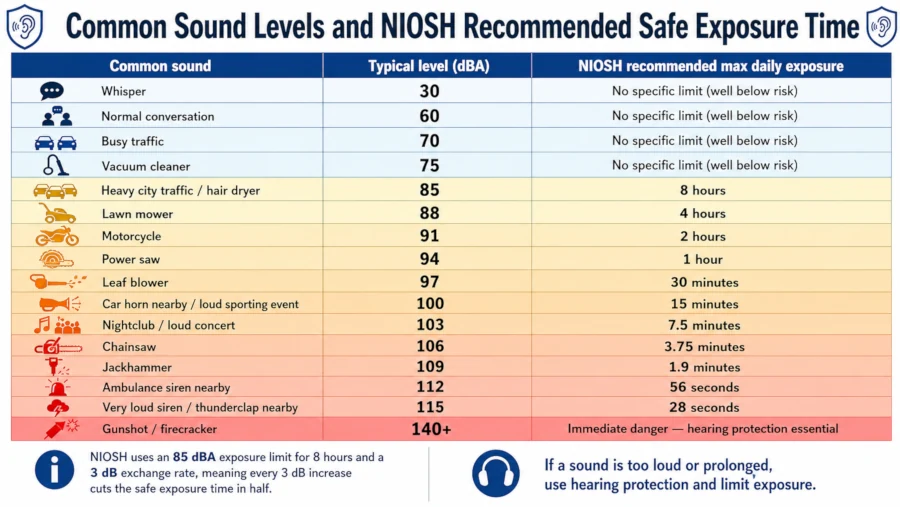
Noise-induced hearing loss is permanent once it happens and almost entirely preventable before it does. NIOSH sets its recommended exposure limit at 85 A-weighted decibels averaged over an eight-hour day, and for every 3 dBA increase in loudness, the safe exposure time is cut in half (CDC/NIOSH, 2024). In practice: carry foam earplugs, use them at concerts, on the mower, with power tools and at the range, and treat your headphone volume as a budget you spend rather than a dial you turn up.
“Natural Tinnitus Remedy ” is not the same as “harmless”
Dietary supplements are not reviewed by the FDA for safety or effectiveness before they reach the shelf (NCCIH, 2025). If you decide to try something anyway, know what you are taking on.
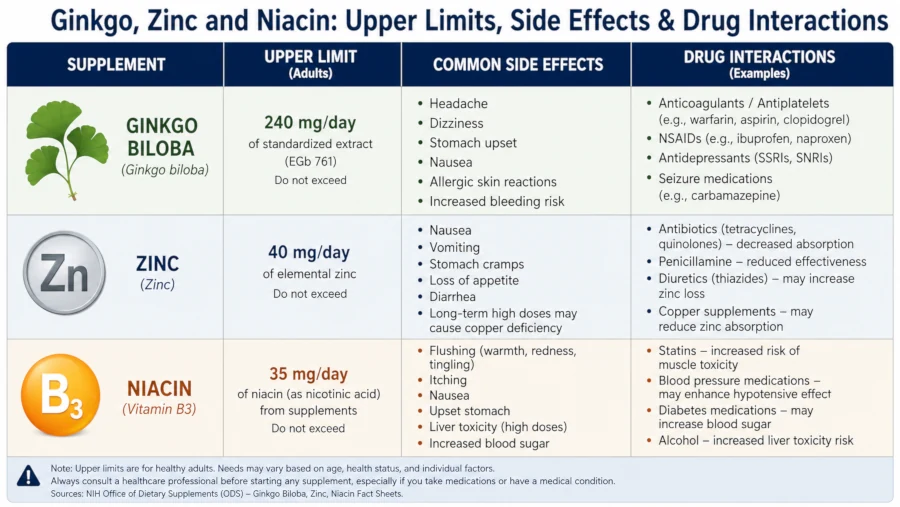
Ginkgo
- Most common side effects: dizziness, gastrointestinal symptoms, and headache (NCCIH, 2025).
- Ginkgo may increase bleeding risk in people taking anticoagulants such as warfarin, and may interact with other medicines. If you take any prescription, talk to your clinician or pharmacist first (NCCIH, 2025).
- Pregnancy and breastfeeding: ginkgo may be unsafe in pregnancy and might cause early labor or extra bleeding during delivery. Little is known about use while breastfeeding (NCCIH, 2025).
- Fresh ginkgo seeds are toxic when eaten, and serious effects have occurred with roasted seeds and the crude plant. Seeds are not the same product as standardized leaf extract (NCCIH, 2025).
- If you have surgery or a dental procedure coming up, tell the surgeon or dentist what you are taking.
Zinc
- The tolerable upper intake level for adults is 40 mg a day from all sources combined (NIH Office of Dietary Supplements, zinc). Popular tinnitus regimens circulating online suggest 15 mg twice daily, which puts you close to that ceiling before food is counted.
- Doses of 50 mg or more over a period of weeks can inhibit copper absorption, reduce immune function, and lower HDL cholesterol. Excessive amounts cause nausea, dizziness, headaches, stomach upset, vomiting, and appetite loss (NIH ODS, zinc).
- Zinc can interact with quinolone and tetracycline antibiotics and with penicillamine (NIH ODS, zinc).
High-dose B vitamins
Escalating niacin protocols circulate widely for tinnitus, sometimes reaching several hundred milligrams twice a day. They have no supporting evidence and a real downside. The tolerable upper intake level for niacin in adults is 35 mg a day; 30 to 50 mg of nicotinic acid typically causes flushing, and gram-level doses are drug therapy that belongs under medical supervision (NIH Office of Dietary Supplements, niacin). Doses above 500 mg a day produce transient liver enzyme elevations in up to 20% of people, and high doses have been linked to clinically apparent acute liver injury that can be severe or fatal (LiverTox, NIH). That is a poor trade for an unproven benefit.
Who should be especially cautious
- Anyone taking anticoagulants, antiplatelet drugs, or regular NSAIDs.
- Anyone with a bleeding disorder or a surgery scheduled.
- People who are pregnant or breastfeeding.
- Children, unless a pediatrician has advised it.
- Anyone on several prescriptions — take the full list to a pharmacist before adding anything.
When to see a doctor, and when to go now
Tinnitus is usually not dangerous. A few presentations are exceptions, and two of them are time-sensitive enough that the delay itself causes harm.
Seek care urgently
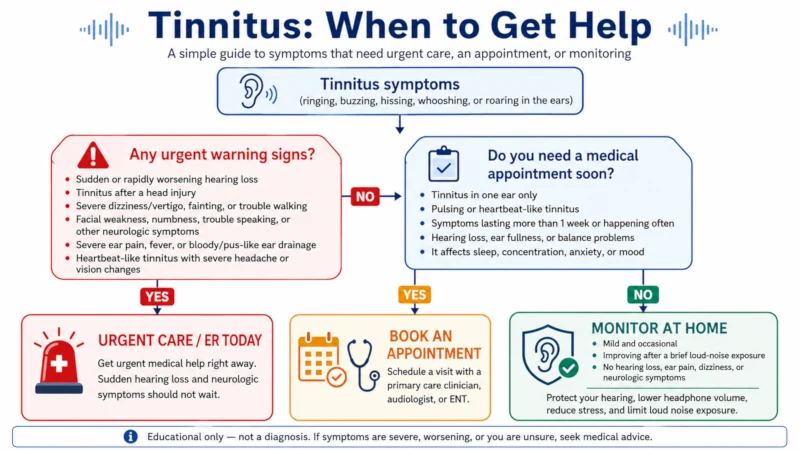
- Sudden hearing loss, particularly in one ear. This is treated as an urgent problem: guidelines call for audiometry as soon as possible and within 14 days of symptom onset, and steroids may be offered as initial therapy within the first two weeks (AAO-HNSF Sudden Hearing Loss guideline, 2019). Waiting to see whether it settles can cost you hearing you would otherwise have recovered.
- A sound that pulses in time with your heartbeat. Pulsatile tinnitus needs evaluation and may call for imaging (NIDCD, 2023).
- New tinnitus after a head injury, or alongside severe dizziness or vertigo you cannot stand up through.
- Ear pain, drainage, or fever with the tinnitus.
- Call 911 for face drooping, arm weakness, slurred speech, sudden severe headache, or sudden vision loss. Those are stroke warning signs and are a separate emergency.
Make an appointment
- Tinnitus in one ear only, tinnitus lasting six months or more, or tinnitus with any hearing difficulty — all three warrant a prompt, comprehensive hearing evaluation (AAO-HNSF, 2014).
- Tinnitus that started after a new medication. Call the prescriber rather than stopping the drug yourself.
- Tinnitus that is affecting your sleep, mood, or ability to concentrate. That is a treatable problem, and it is the one CBT is for.
- A blocked or full-feeling ear, which may simply be wax.
What to realistically expect
There is currently no cure for tinnitus, but there are ways to reduce symptoms, and for many people it improves or goes away over time — though in some it worsens (NIDCD, 2023). Habituation is real and common: the sound does not necessarily get quieter, but your brain stops flagging it as important, the way it stopped flagging the hum of your refrigerator.
A reasonable goal is not silence. It is that the sound stops being the thing your day is organized around. That goal is achievable for most people, usually through some combination of treating what is underneath it, hearing care, background sound, and help with the distress. Anything marketed to you as a tinnitus cure is overselling what exists.
| Health Disclaimer: This article is for general education and is not medical advice, diagnosis, or treatment. Tinnitus has many possible causes, and some of them need a clinician to identify. Do not use supplements or home remedies to self-treat ringing in the ears in place of a proper evaluation. Dietary supplements are not reviewed by the FDA before they are sold, and product quality varies. If you take prescription medication, have a bleeding disorder, are pregnant or breastfeeding, or have surgery planned, talk to your doctor or pharmacist before starting any supplement. Do not stop a prescribed medication on your own, even if you think it is causing your tinnitus — call the prescriber instead. Seek care urgently for sudden hearing loss, tinnitus that pulses with your heartbeat, tinnitus after a head injury, or tinnitus with severe dizziness. Call 911 for face drooping, arm weakness, slurred speech, sudden severe headache, or sudden vision loss. |
Frequently Asked Questions
What is the best natural remedy for tinnitus?
There is no natural remedy with good evidence of reducing tinnitus itself. The best-supported drug-free approaches are cognitive behavioral therapy, hearing aids where hearing loss is present, and background sound, alongside treating any underlying cause such as earwax, a jaw problem, or a medication side effect (AAO-HNSF, 2014; NIDCD, 2023).
Does ginkgo biloba work for tinnitus?
The evidence says no. A trial of more than 1,100 people found ginkgo no better than placebo over 12 weeks, the 2022 Cochrane review found little to no effect, and NCCIH states that research suggests ginkgo is not helpful for tinnitus symptoms (Drew & Davies, BMJ, 2001; Sereda et al., Cochrane, 2022; NCCIH, 2025).
Can a vitamin or mineral deficiency cause ringing in the ears?
Deficiencies can affect nerve and inner-ear function, which is why zinc in particular was studied repeatedly. Supplementing has not translated into symptom relief in trials (Person et al., Cochrane, 2016). If you have reason to suspect a deficiency, ask for blood work rather than guessing with capsules — and correct it because the deficiency matters, not because it will quiet the ringing.
Will cutting out caffeine, salt, or alcohol stop my tinnitus?
Caffeine has been tested directly and abstaining did not reduce tinnitus severity; withdrawal made some people feel worse (St Claire et al., 2010). Broad elimination diets are not evidence-based. Personal triggers are worth tracking individually, and a two-week log will tell you more than a generic avoid list.
Can tinnitus go away on its own?
Sometimes. For both children and adults it may improve or even go away over time, though in some cases it worsens. Once it lasts three months or longer it is considered chronic, which does not mean permanent but does mean it is worth getting evaluated rather than waiting it out (NIDCD, 2023).
Are tinnitus supplements sold online worth trying?
Multi-ingredient tinnitus formulas typically combine ginkgo, zinc, magnesium and B vitamins — the same ingredients U.S. guidelines advise clinicians not to recommend for this purpose (AAO-HNSF, 2014). NIDCD notes that although vitamins, herbal extracts, and supplements are commonly advertised as cures, none has been proven effective (NIDCD, 2023). The money is better spent on a hearing evaluation.
References
- National Institute on Deafness and Other Communication Disorders (NIDCD). Tinnitus. NIDCD Fact Sheet, Publication No. 10-4896, February 2023. → View source (NIDCD)
- Tunkel DE, Bauer CA, Sun GH, et al. Clinical Practice Guideline: Tinnitus. Otolaryngology–Head and Neck Surgery. 2014;151(2 Suppl):S1-S40. → View source (PubMed)
- Sereda M, Xia J, Scutt P, Hilton MP, El Refaie A, Hoare DJ. Ginkgo biloba for tinnitus. Cochrane Database of Systematic Reviews. 2022;11(11):CD013514. → View source (PubMed)
- Drew S, Davies E. Effectiveness of Ginkgo biloba in treating tinnitus: double blind, placebo controlled trial. BMJ. 2001;322(7278):73. → View source (BMJ)
- National Center for Complementary and Integrative Health (NCCIH). Ginkgo: Usefulness and Safety. Last updated February 2025. → View source (NCCIH)
- Person OC, Puga MES, da Silva EMK, Torloni MR. Zinc supplementation for tinnitus. Cochrane Database of Systematic Reviews. 2016;11(11):CD009832. → View source (PubMed)
- Fuller T, Cima R, Langguth B, Mazurek B, Vlaeyen JWS, Hoare DJ. Cognitive behavioural therapy for tinnitus. Cochrane Database of Systematic Reviews. 2020;1(1):CD012614. → View source (PubMed)
- Sereda M, Xia J, El Refaie A, Hall DA, Hoare DJ. Sound therapy (using amplification devices and/or sound generators) for tinnitus. Cochrane Database of Systematic Reviews. 2018;12(12):CD013094. → View source (PubMed)
- St Claire L, Stothart G, McKenna L, Rogers PJ. Caffeine abstinence: an ineffective and potentially distressing tinnitus therapy. International Journal of Audiology. 2010;49(1):24-29. → View source (PubMed)
- Chandrasekhar SS, Tsai Do BS, Schwartz SR, et al. Clinical Practice Guideline: Sudden Hearing Loss (Update). Otolaryngology–Head and Neck Surgery. 2019;161(1 Suppl):S1-S45. → View source (AAO-HNSF)
- Centers for Disease Control and Prevention / NIOSH. Noise-Induced Hearing Loss: recommended exposure limit and exchange rate. → View source (CDC/NIOSH)
- National Institutes of Health, Office of Dietary Supplements. Zinc: Fact Sheet for Health Professionals. → View source (NIH ODS)
- National Institutes of Health, Office of Dietary Supplements. Niacin: Fact Sheet for Health Professionals. → View source (NIH ODS)
- LiverTox: Clinical and Research Information on Drug-Induced Liver Injury. Niacin. National Institute of Diabetes and Digestive and Kidney Diseases, NCBI Bookshelf. → View source (LiverTox)
