Natural remedies for pregnancy anxiety — things like gentle exercise, mindfulness, better sleep, herbal teas and aromatherapy — are often the first options expectant parents look for, especially when they would rather limit medication. The honest picture is mixed. A handful of lifestyle and mind–body approaches have reasonable evidence for easing mild, everyday anxiety, while several popular “remedies” have little or no good evidence behind them, and a few raise real safety questions during pregnancy. This guide separates what the research supports from what it does not, and — just as importantly — explains when ordinary worry has tipped into something that deserves professional care.
Feeling anxious while pregnant is common: anxiety affects roughly one in five people during pregnancy and the year after birth. [Perinatal anxiety study, 2024] That does not mean it should be brushed off as something you simply have to endure. The most effective plan usually pairs sensible self-care with support from a professional — not one in place of the other.
Is it normal to feel anxious during pregnancy?
| The short version Best supported: regular movement, a talking therapy such as CBT, mindfulness and breathing skills, protected sleep, moderate caffeine, and good social support.Limited or mixed evidence: herbal teas, aromatherapy, prenatal massage, acupuncture and yoga — reasonable as comfort measures, with sensible safety checks.Little or no good evidence: homeopathy and flower “rescue” essences. They are unlikely to do harm in themselves, but should not replace real care. Get help promptly if anxiety is constant, you cannot eat or sleep, you have panic attacks, or you have frightening or intrusive thoughts. Urgent resources are listed near the end of this article. |
Yes. Pregnancy brings physical changes, hormonal shifts and a lot of understandable uncertainty about birth, health and becoming a parent. Some worry is expected and even useful. The picture changes when anxiety becomes persistent, feels difficult to control, or starts to interfere with sleep, eating, work or relationships. At that point it may be an anxiety disorder rather than everyday nerves, and it is worth talking to a professional. [ACOG, 2023]
Common signs include worry that is hard to switch off, restlessness or feeling on edge, irritability, difficulty concentrating, trouble sleeping, and physical symptoms such as a racing heart, muscle tension, headaches or nausea. Anxiety and low mood often travel together, so it is common to notice symptoms of both anxiety and depression at the same time.
Untreated, significant anxiety is not just unpleasant — it is linked with poorer outcomes for parent and baby, which is exactly why getting support matters. The encouraging news is that perinatal anxiety responds well to treatment, and many people recover fully. [ACOG, 2023]
Natural Remedies for Pregnancy Anxiety: A quick map of the evidence
Use this as an at-a-glance guide. “Strength of evidence” reflects how well each approach has been studied for anxiety, mood and stress around pregnancy — not a promise of results for any one person.
| Approach | Strength of evidence | What to keep in mind |
| Talking therapy (e.g. CBT) | Good | Recommended first-line for mild-to-moderate anxiety; effective and safe in pregnancy. |
| Regular movement / prenatal exercise | Moderate | Aim for ~150 min/week with your provider’s OK; also benefits mood and sleep. |
| Mindfulness, breathing, relaxation | Moderate but mixed | Helpful for many; effects vary by program and person. |
| Sleep, routine, social support | Moderate (indirect) | Foundations that make everything else work better. |
| Moderate caffeine limits | Supportive | Keep under ~200 mg/day; high caffeine can worsen jitteriness. |
| Herbal teas & aromatherapy | Limited | Some small studies; safety in pregnancy is not well established — check first. |
| Prenatal massage, acupuncture, yoga | Limited | Reasonable comfort measures with a trained, prenatal-experienced practitioner. |
| Homeopathy & flower essences | No good evidence | Not shown to work beyond placebo; should not replace care. |
Approaches with the best support
Move your body most days
Regular, moderate activity is one of the most reliable mood supports in pregnancy. National guidance suggests aiming for about 150 minutes of moderate-intensity activity a week — brisk walking, swimming, stationary cycling or prenatal classes — which you can split into short sessions. [ACOG, 2024] Reviews link prenatal exercise with fewer depressive symptoms, and many people find it eases tension and improves sleep. [ACOG, 2020] Get your provider’s OK first, especially if you have any pregnancy complications, and stop if you feel dizzy, short of breath or have pain or contractions.
Talking therapy and learned coping skills
Structured psychological therapy — particularly cognitive behavioural therapy (CBT) — is considered a first-line option for mild-to-moderate perinatal anxiety because it works and avoids medication exposure. It teaches practical ways to notice and reframe anxious thought patterns and to face worries gradually. Ask your provider about referrals; some areas offer perinatal-specific therapy and group programs. [ACOG, 2023]
Mindfulness, meditation and breathing
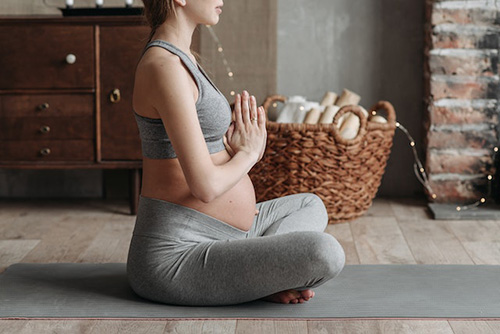
Mindfulness and relaxation programs can help calm a busy mind, though results are genuinely mixed across studies: a 2023 systematic review found moderate reductions in anxiety and stress, alongside high variability between programs. [Sari et al., 2023] In practice that means they are worth trying — but if one approach does not suit you, another might. A simple starting point is slow, paced breathing:
- Sit comfortably and breathe in gently through your nose for a count of four.
- Hold for a count of four.
- Breathe out slowly for a count of four, then pause for four. Repeat for a few minutes.
Protect your sleep and routine
Poor sleep and anxiety feed each other. A consistent wind-down routine, a cool dark room, limiting screens late at night, and using a pillow for comfortable positioning can all help. If anxiety is the thing keeping you awake, that is a useful signal to seek support rather than just chasing better sleep hygiene.
Keep caffeine moderate
Caffeine is a stimulant and can amplify a racing heart and jittery feelings. Guidance suggests keeping intake under about 200 mg a day during pregnancy — roughly one 12-ounce cup of coffee — counting tea, cola, chocolate and energy drinks too. [ACOG, 2024] If caffeine makes you feel more anxious, switching some drinks to decaf or herbal options can help.
Eat regularly and lean on support
Regular, balanced meals help steady energy and mood, and skipping meals can leave you shaky and irritable in a way that mimics anxiety. Evidence that any single nutrient (such as omega-3 fats) treats perinatal anxiety is limited, so think “regular, varied and adequate” rather than chasing a specific supplement. Just as important: talking to a trusted partner, friend or peer-support group reduces the sense of facing it alone.
Herbal teas, essential oils and aromatherapy
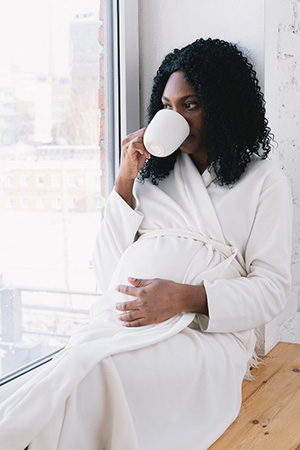
Aromatherapy and herbal teas are popular and can feel soothing, but the evidence is limited and “natural” does not automatically mean “safe in pregnancy.” For lavender, small studies hint at a calming effect, yet health authorities describe the overall evidence as preliminary and unclear, and note possible side effects such as headache or skin irritation. [NCCIH, 2023]
If you would like to try aromatherapy, sensible precautions include diffusing rather than swallowing oils, diluting well before any skin contact, doing a patch test, and avoiding oils often flagged for caution in pregnancy (for example basil, fennel, clary sage and rosemary). Always check with your midwife or doctor first.
With herbal teas such as chamomile or lemon balm, the same rule applies: most have not been well studied in pregnancy, quality and strength vary between products, and some are advised only in moderation or avoided in later pregnancy. Tell your provider about anything you are drinking regularly, and choose reputable brands.
Approaches with little or no good evidence
Some widely marketed “remedies” are unlikely to help beyond a placebo effect. Homeopathic products — including ones sold under names like Arsenicum (prepared from arsenic) and Argentum nitricum (from silver nitrate) — are diluted so heavily that little or none of the original substance remains. Major health bodies are clear that there is no good-quality evidence homeopathy works for any health condition, and it should not be used in place of effective care. [NHS, 2025] Older claims that specific homeopathic remedies “significantly reduced” pregnancy anxiety in trials are not supported by reliable, well-conducted research.
Flower-essence products marketed as “rescue” remedies fall into the same category: any benefit appears to come from the ritual and expectation rather than the product itself. If a calming ritual genuinely helps you feel better and is safe, there is no harm in it — just do not rely on it to treat anxiety that needs proper attention.
Complementary therapies: massage, acupuncture and yoga

These can be pleasant, relaxing additions to a self-care plan, with limited but generally reassuring evidence for easing stress.
- Prenatal yoga combines gentle movement, breathing and relaxation; small studies suggest it may lower stress and anxiety, and it overlaps with the broader benefits of exercise. Choose a class designed for pregnancy and avoid “hot” styles.
- Prenatal massage from a therapist trained in pregnancy may aid relaxation and ease aches; make sure the practitioner is qualified for prenatal work.
- Acupuncture has limited evidence specifically for pregnancy anxiety; if you try it, use a licensed practitioner experienced in prenatal care.
Safety first: who should be cautious and what to avoid
“Natural” and “gentle” are not the same as “risk-free.” Herbs, supplements and essential oils are not tightly regulated, can vary in strength and purity, and can interact with medicines or affect pregnancy. A few principles keep you on the safe side:
- Tell every provider — midwife, doctor, pharmacist — about all teas, oils and supplements you use, even “natural” ones.
- Do not start herbal supplements or essential oils in pregnancy or while breastfeeding without checking first.
- Never stop a prescribed medication, including anxiety or depression medication, without medical advice — stopping suddenly can be harmful.
- Take extra care if you have a history of anxiety or depression, other health conditions, allergies, or any pregnancy complications.
Red flags: when to get help now
Self-care is not enough on its own when anxiety becomes severe. Reach out to your provider promptly — or use an urgent resource below — if you notice any of the following:
| Seek help promptly if you experience: Anxiety or worry that is constant and stops you functioning, eating or sleeping.Panic attacks, or a sense of dread you cannot calm.Frightening, intrusive or unwanted thoughts that distress you.Thoughts of harming yourself, or feeling that your family would be better off without you.Feeling disconnected from reality, seeing or hearing things others do not, or holding unusual beliefs — this can signal a rare but serious emergency and needs same-day medical attention. If you are in the United States: Call or text 988 (988 Suicide & Crisis Lifeline) for free, confidential support, 24/7. [988 Lifeline, 2024]Call or text 1-833-852-6262 (National Maternal Mental Health Hotline) for specialised perinatal support, 24/7. [CDC, 2024]Call 1-800-944-4773 (Postpartum Support International HelpLine) for resources and peer support. [PSI, 2025] If you or someone else is in immediate danger, call 911 (or your local emergency number). |
Realistic expectations
Used well, the supported approaches above can take the edge off mild anxiety and help you feel steadier day to day. What they are not is a cure, or a replacement for assessment and treatment when anxiety is moderate or severe. Give lifestyle changes a few weeks, notice what actually helps you, and combine them with professional support rather than relying on any single “remedy.” Asking for help is a sign of taking your health — and your baby’s — seriously, not a failure.
| Health Disclaimer: This article is for general education only and is not a substitute for professional medical advice, diagnosis or treatment. It does not claim to diagnose, treat, cure or prevent any condition. Always speak with a qualified healthcare provider — your midwife, doctor, pharmacist or mental health professional — before starting, stopping or changing any treatment, supplement, herb or natural remedy, especially during pregnancy or breastfeeding. Never disregard or delay seeking professional advice because of something you have read here. If you think you may have a medical or mental health emergency, call your local emergency number immediately. |
Frequently Asked Questions
Are herbal teas safe for anxiety during pregnancy?
Some herbal teas are widely used and may feel calming, but most have not been well studied in pregnancy, and strength and purity vary between products. A few are advised only in moderation or avoided later in pregnancy. Check with your midwife or doctor before drinking any herbal tea regularly, and choose reputable brands.
Can I use essential oils like lavender while pregnant?
Possibly, with care. Evidence that aromatherapy reduces anxiety is limited and unclear. [NCCIH, 2023] If you try it, prefer diffusing over ingesting, dilute before any skin contact, patch-test first, avoid oils flagged for caution in pregnancy, and confirm with your provider.
Do homeopathic remedies like Arsenicum work for pregnancy anxiety?
There is no good-quality evidence that homeopathy works for anxiety or any other condition. [NHS, 2025] These products are extremely diluted and any benefit appears to be a placebo effect. They should not be used in place of approaches that are known to help.
Will anxiety harm my baby?
Occasional worry is normal and not something to fear. Persistent, severe and untreated anxiety has been linked with poorer outcomes, which is why getting support matters — and treatment reduces that risk. [ACOG, 2023] Reaching out early is one of the most protective things you can do.
When should I consider therapy or medication?
Consider professional help whenever anxiety is persistent, distressing or interfering with daily life. Talking therapy such as CBT is often recommended first, and medication is sometimes appropriate during pregnancy under medical guidance; your provider can help you weigh the options for your situation. [ACOG, 2023]
What is the single most effective natural approach?
There is no magic remedy. The most reliable combination is regular movement, a structured talking therapy or coping-skills program, good sleep, and real social support — with professional care if symptoms are more than mild.
References
- American College of Obstetricians and Gynecologists (ACOG). Screening and Diagnosis of Mental Health Conditions During Pregnancy and Postpartum. Clinical Practice Guideline, 2023. → View source
- American College of Obstetricians and Gynecologists (ACOG). Treatment and Management of Mental Health Conditions During Pregnancy and Postpartum. Clinical Practice Guideline, 2023. → View source
- Prevalence and treatment of perinatal anxiety: diagnostic interview study. (NIH PubMed Central), 2024. → View source
- American College of Obstetricians and Gynecologists (ACOG). Exercise During Pregnancy (patient FAQ). → View source
- American College of Obstetricians and Gynecologists (ACOG). Physical Activity and Exercise During Pregnancy and the Postpartum Period. Committee Opinion, 2020. → View source
- Sari YP, et al. The Effects of a Mindfulness-Based Intervention on Mental Health Outcomes in Pregnant Women: A Systematic Review and Meta-Analysis. J Nurs Res, 2023. → View source
- American College of Obstetricians and Gynecologists (ACOG). How much coffee can I drink while I’m pregnant? (Ask ACOG). → View source
- U.S. National Center for Complementary and Integrative Health (NCCIH). Lavender, 2023. → View source
- National Health Service (NHS, UK). Homeopathy, 2025. → View source
- 988 Suicide & Crisis Lifeline. Maternal Mental Health, 2024. → View source
- Postpartum Support International (PSI). Get Help / HelpLine, 2025. → View source
- U.S. Centers for Disease Control and Prevention (CDC). Depression resources / National Maternal Mental Health Hotline, 2024. → View source
