
Natural remedies for night sweats are a common first step for people whose sleep is being disrupted by excessive overnight sweating. Night sweats are not a diagnosis in themselves — they are a symptom that can have many causes, ranging from the hormonal shifts of menopause to infections, medications, or more serious conditions. Before reaching for any supplement or herbal remedy, it helps to understand what may be driving the problem and when medical attention is actually needed.
This article covers the most-studied natural approaches, gives an honest picture of the evidence behind each one, and outlines the lifestyle changes most likely to help regardless of the underlying cause.
What Are Night Sweats?
Night sweats — sometimes called sleep hyperhidrosis — are episodes of heavy sweating during sleep that are unrelated to an overheated bedroom. The key distinction from ordinary warmth-driven sweating is that they can be severe enough to soak clothing or bedding, and they often happen even in a cool room.
Occasional mild sweating at night is common and rarely concerning. It is the persistent, drenching variety — especially when accompanied by other symptoms — that warrants a closer look.

Common Causes of Night Sweats
Understanding what is causing night sweats matters because the right approach depends entirely on the underlying reason. Several major categories account for most cases:
Hormonal Changes: The Most Common Cause
In women, the most frequent driver is the transition through perimenopause and menopause, during which fluctuating estrogen levels disrupt the body’s temperature-regulating mechanism. The hypothalamus — the brain region that acts as a thermostat — becomes hypersensitive to small changes in body temperature, triggering flushing and sweating. Estimates suggest that up to 75% of women going through menopause experience these vasomotor symptoms, which include both hot flashes and night sweats. [NCCIH, 2024]
Men can also experience night sweats related to low testosterone, particularly in middle age and beyond. This is less often discussed but should not be overlooked. Read more: Powerful Herbs for Women
Medications
A number of commonly prescribed drugs list night sweats as a side effect. These include certain antidepressants (particularly SSRIs and SNRIs such as paroxetine and venlafaxine), hormone therapies for breast cancer or prostate cancer, corticosteroids such as prednisone, and some blood pressure medications. If night sweats began around the time a new prescription was started, this connection is worth discussing with a prescribing clinician.
Infections and Medical Conditions
Night sweats are a well-known feature of several infections, including tuberculosis and endocarditis. HIV infection and certain blood cancers such as lymphoma can also present with significant nocturnal sweating. Hyperthyroidism, an overactive thyroid, causes increased metabolic activity that often manifests as excessive sweating alongside weight loss, rapid heart rate, and tremors. These are not reasons to panic, but they are reasons to see a doctor rather than self-treating.
Anxiety, Stress, and Sleep Disorders
The stress response activates the sympathetic nervous system, raising body temperature and triggering perspiration. Chronic anxiety, post-traumatic stress disorder, and certain sleep disorders can all cause night sweats or worsen hormone-related sweating. Obstructive sleep apnea — a very common and often undiagnosed condition — has been independently associated with nocturnal sweating.
When Night Sweats Require Medical Attention
The following warning signs suggest that night sweats may be a symptom of something that needs medical evaluation. Natural remedies are not a substitute for professional diagnosis in these situations:
| SEEK MEDICAL ATTENTION IF YOU EXPERIENCE: Night sweats accompanied by unexplained weight lossFever, chills, or swollen lymph nodesChest pain or palpitations alongside sweatingNight sweats that begin suddenly or worsen rapidlyNight sweats in men without an obvious triggerAny night sweats in a child or teenagerNight sweats that persist despite lifestyle changesDrenching sweats that require changing bed linens or clothing |

If night sweats are a recent change, are getting worse, or are accompanied by any of the above symptoms, see a healthcare provider before trying home remedies. If they appear to be clearly linked to menopause and are not accompanied by concerning symptoms, evidence-based lifestyle adjustments and supplements may be a reasonable first step alongside — not instead of — periodic check-ins with your doctor.
Lifestyle Changes That May Reduce Night Sweats
Lifestyle modifications are the foundation of night sweat management. They carry no significant side effects and can meaningfully reduce symptom frequency for many people.
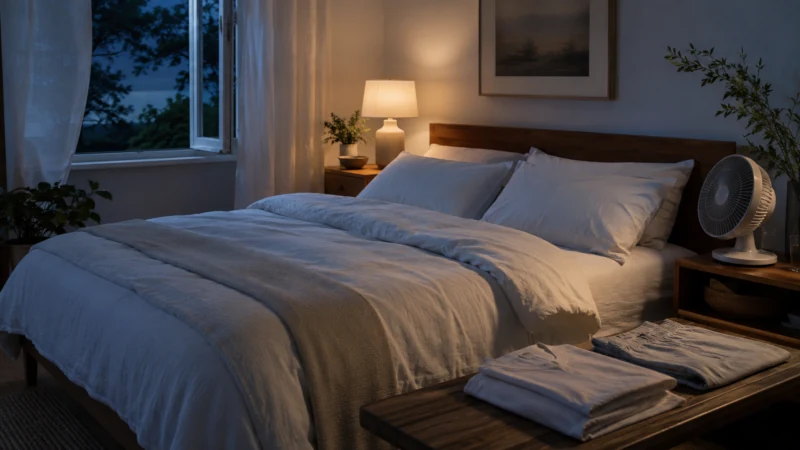
Keep Your Sleeping Environment Cool
Cooler bedroom temperatures — generally between 60°F and 67°F (15°C–19°C) — reduce the threshold at which the body triggers a sweating response. Breathable, natural-fibre bedding and sleepwear (cotton, bamboo, linen) allow better heat dissipation than synthetic fabrics. Moisture-wicking sheets specifically designed for hot sleepers can also help. A bedside fan creates airflow that accelerates cooling after a sweat episode begins. Related: Natural Remedies for Insomnia
Identify and Avoid Your Personal Triggers
Common dietary and lifestyle triggers include:
- Alcohol, particularly wine, which causes vasodilation and raises skin temperature
- Caffeine, which stimulates the central nervous system and may raise core body temperature
- Spicy foods containing capsaicin, which activate heat-sensing nerve pathways
- Large evening meals, which increase metabolic activity during digestion
- Smoking, which disrupts hormonal balance and raises adrenaline levels
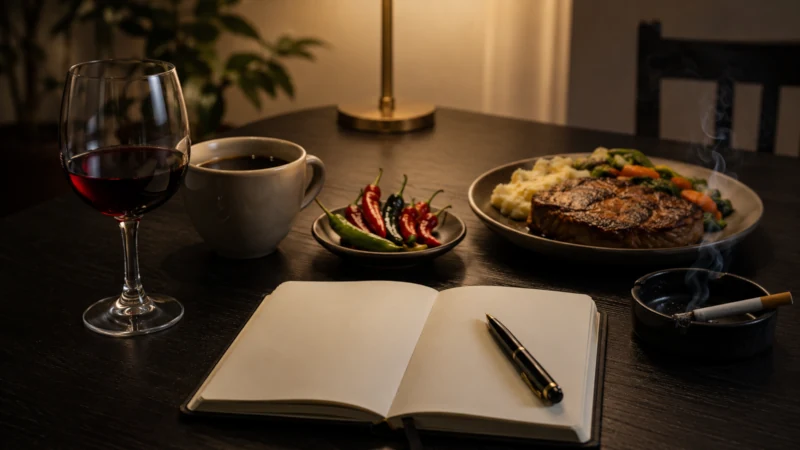
Keeping a symptom diary — noting what you ate, drank, and did in the hours before a sweat episode — is a practical and underutilised tool. Patterns often emerge within two to three weeks.
Timing of Exercise
Regular physical activity supports hormonal regulation and sleep quality, both of which may reduce vasomotor symptoms over time. However, vigorous exercise within two to three hours of bedtime can temporarily raise core temperature and worsen nocturnal sweating for some people. Morning or early afternoon exercise tends to be better tolerated.
Relaxation Techniques
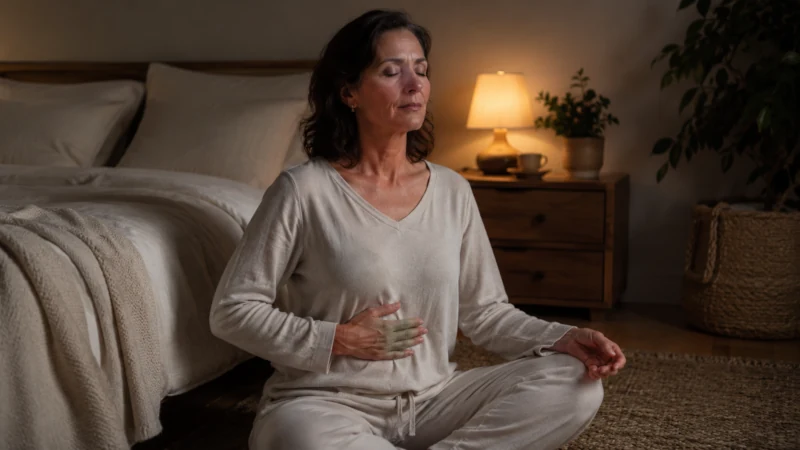
Slow, paced breathing (sometimes called “paced respiration” in the clinical literature) has shown modest effectiveness in reducing hot flash frequency in some trials. Yoga, mindfulness meditation, and progressive muscle relaxation may also help by calming the autonomic nervous system, though the evidence here is early-stage and mostly involves small studies.
Natural Remedies for Night Sweats: Herbal and Dietary Supplements
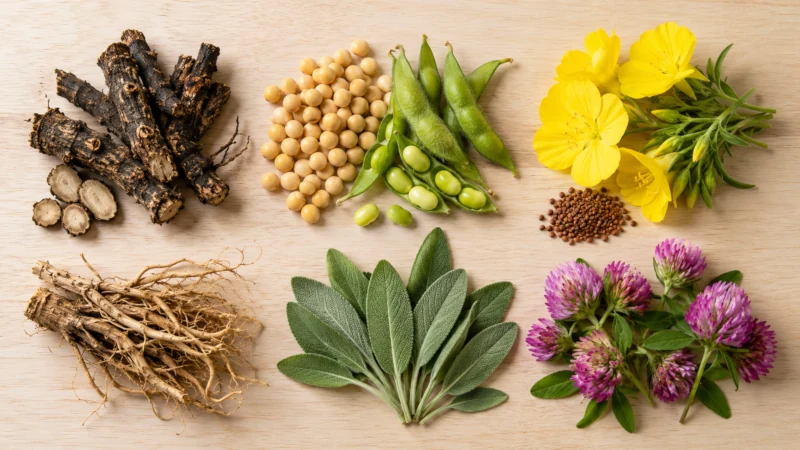
The table below summarises the evidence quality for the most-studied natural supplements. Quality of evidence matters: a promising small study is not the same as a well-conducted, large randomised controlled trial (RCT). All of these supplements can interact with medications, and some carry genuine safety concerns.
| Remedy | Evidence Quality | What It May Help | Key Cautions |
| Black cohosh | Moderate — mixed RCTs; 2023 meta-analysis positive for overall menopause symptoms | Hot flashes & night sweats in menopausal women | Possible rare liver toxicity; avoid if hormone-sensitive cancer history |
| Soy isoflavones (dietary or supplement) | Moderate — systematic reviews show modest benefit | Hot flash frequency and severity | Talk to doctor if history of hormone-sensitive conditions |
| Red clover isoflavones | Weak to moderate — conflicting RCTs | Hot flashes (inconsistent results) | Similar cautions to soy; may interact with blood thinners |
| Evening primrose oil | Limited — small RCTs; some positive findings | Hot flash severity; mood | May increase bleeding risk; stop before surgery |
| Valerian root | Limited — small studies, mostly for sleep quality | Sleep quality; night sweat frequency in menopause | Drowsiness; avoid with sedatives or alcohol |
| Sage (Salvia officinalis) | Limited — one RCT showed benefit for hot flushes | Hot flush frequency and intensity | High doses may be toxic; not for pregnancy |
| Acupuncture | Moderate — meta-analyses show benefit vs. sham; effect size modest | Hot flashes; sleep disruption | Choose licensed practitioner; generally low risk |
Black Cohosh (Actaea racemosa)
Black cohosh is the most widely studied herbal supplement for menopausal hot flashes and night sweats. A 2023 meta-analysis of 22 studies concluded that black cohosh extracts — alone or in combination with other herbs — were potentially beneficial for overall menopause symptoms and showed improvements in hot flashes specifically. [NCCIH, 2024]
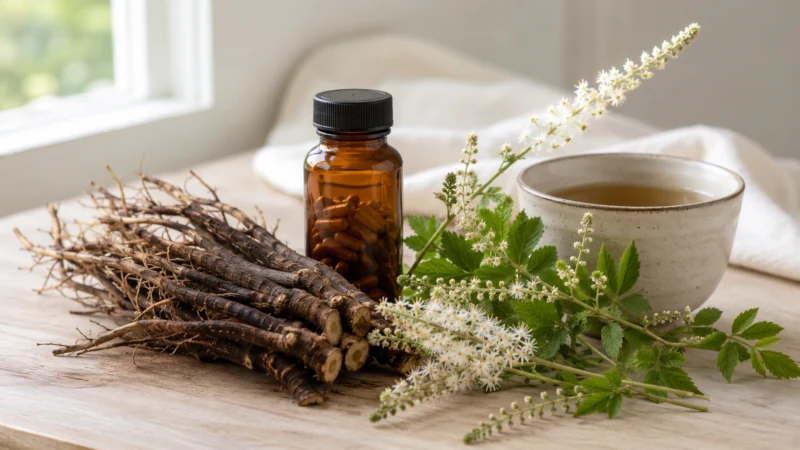
The precise mechanism remains unclear. Earlier theories about estrogenic activity have largely been revised; current thinking focuses on effects on serotonin pathways in the hypothalamus. This distinction may be why some women who cannot use hormone therapies (such as those with certain breast cancer histories) have considered it — though its safety in that population has not been established.
The main safety concern with black cohosh is rare but documented liver toxicity. Cases of serious liver damage — though uncommon — have been reported. Anyone taking it should stop and seek medical advice if they develop dark urine, jaundice, or unexplained fatigue. The NCCIH advises against its use during pregnancy or breastfeeding and recommends caution if you have a hormone-sensitive condition.[NCCIH, 2024]
Soy Isoflavones
Soy contains phytoestrogens — plant compounds that bind weakly to estrogen receptors. A systematic review and meta-analysis of randomised controlled trials found that extracted or synthesised soy isoflavones reduced hot flash frequency and severity compared to placebo, though the magnitude of benefit was modest. [Taku et al., JAND, 2012]
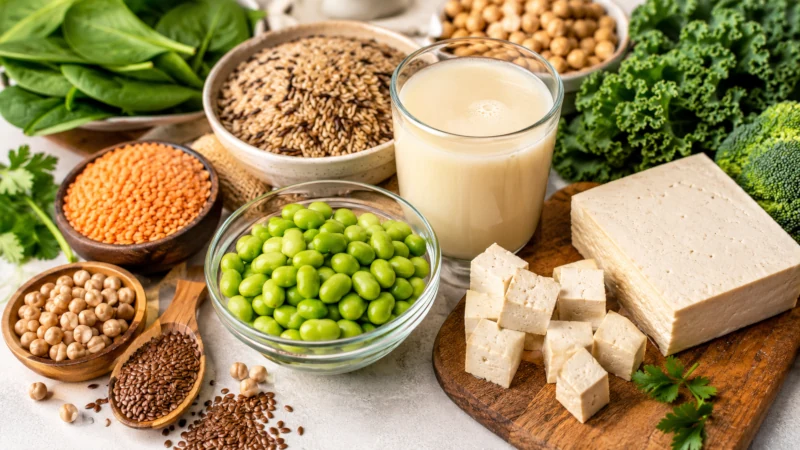
Eating soy foods (tofu, edamame, soy milk, miso) is a safe dietary choice for most people and provides isoflavones alongside protein, fibre, and other nutrients. Soy supplement doses are more variable, and results may take several weeks to months to appear. Women with hormone-sensitive cancers should discuss soy supplementation with their oncologist before using it.
Evening Primrose Oil
Evening primrose oil is extracted from the seeds of the North American evening primrose plant. It is rich in gamma-linolenic acid (GLA), an omega-6 fatty acid involved in prostaglandin production. Some research suggests it may reduce the severity of hot flashes, though the evidence is limited to small studies with short follow-up periods. One randomised trial published in the Journal of Education and Health Promotion found a modest reduction in hot flash severity. [Mehrizi et al., 2018] Learn more: Evening Primrose Plant Benefits
Evening primrose oil may increase bleeding time and should be stopped two weeks before surgery. It can also lower the seizure threshold in people taking phenothiazine antipsychotics.
Valerian Root
Valerian root has a long history of use for anxiety and sleep disturbance. Some small trials in menopausal women have found that it may reduce night sweat frequency alongside improving sleep quality, possibly by acting on GABA receptors in the brain. However, the evidence base is thin — most studies are small and of short duration.
Valerian can cause morning drowsiness and should not be combined with sedative medications, alcohol, or other sleep aids without medical guidance. Abrupt discontinuation after prolonged use may cause withdrawal effects.
Sage (Salvia officinalis)
Sage has traditional use in European herbal medicine for excessive sweating and menopausal symptoms. One randomised clinical trial found that a fresh sage preparation significantly reduced the frequency and severity of hot flushes over eight weeks. [Bommer et al., Adv. Therapy, 2011]
Sage is generally safe in culinary amounts, but high-dose supplemental forms — teas, tinctures, essential oils — can be toxic because of the constituent thujone. It is contraindicated in pregnancy and should be avoided by people with seizure disorders.
Red Clover Isoflavones
Like soy, red clover contains isoflavones. Clinical trials have produced inconsistent results — some showing a meaningful reduction in hot flash frequency and others finding no significant difference from placebo. The overall evidence is weaker and less consistent than for soy isoflavones. Red clover may interact with blood-thinning medications including warfarin.
Acupuncture
Acupuncture involves inserting fine needles at specific body points to influence physiological processes. A systematic review and meta-analysis of randomised controlled trials found that acupuncture reduced hot flash frequency significantly compared to sham acupuncture, though the magnitude of effect was modest. [Jeong et al., Menopause, 2016]
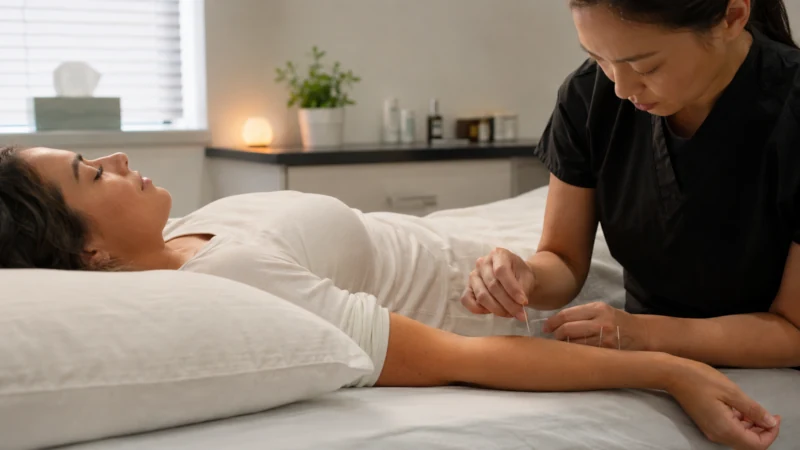
Acupuncture is considered low-risk when performed by a licensed practitioner and may be a reasonable option for those who prefer non-pharmacological approaches or who cannot use hormonal or herbal treatments.
Diet and Nutrition: Supporting Hormonal Balance
A well-balanced diet does not cure night sweats, but it can support the hormonal and metabolic environment that influences them:
- Magnesium: This essential mineral supports nerve and muscle function and has been studied in the context of sleep quality. Good sources include pumpkin seeds, spinach, almonds, black beans, and edamame. [NIH ODS, 2026]
- B vitamins: Found in whole grains, leafy greens, nuts, and seeds, B vitamins support stress-response pathways.
- Phytoestrogen-rich foods: Flaxseed, chickpeas, lentils, and soy foods contribute plant estrogens to the diet without the concentrated doses of supplements.
- Zinc: Found in oysters, grass-fed beef, pumpkin seeds, and legumes; supports hormonal function in both men and women.
Who Should Use Extra Caution With Natural Supplements
Not all natural remedies are appropriate for everyone. The following groups should speak with a healthcare provider before starting any of the supplements discussed in this article:
- Women with a history of breast cancer, uterine cancer, or other hormone-sensitive conditions (phytoestrogens remain an area of active debate in this context)
- Pregnant or breastfeeding women (most herbal supplements in this article are contraindicated)
- People taking anticoagulants, anticonvulsants, sedatives, or antidepressants (significant interaction risks exist)
- People with liver disease (black cohosh carries a specific concern here)
- Anyone scheduled for surgery in the next two to four weeks (evening primrose oil and red clover may increase bleeding)
- People with epilepsy or seizure disorders (sage, evening primrose oil, and valerian may lower seizure threshold)
Realistic Expectations
No natural remedy eliminates night sweats entirely for most people, and most take weeks to months to show any measurable effect. The strongest and most consistent evidence for menopause-related night sweats still favours hormone therapy (HRT), which is a conversation worth having with your doctor if symptoms are significantly affecting quality of life.
Natural approaches work best as part of a broader strategy: cooler sleep environment, trigger avoidance, regular exercise, stress management, and a balanced diet. Used together, these changes can meaningfully reduce symptom frequency and severity even without supplementation.
It is also worth remembering that individual responses vary considerably. What reduces symptoms for one person may have no effect for another. Trial periods of six to twelve weeks with a single approach — while tracking symptoms in a diary — make it easier to determine what is actually working.

| HEALTH DISCLAIMER: This article is for general educational purposes only. It does not replace professional medical advice, diagnosis, or treatment. Night sweats can be a sign of serious underlying conditions. Always consult a qualified healthcare provider before starting any supplement, herb, or significant lifestyle change — especially if you are pregnant, breastfeeding, taking prescription medications, or have a pre-existing health condition. Do not delay seeking medical care based on anything you read here. |
When to Talk to a Healthcare Provider
Natural approaches are most appropriate as a first step when night sweats appear clearly related to menopause, are mild to moderate, and are not accompanied by concerning symptoms. In any of the following situations, a clinical evaluation should come before or alongside home remedies:
- You have not yet spoken to a doctor about the cause of your night sweats
- Symptoms are severe enough to significantly disrupt your sleep most nights
- You are a man experiencing unexplained night sweats
- Night sweats began after starting a new medication
- You have any of the red-flag symptoms listed earlier in this article
- Lifestyle changes and natural remedies have not produced improvement after three months
Frequently Asked Questions
Can night sweats in men be treated with the same natural remedies as in women?
Some approaches — particularly lifestyle changes like cooling the bedroom, avoiding alcohol and caffeine, and regular exercise — are relevant regardless of sex. However, the herbal and phytoestrogen-based supplements discussed in this article have been studied primarily in menopausal women. Men experiencing night sweats should be evaluated for causes including low testosterone, sleep apnea, and infections before relying on remedies developed for hormonal sweating in women.
How long does it take for black cohosh to work?
Clinical trials have used black cohosh for periods of four weeks to twelve months, with many studies reporting effects beginning around four to eight weeks. If there is no perceptible improvement after eight weeks, it is unlikely to be effective for that individual. Always use the lowest effective dose and avoid exceeding recommended amounts.
Is it safe to take multiple herbal supplements at the same time?
Combining supplements multiplies the potential for interactions — both with each other and with any prescription medications. It also makes it harder to determine which one is helping. Starting one supplement at a time, giving it six to eight weeks before assessing, and maintaining a symptom diary is a safer and more informative approach. Discuss any combination with a pharmacist or doctor.
Can diet alone reduce menopause night sweats?
Diet alone is unlikely to eliminate menopause-related night sweats, but it can be a meaningful supporting factor. Avoiding trigger foods, eating regular phytoestrogen-rich meals, and maintaining healthy magnesium and zinc intake may modestly reduce frequency and severity. Dietary approaches carry no side effects and are reasonable to try regardless of whether other interventions are used.
Are there any supplements that should be completely avoided?
Dong quai (Angelica sinensis) is sometimes promoted for menopause symptoms, but the evidence for its effectiveness is inconsistent and it carries significant risks including photosensitivity and potentially harmful interactions with blood-thinning medications. Wild yam cream is sold for hormonal symptoms but does not convert to progesterone in the body — its marketing often exceeds its evidence. Neither is recommended on the basis of current research.
References
- National Center for Complementary and Integrative Health. (2024). Black Cohosh. U.S. Department of Health & Human Services. → View source
- National Institutes of Health Office of Dietary Supplements. (2026). Magnesium: Fact Sheet for Health Professionals. → View source
- Taku, K., Melby, M. K., Kronenberg, F., Kurzer, M. S., & Messina, M. (2012). Extracted or synthesized soybean isoflavones reduce menopausal hot flash frequency and severity. Journal of the Academy of Nutrition and Dietetics, 112(7), 1016–1030. → View source
- Jeong, S. H., Lee, H., Kim, M. R., & Kim, D. I. (2016). Acupuncture for vasomotor menopausal symptoms: A systematic review and meta-analysis. Menopause, 23(10), 1129–1138. → View source
- Bommer, S., Klein, P., & Suter, A. (2011). First time proof of sage’s tolerability and efficacy in menopausal women with hot flushes. Advances in Therapy, 28(6), 490–500. → View source
- Mehrizi, P., Shemshadi, H., & Vash, P. G. (2018). Evaluating the effect of evening primrose oil on hot flash in menopausal women: A randomized clinical trial. Journal of Education and Health Promotion, 7, 5. → View source
- Sadahiro, R., Matsuoka, L. N., Zeng, B-S., et al. (2023). Black cohosh extracts in women with menopausal symptoms: an updated pairwise meta-analysis. Menopause, 30(7), 766–773. → View source
- De Souza, M. C., Walker, A. F., Robinson, P. A., & Bolland, M. J. (2002). A double-blind, randomized, placebo-controlled trial of vitamin E for hot flushes. Gynecological Endocrinology, 16(4), 295–300. → View source
