
Most women don’t need a cabinet full of supplements. They need a short list of nutrients handled well, plus a clear sense of which ones actually change as your body changes. This guide to vitamins and minerals for women’s health walks through the ones that do the most work, what the evidence really says about each, and how to cover your needs through food before you reach for a pill.
A handful of nutrients matter more for women than the rest: iron, folate, vitamin B12, calcium, vitamin D, iodine, magnesium, and vitamin C. Your need for several of them rises and falls with menstruation, pregnancy, breastfeeding, and menopause. Getting them right supports steady energy, strong bones, a healthy pregnancy when that’s relevant, and a nervous system that works the way it should.
One principle runs through everything below: food first. Federal dietary guidance is clear that people should get most of their nutrients from food and beverages, with supplements filling specific gaps rather than replacing a decent diet [NIH Office of Dietary Supplements].
Women’s health: Why nutrient needs shift over a lifetime

Two facts explain most of the difference. First, monthly periods cause a regular loss of blood, and therefore iron, that men don’t experience, which is why iron deficiency is far more common in women of reproductive age [NIH ODS, Iron]. Second, pregnancy and breastfeeding raise demand for several nutrients at once, and the fall in estrogen around menopause changes how the body handles bone. None of this means women are fragile. It means the target moves: a 25-year-old, a pregnant 32-year-old, and a 60-year-old have genuinely different nutritional priorities.
Iron: the one many women run low on
Your body uses iron to make hemoglobin, the protein in red blood cells that carries oxygen from your lungs to the rest of your body [NIH ODS, Iron]. Run low and that supply chain falters. Iron deficiency anemia sets in, red blood cells shrink and carry less oxygen, and the result is fatigue, weakness, trouble concentrating, and a harder time fighting off infections [NIH ODS, Iron].
Women of reproductive age are the group most likely to fall short. Teen girls and women with heavy periods, along with pregnant women, top the list of those who struggle to get enough [NIH ODS, Iron]. The numbers reflect it: adult women aged 19 to 50 need about 18 mg of iron a day, more than twice the 8 mg men need, and that rises to 27 mg during pregnancy [NIH ODS, Iron].
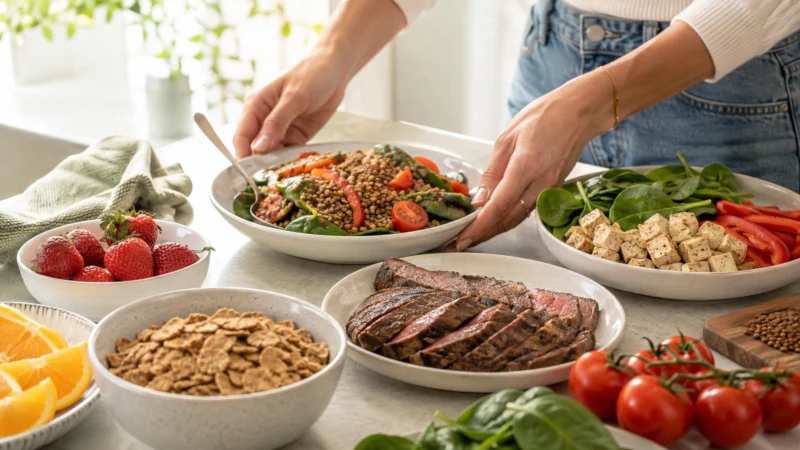
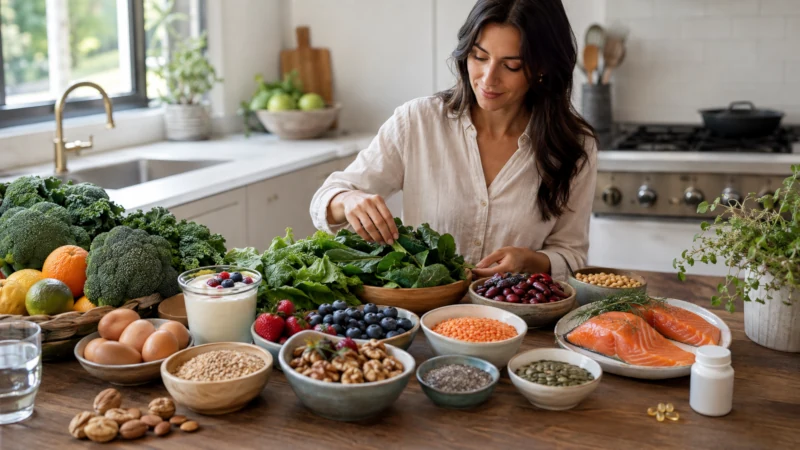
For food sources, lean meat, seafood, and poultry supply heme iron, the kind your body absorbs most easily. Beans, lentils, spinach, tofu, and iron-fortified cereals supply non-heme iron [NIH ODS, Iron]. A practical trick: pair plant sources of iron with vitamin C, such as citrus, strawberries, peppers, or tomatoes, which improves how much non-heme iron you absorb [NIH ODS, Iron]. Our guide to foods for healthy blood has more meal ideas built around this pairing.
A caution worth taking seriously: more is not better. Iron supplements can cause upset stomach, constipation, and nausea, and accidental iron overdose is a leading cause of fatal poisoning in young children, so any supplement must be kept out of their reach [NIH ODS, Iron]. Some people have hemochromatosis, an inherited condition that lets iron build to toxic levels; they should avoid iron and high-dose vitamin C supplements [NIH ODS, Iron]. Because of all this, don’t start a high-dose iron supplement on a hunch. Confirm a deficiency with your doctor first.
Folate (vitamin B9): especially before and during pregnancy
If one nutrient has an airtight case for women who could become pregnant, it’s folate. Taking folic acid, the supplement form of folate, before conception and in early pregnancy helps prevent neural tube defects, which are serious malformations of the baby’s brain and spine such as spina bifida and anencephaly [NIH ODS, Folate]. This is well-established, not preliminary, evidence, and U.S. guidance reflects it.

Timing is the catch. The neural tube closes in the first few weeks, often before a woman knows she’s pregnant, and about half of U.S. pregnancies are unplanned [NIH ODS, Folate]. That’s why the recommendation applies to all women who could become pregnant, not only those actively trying: 400 micrograms of folic acid a day, rising to 600 mcg during pregnancy [NIH ODS, Folate].
Food folate is found in leafy greens, beans, and citrus, and folic acid is added to many U.S. breads, cereals, and pastas. Food folate carries no risk, but don’t exceed the upper limit from supplements and fortified foods without medical advice [NIH ODS, Folate].
Vitamin B12: nerves, blood, and DNA
Vitamin B12 keeps your blood and nerve cells healthy and helps make DNA [NIH ODS, Vitamin B12]. A shortfall can cause megaloblastic anemia, a fatigue-and-weakness pattern, and it can damage the nervous system even without anemia, which is why catching a deficiency early matters [NIH ODS, Vitamin B12].

Here’s the part relevant to a lot of women: B12 occurs naturally only in animal foods. Plant foods contain none unless they’re fortified [NIH ODS, Vitamin B12]. If you follow a vegetarian or vegan diet, you’ll need fortified foods or a supplement. Older adults are also at higher risk because the body’s ability to release B12 from food declines with age, and common medicines, including metformin and acid-reducing proton pump inhibitors, can lower absorption [NIH ODS, Vitamin B12]. One honest note: while B12 with other B vitamins lowers homocysteine, a marker linked to heart disease, taking these supplements has not been shown to reduce the risk of heart attack or stroke [NIH ODS, Vitamin B12].
Vitamin B6: metabolism, immunity, and pregnancy
Vitamin B6 is a workhorse. The body uses it in more than 100 enzyme reactions involved in metabolism, plus immune function and brain development during pregnancy and infancy [NIH ODS, Vitamin B6]. Most people in the U.S. get enough from food, with poultry, fish, potatoes and other starchy vegetables, and non-citrus fruit among the major sources [NIH ODS, Vitamin B6]. B6 is also used, under medical guidance, to ease nausea in early pregnancy, which is a conversation to have with your doctor rather than a do-it-yourself project.
Calcium and vitamin D: the bone-health pair
These two belong together because they work together: vitamin D is what lets your body absorb the calcium you eat [NIH ODS, Vitamin D].
Calcium

Calcium is the main structural material of bones and teeth, and it also supports muscle function, nerve signaling, and blood clotting [NIH ODS, Calcium]. Bones act as the body’s calcium bank; after about age 30 they slowly lose calcium, and in middle age that loss speeds up [NIH ODS, Calcium]. This matters more for women because the drop in estrogen around menopause accelerates bone loss, raising the risk of osteoporosis and fractures [Endocrine Society, 2022].
Dairy is the best-known source, but so are canned sardines and salmon with soft bones, calcium-set tofu, fortified plant milks and juices, and greens like kale and broccoli [NIH ODS, Calcium]. See our list of foods high in calcium for everyday options. As with iron, more isn’t automatically better; very high calcium intakes can cause problems, so aim for the recommended amount rather than piling on [NIH ODS, Calcium].
Vitamin D
Vitamin D helps your body absorb calcium and, together with it, protects against osteoporosis [NIH ODS, Vitamin D]. Few foods contain much: fatty fish like salmon and tuna are among the best, and most of the vitamin D in American diets comes from fortified milk [NIH ODS, Vitamin D]. Your skin also makes vitamin D from sunlight, though how much varies with season, latitude, skin tone, and sunscreen use. People who get little sun, older adults, those with obesity, and people with fat-absorption conditions like Crohn’s or celiac disease are more likely to fall short [NIH ODS, Vitamin D].
One place to keep expectations realistic is vitamin D and mood. Some studies link low vitamin D levels to a higher risk of depression, but clinical trials show that taking vitamin D supplements does not prevent or relieve depression [NIH ODS, Vitamin D]. It’s a nutrient worth keeping adequate for your bones, not a treatment for low mood.
Iodine: fuel for the thyroid

Your thyroid needs iodine to make the hormones that regulate metabolism, and those same hormones are essential for a baby’s bone and brain development during pregnancy and infancy [NIH ODS, Iodine]. Too little iodine can lead to goiter, an enlarged thyroid, and hypothyroidism, an underactive thyroid that shows up as fatigue, weight gain, cold intolerance, and dry skin, and that is more common in women [Mayo Clinic, 2026].
Most people in the U.S. get enough iodine, largely thanks to iodized salt [NIH ODS, Iodine]. Pregnancy is the exception worth flagging: the American Thyroid Association recommends that women who are pregnant, trying to conceive, or breastfeeding take a daily supplement with 150 mcg of iodine, yet only about half of U.S. prenatal vitamins contain any [NIH ODS, Iodine]. If you’re pregnant or planning to be, it’s worth checking your prenatal’s label.
Magnesium: a quiet multitasker
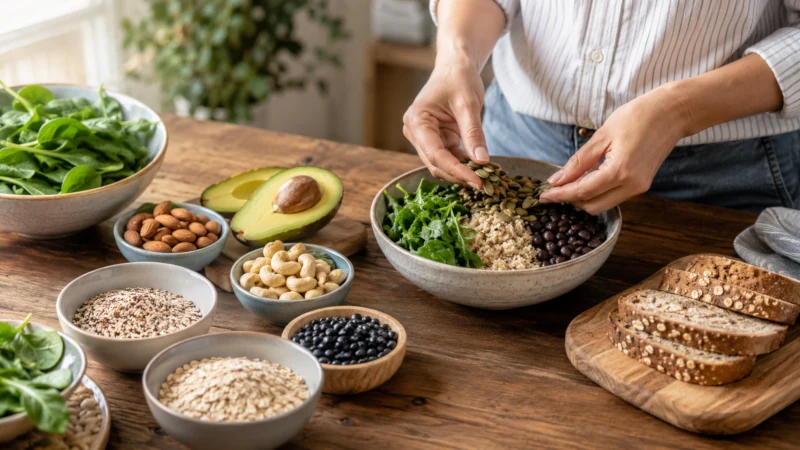
Magnesium acts as a cofactor in more than 300 enzyme systems that handle muscle and nerve function, blood sugar control, blood pressure, and the building of protein, bone, and DNA [NIH ODS, Magnesium]. Adult women need roughly 310 to 320 mg a day, available from leafy greens, nuts, seeds, legumes, and whole grains [NIH ODS, Magnesium]. Our roundup of magnesium-rich foods covers the best sources.
Magnesium has become a popular supplement for stress, sleep, and PMS, so it’s worth being straight about the evidence. A systematic review found the research on magnesium for subjective anxiety suggestive of a benefit in vulnerable groups, such as people with mild anxiety or PMS, but rated the overall quality of that evidence as poor and called for better trials [Boyle et al., 2017]. A separate review of magnesium in gynecological practice concluded it may help with PMS, menstrual cramps, menstrual migraine, and some menopausal symptoms, though this too rests on limited data [Parazzini et al., 2017]. And for blood pressure, supplements produce only a small reduction [NIH ODS, Magnesium]. Reasonable to try with your doctor’s input; not a guaranteed fix.
Vitamin C: antioxidant, collagen, and iron’s best friend
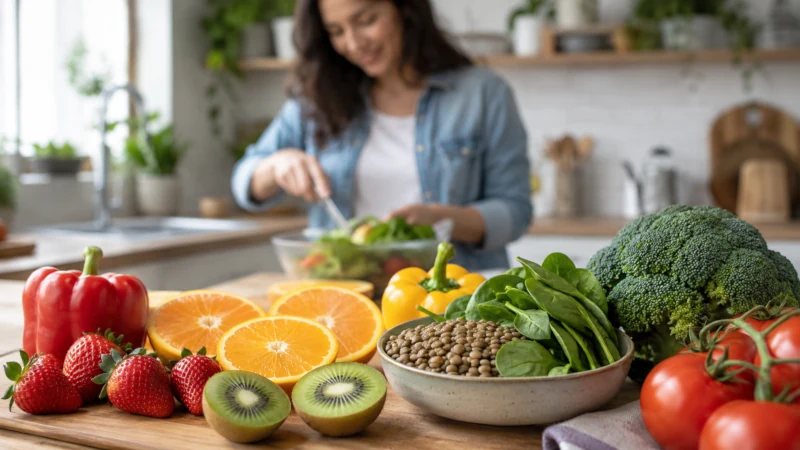
Vitamin C is an antioxidant that helps protect cells from free-radical damage, and your body needs it to make collagen, the protein that builds skin, blood vessels, and connective tissue and helps wounds heal [NIH ODS, Vitamin C]. For women specifically, one of its most useful jobs is boosting the absorption of non-heme (plant) iron, which makes it a natural partner to a beans-and-greens approach to iron [NIH ODS, Vitamin C]. You’ll find the top sources in our guide to vitamin C-rich foods. The popular idea that vitamin C wards off colds is only partly supported: taking it regularly may modestly shorten a cold, but starting it once you’re already sick doesn’t seem to help [NIH ODS, Vitamin C].
Food first, then fill the gaps
For most healthy women eating a varied diet, food covers these needs. Supplements earn their place in specific situations: pregnancy, a diagnosed deficiency, a restricted diet such as vegan eating, or a life stage with higher demand. A daily multivitamin is a reasonable backstop for some people, but it isn’t a substitute for meals. If you eat mostly plant-based, our guide to plant-based sources of calcium, iron, and protein is a good starting point.
| Nutrient | Why it matters for women | Everyday food sources |
| Iron | Carries oxygen; commonly low with periods and in pregnancy | Lean meat, poultry, seafood, beans, lentils, spinach, fortified cereal |
| Folate (B9) | Prevents neural tube defects before and in early pregnancy | Leafy greens, beans, citrus, fortified breads and pasta |
| Vitamin B12 | Blood, nerves, and DNA; often low in vegans and older adults | Meat, fish, eggs, dairy, fortified foods |
| Calcium | Builds bone; protects against osteoporosis after menopause | Dairy, canned fish with bones, tofu, fortified plant milks, greens |
| Vitamin D | Lets the body absorb calcium; supports bone health | Fatty fish, fortified milk, sunlight, supplements |
| Iodine | Thyroid hormones and fetal brain development | Iodized salt, dairy, seafood, prenatal supplements |
| Magnesium | Muscle and nerve function, blood sugar and pressure | Leafy greens, nuts, seeds, legumes, whole grains |
| Vitamin C | Antioxidant, collagen, boosts plant-iron absorption | Citrus, peppers, strawberries, broccoli, tomatoes |
Recommended amounts vary by age and life stage; the linked fact sheets list exact figures.
Supplements: safety, interactions, and who should be careful
Keep expectations realistic. Correcting a genuine deficiency can make a real difference. Taking extra of a nutrient you already have enough of usually doesn’t, and occasionally causes harm.
Common side effects to know:
- Iron can cause constipation, nausea, and stomach upset, especially on an empty stomach [NIH ODS, Iron].
- Magnesium supplements can cause diarrhea and GI upset, and are risky for people with kidney disease [NIH ODS, Magnesium].
- Very high calcium intakes can cause kidney and other problems, so stay near the recommended amount [NIH ODS, Calcium].
- Vitamin D toxicity comes almost entirely from over-supplementing, not from sunshine [NIH ODS, Vitamin D].
Interactions worth spacing out or discussing:
- Iron can reduce the effectiveness of levothyroxine (a thyroid medication) and levodopa, and calcium can interfere with iron absorption, so take them at different times [NIH ODS, Iron].
- Metformin and acid-reducing drugs can lower vitamin B12 absorption [NIH ODS, Vitamin B12].
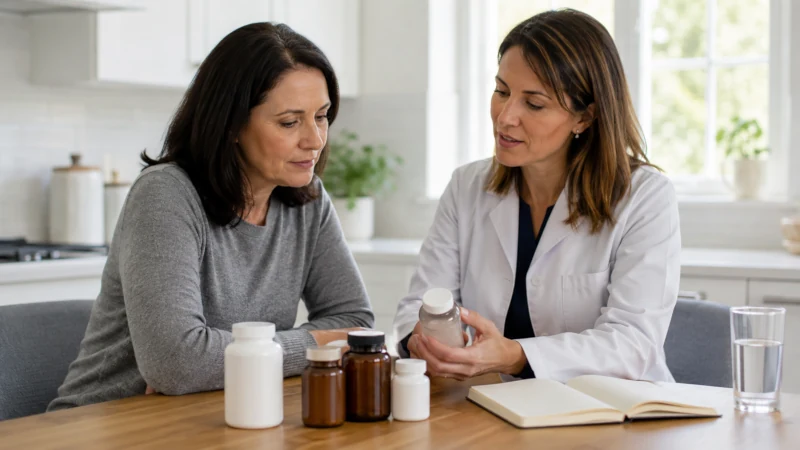
During pregnancy and breastfeeding, needs rise for iron, folate, iodine, and more, but some nutrients have upper limits and high-dose supplements aren’t automatically safe. A prenatal vitamin plus your doctor’s guidance is the right approach. People with hemochromatosis (iron), kidney disease (magnesium), or who take interacting medications should talk to a professional first. Before starting any new supplement, a quick conversation with a doctor, registered dietitian, or pharmacist can confirm you actually need it and check for interactions.
When to see a doctor

Nutrition supports your health, but some symptoms call for a professional rather than a supplement. Talk to a doctor if you notice:
- Persistent fatigue, shortness of breath, unusual paleness, or a racing heart, which can signal anemia and deserve a blood test rather than a guess.
- Numbness or tingling in the hands or feet, which can be a sign of B12 deficiency.
- Swelling at the base of the neck, unexplained weight change, or ongoing cold intolerance and fatigue, which warrant a thyroid check.
- Heavy periods that leave you drained, which are a common and treatable cause of low iron.
Severe symptoms such as chest pain, fainting, or severe breathlessness are reasons to seek urgent care or call 911. And if you’re pregnant or planning a pregnancy, see your doctor to set up the right prenatal nutrition rather than assembling supplements on your own.
| Health Disclaimer: This article is for general education and information only. It is not medical advice and is not a substitute for diagnosis or treatment from a qualified professional. Nutrient needs vary by age, health status, and life stage, and supplements can interact with medications and health conditions. If you are pregnant, breastfeeding, managing a medical condition, or taking prescription medicine, talk to your doctor, a registered dietitian, or a pharmacist before starting any supplement. If you have severe or sudden symptoms, seek urgent care or call 911. |
Frequently Asked Questions
What vitamins should most women take daily?
For most women eating a varied diet, food covers the essentials and no daily supplement is required. The clearest exception is folic acid for anyone who could become pregnant. Beyond that, a supplement makes sense to fill a specific gap, such as B12 on a vegan diet or vitamin D with little sun exposure. Check with your doctor before making it routine.
Do I need an iron supplement?
Only if you’re actually low. Heavy periods, pregnancy, and a vegetarian or vegan diet raise the risk, but symptoms like fatigue have many causes. Ask your doctor for a blood test before starting a high-dose iron supplement, since too much iron can cause side effects and is dangerous for people with hemochromatosis.
When should I start folic acid if I want to get pregnant?
Before you conceive. Because the neural tube closes in the first few weeks and many pregnancies are unplanned, guidance is to take 400 micrograms of folic acid daily if you could become pregnant, increasing to 600 mcg once pregnant.
Are women’s multivitamins worth it?
They can help fill gaps but don’t replace a good diet. If you choose one, check that it fits your situation, for example that a prenatal contains iodine, since only about half do.
Can I get enough vitamin D from the sun?
Sometimes, but it’s unreliable. How much your skin makes depends on season, latitude, skin tone, and sunscreen. Older adults, people with limited sun exposure, and those with certain conditions often need vitamin D from food or supplements.
Is it possible to take too many vitamins?
Yes. Minerals like iron and calcium and fat-soluble vitamins can build up and cause harm at high doses. Staying near recommended amounts, and getting nutrients from food where you can, keeps you on the safe side.
References
- National Institutes of Health, Office of Dietary Supplements. Iron: Fact Sheet for Consumers (updated August 17, 2023). View source
- National Institutes of Health, Office of Dietary Supplements. Calcium: Fact Sheet for Consumers (updated September 14, 2023). View source
- National Institutes of Health, Office of Dietary Supplements. Vitamin D: Fact Sheet for Consumers (updated November 8, 2022). View source
- National Institutes of Health, Office of Dietary Supplements. Folate: Fact Sheet for Consumers. View source
- National Institutes of Health, Office of Dietary Supplements. Vitamin B12: Fact Sheet for Consumers. View source
- National Institutes of Health, Office of Dietary Supplements. Vitamin B6: Fact Sheet for Consumers. View source
- National Institutes of Health, Office of Dietary Supplements. Iodine: Fact Sheet for Consumers. View source
- National Institutes of Health, Office of Dietary Supplements. Magnesium: Fact Sheet for Consumers. View source
- National Institutes of Health, Office of Dietary Supplements. Vitamin C: Fact Sheet for Consumers. View source
- Endocrine Society. Menopause and Bone Loss (2022). View source
- Mayo Clinic. Hypothyroidism (underactive thyroid): Symptoms and causes (2026). View source
- Boyle NB, Lawton C, Dye L. The Effects of Magnesium Supplementation on Subjective Anxiety and Stress: A Systematic Review. Nutrients. 2017;9(5):429. doi:10.3390/nu9050429. PMID 28445426. View source
- Parazzini F, Di Martino M, Pellegrino P. Magnesium in the gynecological practice: a literature review. Magnes Res. 2017;30(1):1-7. doi:10.1684/mrh.2017.0419. PMID 28392498. View source
