
Nitric oxide (NO) is the small “relax” signal your artery lining uses to widen blood vessels and ease blood flow. In high blood pressure, that signaling is often blunted [Hermann, 2006]. Supporting it — mainly through nitrate-rich vegetables and regular exercise — nudges blood pressure down for some people, but the average effect is modest and varies a lot from person to person [Norouzzadeh, 2025].
So the skill that actually pays off isn’t chasing the next supplement. It’s measuring nitric oxide and blood pressure changes correctly and consistently, so you can tell a real shift from the ups and downs every home monitor shows [AHA home monitoring, 2025]. This guide covers how the two connect, then — more usefully — how to set up a clean measurement routine and a simple 14-day test so your numbers mean something.
This article is educational and isn’t a substitute for personalized medical advice — see the full disclaimer before the FAQ.
What nitric oxide does in your arteries
Your endothelium — the inner lining of your blood vessels — releases NO, which tells the surrounding muscle layer to loosen. That lowers resistance and improves flow [Carlström, 2024]. When NO is scarcer, often because oxidative stress reduces its production or “scavenges” it, arteries tend toward higher tone and stiffness, which can push pressure up [Carlström, 2024] [Hermann, 2006].
NO isn’t the whole story of hypertension, though. It’s one contributor among many — genetics, salt handling, kidney function, weight, sleep, and stress all play a part [Hermann, 2006]. That’s why “boost nitric oxide” is a reasonable lever, not a cure. The two changes with the best evidence — eating more nitrate-rich vegetables and moving more — tend to produce small average drops in systolic pressure, on the order of a few mmHg, with a wide spread between individuals [Norouzzadeh, 2025] [Liang, 2024]. A few mmHg is worth having, but it’s easy to miss if your measuring is sloppy — which is the part that’s genuinely in your control.
The real skill: measuring so your numbers mean something
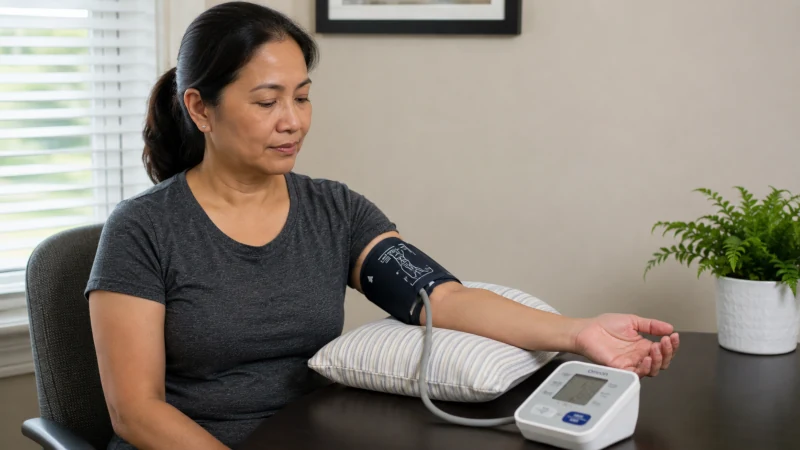
One reading is a snapshot; a record of readings over time is the picture that matters [AHA home monitoring, 2025]. Get the routine right and your home numbers become genuinely useful — to you and to whoever helps manage your care.
| Step | Do this | Avoid this |
| Cuff | An automatic upper-arm cuff sized to your arm, ideally a validated model. | Wrist or finger monitors, unless your clinician specifically recommends one. |
| Timing | The same time each day (or a morning and an evening reading). | Random times whenever you happen to remember. |
| Prep | No caffeine, exercise, or smoking for 30 minutes; empty your bladder first. | Measuring right after coffee, a walk, or a stressful call. |
| Rest | Sit quietly for 5 minutes before the first reading. | Talking, scrolling, or working while the cuff inflates. |
| Position | Back supported, feet flat, arm resting supported at heart level. | Crossed legs, slouching, or an arm dangling below the heart. |
| Readings | Take 2 readings a minute apart; record both or their average. | Trusting a single reading. |
| Notes | Jot down medication timing and any symptoms. | Trying to reconstruct it from memory later. |
For a step-by-step walkthrough with the common mistakes, see how to take your blood pressure at home.
Cuff fit changes the number
A cuff that’s too small can read falsely high; one that’s too large can read low [AHA home monitoring, 2025]. Measure your upper-arm circumference and match it to your monitor’s sizing guide rather than guessing.
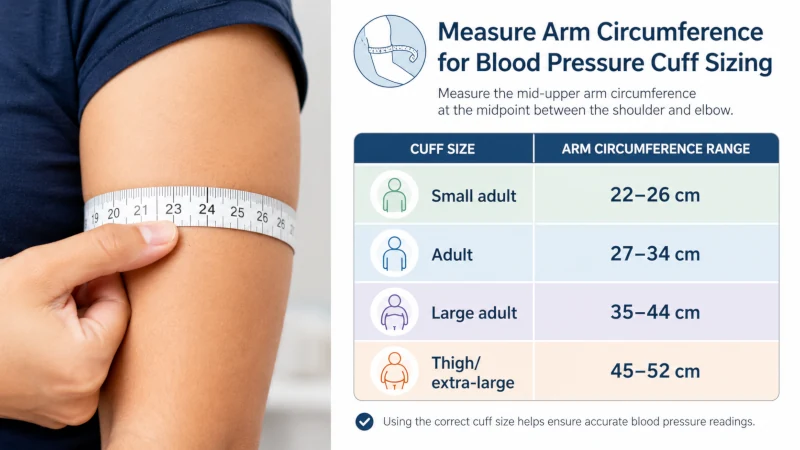
| Upper-arm circumference | Typical cuff label | Note |
| ~22–26 cm | Small adult | Often needed for smaller arms. |
| ~27–34 cm | Adult / Medium | The most common size. |
| ~35–44 cm | Large adult | Very common — measure, don’t assume. |
| ~45–52 cm | Extra-large | Often a special order; fit drives accuracy. |
Get a clean baseline before you change anything
If you’re going to test nitrate-rich foods, more walking, or anything else, take a baseline first — otherwise you’ll never know whether a change actually did something. Collect readings for about 7 days before you start.
| Baseline step | What to do | Why it matters |
| Days 1–7 | Measure once daily at the same time — or morning and evening if you can. | Builds a stable trend to compare against. |
| Add short notes | Caffeine, alcohol, sleep, stress, medication timing. | Explains the odd spike or dip. |
| Keep routines steady | Don’t change diet, exercise, or supplements yet. | Fewer confounders, cleaner comparison. |
Reading your numbers without spiraling
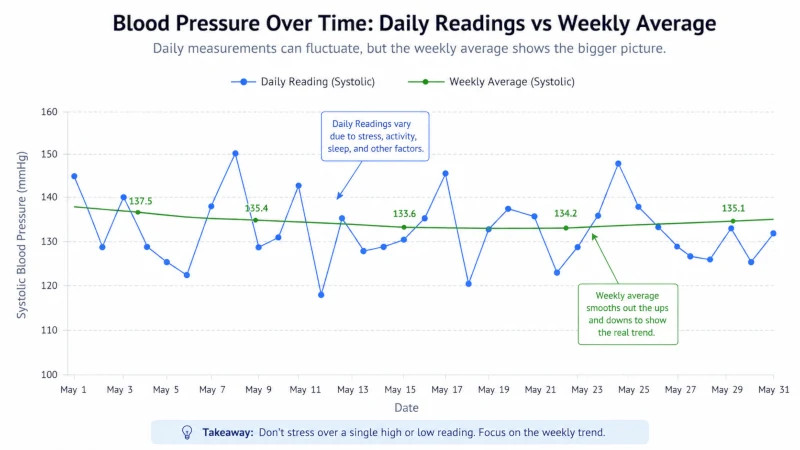
Single readings bounce around. What you’re looking for is the trend over days and weeks [AHA home monitoring, 2025]. A simple rule of thumb:
- A reading looks high but you feel fine → rest quietly for 5–10 minutes and repeat.
- The repeat is much lower → treat the first as noise and move on.
- Readings stay elevated across 1–2 weeks → bring your log to your clinician [2025 AHA/ACC guideline].
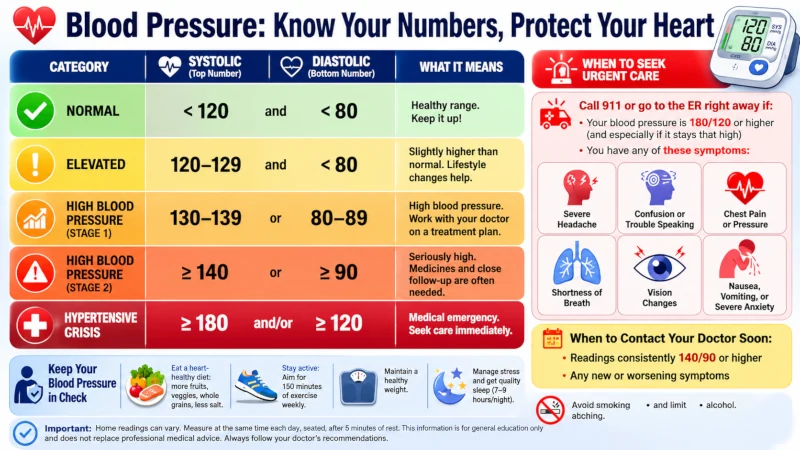
- Any reading over 180/120 mmHg → wait a minute and retake; if it stays there, contact your clinician right away, and if it comes with chest pain, shortness of breath, weakness, vision or speech changes, call 911 [AHA readings guide, 2025].
Run one experiment at a time
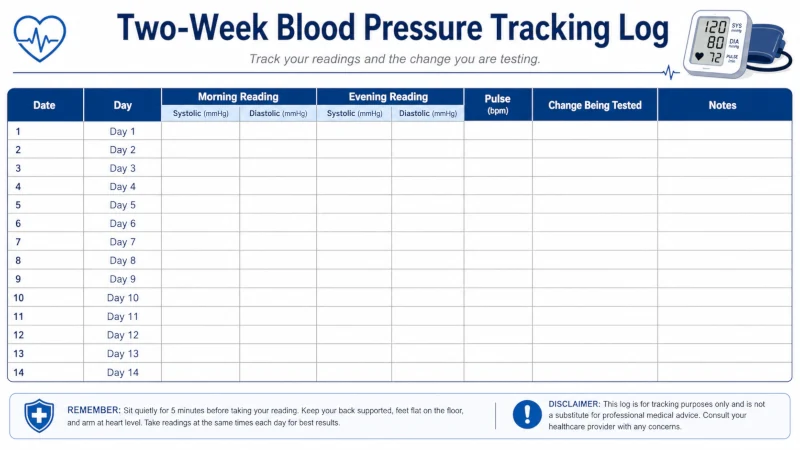
Once your baseline is set, change one thing for 14 days — long enough to show a pattern, short enough to stay motivated. Keep everything else the same so the trend is readable.
| Experiment | What to change | Keep the same | Track |
| Nitrate-rich foods | Add 1–2 servings of nitrate-rich vegetables most days. | Exercise, medication timing, caffeine. | BP trend, servings, symptoms. |
| Walking / exercise | Add 20–30 minutes of brisk walking most days. | Diet, supplements, mouthwash. | BP trend, minutes, sleep. |
| Mouthwash change | Cut back on frequent antibacterial mouthwash (an optional variable). | Diet, exercise, supplements. | BP trend, mouthwash use. |
Why these two lead the list: pooled trials show dietary nitrate produces small, dose-related reductions in blood pressure, though the certainty of that evidence is only low to moderate [Norouzzadeh, 2025]; and regular exercise improves measures of endothelial function and nitric oxide in people with hypertension, even if individual trials aren’t unanimous [Liang, 2024]. The mouthwash link is more preliminary — treat it as a curiosity to test, not a rule.
The smallest tracking set that still works
Tracking should be easy enough that you’ll actually do it. This is the minimum that still gives clean answers:
| Track | How often | Why |
| BP trend | Daily, or 4–5×/week | Trends beat single numbers. |
| The change you’re testing | A daily yes/no note | Links the behavior to the trend. |
| Exercise minutes | Weekly total | Movement supports endothelial function in hypertension. |
| Sleep | A quick 1–5 rating | Sleep affects blood-pressure regulation. |
| Symptoms | As needed | Catches readings that are too low, or side effects. |
Who should get a clinician involved first
If any of these apply, be conservative and talk with your clinician before making bigger changes:
- You take blood-pressure medicine — especially more than one.
- You’ve had dizziness, fainting, or very low readings.
- You have kidney disease, heart failure, or significant cardiovascular history.
- You are pregnant or think you might be.
Supplements deserve extra care here. Nitric-oxide products like L-arginine, L-citrulline, and beetroot extract can add to the effect of blood-pressure and erectile-dysfunction medications and push pressure too low, so they’re worth clearing with a clinician first — more on realistic expectations and safety in the guide to nitric oxide supplements.
Safe first steps
- Food first — nitrate-rich vegetables most days.
- Move most days — walking, plus a little strength work 2–3×/week.
- Consider supplements only if appropriate and monitored — not as a first move.
Want the bigger picture of how all of this fits together? Start with the complete guide to nitric oxide for blood pressure.
| HEALTH DISCLAIMER. This article on nitric oxide and blood pressure is for education only and is not medical advice, diagnosis, or treatment. Home tracking supports a conversation with your clinician; it doesn’t replace one. If you have high blood pressure, heart, kidney, or vascular disease, are pregnant, or take prescription medication, talk with a qualified professional before changing treatment, diet, or supplements. If a reading is over 180/120 mmHg with symptoms such as chest pain, shortness of breath, weakness, or trouble speaking, call your local emergency number. |
Frequently Asked Questions
How soon can blood pressure change?
You might see day-to-day shifts quickly, but judge any real change on a 2–4 week trend rather than a single reading [AHA home monitoring, 2025].
Is nitric oxide the main cause of high blood pressure?
No. Hypertension is multi-factorial, and reduced nitric oxide is one contributor among many [Hermann, 2006].
Should I take more readings if I’m anxious?
More readings help only if they’re consistent. Anxiety-driven checking at random moments usually just adds noise — stick to your set times.
What single habit improves accuracy the most?
Consistency: same time, seated and rested, feet flat, arm supported, and two readings each session [AHA home monitoring, 2025].
Bring a 2–4 week log with dates, your daily average, medication timing, and any symptoms [2025 AHA/ACC guideline].
References
- Carlström M, Weitzberg E, Lundberg JO. Nitric Oxide Signaling and Regulation in the Cardiovascular System: Recent Advances. Pharmacological Reviews. 2024;76(6):1038–1062. View source
- Hermann M, Flammer A, Lüscher TF. Nitric oxide in hypertension. Journal of Clinical Hypertension (Greenwich). 2006;8(12 Suppl 4):17–29. PMID 17170603; PMC8109558. View source
- Liang C, Song Z, Yao XZ, Xiao Q, Fu H, Tang L. Exercise interventions for the effect of endothelial function in hypertensive patients: a systematic review and meta-analysis. Journal of Clinical Hypertension. 2024;26:599–614. View source
- Norouzzadeh M, et al. Plasma nitrate, dietary nitrate, blood pressure, and vascular health biomarkers: a GRADE-assessed systematic review and dose-response meta-analysis of randomized controlled trials. Nutrition Journal. 2025;24:47. View source
- Jones DW, et al. 2025 AHA/ACC Guideline for the Prevention, Detection, Evaluation and Management of High Blood Pressure in Adults. Hypertension. 2025. View source
- American Heart Association. Monitoring Your Blood Pressure at Home. Reviewed 2025. View source
- American Heart Association. Understanding Blood Pressure Readings. Reviewed 2025. View source
