
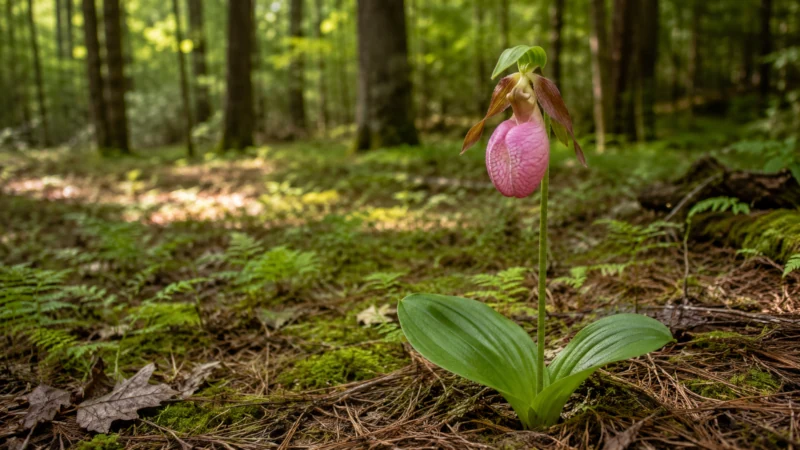
The lady’s slipper plant is a woodland orchid known for its pouch-shaped flower, not a proven herbal treatment. The name covers several slipper orchids, but North American readers are often looking for species in the Cypripedium genus, including pink, yellow, showy, and white lady’s slippers. Their roots were used historically for nervousness, tooth pain, and muscle spasms. Modern evidence does not show that lady’s slipper is an effective or appropriate home remedy. [USDA Forest Service, n.d.] [EBSCO CAM Review Board, 2024]
The practical advice is simple: enjoy the flower where it grows. Do not dig it up, collect the root, make a tincture, or apply the plant to your skin. Many lady’s slipper orchids depend on specific soil fungi, grow slowly, and are vulnerable to collection. Some can also cause a rash. [Maine Natural Areas Program, 2021] [N.C. Cooperative Extension, n.d.]
What is a lady’s slipper plant?
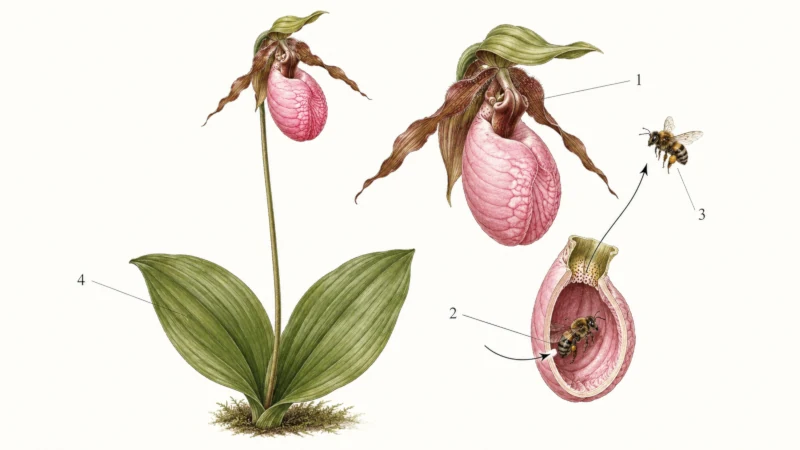
Lady’s slipper orchids get their common name from a modified petal shaped like a small pouch or slipper. In the North American Cypripedium group, the pouch is more than a striking feature. It guides insects through the flower in a one-way route that can transfer pollen. The flower attracts bees, but it does not give them a nectar reward. [USDA Forest Service, n.d.-b]
The common name can be confusing. EBSCO notes that slipper orchids include Cypripedium species native to North America and Europe, as well as other slipper-orchid groups in Asia and South America. This page focuses on wild North American Cypripedium orchids because those are the plants most often discussed in traditional herbal use and conservation guidance. [EBSCO CAM Review Board, 2024]
For related plant profiles and evidence-focused safety notes, browse the site’s herb articles section.
How to identify common lady’s slipper orchids
A pouch-like bloom is the shared clue, but color, leaves, habitat, and flowering season help separate common species. Identification matters because conservation status and local rules vary by species and location. Do not remove a wild orchid to identify it.
| Common name | Scientific name | What to look for | Typical habitat | Source |
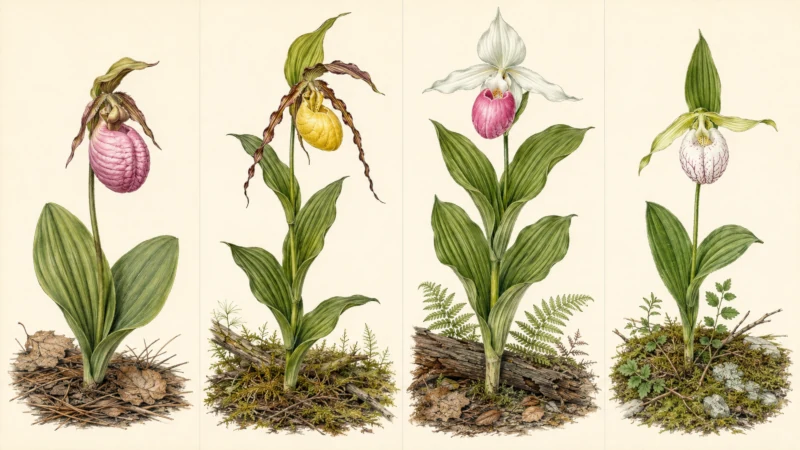
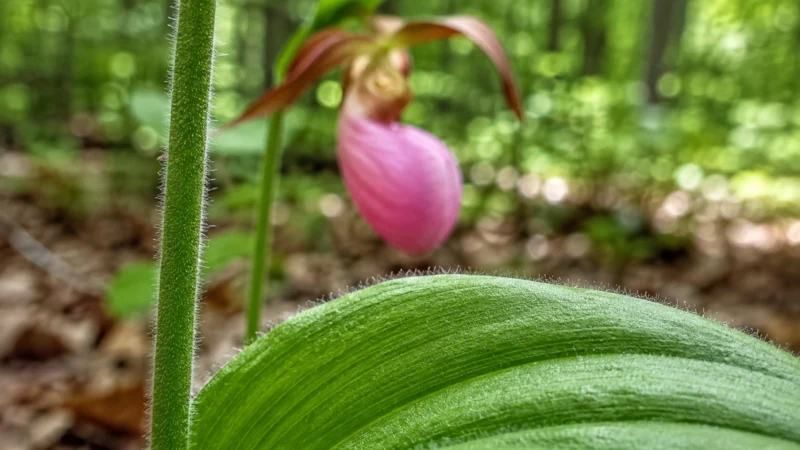
| Pink lady’s slipper | Cypripedium acaule | Usually a single pink pouch-like flower on a leafless stalk above two broad basal leaves. Flowers may occasionally be white. | Dry mixed woods, acidic woodland soils, and some boggy areas. | [USDA Forest Service, n.d.] |
| Yellow lady’s slipper | Cypripedium parviflorum | A yellow pouch with twisted surrounding flower parts. Unlike the pink species, it has leaves along the stem. | Moist, nutrient-rich forests, bogs, and swamps in places where it occurs. | [Maine Natural Areas Program, 2021] [Missouri Department of Conservation, n.d.] |
| Showy lady’s slipper | Cypripedium reginae | A taller leafy plant with white petals and a bright pink pouch. | Moist habitats such as cedar swamps and cedar glades. | [Maine Natural Areas Program, 2021] |
| White lady’s slipper | Cypripedium candidum | A small white pouch with purplish veins or spots. | Open wet habitats, including wet prairies and fens. | [USDA Forest Service, n.d.-b] |
Pink lady’s slipper
Pink lady’s slipper, also called moccasin flower, is the species many hikers recognize first. The U.S. Forest Service describes a plant 6 to 15 inches tall with two opposite basal leaves and a large pink to whitish-pink flower at the end of an erect stalk. It generally flowers between May and July. [USDA Forest Service, n.d.]
Yellow lady’s slipper
Yellow lady’s slipper is easy to separate from the pink species once you look below the flower. The yellow species has leaves along its stem. The Missouri Department of Conservation also describes a yellow pouch surrounded by long, twisted flower parts. [Maine Natural Areas Program, 2021] [Missouri Department of Conservation, n.d.]
Showy and white lady’s slippers
Showy lady’s slipper is taller and carries white petals with a vivid pink pouch. White lady’s slipper has a smaller white pouch and grows in wet, open habitats. These examples show why “lady’s slipper plant” is not a precise species name. [Maine Natural Areas Program, 2021] [USDA Forest Service, n.d.-b]
Why these orchids are difficult to move or grow
A lady’s slipper orchid is tied to its soil community. Its seeds are tiny and lack the stored food that many other seeds use during germination. The plant depends on a relationship with soil fungi that supply nutrients during the earliest growth stages. [USDA Forest Service, n.d.] [Maine Natural Areas Program, 2021]
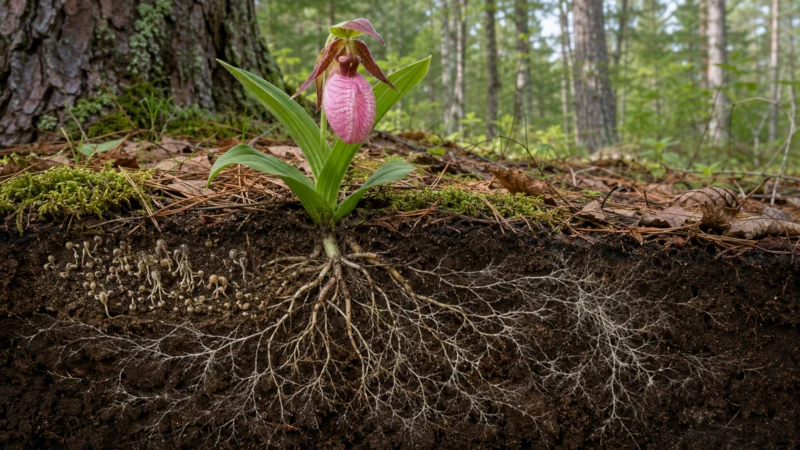
That relationship helps explain why a wild plant often fails after transplanting. UNH Extension reports that pink lady’s slippers do not transplant well, do not propagate easily from seed, and may take a decade or longer to flower for the first time. Moving a plant from your property may be technically allowed in some places, but it is still discouraged because the plant often does not survive. Local and state rules can be stricter, especially on protected land. [UNH Extension, 2021]
If you want a lady’s slipper orchid for a garden, start with a reputable nursery and ask whether the plant was propagated rather than collected from the wild. Check your local rules before buying or planting any native orchid.
Traditional medicinal uses versus modern evidence
Lady’s slipper root has a documented history of traditional use. The U.S. Forest Service notes that the root was used for nervousness, tooth pain, and muscle spasms, and that lady’s slipper and other orchids were used in the 1800s and 1900s as substitutes for European valerian because of their sedative reputation. [USDA Forest Service, n.d.]
Historical use is not the same as proven benefit. The EBSCO CAM Review Board states that there is no scientific evidence showing effectiveness for anxiety, insomnia, or muscle pain and that no double-blind, placebo-controlled trials of lady’s slipper exist. EBSCO also says the optimum oral dose is not known. [EBSCO CAM Review Board, 2024]
Because the evidence is inadequate and wild root collection can damage slow-growing orchid populations, lady’s slipper should not be treated as a do-it-yourself supplement. If you are reading about it because you want a calming option, use cultivated ingredients with a clearer safety profile and discuss your symptoms with a healthcare professional. The site’s nervine tea blend for stress and review of ashwagandha benefits can help you compare other topics without implying that any herb replaces medical care.
Safety: do not use lady’s slipper as a home remedy
Do not ingest wild lady’s slipper, brew the roots, make a tincture, or apply mashed plant material to the skin. The clinical benefit is unproven, the appropriate dose is unknown, and harvesting roots can destroy plants that take years to mature. [EBSCO CAM Review Board, 2024] [Maine Natural Areas Program, 2021]
Skin irritation
Avoid unnecessary handling. N.C. Cooperative Extension lists pink lady’s slipper as a plant that can cause contact dermatitis, with skin irritation after contact with the leaves. Maine’s Natural Areas Program warns that hairs on the stem and leaves of showy lady’s slipper may cause a rash similar to poison ivy. [N.C. Cooperative Extension, n.d.] [Maine Natural Areas Program, 2021]
Who should avoid it
No one should use wild lady’s slipper as a medicinal product. Children, pregnant or breastfeeding people, people taking prescription medicines, and anyone with a history of plant-related skin reactions have added reasons to avoid it. The absence of reliable dosing and clinical safety data makes self-treatment a poor choice. [EBSCO CAM Review Board, 2024]
When to seek medical care
Call a healthcare professional if you develop a persistent rash after touching a plant. Seek urgent care for swelling of the face or throat, trouble breathing, a rapidly spreading reaction, or symptoms of a serious infection. Tooth pain with facial swelling, fever, or difficulty swallowing needs prompt dental or medical care. Severe anxiety, panic symptoms, or ongoing insomnia also deserve professional attention.
What to do if you find one outdoors
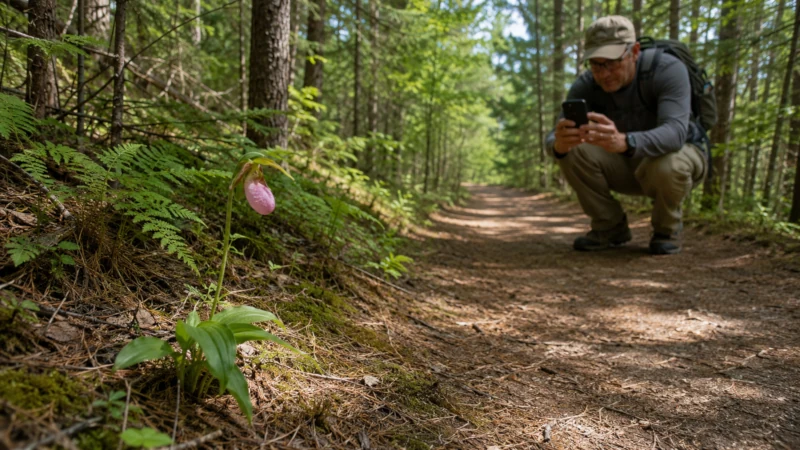
A wild lady’s slipper is best treated as a plant to observe, photograph, and leave in place. Maine’s Natural Areas Program discourages collection even for common species because these orchids need specific habitats and can become scarce through over-collection. [Maine Natural Areas Program, 2021]
- Take a photo without trampling nearby plants. Step off the trail only where local rules allow it.
- Do not pick the flower or dig the roots. Root collection can damage or kill a slow-growing plant.
- Do not assume a transplant will survive. The orchid depends on a soil-fungus relationship that is hard to recreate.
- Check local rules. Protections differ by species, state, province, park, and landowner.
- Use nursery-propagated plants only. Ask the seller where the orchid came from before buying.
| Health disclaimer: This page is for education only. Lady’s slipper should not be used as a home remedy, supplement, tea, tincture, or topical treatment. The evidence for medicinal benefit is inadequate, wild harvesting can damage vulnerable orchid populations, and contact with some species can irritate the skin. Ask a qualified healthcare professional about symptoms such as anxiety, insomnia, muscle spasms, or tooth pain. Seek urgent care for severe symptoms, signs of infection, or a serious allergic reaction. |
Frequently Asked Questions
Is the lady’s slipper plant poisonous?
Some lady’s slipper orchids can irritate the skin. N.C. Cooperative Extension lists pink lady’s slipper as a contact-dermatitis risk, and Maine’s Natural Areas Program gives a similar warning for showy lady’s slipper. Avoid handling wild plants, and wash exposed skin if contact occurs. [N.C. Cooperative Extension, n.d.] [Maine Natural Areas Program, 2021]
Can you use lady’s slipper for anxiety or sleep?
It was used historically for calming purposes, but the evidence does not support using it as a treatment for anxiety or insomnia. EBSCO reports no double-blind, placebo-controlled trials and no established optimum oral dose. [EBSCO CAM Review Board, 2024]
Is it illegal to pick a lady’s slipper flower?
Rules depend on the species and location. UNH Extension notes that the legal picture can vary even for pink lady’s slipper. Protected land, rare-plant rules, and local laws may prohibit collection. Leave wild orchids in place regardless of the minimum legal standard. [UNH Extension, 2021]
Can you transplant a lady’s slipper plant into a garden?
Wild transplants often fail. Lady’s slippers depend on soil fungi, and pink lady’s slippers can take a decade or longer to flower for the first time. Choose a nursery-propagated plant instead of digging one from the wild. [UNH Extension, 2021] [Maine Natural Areas Program, 2021]
What is the easiest way to identify a pink lady’s slipper?
Look for a single pink pouch-like flower above two broad basal leaves with parallel veins. The U.S. Forest Service says the plant is usually 6 to 15 inches tall and flowers between May and July. [USDA Forest Service, n.d.]
References
- EBSCO CAM Review Board. “Lady’s slipper orchid’s therapeutic uses.” EBSCO Research Starters, 2024. → View source
- Maine Natural Areas Program. “Lady’s-slippers in Maine.” Maine Department of Agriculture, Conservation & Forestry, 2021. → View source
- Missouri Department of Conservation. “Yellow Lady’s Slipper.” Field Guide, n.d. → View source
- N.C. Cooperative Extension. “Cypripedium acaule (Moccasin-flower, Pink Lady Slipper).” Extension Gardener Plant Toolbox, n.d. → View source
- UNH Extension. “Can You Dig Up Pink Lady’s Slippers?” March 29, 2021. → View source
- U.S. Forest Service. “Pink Lady’s Slipper (Cypripedium acaule Ait.).” Plant of the Week, n.d. → View source
- U.S. Forest Service. “White Lady Slipper Orchid (Cypripedium candidum).” Plant of the Week, n.d. → View source
