
Horseweed is the kind of plant most people step over without a second look — a tall, scruffy weed in parking lots, fields, and along roadsides. Yet it has earned a place in North American and European folk medicine for centuries, mostly as an astringent for diarrhea and minor bleeding and as a diuretic for urinary complaints.
If you’re reading up on horseweed benefits, here’s the honest starting point: the traditional record is long and a few laboratory findings are intriguing, but almost no human studies sit behind any of it [MedicineNet, 2023]. That doesn’t make the plant worthless. It means the sensible way to think about horseweed is as a mild remedy for minor problems — not a treatment for anything serious.
What horseweed is
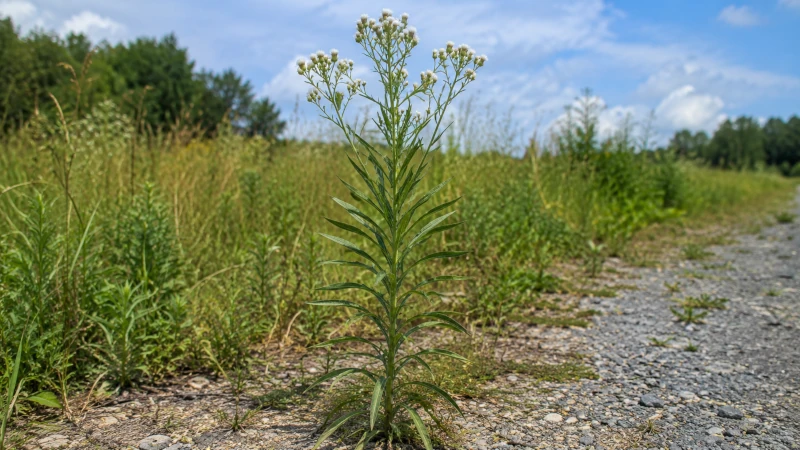
Horseweed is Erigeron canadensis, also catalogued under its old name Conyza canadensis, and known as Canadian fleabane or Canadian horseweed. It belongs to the daisy (Asteraceae) family. Native to North America, it was carried to Europe in the 1600s and now grows on disturbed ground across most of the world. It’s an annual with a single bristly stem that can reach two meters, crowded narrow leaves, and sprays of tiny white-to-cream flower heads.
It also has a bit of a reputation among botanists: horseweed was the first weed to evolve resistance to glyphosate (Roundup) — a survival story, if not a health one. The young leaves are edible and have been cooked as a green. For medicinal purposes, the leaves and flowering tops are the parts traditionally used.
What’s inside it — and why tradition used it the way it did
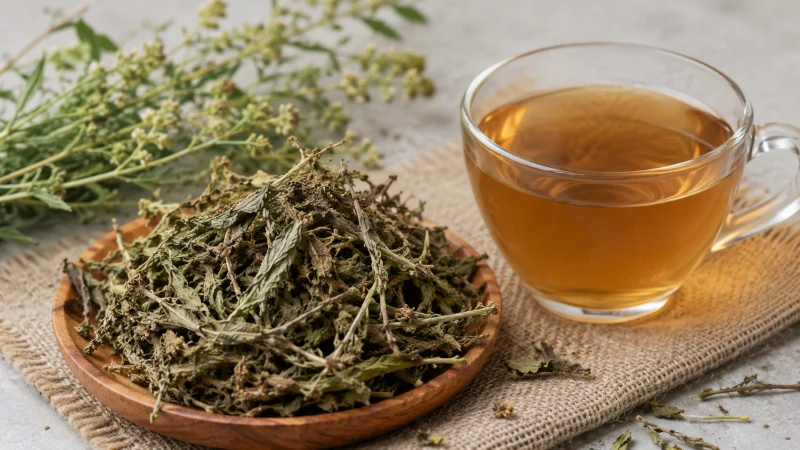
Horseweed’s folk uses line up neatly with its chemistry. The leaves and tops carry tannins, which tighten and bind tissue; flavonoids and phenolic acids, which act as antioxidants; and an essential oil rich in limonene and other terpenes, historically sold as “oil of fleabane” or oil of Erigeron [Al-Snafi, 2017]; [MedicineNet, 2023].
Those tannins explain the two oldest uses. Because they bind proteins on contact and have an astringent, drying effect, it’s plausible that a tannin-rich plant would calm a loose gut and slow oozing from small surface bleeds [Medscape]. Worth keeping in mind, though: chemistry that explains a tradition is not the same as proof that the remedy works in people.
Horseweed benefits and traditional uses: claimed vs. shown
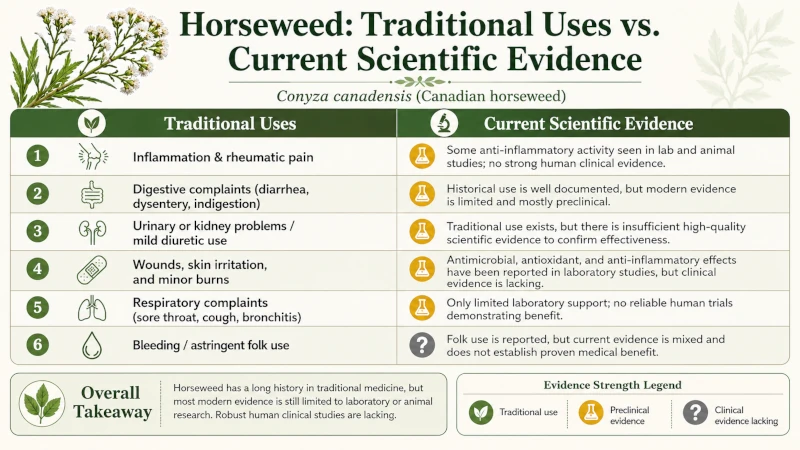
Nearly everything written about horseweed traces back to historical herbals plus a small set of lab and animal studies. Here’s an honest read on each major use.
| Traditional use | What tradition claims | What the evidence actually shows |
| Diarrhea, dysentery | An astringent that firms up a loose gut | Long folk use; tannins give a plausible mechanism — but no human trials [MedicineNet, 2023] |
| Minor bleeding (styptic) | “Oil of Erigeron” slows minor bleeds and nosebleeds | One mouse study reduced bleeding, but less than the drug warfarin and weaker than a comparison plant [Al-Snafi, 2017] |
| Urinary & fluid complaints | A diuretic for the bladder, gout, and “gravel” | Described as a diuretic in herbal monographs; tannin-related mechanism; no human trials [Medscape] |
| Antioxidant, antimicrobial, mood, cough | A broadly “tonic” healing herb | Early lab and rodent findings only — not yet meaningful for self-care [Al-Snafi, 2017]; [Šutovská et al., 2022] |
Diarrhea and an upset gut
This is horseweed’s most consistent traditional role. As an astringent, it was brewed into a tea for simple diarrhea, and the same logic underlies its folk use for more severe gut illness. The mechanism is reasonable, and a mild astringent tea is unlikely to hurt a healthy adult with a brief, ordinary bout. But “reasonable mechanism” is where the evidence stops — there are no clinical trials showing horseweed shortens or settles diarrhea in people [MedicineNet, 2023]. For ordinary cases, rest and fluids do most of the work; you can read more in our guide to foods that help with diarrhea.
Minor bleeding
Old herbals describe oil of Erigeron as a hemostatic — something to slow minor bleeding, including nosebleeds and small bleeds after childbirth. There’s a sliver of experimental support: in one mouse study, a horseweed extract reduced bleeding compared with no treatment, though it worked less well than warfarin and was outperformed by a different plant in the same experiment [Al-Snafi, 2017]. That’s a modest animal signal, not evidence you can rely on for yourself. The key word in every careful herbal text here is minor. Anything more than a small, obvious bleed belongs with a clinician.
Fluid balance and urinary complaints
Horseweed has a long reputation as a diuretic, used for bladder irritation, gout, and urinary “gravel,” and that effect is attributed to its tannins in pharmacology references [Medscape]. Again, the human evidence isn’t there. If you’re dealing with recurrent urinary symptoms or stones, the plant is no substitute for a proper workup — and our overview of natural approaches to kidney stones covers more useful ground.
What the lab and animal studies hint at
Most modern research on horseweed happens in test tubes and rodents, and some of it is genuinely interesting. Extracts have shown antioxidant, antimicrobial, and anti-inflammatory activity in the lab; a horseweed extract protected mice against stomach ulcers; and a polyphenol complex from the plant produced a cough-suppressing effect in animals that approached codeine in one study [Al-Snafi, 2017]; [Šutovská et al., 2022]. These are worth watching. They are not a reason to treat yourself, because lab and animal findings routinely fail to hold up in humans.
A plain-spoken consumer drug reference sums up the whole picture well: horseweed has been used traditionally for diarrhea, bladder problems, and menstrual irregularities, but there are no scientific studies supporting any of those uses [MedicineNet, 2023]. Keep that in view as you read anything that sounds more certain.
What horseweed can’t do — symptoms that need a doctor, not a weed
Some of horseweed’s oldest listed “uses” are for conditions that are genuinely dangerous to self-treat. Historic texts recommend it for heavy uterine bleeding, blood in the urine, dysentery, and even typhoid fever. None of those are minor complaints:
- Abnormal or heavy uterine bleeding. Causes range from hormonal shifts to fibroids to, rarely, cancer. It needs evaluation, not a tea.
- Blood in the urine (hematuria). This can point to infection, kidney stones, or bladder or kidney cancer. Never self-treat it.
- Bloody or mucus-filled diarrhea, high fever, or signs of dehydration. These can signal a serious infection that needs medical care, sometimes urgently.
| When to skip self-care and get medical help If bleeding is more than minor, if there’s blood where it shouldn’t be, or if you have a fever and can’t keep fluids down, that’s a call-your-doctor or urgent-care situation — not a tea situation. No herb is an appropriate stand-in for any of the conditions above. |
How horseweed is traditionally prepared
There is no standardized medicinal dose for horseweed, because it hasn’t been studied that way [RxList, 2021]. Traditional preparations from herbal texts include:
- Infusion or decoction: roughly a tablespoon of dried leaves per cup of water, up to two or three cups a day.
- Dry extract: about one to two grams a day, split across two or three doses.
- Essential oil (oil of fleabane): potent, historically diluted in a carrier oil and never taken neat.
If you decide to try it for a minor, ordinary complaint, treat those traditional amounts as ceilings rather than targets, start low, and stop if anything feels off. The better move is to run it past a pharmacist or a clinician who knows your history first — especially if you take any regular medication.
Side effects, interactions, and who should avoid it
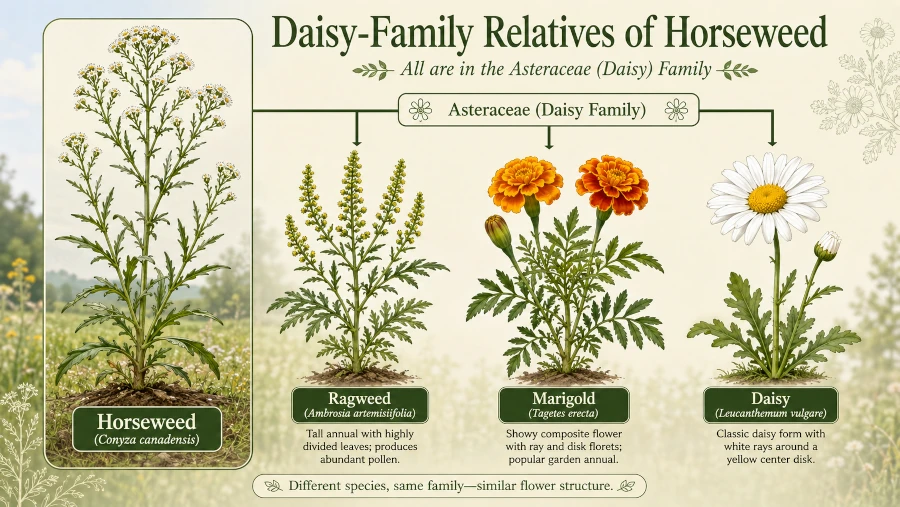
Horseweed is reasonably well tolerated by healthy adults in small amounts, but it isn’t risk-free.
- Allergy. It sits in the daisy family alongside ragweed, marigolds, and chrysanthemums. If you react to those, horseweed can trigger you too, and skin contact with the plant can cause dermatitis [MedicineNet, 2023].
- Too much tannin. Astringent in small doses, tannins can irritate the stomach in larger amounts and aren’t benign over time [Song of the Woods, 2025].
- Pregnancy and breastfeeding. Avoid it. Horseweed has a traditional reputation as an emmenagogue (a uterine and menstrual stimulant), there’s no safety data during pregnancy or nursing, and “no data” here means “don’t” [MedicineNet, 2023]; [RxList, 2021].
- Medication interactions. No serious interactions are formally documented [RxList, 2021] — but that reflects how little the plant has been studied, not a clean bill of health. Because it’s described as a diuretic, be cautious pairing it with prescription diuretics or with drugs sensitive to fluid balance such as lithium, and because tannins can bind compounds in the gut, separate horseweed from your medications by a couple of hours. Ask a pharmacist if you take anything regularly.
- Where it grows. Horseweed absorbs what’s around it. Never harvest from roadsides, sprayed lots, or industrial edges.
Who should skip horseweed entirely: anyone pregnant or breastfeeding; anyone with a ragweed or daisy-family allergy; anyone with serious bleeding, blood in the urine, or a high fever (see the section above); children; and anyone on multiple medications without professional sign-off.

Talk to a healthcare professional if your symptoms last more than a day or two, keep coming back, involve bleeding or fever, or you’re managing a chronic condition or taking prescription drugs.
| Health disclaimer This article is for general education and information only. It is not medical advice and is not a substitute for diagnosis or treatment by a qualified healthcare professional. Herbs can interact with medications and aren’t right for everyone. If you are pregnant, breastfeeding, taking medication, or managing a health condition — or if you have bleeding, blood in your urine, or a fever — talk to your doctor before using horseweed or any herbal remedy, and seek prompt care for serious or worsening symptoms. |
Frequently Asked Questions
Is horseweed safe to drink as a tea?
For a healthy, non-pregnant adult, an occasional cup of mild horseweed infusion for a minor complaint is generally low-risk. The main cautions are allergy (it’s a daisy-family plant), tannin-related stomach upset in larger amounts, and the fact that no clinical studies confirm it actually helps [MedicineNet, 2023]; [RxList, 2021].
Does horseweed really stop bleeding?
Traditionally it was used to slow minor bleeding, and one mouse study showed a modest effect — weaker than standard medication [Al-Snafi, 2017]. There’s no human evidence, and any significant bleeding should be evaluated by a clinician rather than self-treated.
Can I take horseweed while pregnant or breastfeeding?
No. It has a folk reputation as a uterine stimulant and there’s no safety data in pregnancy or nursing, so the cautious and correct answer is to avoid it [MedicineNet, 2023]; [RxList, 2021].
Is horseweed the same as Erigeron canadensis and Conyza canadensis?
Yes. They’re the same plant. Erigeron canadensis is the current scientific name, Conyza canadensis is the older synonym, and “Canadian fleabane” is a common name.
Does horseweed interact with medications?
No serious interactions are formally listed, but it’s barely been studied [RxList, 2021]. Given its diuretic reputation and tannin content, check with a pharmacist before combining it with prescription medicines, and don’t take it at the same time of day as other drugs.
Are the lab studies a reason to start using it?
Not yet. The antioxidant, antimicrobial, anti-ulcer, and cough-suppressing findings come from test tubes and animals [Al-Snafi, 2017]; [Šutovská et al., 2022], and results like those often don’t translate to people.
References
- MedicineNet. Horseweed. View source
- RxList. Horseweed. View source
- Medscape Reference. Canadian fleabane (Conyza canadensis / Erigeron canadensis). View source
- Al-Snafi AE. Pharmacological and Therapeutic Importance of Erigeron canadensis (Syn: Conyza canadensis). Indo Am J Pharm Sci, 2017. View source
- Šutovská M, et al. Chemical characteristics and significant antitussive effect of the Erigeron canadensis polyphenolic polysaccharide-protein complex. J Ethnopharmacol, 2022. View source
- Anxiolytic and Antidepressant-Like Effects of Conyza canadensis Aqueous Extract (rat model). 2021. View source
- Pamplona-Roger GD. Encyclopedia of Medicinal Plants. Editorial Safeliz, 2000
