Short version: a couple of adaptogenic herbs — ashwagandha and rhodiola most of all — have reasonable human evidence for lowering general stress and anxiety, and that can make social situations feel more manageable. None of them has been tested head-on for social anxiety disorder, though, and none replaces therapy. So if you’re weighing adaptogenic herbs for social anxiety, the honest framing is this: a possible add-on to proven care, not the main event.
That distinction matters more than most articles let on, so the sections below keep coming back to it.
Social anxiety disorder is a clinical condition, not just shyness. It’s the kind of thing that makes you reroute your whole day to avoid a presentation or a phone call. The strongest treatments for it are cognitive behavioral therapy (CBT), exposure therapy, and — when a clinician thinks it’s warranted — medication. Herbs sit alongside those, at best. If social anxiety is shrinking your life, that’s the first call to make.
What “Adaptogen” Actually Means (and Doesn’t)
“Adaptogen” is a loose label for botanicals traditionally used to help the body handle stress. The NIH Office of Dietary Supplements describes ashwagandha, for example, as an adaptogen — meaning a compound said to help a person resist or adapt to physical, chemical, and biological stressors in nonspecific ways (NIH ODS). “Nonspecific” is the key word. It’s a general-resilience idea, not a targeted treatment for a named disorder.
That’s why the marketing and the science often diverge. A bottle promising “calm” is leaning on tradition and broad stress research. Whether that translates to your racing heart before a party is a separate, much thinner question.
Why “Anxiety” Evidence Isn’t the Same as “Social Anxiety” Evidence
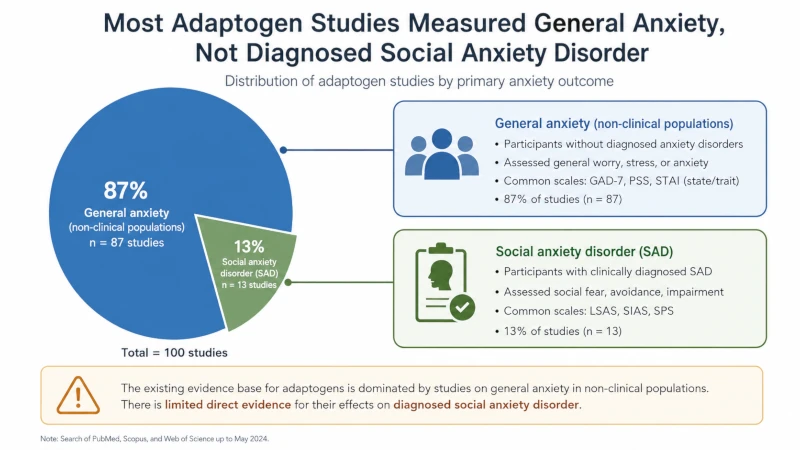
Here’s the trap. A study might show an herb lowers scores on a general anxiety scale in stressed adults. That’s a real finding. But social anxiety disorder has its own diagnostic criteria and its own dynamics — anticipatory dread, fear of judgment, avoidance — and almost none of the adaptogen trials recruited people with that diagnosis or measured it directly. So when you read “reduces anxiety,” read it as general anxiety unless the study says otherwise. The herbs below may help indirectly, by turning down baseline stress. That’s a plausible benefit, not a proven cure.
A quick way to weigh any claim: human randomized controlled trials (RCTs) beat animal or cell studies; systematic reviews that pool several RCTs beat single trials; and U.S. supplements aren’t reviewed for effectiveness before sale, so product quality varies brand to brand.
The Herbs With the Most Relevant Human Evidence
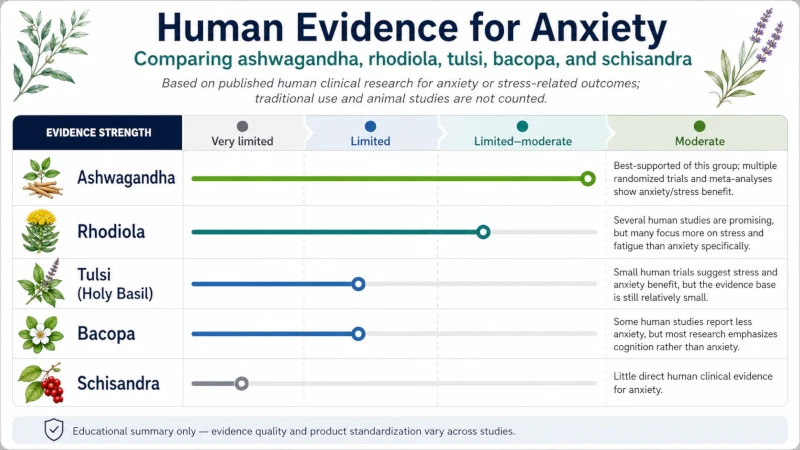
Doses below reflect what researchers used — study ranges, not personal recommendations.
Ashwagandha (Withania somnifera)
This is the one with the most human data. Several randomized, placebo-controlled trials — most small and short — suggest standardized ashwagandha extracts can reduce perceived stress and anxiety and improve sleep, usually over six to eight weeks (NIH ODS). A 2022 meta-analysis pooling 12 RCTs in about 1,000 adults found significant average reductions in both anxiety and stress (Akhgarjand et al., 2022). The catch: those trials varied enormously in their results (statistically, the heterogeneity was very high), so the average benefit is real but the certainty is modest and the effect you personally get could be large, small, or nil.
Study dosing: roughly 240–600 mg/day of a standardized root extract is common, with some trials going higher. The ODS notes it’s genuinely hard to name a single recommended dose because extracts and standardization differ so much (NIH ODS).
Safety: generally well tolerated for up to about three months, with mild side effects like stomach upset, loose stools, nausea, or drowsiness (NIH ODS). Rare cases of liver injury have been reported. It may interact with medicines for diabetes, blood pressure, thyroid, seizures, sedation, and immune suppression, and it can affect thyroid and sex hormones — stop it before surgery. Major health authorities advise against use in pregnancy and breastfeeding due to insufficient safety data, and people with hormone-sensitive conditions should be cautious. Run it past your clinician and pharmacist.
For social anxiety: the best evidence here is for general stress and anxiety, with no trials targeting social anxiety disorder. Reasonable as an adjunct to monitor with your care team; not a sole therapy.
Rhodiola (Rhodiola rosea)
Rhodiola is usually reached for when stress comes with fatigue and low energy. Some trials and reviews report reductions in stress and mild anxiety and improvements in fatigue over the short term, though trial quality is mixed and social-anxiety-specific research is missing.
Study dosing: standardized extracts around 200–400 mg/day, typically for 12 weeks or less.
Safety: the National Center for Complementary and Integrative Health calls rhodiola possibly safe for up to 12 weeks. Side effects can include dizziness, headache, insomnia, and either dry mouth or excess saliva; an interaction with the blood-pressure drug losartan has been reported; and there’s too little data to call it safe in pregnancy or breastfeeding (NCCIH). Because it can feel mildly stimulating, some people do better taking it in the morning to avoid sleep trouble.
For social anxiety: may ease stress-linked anxiety and flagging energy, which can indirectly support showing up to social things — but it hasn’t been proven for the disorder itself.
Holy Basil / Tulsi (Ocimum tenuiflorum)
Tulsi has a long Ayurvedic history and some encouraging modern data. In a 2022 randomized, double-blind, placebo-controlled trial, 100 stressed adults taking a standardized holy basil extract at 250 mg/day for eight weeks showed lower perceived stress and better sleep than placebo (Lopresti et al., 2022). A broader review of human data points the same direction while calling for more rigorous trials (Jamshidi & Cohen, 2017).
Study dosing: trials have used roughly 250–1,200 mg/day depending on the specific extract, usually for four to eight weeks. Standardization varies a lot between brands.
Safety: generally well tolerated in studies, but comprehensive interaction and pregnancy data are limited. Get medical guidance if you’re on medications, pregnant, or nursing.
For social anxiety: promising for stress, untested for social anxiety specifically. A complement, not a replacement.
Bacopa (Bacopa monnieri)
Bacopa is studied mostly for memory and attention, with some signals for anxiety. Several trials and reviews report cognitive benefits, and a few note anxiety reduction, though results aren’t consistent (Calabrese et al., 2008; StatPearls, Bacopa monnieri). The cognitive angle is the interesting part for social settings — sharper attention and processing can help when stress would otherwise scatter your thoughts mid-conversation.
Study dosing: around 300 mg/day of a standardized extract (often ~55% bacosides), usually over 8–12 weeks or longer. Effects tend to build slowly.
Safety: generally well tolerated; the most common side effect is stomach upset. Discuss your medications and conditions with a clinician.
For social anxiety: may help general anxiety for some and support focus, but it’s not a stand-alone treatment.
Schisandra (Schisandra chinensis)
Schisandra is a traditional adaptogen with mostly preclinical backing. A 2019 review describes real mechanistic promise but stresses that the bulk of the evidence is still animal or lab work, with few high-quality human anxiety trials (Nowak et al., 2019).
Study dosing: preparations vary widely and there’s no established dosing framework for anxiety.
Safety: generally well tolerated in limited studies, but it can inhibit the CYP3A4 enzyme and raise blood levels of some drugs (it’s been shown to increase tacrolimus levels in transplant patients), so the interaction potential is real if you take prescription medications. Review it with your clinician.
For social anxiety: interesting but under-studied in humans. Secondary option at most.
Adaptogenic Mushrooms: Reishi and Lion’s Mane
These get marketed alongside adaptogens, and the anxiety evidence is early.
Reishi (Ganoderma lucidum): small studies suggest possible benefits for sleep quality and perceived stress, but the evidence is mixed and low-quality, so there’s no solid claim for a direct anti-anxiety effect yet (Pazzi et al., 2020). A 2025 trial combining reishi with ashwagandha improved perceived stress, but a combination can’t tell you what the reishi did on its own (Gundermann et al., 2025).
Lion’s Mane (Hericium erinaceus): a 2019 pilot study in adults with overweight or obesity reported improved mood and anxiety measures — but it lacked a placebo group, so read it cautiously (Vigna et al., 2019). A 2023 placebo-controlled pilot in 41 healthy young adults found only a trend toward lower stress after 28 days (Docherty et al., 2023). Samples are small and results are inconsistent.
Bottom line on the mushrooms: possibly helpful for general stress management for some people, not established for social anxiety.
One Important Warning: Kava Is Not an Adaptogen
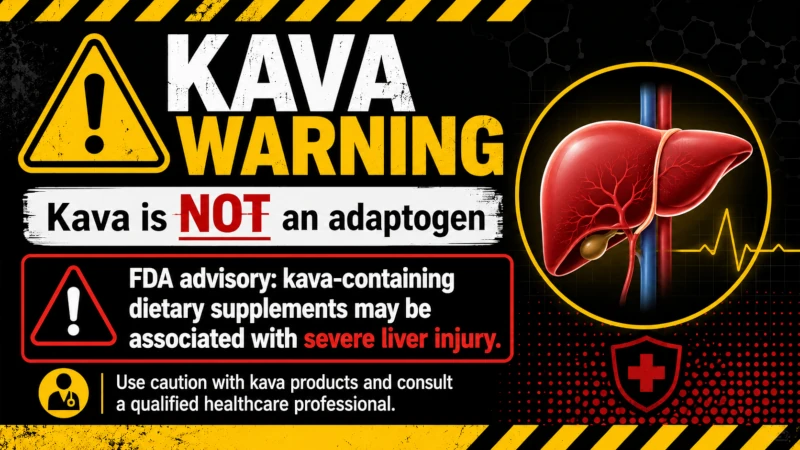
Kava often shows up in “calming herb” lists, and it does have anxiety data — but it carries a serious liver risk and isn’t an adaptogen. In 2002 the FDA issued a consumer advisory after more than 25 reports of liver-related injury, including hepatitis, cirrhosis, and liver failure, tied to kava-containing supplements (NIH ODS; NCCIH). If you’re exploring calming herbs and come across kava, talk through this risk with a clinician first.
How to Choose a Product Without Getting Burned
Because supplements aren’t pre-approved for effectiveness, the brand matters as much as the herb. A few practical filters:
- Buy standardized extracts from brands that publish third-party testing for identity, potency, and contaminants. Many of the studies above used specific standardized extracts, so a random “blend” won’t necessarily behave the same way.
- Start low, go slow, and track. Pick one herb and rate your discomfort 0–10 before and after social situations for four to eight weeks. One variable at a time tells you what’s actually working.
- Don’t stack it with alcohol or sedatives without guidance. Some of these herbs are mildly sedating, and combining them can backfire.
- Skip it in pregnancy or breastfeeding unless your clinician signs off. Safety data are thin for most of these.
Safety, Interactions, and When to Get Help
Medication interactions are the real risk, not exotic side effects. Ashwagandha alone may interact with drugs for blood sugar, blood pressure, thyroid, seizures, sedation, and immune suppression, and schisandra can change how your body clears certain prescriptions. If you take anything regularly — including an SSRI — cross-check with a pharmacist before starting an herb.
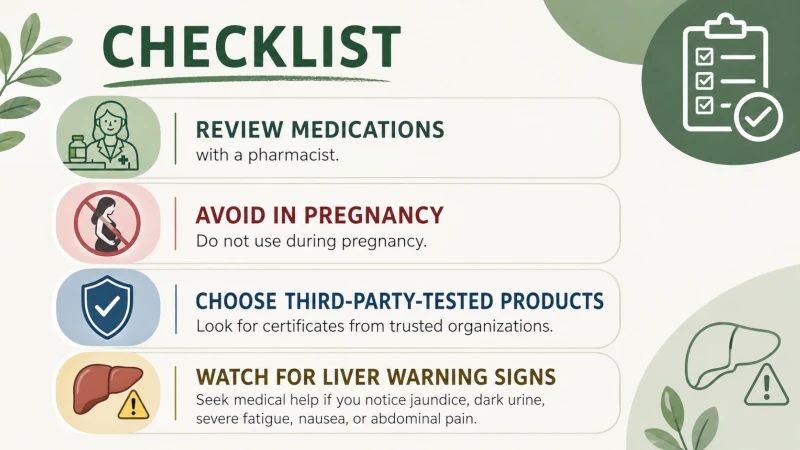
Stop any herb and seek care if you notice yellowing skin or eyes, severe fatigue, a racing heartbeat, sudden mood changes, or a rash. These are the same warning signs public health agencies give for complementary products generally (NCCIH).
And know when herbs aren’t the right tool at all. If your anxiety comes with panic that won’t settle, if you’re avoiding so much that work or school is slipping, or if you’re having thoughts of harming yourself, that’s past the point of self-experimentation — reach out to a mental health professional. In the U.S., you can call or text 988 (Suicide & Crisis Lifeline) any time, or use SAMHSA’s helpline at 1-800-662-4357 for treatment referrals. Asking for help early is the move that actually changes things.
A Realistic 8-Week Plan (Herb Plus Exposure)
Think of an adaptogenic herb as one tool among several — therapy, skills practice, sleep, movement, and sane caffeine habits do the heavy lifting. If you and your clinician decide to try one:
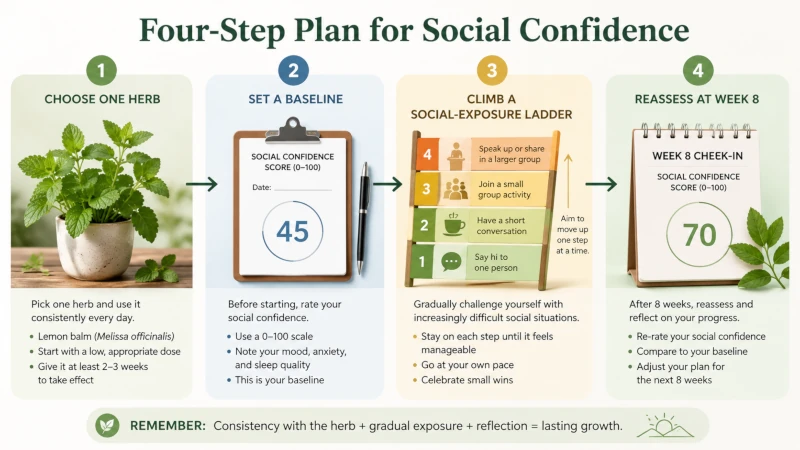
- Pick a single herb with the best evidence-and-safety fit for you (often ashwagandha or rhodiola). Track symptoms weekly for six to eight weeks.
- Build a “social ladder.” Pair the herb with gradual exposure — from saying hi to a barista, to a short group hang — so your nervous system relearns that these situations are survivable. Structured exposure is a cornerstone of effective care, and it’s doing more than the herb is.
- Mind timing. Rhodiola in the morning can help you avoid insomnia; ashwagandha is usually taken once or twice daily per the product’s directions.
- Reassess at eight weeks. No meaningful change, or side effects? Re-evaluate with a professional — keep it, switch, or stop.
Herb-by-Herb Snapshot
| Herb | Best-supported use | Typical study dose | Watch for | Verdict for social anxiety |
| Ashwagandha | General stress & anxiety | ~240–600 mg/day extract, 6–8 wks | Thyroid/hormone effects; many interactions; avoid in pregnancy | Best evidence; reasonable first trial as an adjunct |
| Rhodiola | Stress-fatigue, mild anxiety | ~200–400 mg/day, ≤12 wks | Stimulating; sleep issues; losartan interaction | Helpful indirectly; short-term use |
| Tulsi | Stress, sleep | ~250–1,200 mg/day, 4–8 wks | Limited interaction/pregnancy data | Promising for stress; untested for SAD |
| Bacopa | Cognition; some anxiety | ~300 mg/day, 8–12+ wks | GI upset; slow to act | Focus support; inconsistent anxiety data |
| Schisandra | Stress resilience (preclinical) | No established dose | CYP3A4 drug interactions | Experimental / secondary |
| Reishi / Lion’s Mane | Stress, sleep, mood (early) | Varies | Small, mixed studies | Adjuncts only; prioritize stronger options |
| HEALTH DISCLAIMER This article is for education only and isn’t a substitute for professional medical advice, diagnosis, or treatment. Adaptogenic herbs are not approved to treat, cure, or prevent social anxiety disorder or any disease, and individual responses and product quality vary. Always consult a licensed healthcare provider — and a pharmacist if you take medications, are pregnant or breastfeeding, or have a chronic condition — before starting any herb or supplement. If you’re in crisis, contact a qualified professional or, in the U.S., call or text 988. Use of any information here is at your own risk. |
Frequently Asked Questions
No. At most, herbs like ashwagandha and rhodiola may lower general stress and anxiety, which can make social situations feel more manageable. None has been shown to treat social anxiety disorder, and they don’t replace therapy.
Do I need an “adaptogen stack”?
No strong evidence supports multi-herb stacks over single herbs for anxiety, and combining products makes both safety and attribution murkier. Start with one and see what it does.
How long until I’d notice anything?
Most stress and anxiety trials run six to eight weeks. Some people feel changes sooner, but plan to reassess around the two-month mark with actual symptom tracking rather than going on a hunch.
Can I take these with therapy or an SSRI?
Often yes, but check interactions first. Ashwagandha and schisandra in particular can interact with medications, and your prescriber should be in the loop before you add anything.
Are “natural” products automatically safer?
No. Safety depends on the specific herb, the dose, your health, and product quality. Kava is the cautionary example — herbal, popular, and linked to severe liver injury.
When should I skip herbs and get professional help instead?
If anxiety is disrupting school, work, or relationships, if you’re avoiding most social situations, or if you have panic that won’t settle or any thoughts of self-harm, that’s the point to talk to a mental health professional (or call/text 988 in the U.S.).
References
- NIH Office of Dietary Supplements. Ashwagandha: Is It Helpful for Stress, Anxiety, or Sleep? (Health Professional). View source
- Akhgarjand C, et al. Does ashwagandha supplementation have a beneficial effect on anxiety and stress? Meta-analysis of RCTs. Phytother Res. 2022;36(11):4115–4124. View source
- NCCIH. Rhodiola: Usefulness and Safety. View source
- Lopresti AL, et al. RCT of an Ocimum tenuiflorum (Holy Basil) extract on stress, mood, and sleep. Front Nutr. 2022;9:965130. View source
- Nowak A, et al. Potential of Schisandra chinensis in Human Health and Nutrition. Nutrients. 2019;11(2):333. View source
- Vigna L, et al. Hericium erinaceus Improves Mood and Sleep Disorders in Overweight/Obesity (pilot, no placebo). Evid Based Complement Alternat Med. 2019:7861297. View source
- Docherty S, et al. Acute and Chronic Effects of Lion’s Mane on Cognition, Stress and Mood in Young Adults (pilot). Nutrients. 2023;15(22):4842. View source
- NIH ODS. Kava (FDA 2002 consumer advisory). View source
- NCCIH. Kava. View source
- Jamshidi N, Cohen MM. The Clinical Efficacy and Safety of Tulsi: A Systematic Review. Evid Based Complement Alternat Med. 2017:9217567. View source
- Calabrese C, et al. Standardized Bacopa monnieri extract on cognition, anxiety, and depression. J Altern Complement Med. 2008. View source
- StatPearls. Bacopa monnieri. View source
- Stojcheva EI, Quintela JC. Rhodiola rosea in stress- and anxiety-related symptoms (review). View source
- Pazzi F, et al. Reishi (Ganoderma lucidum) and mood/sleep (review). View source
