
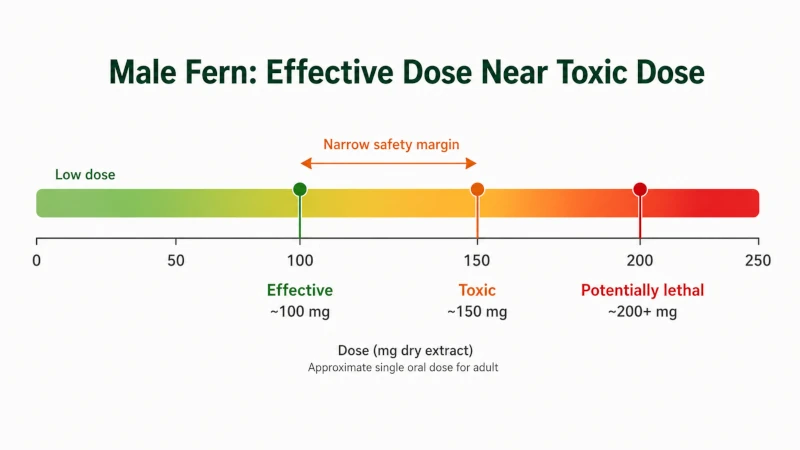
The male fern benefits people still search for belong mostly to pharmacy history, not to a modern self-care routine. Dryopteris filix-mas was an official medicine across Europe and the United States for over a century, prized for one job: expelling tapeworms. The catch is that the same compounds in its rhizome that paralyze a worm can also injure human nerves, eyes, and liver at doses uncomfortably close to the ones once called therapeutic (Drugs.com male fern monograph, 2025; WebMD, n.d.).
So here is the honest version of male fern benefits: what the plant is, what it was used for, what the science actually supports, what the safety record looks like, and what doctors reach for today when a tapeworm is suspected. Read it the way a careful herbalist or a curious patient would, not as a how-to.
What male fern actually is
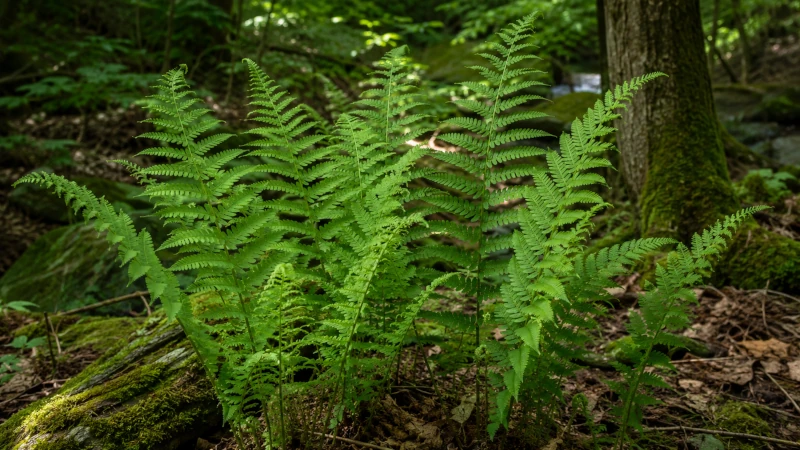
Male fern is a perennial woodland fern native to the temperate Northern Hemisphere, including Europe, Asia, North Africa, and North America (Kew Plants of the World Online, 2026). It favours damp, shaded woodland and shady banks, though near the northern edge of its range it prefers sunnier, well-drained ground, and it is far more common in Europe than in North America (Wikipedia: Dryopteris filix-mas, 2025).
The “male” in the name is a historical quirk, not biology. Ferns reproduce by spores, not sex organs. Sixteenth-century writers simply thought its sturdy, upright fronds looked masculine next to the softer, drooping lady fern (Athyrium filix-femina), and the label stuck (Wikipedia, 2025).
One point where old herbals and modern databases disagree is the plant family. Most current floras — including the Flora of North America and Wikipedia — place D. filix-mas in the family Dryopteridaceae (Wikipedia, 2025). Some botanical databases, including Kew’s Plants of the World Online and the NC State Extension toolbox, still file it under a broadly defined Polypodiaceae (Kew POWO, 2026; NC State Extension, n.d.). Both names refer to the same fern; the difference is how broadly each source draws the family.
At a glance:
| Feature | Detail |
| Scientific name | Dryopteris filix-mas (L.) Schott |
| Family | Dryopteridaceae (some databases list a broad Polypodiaceae) |
| Other common names | Aspidium, bear’s paw, knotty brake, shield fern, worm fern |
| Native range | Temperate Europe, Asia, North Africa, and North America |
| Historically used part | Rhizome (underground stem) and frond bases |
| Key active compounds | Phloroglucinol derivatives: filixic acid (filicin), aspidinol, flavaspidic acid, albaspidin |
What male fern was traditionally used for
For nearly two centuries, male fern was the standard European remedy for tapeworm. The early Greeks and Romans already valued it for expelling worms, and it earned the folk name “worm fern” (Drugs.com, 2025). Its most famous commercial form arrived around 1775, when Madame Nouffer, the widow of a Swiss surgeon, became so well known for curing tapeworm that the French crown reportedly paid her for the recipe — powdered male fern root followed by a purgative. (This origin story is widely repeated in historical accounts; it isn’t drawn from a primary source we could open directly.)
The medicinal preparation was a resin-like extract of the rhizome called aspidium oleoresin. The rhizome contains roughly 6% to 15% of this oleoresin, and D. filix-mas was formerly listed in the United States Pharmacopeia before those entries were later removed (Drugs.com, 2025).
Traditional uses were narrow and centered almost entirely on intestinal worms:
- Taenia saginata (beef tapeworm) and T. solium (pork tapeworm)
- The broad fish tapeworm, now reclassified as Dibothriocephalus latus (formerly Diphyllobothrium latum) (CDC DPDx: Diphyllobothriasis, 2019)
- Hookworm (Ancylostoma duodenale)
A note on names: some older herbals, including the previous version of this article, listed “Bothriocephalus” as a target. That genus name no longer applies to the human broad fish tapeworm. The CDC now uses Dibothriocephalus latus (CDC DPDx, 2019).
Beyond the worm-killing tradition, herbalists in southern Nigeria and other parts of West Africa have used a leaf preparation of D. filix-mas for inflammation, rheumatoid arthritis, wounds, and ulcers (Erhirhie et al., 2019). Those uses rest mostly on traditional knowledge and a handful of animal studies.
How male fern works against worms
The active compounds are phloroglucinol derivatives — chiefly filixic acid (filicin) and related molecules — concentrated in the rhizome. In the gut they paralyze the muscles of tapeworms, so the worm loosens its grip on the intestinal wall and a strong laxative can flush it out (Drugs.com, 2025).
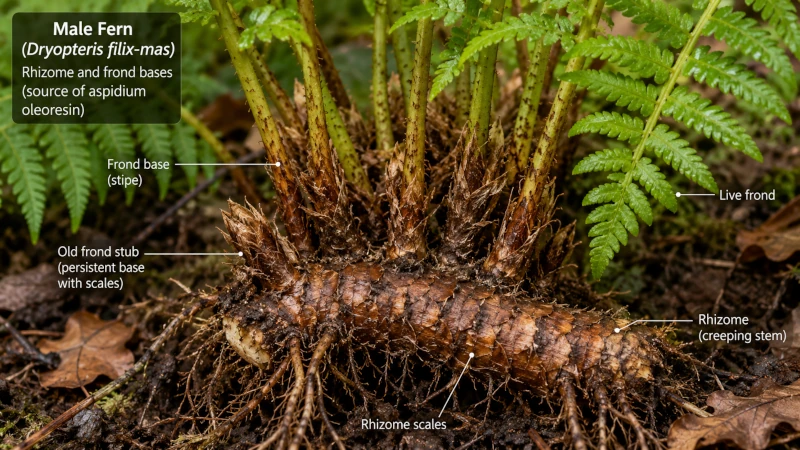
The problem is that those compounds are toxic to the host too. In a 2021 laboratory study using the soil nematode Caenorhabditis elegans as a stand-in for parasitic worms, purified filicinic-acid ethers killed nematodes at concentrations roughly 40 times lower than the crude extract needed — meaning the isolated molecules are extremely potent (Egorova et al., 2021).
The reason traditional protocols were survivable at all is that these compounds are poorly absorbed from the human gut on their own. Absorption climbs sharply in the presence of fats, oils, or alcohol, which is why old protocols banned dietary fat and warned specifically against following the dose with castor oil (see our article on the castor bean plant), even though castor oil is itself a purgative (Drugs.com, 2025).
That narrow gap between an effective dose and a toxic one is the same trap you see with cardiac herbs like foxglove, where the therapeutic dose sits close to the poisonous one (see our overview of herbs that act on the heart). With male fern, the margin is thin enough that it eventually cost the plant its place in medicine.
What modern evidence does — and does not — support
Three parts of the picture need to stay separate.
The anthelmintic action is real, but the human data is old
Clinical use in people peaked in the mid-twentieth century. A 1958 trial compared male fern given by tube against piperazine for expelling tapeworms (Goodwin & Standen 1958, cited in Drugs.com, 2025). Since then, most new work has been in test tubes or in veterinary models rather than in people. The 2021 nematode study above is a good example: it confirms the extract is toxic to worms but says nothing about a safe human dose (Egorova et al., 2021). None of it is comparable to a modern registered-drug trial.
The anti-inflammatory work is early stage
A 2019 study from Nnamdi Azikiwe University in Nigeria found that an ethanolic leaf extract reduced paw swelling and arthritis in animal inflammation models, and identified the flavonoid quercetin-3-O-α-L-rhamnopyranoside as the active compound (Erhirhie et al., 2019). It’s an interesting lead, but it is animal-only, and it uses the leaf — not the rhizome, which is where the heavy toxic load sits.
There are no controlled human trials that justify modern use
The 2025 Drugs.com monograph states plainly that clinical evidence does not support any specific dose of male fern and that toxicities have been reported at traditional doses (Drugs.com, 2025). WebMD goes further, calling oral male fern “likely unsafe” and warning that swallowing it can cause very serious harm, including death (WebMD, n.d.).
Why male fern fell out of medical use
Three things ended its medical career.
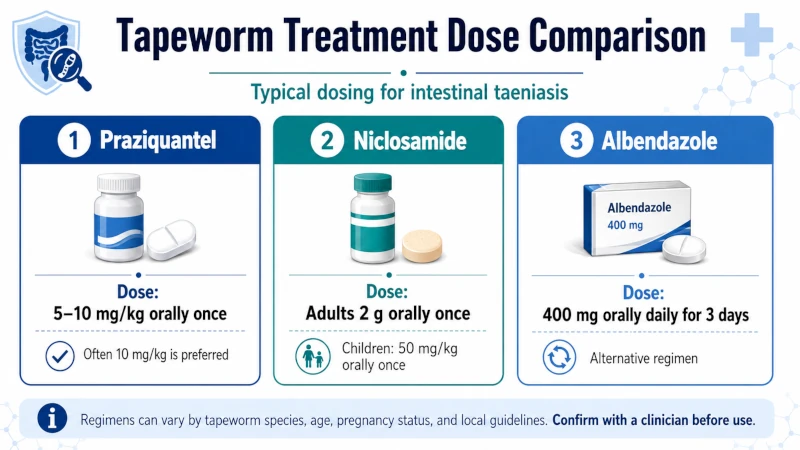
First, safer drugs arrived. Praziquantel and niclosamide cure most tapeworm infections in a single oral dose, with mild side effects, and albendazole given for three days is another option (CDC clinical treatment of taeniasis, 2024). None of these requires a separate purgative, a fat-free diet, or careful titration to avoid poisoning.
Second, the toxicity is severe. Reported reactions to male fern include nausea, diarrhea, vertigo, headache, tremor, difficulty breathing, convulsions, and cardiac and respiratory failure, along with impaired vision and jaundice (Drugs.com, 2025). The rhizome is toxic enough that overdoses have caused serious poisoning, blindness, and death (Wikipedia, 2025).
Third, regulators acted. Male fern was removed from the United States Pharmacopeia, and Canada now requires that products containing male fern be labelled “For external use only” (WebMD, n.d.).
Male fern safety profile
Common, dose-dependent adverse effects
- Nausea, vomiting, diarrhea, abdominal cramps
- Headache, dizziness, vertigo, tremor
- Difficulty breathing
Serious adverse effects
- Impaired vision, sometimes progressing to blindness
- Jaundice and liver injury
- Convulsions
- Cardiac and respiratory failure
- Death
These reactions are documented at traditional “therapeutic” doses, which is exactly why the plant is no longer used (Drugs.com, 2025; Wikipedia, 2025).
Toxicity rises sharply when male fern is taken with fats, oils, or alcohol, all of which increase how much of the rhizome’s phloroglucinols the gut absorbs. This is why castor oil was specifically banned in older protocols even though it is a strong purgative — the oil dramatically raises absorption of the toxic compounds (Drugs.com, 2025).
Interactions worth knowing
- Male fern extract combined with castor oil increases absorption and toxicity — a documented, and dangerous, combination (Drugs.com, 2025).
- A diet high in fats and oils, including lipid-based supplements, raises absorption and therefore risk.
- Certain stomach and intestinal conditions can increase how much male fern the body absorbs, pushing a given dose toward the toxic range (WebMD, n.d.).
Who must avoid male fern entirely
Oral male fern is not something to experiment with in any form, and it is flatly off-limits if you are:
- Pregnant or trying to conceive. Safety in pregnancy has not been established, and the guidance is to avoid it (Drugs.com, 2025). One in-vitro study actually found that a leaf extract reduced uterine contractions in mouse tissue (Bafor et al., 2017) — the point is that its effects on the uterus are poorly understood, and its general toxicity alone makes it unsafe.
- Breastfeeding (Drugs.com, 2025).
- A child, an adolescent, or older and frail.
- Living with liver disease, kidney disease, a seizure disorder, eye disease, a heart condition, or a stomach or intestinal condition that could raise absorption (WebMD, n.d.).
- Following a high-fat diet, taking fish oil or other lipid-based supplements, or drinking alcohol regularly.
What doctors use for tapeworms in 2026
If a stool test or imaging confirms a tapeworm, the standard treatments are short, oral, and generally well tolerated (CDC, 2024).
| Drug | Typical adult dose | Notes |
| Praziquantel | 5–10 mg/kg orally, single dose | First-line for Taenia per the CDC; 10 mg/kg may cure more cases than 5 mg/kg. Available for human use in the US. |
| Niclosamide | 2 g orally, single dose | Effective alternative, but not currently available for human use in the United States. |
| Albendazole | 400 mg orally daily for 3 days | An option for taeniasis; available in the US. |
Praziquantel and albendazole need extra care when cysticercosis is suspected, because there are reports of seizures associated with treatment. A clinician may re-examine stool 1 and 3 months after treatment to confirm the infection has cleared (CDC, 2024).
Safer botanical options people confuse with male fern
Several traditional anti-parasitic plants have far gentler safety profiles, and our roundup of herbs that support the body against intestinal parasites covers more of them. Common food-grade examples include:
- Pumpkin seeds (Cucurbita pepo) — cucurbitin appears to help detach tapeworms in laboratory and small clinical studies, and pumpkin seeds are safe at culinary doses.
- Garlic (Allium sativum) — has antiparasitic activity in the lab; human evidence is limited, but dietary use is safe.
- Papaya seeds (Carica papaya) — small studies suggest activity against intestinal worms, and they are well tolerated at modest doses.
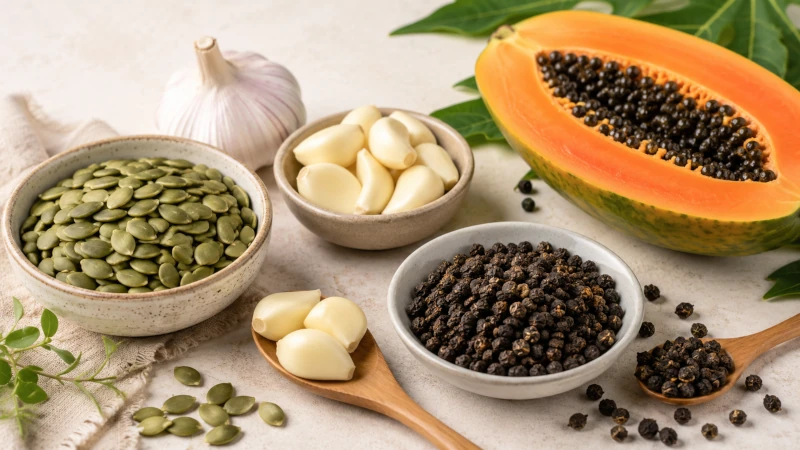
None of these replaces medical evaluation when a parasite is suspected. They are forgiving; Dryopteris filix-mas is not.
The female fern (Polypodium vulgare) is a related plant traditionally used as a mild laxative and a much gentler vermifuge. It still isn’t first-line care, but it is far less toxic than the male fern rhizome.
When to see a doctor
See a healthcare professional promptly if you notice:
- Unexplained weight loss or persistent abdominal pain
- Visible worm segments in your stool
- Long-standing diarrhea, especially after raw or undercooked fish, beef, or pork
- Anal itching, especially at night (often pinworm in children)
- Fatigue and pallor that could point to vitamin B12 deficiency, sometimes a clue to fish tapeworm
Seek urgent care if you or someone else has taken male fern and develops blurred vision, severe vomiting, confusion, seizures, or yellowing of the skin or eyes.
| HAEALTH DISCLAIMER: This article is for general education. It is not a substitute for diagnosis, treatment, or advice from a licensed healthcare professional. Dryopteris filix-mas contains compounds that can cause vision loss, liver damage, and death at doses close to traditional “therapeutic” amounts. Do not self-administer male fern in any form. If you suspect an intestinal parasite, speak with a doctor or pharmacist about evidence-based options such as praziquantel, niclosamide, or albendazole. People who are pregnant, breastfeeding, taking other medications, or living with a chronic illness should consult a clinician before using any herb or supplement. |
Frequently Asked Questions
Is male fern safe to take as a tapeworm remedy?
No. The dose that paralyzes a tapeworm sits uncomfortably close to the dose that harms the eyes and liver. Male fern was withdrawn from the United States Pharmacopeia, and WebMD classifies oral use as “likely unsafe” (WebMD, n.d.).
Can male fern really cause blindness?
Yes. Impaired vision is a recognized reaction, and overdoses have caused blindness (Drugs.com, 2025; Wikipedia, 2025).
Why did old herbal books recommend it, then?
Because for two centuries it was the best available option. Niclosamide and praziquantel are what made male fern obsolete — not any new discovery about the plant itself.
Is the leaf safer than the rhizome?
The leaf carries far less of the toxic phloroglucinols, and the animal anti-inflammatory research uses the leaf specifically (Erhirhie et al., 2019). Even so, there is no validated human dose and no good reason to experiment.
Is bracken fern the same plant?
No. Bracken (Pteridium aquilinum) is a different fern from a different family. It is also toxic — a recognized animal carcinogen linked to higher stomach and esophageal cancer rates where it is eaten. Neither plant is safe for routine use.
References
- Drugs.com. Male Fern: Uses, Benefits & Dosage. Medically reviewed by Drugs.com. Last updated October 22, 2025. View source
- WebMD. Male Fern: Overview, Uses, Side Effects, Precautions, Interactions, Dosing and Reviews. n.d. View source
- Royal Botanic Gardens, Kew. Dryopteris filix-mas (L.) Schott — Plants of the World Online. 2026. View source
- Wikipedia. Dryopteris filix-mas. 2025. View source
- Centers for Disease Control and Prevention. DPDx — Diphyllobothriasis (Dibothriocephalus latus). Last reviewed 2019. View source
- Centers for Disease Control and Prevention. Clinical Treatment of Taeniasis. May 3, 2024. View source
- Centers for Disease Control and Prevention. About Human Tapeworm (Taeniasis). June 13, 2024. View source
- Erhirhie EO, Emeghebo CN, Ilodigwe EE, et al. Dryopteris filix-mas (L.) Schott ethanolic leaf extract and fractions exhibited profound anti-inflammatory activity. Avicenna J Phytomed. 2019;9(4):396–409. PMID 31309077; PMCID PMC6612247. View source
- Egorova A, Gatiyatullina A, Terenzhev D, Belov T, Kalinnikova T. Toxic action of substances from male fern Dryopteris filix-mas (L.) Schott on free-living soil nematode Caenorhabditis elegans. E3S Web of Conferences 254, 09011 (FARBA 2021). View source
- Bafor EE, Omokaro WO, Uwumarongie OH, et al. Dryopteris filix-mas (Dryopteridaceae) leaves inhibit mouse uterine activity. Journal of Medicinal Plants for Economic Development. 2017;1(1). View source
- NC State Extension Gardener Plant Toolbox. Dryopteris filix-mas. n.d. View source
