
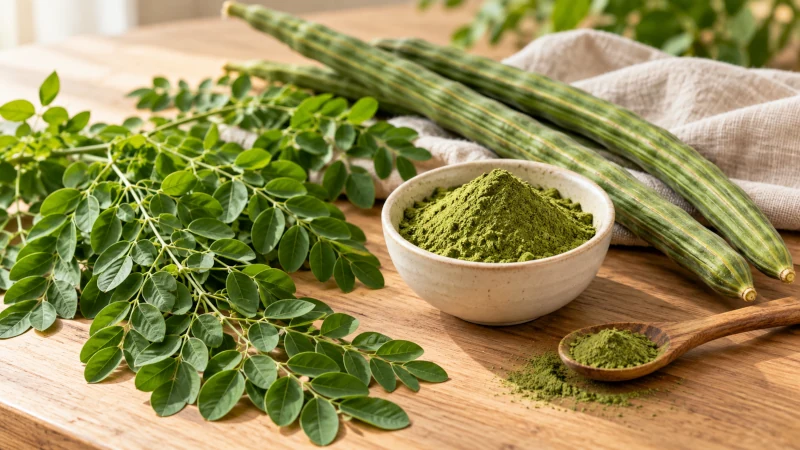
Moringa is a genuinely nutritious leafy green, and that part of its reputation holds up. The fresh leaves of Moringa oleifera — the “drumstick tree” — deliver vitamin A, vitamin C, calcium, and protein for very few calories [USDA data via NutritionValue.org]. The bigger moringa benefits you’ll see promised on supplement labels, like lowering blood sugar, calming inflammation, or protecting your heart, rest on much thinner ground: a handful of small human trials with mixed results, and a large pile of animal and lab studies [MSK, 2023; Nova et al., 2020].
So here’s the honest version. As food, moringa earns a place on your plate. As a supplement, it looks promising in one or two areas and unproven in most — and it isn’t a good fit for everyone, especially if you’re pregnant, take diabetes medication, or rely on a drug that needs steady blood levels.
What moringa is
Moringa is a fast-growing tree native to parts of Asia and Africa and now grown across the tropics. Its leaves and long seed pods (the “drumsticks”) are everyday food in many of those regions, while the bark and root show up mainly in folk remedies. The seeds are even used in simple water-filtration systems [MSK, 2023]. In the Philippines, where it’s called malunggay, the leaves have a long history as a food for new mothers [LactMed, 2026].
In Western shops you’ll mostly find it as dried leaf powder, capsules, tea, or seed oil. Powders and capsules are sold as dietary supplements, which aren’t regulated the way medicines are, so there’s no standardized dose [WebMD, 2025].
Moringa nutrition: what’s actually in the leaves
Here is what USDA data shows for one cup of chopped fresh leaves. A cup weighs only about 21 grams, because the leaflets are tiny and light, so these numbers are for a small amount of food.
| Nutrient | Per 1 cup chopped fresh leaves (21 g) |
| Calories | 13 |
| Protein | 2 g |
| Fiber | 0.4 g |
| Vitamin A | 79 mcg RAE |
| Vitamin C | 10.9 mg |
| Calcium | 39 mg |
| Iron | 0.84 mg |
| Potassium | 71 mg |
| Magnesium | 9 mg |
| Folate | 8 mcg DFE |
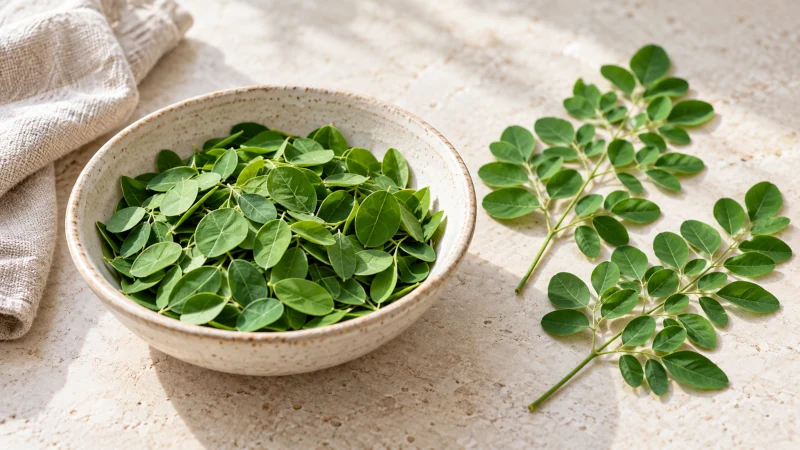
Source: USDA data for drumstick leaves, raw, as published by [USDA data via NutritionValue.org].
Gram for gram, that’s a dense leaf. Dried powder concentrates it further, because the water is gone — but brands differ and there’s no standard USDA entry for moringa powder, so read the label rather than trusting a headline number.
That’s also the right attitude toward the comparisons that follow moringa around (“more vitamin C than oranges,” “more potassium than bananas”). Check whether they pit dried powder against fresh fruit by weight, and remember that most people eat a teaspoon or two of powder, not a bowlful. You’ll also see moringa called a “complete protein.” Whatever its amino-acid profile, the amounts in a typical serving are small, so it won’t move your daily protein much.
If you eat plant-based, moringa leaves are a reasonable addition to a varied diet. Their iron is the plant (nonheme) kind, which your body absorbs less readily, so pairing plant iron with vitamin C matters more than any single “superfood.”
Moringa benefits, graded by the evidence
| Claim | Evidence level | What it means for you |
| Nutrient-dense leafy green | Well established (food composition data) | Worth eating as a vegetable |
| Lowers blood sugar | Limited and mixed (small human trials) | Not a substitute for treatment; watch for lows if you take medication |
| Improves cholesterol | Limited; effect very small | Won’t replace cholesterol medication |
| Increases breast milk | Moderate for short-term milk volume; safety guidance conflicts | Discuss with a lactation consultant first |
| Reduces inflammation / antioxidant | Mostly lab and animal studies | Unproven in people |
| Aids digestion | Traditional use; no human trials found | Unproven |
Blood sugar: promising, but small and mixed
This is the claim you’ll see most. A 2020 systematic review found eight human studies, using anywhere from 4 to 20 grams a day of leaf powder or capsules. Several reported lower after-meal or fasting glucose, but a placebo-controlled randomized trial found no significant difference between moringa and placebo. The authors called the results encouraging and said more trials with enough people who have diabetes or prediabetes are “certainly needed” [Nova et al., 2020].
Individual studies show why the picture is blurry. In one, 46 people taking 8 grams a day for 40 days saw fasting and after-meal glucose fall by 28% and 26%. In a double-blind trial of 65 people taking 2,400 mg a day for 12 weeks, HbA1c improved in 58% of the moringa group versus 38% of the placebo group [Drugs.com, 2026]. Those are interesting results from small studies, not proof.
What to do with that: if your blood sugar is healthy, moringa won’t hurt as food. If you have diabetes, don’t add a moringa supplement without telling your doctor, because a glucose-lowering herb stacked on glucose-lowering medication can push you low. Know the warning signs of low blood sugar before you start anything new. If you’re comparing supplements, our look at metformin vs berberine shows how far the evidence gap between a prescription drug and a supplement can be — and for day-to-day control, diabetic-friendly foods do more heavy lifting than any single herb.
Cholesterol: a real but tiny effect
Human data here is thin. In one study of 35 people with high cholesterol who took 4.6 grams of leaf a day for 50 days, total cholesterol dropped 1.6% and HDL (“good”) cholesterol rose 6.3% [Drugs.com, 2026]. Memorial Sloan Kettering’s review describes the effect on lipids as small [MSK, 2023]. A 1.6% change is not something you’d notice on a lab report, so treat moringa as food here, not therapy.
Breast milk supply: the strongest human data, with a safety split
Of all moringa’s uses, this one has the most human research — and the clearest disagreement between reputable sources.
A 2025 systematic review pooled eight studies of postpartum mothers (only three were randomized controlled trials, about 364 women in total). Doses ran from 250 to 800 mg a day for three days to a month. Moringa increased milk volume by up to 400 mL a day compared with controls, and one study found higher prolactin, the milk-making hormone. The authors flagged the small number of trials and said longer studies are needed to pin down dosing and safety [Ammar et al., 2025].
The U.S. National Library of Medicine’s LactMed database, revised in July 2026, cites a larger meta-analysis (14 studies, 865 participants) that also found more milk, and reports no serious short-term adverse effects in mothers or their breastfed babies. It adds two cautions: long-term benefit to infants hasn’t been studied, and moringa may stimulate blood clotting, so anyone at high risk of clots should be careful [LactMed, 2026].
On the other side, Memorial Sloan Kettering and the Drugs.com professional monograph both advise against moringa while breastfeeding, citing a lack of safety information [MSK, 2023; Drugs.com, 2026]. The sources don’t agree, and you should know that. A practical middle path: if milk supply is the concern, see a lactation consultant first — latch, feeding frequency, and pumping technique fix more supply problems than any herb, and LactMed stresses that galactagogues should support, not replace, that evaluation [LactMed, 2026].
Inflammation, antioxidants, and immunity: mostly lab and animal work
Moringa leaves contain polyphenols such as flavonoids and phenolic acids, and in lab and animal studies extracts show anti-inflammatory, antioxidant, and antibacterial activity [MSK, 2023]. That tells researchers where to look. It doesn’t tell you what a spoonful of powder does in your body, and human trials on inflammation are largely missing. If joint pain or chronic inflammation is your reason for looking at moringa, anti-inflammatory supplements with human data such as fish oil or curcumin are a better-studied place to start.
Immunity claims follow the same pattern. Vitamins A and C do support normal immune function, but you get them from plenty of everyday immune-supporting foods, and no trial we found shows moringa prevents infections.
Digestion: tradition, not trials
Moringa has traditional use for stomach complaints, and animal studies suggest it may protect against ulcers [MSK, 2023]. That’s where the evidence ends. One claim worth correcting: moringa leaves are not a high-fiber food. A cup of fresh leaves has less than half a gram [USDA data via NutritionValue.org], and a teaspoon of powder won’t do much for regularity either.
How to use moringa (and how much)
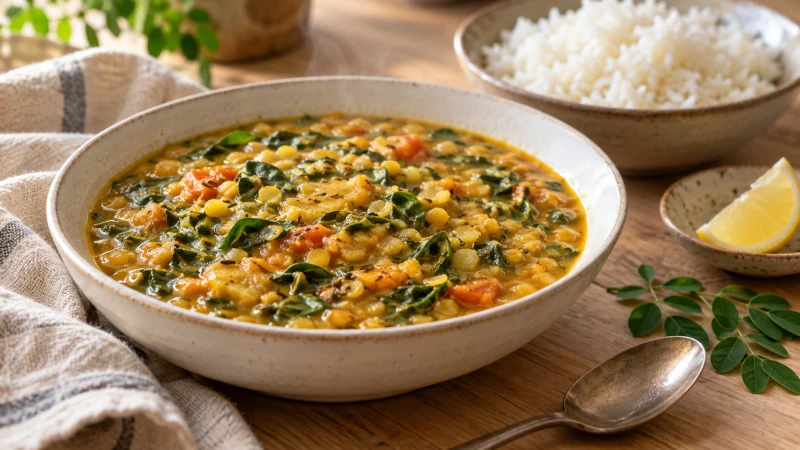
Food first. Fresh or frozen leaves cook down like spinach and work in soups, dals, stews, and eggs. The pods go into curries. Powder has a grassy, slightly bitter taste that hides best in smoothies, soups, or sauces.
For supplements, there is no established dose. Drugs.com states plainly that clinical data are insufficient to recommend one; studies have used 2.4 to 8 grams a day for up to 12 weeks [Drugs.com, 2026]. If you try it, start at the low end, pick a brand that carries an independent third-party testing seal, and stop if anything feels off. Memorial Sloan Kettering’s point is worth keeping in mind: supplements are stronger than the herb you’d use in cooking [MSK, 2023].
Moringa seed oil and how to make it
Moringa seed oil (sometimes sold as ben oil) is used on skin and hair as a light moisturizing oil. There’s little clinical research on skin benefits, so think of it as a cosmetic oil rather than a treatment. If you have access to mature pods and an oil press, you can make a small batch at home:
- Harvest and clean. Collect fully ripe seeds from mature pods and remove any debris.
- Dry. Spread the seeds on a clean cloth in a well-ventilated spot until completely dry.
- Crush. Crack them with a mortar and pestle or a mechanical crusher.
- Press. Run the crushed seeds through a manual or electric oil press, following the manufacturer’s instructions.
- Settle and decant. Let the oil sit so sediment sinks, then pour the clear oil into clean, dry glass bottles.
- Store. Keep it somewhere dark and cool to slow oxidation.
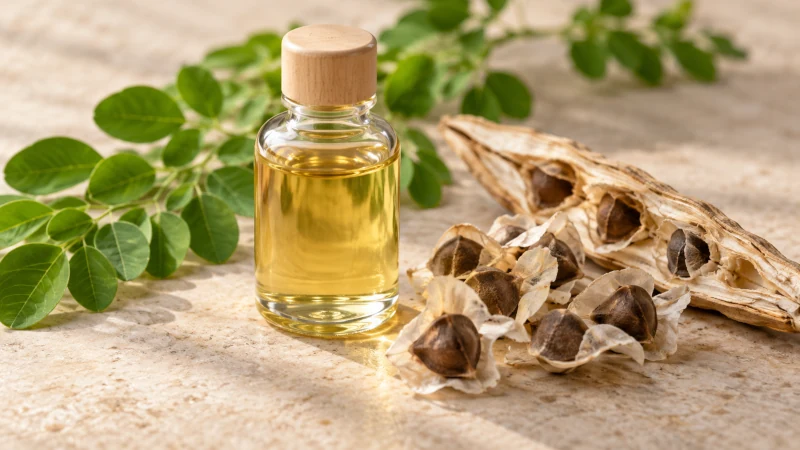
Home pressing yields small amounts and variable quality. Patch-test on your inner arm for 24 hours before wider use, and keep homemade oil for skin, not cooking or swallowing.
Side effects, interactions, and who should avoid moringa
Side effects
In clinical studies moringa has generally been well tolerated [Drugs.com, 2026]. Serious reactions are rare but documented in case reports: Stevens-Johnson syndrome (a severe skin and mucous-membrane reaction) in a man who ate moringa leaves, skin toxicity after moringa powder taken for weight loss, and anaphylaxis after eating the leaves [MSK, 2023]. In animal studies, some concentrated extracts have caused liver and kidney damage, and very high doses were genotoxic, though human toxicity data are lacking [Drugs.com, 2026; MSK, 2023].
Drug interactions
No clinical studies have directly tested moringa–drug interactions [Drugs.com, 2026]. The concerns below come from lab and animal work or from what moringa does to blood sugar, so they’re possibilities to discuss with your pharmacist rather than confirmed effects.
| If you take… | Possible concern | Evidence |
| Diabetes medicines (insulin, sulfonylureas, others) | Added glucose-lowering could cause lows | Glucose-lowering effect in studies [MSK, 2023; Nova et al., 2020] |
| Sitagliptin | Moringa reduced the drug’s effect in diabetic rats | Animal only [MSK, 2023] |
| Drugs broken down by CYP3A4 (many statins, some blood pressure drugs, antiretrovirals and others) | Moringa may change drug levels | Lab/animal only; clinical relevance unknown [MSK, 2023] |
| Levothyroxine | Possible interference with thyroid hormone conversion | Theoretical [Drugs.com, 2026] |
| Anyone at high risk of blood clots | May stimulate clotting | Caution noted by LactMed [LactMed, 2026] |

Pregnancy and breastfeeding
Avoid moringa supplements during pregnancy. Memorial Sloan Kettering lists pregnancy as a contraindication, and Drugs.com notes abortifacient effects from leaf extract in rats; root extracts have shown antifertility effects in animal studies [MSK, 2023; Drugs.com, 2026]. The bark and root, used in folk medicine, are the parts to steer clearest of. For breastfeeding, see the evidence split above and decide with your provider.
Talk to a doctor or pharmacist before using moringa if you:
- are pregnant, trying to conceive, or breastfeeding
- take diabetes medication, levothyroxine, or any drug with a narrow dosing range
- have a history of blood clots or a clotting disorder
- have liver or kidney disease
- have had a severe allergic or skin reaction to a food or supplement
- have surgery scheduled
When to get medical help
- Call 911 or go to the ER for swelling of the lips, tongue, or throat, trouble breathing, or a spreading rash with blisters, mouth sores, or fever after taking moringa.
- Treat and call your doctor if you take diabetes medication and feel shaky, sweaty, confused, or dizzy — check your glucose and treat a low first.
- Stop and get checked for yellowing skin or eyes, dark urine, or unusual fatigue while taking any herbal supplement.
- See your doctor if you started moringa for blood sugar, cholesterol, or milk supply and your numbers or symptoms aren’t improving. Those problems need proper evaluation, not a bigger dose.
| HEALTH DISCLAIMER: This article is for general education and is not medical advice, diagnosis, or treatment. Moringa is a food and a dietary supplement, not a replacement for prescribed medication, and supplements are not reviewed for safety or effectiveness the way drugs are. Do not start moringa, or stop or change any medicine, based on this article. Talk to your doctor, pharmacist, or a registered dietitian first — especially if you are pregnant, trying to conceive, or breastfeeding; take diabetes medication, levothyroxine, or other prescription drugs; or have liver or kidney disease or a clotting disorder. Seek emergency care for signs of a severe allergic or skin reaction. |
Frequently Asked Questions
Is it safe to take moringa every day?
Eating moringa leaves as a vegetable is generally considered safe [MSK, 2023]. Daily supplements have been studied for up to about 12 weeks at 2.4 to 8 grams a day, and there isn’t enough data to set a standard dose or confirm long-term safety [Drugs.com, 2026]. If you take it daily, keep to modest amounts and tell your doctor, especially if you take other medications.
Does moringa lower blood sugar?
Possibly, a little. Some small human studies found lower fasting or after-meal glucose, but a placebo-controlled trial found no difference, and reviewers say better trials are needed [Nova et al., 2020]. It is not a replacement for diabetes treatment, and combining it with glucose-lowering medication could cause lows.
Can moringa increase breast milk?
The human evidence is more encouraging here than for other uses: reviews report increased milk volume over short periods [Ammar et al., 2025; LactMed, 2026]. But some references still advise avoiding moringa while breastfeeding because long-term safety data are missing [MSK, 2023; Drugs.com, 2026]. Talk with a lactation consultant before trying it.
Can I take moringa while pregnant?
No — avoid moringa supplements in pregnancy. Animal studies found abortifacient and antifertility effects from leaf and root extracts, and major references list pregnancy as a reason to avoid it [MSK, 2023; Drugs.com, 2026].
How much moringa powder should I take?
There is no established dose [Drugs.com, 2026]. Studies have used 2.4 to 8 grams a day. Check your product’s label for how many grams its scoop or teaspoon holds, start low, follow the label, and check with your doctor if you have a health condition.
Is moringa powder better than capsules?
Neither is proven better. Powder is easier to add to food and usually cheaper per gram; capsules make the dose easier to track. Quality varies between brands in both forms, so look for independent third-party testing.
References
- Memorial Sloan Kettering Cancer Center. About Herbs: Moringa oleifera. Last updated June 20, 2023. View source
- Nova E, Redondo-Useros N, Martínez-García RM, et al. Potential of Moringa oleifera to Improve Glucose Control for the Prevention of Diabetes and Related Metabolic Alterations: A Systematic Review of Animal and Human Studies. Nutrients. 2020;12(7):2050. doi:10.3390/nu12072050. PMID 32664295. View source
- Drugs.com. Moringa (professional natural product monograph). Last updated February 19, 2026. View source
- Drugs and Lactation Database (LactMed®). Moringa. National Library of Medicine. Revised July 15, 2026. NBK501899. View source
- Ammar M, Russo GL, Altamimi A, et al. Moringa oleifera Supplementation as a Natural Galactagogue: A Systematic Review on Its Role in Supporting Milk Volume and Prolactin Levels. Foods. 2025;14(14):2487. doi:10.3390/foods14142487. View source
- U.S. Department of Agriculture nutrient data for drumstick leaves, raw, as published by NutritionValue.org. View source
- WebMD. Health Benefits of Moringa: Is Moringa Good For You? May 1, 2025. View source


