
This brown rice and vegetable pilaf is a one-pan dinner: whole grain rice simmered in unsalted broth with sautéed eggplant, roasted red pepper, tomato and garlic. It makes four generous servings of about 425 calories and 7.5 grams of fiber each, with very little sodium if you choose your broth carefully. Rice and vegetables won’t cure or prevent disease on their own, but a meal like this fits the eating pattern with the strongest evidence behind it: more whole grains, more vegetables, less salt.
Below you’ll find the recipe, the numbers, an honest look at what brown rice can and can’t do for you, and a few situations where you might want to tweak it.
Rice and Vegetables Ingredients
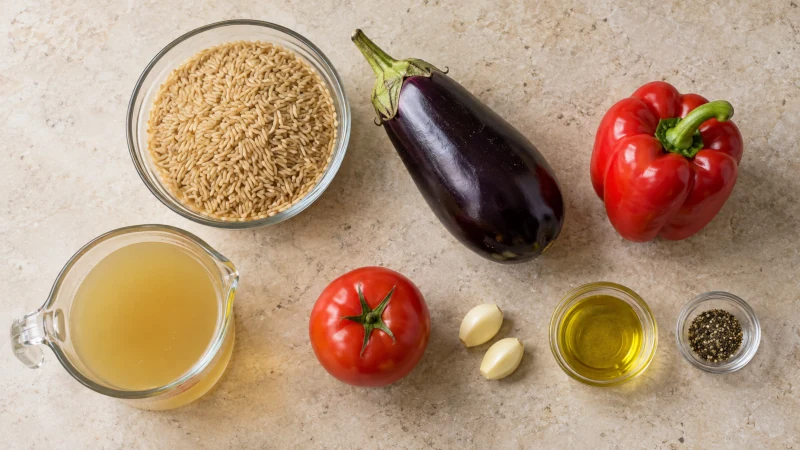
Serves 4
- 12.3 oz (about 1¾ cups / 350 g) brown rice, long grain
- 1 medium eggplant (about 1 lb / 450 g), cut into ¾-inch cubes
- 1 red bell pepper, roasted and peeled (see below), cut into strips
- 1 medium tomato, chopped or crushed
- 2 garlic cloves, finely chopped
- 3 to 4 cups unsalted or no-salt-added vegetable broth, kept hot
- 2 tablespoons extra virgin olive oil
- Salt and black pepper, to taste (optional)
Preparation
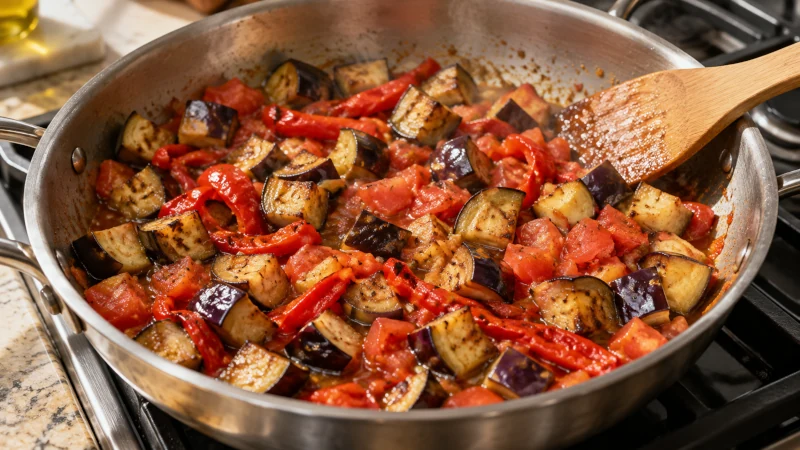
- Rinse the rice in a sieve until the water runs mostly clear. Soaking is optional: an overnight soak in cold water, or an hour in hot water, shortens the cooking time and lets you get by with less broth. Drain well.
- Heat the oil in a wide, heavy pan or sauté pan with a lid over medium-high heat. Add the eggplant and cook, stirring now and then, for 6 to 8 minutes until it softens and browns at the edges. Add the pepper strips for the last minute.
- Add the tomato and cook for 2 minutes, until it starts to break down.
- Stir in the rice and toast it with the vegetables for a minute so every grain is coated.
- Pour in 3 cups of the hot broth. Taste the broth first; add salt now only if it needs it. Bring to a boil.
- Cover and simmer on low heat for 35 to 45 minutes. Soaked rice is usually done near the short end; unsoaked brown rice near the long end. If the pan looks dry before the rice is tender, add more hot broth, a half cup at a time.
- Add the garlic for the last 5 minutes of cooking so it stays fragrant rather than bitter.
- Rest, then fluff. Take the pan off the heat and leave it covered for 5 minutes. The rice should be tender and the grains separate. Serve hot.
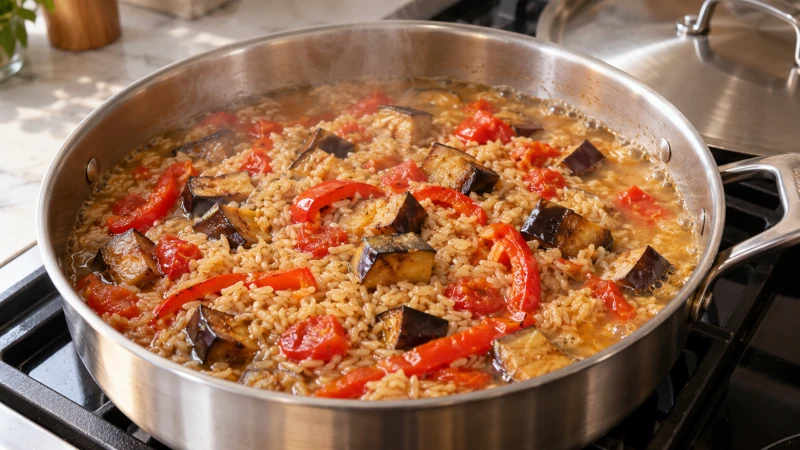
Lighter version: skip the sauté and simmer the raw vegetables directly in the broth with the rice. You’ll lose some browned flavor and save about 60 calories per serving.
Prep time: 15 minutes (plus optional soaking and pepper roasting). Cook time: about 45 minutes. Servings: 4.
If you like this kind of meal, our lentils and brown rice recipe uses the same whole grain with a legume for extra protein.
How to Roast and Store the Red Pepper
Roast the whole pepper in a very hot oven (around 450°F), or turn it over a gas flame or under the broiler, until the skin blisters and blackens in places. Put it in a covered bowl for 10 minutes; the steam loosens the skin. Once it’s cool, peel, split, and scrape out the seeds. Wipe away charred bits rather than rinsing if you can — rinsing washes off flavor.
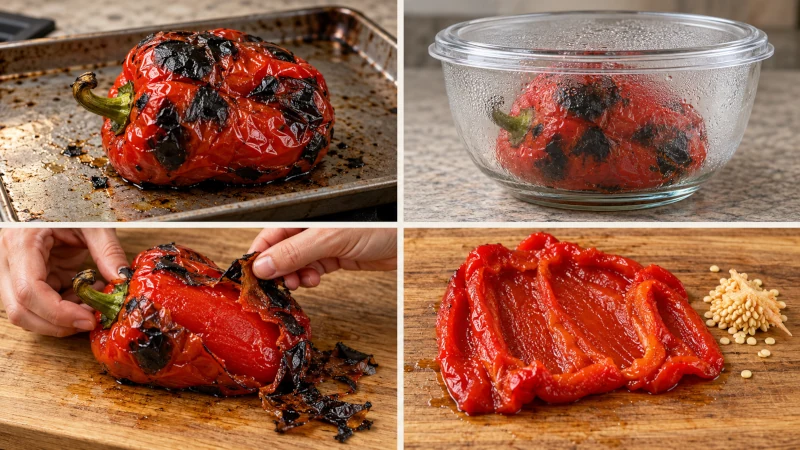
Roasted peppers keep for a few days in a covered container in the fridge, and they freeze well in a bag or container for longer storage. Some older recipes suggest preserving peppers by boiling them in a jar of water. That isn’t safe. Peppers are a low-acid vegetable, and low-acid vegetables have to be processed in a pressure canner, because boiling-water temperatures don’t destroy the spores that cause botulism [NDSU Extension, 2023]. If you aren’t pressure canning with a tested recipe, freeze them instead.
Storing and Reheating Leftovers
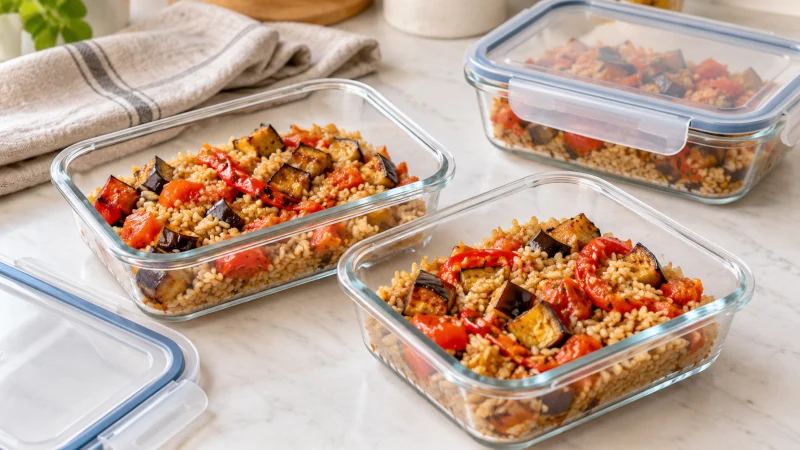
This dish makes good leftovers if you handle them well. Refrigerate within 2 hours of cooking, in shallow containers so the rice cools quickly. Eat within 3 to 4 days, or freeze for 3 to 4 months. Reheat until it’s steaming hot all the way through — 165°F on a food thermometer [USDA FSIS, 2020]. A splash of water or broth before reheating keeps the rice from drying out.
Nutrition per Serving
| Nutrient (per serving, 1 of 4) | Amount |
| Calories | about 425 kcal |
| Protein | about 8 g |
| Carbohydrates | about 77 g |
| Fiber | about 7.5 g |
| Total fat | about 10 g (mostly from olive oil) |
| Cholesterol | 0 mg |
| Sodium | about 10 mg before broth and salt — check your broth label |
| Vitamin C | roughly 38 mg from the red pepper before cooking; heat reduces this |
How we calculated this: USDA nutrient values for raw brown rice, eggplant, red bell pepper, tomato and garlic at the quantities listed [USDA FoodData Central], plus 2 tablespoons of olive oil at about 119 calories and 13.5 grams of fat per tablespoon (USDA data, as summarized in our guide to the benefits of olive oil). Figures are estimates; brands and vegetable sizes vary. Broth isn’t included because its sodium ranges from almost none to several hundred milligrams per cup.
Is Rice and Vegetables Healthy? What the Evidence Supports
Mostly yes — with brown rice. The health story here belongs to the pattern, not to any single ingredient.
Whole grains and fiber
The World Cancer Research Fund, which runs the largest ongoing review of diet and cancer, rates the evidence as strong that whole grains, and foods containing fiber, lower the risk of colorectal cancer [WCRF, 2018]. That is a reduction in risk across populations, not a guarantee for any one person, and it comes from the overall diet rather than one recipe. Our guide to a cancer-preventing diet puts that finding alongside the other factors that matter more, like not smoking and limiting alcohol and processed meat.
For heart health, a 2016 meta-analysis of prospective studies in the BMJ linked higher whole grain intake with lower risk of coronary heart disease, cardiovascular disease and early death. One detail is worth keeping: the same analysis found little evidence of a link for refined grains, white rice, or total rice [Aune et al., 2016]. So the grain you choose matters. These are observational studies, which can’t fully separate the grain from the healthier habits of people who eat more of it.
On fiber, U.S. dietary guidance is 14 grams per 1,000 calories — about 28 grams a day on a 2,000-calorie diet — and a diet low in fiber and high in red meat is linked with a higher risk of diverticulitis [NIDDK, 2021]. One serving of this pilaf covers roughly a quarter of that daily target. If you eat little fiber now, add it gradually and drink more fluids; our guide on how to increase fiber intake walks through it step by step.
Brown rice, white rice, and blood sugar
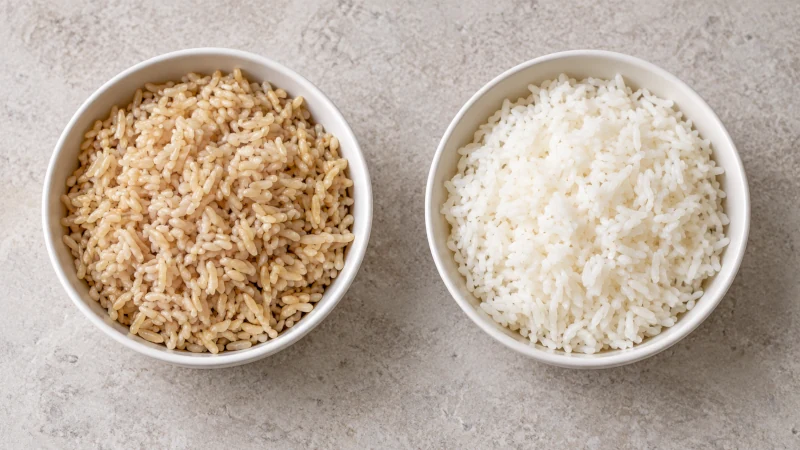
In three large U.S. cohorts — nearly 200,000 men and women — people who ate white rice five or more times a week had a modestly higher risk of type 2 diabetes, while those eating brown rice twice a week or more had a modestly lower risk. Swapping about a third of a daily serving of white rice for brown was associated with a 16% lower risk [Sun et al., 2010]. That’s an association, not proof that brown rice prevents diabetes, but it’s a reasonable nudge toward the whole grain. If you have diabetes, the portion and what you eat alongside it matter as much as the type of rice; a dietitian can help you size servings.
Keeping the sodium low
The vegetables and rice here contribute almost no sodium. What decides the final number is the broth and how much salt you add. The FDA advises adults to keep sodium under 2,300 mg a day, notes that more than 70% of the sodium people eat comes from packaged and prepared foods, and suggests reading the label: 5% Daily Value or less per serving is low, 20% or more is high [FDA, n.d.]. Choose a broth labeled “no salt added” or “unsalted,” or make your own. For the bigger picture, see our evidence-graded list of foods that lower blood pressure.
The vegetables and garlic: realistic expectations
Red bell pepper is one of the richest common sources of vitamin C, and eggplant and tomato add volume and fiber for few calories. Garlic adds flavor, which makes it easier to go light on salt. Garlic’s research is mostly on concentrated supplements: they may lower cholesterol, blood pressure and blood sugar to a small extent in people with high levels, and garlic hasn’t been shown to reduce stomach cancer risk [NCCIH, 2025]. Two cloves in a pot of rice is seasoning, not treatment. Our page on what garlic can and can’t do covers the details.
Eggplant has a long reputation in traditional herbal writing for helping the liver, gallbladder and “slow digestion.” We couldn’t find human trials that support those uses, so treat them as tradition and enjoy eggplant as a vegetable.
Evidence at a glance
| Claim | Strength of evidence | Source |
| Whole grains and foods with fiber lower colorectal cancer risk | Strong (expert panel review of cohort studies) | WCRF, 2018 |
| Whole grain intake is linked to lower heart disease and early death | Moderate–strong (meta-analysis of observational studies) | Aune et al., 2016 |
| White rice and total rice show little link to those outcomes | Same meta-analysis; observational | Aune et al., 2016 |
| Choosing brown over white rice is linked to lower type 2 diabetes risk | Limited–moderate (large cohorts; association only) | Sun et al., 2010 |
| A high-fiber, lower–red meat diet may lower diverticulitis risk | Expert guidance based on research | NIDDK, 2021 |
| Garlic supplements slightly lower cholesterol and blood pressure | Limited to moderate, for supplements, not cooking amounts | NCCIH, 2025 |
| Eggplant helps the gallbladder or pancreas | Traditional use only; no human trials located | — |
| This dish prevents cancer or heart attack | Not supported — no single dish does | — |
Who Should Adjust This Recipe
Arsenic in rice: pregnancy and young children
Rice absorbs more inorganic arsenic from soil and water than most crops. The FDA does not advise the general population to change how much rice they eat, but it suggests pregnant women eat a variety of grains — wheat, oats, barley — rather than relying on rice, and that infants and toddlers get a variety of grains too. Cooking rice in plenty of water (6 to 10 parts water to 1 part rice) and draining the excess can cut inorganic arsenic by 40% to 60%, though it also removes some nutrients [FDA, 2016]. That method doesn’t suit a pilaf, so if you want it, boil and drain the rice separately like pasta, then fold it into the cooked vegetables.
Kidney disease
Brown rice is higher in potassium and phosphorus than white rice [DaVita, n.d.], and eggplant and tomato add potassium as well. If you follow a kidney diet, ask your dietitian how this fits your limits; white rice, smaller portions, or a different vegetable mix may work better for you.
IBS and a low-FODMAP diet
Garlic is high in fructans, a common trigger for people with irritable bowel syndrome. Fructans don’t dissolve into fat, which is why garlic-infused oils are considered low FODMAP [Monash University, n.d.]. Leave out the cloves and sauté the vegetables in a certified garlic-infused olive oil instead.
Blood thinners and garlic supplements
Garlic in normal food amounts has been used safely in research, but garlic supplements may increase bleeding risk, so tell your healthcare provider if you take them, especially before surgery or if you use anticoagulants or aspirin. During pregnancy and breastfeeding, amounts larger than those found in food may not be safe [NCCIH, 2025]. The two cloves in this recipe are a food amount.
When food isn’t the answer
A high-fiber meal is not a treatment for bowel symptoms. If you have rectal bleeding, black or tarry stools, ongoing belly pain, fever with abdominal pain, unexplained weight loss, or a change in bowel habits that lasts more than a couple of weeks, see a doctor rather than adjusting your diet on your own. Seek urgent care for severe abdominal pain or vomiting with an inability to pass stool or gas. If you’ve had diverticulitis, ask your doctor how and when to increase fiber [NIDDK, 2021].
| HEALTH DISCLAIMER: This recipe and article are for general education and are not medical advice. No single food or dish prevents, treats, or cures disease. If you have kidney disease, diabetes, a digestive condition such as IBS or diverticular disease, take blood thinners or other prescription medicines, or are pregnant, breastfeeding, or feeding a young child, talk with your doctor or a registered dietitian about how this dish fits your diet. Seek medical care promptly for severe or worsening symptoms. |
Frequently Asked Questions
Can I make rice and vegetables with white rice?
Yes. Use about the same amount of rice, start with less broth (around 2½ to 3 cups), and check for doneness after about 18 to 20 minutes. You’ll get a softer dish with less fiber; a large meta-analysis found little link between white rice and lower heart-disease risk, unlike whole grains [Aune et al., 2016].
Do I have to soak brown rice?
No. Soaking mainly shortens the cooking time and lets you use a little less liquid. Unsoaked brown rice works; plan on the longer simmer and keep extra hot broth nearby.
How can I lower the arsenic in rice?
Eat a variety of grains rather than rice at every meal. Cooking rice in 6 to 10 parts water and draining the excess can remove 40% to 60% of inorganic arsenic, at the cost of some nutrients [FDA, 2016]. For this recipe, boil and drain the rice separately, then combine it with the cooked vegetables.
Can I freeze this dish?
Yes. Cool it quickly in shallow containers, refrigerate within 2 hours, and freeze for up to 3 to 4 months. Reheat to 165°F [USDA FSIS, 2020].
Is rice and vegetables good for weight loss?
It can fit a weight-loss plan: about 425 calories a serving, with enough fiber to be filling. Expert review finds that foods containing fiber help protect against weight gain [WCRF, 2018], but no single recipe causes weight loss. Portion size and the rest of your day matter more.
What can I add for more protein?
Stir in a can of drained, rinsed chickpeas or white beans in the last 10 minutes, or serve with grilled fish or chicken. Rinsing canned beans washes off some of the added salt.
References
- Aune D, Keum N, Giovannucci E, et al. Whole grain consumption and risk of cardiovascular disease, cancer, and all cause and cause specific mortality: systematic review and dose-response meta-analysis of prospective studies. → View source
- DaVita. Is Rice an Acceptable Food for a Kidney Diet? → View source
- Monash University FODMAP. All about onion, garlic and infused oils on the Low FODMAP Diet. → View source
- National Center for Complementary and Integrative Health (NCCIH). Garlic: Usefulness and Safety. → View source
- National Institute of Diabetes and Digestive and Kidney Diseases (NIDDK). → View source
- North Dakota State University Extension. Questions and Answers About Using a Pressure Canner (FN1415). → View source
- Sun Q, Spiegelman D, van Dam RM, Holmes MD, Malik VS, Willett WC, Hu FB. White rice, brown rice, and risk of type 2 diabetes in US men and women. → View source
- U.S. Food and Drug Administration. FDA proposes limit for inorganic arsenic in infant rice cereal. April 1, 2016. → View source
- U.S. Food and Drug Administration. Sodium: Look at the Label. → View source
- USDA Food Safety and Inspection Service. Leftovers and Food Safety. → View source
- World Cancer Research Fund. Eat a diet rich in wholegrains, vegetables, fruit and beans — recommendation evidence → View source
- USDA FoodData Central (SR Legacy) values, viewed via third-party mirrors: brown rice, long-grain, raw (169703); eggplant, raw (169228); tomatoes, red, ripe, raw (170457); garlic, raw (169230); peppers, sweet, red, raw (NDB 11821). → View source


