
Lentils and brown rice simmered in one pot with onion, tomato, pepper and carrot make a filling stew for very little money and about 45 minutes at the stove. One serving of this lentils and brown rice recipe has roughly 15 grams of protein, 9 grams of fiber and close to 4 milligrams of iron, by our estimate from USDA data [USDA FoodData Central, 2019].
That makes it a good meal to keep in rotation if you want more plant iron, folate and fiber, or if you’re eating with healthy blood in mind. It won’t treat anemia or any other condition, and the iron in lentils needs some help to be absorbed. Conveniently, the help is already in the pot.
Lentils and brown rice recipe
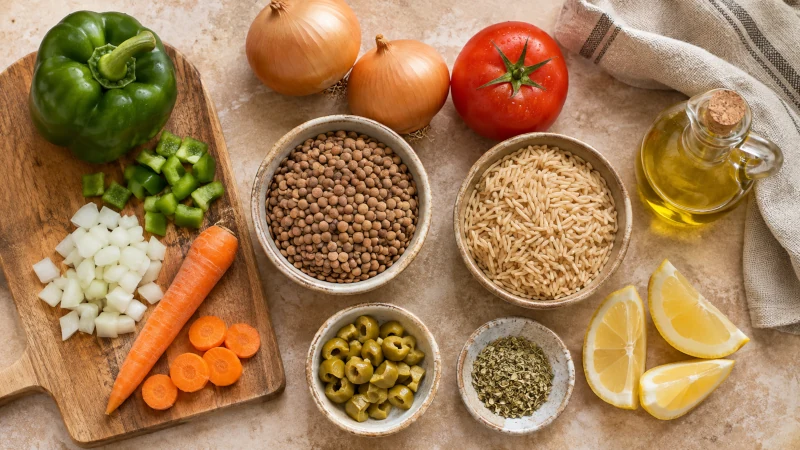
Serves 4 · Prep about 15 minutes · Cook about 45 minutes
Ingredients
- 1 cup dried brown or green lentils
- ½ cup brown rice
- 2 onions, chopped
- 1 tomato, chopped
- 1 sweet green pepper, seeded and chopped
- 1 carrot, peeled and chopped
- 1.75 oz (50 g) green olives, chopped
- 1 teaspoon dried oregano
- 2 to 4 tablespoons olive oil (each tablespoon adds around 120 calories to the pot, about 30 per serving)
- About 5 cups water, plus more as needed
- Sea salt, to taste
- Lemon wedges, to serve (optional)
Method
- Sort through the lentils for small stones or debris, then rinse them [Harvard Nutrition Source, 2025]. Rinse the rice.
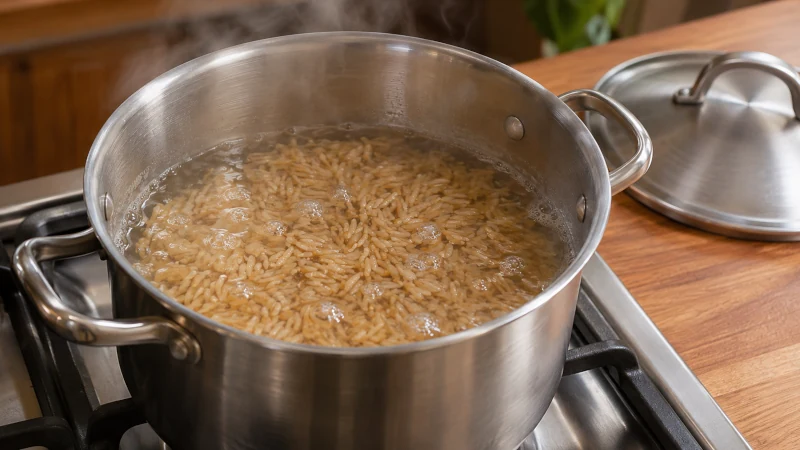
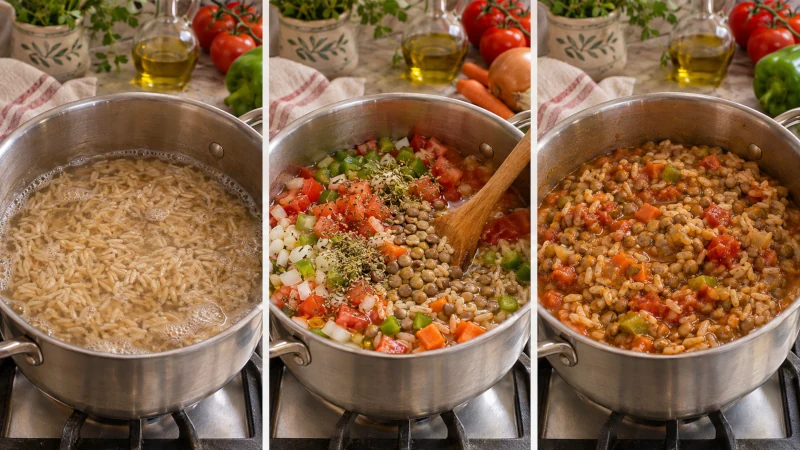
- Bring the water to a boil in a large pot. Add the rice, lower the heat, cover and simmer for 15 minutes. Brown rice needs the head start.
- Add the lentils, onions, tomato, pepper, carrot, oregano and olive oil. Bring back to a simmer.
- Cook, partly covered, for another 25 to 30 minutes. Stir now and then, and add a splash of water if the pot looks dry. It’s done when the rice and lentils are both tender and the stew is thick, not soupy.
- Taste before you salt. The olives bring plenty of their own.
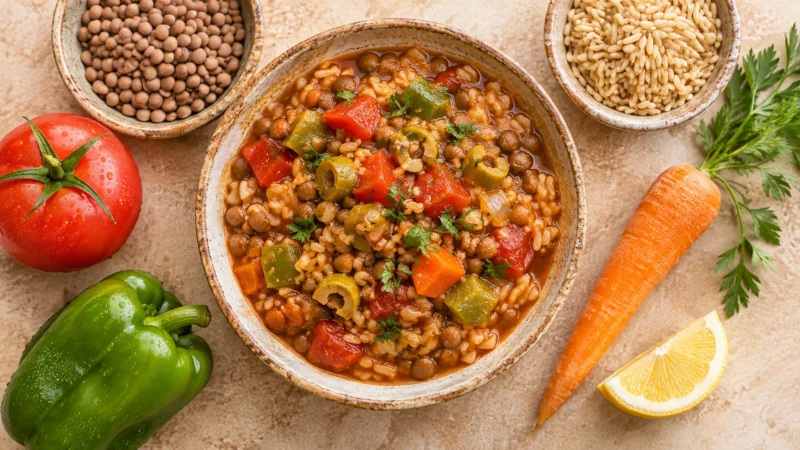
- Serve hot, with the chopped olives scattered on top and a squeeze of lemon if you like.
Cook’s notes
Soaking is optional. Lentils cook quickly enough that pre-soaking isn’t necessary [Harvard Nutrition Source, 2025]. Some cooks like to soak brown rice overnight in cold water, or for an hour in hot water. If you do, drain it and start checking for doneness sooner.
Pick your lentil on purpose. Whole brown or green lentils take about 20 to 30 minutes and hold their shape. Split red lentils cook in 10 to 15 minutes and collapse into a purée [Harvard Nutrition Source, 2025], so add them later and expect a thicker, softer stew.
Cook them through. Undercooked lentils are hard to digest and can upset your stomach [Harvard Nutrition Source, 2025].
Recipe adapted from George D. Pamplona-Roger, Encyclopedia of Foods and Their Healing Power, vol. 3 (Editorial Safeliz, 2005).
Nutrition per serving
One serving is a quarter of the pot. The oil is the big variable, so both ends are shown.
| Per serving | With 4 tbsp olive oil | With 2 tbsp olive oil |
| Calories | about 430 | about 370 |
| Protein | 15 g | 15 g |
| Carbohydrate | 58 g | 58 g |
| Fiber | 9 g | 9 g |
| Total fat | 17 g | 10 g |
| Saturated fat | 2.4 g | 1.5 g |
| Cholesterol | 0 mg | 0 mg |
| Iron | 3.9 mg | 3.9 mg |
| Sodium, before any added salt | about 215 mg | about 215 mg |
These are estimates calculated from USDA FoodData Central values for the raw ingredients [USDA FoodData Central, 2019], using typical household weights (192 g for a cup of dried lentils, for example). Yours will shift with the size of your vegetables, the brand of olives, and how much oil and salt you use.
What a bowl gives you
| Claim | How solid is it? | Basis |
| The dish supplies iron, folate, fiber and protein | Well established | Food composition data [USDA FoodData Central, 2019] |
| Plant iron is absorbed less well than meat iron; vitamin C helps | Well established | NIH review of the evidence [NIH ODS, Iron fact sheet] |
| Fiber with enough fluid eases constipation | Established for fiber in general | NIDDK guidance; not tested for this dish [NIDDK, 2018] |
| This stew treats or prevents anemia | Not supported | No trials of the dish; anemia needs a diagnosis [Mayo Clinic, 2025] |
Iron: more on the plate than in the blood
Half a cup of boiled lentils has about 3 mg of iron. Three ounces of braised beef has about 2 mg [NIH ODS, Iron fact sheet]. Measured on the plate, lentils hold their own against meat.
In the body it’s a different story. Lentil iron is nonheme iron, the plant form, and you absorb less of it than the heme iron in meat. NIH estimates iron bioavailability at about 14% to 18% from mixed diets that include meat, seafood and vitamin C, and 5% to 12% from vegetarian diets. That gap is why the recommended iron intake for vegetarians is 1.8 times higher [NIH ODS, Iron fact sheet].
A serving of this stew supplies roughly 3.9 mg. Adult men and women over 50 need 8 mg a day, women aged 19 to 50 need 18 mg, and pregnancy raises it to 27 mg [NIH ODS, Iron fact sheet]. So one bowl is a useful contribution, and worth repeating through the week. It is not a fix for a diagnosed deficiency. For other sources, see our list of the best foods for anemia.
Folate
Dried lentils carry 479 mcg of folate per 100 g, which puts them among the richest sources in the USDA database [USDA FoodData Central, 2019]. That figure is for the dry seed. We don’t have a reliable cooked figure for this particular stew, so folate isn’t in the table above.
Your body uses folate to build DNA and divide cells. Too little leads to megaloblastic anemia, in which red blood cells come out large and abnormal. Adults need 400 mcg DFE a day [NIH ODS, 2018]. Our guide to foods high in folate has a fuller chart.
Protein
You get about 15 grams per serving, most of it from the lentils. The old rule held that beans and rice had to share a plate to “complete” the protein. Current guidance is more relaxed: MedlinePlus says nutrition experts no longer worry about pairing proteins at a single meal and look at the adequacy of the whole day’s diet instead, while noting that a diet built on a single plant food won’t be adequate [MedlinePlus, 2025]. Eat the two together because they taste good together. More on the evidence in our article on the health benefits of lentils.
Fiber and regularity
A serving has roughly 9 grams of fiber. Adults should get 22 to 34 grams a day, depending on age and sex [NIDDK, 2018]. NIDDK lists lentils, whole grains and carrots among good fiber sources for people dealing with constipation, and adds the part people skip: drink plenty of liquids, which helps the fiber work and makes stools softer and easier to pass [NIDDK, 2018].
That evidence is about fiber generally. Nobody has run a trial on this stew. If you don’t eat much fiber now, add it a little at a time so your body gets used to the change [NIDDK, 2018]. Our practical guide to increasing fiber walks through how.
Getting more iron out of the bowl
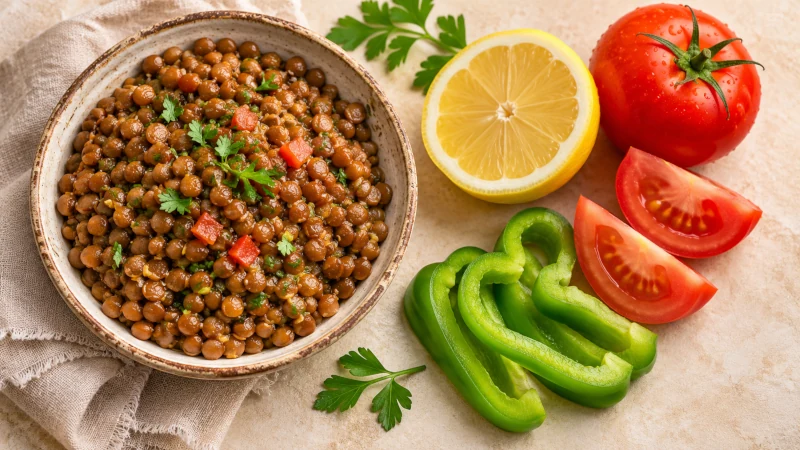
Vitamin C enhances the absorption of nonheme iron. So do meat, poultry and seafood eaten at the same meal. Working against it are phytate, found in grains and beans, and certain polyphenols; calcium might reduce absorption of both forms of iron [NIH ODS, Iron fact sheet].
Tomatoes and peppers are both good sources of vitamin C [Mayo Clinic, 2025], and both are already in this recipe. Citrus is another: Mayo Clinic lists oranges, tangerines and grapefruit, and a squeeze of lemon at the table works on the same principle.
Keep this in proportion. NIH notes that in a typical mixed Western diet these enhancers and inhibitors largely even out and have little effect on most people’s iron status [NIH ODS, Iron fact sheet]. If you eat little or no meat, it’s reasonable to pay them a bit more attention.
Side effects and who should take care
For most people this is ordinary food with ordinary risks. A few groups should think before making it a regular habit.
Gas and bloating
Legumes, including lentils, and whole grains are on NIDDK’s list of foods that may lead to excess gas. They contain carbohydrates the small intestine doesn’t fully digest, and bacteria in the large intestine break them down and make gas in the process. Some people also get more gas when they eat a lot of fiber [NIDDK, 2021]. A smaller portion to start usually helps. If you have irritable bowel syndrome, a doctor or dietitian may suggest trying a low FODMAP diet for a few weeks [NIDDK, 2021], and lentils may be one of the foods you test.
Salt
Green olives are salty. The 50 grams in this recipe carry about 780 mg of sodium [USDA FoodData Central, 2019], close to 200 mg per serving before you touch the salt. If you’re watching sodium, use fewer olives and skip the added salt.
Kidney disease
The National Kidney Foundation lists lentils, legumes, tomatoes and raw carrots among higher-potassium foods. If you have kidney disease and your healthcare provider has told you to limit potassium, work out portions with them or with a kidney dietitian before adding this dish [National Kidney Foundation, 2023].
Rice and arsenic
Rice tends to absorb arsenic more readily than other crops. The FDA’s position is that you can certainly eat rice as part of a well-balanced diet, and that variety matters, especially for infants and toddlers, who should get a mix of grains [FDA, 2022].
Cooking rice like pasta, in 6 to 10 parts water and then draining it, can cut inorganic arsenic by 40% to 60%; rinsing alone does very little [FDA, 2022]. This stew keeps its cooking water. If you eat rice often and want to lower your exposure, boil the rice separately in plenty of water for the first 15 minutes, drain it, then add it to the pot with the lentils.
Pregnancy and breastfeeding
Lentils and brown rice are a sensible pregnancy food: iron needs rise to 27 mg a day and folate needs to 600 mcg DFE (500 mcg while breastfeeding) [NIH ODS, Iron fact sheet] [NIH ODS, 2018]. Food doesn’t replace supplements here. Women who could become pregnant are advised to get 400 mcg of folic acid a day from supplements or fortified foods, in addition to folate from a varied diet, to reduce the risk of neural tube defects [NIH ODS, 2018]. Iron supplements in pregnancy should follow your obstetric provider’s advice [NIH ODS, Iron fact sheet]. Cook the lentils fully, as you would for anyone.
Medications and iron overload
None of the sources reviewed for this article describes a drug interaction with lentils or rice eaten as food. The interactions NIH lists involve supplements: iron supplements can reduce absorption of levothyroxine and levodopa, and folate supplements can interact with methotrexate and some antiepileptic drugs [NIH ODS, Iron fact sheet] [NIH ODS, 2018]. If you take any of these, the conversation with your prescriber is about pills, not about this stew.
Adults with normal intestinal function have very little risk of iron overload from food. People with hereditary hemochromatosis are different, because they absorb too much dietary iron [NIH ODS, Iron fact sheet]. If that’s you, follow your specialist’s dietary advice.
Allergy
If you’ve reacted to lentils or other legumes before, skip this dish and ask your doctor about testing. Swelling of the lips, tongue or throat, or trouble breathing after eating, is an emergency: call 911 or your local emergency number.
When food isn’t enough
A bowl of lentils is a reasonable response to wanting a better diet. It’s the wrong response to symptoms.
Iron deficiency anemia can cause extreme tiredness, weakness, pale skin, headache, dizziness, cold hands and feet, a sore tongue, brittle nails, and cravings for ice, dirt or clay. Mayo Clinic’s advice is direct: see a healthcare professional and don’t try to diagnose or treat it yourself [Mayo Clinic, 2025]. One reason is that low iron often comes from blood loss, including heavy periods or slow bleeding from an ulcer, a colon polyp or colorectal cancer, and the cause has to be found [Mayo Clinic, 2025].
Chest pain, a fast heartbeat or shortness of breath need prompt medical attention. And talk to a professional before starting iron supplements, because too much iron can build up and damage the liver and other organs [Mayo Clinic, 2025].
The same goes for your gut. Constipation that doesn’t ease with more fiber and fluids, or that comes with blood in the stool, ongoing abdominal pain or unexplained weight loss, deserves a visit to your doctor.
| HEALTH DISCLAIMER: This article is for general education and is not medical advice, diagnosis or treatment. Lentils and brown rice are nutritious foods, but this recipe does not treat or prevent anemia, constipation or any other condition. Talk with your doctor or a registered dietitian before making significant diet changes if you are pregnant or breastfeeding, have kidney disease, hemochromatosis, irritable bowel syndrome or a food allergy, or take prescription medication. Don’t start iron or folic acid supplements, or stop a prescribed one, because of something you read here. If you have chest pain, a racing heartbeat, trouble breathing or signs of bleeding, get medical care promptly. |
Frequently Asked Questions
Do I need to soak lentils and brown rice before cooking?
No. Lentils cook quickly, so pre-soaking isn’t necessary [Harvard Nutrition Source, 2025]. Soaking brown rice is a matter of preference; if you soak it, expect it to cook a little faster.
Can I cook lentils and brown rice together in the same pot?
Yes, with a staggered start. Whole brown or green lentils need about 20 to 30 minutes [Harvard Nutrition Source, 2025] and brown rice needs longer, so give the rice 15 minutes on its own before the lentils go in.
Are lentils and brown rice a complete protein?
Together they give you a good spread of amino acids, about 15 grams of protein per serving of this recipe. You don’t have to eat them at the same meal for it to count; what matters is the balance of your diet across the day [MedlinePlus, 2025].
Is this dish good for anemia?
It’s a helpful food, not a treatment. A serving has roughly 3.9 mg of plant iron [USDA FoodData Central, 2019], which you absorb less efficiently than iron from meat [NIH ODS, Iron fact sheet]. If you have symptoms of anemia, get tested instead of treating yourself with food [Mayo Clinic, 2025].
Can I use canned lentils?
Yes. Canned lentils are precooked; rinse them well to reduce the sodium [Harvard Nutrition Source, 2025]. Cook the rice and vegetables first and stir the lentils in for the last few minutes to heat through.
References
- National Institutes of Health, Office of Dietary Supplements. Iron: Fact Sheet for Health Professionals. View source
- National Institutes of Health, Office of Dietary Supplements. Folate: Fact Sheet for Health Professionals. View source
- U.S. Department of Agriculture, Agricultural Research Service. lentils, raw; rice, brown, long-grain, raw; onions; tomatoes; sweet green peppers; carrots; green olives; olive oil. View source
- MedlinePlus, U.S. National Library of Medicine. Amino acids. View source
- National Institute of Diabetes and Digestive and Kidney Diseases. Eating, Diet, & Nutrition for Constipation. View source
- National Institute of Diabetes and Digestive and Kidney Diseases. Eating, Diet, & Nutrition for Gas in the Digestive Tract. View source
- U.S. Food and Drug Administration. What You Can Do to Limit Exposure to Arsenic. Content current as of April 27, 2022. View source
- Harvard T.H. Chan School of Public Health, The Nutrition Source. Lentils. View source
- Mayo Clinic Staff. Iron deficiency anemia: Symptoms and causes. View source
- National Kidney Foundation. Potassium in Your CKD Diet. View source


