
Vitamin D’s best-proven benefit is also its least flashy: it lets your intestines absorb calcium and phosphate, which your bones need to harden properly. Without enough of it, children develop rickets and adults develop osteomalacia, a softening of the bones that causes pain and fractures [NIH ODS, 2026]. That much is settled science, and it is the foundation of every real list of vitamin D benefits.

Beyond the skeleton, the story is more interesting and more modest. Vitamin D receptors turn up in tissues all over the body, and people with low blood levels have higher rates of many diseases. But when researchers gave tens of thousands of healthy adults vitamin D in large randomized trials, most of the hoped-for extras (fewer cancers, heart attacks, fractures) didn’t show up [Manson et al., 2019; LeBoff et al., 2022; NIH ODS, 2026]. Here is what holds up, how much you actually need, where to get it, and when more becomes a problem.
What vitamin D does in your body
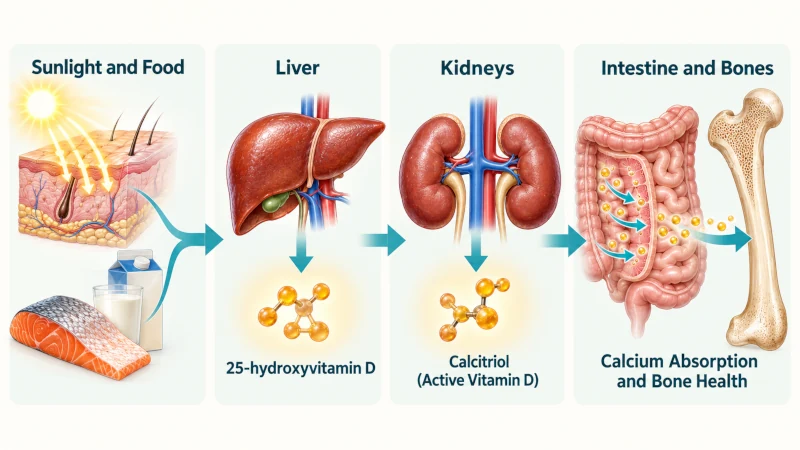
Vitamin D is a fat-soluble vitamin. Your skin makes it when ultraviolet B (UVB) light hits it, and you can also get it from a small number of foods and from supplements. Whatever the source, it arrives inactive. Your liver converts it into 25-hydroxyvitamin D, the form a blood test measures, and your kidneys then turn that into calcitriol, the active hormone [NIH ODS, 2026].
Calcitriol’s main job is keeping blood calcium and phosphate in a narrow range. It increases calcium absorption from the gut, supports normal bone mineralization, and works with the cells that build and remodel bone. When calcium drops too low, muscles can cramp and spasm, a state called tetany [NIH ODS, 2026].
Vitamin D also influences inflammation, immune function, cell growth and glucose metabolism, and many tissues carry receptors for it [NIH ODS, 2026]. That biology is real. Whether taking more vitamin D changes health outcomes in those systems is a separate question, and it’s the one most marketing skips.
Vitamin D benefits: what the evidence supports, and what it doesn’t
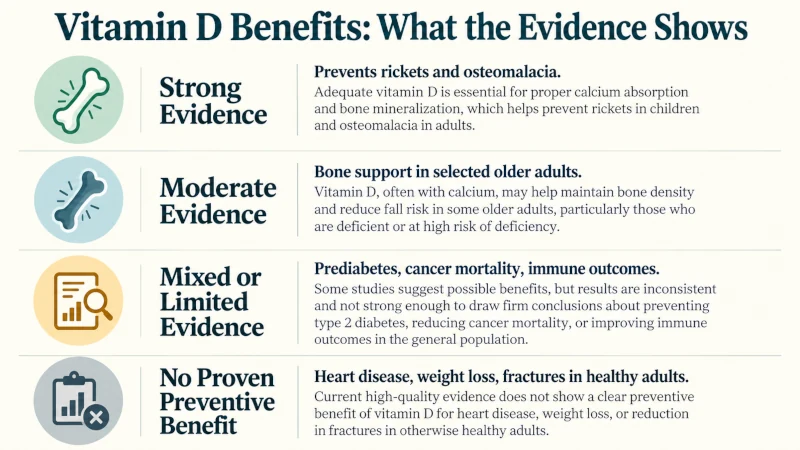
The short version first. The table below grades each common claim by the quality of human evidence behind it, not by how plausible it sounds.
| Claim | What human studies show | Evidence |
| Preventing rickets and osteomalacia | Adequate vitamin D prevents both; deficiency causes them [NIH ODS, 2026] | Strong, established |
| Bone density in older adults | Vitamin D with calcium gives small gains in some postmenopausal women and older men [NIH ODS, 2026] | Moderate |
| Fewer fractures in nursing-home residents | Vitamin D plus calcium reduced fractures in institutionalized older people [NIH ODS, 2026] | Moderate |
| Preventing fractures or falls in healthy adults | Large trials and a USPSTF review found no benefit in people who weren’t deficient [LeBoff et al., 2022; USPSTF, 2024 draft] | Strong evidence of no benefit |
| Slowing prediabetes to type 2 diabetes | Largest trial narrowly missed significance; one major guideline still suggests it for high-risk prediabetes [Pittas et al., 2019; Endocrine Society, 2024] | Mixed |
| Cancer | No effect on how many people develop cancer; possible modest drop in cancer deaths [Manson et al., 2019; NIH ODS, 2026] | Mixed, limited |
| Heart disease and stroke | Trials show no reduction [Manson et al., 2019; NIH ODS, 2026] | Not supported |
| Colds and respiratory infections | Small benefit in a 2021 analysis; no longer statistically significant in the 2025 update [Jolliffe et al., 2025] | Weak, mixed |
| Autoimmune disease | One large trial found fewer new diagnoses [Hahn et al., 2022] | Early, promising |
| Depression, multiple sclerosis, weight loss | Trials show no benefit [NIH ODS, 2026] | Not supported |
Strongest benefit: building and maintaining bone
Getting enough vitamin D prevents rickets in children and osteomalacia in adults, and together with calcium it helps protect older adults from osteoporosis [NIH ODS, 2026]. In trials of postmenopausal women and older men, vitamin D plus calcium produced small gains in bone mineral density, and the combination reduced fracture rates among older people living in nursing homes and similar settings [NIH ODS, 2026].
Osteomalacia is worth knowing by name because it is easy to dismiss as aches and pains. It causes widespread bone pain, especially in the hips, muscle weakness, and bones that break without much of an injury [MedlinePlus, 2026].
Vitamin D is only half of the bone equation. The other half is calcium, and food is the best place to get it; our guide to foods high in calcium shows which sources your body actually absorbs, and the best foods for osteoporosis covers protein, vitamin K and the rest of a bone-friendly diet.
Fractures and falls: why healthy adults shouldn’t expect protection
This is where belief and evidence are furthest apart. In a study within the VITAL trial, 25,871 U.S. men 50 and older and women 55 and older took 2,000 IU of vitamin D3 a day or a placebo for a median of 5.3 years. The vitamin D group did not have fewer total, nonvertebral or hip fractures; the hazard ratio for total fractures was 0.98 [LeBoff et al., 2022; NIH ODS, 2026]. Most participants were not deficient when they started.
The U.S. Preventive Services Task Force (USPSTF) has reached the same conclusion. In 2018 it recommended against vitamin D to prevent falls in community-dwelling adults 65 and older, and a December 2024 draft update recommends against vitamin D, with or without calcium, to prevent fractures or falls in postmenopausal women and men 60 and older who live independently. That update was still listed as a draft as of October 2026 [USPSTF, 2024 draft].
Two caveats matter. These recommendations don’t apply to people with osteoporosis, a previous fragility fracture, diagnosed vitamin D deficiency, or a condition that interferes with absorbing vitamin D. And the Task Force still says getting the recommended daily amount is important for bone health [USPSTF, 2024 draft]. In practice: meet your daily need, and don’t expect extra on top of that to prevent a fall.
Prediabetes: where experts disagree
The largest diabetes-prevention trial, D2d, gave 2,423 adults with prediabetes 4,000 IU of vitamin D3 a day or a placebo for a median of 2.5 years. Diabetes developed in 293 people taking vitamin D and 323 taking placebo, a 12% lower risk that fell just short of statistical significance (hazard ratio 0.88; 95% CI 0.75 to 1.04) [Pittas et al., 2019; NIH ODS, 2026]. Among the small group who started with very low levels, below 12 ng/mL, the risk reduction looked much larger, but that came from an analysis done after the fact [NIH ODS, 2026].
Expert bodies read this differently. The Endocrine Society’s 2024 guideline suggests vitamin D, alongside lifestyle changes, for adults with high-risk prediabetes [Endocrine Society, 2024]. The NIH Office of Dietary Supplements, summarizing the same trials, concludes they offer little evidence that vitamin D slows progression to diabetes, especially in people whose levels are already adequate [NIH ODS, 2026].
If you have prediabetes, weight, activity and diet still carry the strongest evidence, and it helps to understand what your blood sugar numbers mean. Treat vitamin D as a question for your clinician, not a substitute for those changes.
Cancer, heart disease and immune health
Observational studies link higher vitamin D levels with lower cancer rates, and lab research suggests ways it could slow tumor growth. In VITAL, though, 2,000 IU a day for a median of 5.3 years did not lower the rate of invasive cancer or major cardiovascular events compared with placebo [Manson et al., 2019; NIH ODS, 2026]. Meta-analyses that combine VITAL with other trials find no effect on how many people get cancer but a possible 12% to 13% reduction in cancer deaths, mostly in trials that used daily doses [NIH ODS, 2026]. That signal is interesting, not settled. For heart disease and stroke, trials have not shown a benefit, even in people who started with low levels [NIH ODS, 2026].
Immunity is the most heavily marketed area and the least settled. A 2021 meta-analysis found a small reduction in acute respiratory infections with vitamin D. When the same research group updated it in 2025 with newer trials, the overall effect (odds ratio 0.94; 95% CI 0.88 to 1.00) was no longer statistically significant [Jolliffe et al., 2025].
One finding is genuinely promising. In a VITAL study of autoimmune disease, people taking vitamin D for about five years were diagnosed with conditions such as rheumatoid arthritis, psoriasis and autoimmune thyroid disease less often than those on placebo (hazard ratio 0.78; 95% CI 0.61 to 0.99) [Hahn et al., 2022]. It’s a single trial, the absolute difference was small, and it needs to be repeated before it changes advice.
Mood, weight and multiple sclerosis
Low vitamin D is associated with depression, but supplements have not been shown to prevent depression or ease depressive symptoms in clinical trials, and they don’t promote weight loss [NIH ODS, 2026]. People with multiple sclerosis often have low levels, yet trials have not shown that supplements reduce relapses or disability [NIH ODS, 2026]. If low mood, fatigue or weight change is what brought you here, those symptoms deserve their own evaluation.
Signs of vitamin D deficiency, and who’s at risk
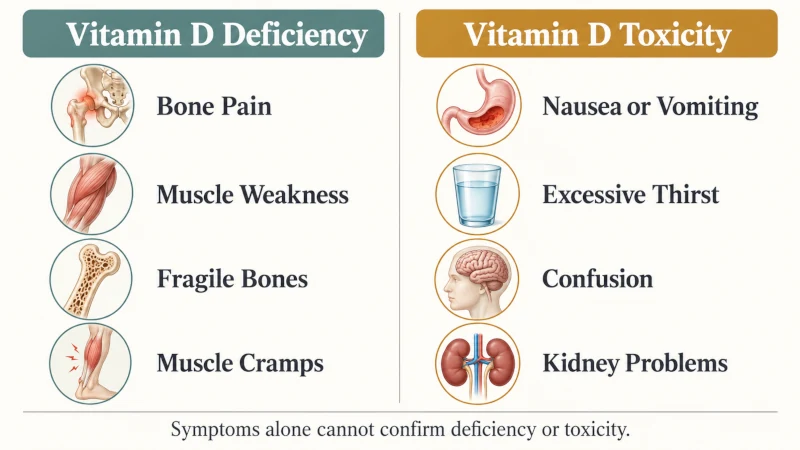
A mild shortfall usually causes no symptoms at all. When deficiency becomes significant, children can develop rickets: soft, misshapen bones, bone pain, delayed growth, and in severe cases seizures from low calcium [NIH ODS, 2026]. Adults develop osteomalacia, with bone pain (often in the hips), muscle weakness and fractures after minor injuries. Low blood calcium can add numbness around the mouth, tingling in the hands and feet, and cramps or spasms [MedlinePlus, 2026].
True deficiency is less common than headlines imply. In national U.S. data from 2011 to 2014, about 5% of people were at risk of deficiency and 18% at risk of inadequacy [NIH ODS, 2026]. Some groups are more likely to fall short [NIH ODS, 2026]:
- Breastfed babies. Breast milk alone doesn’t usually supply enough.
- Older adults. Aging skin makes less vitamin D, and many older people spend more time indoors.
- People with little sun exposure. That includes people who are homebound, work indoors in daylight hours, or cover most of their skin, including for religious reasons.
- People with darker skin. Melanin reduces how much vitamin D skin produces, although lower blood levels in this group haven’t been clearly tied to worse bone outcomes.
- People with conditions that limit fat absorption, such as celiac disease, Crohn’s disease, ulcerative colitis, cystic fibrosis and some liver diseases.
- People with obesity or who have had gastric bypass surgery. Body fat holds onto vitamin D, and bypass surgery skips part of the intestine where it’s absorbed.
- People who avoid dairy, including those with lactose intolerance, milk allergy or a vegan diet, since fortified milk is a major source.
How much vitamin D do you need?
U.S. recommendations assume you get minimal sun, so they reflect what you’d need from food and supplements alone. One microgram (mcg) equals 40 IU [NIH ODS, 2026].
| Age | Recommended daily amount | Upper limit (from all sources) |
| 0–6 months | 400 IU (10 mcg)* | 1,000 IU (25 mcg) |
| 7–12 months | 400 IU (10 mcg)* | 1,500 IU (38 mcg) |
| 1–3 years | 600 IU (15 mcg) | 2,500 IU (63 mcg) |
| 4–8 years | 600 IU (15 mcg) | 3,000 IU (75 mcg) |
| 9–70 years | 600 IU (15 mcg) | 4,000 IU (100 mcg) |
| Over 70 | 800 IU (20 mcg) | 4,000 IU (100 mcg) |
| Pregnancy and breastfeeding | 600 IU (15 mcg) | 4,000 IU (100 mcg) |
*Adequate Intake. Source: Food and Nutrition Board values published by [NIH ODS, 2026].
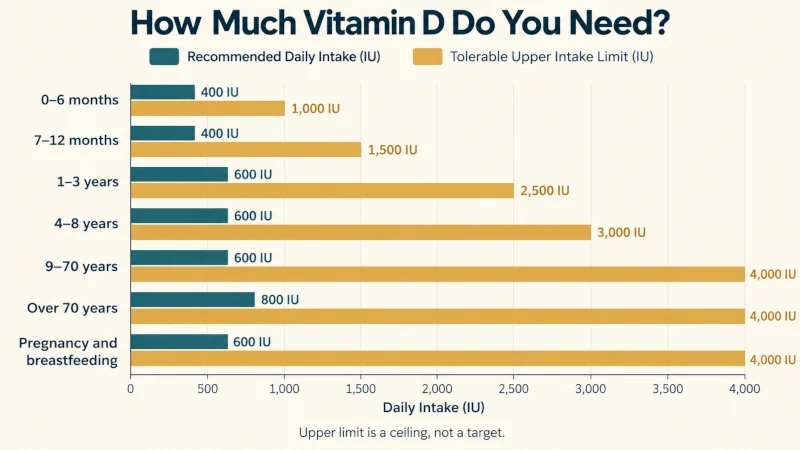
Treat the upper limit as a ceiling: the most you can take daily without likely harm. The Food and Nutrition Board noted that intakes below it may still cause problems over time [NIH ODS, 2026].
Some professional guidance goes further for particular groups. The Endocrine Society suggests routine vitamin D for children and teens aged 1 to 18, adults 75 and older, people who are pregnant, and adults with high-risk prediabetes, while advising healthy adults aged 19 to 74 to simply meet the recommended amount rather than take extra [Endocrine Society, 2024]. For adults 50 and older who do need a supplement, it prefers a lower daily dose over large weekly or monthly doses [Endocrine Society, 2024]. That preference is one reason vitamin D shots, which deliver very large doses at long intervals, are rarely the best option.
Where to get vitamin D
Food sources
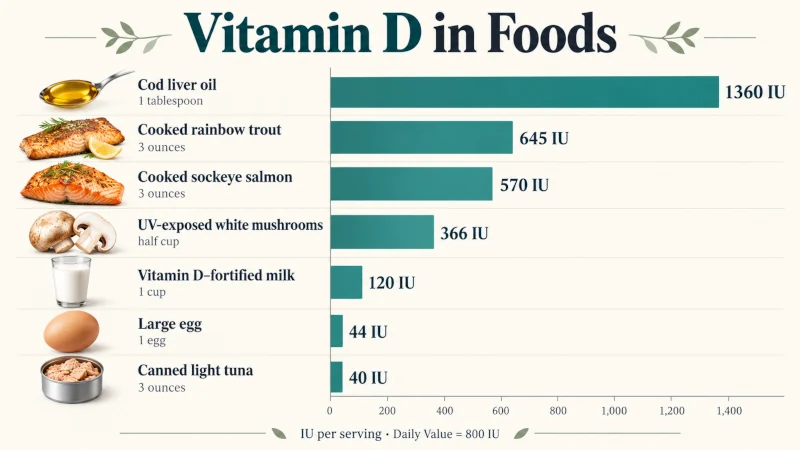
Very few foods are naturally rich in vitamin D. Fatty fish and fish liver oils lead the list, while egg yolks, beef liver and cheese contain small amounts. In the U.S., fortified foods such as milk, plant milks and breakfast cereals supply most of the vitamin D people get from their diet [NIH ODS, 2026].
| Food | Serving | Vitamin D (IU) | % Daily Value |
| Cod liver oil | 1 tablespoon | 1,360 | 170% |
| Rainbow trout, farmed, cooked | 3 ounces | 645 | 81% |
| Sockeye salmon, cooked | 3 ounces | 570 | 71% |
| White mushrooms, UV-exposed, raw | ½ cup | 366 | 46% |
| Milk, 2%, vitamin D–fortified | 1 cup | 120 | 15% |
| Soy, almond or oat milk, fortified | 1 cup | 100–144 | 13–18% |
| Ready-to-eat cereal, fortified (10% DV) | 1 serving | 80 | 10% |
| Sardines, canned in oil | 2 sardines | 46 | 6% |
| Egg, large (vitamin D is in the yolk) | 1 egg | 44 | 6% |
| Tuna, light, canned in water | 3 ounces | 40 | 5% |
Daily Value for vitamin D is 800 IU (20 mcg). Source: USDA data compiled by [NIH ODS, 2026].
Fatty fish does double duty: it’s also one of the foods with the best evidence for heart health. Ordinary mushrooms contain very little vitamin D unless they’ve been exposed to UV light, which the label will say, and vegetables, fruit, grains, beans and nuts contain essentially none [NIH ODS, 2026].
Cod liver oil is potent; a single tablespoon exceeds the daily value [NIH ODS, 2026]. If you take it alongside a multivitamin or a separate vitamin D supplement, add up the total. Fish liver oils also supply vitamin A, which has its own upper limit.
Sunlight

Most people get at least some vitamin D from the sun. How much depends on the season, time of day, latitude, cloud cover, skin tone, age and sunscreen. UVB doesn’t pass through window glass, so sun through a window won’t help [NIH ODS, 2026]. Some experts suggest that roughly 5 to 30 minutes of midday sun on the face, arms and legs, a few times a week, usually produces enough [NIH ODS, 2026].
The American Academy of Dermatology disagrees with using the sun this way. Because UV radiation causes skin cancer, it recommends getting vitamin D from food and supplements instead, and says there’s no amount of sun exposure that maximizes vitamin D without raising skin-cancer risk [AAD, 2025]. Both positions weigh the same trade-off differently. If you have fair skin, a history of skin cancer, or take a medication that makes you sun-sensitive, food and supplements are the safer route.
One reassurance: sun exposure doesn’t cause vitamin D toxicity, because the skin limits how much it makes. Frequent tanning-bed use is different and can push blood levels very high [NIH ODS, 2026].
Supplements: D2 or D3?
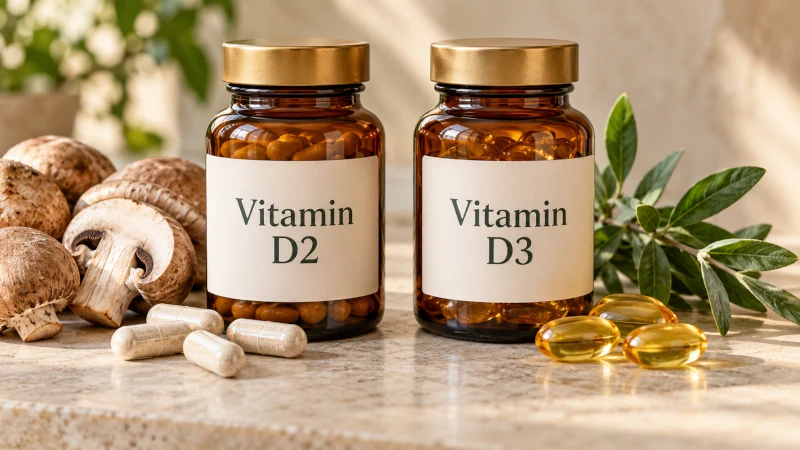
Supplements contain either vitamin D2 (ergocalciferol, made from yeast) or vitamin D3 (cholecalciferol, usually made from lanolin, with lichen-based versions for vegans). Both are well absorbed and both cure rickets, but D3 raises blood levels more and keeps them up longer [NIH ODS, 2026]. Some dietary fat in the same meal helps absorption, though some vitamin D is absorbed without it [NIH ODS, 2026].
Should you get your vitamin D level tested?
For most healthy people, no. The Endocrine Society advises against routine vitamin D testing in healthy adults, including during pregnancy and in people with darker skin or obesity, because trials haven’t identified a blood level that predicts benefit [Endocrine Society, 2024]. The USPSTF likewise found insufficient evidence to recommend screening adults without symptoms [NIH ODS, 2026].
Testing makes sense when there’s a reason: symptoms of osteomalacia, a condition that affects absorption, kidney or liver disease, low blood calcium, or a medication that interferes with vitamin D. If you are tested, results are generally read this way [NIH ODS, 2026]:
| Blood 25-hydroxyvitamin D | What it generally means |
| Below 12 ng/mL (30 nmol/L) | Risk of deficiency (rickets, osteomalacia) |
| 12 to under 20 ng/mL (30 to under 50 nmol/L) | Generally considered inadequate for bone health |
| 20 ng/mL (50 nmol/L) or higher | Adequate for most healthy people |
| Above 50 ng/mL (125 nmol/L) | Linked to potential harm, particularly above 60 ng/mL (150 nmol/L) |
Lab methods vary, so the same blood sample can read higher or lower depending on the test used [NIH ODS, 2026]. Some labs and clinicians use different cutoffs from these, so ask which ones apply to your result.
Too much vitamin D: toxicity, interactions and who should be careful
Vitamin D toxicity
Vitamin D toxicity is almost always caused by supplements: taking too much, a manufacturing error, or an incorrect prescription. It doesn’t come from food or sun [NIH ODS, 2026]. Excess vitamin D drives blood calcium too high (above about 11.1 mg/dL), usually with blood vitamin D above roughly 150 ng/mL [NIH ODS, 2026].
Symptoms include nausea, vomiting, loss of appetite, muscle weakness, confusion or other mental changes, pain, dehydration, excessive thirst and urination, and kidney stones. In severe cases, toxicity can cause kidney failure, calcium deposits in blood vessels and heart valves, irregular heart rhythms and death [NIH ODS, 2026].
The Food and Nutrition Board considers toxic symptoms unlikely below 10,000 IU a day, yet it advises keeping blood levels below about 50 to 60 ng/mL and notes that harm may appear at lower intakes over time [NIH ODS, 2026]. Adding calcium raises a separate risk: in the Women’s Health Initiative, daily calcium plus vitamin D increased kidney stones by 17% over seven years [NIH ODS, 2026], and the USPSTF’s review found a small rise in kidney stones with vitamin D supplements [USPSTF, 2024 draft].
Medication interactions
Check with your doctor or pharmacist before taking vitamin D if you use any of these [NIH ODS, 2026]:
- Orlistat (Xenical, alli), which can reduce how much vitamin D you absorb.
- Certain statins (atorvastatin, lovastatin, simvastatin). High vitamin D intakes may make them less potent, and statins may reduce how much vitamin D your body makes.
- Corticosteroids such as prednisone, which impair vitamin D metabolism and calcium absorption.
- Thiazide diuretics, which together with vitamin D can push calcium too high, especially in older adults and people with kidney problems or overactive parathyroid glands.
- Antiseizure medicines, which can contribute to osteomalacia [MedlinePlus, 2026].
Pregnancy, breastfeeding and babies
Pregnancy and breastfeeding don’t change the recommended amount (600 IU) or the upper limit (4,000 IU) for adults [NIH ODS, 2026]. The Endocrine Society suggests routine vitamin D during pregnancy because it may lower the risk of complications such as preeclampsia and preterm birth; the trials it reviewed used an average of about 2,500 IU a day [Endocrine Society, 2024]. A prenatal vitamin may already cover part of that, so check with your prenatal provider before adding a separate supplement.
Babies fed only breast milk, or breast milk plus formula, need a 400 IU vitamin D supplement every day starting shortly after birth. Babies who drink 32 ounces or more of formula a day don’t need one, because formula is fortified [CDC, 2026]. Infants have the lowest upper limits of any age group, so use a product made for babies rather than an adult supplement [NIH ODS, 2026].
Who should talk to a clinician before supplementing
- Anyone with high blood calcium, overactive parathyroid glands, kidney disease, or a history of kidney stones [NIH ODS, 2026].
- People with liver or kidney disease, which affect how vitamin D is activated [NIH ODS, 2026; MedlinePlus, 2026].
- Anyone taking the medications listed above.
- People using several products that contain vitamin D, such as a multivitamin, a calcium-plus-D tablet and cod liver oil.
- Anyone considering more than 4,000 IU a day, or a high-dose weekly prescription product.
When to see a doctor
Book an appointment if you have [MedlinePlus, 2026]:
- Ongoing bone pain, especially in the hips.
- Muscle weakness you can’t explain.
- A broken bone after a minor fall or bump.
- Numbness around your mouth, tingling in your hands or feet, or hand and foot spasms.
Get same-day or emergency care if you’ve been taking high-dose vitamin D and develop persistent vomiting, severe weakness, confusion, extreme thirst with frequent urination, or an irregular heartbeat. These can signal dangerously high calcium [NIH ODS, 2026]. Call 911 for chest pain, fainting or a seizure.
| HEALTH DISCLAIMER: This article is for general education and is not medical advice, diagnosis or treatment. Vitamin D needs vary with age, health conditions, medications, diet and sun exposure. Talk with your doctor, pharmacist or a registered dietitian before starting a supplement, taking more than the recommended amount, or giving vitamin D to a baby or child, and especially if you are pregnant or breastfeeding, take prescription medication, or have kidney, liver or parathyroid disease or a history of kidney stones. Do not start, stop or change a prescribed treatment because of what you read here. If you think you are having a medical emergency, call 911. |
Frequently Asked Questions
What is the main benefit of vitamin D?
Helping your body absorb calcium and phosphate so bones mineralize properly. That’s what prevents rickets in children and osteomalacia in adults, and it’s the best-supported vitamin D benefit by far [NIH ODS, 2026].
Is it better to take vitamin D every day or once a week?
For adults 50 and older who need a supplement, the Endocrine Society prefers a lower daily dose over large weekly or monthly doses [Endocrine Society, 2024]. If your clinician has prescribed a weekly high-dose product to correct a deficiency, follow those instructions.
How much vitamin D is too much?
For adults, the upper limit is 4,000 IU (100 mcg) a day from all sources, and it’s lower for children and infants. Toxic symptoms are unlikely below 10,000 IU a day, but harm can build up over time at lower intakes, so stay at or below the upper limit unless a clinician advises otherwise [NIH ODS, 2026].
Can I get enough vitamin D from the sun alone?
Some people can, depending on season, latitude, skin tone and age; UVB doesn’t pass through window glass [NIH ODS, 2026]. Dermatologists recommend getting vitamin D from food and supplements rather than sun exposure because of skin-cancer risk [AAD, 2025].
Should I take vitamin D with calcium?
Vitamin D helps you absorb calcium, but healthy older adults living independently don’t appear to gain fracture protection from supplementing both, and the combination slightly raises kidney-stone risk [USPSTF, 2024 draft; NIH ODS, 2026]. Aim to get calcium from food, and ask your clinician whether you need a supplement.
Does vitamin D help your immune system?
Vitamin D plays a role in immune function [NIH ODS, 2026], but the latest analysis of trials found no statistically significant reduction in respiratory infections overall [Jolliffe et al., 2025]. A single large trial suggested fewer new autoimmune diagnoses, which is promising but unconfirmed [Hahn et al., 2022].
References
- National Institutes of Health, Office of Dietary Supplements. Vitamin D: Fact Sheet for Health Professionals. View source
- Demay MB, Pittas AG, Bikle DD, et al. Vitamin D for the Prevention of Disease: An Endocrine Society Clinical Practice Guideline. View source
- Manson JE, Cook NR, Lee IM, et al.; VITAL Research Group. Vitamin D Supplements and Prevention of Cancer and Cardiovascular Disease. View source
- LeBoff MS, Chou SH, Ratliff KA, et al. Supplemental Vitamin D and Incident Fractures in Midlife and Older Adults. View source
- Pittas AG, Dawson-Hughes B, Sheehan P, et al.; D2d Research Group. Vitamin D Supplementation and Prevention of Type 2 Diabetes. View source
- Jolliffe DA, Camargo CA, Sluyter JD, et al. View source
- Hahn J, Cook NR, Alexander EK, et al. View source
- U.S. Preventive Services Task Force. View source
- Centers for Disease Control and Prevention. Vitamin D: Infant and Toddler Nutrition. View source
- American Academy of Dermatology. Vitamin D. View source
- MedlinePlus Medical Encyclopedia. Osteomalacia. View source


