
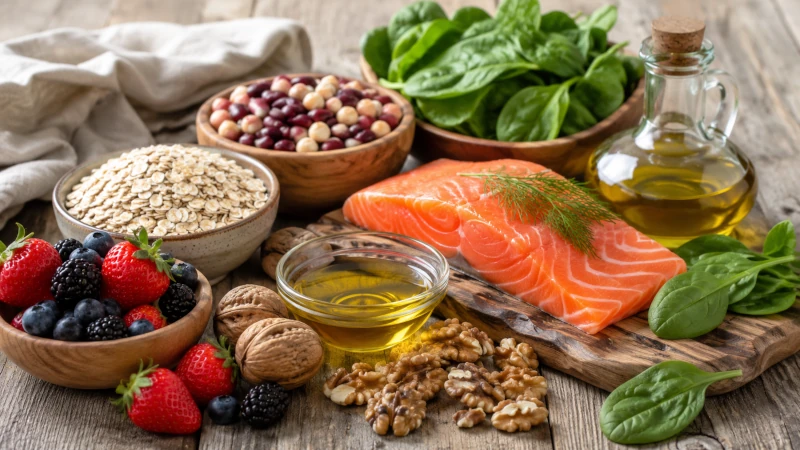
The most useful thing you can do for your heart at the grocery store is also the least exciting: buy more of a few specific foods, and eat them often enough that they become a habit. Not a miracle supplement, not a 30-day cleanse — just real food, eaten consistently. The foods good for the heart that hold up under careful research are ordinary and affordable: fatty fish, oats, walnuts, olive oil, beans, leafy greens, and berries. Here are seven of them, what each one actually does, how much you’d realistically need, and where the science is strong versus still emerging.
One honest note up front. No food on this list “cures,” “reverses,” or “unclogs” anything on its own. What the evidence supports is steadier: eaten as part of an overall pattern, these foods can nudge your cholesterol, blood pressure, and long-term risk in the right direction. That’s a real benefit — just not a dramatic one, and it works best alongside not smoking, moving your body, sleep, and any medication your doctor has prescribed. For more on the bigger picture, see our cardiovascular health guides.
What “Heart-Healthy” Actually Means
A food earns a spot on a heart list when it does one or more concrete things: lowers LDL (“bad”) cholesterol, helps control blood pressure, reduces inflammation, improves the lining of your blood vessels, or replaces something worse on your plate. That last point matters more than people expect. A lot of the benefit from salmon or beans comes from what they push aside — processed meat, refined carbs, fried food. The American Heart Association frames heart eating as a whole pattern rather than a hunt for single superfoods, and that’s the right way to read the list below.
The 7 Foods Good for the Heart
1. Fatty Fish (Salmon, Sardines, Mackerel, Trout)
If you add one thing, make it fish. Fatty fish supply omega-3 fatty acids (EPA and DHA), which are linked to lower triglycerides, slightly lower blood pressure, and a reduced chance of dying from heart disease. The American Heart Association recommends two servings of fish a week — about two 3.5-ounce portions — with oily fish like salmon, sardines, and mackerel being the best sources. Mayo Clinic notes the benefit comes from eating fish, not from chasing the highest dose.
Worth being clear about supplements: for most people without heart disease, fish-oil capsules have not been shown to prevent heart attacks, and the AHA does not recommend them for general prevention. They may be reasonable for specific patients — for example, people with very high triglycerides or existing heart disease — but that’s a decision for your doctor, not a default. Eat the fish first.
Practical amount: two servings (about 8 oz total) of oily fish per week. Canned salmon and sardines count and are cheap.
2. Oats and Whole Grains
Oats are one of the few foods with a heart claim the FDA actually authorized. The soluble fiber in oats, called beta-glucan, forms a gel in your gut that traps bile acids, which nudges your liver to pull cholesterol out of your blood to make more. The FDA-backed claim centers on about 3 grams of beta-glucan a day, and pooled trials show that dose lowering total and LDL cholesterol by roughly 5–10%. That’s a modest, reliable effect — not a statin, but real.
Practical amount: about 1.5 cups of cooked oatmeal, or 3 grams of beta-glucan, daily. Barley, brown rice, and other whole grains add fiber too. Skip the heavily sweetened instant packets.
3. Walnuts (and Nuts in General)
Walnuts stand out among nuts for their plant omega-3 (alpha-linolenic acid). Across dozens of controlled trials, a meta-analysis found walnut-rich diets modestly lowered total and LDL cholesterol and triglycerides compared with control diets. In the large PREDIMED trial, a Mediterranean diet that included mixed nuts was part of a pattern that reduced major cardiovascular events in high-risk adults. Read our full walnut health benefits guide for more.
Practical amount: a small handful (about 1 oz, 7 whole walnuts) most days. Nuts are calorie-dense, so unsalted portions in place of chips or sweets are the move, not piles on top of everything.
4. Extra-Virgin Olive Oil
Olive oil is the backbone of the Mediterranean pattern, the diet with the strongest trial evidence for heart protection. In PREDIMED — a randomized trial in about 7,400 high-risk adults — a Mediterranean diet rich in extra-virgin olive oil was associated with roughly a 30% lower rate of heart attack, stroke, and cardiovascular death versus a lower-fat control diet. One caveat in the interest of honesty: PREDIMED was retracted and republished in 2018 after problems with how some participants were randomized; the corrected analysis still supported the diet, but it’s fair to read the effect as strong evidence for the overall pattern rather than proof that oil alone did the work.
Practical amount: use extra-virgin olive oil as your main cooking and dressing fat, roughly 1–4 tablespoons a day, in place of butter or processed oils. It’s still calorie-dense, so it replaces fats rather than adding to them.
5. Beans, Lentils, and Peas (Legumes)
Legumes are a quiet workhorse: high in soluble fiber and plant protein, almost no saturated fat. Meta-analyses of controlled trials show that eating beans, lentils, and peas lowers LDL cholesterol by around 5%. The evidence on hard outcomes like heart attacks is more mixed — some reviews find a benefit at higher intakes, others are inconclusive, and study quality varies. Still, as a swap for red and processed meat, legumes are an easy win. Green peas are a simple starting point; see our guide to peas and heart health.
Practical amount: aim for about 1.5 cups a week or more (roughly a half-cup serving a few times). Canned, rinsed beans are fine — choose low-sodium when you can.
6. Leafy Greens and Cruciferous Vegetables
Spinach, kale, arugula, broccoli, and their relatives bring two useful things: dietary nitrates that help relax blood vessels, and a pile of fiber and potassium. In a meta-analysis of cohort studies, higher intake of green leafy and cruciferous vegetables was tied to roughly a 15% lower incidence of cardiovascular disease, and a randomized crossover trial found cruciferous vegetables modestly lowered blood pressure in adults with mildly elevated readings. Broccoli is an easy, well-studied pick — our broccoli health benefits page goes deeper.
Practical amount: about one cup of leafy greens a day, plus cruciferous vegetables a few times a week. Light steaming or roasting keeps more nutrients than boiling.
7. Berries
Blueberries, strawberries, and other berries are loaded with anthocyanins — the pigments behind their color and much of their benefit. Short randomized studies show berries can improve blood pressure, blood vessel function, and cholesterol markers, and large observational studies link higher anthocyanin intake to lower heart-attack risk. Be clear-eyed here: most berry trials measure short-term markers rather than decades-long outcomes, so the evidence is promising rather than settled. Berries are also a genuinely good swap for sugary desserts, which is its own heart win.
Practical amount: about a half to one cup most days. Frozen berries are just as nutritious as fresh and far cheaper out of season.
How Strong Is the Evidence? A Quick Honest Summary
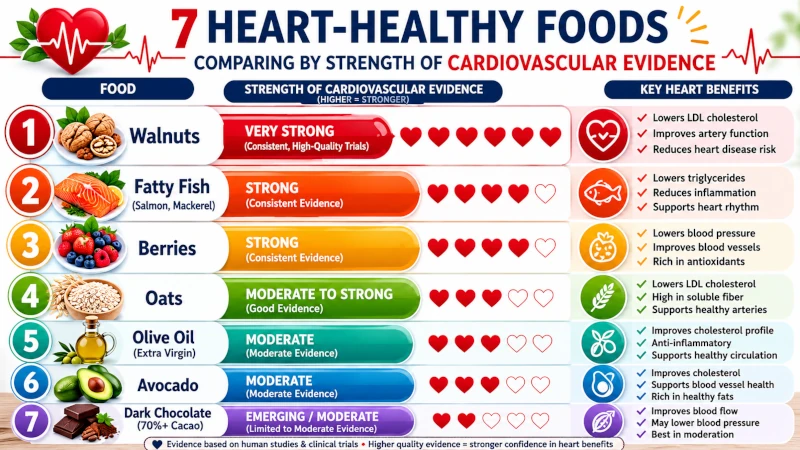
Not every food here is supported equally. This table sorts them by how solid the heart evidence is, so you know where to set your expectations.
| Food | What it helps | Evidence strength |
| Fatty fish | Triglycerides, CVD death risk | Strong (diet); supplements not for general prevention |
| Oats / whole grains | Lowers LDL ~5–10% | Strong (FDA-recognized) |
| Olive oil | Major CV events (as part of Med. diet) | Strong pattern evidence (PREDIMED) |
| Walnuts / nuts | Lowers LDL & triglycerides | Strong for lipids |
| Leafy & cruciferous veg | Blood pressure, CVD incidence | Moderate–strong |
| Beans / legumes | Lowers LDL ~5% | Good for cholesterol; mixed for hard outcomes |
| Berries | BP, vessel function, lipid markers | Promising; mostly short-term markers |
How to Actually Eat This Way
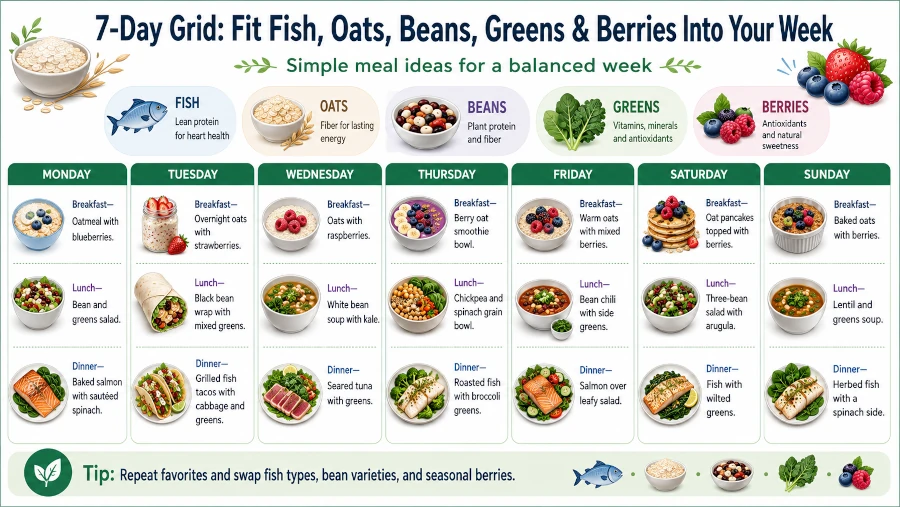
You don’t need to overhaul everything by Monday. The pattern beats any single food, so build it in pieces. A workable week might look like salmon twice, oatmeal a few mornings, beans in place of meat once or twice, olive oil as your default fat, greens with most dinners, walnuts as a snack, and berries instead of dessert. None of it is exotic, and most of it is cheaper than what it replaces. If you want to browse more options, our foods section has individual guides.
Two things matter as much as what you add: cutting back on processed and red meat, refined carbs, and salty packaged food, and being patient. Cholesterol and blood-pressure changes show up over weeks to months, not days.
Who Should Be Careful, and When to See a Doctor
Whole foods are safe for most people, but a few situations call for a conversation first. If you take blood thinners (such as warfarin), large or sudden changes in leafy greens can affect how your medication works because of their vitamin K — consistency matters more than avoidance, and your doctor can guide the dose. High-dose fish-oil supplements can thin the blood and may interact with anticoagulants. If you have kidney disease, the potassium in beans, greens, and some fruit may need limiting. People with IBS or digestive sensitivity sometimes react to a sudden jump in beans and fiber — increase slowly and drink water. If you’re pregnant or breastfeeding, keep eating fish but choose lower-mercury options like salmon, sardines, and trout, and avoid high-mercury fish.
Food is support, not a substitute. If you’ve been prescribed medication for cholesterol, blood pressure, or heart disease, keep taking it unless your doctor says otherwise. Diet works alongside treatment, not instead of it.
Red-Flag Symptoms — Get Help Now
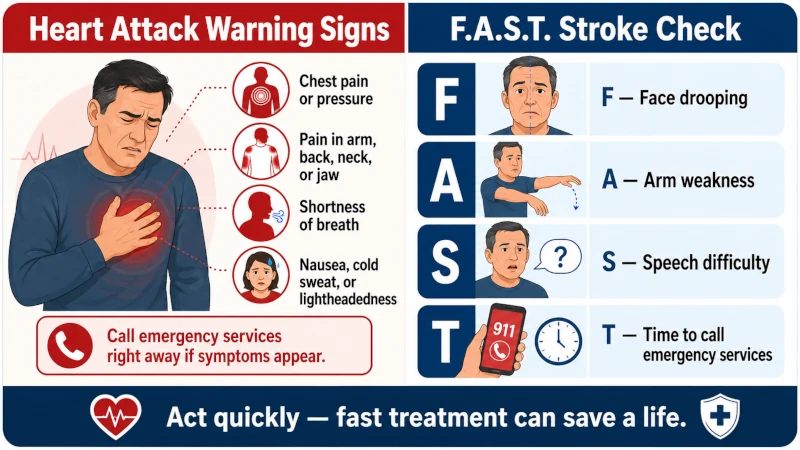
No food prevents an emergency. Call 911 right away if you have chest pain or pressure, pain spreading to the arm, jaw, neck, or back, sudden shortness of breath, breaking out in a cold sweat, nausea, or lightheadedness — these can signal a heart attack. Women, older adults, and people with diabetes may have subtler signs like unusual fatigue or jaw discomfort. For a possible stroke, remember F.A.S.T.: face drooping, arm weakness, speech difficulty, time to call 911. Don’t wait it out, and don’t drive yourself.
| Health Disclaimer This article is for general education and is not medical advice, diagnosis, or treatment. Food can support heart health, but it does not replace prescribed medication, and no single food cures or reverses heart disease. If you have a heart condition, high blood pressure, diabetes, a bleeding disorder, or take any medication, talk with your doctor, cardiologist, or a registered dietitian before making major diet changes. If you think you are having a heart attack or stroke, call 911 right away. |
Frequently Asked Questions
What is the single best food for your heart?
There isn’t one — and any source promising a magic food is overselling it. If forced to pick, fatty fish like salmon has some of the strongest evidence for lowering heart-disease risk, but the benefit comes from an overall pattern of these foods, not a hero ingredient.
How fast will eating these foods help my heart?
Cholesterol and blood pressure usually start shifting within a few weeks to a few months of consistent changes, not overnight. Long-term risk reduction builds over years. Think of it as a steady habit, not a quick fix.
Can heart-healthy foods replace my cholesterol or blood pressure medication?
No. These foods can complement treatment and sometimes reduce how much you need over time, but you should never stop or lower a prescribed medication on your own. Talk to your doctor before changing anything.
Are fish-oil supplements as good as eating fish?
For most people without heart disease, no — trials haven’t shown capsules prevent heart attacks, and the American Heart Association doesn’t recommend them for general prevention. Eating fish provides protein and nutrients a capsule doesn’t. Supplements may help specific patients, which is a doctor’s call.
Is it okay to eat these foods if I take blood thinners?
Usually yes, but keep your intake of leafy greens steady rather than wildly variable, since their vitamin K affects some blood thinners. Run high-dose fish-oil supplements past your doctor. Consistency is the key word.
References
- American Heart Association — Fish and Omega-3 Fatty Acids [View source]
- Mayo Clinic — Omega-3 in fish: How eating fish helps your heart [View source]
- Aung T, et al. AHA Science Advisory: Omega-3 (Fish Oil) Supplementation and Prevention of CVD. Circulation, 2017 [View source]
- U.S. FDA — Health Claims: Soluble Dietary Fiber and Coronary Heart Disease (Federal Register, 2005) [View source]
- Joyce SA, et al. The Cholesterol-Lowering Effect of Oats and Oat Beta-Glucan. Front Nutr, 2019 [View source]
- Guasch-Ferré M, et al. Effects of Walnut Consumption on Cardiovascular Risk Factors: Meta-Analysis. Am J Clin Nutr, 2018 [View source]
- Estruch R, et al. PREDIMED: Mediterranean Diet for Primary Prevention of CVD (retraction & republication). Harvard Nutrition Source summary [View source]
- Guasch-Ferré M, et al. Olive Oil Intake and Risk of CVD and Mortality in the PREDIMED Study. BMC Med, 2014 [View source]
- Bazzano LA, et al. Non-Soy Legume Consumption Lowers Cholesterol: Meta-Analysis of RCTs. Nutr Metab Cardiovasc Dis, 2011 [View source]
- Viguiliouk E, et al. Legume Consumption and Risk of CVD and Type 2 Diabetes: Systematic Review & Meta-Analysis, 2023 [View source]
- Pollock RL. The effect of green leafy and cruciferous vegetable intake on CVD incidence: Meta-Analysis, 2016 [View source]
- Connolly G, et al. VESSEL Study: Cruciferous Vegetables Lower Blood Pressure (RCT crossover), 2024 [View source]
- Basu A, et al. Berries: Emerging Impact on Cardiovascular Health. Nutr Rev, 2010 [View source]
- American Heart Association — Diet and Lifestyle Recommendations [View source]
