
Copper is a nutrient most people never have to think about, and that is mostly good news. Your body uses tiny amounts of it to make energy, move iron where it needs to go, build connective tissue, make certain brain chemicals, and defend cells against oxidative damage [NIH ODS, 2022]. So the real copper benefits are the benefits of having enough: healthy blood, working nerves, and sturdy tissue. Most American adults already get that much from food [NIH ODS, 2022].
The people who should pay closer attention are a smaller group: anyone taking high-dose zinc, anyone who has had stomach or weight-loss surgery, people with celiac disease, and people with Wilson disease, an inherited condition that makes copper build up. For them, copper is a question worth asking a clinician about. For everyone else, the useful moves are knowing which foods supply it and not overdoing supplements.
What copper actually does in your body
Copper works mainly as a helper for enzymes, which scientists call cuproenzymes. These enzymes handle energy production, iron metabolism, connective tissue building, and the synthesis of neurotransmitters. Copper also has roles in blood vessel growth, brain development, skin and hair pigmentation, and immune function [NIH ODS, 2022].
| Copper-dependent enzyme | What it does |
| Cytochrome c oxidase | Final step of energy production inside mitochondria |
| Lysyl oxidase | Cross-links collagen and elastin, which keeps connective tissue and blood vessels strong |
| Copper-zinc superoxide dismutase | Neutralizes superoxide, a damaging free radical |
| Ceruloplasmin and hephaestin | Prepare iron to be released from cells and carried in the blood |
| Dopamine beta-hydroxylase | Converts dopamine into noradrenaline |
| Tyrosinase | Starts melanin production, which gives skin and hair their color |
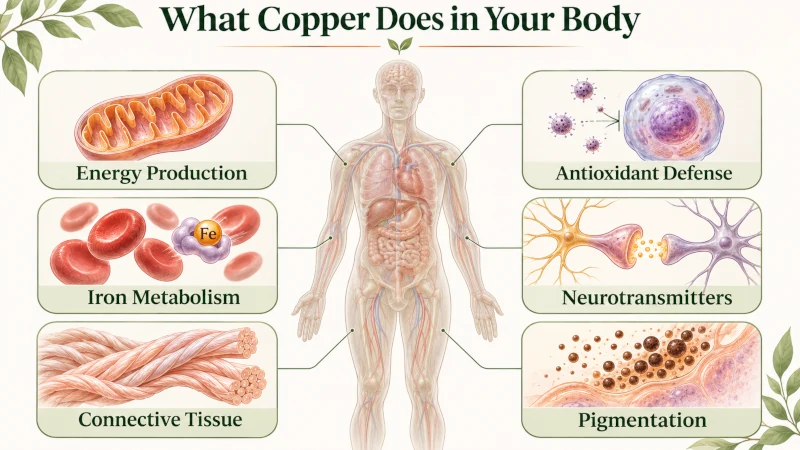
Source: [Jaiser & Winston, 2010]; [NIH ODS, 2022].
You do not carry much of it. An average adult holds 50 to 120 mg in total, and almost two-thirds of that sits in the skeleton and muscle. The liver keeps levels steady by releasing extra copper into bile, so most of it leaves through the stool [NIH ODS, 2022].
Why copper and iron are linked
Ceruloplasmin carries more than 95% of the copper in healthy blood, and it also helps the body handle iron [NIH ODS, 2022]. Without enough copper, iron can get stuck in the liver instead of reaching the bone marrow. That is one reason copper deficiency causes anemia, and why that anemia often looks different from ordinary iron deficiency: red cells tend to be normal-sized or large rather than small [Jaiser & Winston, 2010]. If you are being treated for low iron, our guide to what iron does and how to take it safely covers that side of the picture.
Copper benefits, graded honestly
Well established: copper is essential. The enzymes above cannot work without it, and a true deficiency causes anemia, low white blood cell counts, and nerve damage. When doctors correct a deficiency, blood counts recover quickly and completely. Nerve damage, on the other hand, usually stops getting worse or improves only partly [Jaiser & Winston, 2010].
Insufficient evidence: heart health. Copper deficiency changes blood lipids, and animal studies link it to heart abnormalities. But studies in people point in different directions. In one Italian cohort, adults with the highest copper intake had lower blood pressure and LDL cholesterol. In U.S. national survey data, people with the highest blood copper had a higher risk of dying from coronary heart disease. Small supplement trials in healthy adults, including one giving 2 mg a day for 8 weeks to 70 people, found no effect on cholesterol, CRP, or homocysteine. NIH concludes the evidence is insufficient to draw conclusions either way [NIH ODS, 2022].
Mixed and unresolved: Alzheimer’s disease. Some researchers think too little copper contributes to Alzheimer’s; others think too much does. Meta-analyses find that people with Alzheimer’s tend to have higher blood copper, and a 12-month trial giving 8 mg of copper daily to 68 people with mild Alzheimer’s found no difference in cognition. Experts at a 2013 nutrition and brain conference suggested people at higher risk choose multivitamins without copper or iron, though NIH stresses that much more research is needed [NIH ODS, 2022].
Real but narrow: immunity. Deficiency raises the risk of infection [NIH ODS, 2022]. We found no trials showing that extra copper strengthens immunity in people who already get enough.
Mostly folklore: gray hair. Copper is needed to make melanin, and loss of pigment is one effect of deficiency [NIH ODS, 2022]. Ordinary age-related graying is a different thing, and we found no good evidence that copper supplements reverse it.
Not supported: copper bracelets for arthritis. In a randomized, double-blind crossover trial, 70 people with painful rheumatoid arthritis each wore a copper bracelet and three other wrist devices for five weeks apiece. The copper bracelet did no better than placebo for pain, inflammation, or disease activity, and seven participants reported skin irritation from it. The authors call their trial strong but not definitive [Richmond et al., 2013]. With rheumatoid arthritis, early medical treatment is what protects joints.
How much copper you need
Copper amounts are small enough that labels often use micrograms (mcg). 1,000 mcg equals 1 mg. The Recommended Dietary Allowance (RDA) covers nearly all healthy people; the Tolerable Upper Intake Level (UL) is the most you should take in daily from food and supplements combined [NIH ODS, 2022].
| Age or life stage | RDA per day | Upper limit (UL) per day |
| Birth–6 months | 200 mcg* | Not set — breast milk, formula, and food only |
| 7–12 months | 220 mcg* | Not set — breast milk, formula, and food only |
| 1–3 years | 340 mcg | 1,000 mcg |
| 4–8 years | 440 mcg | 3,000 mcg |
| 9–13 years | 700 mcg | 5,000 mcg |
| 14–18 years | 890 mcg | 8,000 mcg |
| Adults 19+ | 900 mcg | 10,000 mcg (10 mg) |
| Pregnancy | 1,000 mcg | 8,000 mcg (under 19) / 10,000 mcg (19+) |
| Breastfeeding | 1,300 mcg | 8,000 mcg (under 19) / 10,000 mcg (19+) |
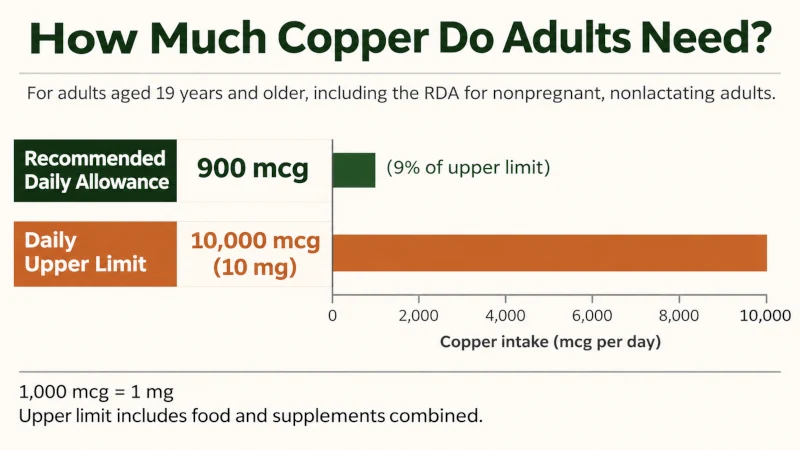
*Adequate Intake. Source: [NIH ODS, 2022].
Most people clear the bar without trying. U.S. men average about 1,400 mcg a day from food and women about 1,100 mcg; with supplements, adult totals run 1,400 to 1,700 mcg. Still, 6% to 15% of adults who don’t take a copper-containing supplement fall below the average requirement [NIH ODS, 2022]. The UL is based on the amount linked to liver damage and does not apply to people taking copper under medical supervision.
You will still see older supplement guides call 2 mg the daily “need” and list 4 to 6 mg as a “therapeutic” dose. Those figures don’t match current recommendations, and there is no recognized therapeutic dose of copper for healthy people.
The best food sources of copper
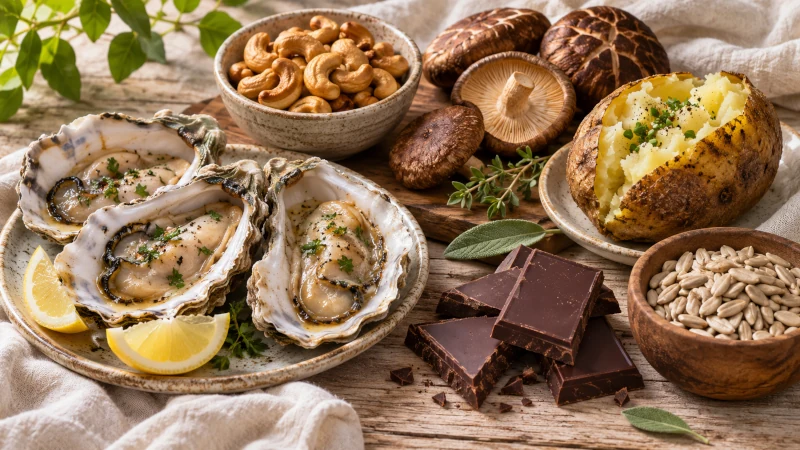
Shellfish, organ meats, nuts and seeds, whole grains, and chocolate are the richest sources [NIH ODS, 2022]. The Daily Value on labels is 900 mcg.
| Food | Copper (mcg) | % Daily Value |
| Beef liver, pan-fried, 3 oz | 12,400 | 1,378% |
| Oysters, eastern wild, cooked, 3 oz | 4,850 | 539% |
| Baking chocolate, unsweetened, 1 oz | 938 | 104% |
| Potato, cooked with skin, 1 medium | 675 | 75% |
| Shiitake mushrooms, cooked, ½ cup | 650 | 72% |
| Cashews, dry roasted, 1 oz | 629 | 70% |
| Dungeness crab, cooked, 3 oz | 624 | 69% |
| Sunflower seed kernels, toasted, ¼ cup | 615 | 68% |
| Dark chocolate (70–85% cacao), 1 oz | 501 | 56% |
| Tofu, firm, raw, ½ cup | 476 | 53% |
| Chickpeas, ½ cup | 289 | 32% |
| Whole-wheat pasta, cooked, 1 cup | 263 | 29% |
| Avocado, raw, ½ cup | 219 | 24% |
| Spinach, boiled, ½ cup | 157 | 17% |
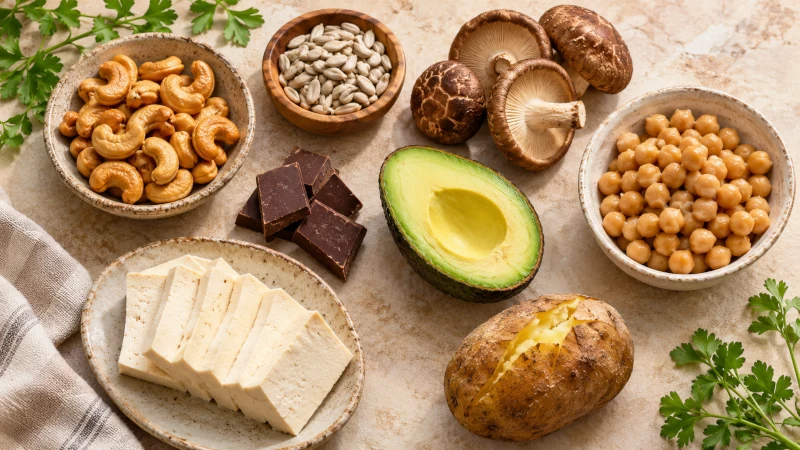
Source: USDA FoodData Central values as published in [NIH ODS, 2022].
Two things stand out. First, liver is in a class of its own: one 3-ounce serving holds more copper than the adult UL, which is set for regular daily intake, so it makes sense as an occasional food rather than a daily one. Second, potatoes, mushrooms, cashews, and tofu are ordinary foods that quietly do a lot of the work. Many of the same foods appear in our list of the best foods for anemia.
Your gut also adjusts. When a diet contains only 400 mcg of copper a day, you absorb about 75% of it; at 7.5 mg a day, absorption falls to about 12% [NIH ODS, 2022]. That built-in buffer is a big part of why deficiency and toxicity are both uncommon in healthy people.
Who is most likely to run low
Copper deficiency is uncommon [NIH ODS, 2022]. When it does happen, it usually traces back to one of a few causes.
High-dose zinc. Zinc and copper compete in the gut, and too much zinc shuts copper out. Reductions in a marker of copper status have appeared with zinc intakes of about 60 mg a day taken for up to 10 weeks, which is part of why the adult UL for zinc is 40 mg [NIH ODS, 2022]. Zinc-containing denture creams used in large amounts can cause the same problem [NIH ODS, 2022]. In a review of 55 published cases of copper deficiency nerve damage, zinc overload accounted for 16%, including four cases from denture cream and two from supplements taken at 200 to 400 mg a day [Jaiser & Winston, 2010]. Our guide to zinc benefits and safe limits covers the zinc side in detail.
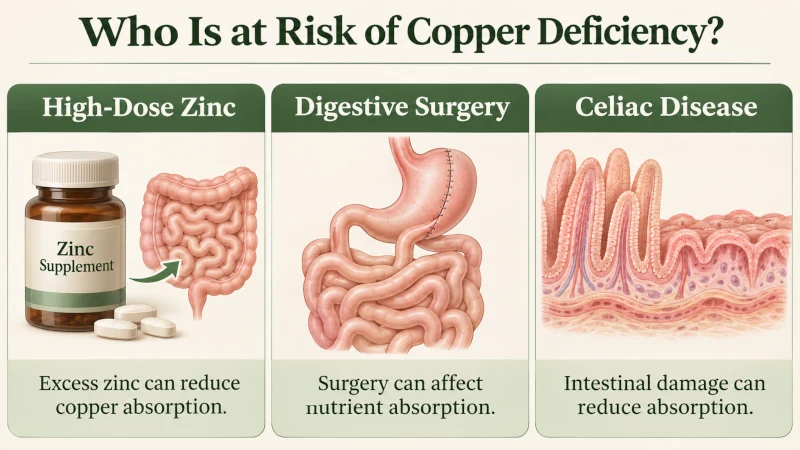
Stomach or weight-loss surgery. Prior upper digestive surgery was the most common cause in that same review, behind 47% of cases. After bariatric surgery, symptoms appeared anywhere from 5 to 26 years later, so a surgery long in the past still counts [Jaiser & Winston, 2010].
Celiac disease. In a study of 200 children and adults with celiac disease, 15% were copper deficient because of damage to the intestinal lining. Copper levels typically return to normal within a month of supplementation alongside a gluten-free diet [NIH ODS, 2022].
Menkes disease. This rare inherited disorder, which mostly affects boys, blocks copper absorption from infancy. Copper injections started in the first weeks of life can improve survival and development [NIH ODS, 2022].
Signs of copper deficiency

The two main targets are the blood and the nervous system.
- Blood: anemia and low white blood cell counts (neutropenia). These changes can look so much like a bone marrow disorder that copper deficiency has been misdiagnosed as myelodysplastic syndrome [Jaiser & Winston, 2010].
- Nerves: a spinal cord problem called copper deficiency myelopathy, with an unsteady, stiff walk and tingling in the hands and feet. It closely mimics vitamin B12 deficiency, and the two can occur together [Jaiser & Winston, 2010]. Our overview of B complex vitamins explains the B12 side.
- Other effects seen in animal and human studies: loss of skin and hair pigment, high cholesterol, connective tissue problems, osteoporosis and other bone defects, and more infections [NIH ODS, 2022].
Timing matters. In the 55-case review, copper replacement fixed blood problems rapidly and completely, but no one regained full nerve function; about half improved partly and the rest stabilized [Jaiser & Winston, 2010]. If you have risk factors and new numbness or balance trouble, getting checked early is the whole game.
Testing is less precise than you might expect
No single blood marker reliably measures copper status. Doctors usually check serum copper and ceruloplasmin together, but both can shift with estrogen, pregnancy, infection, inflammation, and some cancers [NIH ODS, 2022]. In deficiency, urine copper is typically low or normal, which helps separate it from Wilson disease, where urine copper runs high [Jaiser & Winston, 2010].
| RED FLAGS: if you develop numbness or tingling in your hands or feet, an unsteady walk, or frequent stumbling, especially if you take zinc supplements, use a lot of denture cream, or have had stomach or weight-loss surgery. Also ask about copper if you have anemia that isn’t improving on iron [Jaiser & Winston, 2010]. ASK ABOUT WILSON DISEASE: if you have yellowing of the skin or eyes, a tremor, or unexplained personality or mood changes, particularly at a young age or with a family history [NIDDK, 2018]. EMERGENCY: if a child swallows copper supplements or blue copper sulfate crystals (sold for pond algae control and sometimes mistaken for candy), call Poison Control at 1-800-222-1222, or 911 if the child is unresponsive or struggling to breathe. People who swallowed copper sulfate have become very sick or died [ATSDR, 2024]. |
Copper supplements: when they make sense
For most people, a standalone copper supplement adds nothing. Supplements contain several forms, including cupric oxide, cupric sulfate, copper amino acid chelates, and copper gluconate, and no studies have compared how well they are absorbed. Amounts range from a few micrograms up to 15 mg, about 17 times the Daily Value [NIH ODS, 2022]. If you take a multivitamin plus another supplement, add up the copper from both.
A diagnosed deficiency is different. That is treated by a clinician, who also fixes the cause, such as stopping excess zinc. In published cases, oral copper equivalent to about 2 mg a day was the usual starting point, with some patients needing more [Jaiser & Winston, 2010]. Follow-up blood work guides the dose, not guesswork.
Zinc and copper
You may see advice to take copper and zinc in a fixed 10-to-1 ratio. That isn’t an official recommendation. The best-known real-world example is the AREDS formula for age-related macular degeneration, which pairs 80 mg of zinc with 2 mg of copper specifically to avoid zinc-related copper deficiency anemia. In the trials, people taking it showed no sign of anemia [NEI, 2020]. If you take zinc above the 40 mg UL for more than a few weeks, talk with your clinician about whether you need copper and how to monitor it, rather than guessing at a ratio.
Medication interactions
NIH states that copper is not known to have clinically relevant interactions with medications [NIH ODS, 2022]. There are a few practical exceptions to keep in mind. Wilson disease is treated with chelating drugs and zinc that lower body copper, so extra copper works directly against that treatment [NIDDK, 2018]. High-dose zinc supplements reduce copper absorption, as above. And in one published case, high-dose iron supplements were suspected of contributing to copper deficiency, though the authors could not confirm cause and effect [Jaiser & Winston, 2010]. Bring your full supplement list to appointments.
Pregnancy and breastfeeding
Needs rise to 1,000 mcg a day in pregnancy and 1,300 mcg while breastfeeding, while the upper limit stays the same as for other people your age [NIH ODS, 2022]. Food usually covers the increase. Check the copper in your prenatal vitamin, and don’t add a separate copper supplement unless your obstetric provider recommends it.
Who should not take extra copper
- People with Wilson disease, or anyone told they have high copper levels [NIDDK, 2018].
- Infants: breast milk, formula, and food should be their only copper sources [NIH ODS, 2022].
- Anyone already near the UL from combined supplements.
- People at higher risk of Alzheimer’s disease may prefer a multivitamin without copper, a cautious expert suggestion rather than a proven rule [NIH ODS, 2022].
When copper becomes a problem
Long-term excess can damage the liver and cause stomach pain, cramps, nausea, diarrhea, and vomiting [NIH ODS, 2022]. In healthy people without an inherited copper disorder, though, toxicity is rare. Swallowing large amounts, through water or supplements, over time can damage the liver and kidneys [ATSDR, 2024].
Copper in tap water
Water is the usual route for excess. Copper can leach from household pipes, especially when water is acidic or the plumbing is new or recently renovated [ATSDR, 2024]. Stagnant water sitting in copper pipes and fixtures has caused copper toxicity, and the EPA’s limit for public water systems is 1.3 mg per liter [NIH ODS, 2022]. Water that tastes metallic or bitter, or has a blue-green tint, may contain too much copper. Flushing your system and testing your water are the practical fixes [ATSDR, 2024].
Wilson disease
Wilson disease is a genetic disorder that stops the body from clearing extra copper, so it builds up in the liver, brain, eyes, and other organs. Symptoms vary and can involve the liver, the nervous system and mental health, or the eyes [NIDDK, 2018]. Without treatment it can lead to cirrhosis, acute hepatitis, and liver failure; lifelong treatment with chelating drugs or high-dose zinc can prevent permanent organ damage [NIH ODS, 2022]. At the start of treatment, doctors may advise avoiding high-copper foods such as chocolate, liver, mushrooms, nuts, and shellfish [NIDDK, 2018].
| HEALTH DISCLAIMER: This article is for general education and is not a substitute for personalized medical advice, diagnosis, or treatment. Copper deficiency and copper overload are diagnosed with blood and urine tests, not symptom lists, and both need medical care. Talk with your doctor, pharmacist, or a registered dietitian before starting, stopping, or changing a copper or zinc supplement, especially if you are pregnant or breastfeeding, have had stomach or weight-loss surgery, have celiac disease, liver disease, or Wilson disease, or are giving supplements to a child. If you think you are having a medical emergency, call 911. |
Frequently Asked Questions
Is 2 mg of copper too much?
Not for most healthy adults. It is more than the 900 mcg RDA but well below the 10 mg upper limit, even with the 1,100 to 1,400 mcg most people get from food [NIH ODS, 2022]. It is also the amount paired with zinc in the AREDS eye formula [NEI, 2020]. People with Wilson disease are the clear exception.
Should I take copper with my zinc supplement?
Only if your zinc dose is high and long-term. Zinc above about 40 mg a day can block copper absorption over weeks [NIH ODS, 2022]. At normal multivitamin levels, you don’t need a separate copper pill. If you take high-dose zinc, ask your clinician about copper and monitoring.
Can low copper cause gray hair?
Severe deficiency can reduce skin and hair pigment because melanin production needs copper [NIH ODS, 2022]. Ordinary graying with age is not a sign of deficiency, and copper supplements are not a proven fix for it.
Do copper bracelets help arthritis?
The best trial says no. In people with rheumatoid arthritis, copper bracelets worked no better than placebo for pain, inflammation, or disease activity, and some caused skin irritation [Richmond et al., 2013].
Is water from copper pipes safe to drink?
Usually, yes. Problems arise mainly with acidic water or new plumbing. A metallic or bitter taste or blue-green color is a warning sign; flushing the taps and testing your water are the next steps [ATSDR, 2024].
How do I know if I’m low on copper?
Only a blood test can tell, usually serum copper plus ceruloplasmin, and even those can be thrown off by pregnancy, estrogen, or inflammation [NIH ODS, 2022]. Unexplained anemia, low white counts, numbness, or an unsteady walk, especially with risk factors like zinc overuse or past stomach surgery, are reasons to ask [Jaiser & Winston, 2010].
References
- National Institutes of Health, Office of Dietary Supplements. Copper: Fact Sheet for Health Professionals. View source
- National Institute of Diabetes and Digestive and Kidney Diseases. Wilson Disease. View source
- Jaiser SR, Winston GP. Copper deficiency myelopathy. View source
- Agency for Toxic Substances and Disease Registry (CDC). ToxFAQs for Copper. View source
- National Eye Institute. AREDS/AREDS2 Frequently Asked Questions. View source
- 6. Richmond SJ, Gunadasa S, Bland M, MacPherson H. Copper bracelets and magnetic wrist straps for rheumatoid arthritis – analgesic and anti-inflammatory effects: a randomised double-blind placebo controlled crossover trial. View source


