
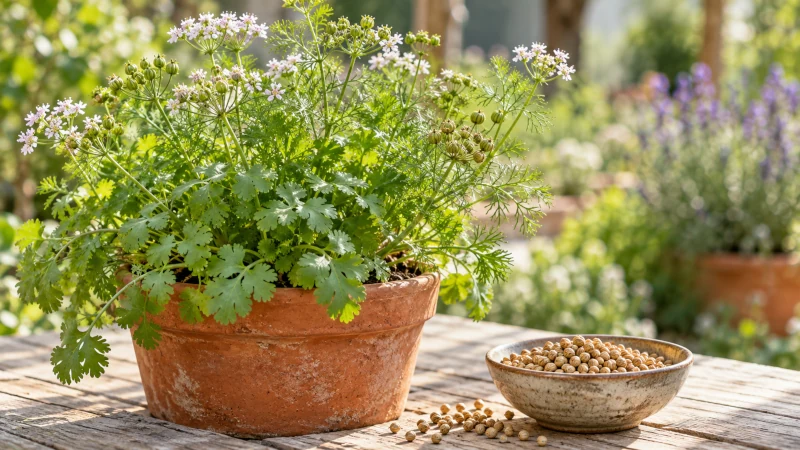
The coriander plant (Coriandrum sativum) gives you two very different kitchen staples: the fresh green leaves sold as cilantro, and the round, citrusy seeds sold as coriander. Both are safe to eat in normal food amounts, leaves included. As a remedy, the seeds carry the strongest reputation, mostly for digestion: easing gas, bloating, and that heavy feeling after a big meal.
The research is thinner than the folklore. One small trial found that an herbal blend containing coriander eased pain and bloating in irritable bowel syndrome, and a few small trials suggest coriander seed powder may modestly lower blood sugar and cholesterol. Most of the other claims you’ll read, from fighting bacteria to calming anxiety, come from test tubes and lab animals. Here’s what holds up, how to use the plant well, and who should be careful with it.
What the coriander plant is
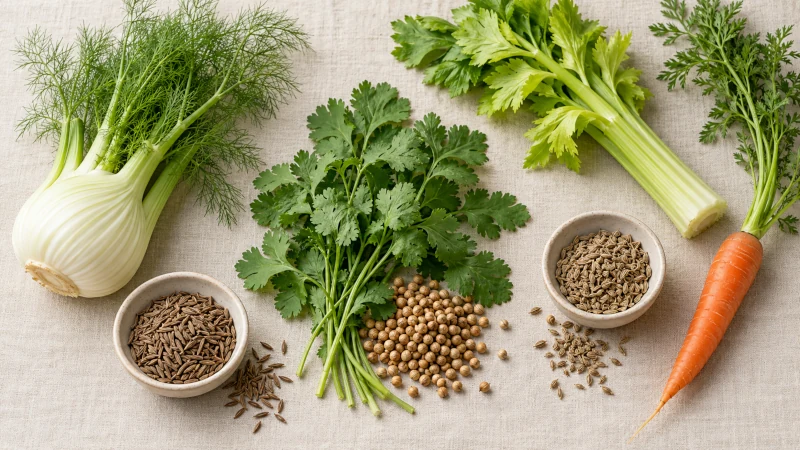
Coriander belongs to the Apiaceae family, alongside carrots, celery, parsley, fennel, and cumin. It’s an annual herb with feathery upper leaves and small white to pale pink flowers, and its “seeds” are really dried fruits. It is also one of the oldest seasonings on record, with use traced back to about 1550 BC [Sobhani, 2022].
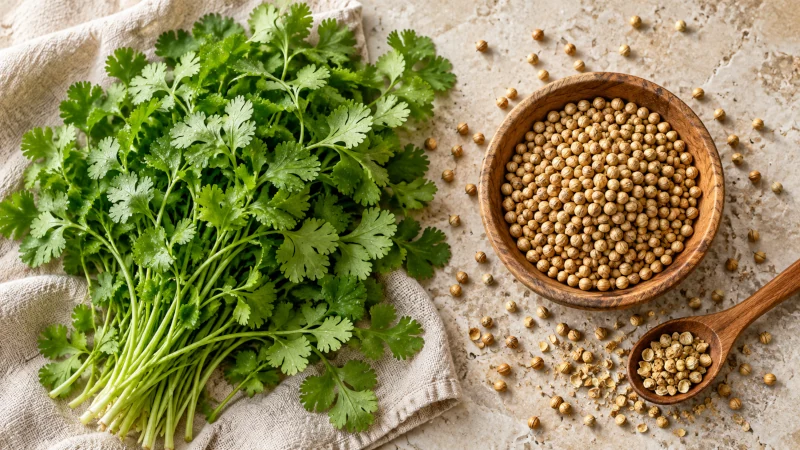
In the United States, cilantro usually means the leaves and coriander the seeds. In much of the world, “coriander” covers both. They taste nothing alike — the leaves are bright and grassy, the seeds warm and lemony — but they come from the same plant.
Some older herbal guides warn against eating the green parts. In ordinary food amounts there’s no basis for that. Cilantro is eaten every day in cuisines from Mexico to India to Thailand, and safety reviewers point to coriander’s long history of dietary use without reported harm [Burdock & Carabin, 2009].
What’s in coriander seeds
The seeds hold an aromatic essential oil. Linalool, a floral-smelling compound, is one of its main components, along with polyphenols such as flavonoids [Zamany, 2025].
In lab and animal studies, coriander extracts and oil have shown antimicrobial, antioxidant, blood-sugar-lowering, cholesterol-lowering, anti-anxiety, anti-inflammatory, and anticonvulsant activity [Laribi, 2015]. That list is why coriander gets called a superfood online. It’s also a reason for caution: activity in a dish of cells or a lab rat is where research starts, not proof that something works in people.
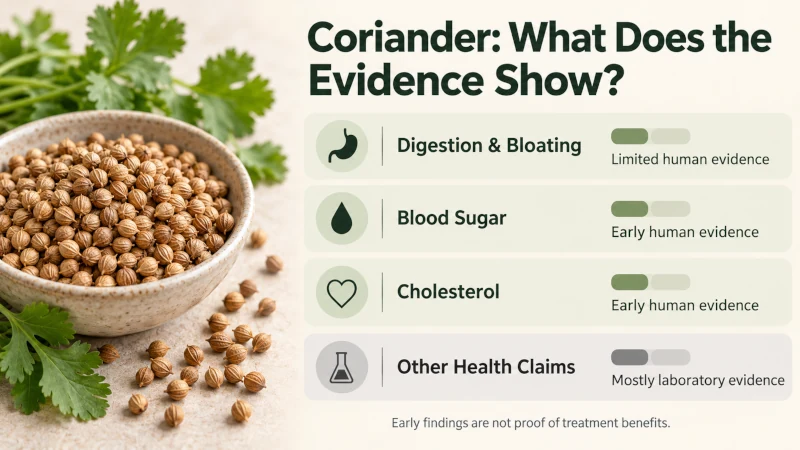
Coriander plant benefits: what the evidence shows
| Use | What the research shows | Evidence strength |
| Gas, bloating, indigestion | Long traditional use; one small trial of a three-herb blend in IBS | Limited |
| Blood sugar (type 2 diabetes) | One small, six-week trial of seed powder | Early |
| Cholesterol | Two small, short trials of seed powder | Early |
| Fresher breath | Traditional use only | Insufficient |
| Infections, anxiety, cancer, worms | Lab and animal studies only | Insufficient |
Digestion, gas, and bloating
This is coriander’s oldest job, and it’s why the seeds turn up in so many after-dinner teas and spice blends. Herbs used this way are called carminatives — remedies taken to relieve gas and cramping. For the wider picture on which plants have real stomach evidence, see our guide to herbs for stomach issues.
The best human data comes from a 2006 pilot trial. Thirty-two people with irritable bowel syndrome took either Carmint — a product made from lemon balm, spearmint, and coriander extracts — or a placebo for eight weeks, alongside standard loperamide or psyllium. By the end, the Carmint group had less frequent and less severe abdominal pain and bloating [Vejdani, 2006].
Two caveats keep that from being a clean win for coriander. The study was small, and because coriander was one of three herbs, nobody can say how much of the effect it contributed. Still, the result fits centuries of use, and a cup of coriander seed tea after a heavy meal is a low-risk thing to try. If gas is a regular problem, look first at the foods that commonly cause flatulence.
What coriander is not is a treatment for gastritis, pancreatic problems, or any other diagnosed digestive condition, even though it shows up on older lists of indications. Those need a proper diagnosis.
Blood sugar
The most interesting newer research involves blood sugar. In a 2025 randomized, double-blind trial, 40 adults with type 2 diabetes took 1,000 mg of ground coriander seed (two 500 mg capsules) or a placebo every day for six weeks, while staying on their usual metformin or glibenclamide. Average fasting blood sugar in the coriander group fell from about 156 to 130 mg/dL, the placebo group didn’t change, and no side effects were reported [Zamany, 2025].
Encouraging, yes — but it’s one small, short, single-center study, and the authors list the small sample and brief duration as limitations [Zamany, 2025]. It is not a reason to change your diabetes treatment. If you take glucose-lowering medicine, check with your doctor before adding a concentrated coriander supplement, since a further drop in blood sugar is at least possible.
Cholesterol
The same 2025 trial reported lower total cholesterol, triglycerides, and LDL (“bad”) cholesterol in the coriander group — LDL fell by roughly 16 mg/dL — with no change in HDL [Zamany, 2025]. A 2018 randomized trial gave 80 people with high cholesterol garlic powder, coriander seed powder, a mix of the two, or a placebo at 2 g a day. All three supplements improved blood lipids over 40 days, with garlic showing the largest effect on LDL [Pak J Pharm Sci, 2018].
Taken together, these point to a modest effect worth more study, not a substitute for a cholesterol plan. Both trials were small and short, and the doses were well above what a typical recipe contains.
Fresher breath
Chewing a few coriander seeds after a meal heavy in garlic or onion is an old breath-freshening habit. It’s pleasant and harmless. We found no clinical studies testing whether it actually works better than any other strong-smelling seed — or a toothbrush.
Claims that are still lab-only
Coriander oil kills some bacteria and fungi in lab dishes, and animal studies have explored anxiety, memory, seizures, and cancer cells [Laribi, 2015]. None of this has been shown to work in people. The same review notes that despite coriander’s long list of traditional uses, there’s no published evidence for using it in airway conditions such as asthma [Laribi, 2015]. Folk claims that it expels intestinal worms haven’t been confirmed in human studies either.
How to use coriander
For most people, the best way to use the coriander plant is the ordinary one: cook with it.
In the kitchen
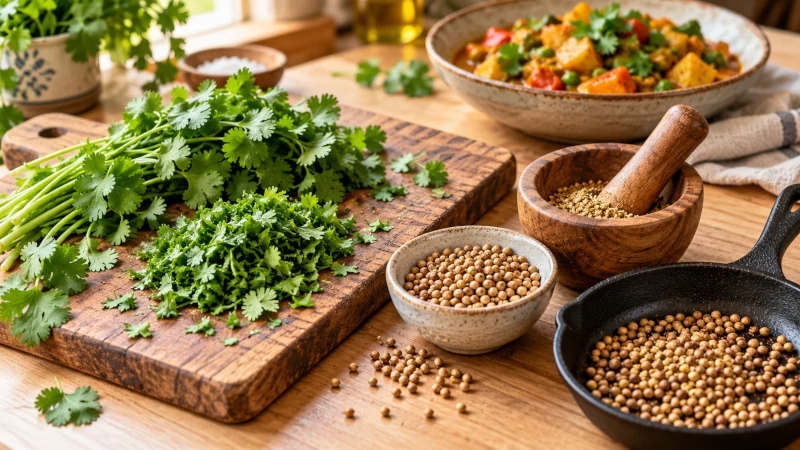
- Seeds: Toast whole seeds in a dry pan until fragrant, then grind them. They’re a mainstay of curry powders, garam masala, pickling spice, and many sausage and bread recipes.
- Leaves (cilantro): Add them raw or at the very end of cooking — salsas, chutneys, salads, soups, noodle dishes. Heat dulls the flavor quickly.
Coriander seed tea
Lightly crush whole seeds, steep them in just-boiled water for several minutes, and strain. Keep the amount in the range you’d use for cooking. There is no established medicinal dose; the capsule trials above used 1 to 2 grams of seed powder a day [Zamany, 2025] [Pak J Pharm Sci, 2018], which tells you what was studied, not what has been proven.

Coriander essential oil is a different product
Coriander essential oil is a concentrated distillate, used in tiny amounts to flavor foods and scent products. It isn’t something to swallow by the drop at home, even though some herbal sources still suggest a few drops several times a day. Poison control specialists warn that essential oils can cause serious poisoning when misused, especially in children, and that few of their uses have been tested scientifically [Poison Control]. Keep bottles out of children’s reach.
Side effects, interactions, and safety
As a food, coriander is very safe. Reviewers who examined coriander oil concluded it is safe as a food ingredient at the levels normally used, based on its long history of use and limited toxicity data [Burdock & Carabin, 2009]. The real risks involve allergies and concentrated products.
Allergy
Coriander allergy is uncommon, but reactions range from an itchy mouth to anaphylaxis. Because coriander shares a family with celery, fennel, cumin, and anise, these allergies often travel together, and they’re more likely in people allergic to birch or mugwort pollen [Berghea, 2025]. Among patients tested for suspected spice allergy, the Apiaceae family — coriander, caraway, fennel, and celery — produced the most frequent sensitization [Berghea, 2025]. If fennel seeds or celery give you trouble, be cautious with coriander, and remember it hides in many spice blends.
Medications
Formal research on coriander drug interactions is scarce. The clearest concern is diabetes medicine: because seed powder lowered fasting blood sugar in a small trial [Zamany, 2025], anyone taking glucose-lowering drugs should ask a doctor or pharmacist before using concentrated coriander products and keep monitoring their levels.
Pregnancy and breastfeeding
Coriander leaves and seeds in normal cooking amounts are part of everyday diets around the world. Concentrated supplements and essential oil haven’t been studied in pregnancy or breastfeeding — the 2025 diabetes trial, for example, excluded pregnant and breastfeeding women [Zamany, 2025] — so stick to food amounts unless your clinician advises otherwise.
Who should be cautious
- People allergic to celery, fennel, carrot, anise, cumin, or birch or mugwort pollen
- Anyone taking diabetes medication, before using coriander supplements
- People who are pregnant or breastfeeding, with supplements and essential oil
- Households with children, where essential oils should be stored out of reach
- Anyone with digestive symptoms that are new, severe, or haven’t been diagnosed
When to see a doctor
Coriander is for mild, occasional digestive discomfort. Skip self-treatment and see a doctor right away if indigestion comes with any of these [NIDDK, 2025]:
- Pain in your chest, jaw, neck, or arm
- Difficulty swallowing or painful swallowing
- Frequent vomiting, or bloody vomit
- Severe, constant abdominal pain, or long-lasting bloating or swelling
- Shortness of breath
- Weight loss without trying, or loss of appetite
- Yellowing of your eyes or skin
- Black, tar-like stools
You should also see a doctor if indigestion doesn’t get better [NIDDK, 2025]. Call 911 for chest pain, trouble breathing, or swelling of the face or throat after eating. If a child swallows essential oil, contact Poison Control at 1-800-222-1222 or use its online tool [Poison Control].
| HEALTH DISCLAIMER: This article is for general education and is not medical advice. It doesn’t replace diagnosis or treatment from a qualified healthcare professional. Coriander is safe as a food for most people, but concentrated supplements and essential oils carry different risks. Talk to your doctor or pharmacist before using coriander medicinally if you are pregnant or breastfeeding, take diabetes or other prescription medication, have food or pollen allergies, or live with an ongoing health condition. Seek emergency care for a severe allergic reaction, chest pain, or trouble breathing. |
Frequently Asked Questions
Is cilantro the same as coriander?
Yes — both come from Coriandrum sativum. In the U.S., cilantro refers to the fresh leaves and coriander to the dried seeds; elsewhere, “coriander” often means both. They taste completely different, so one can’t replace the other in a recipe.
Can you eat the leaves of the coriander plant?
Yes. The leaves are eaten daily in many cuisines, and coriander has a long history of dietary use without reported harm [Burdock & Carabin, 2009]. The main exception is someone with a coriander or related plant allergy.
Does coriander help with gas and bloating?
It may help a little. Coriander has long been used as a carminative, and a small trial of a blend containing coriander, lemon balm, and spearmint reduced IBS pain and bloating [Vejdani, 2006]. It’s a reasonable, low-risk thing to try for occasional discomfort. Persistent symptoms deserve a doctor’s visit.
Can coriander lower blood sugar?
Early evidence says it might. In a small six-week trial, 1,000 mg a day of coriander seed powder lowered fasting blood sugar in people with type 2 diabetes [Zamany, 2025]. That’s too little evidence to rely on, and it’s no substitute for diabetes treatment. Talk to your doctor before trying a supplement.
Is it safe to take coriander essential oil by mouth?
Not as a home remedy. The oil is used in tiny amounts as a food flavoring, but essential oils can cause serious poisoning when misused, particularly in children [Poison Control]. Use the seeds or leaves instead.
Can you be allergic to coriander?
Yes. Coriander allergy is uncommon but can be severe, and it often overlaps with allergies to celery, fennel, and other Apiaceae plants, or to birch and mugwort pollen [Berghea, 2025].
References
- Berghea EC, Feketea G, Cosoreanu M, Popa O, Ionescu MD, Porr C, Berghea F, Vassilopoulou E. Spices, herbs and allergic reactions in children: myth or reality — a narrative review with scoping elements. View source
- Burdock GA, Carabin IG. Safety assessment of coriander (Coriandrum sativum L.) essential oil as a food ingredient. Food and Chemical Toxicology. View source
- Laribi B, Kouki K, M’Hamdi M, Bettaieb T. Coriander (Coriandrum sativum L.) and its bioactive constituents. Fitoterapia. View source
- National Capital Poison Center (Poison Control). Essential oils: Poisonous when misused. View source
- National Institute of Diabetes and Digestive and Kidney Diseases (NIDDK). Symptoms & Causes of Indigestion. View source
- [Authors not confirmed]. Supplementation of garlic and coriander seed powder: impact on body mass index, lipid profile and blood pressure of hyperlipidemic patients. View source
- Sobhani Z, Mohtashami L, Amiri MS, Ramezani M, Emami SA, Simal-Gandara J. Ethnobotanical and phytochemical aspects of the edible herb Coriandrum sativum L. Journal of Food Science. View source
- Vejdani R, Shalmani HR, Mir-Fattahi M, et al. The efficacy of an herbal medicine, Carmint, on the relief of abdominal pain and bloating in patients with irritable bowel syndrome: a pilot study. Digestive Diseases and Sciences. View source
- Zamany S, Barzegar A, Aghapour B, Ferdosi F. Effects of dietary supplementation with coriander seed powder on serum lipid profile, glycemic indices, and oxidative stress biomarkers in patients with type 2 diabetes mellitus: a randomized, double-blind, placebo-controlled trial. Preventive Nutrition and Food Science. View source


