
If you have chronic kidney disease, grocery shopping can feel like a puzzle with no clear answer. One article calls a food a kidney superfood. Another puts it on an avoid list. Both can’t be right — and often, neither is giving you the full picture.
The real issue is that kidney-friendly foods aren’t universal. What fits your eating plan depends on your CKD stage, your current labs, and which nutrients your kidneys are struggling to regulate. The National Kidney Foundation (NKF) is explicit: there is not one single correct eating plan for everyone with kidney disease. The KDIGO 2024 Clinical Practice Guideline echoes that, recommending individualized nutrition advice on sodium, phosphorus, potassium, and protein based on each person’s needs and disease severity [NKF, 2024; KDIGO, 2024].
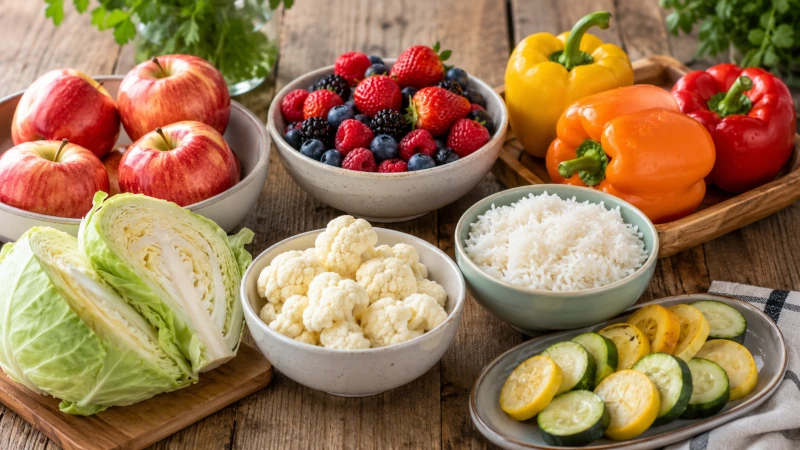
That said, certain foods appear consistently in lower-potassium guidance from NIDDK and NKF, and they tend to be practical, affordable, and easier to build into a real meal plan than most kidney superfood lists suggest. These seven are a solid starting point — as long as you use them alongside advice from your care team, not instead of it.
What makes a food kidney-friendly?
For most people with CKD, eating kidney-friendly means staying within the nutrient limits that matter for your kidneys right now. The four that come up most often are:
- Sodium — high sodium raises blood pressure and puts extra strain on damaged kidneys. NKF and KDIGO both highlight sodium reduction as a primary dietary goal.
- Potassium — when kidneys can’t clear potassium efficiently, it builds up in the blood. High blood potassium (hyperkalemia) can cause dangerous heart rhythm problems. Not everyone with CKD needs to restrict potassium, but those who do need to monitor it carefully.
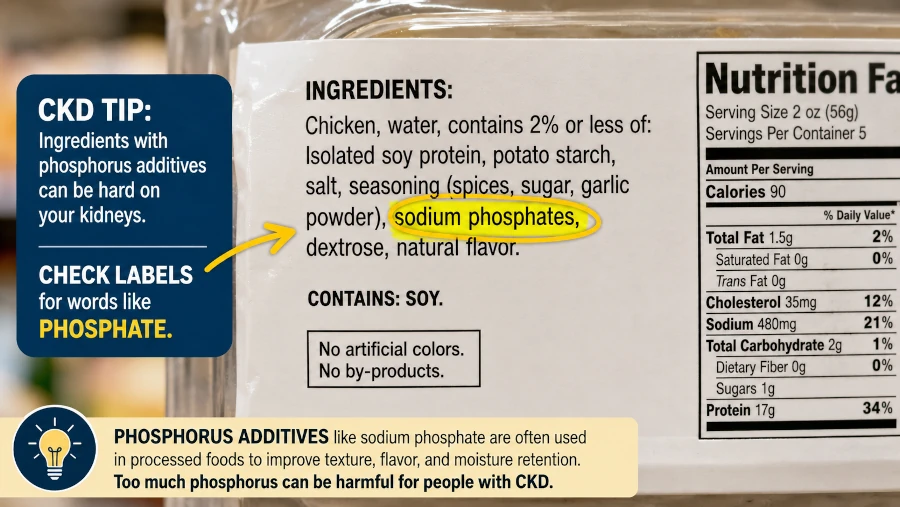
Phosphorus — kidneys that aren’t filtering well can allow phosphorus to accumulate, weakening bones and stressing the heart over time. Phosphorus from food additives is a particular concern because it’s absorbed almost completely, unlike phosphorus from natural food sources [NKF, 2024].
Protein — protein metabolism produces waste products that healthy kidneys filter out. For many people with CKD who aren’t on dialysis, some reduction in protein intake is recommended [NKF, 2024; KDIGO, 2024].
Because these needs shift as kidney function changes, a food that fits well at stage 2 may need to be reconsidered at stage 4. KDIGO specifically notes that potassium-rich foods may be encouraged in earlier stages of CKD but the diet may need to be reviewed as function worsens [KDIGO, 2024]. This list focuses on foods that are consistently lower in potassium and easier to fit into a lower-sodium, whole-food approach — and flags where you need to be specific.
The 7 foods — and why they make the list
1. Apples
NIDDK’s Potassium Tips for People with Chronic Kidney Disease lists apples, applesauce, and apple juice among fruits with 200 mg or less of potassium per serving — one of the clearest low-potassium endorsements in government guidance [NIDDK, 2023]. NKF’s 40 Low Potassium Fruits and Vegetables guide includes them as well [NKF, 2024].
From a practical standpoint, apples are hard to beat. They’re affordable, easy to portion, and require no cooking. For kidney-conscious eating, stick to fresh apples or plain applesauce without added sugar. Flavored apple chips and juice drinks often contain added sodium or are easy to over-consume. For their broader nutrition profile, see our article on apple health benefits.
2. Berries
Strawberries, blueberries, raspberries, and cranberries all appear on NIDDK’s and NKF’s lower-potassium fruit lists, with potassium at or below 200 mg per serving [NIDDK, 2023; NKF, 2024]. That makes a modest serving of berries one of the more flexible fruit choices in a CKD eating plan — easier to fit than bananas, oranges, or melons, which carry significantly more potassium.
Berries also help make a kidney-conscious diet feel less restrictive. A handful over oatmeal or with plain yogurt is the kind of simple, repeatable meal that’s actually sustainable. For a closer look at what’s in them, see our article on the health benefits of blueberries.
Portion size still matters. A small serving of fresh berries is fine; a large smoothie made with multiple cups is a different nutritional story. Kidney organizations consistently stress that serving size determines how well any food actually fits your plan [NKF, 2024].
3. Bell peppers
Bell peppers appear on NIDDK’s lower-potassium vegetable list and are consistently recommended in kidney nutrition guidance from NKF [NIDDK, 2023; NKF, 2024]. You can read more about their general nutrition profile in our article on bell pepper benefits. Their particular usefulness for CKD comes down to something practical: they deliver real flavor without any sodium.
This matters more than it might seem. KDIGO’s 2024 guideline recommends keeping salt intake below 5 grams per day (roughly 2 grams of sodium), and sodium reduction is a core recommendation in NKF’s CKD nutrition guidance as well [KDIGO, 2024; NKF, 2024]. When you’re cutting salt, food starts to taste flat. Bell peppers — sliced raw into salads, roasted into rice bowls, stirred into eggs or soups — are one of the better tools for replacing the flavor you’re giving up. All colors work; red, yellow, and orange peppers are slightly sweeter, green are more bitter.
4. Cabbage
Cabbage sits on NKF’s low-potassium vegetable list and is explicitly included in NKF’s stages 1–5 CKD nutrition guide [NKF, 2024]. Read more about its general properties in our article on cabbage plant health benefits. For CKD meal planning specifically, cabbage’s main advantages are practical: it’s inexpensive, keeps for days in the refrigerator, and works in almost any cooking style — raw in slaws, braised, roasted, or added to soups.
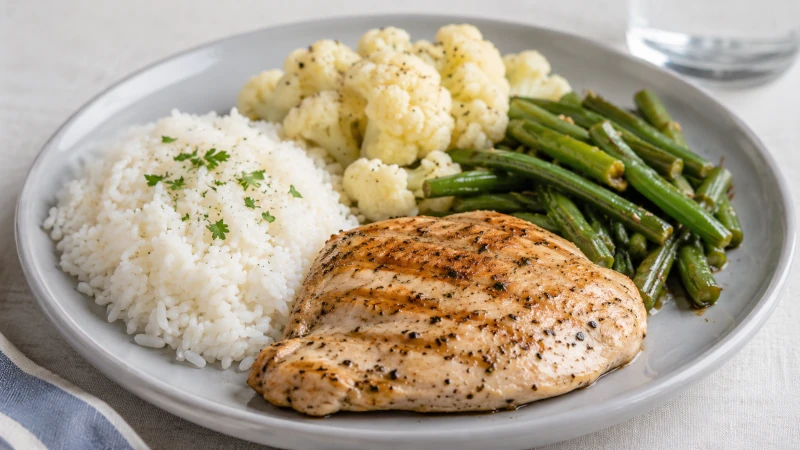
That matters because one of the bigger dietary traps in CKD is relying on packaged and processed foods, which tend to be loaded with sodium and phosphorus additives. NIDDK and NKF both flag processed foods as a significant phosphorus problem [NIDDK, 2024; NKF, 2024]. A meal built around cabbage, plain protein, and white rice is the kind of whole-food baseline that helps you avoid those additives without needing complicated ingredient-label detective work.
5. Cauliflower
Like cabbage, cauliflower appears on NKF’s low-potassium vegetable list, and NKF has specifically highlighted it as a kidney-friendlier alternative to mashed potatoes [NKF, 2024]. Our page on cauliflower health benefits covers its general nutritional profile.
The potato substitution is worth emphasizing. Potatoes are a staple for many people, but they’re significantly higher in potassium and require careful preparation — dicing small and boiling in a large pot of water — to reduce that load [NIDDK, 2024]. Plain mashed or roasted cauliflower doesn’t need that extra step. It’s versatile enough for comfort-food dishes (mashed, in soups, as a pizza base) or simpler preparations like roasted florets, without making your meals feel like a medical diet.
6. Summer squash (yellow squash and zucchini)
This is where specificity matters. NIDDK’s potassium guidance lists yellow squash and zucchini among lower-potassium vegetables [NIDDK, 2023]. Other types of squash — butternut, acorn, Hubbard — are considerably higher in potassium and are not interchangeable with summer varieties in a potassium-restricted plan. A vague recommendation to eat squash gets this wrong.
Yellow squash and zucchini are mild, cook quickly, and fit easily into sautés, pasta dishes, rice bowls, and soups. Our article on the health benefits of squash provides broader context on the squash family. For kidney-conscious eating, buy summer varieties — generally the ones with thin, tender skin and no hard seeds inside.
7. White rice
White rice deserves its place because NIDDK includes it among lower-potassium starches, specifically listing it on the eat-these side of its substitution guide for people who need to lower potassium [NIDDK, 2023]. Brown rice, wild rice, and bran cereals appear on the instead-of side.
Beyond the potassium advantage, white rice gives people a reliable, neutral base for meals. Plain rice, a lower-potassium vegetable, and a modest portion of protein is the kind of simple template that’s easy to repeat without overthinking — and the best CKD diet is usually one you can actually stick to. Keep it plain; seasoned or packaged rice mixes typically add significant sodium.
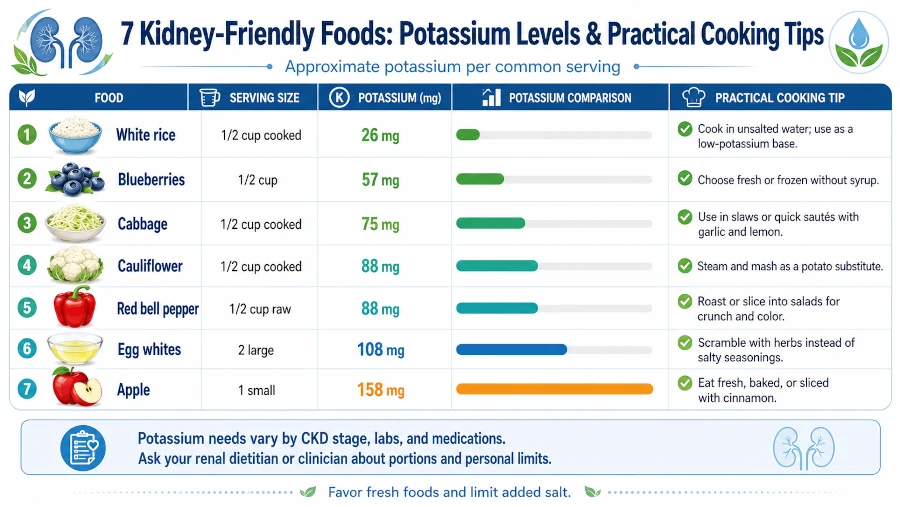
Quick-reference: how these 7 foods compare
The table below summarizes why each food is commonly recommended in lower-potassium CKD guidance and offers one key practical tip for each.
| Food | Why it often fits | Potassium level* | Key tip |
| Apples | Lower-potassium fruit; portable and affordable | ≤200 mg / serving | Stick to fresh or unsweetened applesauce; avoid added-salt canned versions |
| Berries | Lower-potassium; easy to portion | ≤200 mg / serving | Fresh or unsweetened frozen; watch portion size |
| Bell peppers | Lower-potassium; adds flavor without salt | ≤200 mg / serving | Use in place of salty sauces and seasoning packets |
| Cabbage | Lower-potassium; inexpensive; raw or cooked | ≤200 mg / serving | Green or red both work; avoid pre-seasoned coleslaw mixes |
| Cauliflower | Lower-potassium; versatile comfort-food substitute | ≤200 mg / serving | Use mashed instead of potatoes when K control is needed |
| Summer squash | Lower-potassium; mild and flexible | ≤200 mg / serving | Yellow squash and zucchini only — other squash types are higher in K |
| White rice | Lower-potassium starch; reliable meal base | ≤200 mg / serving | Plain, unseasoned; avoid flavored rice packets (high sodium) |
*Per NIDDK Potassium Tips for People with CKD (200 mg or less per serving). Portion size affects actual intake; confirm with your dietitian.
Foods to approach carefully
A useful kidney-food article doesn’t just list what fits — it flags where casual recommendations go wrong. These five categories deserve more caution than they typically get in general nutrition content.
Dates and dried fruit
Dates and dried fruit are popular in general wellness articles, but they’re not safe universal recommendations for CKD. NIDDK places dates on the higher-potassium side of its fruit guidance, and its kidney failure nutrition page advises limiting dried fruit when potassium control is needed [NIDDK, 2024]. The drying process concentrates potassium, so a small portion contains significantly more than the same weight of fresh fruit.
Potatoes
Potatoes aren’t off-limits for everyone with CKD, but they shouldn’t be casually recommended without qualification. They’re substantially higher in potassium than the foods on this list. NIDDK explains that cutting potatoes into small pieces and boiling them in a large pot of water can reduce their potassium content — but this requires deliberate preparation, and the effect depends on cooking method [NIDDK, 2024]. Anyone managing potassium should check with a dietitian before including them regularly.
Packaged foods with phosphorus additives
This is one of the most under-discussed problems in CKD nutrition. Phosphorus additives in processed foods — identified on ingredient labels by words containing PHOS (for example, sodium phosphate, dicalcium phosphate, phosphoric acid) — are absorbed by the body almost completely, unlike phosphorus from natural food sources like meat or dairy [NKF, 2024]. NKF specifically advises checking labels for these terms. Packaged soups, processed deli meats, fast food, flavored instant grains, and many canned goods are common sources.
Salt substitutes
People reducing sodium sometimes reach for salt substitutes, assuming they’re a safe swap. Many are not. Most replace sodium chloride with potassium chloride, which can significantly raise blood potassium in people who already struggle to excrete it. NIDDK’s potassium guidance explicitly warns against using salt substitutes unless a provider specifically recommends them [NIDDK, 2023]. This is worth repeating because salt substitutes are marketed as heart-healthy and are widely available without any CKD-specific warning on the label.
Over-the-counter supplements
NIDDK states that people with kidney failure should only take vitamin, mineral, or dietary supplements recommended by their provider, because over-the-counter products may be harmful [NIDDK, 2024]. This applies more broadly to CKD. Supplements that seem benign — high-dose vitamin C, potassium supplements, certain herbal extracts — can stress compromised kidneys or push electrolytes out of safe range. Never add supplements to a CKD plan without checking with your care team first.
What about protein?
For most adults with CKD who aren’t on dialysis, NKF recommends a lower-protein diet than the general population typically eats. KDIGO’s 2024 guideline supports maintaining protein intake at approximately 0.8 g/kg of body weight per day for many adults with CKD, while tailoring that advice to the individual [KDIGO, 2024; NKF, 2024]. The concern is that protein metabolism produces nitrogenous waste that healthy kidneys filter out — a job that becomes harder as kidney function declines.
The situation is different for people on dialysis, who typically need more protein to compensate for losses during treatment. This is one of the clearest examples of why CKD nutrition is not one-size-fits-all, and why protein goals should come from your nephrologist or renal dietitian [NKF, 2024], not from a general food article.
When to call your care team
Dietary changes in CKD are generally safe when made gradually and with professional guidance. Some situations call for faster attention. Contact your healthcare provider promptly if you notice:
- Muscle weakness, cramping, or an unusual heartbeat — possible signs of potassium imbalance
- Significant swelling in your legs, ankles, or around your eyes — may indicate fluid or sodium problems
- Bone pain, joint pain, or persistently itchy skin — possible signs of phosphorus or calcium imbalance
- Nausea, loss of appetite, or confusion — can indicate that waste products are building up in your blood
- Rapid weight gain over a few days — often a sign of fluid retention
These aren’t reasons to panic. They’re reasons to call your doctor or care team rather than adjust your diet on your own. CKD nutrition problems are largely manageable when caught early.
Who should work with a dietitian?
Ideally, anyone with CKD. But especially if any of the following apply to you:
- You have stage 3 CKD or higher
- Your potassium, phosphorus, or sodium levels are out of range on your lab results
- You’re managing CKD alongside diabetes, heart disease, or another chronic condition
- You’re pregnant or planning to become pregnant
- You have recently started dialysis or are approaching the point where it may be needed
- You’ve been eating carefully but your labs haven’t improved

NKF emphasizes that there is not one correct eating plan for everyone with kidney disease, and KDIGO’s 2024 guideline recommends working with renal dietitians or accredited nutrition providers for individualized guidance [NKF, 2024; KDIGO, 2024]. A registered dietitian specializing in kidney disease can build a meal plan around your specific labs, medications, and food preferences — something no general food article can do.
| HEALTH DISCLAIMER This article is for educational purposes only and does not constitute personal medical advice. Dietary changes for chronic kidney disease must be based on your individual lab results, CKD stage, medications, and guidance from your clinician or renal dietitian. Do not make significant dietary changes without first consulting your healthcare provider. |
Frequently Asked Questions
What foods are easiest to include on a kidney-friendly diet?
Foods that appear consistently in lower-potassium CKD nutrition guidance include apples, berries, bell peppers, cabbage, cauliflower, yellow squash (and zucchini), and white rice [NIDDK, 2023; NKF, 2024]. They’re practical, affordable, and easier to build into simple meals than most renal superfood lists suggest. What actually fits your plan depends on your CKD stage and current labs — check with your care team or a renal dietitian.
Do all people with CKD need to avoid potassium?
No. Potassium restrictions depend on your kidney function and blood potassium levels. KDIGO notes that potassium-rich foods may be encouraged in earlier stages of CKD and only need to be reviewed if function worsens [KDIGO, 2024]. Your provider tracks your potassium through regular blood tests and will advise you accordingly.
Are potatoes bad for kidney disease?
Not automatically — but they’re higher in potassium than most foods on this list, so they require more care. NIDDK explains that dicing potatoes small and boiling them in a large pot of water can reduce their potassium content [NIDDK, 2024]. Whether they fit your specific plan is a question for your dietitian or nephrologist.
Is a plant-forward diet safe for CKD?
KDIGO’s 2024 guideline supports a healthy eating pattern with more plant foods and fewer ultra-processed foods for people with CKD [KDIGO, 2024]. Plant-based eating can fit CKD well — but not every plant food is low in potassium or phosphorus, so the approach needs to be tailored to your stage and labs.
Can people with CKD use salt substitutes?
Generally no — not without explicit guidance from a provider. Most salt substitutes replace sodium chloride with potassium chloride, which can raise blood potassium to dangerous levels in people who already struggle to excrete it [NIDDK, 2023]. Check with your care team before switching.
Should people with CKD take supplements on their own?
No. NIDDK advises that people with kidney failure should only take supplements recommended by their provider, because over-the-counter products may cause harm [NIDDK, 2024]. Seemingly harmless supplements — herbal extracts, high-dose vitamins, potassium products — can interfere with kidney function or push electrolytes out of safe range.
References
- National Kidney Foundation — Nutrition and Kidney Disease, Stages 1–5 (Not on Dialysis). https://www.kidney.org/kidney-topics/nutrition-and-kidney-disease-stages-1-5-not-dialysis
- National Institute of Diabetes and Digestive and Kidney Diseases (NIDDK) — Healthy Eating for Adults with Chronic Kidney Disease. https://www.niddk.nih.gov/health-information/kidney-disease/chronic-kidney-disease-ckd/healthy-eating-adults-chronic-kidney-disease
- Kidney Disease: Improving Global Outcomes (KDIGO) — 2024 Clinical Practice Guideline for the Evaluation and Management of Chronic Kidney Disease. Kidney International, Vol. 105, Supplement 4S (April 2024). https://kdigo.org/wp-content/uploads/2024/03/KDIGO-2024-CKD-Guideline.pdf
- NIDDK — Potassium Tips for People with Chronic Kidney Disease (PDF). https://www.niddk.nih.gov/-/media/Files/Health-Information/Health-Professionals/Kidney-Disease/PotassiumTipsforPeopleCKD_EN.pdf
- National Kidney Foundation — 40 Low Potassium Fruits and Vegetables to Add to Your Grocery List. https://www.kidney.org/news-stories/40-low-potassium-fruits-and-vegetables-to-add-to-your-grocery-list
- National Kidney Foundation — Phosphorus and Your CKD Diet. https://www.kidney.org/kidney-topics/phosphorus-and-your-ckd-diet
- NIDDK — Eating Right with Kidney Failure. https://www.niddk.nih.gov/health-information/kidney-disease/kidney-failure/eating-right
- NIDDK — Managing Chronic Kidney Disease. https://www.niddk.nih.gov/health-information/kidney-disease/chronic-kidney-disease-ckd/managing
- National Kidney Foundation — CKD Diet: How Much Protein Is the Right Amount? https://www.kidney.org/kidney-topics/ckd-diet-how-much-protein-right-amount
