
This heart-healthy foods list pulls together 23 everyday foods that research links to a healthier heart — and it is honest about how much each one actually does. Heart disease is still the leading cause of death in the United States, where roughly one person dies from cardiovascular disease every 33 seconds [CDC, 2024]. The reassuring part: what you eat is one of the few risk factors you control directly.
A quick reality check before the list. No single food prevents or reverses a heart attack. What protects your heart is the overall pattern — more plants, more fiber, more unsaturated fat, less salt and less ultra-processed food, repeated over years [NHLBI, 2024]. The foods below earn their place because they fit that pattern, and for each one this guide flags whether the evidence is strong, moderate, or still limited.
How food actually affects your heart
Diet influences your heart through a handful of measurable levers: LDL (“bad”) cholesterol, blood pressure, triglycerides, inflammation, and how easily the blood clots [Harvard Health, 2023]. Soluble fiber and unsaturated fats nudge cholesterol down. Potassium-rich plants help blood pressure. Omega-3 fats lower triglycerides. None of these shifts is dramatic on its own — but they stack.
Keep that in mind as you read. A food that lowers LDL by 5% is doing real work, even though it sounds modest. Combine several and the effect adds up to something a cardiologist would notice.
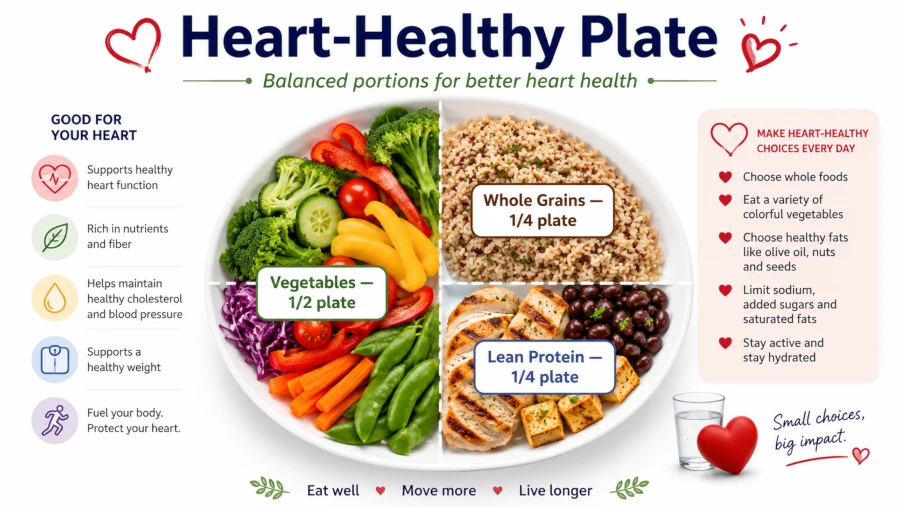
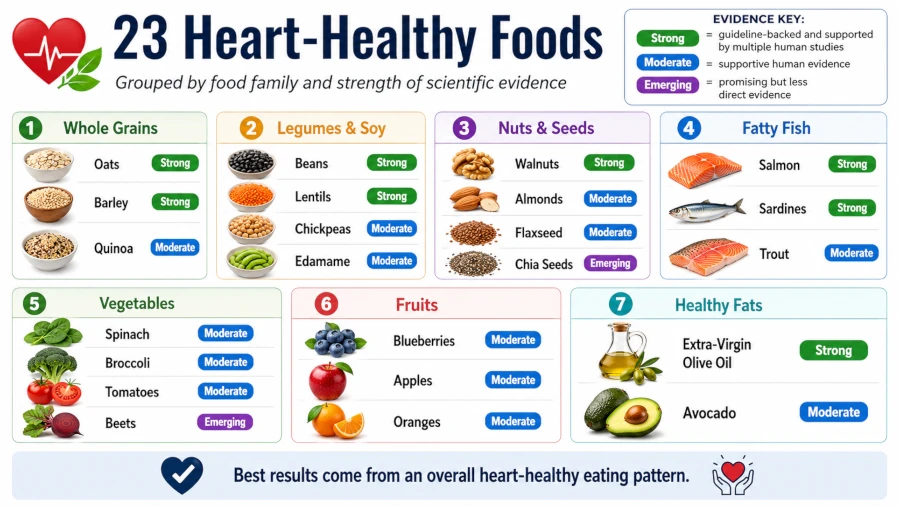
The 23 heart-healthy foods
Grouped by food family, with the strongest evidence first within each group.
Whole grains and high-fiber foods
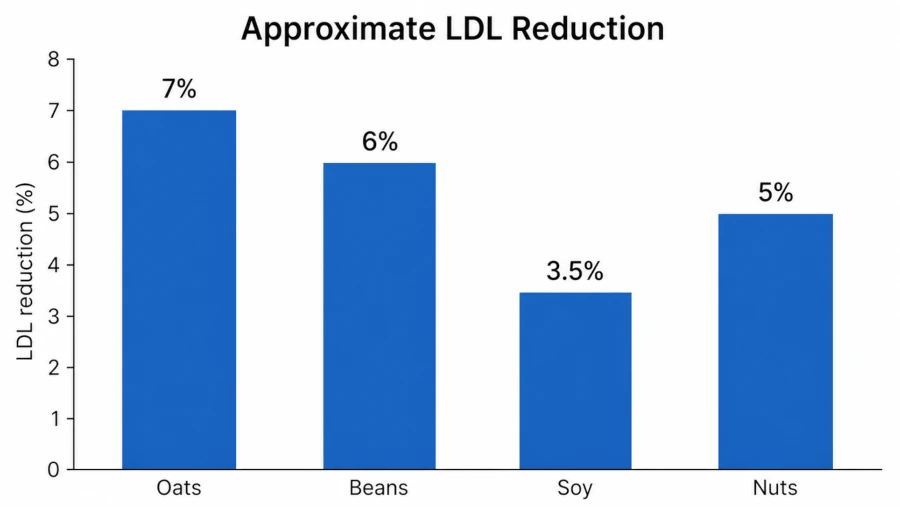
1. Oats and oat bran — Among the best-studied foods here. The soluble fiber beta-glucan binds cholesterol in the gut. At about 3 grams of beta-glucan a day (roughly one and a half cups of cooked oatmeal), trials show LDL cholesterol drops by around 5–7% [Whitehead et al., 2014]. This is one of the few food-specific claims the FDA has formally allowed. Evidence: strong.
2. Whole grains and wheat bran — Whole grains keep the bran and germ, so they carry fiber, B vitamins, and minerals that refined grains lose. Diets built on whole grains track with lower LDL and lower heart-disease risk [NHLBI, 2024]. Wheat bran is mostly insoluble fiber, so it helps digestion more than cholesterol — useful, but oats do more for your lipids. Evidence: strong for the pattern.
Legumes and pulses
3. Beans and lentils — Pooled trials found that about 130 grams a day (roughly three-quarters of a cup) of pulses lowered LDL by close to 5% [Ha et al., 2014]. They are also filling and low in saturated fat, so they tend to displace less-healthy foods. Evidence: moderate.
4. Chickpeas — A pulse with the same fiber-and-plant-protein advantages as beans, plus folate and other B vitamins. Their fiber slows cholesterol absorption from other foods [Ha et al., 2014]. See more on chickpea health benefits. Evidence: moderate.
5. Garden peas — Naturally low in fat and sodium and a source of fiber, potassium, and plant protein. The direct heart-outcome data are thinner than for beans, but peas fit the pulse family that lowers LDL. Evidence: limited to moderate.
6. Soy and tofu — Soy is a useful swap for fattier animal protein. Meta-analysis of the trials the FDA reviewed found about 25 grams of soy protein a day cut LDL by roughly 3–4% [Blanco Mejia et al., 2019]. Worth knowing: in 2017 the FDA proposed scaling back its older, stronger soy heart-health claim because results across studies were inconsistent [FDA, 2017]. So soy helps a little; it is not magic. More on soy health benefits. Evidence: mixed but modestly favorable.
Nuts and healthy fats
7. Walnuts — In large cohort studies, eating about 28 grams of nuts a day (a small handful) was associated with roughly 25–30% lower risk of coronary heart disease [Aune et al., 2016]. Walnuts also supply plant omega-3 (ALA). Portion matters — nuts are calorie-dense. More on walnut health benefits. Evidence: strong (observational, supported by trials).
8. Almonds — Part of the same nut evidence base, and several trials specifically link almonds to lower LDL when they replace refined snacks [Aune et al., 2016]. A 28-gram serving is about 23 almonds. Evidence: strong.
9. Macadamia nuts — Rich in the same monounsaturated fat as olive oil, so swapping them for animal fat can help your cholesterol profile. They are studied less than walnuts or almonds, and they are very calorie-dense. Enjoy them, but keep portions small. Evidence: limited.
10. Extra-virgin olive oil — The PREDIMED trial randomized people at high cardiovascular risk to a Mediterranean diet rich in extra-virgin olive oil and saw about 30% fewer major cardiovascular events versus a low-fat control [Estruch et al., 2018]. Use it in place of butter and tropical oils, not on top of them. More on the benefits of olive oil. Evidence: strong (as part of a Mediterranean pattern).
11. Avocado — Monounsaturated fat plus fiber and potassium. Trials show modest LDL improvements when avocado replaces saturated fat. Like all the fats here, it is a substitution, not an add-on. Evidence: moderate.
Fish
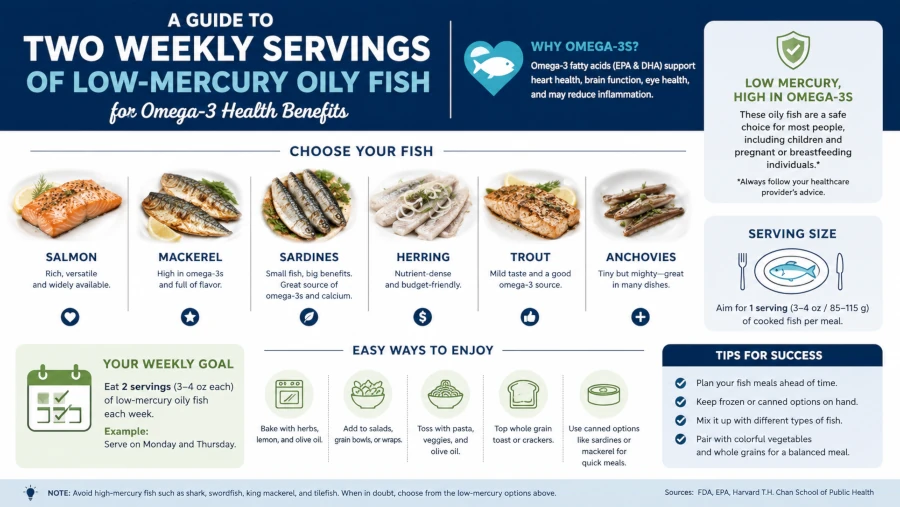
12. Fatty fish (salmon, sardines, mackerel, trout) — The American Heart Association recommends two servings of non-fried fish a week, ideally oily fish, for their omega-3 fats [AHA, 2018]. Omega-3s mainly lower triglycerides and may reduce the risk of dying from heart disease. Note: whole fish has better evidence than fish-oil pills for most people [NIH ODS, 2024]. Evidence: moderate to strong.
Fruits
13. Strawberries — Berries are loaded with anthocyanins, the pigments behind their color. In a study following 93,600 women, those eating the most anthocyanins had about 32% lower risk of heart attack [Cassidy et al., 2013]. More on strawberry health benefits. Evidence: moderate (observational).
14. Blueberries — The other half of that anthocyanin finding. Three or more servings a week of blueberries and strawberries combined tracked with lower heart-attack risk in younger and middle-aged women [Cassidy et al., 2013]. Frozen counts. Evidence: moderate.
15. Grapes (especially red and black) — Grapes carry polyphenols that improve markers like blood-vessel function in short studies. The hard outcome data (heart attacks, deaths) are thinner than for berries, and grape juice is high in sugar — whole grapes are the better choice. Evidence: limited to moderate.
16. Oranges and citrus — A good source of soluble fiber, potassium, vitamin C, and flavanones, all of which fit a heart-protective pattern. One caution that matters: grapefruit can interfere with several heart and cholesterol medications (see the safety section). Evidence: moderate.
17. Mango — Rich in antioxidants, potassium, and fiber. The direct cardiovascular evidence is limited and mostly from small or short studies, but mango fits a fruit-forward diet well. Watch portions if you are managing blood sugar. Evidence: limited.
18. Peaches — Low in calories, with fiber, potassium, and vitamin C. There is little research on peaches and heart outcomes specifically; the benefit comes from being part of an overall high-fruit diet. Evidence: limited (pattern-based).
Vegetables
19. Leafy greens (spinach, kale, collards) — Among the most consistently heart-protective vegetables. They supply potassium, folate, and dietary nitrates that support healthy blood pressure and blood-vessel function [Harvard Health, 2023]. One interaction to flag: if you take warfarin, keep your vitamin-K intake steady rather than swinging up and down. Evidence: strong.
20. Carrots — Provide beta-carotene, fiber, and potassium. As part of a vegetable-rich diet they are linked with lower heart-disease risk, though carrots alone have not been singled out in trials. Evidence: limited to moderate.
21. Artichokes — High in fiber and a traditional remedy for cholesterol. Some small studies of concentrated artichoke-leaf extract show LDL reductions, but that is a supplement dose, not a side of vegetables — do not over-read it. Still a genuinely healthy, high-fiber choice. Evidence: limited.
22. Squash — Low in fat and sodium, with antioxidant vitamins and potassium. A solid, filling vegetable for a heart-healthy plate; the evidence is pattern-based rather than squash-specific. Evidence: limited.
23. Potatoes — Honest take: plain potatoes — baked or boiled, with little salt and no deep-frying — are fine in a heart-healthy diet and bring potassium and fiber (keep the skin). But fries and chips are linked to worse outcomes, and the cooking method matters more than the potato. For more heart-supportive vegetables and meals, see our 7 foods good for the heart. Evidence: neutral to positive when prepared well.
Heart-healthy foods at a glance
How strong the evidence is for each food family, and what it mainly helps.
| Food family | What it mainly helps | Evidence strength |
| Oats / oat bran | Lowers LDL cholesterol (beta-glucan) | Strong |
| Whole grains | Lower LDL; lower CHD risk | Strong (pattern) |
| Beans, lentils, chickpeas, peas | Lower LDL (~5%) | Moderate |
| Soy / tofu | Small LDL reduction (~3–4%) | Mixed / modest |
| Nuts (walnuts, almonds, macadamia) | Lower CHD risk; better lipids | Strong (nuts overall) |
| Extra-virgin olive oil | Fewer major cardiac events | Strong (Mediterranean) |
| Fatty fish | Lower triglycerides; lower cardiac death | Moderate–strong |
| Berries (strawberry, blueberry) | Lower heart-attack risk | Moderate |
| Leafy greens | Blood pressure; vessel function | Strong |
| Other fruit & veg (grapes, citrus, mango, peach, carrot, artichoke, squash, potato) | Support a heart-healthy pattern | Limited–moderate |
How much does this really move the needle?
Any single food usually shifts LDL cholesterol by only a few percent. The payoff comes from combining them. “Portfolio” diets that stack several cholesterol-lowering foods — oats, beans, nuts, soy, plant sterols — have reduced LDL by 10–20% in studies, which is in the range of a low-dose statin [Harvard Health, 2023]. That is the realistic prize: meaningful, gradual, and dependent on consistency.
Food is for prevention and long-term risk. It is not a treatment for a blocked artery and it does not replace prescribed medication. If a clinician has put you on a statin or blood-pressure drug, keep taking it — diet works alongside those, not instead of them.
What to cut back on
A heart-healthy plate is also about what you eat less of:
- Sodium (salt) — most of it hides in processed and restaurant food, not the salt shaker.
- Added sugars and sugary drinks — linked to higher cardiovascular risk.
- Trans fats and excess saturated fat — swap toward the unsaturated fats above.
- Processed and red meats — fish, poultry, and legumes are better protein anchors.
- Ultra-processed foods and alcohol — keep both modest.
If you are already managing chest pain or coronary artery disease, our guide to the best foods to eat for angina goes deeper on day-to-day meals.
Safety, side effects, and medication interactions
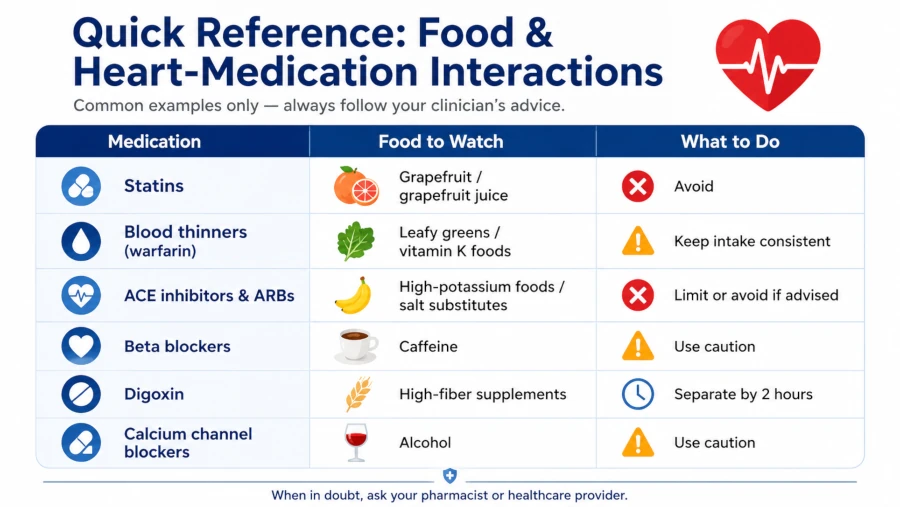
Food is generally safe, but a few combinations matter — especially if you take heart or cholesterol medication.
Food–drug interactions worth knowing
- Grapefruit and citrus. Grapefruit blocks an enzyme that clears many statins and some blood-pressure and heart-rhythm drugs, which can raise their levels and side-effect risk. If you take these, ask your pharmacist before adding grapefruit.
- Leafy greens and warfarin. Vitamin K affects how warfarin works. You do not have to avoid greens — just keep your intake roughly consistent week to week, and tell your clinician.
- Soy and thyroid medication. Soy can interfere with absorption of levothyroxine; separate them by several hours.
- Fish-oil supplements and blood thinners. High-dose omega-3 supplements can have a mild blood-thinning effect; mention them to your clinician if you take anticoagulants.
Who should be cautious
- Kidney disease or potassium restriction. Potatoes, leafy greens, beans, and citrus are high in potassium. If you have advanced kidney disease or take potassium-affecting drugs, get personalized limits from your care team.
- Allergies and digestion. Tree-nut and soy allergies are common. Beans and lentils can cause gas at first; increasing fiber slowly and drinking water helps.
- Pregnancy and young children. Choose lower-mercury fish (salmon, sardines, trout) and limit high-mercury fish such as shark, swordfish, and king mackerel.
Supplements are not the same as food
Pills of fish oil, CoQ10, or flavonoids are often marketed for the heart, but for most people the evidence is weaker than for the whole foods themselves, and large trials of omega-3 supplements have been mixed [NIH ODS, 2024]. Food first; treat supplements as a conversation to have with your clinician, not a default.
When it is more than diet: warning signs
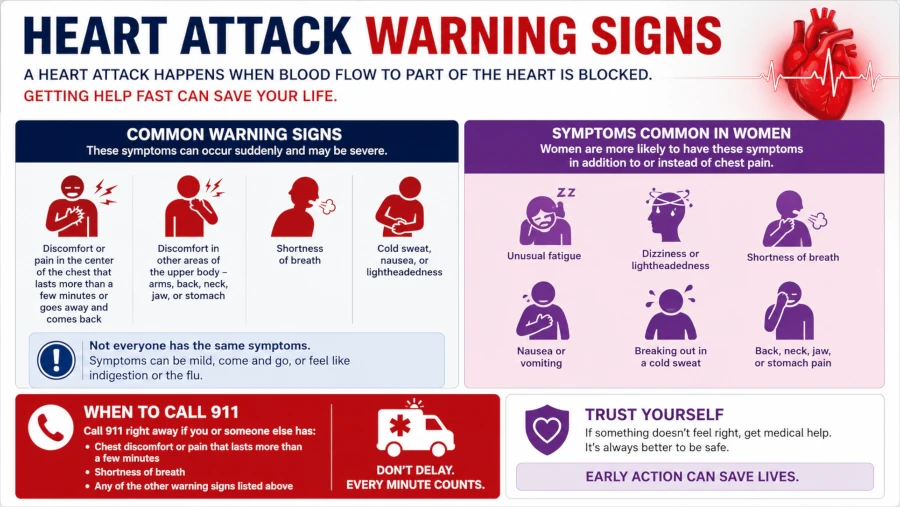
Diet is prevention. It cannot stop a heart attack in progress. Call emergency services (911 in the U.S.) right away for: chest pain or pressure; pain spreading to the arm, jaw, neck, or back; sudden shortness of breath; a cold sweat, nausea, or lightheadedness. Symptoms in women can be subtler — unusual fatigue, nausea, or jaw and back pain rather than classic chest pain.
Talk to a healthcare professional — don’t rely on food alone — if you have known heart disease, cholesterol or blood pressure that stays high despite diet changes, chest tightness when you exert yourself, or a strong family history of early heart disease. Diet supports treatment; it doesn’t replace a diagnosis.
| Health Disclaimer This article is for general education and information only. It is not medical advice and is not a substitute for diagnosis or treatment by a qualified healthcare professional. Foods and supplements can interact with medications and existing conditions. If you are pregnant or breastfeeding, have a heart condition, or take prescription medication, talk to your doctor or pharmacist before making major changes to your diet or starting any supplement. If you think you may be having a heart attack, call your local emergency number immediately. |
Frequently Asked Questions
What is the single best food for your heart?
There isn’t one. If forced to pick, oily fish and oats have some of the most direct evidence — oats for cholesterol, fish for triglycerides and cardiac death [Whitehead et al., 2014] [AHA, 2018]. But the pattern beats any single food.
How fast will eating these foods help?
Cholesterol can start improving within a few weeks of consistent changes (oat and bean trials often run 4–8 weeks). Lower long-term heart-attack and stroke risk builds over months and years.
Can diet alone reverse heart disease?
Diet can slow progression and improve risk factors, and intensive lifestyle programs have shown benefit, but for most people with established disease it works alongside medication and medical care, not instead of it.
Are eggs and coffee bad for the heart?
For most healthy people, moderate egg intake and moderate coffee are not strongly tied to heart harm. Individual advice depends on your cholesterol and overall risk — ask your clinician.
Is grape juice as good as whole grapes?
Whole grapes are better. Juice concentrates the sugar and removes most of the fiber. The same goes for fruit generally — eat it, don’t drink it, when you can.
References
- Centers for Disease Control and Prevention (CDC). Heart Disease Facts. 2024. → View source
- National Heart, Lung, and Blood Institute (NHLBI). Heart-Healthy Living: Choose Heart-Healthy Foods. → View source
- Harvard Health Publishing. Heart-healthy foods: What to eat and what to avoid. 2023. → View source
- Estruch R, et al. Primary Prevention of Cardiovascular Disease with a Mediterranean Diet Supplemented with Extra-Virgin Olive Oil or Nuts (PREDIMED, corrected report). N Engl J Med. 2018. DOI: 10.1056/NEJMoa1800389. → View source
- Whitehead A, et al. Cholesterol-lowering effects of oat beta-glucan: a meta-analysis of randomized controlled trials. Am J Clin Nutr. 2014. → View source
- U.S. FDA. 21 CFR 101.82 — Health claims: Soy protein and risk of coronary heart disease. → View source
- U.S. FDA. Food Labeling: Health Claims; Soy Protein and Coronary Heart Disease (proposed rule). Federal Register, 2017. → View source
- Blanco Mejia S, et al. A meta-analysis of 46 studies identified by the FDA demonstrates that soy protein decreases circulating LDL and total cholesterol concentrations in adults. J Nutr. 2019. DOI: 10.1093/jn/nxz020. → View source
- Ha V, Sievenpiper JL, et al. Effect of dietary pulse intake on established therapeutic lipid targets for cardiovascular risk reduction. CMAJ. 2014. DOI: 10.1503/cmaj.131727. → View source
- Aune D, et al. Nut consumption and risk of cardiovascular disease, total cancer, all-cause and cause-specific mortality: a systematic review and dose-response meta-analysis. BMC Med. 2016. → View source
- American Heart Association. Eating fish twice a week reduces heart, stroke risk (Rimm EB, et al. Circulation. 2018). 2018. → View source
- National Institutes of Health, Office of Dietary Supplements (NIH ODS). Omega-3 Fatty Acids — Health Professional Fact Sheet. → View source
- Cassidy A, et al. High anthocyanin intake is associated with a reduced risk of myocardial infarction in young and middle-aged women. Circulation. 2013. DOI: 10.1161/CIRCULATIONAHA.112.122408. → View source
