
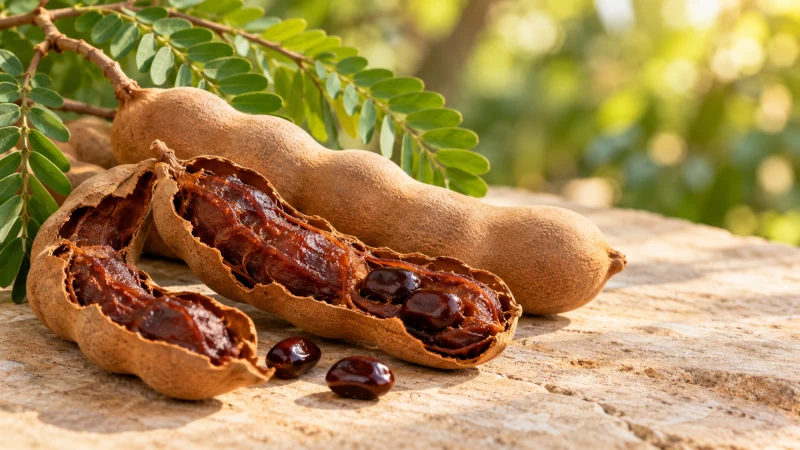
Tamarind does double duty in a lot of kitchens. The sticky, sweet-sour pulp inside the pods of the tamarind tree sours curries and chutneys in South and Southeast Asia, flavors drinks and candy in Mexico and the Caribbean, and turns up in sauces as far afield as Worcestershire sauce [Healthline, 2023]. For generations it has also been taken as a gentle remedy for constipation and fever.
The short version: as a food, tamarind pulp is nutritious, if sugary. As a medicine, nearly every tamarind tree benefit you will read about rests on traditional use and animal studies, with very little testing in people. And there are two safety points most articles leave out — tamarind can raise blood levels of aspirin, and some imported tamarind candy has been linked to lead poisoning in children.
The tamarind tree at a glance
Tamarindus indica is a member of the legume family (Fabaceae). It is native to tropical Africa and now grown throughout the tropics [TRAMIL]. The tree is a large evergreen that can reach about 24 meters, and its brown, velvety pods run roughly 10 to 18 cm long, with hard seeds buried in the edible pulp. The name comes from the Persian tamar-i-hind, “date of India,” because the fruit was first thought to come from an Indian palm [Bhadoriya et al., 2011].

You will see it sold as tamarindo in Spanish, tamarin in French and imli in Hindi. Traditional medicine uses nearly every part of the tree — pulp, leaves, seeds, bark and roots — but the pulp and leaves are the parts people most often reach for at home.
What’s actually in tamarind pulp
Tamarind gets its sourness from organic acids, mainly tartaric acid along with citric, malic and others, plus pectin [Bhadoriya et al., 2011]. Its sweetness comes from a lot of natural sugar. A cup of raw pulp (120 g) contains, per USDA data [USDA data via University Hospitals]:
| Nutrient (1 cup / 120 g raw pulp) | Amount |
| Energy | 287 kcal |
| Carbohydrate | 75 g (about 69 g sugars) |
| Fiber | 6.1 g |
| Potassium | 754 mg |
| Magnesium | 110 mg |
| Iron | 3.4 mg |
| Thiamin (vitamin B1) | 0.51 mg |
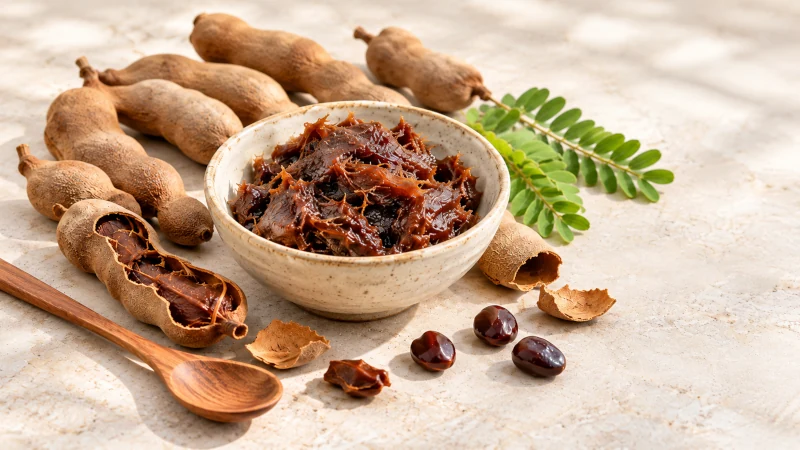
That is a respectable amount of thiamin, magnesium and iron, but few people eat a full cup at once. An ounce (30 g) — a little under a quarter cup — supplies about 5% of the daily value for magnesium [Healthline, 2023]. The sugar is the fruit’s own rather than added sugar, though candy and sweetened drinks pile more on top [WebMD, 2024].
Tamarind tree benefits, graded by the evidence
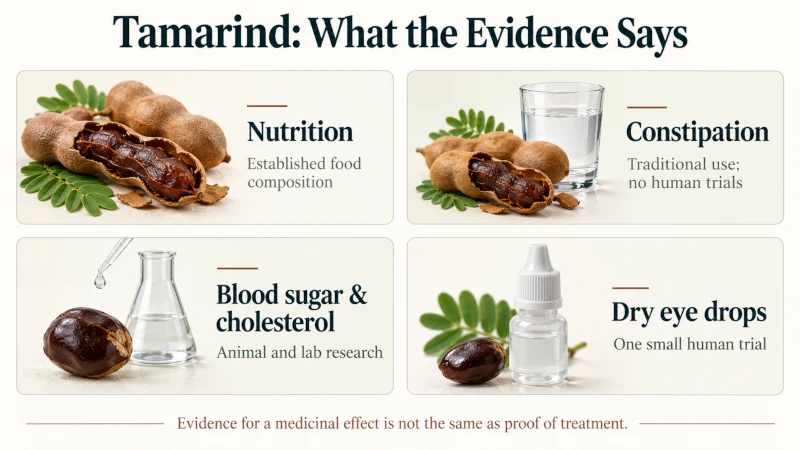
Here is where tamarind’s reputation and the research part ways. Each use below is labeled by the kind of evidence behind it.
Constipation: a long tradition, little testing
Tamarind’s best-known medicinal use is as a mild laxative. In Madagascar children are given whole tamarind fruit at breakfast to keep them regular; in Mali and Burkina Faso the pulp is soaked and drunk [Bhadoriya et al., 2011]. The usual explanation is the fruit’s malic and tartaric acids and potassium. TRAMIL, a research network that documents Caribbean folk remedies, lists tamarind pulp juice as an acceptable traditional option for constipation based on documented use and toxicity data [TRAMIL].
What is missing is a clinical trial in people. The one controlled test we found points the other way: in a TRAMIL-commissioned study, fresh tamarind juice given to mice did not significantly change how fast food moved through the gut [TRAMIL]. So treat tamarind as a pleasant, fiber-containing food that some people find helpful, not as a proven remedy. If you want something with real trial data, prunes and kiwifruit have it — see our ranked guide to foods that help with constipation.
Older herbal books often paired tamarind with senna to strengthen the effect. Senna is a stimulant laxative, and our guide to intestinal disorders explains why short-term stimulant laxatives such as senna should be used briefly, if at all.
Liver and gallbladder: animal studies only
You may read that tamarind “relieves liver congestion” or “empties the gallbladder.” We found no human study showing either. The supporting evidence is a rat study in which water extracts of tamarind fruit, leaves and unroasted seeds helped the liver recover from paracetamol (acetaminophen) damage [Bhadoriya et al., 2011]. There is also a contrary signal: chicks fed a diet that was 10% tamarind fruit developed liver and kidney toxicity [TRAMIL]. Neither result tells you what a glass of tamarind drink does in a person.
TRAMIL does record tamarind as a traditional remedy for hepatitis and jaundice, but only as a complement to medical care, and it urges seeing a doctor first because both conditions can be serious [TRAMIL]. For everyday liver health, overall diet matters far more than any single fruit — our guide to the best foods for the liver ranks what the research actually supports. Pain under the right ribs after fatty meals can be gallstones; our gallstones size chart covers symptoms and when they need urgent care.
Fever and cooling drinks
Tamarind pulp has been used to bring down fevers in Madagascar and Ghana, where the leaves are also used for malaria [Bhadoriya et al., 2011]. A cold tamarind drink is refreshing and helps you stay hydrated when you are unwell, which is worth something. There is no evidence it lowers a fever or treats malaria. The older claim that it boosts sports training has no source behind it, and we have dropped it.
Tamarind leaves for worms: tradition, not treatment
Tamarind leaves have been used in parts of Africa to help extract Guinea worms and dress the wounds they leave, a leaf-and-root extract is used for hookworm in Tanzania, and soaked seeds are used as a dewormer elsewhere [Bhadoriya et al., 2011]. None of this has been tested in human trials. If you think you have a parasite, a stool test and a prescribed medicine will clear it far more reliably — our review of antiparasitic herbs explains why.
Blood sugar, cholesterol and antioxidants
Tamarind seed extract lowered blood sugar in diabetic rats, pulp extract lowered cholesterol in hamsters, and the seed coat and pod shell contain antioxidant compounds that are active in the lab [Bhadoriya et al., 2011] [Healthline, 2023]. These are early findings in animals and test tubes, using concentrated extracts rather than the fruit you eat. They are not a reason to use tamarind to manage diabetes or cholesterol — and because the pulp is so sugary, people with diabetes need to count it like any other sweet fruit.
Tamarind seed eye drops: the one human trial worth knowing
The most solid human evidence for any tamarind product involves the seed, not the fruit. A purified sugar from the seed, called tamarind seed polysaccharide, is used in some lubricating eye drops. In a small randomized trial, 30 people with dry eye used drops containing 0.5% or 1% tamarind seed polysaccharide, or a standard hyaluronic acid drop, three or more times a day for 90 days. The tamarind drops worked about as well as the comparison drop, the 1% version eased burning and gritty sensations somewhat more, and no side effects were reported [Rolando & Valente, 2007].
The trial was open-label, had no placebo group and was supported by a drug company, so it is encouraging rather than conclusive. And this applies only to sterile pharmacy eye drops. Never put a homemade tamarind preparation in your eyes.
Evidence at a glance
| Use | Part used | Strength of evidence | What it means for you |
| Nutrition | Pulp | Established composition data | Real food value: fiber, potassium, magnesium, thiamin — and a lot of sugar |
| Constipation | Pulp | Traditional; one mouse study found no effect; no human trials | Fine as food; don’t rely on it |
| Liver / gallbladder | Pulp, leaves, seeds | Rat data only; one chick study showed harm at high intake | Not a treatment; see a doctor for symptoms |
| Fever | Pulp drink | Traditional only | Hydrating, not fever-lowering |
| Intestinal worms | Leaves, seeds | Traditional only | Get tested and use prescribed treatment |
| Blood sugar / cholesterol | Seed and pulp extracts | Animal and lab studies | Too early to act on |
| Dry eye | Seed polysaccharide drops | One small human randomized trial | Promising pharmacy product only |
How people prepare tamarind
In the kitchen, tamarind comes as whole pods, pressed blocks of seedless pulp, concentrate, syrup and candy [Healthline, 2023]. To make a simple drink like agua de tamarindo, soak pulp in hot water, mash, strain out the fibers and seeds, and dilute — tasting before you add sugar, since many recipes add a lot.
TRAMIL documents a traditional constipation preparation: about 40 to 50 g of seedless fruit crushed into half a liter of boiled water, with one cup taken once or twice a day, kept cold and used within 24 hours [TRAMIL]. That describes how people have used it, not a dose tested in a trial. The doses on earlier versions of this page came from an older herbal encyclopedia we could not verify, so we have not repeated them. We also no longer suggest leaf teas for liver complaints, since those conditions need a diagnosis.

Safety: side effects, interactions and who should be careful
Eaten as food, tamarind is part of everyday diets across the tropics. In larger, remedy-sized amounts, expect looser stools — that is the reason people take it. The more important risks come from medicines and from contaminated candy.
Aspirin, ibuprofen and chloroquine
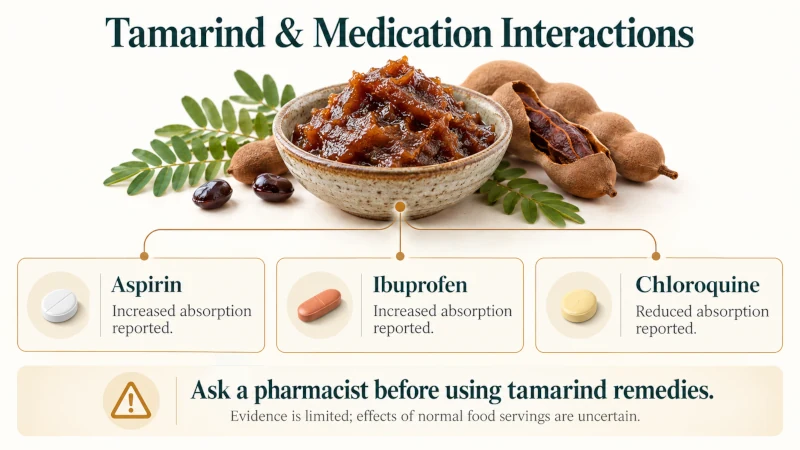
This is the safety issue that matters most. In a small study at Ahmadu Bello University in Nigeria, six healthy volunteers took 600 mg of aspirin with a tamarind extract mixed into a traditional millet drink; their bodies absorbed significantly more aspirin than when they took it alone [Yakasai, 1991]. A follow-up published by the same research group reported the same direction of effect, and a later study reported that tamarind also raised absorption of ibuprofen. TRAMIL additionally cites a Sudanese study suggesting tamarind lowers absorption of the antimalarial chloroquine [TRAMIL].
These studies are small and decades old, and no one has measured how much a normal serving matters. But more aspirin in your blood means more risk of stomach bleeding and other side effects, so TRAMIL advises avoiding tamarind if you take aspirin, ibuprofen or chloroquine [TRAMIL]. If you take daily low-dose aspirin or regular anti-inflammatory painkillers, skip tamarind remedies and ask your pharmacist about how much tamarind food is sensible for you.
Lead in some imported tamarind candy
Tamarind itself is not a source of lead. But some imported tamarind candies have been. A CDC report described five California children with lead poisoning linked to tamarind candy and folk remedies, and noted that over about nine months, Mexican-made candy was a possible exposure source in roughly 150 of some 1,000 California children with elevated blood lead. Very high lead levels were found in some candy wrappers, which children may lick or which sticky candy can cling to [CDC, 2002].
An Oklahoma investigation found that more than half of the tamarind lollipops it tested exceeded the FDA’s level of concern for lead, and calculated that a child eating a quarter to half of one a day would go over the FDA’s tolerable daily intake [Lynch et al., 2000]. Lead can also leach out of poorly glazed ceramic pots, and tamarind’s acidity makes that more likely [Healthline, 2023].
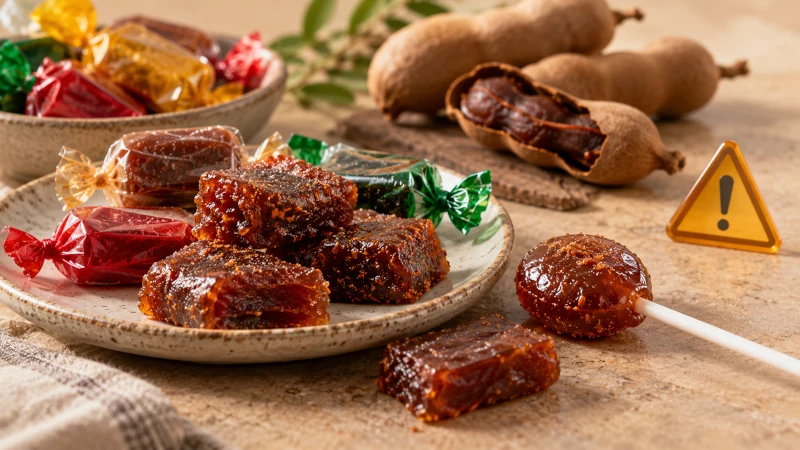
These reports are from 1998 to 2002, and individual brands have changed since. The practical rule still holds: don’t give imported tamarind candy to babies or young children, avoid it during pregnancy unless you know the product is tested, don’t store tamarind in glazed clay pots, and check the FDA recalls list for a brand before buying.
Sugar and diabetes
Most of the calories in tamarind pulp come from sugar, and candy and sweetened tamarind drinks are poor choices if you have diabetes, metabolic syndrome or are watching your weight [WebMD, 2024]. Small amounts of plain pulp used to sour a savory dish are a different matter from a tall glass of sweetened agua de tamarindo. The animal blood-sugar studies mentioned above don’t change that.
Pregnancy, breastfeeding and children
Tamarind in ordinary food amounts is widely eaten by pregnant women and children around the world. Medicinal amounts are another story: TRAMIL found no information that guarantees the safety of tamarind remedies in pregnancy, breastfeeding or children, and advises against using them in pregnant or breastfeeding women and children under 5 [TRAMIL]. Add the candy-lead issue, and the safest approach is to keep tamarind as a food, not a remedy, in these groups.
When to see a doctor instead
Don’t use tamarind or any laxative if you have abdominal pain or a possible bowel blockage, and see a doctor if constipation lasts more than three days despite home care or if your skin or eyes turn yellow [TRAMIL]. Get medical help right away if constipation comes with any of these [NIDDK, 2018]:
- bleeding from the rectum or blood in your stool
- constant belly pain, vomiting or fever
- being unable to pass gas
- lower back pain
- losing weight without trying
For possible gallbladder trouble, call emergency services or go to the emergency department for sudden, severe belly pain; pain that spreads to your back with vomiting; a very high temperature or shivering; or yellowing of your skin or the whites of your eyes. Belly pain lasting longer than 30 minutes needs an urgent appointment [NHS, 2025].
| HEALTH DISCLAIMER: This article is for general education and is not medical advice, diagnosis or treatment. Tamarind remedies have not been proven to treat constipation, liver, gallbladder or parasitic conditions in people, and tamarind can change how some medicines are absorbed, including aspirin and ibuprofen. If you are pregnant or breastfeeding, giving tamarind to a child, taking prescription or regular over-the-counter medicines, or living with diabetes, liver disease or a digestive condition, talk with your doctor or pharmacist before using tamarind medicinally. Seek urgent care for the warning signs listed above. |
Frequently Asked Questions
Is tamarind good for constipation?
Can I eat tamarind if I take aspirin or ibuprofen?
Small studies found tamarind increased how much aspirin, and reportedly ibuprofen, the body absorbs [Yakasai, 1991]. Avoid tamarind remedies while taking these drugs and ask your pharmacist about tamarind in food.
Is tamarind candy safe for kids?
Some imported tamarind candies and their wrappers have contained high levels of lead and have been linked to childhood lead poisoning [CDC, 2002]. Avoid giving imported tamarind candy to young children unless you know it has been tested.
Is tamarind safe during pregnancy?
Normal food amounts are widely eaten. Medicinal preparations have no safety data in pregnancy, and TRAMIL advises against them [TRAMIL]. Skip imported tamarind candy because of the lead risk.
Is tamarind OK if I have diabetes?
Plain pulp in small amounts can fit, but it is high in natural sugar, and candy and sweetened drinks are poor choices [WebMD, 2024]. Rat studies on blood sugar don’t apply to eating the fruit.
References
- Bhadoriya SS, Ganeshpurkar A, Narwaria J, Rai G, Jain AP. Tamarindus indica: Extent of explored potential. View source
- TRAMIL. Tamarindus indica (monograph). TRAMIL Caribbean pharmacopoeia, tramil.net. View source
- University Hospitals. Nutrition Facts: Tamarinds, raw, 1 cup, pulp (USDA nutrient data). View source
- WebMD Editorial Team. Health Benefits of Tamarind. View source
- Jennings K-A. What Is Tamarind? A Tropical Fruit with Health Benefits. Healthline. View source
- Yakasai IA. Effect of Tamarindus indica and sodium/potassium Hausa salt on the bioavailability of aspirin in man [MSc thesis]. View source
- Rolando M, Valente C. Establishing the tolerability and performance of tamarind seed polysaccharide (TSP) in treating dry eye syndrome: View source
- Centers for Disease Control and Prevention. Childhood lead poisoning associated with tamarind candy and folk remedies — California, 1999–2000. View source
- Lynch RA, Boatright DT, Moss SK. Lead-contaminated imported tamarind candy and children’s blood lead levels. View source
- National Institute of Diabetes and Digestive and Kidney Diseases. Symptoms & Causes of Constipation. View source
- NHS. Gallstones. View source


