
The foods that help with constipation most reliably are fiber-rich plants and a few specific fruits — prunes and kiwifruit lead the clinical evidence — paired with enough water and daily movement. That’s the short answer. The longer one matters, because how you add fiber, and which sources you choose, changes how fast you feel relief and how much gas comes with it.
Constipation generally means fewer than three bowel movements per week, stools that are hard or lumpy, straining, or a persistent sense that you haven’t fully emptied. About 16 in 100 adults in the United States report these symptoms [NIDDK, 2018]. For most people, the colon is simply absorbing too much water from stool that moves too slowly [Mayo Clinic, 2025]. Diet, fluids, and habit changes fix this for most people.
This guide ranks 15 foods by the strength of the evidence behind them, shows the actual doses used in clinical trials, and tells you when food isn’t enough and you need a doctor.
Why Food Helps: The Short Version
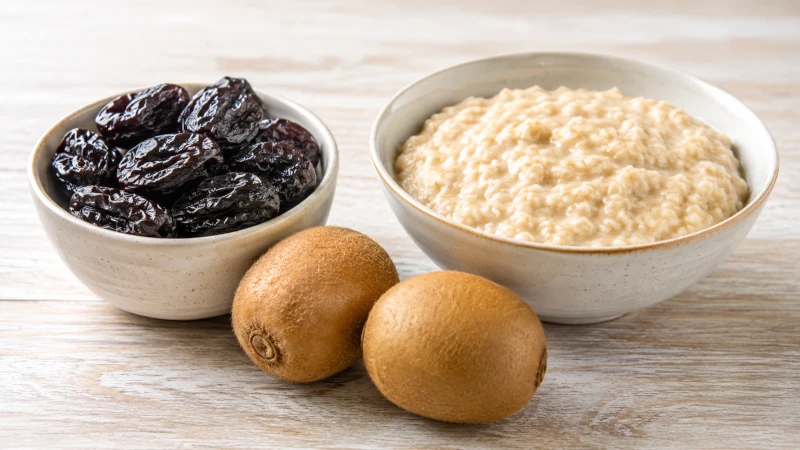
Fiber adds bulk and holds water in stool, which makes it softer and easier to pass [NIDDK, 2018]. Adults need 22 to 34 grams of fiber a day depending on age and sex — most Americans get about half that.
Two types of fiber do different things. Soluble fiber (oats, apples, psyllium, beans, flaxseed, chia) dissolves in water and forms a gel that softens stool. Insoluble fiber (wheat bran, whole-grain bread, vegetable skins, nuts) adds bulk and speeds transit through the colon. Most foods on this list contain both.
The AGA-ACG 2023 joint clinical practice guideline on chronic idiopathic constipation recommends increasing dietary fiber and fluids as a nonpharmacological first step, with psyllium the best-studied fiber supplement if food alone isn’t enough [Chang et al., 2023].
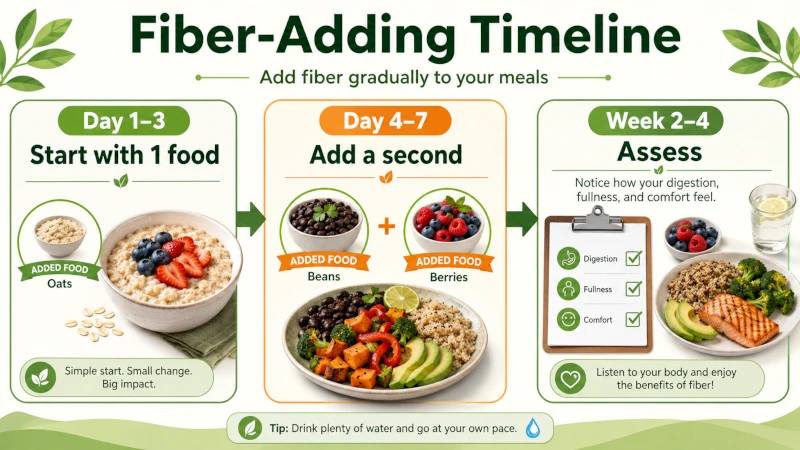
One critical caveat: add fiber slowly — about 2 to 3 grams more per day — to avoid gas and bloating. A sudden large jump in fiber without extra water can actually make constipation worse, not better.
Daily Fiber Targets at a Glance
| Group | Women | Men |
| Age 19–50 | 25 g/day | 31–34 g/day |
| Age 51+ | 21 g/day | 28 g/day |
| Pregnancy | 28 g/day | — |
Source: Dietary Guidelines for Americans 2020–2025, via NIDDK
The 15 Foods That Help With Constipation
1. Prunes (dried plums)
Fiber: about 6 g per 100 g (≈10 prunes). Strongest food-based evidence of any item on this list.
Prunes are the most studied food for constipation in clinical research. In a single-blind randomized crossover trial of 40 adults with chronic constipation, eating 50 g of prunes twice a day — about 100 g total — outperformed an equivalent fiber dose of psyllium on the number of complete spontaneous bowel movements per week and on stool consistency [Attaluri et al., 2011]. A 2024 expert commentary on the AGA-ACG guideline notes that about 5 prunes a day is an effective starting dose for mild constipation [Chang & Lacy, 2024].
Why prunes work so well goes beyond fiber. They combine soluble fiber (pectin), insoluble fiber, polyphenols, and sorbitol — a sugar alcohol that pulls water into the colon [Johns Hopkins Medicine]. For more on the broader nutritional picture, see our deep dive on plum health benefits.
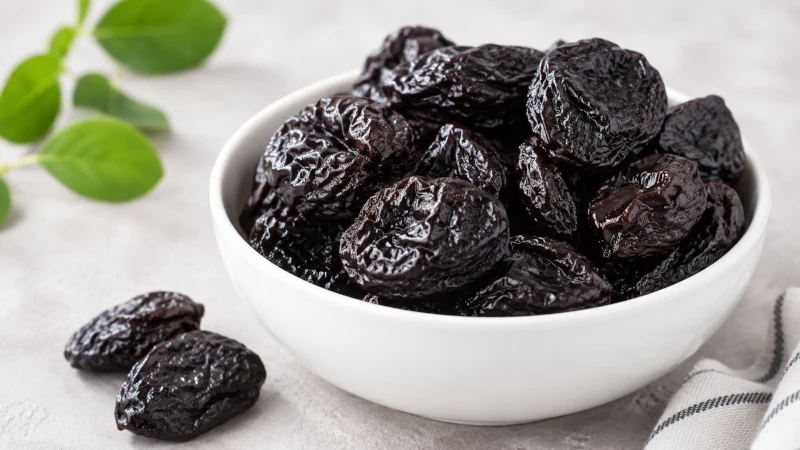
How to use: Start with 4 to 5 prunes a day with a glass of water and work up to 10 if needed. Prune juice (about 120–240 mL) also works but delivers less fiber.
2. Kiwifruit
Fiber: about 2 g per medium kiwi peeled; roughly 3 g skin-on. The other food with high-quality RCT support.
Kiwifruit earned its place at the top of this list through an international multicenter randomized crossover trial. Researchers assigned adults with functional constipation and constipation-predominant IBS to eat 2 green kiwifruits daily or to take 7.5 g of psyllium for four weeks, then cross over. Kiwifruit produced a clinically meaningful increase of at least 1.5 complete spontaneous bowel movements per week in both groups and was rated as causing significantly less abdominal discomfort than psyllium [Gearry et al., 2023].
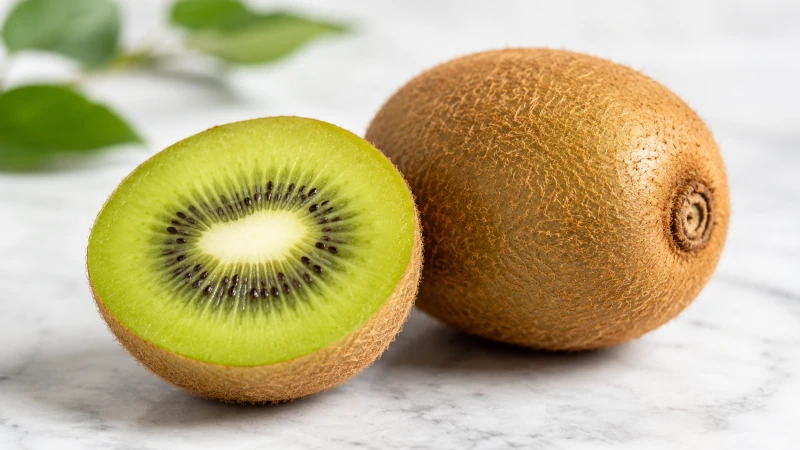
How to use: 2 ripe green kiwifruit per day, ideally with breakfast. The skin is edible and adds fiber, but the trial used peeled fruit.
3. Pears
Fiber: about 5–6 g per medium pear, with skin.
Pears are one of the few common fruits that combine two laxative mechanisms: meaningful fiber content and sorbitol, the same sugar alcohol found in prunes. The skin holds most of the insoluble fiber, so leaving it on matters [USDA FoodData Central].
How to use: One ripe pear with breakfast or as a snack. Bartlett, Anjou, and Asian pears all qualify.
4. Apples
Fiber: about 4 g per medium apple, with skin. Around 1 g of that is pectin.
Apples deliver pectin, a soluble fiber that ferments in the colon and helps soften stool, plus insoluble fiber from the skin. Apple juice contains some sorbitol — less than prune juice, but useful if you don’t tolerate prunes [Johns Hopkins Medicine]. For more detail, see apple health benefits.
How to use: One to two apples a day, skin on. Applesauce is gentler on a sensitive gut but provides less fiber.
5. Figs (fresh or dried)
Fiber: about 3 g per 3 dried figs; 1.5 g per medium fresh fig.
Figs have a long traditional use as a gentle laxative, and there is modest clinical support. A small trial in adults with functional constipation found that 300 g of fig paste daily improved stool frequency and colonic transit time over 8 weeks — far more than most people would realistically eat. Practical everyday use is 3 to 5 dried figs a day, which contributes meaningfully to daily fiber. For more on figs, see health benefits of figs.
How to use: Soak dried figs overnight in water and eat them in the morning, or chop and stir into oatmeal.
6. Raspberries (and other berries)
Fiber: raspberries 8 g per cup; blackberries 7.6 g; strawberries 3 g.
Raspberries are a standout — a single cup delivers about a third of the daily fiber target for women, with one of the highest fiber-per-calorie ratios of any commonly eaten fruit [USDA FoodData Central]. The evidence for berries specifically in constipation is indirect, but they’re an easy, versatile way to close the fiber gap.
How to use: A cup of fresh or frozen berries with yogurt or oatmeal. Frozen berries retain the same fiber as fresh and are available year-round.
7. Oats and oatmeal
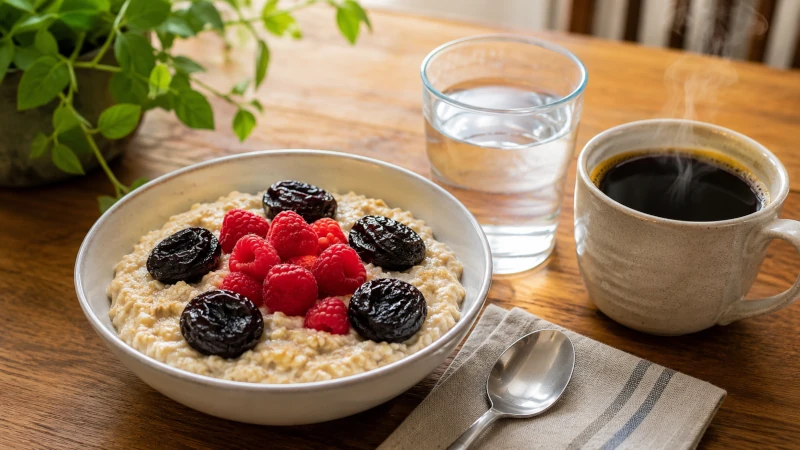
Fiber: about 4 g per ½ cup dry rolled oats. Roughly half is soluble (beta-glucan).
Beta-glucan, the main soluble fiber in oats, forms a viscous gel in the gut that softens stool and feeds beneficial colon bacteria. Oats tend to be the gentlest fiber source for people who get bloating or gas from beans or wheat bran, making them a good entry point.
How to use: Half a cup of rolled or steel-cut oats cooked in milk or water, topped with prunes, berries, or chia seeds. Instant oat packets are lower in fiber and higher in added sugar.
8. Whole-grain bread and pasta
Fiber: about 2 g per slice of true whole-wheat bread; 6 g per cup of cooked whole-wheat pasta.
Swapping refined grains for whole grains is the single easiest structural dietary change most people can make. Look for “whole wheat” or “100% whole grain” as the first ingredient — “multigrain” doesn’t mean whole grain. NIDDK lists whole grains among its first-line food recommendations for constipation [NIDDK, 2018].
How to use: Replace white bread, white rice, and refined pasta with whole-grain versions one meal at a time.
9. Wheat bran
Fiber: about 6 g per 2 tablespoons. Roughly 42% of bran by weight is insoluble fiber.
Wheat bran is the most concentrated source of insoluble fiber on this list. It speeds transit through the colon by adding bulk quickly. Mayo Clinic specifically names high-fiber foods including wheat bran as a first lifestyle step before turning to laxatives [Mayo Clinic, 2024].
How to use: Start with 1 tablespoon a day stirred into yogurt, oatmeal, or a smoothie. Don’t exceed about 30 g of isolated bran daily — large amounts can interfere with mineral absorption.
10. Ground flaxseed
Fiber: about 2 g per tablespoon. Roughly one-third soluble, two-thirds insoluble.
Flaxseeds add fiber, mucilage (a slippery soluble fiber that lubricates the gut), and omega-3 fats. They must be ground — whole flaxseeds mostly pass through undigested. Small trials suggest 1 to 4 tablespoons daily improves stool frequency in chronic constipation. For more detail, see flaxseed plant benefits.
How to use: 1 to 2 tablespoons of freshly ground flaxseed mixed into yogurt, oatmeal, smoothies, or salad dressings. Store ground flax in the refrigerator.
11. Chia seeds
Fiber: about 10 g per 2 tablespoons. Mostly soluble.
Chia seeds absorb roughly ten times their weight in water, forming a gel that bulks and softens stool. They carry one of the highest fiber densities of any food you can buy. Direct constipation trial data for chia is limited, but their fiber profile makes them a practical, flavorless way to add substantial fiber to almost any meal.
How to use: 1 to 2 tablespoons in water, milk, or yogurt — let it sit for 10 minutes to gel. Eating dry chia without enough fluid can cause the opposite of what you want.
12. Lentils, beans, and chickpeas
Fiber: about 15 g per cup of cooked lentils; 12–15 g per cup of cooked beans.
Legumes are the highest-fiber whole foods most people will eat in a normal meal. They also act as prebiotics, feeding gut bacteria that produce short-chain fatty acids that support healthy colon function. NIDDK lists lentils, black beans, kidney beans, and chickpeas explicitly among its primary food recommendations for constipation [NIDDK, 2018].
How to use: Half to one cup of cooked legumes most days. Soak and drain dried beans, or rinse canned beans, to reduce gas. Introduce them gradually.
13. Leafy greens (spinach, kale, collards, Swiss chard)
Fiber: about 4 g per cup cooked. Also high in magnesium.
Leafy greens combine fiber, water, and magnesium — a mineral that draws water into the colon and is the active ingredient in milk of magnesia. Cooked greens are denser in nutrients per bite than raw, though either works.
How to use: A cup of cooked greens as a side dish, or two cups raw in salads. Sautéed with olive oil and garlic is the simplest preparation.
14. Sweet potatoes (with skin)
Fiber: about 4 g per medium sweet potato, mostly in the skin.
Sweet potatoes provide both soluble and insoluble fiber from a single satisfying side dish. They’re also high in potassium, which supports normal muscle contractions — including those of the gut wall. Most of the fiber is in or just under the skin, so eating it matters.
How to use: One whole baked or roasted sweet potato, skin on. Cube and roast with olive oil and salt for the easiest version.
15. Yogurt and kefir with live cultures
Fiber: 0 g. Mechanism: live bacteria, not fiber.
Fermented dairy with live cultures — look for Lactobacillus or Bifidobacterium on the label — may modestly improve stool frequency and consistency. The evidence is genuinely mixed, and effect sizes are smaller than those seen with prunes or kiwifruit [Van der Schoot et al., 2024]. Tolerability is good, and yogurt pairs naturally with the high-fiber foods that have stronger evidence. Kefir typically contains more bacterial strains than standard yogurt.
How to use: One serving (about 170 g / 6 oz) of plain yogurt or one cup of kefir daily. Look for “live and active cultures” on the label.
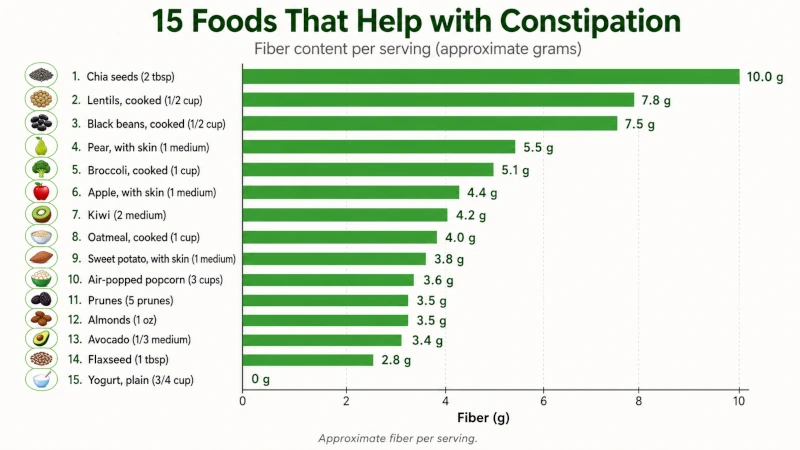
Quick-Reference Table: Fiber and How Each Food Works
| Food | Fiber per serving | Main mechanism | Evidence level |
| Prunes (10) | ~6 g | Sorbitol + soluble fiber + polyphenols | Strong (RCT) |
| Kiwifruit (2) | ~4 g | Soluble + insoluble fiber, actinidin enzyme | Strong (RCT) |
| Pears (1 medium) | 5–6 g | Soluble fiber + sorbitol | Moderate |
| Apples (1 medium) | ~4 g | Pectin + insoluble fiber | Moderate |
| Figs (3 dried) | ~3 g | Soluble + insoluble fiber, peristalsis | Limited (small trials) |
| Raspberries (1 cup) | ~8 g | Insoluble fiber + water + polyphenols | Indirect (fiber) |
| Oats (½ cup dry) | ~4 g | Beta-glucan soluble fiber gel | Moderate |
| Whole-grain bread (1 slice) | ~2 g | Mixed fiber + bulk | Moderate (guideline) |
| Wheat bran (2 Tbsp) | ~6 g | Insoluble fiber, rapid bulk | Moderate |
| Ground flaxseed (1 Tbsp) | ~2 g | Mucilage + mixed fiber | Limited (small trials) |
| Chia seeds (2 Tbsp) | ~10 g | Soluble fiber + water-holding gel | Indirect (fiber) |
| Lentils/beans (1 cup) | 12–15 g | Highest whole-food fiber, prebiotic | Strong (guideline) |
| Leafy greens (1 cup cooked) | ~4 g | Fiber + magnesium | Indirect (fiber) |
| Sweet potato (1 medium) | ~4 g | Soluble + insoluble fiber + potassium | Indirect (fiber) |
| Yogurt/kefir (1 serving) | 0 g | Live probiotic cultures | Mixed |
Fiber values are approximate and based on USDA FoodData Central.
Don’t Skip the Water
Fiber without enough water can harden stool rather than soften it. NIDDK and Mayo Clinic both suggest about 8 to 10 cups of caffeine-free, alcohol-free fluid a day for most adults [NIDDK, 2018] [Mayo Clinic, 2024]. Hot drinks in the morning may also stimulate the colon through the gastrocolic reflex [Johns Hopkins Medicine]. If you want gentler hot-drink options, see our roundup of the best teas for constipation.
Foods That Can Make Constipation Worse
These don’t cause constipation in everyone, but they’re worth scaling back if you’re struggling:
- Low-fiber processed foods: white bread, white rice, packaged snacks, fast food.
- Large amounts of cheese and other dairy — the link is clearest in children, but some adults are sensitive.
- Red and processed meat eaten in large amounts without much fiber on the plate.
- Excess alcohol, which is dehydrating.
- Unripe (green) bananas — higher in resistant starch and tannins that can slow transit. Ripe yellow bananas are roughly neutral.
What Else Helps (Beyond Food)
Diet is the foundation, but a few habits make a real difference:
- Move your body. Even a 20-minute walk after a meal helps trigger normal colon contractions [NIDDK, 2018]. Exercise doesn’t need to be intense.
- Honor the urge. Repeatedly ignoring the signal to go is one of the most common drivers of chronic constipation.
- Use a footstool. Propping your feet about 6 inches off the floor puts your hips in a squatting position and straightens the anorectal angle, which makes stool easier to pass without straining.
- Build a morning routine. A hot drink plus a high-fiber meal, with a bathroom visit 15 to 45 minutes after breakfast, is the optimal window for many people [NIDDK, 2018].
- Manage stress. Stress affects gut motility in some people through the gut-brain axis [Harvard Health, 2023].
What to Expect — and When
Dietary changes work, but they take time. Prunes and kiwifruit have shown effects within a week in clinical trials. Building fiber from food generally needs 2 to 4 weeks of consistent intake and adequate hydration before you can fairly judge whether it’s helping. If you stop eating the foods, the benefit usually fades.
Expect a few days of extra gas as your gut adjusts to more fiber. This is normal and temporary. If it’s severe, slow the pace of fiber addition — add one new food at a time rather than overhauling everything in a week.
Who Should Be Careful With High-Fiber Foods
High-fiber foods are safe for most healthy adults. A few situations warrant extra care:
- Recent bowel surgery or known bowel narrowing (stricture). Talk to your doctor before adding bulk-forming fiber or wheat bran.
- IBS, especially IBS-C. Soluble fiber (psyllium, oats, chia) is generally better tolerated than insoluble fiber (bran). Introduce foods slowly.
- Diverticulosis. Older advice to avoid seeds and nuts has been reversed — high-fiber diets are now recommended. Follow current guidelines from your gastroenterologist.
- Children, older adults, and people with swallowing difficulty. Chia seeds and ground flaxseed need plenty of fluid; dry consumption can cause esophageal obstruction.
- Pregnancy and breastfeeding. Food-based fiber is safe. If you need a fiber supplement, ask your obstetrician first.
- Medication interactions. Fiber can reduce absorption of certain medications, including levothyroxine, lithium, digoxin, and some antidepressants. Separate fiber-rich meals and these medications by at least 2 hours.
Red Flags: When to Call a Doctor
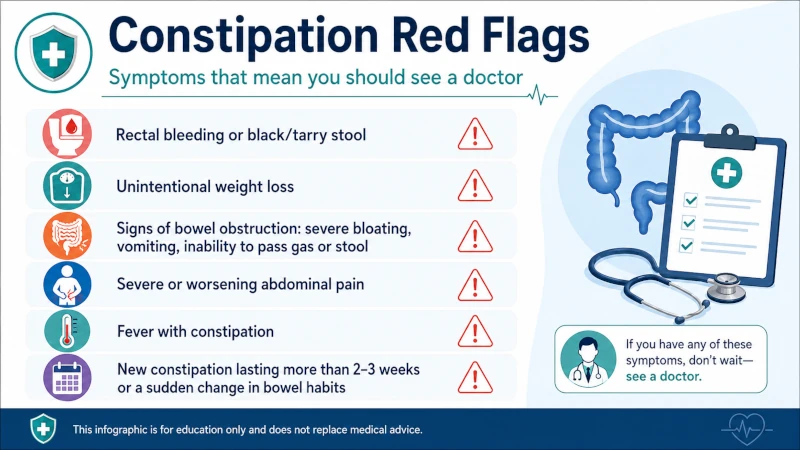
Most constipation responds to food, fluids, and movement. But some symptoms need medical evaluation regardless of what you eat. See a clinician if you have:
- Blood in your stool, on the toilet paper, or in the bowl — especially if dark or black
- Unintentional weight loss
- Severe abdominal pain not relieved by passing stool or gas
- New constipation if you’re over 50, or any unexplained change in bowel habits
- Family history of colon cancer or inflammatory bowel disease
- Fever alongside constipation — read our explainer on constipation and fever
- Constipation lasting more than three weeks despite dietary changes
- Vomiting, inability to pass gas, or a distended belly — possible signs of bowel obstruction; go to an emergency room
These symptoms can point to colon cancer, inflammatory bowel disease, thyroid problems, or other conditions that need proper evaluation [Mayo Clinic, 2025] [AGA Patient Portal, 2026].
| Health Disclaimer This article is for general education only and does not constitute medical advice, diagnosis, or treatment. It does not replace consultation with a qualified healthcare professional. Constipation can occasionally signal a serious underlying condition. Speak with your doctor before making major dietary changes if you are pregnant, breastfeeding, taking prescription medications, recovering from bowel surgery, or managing IBS, IBD, diabetes, thyroid disease, or another chronic condition. Seek immediate care for any red-flag symptoms listed above. |
Frequently Asked Questions
What is the fastest food fix for constipation?
For most adults, prunes or prune juice are the most reliable quick option because sorbitol can trigger a bowel movement within several hours. Kiwifruit and pears also work more quickly than purely fiber-based foods. None of these is guaranteed — if you haven’t had a bowel movement in more than three days or are in pain, call your doctor.
How many prunes should I eat a day?
Clinical trials used 50 g twice a day (about 10 prunes total). A 2024 commentary on the AGA-ACG guideline suggests 5 a day as a realistic starting dose for mild constipation [Chang & Lacy, 2024]. Start low to avoid gas, and always drink water with them.
Is fiber from food better than a fiber supplement?
They work differently. Food fiber arrives with water, polyphenols, and other nutrients, and it’s the approach most guidelines recommend first. Among fiber supplements, only psyllium has good evidence — bran and inulin show less consistent results [Chang et al., 2023]. If diet alone isn’t enough, psyllium is a reasonable next step.
Can coffee or tea help with constipation?
Yes, in moderation. Caffeine stimulates colon contractions in many people, and warm liquid alone can trigger the gastrocolic reflex. Coffee isn’t a substitute for fiber and water, and too much caffeine dehydrates you — but a morning cup alongside a fiber-rich breakfast is a reasonable combination.
Are bananas good or bad for constipation?
It depends on ripeness. Unripe (green) bananas are high in resistant starch and tannins that may slow transit for some people. Ripe yellow bananas are roughly neutral — they provide some fiber and potassium but aren’t particularly laxative or constipating for most adults.
When should I stop relying on food and see a doctor?
See a doctor right away if you have any red-flag symptom: bleeding, unexplained weight loss, severe pain, or new constipation at age 50 or older. If you have none of those but dietary changes haven’t helped after 3 to 4 weeks, schedule a visit.
References
- National Institute of Diabetes and Digestive and Kidney Diseases (NIDDK). Eating, Diet, & Nutrition for Constipation. Last reviewed May 2018. → View source
- National Institute of Diabetes and Digestive and Kidney Diseases (NIDDK). Treatment for Constipation. Last reviewed May 2018. → View source
- Mayo Clinic. Constipation — Symptoms and Causes. Reviewed April 15, 2025. → View source
- Mayo Clinic. Nonprescription Laxatives for Constipation: Use With Caution. January 26, 2024. → View source
- Chang L, Chey WD, Imdad A, et al. AGA-ACG Clinical Practice Guideline: Pharmacological Management of Chronic Idiopathic Constipation. Am J Gastroenterol. 2023;118(6):936-954. → View source (DOI)
- Gearry R, Fukudo S, Barbara G, et al. Consumption of 2 Green Kiwifruits Daily Improves Constipation and Abdominal Comfort. Am J Gastroenterol. 2023;118(6):1058-1068. → DOI | → PMC free full text
- Attaluri A, Donahoe R, Valestin J, Brown K, Rao SSC. Randomised clinical trial: dried plums (prunes) vs. psyllium for constipation. Aliment Pharmacol Ther. 2011;33(7):822-828. → View source (DOI)
- Van der Schoot A, Katsirma Z, Whelan K, Dimidi E. Systematic review and meta-analysis: Foods, drinks and diets and their effect on chronic constipation in adults. Aliment Pharmacol Ther. 2024;59(2):157-174. → View source (DOI) [Note: previous version of this article cited wrong author and volume/pages; corrected.]
- Chang L, Lacy BE. Highlights From the Joint AGA/ACG Guideline on Pharmacologic Management of Chronic Idiopathic Constipation. Gastroenterol Hepatol (N Y). 2024;20(11):678-681. PMID: 39886333. → PMC
- Johns Hopkins Medicine. Foods for Constipation. Health & Wellness Library. → View source
- American Gastroenterological Association. Constipation — Patient Information. Updated January 2026. → View source
- Harvard Health Publishing. The Impact of Stress on Your Gut. Updated July 18, 2023. → View source
- U.S. Department of Agriculture. FoodData Central — nutrient reference database. → View source
