
Alfalfa is a nutritious, very low-calorie food, and alfalfa seeds have lowered cholesterol in a couple of small studies. That’s roughly where the solid evidence ends. Most of the other alfalfa benefits you’ll see listed — healing ulcers, balancing hormones, steadying blood sugar, ‘detoxing’ the body — come from tradition or animal research, not from studies in people [Memorial Sloan Kettering, 2023].
Alfalfa also has a real safety record to know about. Raw sprouts are a recognized source of food poisoning, alfalfa seed products have been linked to lupus flares, and the plant’s vitamin K can blunt the blood thinner warfarin [FDA, 2024; Johns Hopkins Lupus Center; RxList]. Here’s what each claim rests on, so you can decide how — and whether — alfalfa belongs in your diet.
What alfalfa is, and the forms people actually use
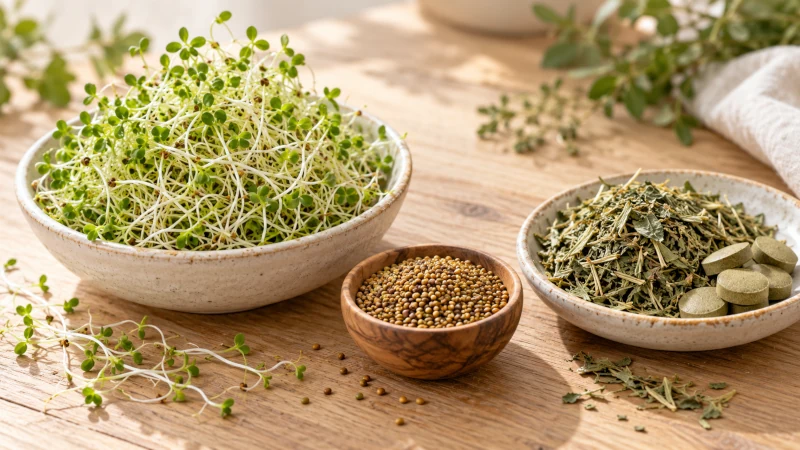
Alfalfa (Medicago sativa), also called lucerne, is a legume grown mainly as animal feed. People eat the sprouts and use the leaves and seeds as supplements [Memorial Sloan Kettering, 2023]. Which form you mean matters, because the evidence and the risks differ:
- Sprouts are the germinated seeds sold in the produce aisle — the food form, and the one with the food-safety issue.
- Seeds were used in the cholesterol research. Long-term use of seed products is rated likely unsafe, mainly because of lupus-like reactions [RxList].
- Dried leaf is sold as tablets, capsules, powder and tea. Alfalfa leaf is rated possibly safe for most adults [RxList].
Alfalfa benefits at a glance
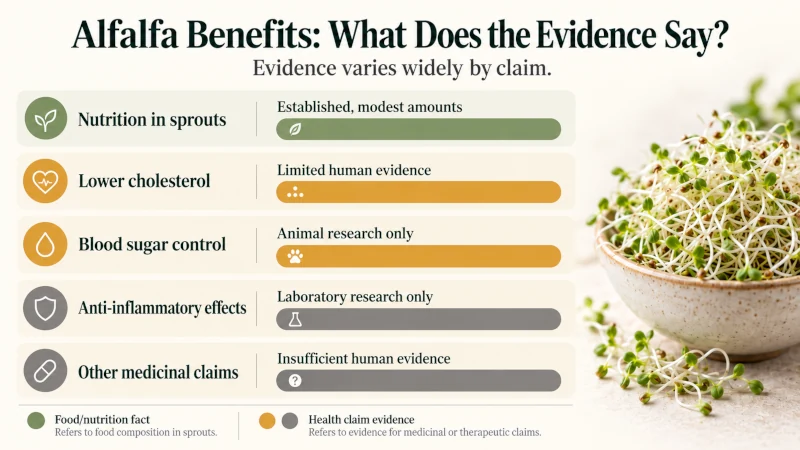
| Claimed benefit | What the evidence shows | Evidence strength |
| Nutrition (vitamin K, folate, fiber) | Sprouts add small amounts of several nutrients for almost no calories [University Hospitals] | Established, but modest |
| Lower cholesterol | Two small, uncontrolled human studies using seeds, plus animal data [Memorial Sloan Kettering, 2023; Mølgaard et al., 1987] | Limited |
| Blood sugar control | Lowers glucose in animals; not tested in people with diabetes [Memorial Sloan Kettering, 2023] | Animal only |
| Anti-inflammatory | Activity of isolated compounds in lab studies [Memorial Sloan Kettering, 2023] | Lab only |
| Diuretic, digestion, ulcers | No experimental evidence in people [Memorial Sloan Kettering, 2023] | Traditional / insufficient |
| Asthma, hay fever, thyroid, breast milk, menstruation | No studies support these uses [Memorial Sloan Kettering, 2023] | Traditional / insufficient |
| Cancer | No evidence it treats cancer; extracts stimulated estrogen-dependent breast cancer cells in lab work [Memorial Sloan Kettering, 2023] | No evidence; possible concern |
Alfalfa nutrition: what’s in a serving
A cup of raw alfalfa sprouts has fewer than 10 calories and is mostly water. Here’s what that cup contains [University Hospitals]:
| Nutrient | Per 1 cup raw alfalfa sprouts |
| Calories | 9.6 kcal |
| Protein | 1.3 g |
| Fiber | 0.8 g |
| Vitamin K | 10.1 µg |
| Folate | 11.9 µg |
| Vitamin C | 2.7 mg |
| Calcium | 10.6 mg |
| Iron | 0.3 mg |
| Magnesium | 8.9 mg |
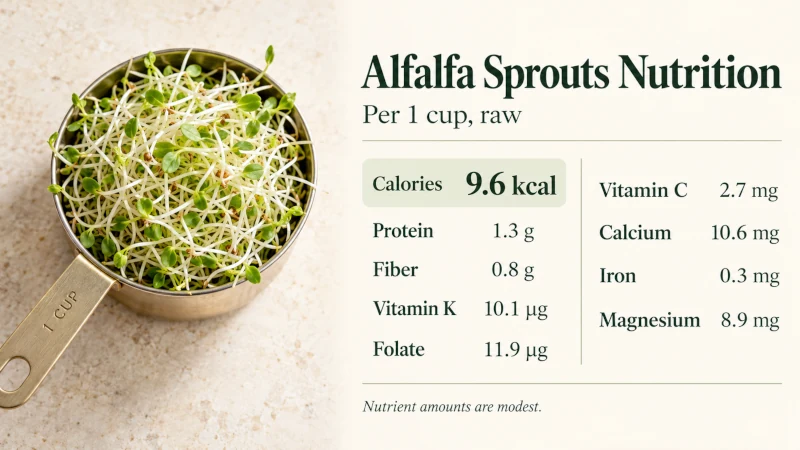
These are garnish-sized numbers. Sprouts are a pleasant way to add crunch and a little nutrition, not a concentrated source of anything. Some herbal books describe alfalfa sprouts as richer in calcium than milk; at about 11 mg per cup, they aren’t close.
The same goes for iron. Alfalfa is often promoted for anemia, but with 0.3 mg of iron per cup, sprouts can’t move the needle on iron deficiency. If you’re building an iron-rich diet, the best foods for anemia — legumes, shellfish, fortified cereals — are far better sources.
Vitamin K is the nutrient to keep an eye on. A cup of sprouts is modest, but alfalfa as an herb is described as containing large amounts of vitamin K, which is the reason it interacts with warfarin [RxList].
Cholesterol: the best-studied alfalfa benefit
If alfalfa has one benefit with human data behind it, this is it. Alfalfa contains fiber and plant compounds called saponins, which appear to bind cholesterol in the gut [Memorial Sloan Kettering, 2023].
The most-cited human study is small and decades old. Researchers gave 15 people with high blood lipids 40 grams of heat-prepared alfalfa seeds three times a day — 120 grams daily — for eight weeks, with no other diet changes. Among the participants with type II hyperlipoproteinemia, median total cholesterol fell about 17% and LDL about 18%. Two people with high cholesterol saw LDL drop by less than 5%. Body weight crept up, probably from the seeds’ calories, and every lipid value returned to its starting level once people stopped [Mølgaard et al., 1987]. MSK describes the human evidence as two small trials that larger, controlled studies still need to confirm [Memorial Sloan Kettering, 2023].
So the effect came from a very large daily dose of seeds — far more than a sprinkle of sprouts or a few tablets — and seeds are also the form most tied to autoimmune reactions [Montanaro & Bardana, 1991]. Alfalfa isn’t a reasonable stand-in for proven cholesterol treatment. Psyllium and plant sterols have stronger evidence among supplements that help lower cholesterol, and the useful first step is a cholesterol test that separates LDL, HDL and triglycerides.
Blood sugar, inflammation and other traditional uses
Alfalfa has a long list of folk uses: diabetes, fluid retention, ulcers, indigestion, arthritis, asthma, thyroid problems, and promoting menstruation or breast milk [Memorial Sloan Kettering, 2023]. Very few have been tested in people.
- Blood sugar. Alfalfa lowers blood glucose in animals, but no studies have checked whether it has a meaningful effect in people with diabetes [Memorial Sloan Kettering, 2023]. Even so, if you take diabetes medication, alfalfa could push your blood sugar too low, so monitor closely [RxList].
- Inflammation. The anti-inflammatory story comes from isolated compounds, such as the isoflavone biochanin-A, studied in the lab [Memorial Sloan Kettering, 2023]. Several anti-inflammatory supplements have human trial data; alfalfa isn’t one of them.
- Diuretic, digestive, respiratory and thyroid uses. MSK found no scientific evidence behind any of these [Memorial Sloan Kettering, 2023].
- Bleeding. Alfalfa’s vitamin K is sometimes cited as a reason to use it for nosebleeds or heavy periods. Its use for a bleeding disorder is rated as having insufficient evidence [RxList], and unexplained or heavy bleeding needs a medical evaluation, not an herb.
Raw alfalfa sprouts and food poisoning
Sprouts grow in warm, humid conditions, and so do Salmonella, Listeria and E. coli. If a few bacteria are present in or on the seed, they can multiply to high levels during sprouting — even when you grow sprouts yourself under clean conditions [FDA, 2024]. Alfalfa sprouts have been linked to E. coli and Salmonella outbreaks in the U.S. and Europe [Memorial Sloan Kettering, 2023].
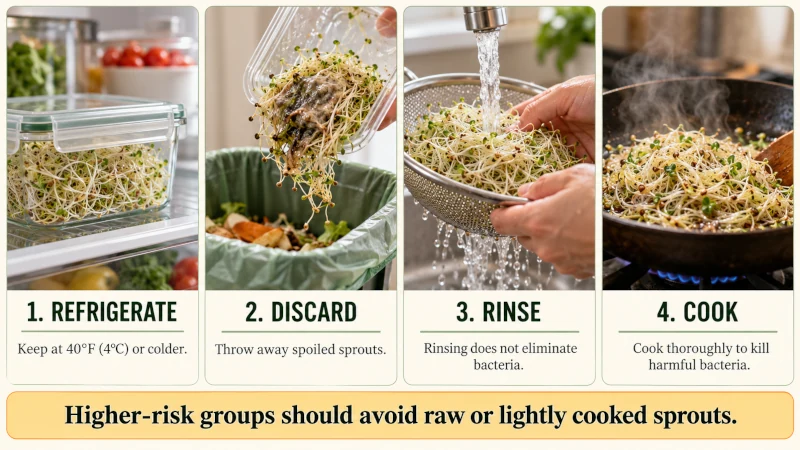
FDA advises children, older adults, pregnant people, and anyone with a weakened immune system — including people with cancer, diabetes, HIV or an organ transplant — to avoid raw or lightly cooked sprouts of any kind [FDA, 2024]. If you’re a healthy adult and want to eat them:
- Buy sprouts refrigerated and keep them at 40°F or below [FDA, 2024].
- Throw out any that look spoiled [FDA, 2024].
- Rinse under running water, knowing that washing reduces bacteria but doesn’t eliminate them [FDA, 2024].
- Cook them when you can — stirred into a soup or stir-fry until hot. Thorough cooking kills harmful bacteria [FDA, 2024].
There’s more detail on how to eat alfalfa sprouts safely in our sprouts guide.
Alfalfa, lupus and autoimmune disease
Alfalfa seeds and sprouts contain L-canavanine, an amino acid that makes up about 1.5% of their dry weight [Memorial Sloan Kettering, 2023]. In a 1982 study, monkeys fed alfalfa sprouts developed blood and immune abnormalities resembling systemic lupus erythematosus (SLE), and adding L-canavanine to their diet reactivated the syndrome [Malinow et al., 1982; Memorial Sloan Kettering, 2023].
The human evidence is thinner but points the same way. A 1983 letter described two people whose quiet, well-controlled lupus flared after they took alfalfa tablets [Roberts & Hayashi, 1983; Memorial Sloan Kettering, 2023], and a participant in an alfalfa-seed cholesterol study developed autoimmune hemolytic anemia [Montanaro & Bardana, 1991].
The science isn’t completely settled: some researchers question whether supplements deliver enough L-canavanine to cause these effects [Memorial Sloan Kettering, 2023]. Clinical guidance doesn’t wait for that debate. The Johns Hopkins Lupus Center tells people with lupus and similar autoimmune conditions to avoid alfalfa sprouts completely [Johns Hopkins Lupus Center], and RxList extends the caution to conditions such as multiple sclerosis and rheumatoid arthritis, because alfalfa may make the immune system more active [RxList].
Side effects, interactions and who should avoid alfalfa
Common side effects
In supplement studies, people reported looser and more frequent stools, diarrhea, abdominal discomfort and gas [Memorial Sloan Kettering, 2023]. Alfalfa may also make your skin more sensitive to the sun [RxList], and it can raise blood levels of uric acid and urea [Memorial Sloan Kettering, 2023].
Medication interactions
| Medication | What can happen | Rating (RxList) |
| Warfarin (Coumadin) | Alfalfa’s vitamin K may make warfarin less effective | Major |
| Birth control pills | Estrogen-like effects might reduce effectiveness; use a backup method | Moderate |
| Estrogen therapy | May change how estrogen pills work | Moderate |
| Diabetes medications | Blood sugar could drop too low | Moderate |
| Immunosuppressants (e.g., cyclosporine, tacrolimus, prednisone) | Alfalfa may stimulate the immune system and weaken these drugs | Moderate |
| Drugs that cause sun sensitivity (e.g., some antibiotics, amitriptyline) | Higher risk of sunburn or rash | Moderate |
Source for the table: [RxList].
On warfarin, the two sources frame the risk a little differently. RxList advises against combining alfalfa with warfarin, and recommends regular blood checks if you do [RxList]. The NIH’s general advice for people on warfarin is to keep vitamin K intake about the same from day to day [NIH ODS]. Either way, an alfalfa supplement — or a sudden new habit of daily sprouts — is something to clear with your anticoagulation clinic first.
Pregnancy and breastfeeding
Two separate cautions apply. Raw sprouts are on FDA’s avoid list during pregnancy because of the infection risk [FDA, 2024]. And alfalfa in amounts larger than normal food portions is rated possibly unsafe during pregnancy and breastfeeding because it may act like estrogen [RxList]; MSK goes further and advises avoiding it altogether while pregnant or nursing [Memorial Sloan Kettering, 2023].
Who should avoid alfalfa
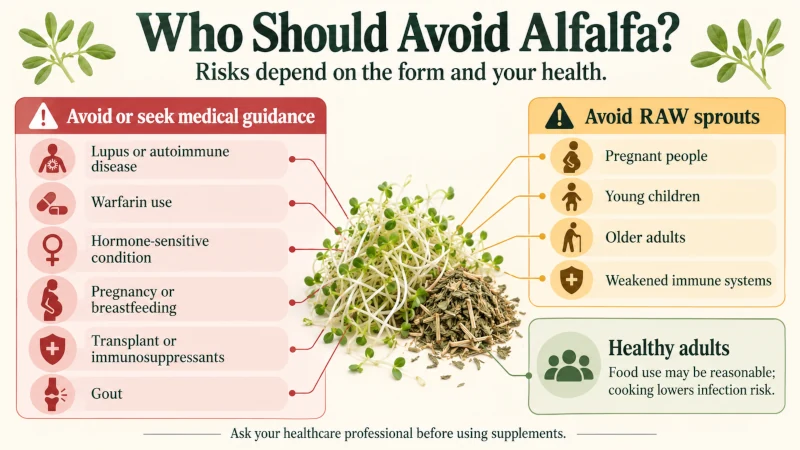
- People with lupus or another autoimmune disease [Johns Hopkins Lupus Center; RxList].
- Anyone with a hormone-sensitive condition, such as breast, uterine or ovarian cancer, endometriosis or uterine fibroids [RxList].
- People with gout, because alfalfa is high in purines [Memorial Sloan Kettering, 2023].
- People taking warfarin, unless their prescriber has agreed and is monitoring [RxList].
- Kidney transplant recipients. One report describes transplant rejection after a supplement containing alfalfa and black cohosh, and alfalfa may weaken cyclosporine [RxList].
- Pregnant or breastfeeding people [Memorial Sloan Kettering, 2023; RxList].
- For raw sprouts specifically: children, older adults, pregnant people and anyone with a weakened immune system [FDA, 2024].
How to use alfalfa sensibly
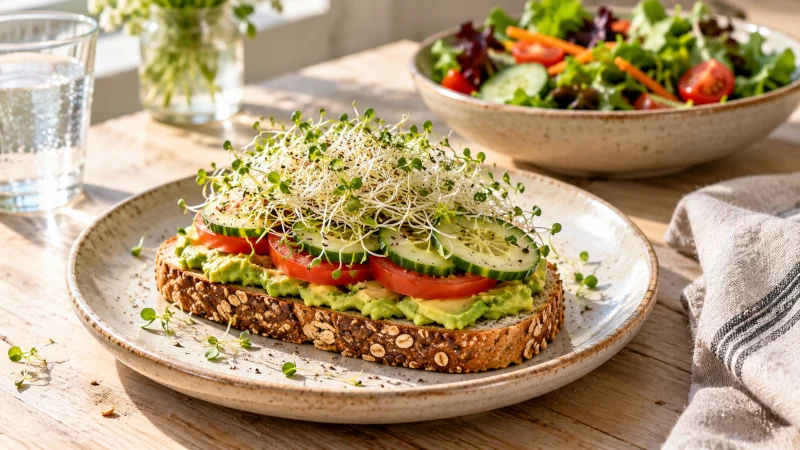
For most healthy adults, the simplest way to get what alfalfa offers is as food — a handful of sprouts on a sandwich or in a salad, or cooked into a hot dish if you’re in a higher-risk group.
Supplements are harder to recommend. No dose has been shown to work for any condition. The cholesterol study used 120 grams of seeds a day [Mølgaard et al., 1987], and the dose listed as studied for cholesterol — 5 to 10 grams of the herb, or a tea made from it, three times a day — sits under an ‘insufficient evidence’ rating [RxList]. If you still want to try a leaf supplement, tell your doctor or pharmacist first, choose a product that lists exactly what it contains, and steer clear of seed-based products, since long-term seed use is rated likely unsafe [RxList].
When to see a doctor
Contact a healthcare provider right away if you think you have food poisoning after eating sprouts. Symptoms include vomiting, diarrhea, abdominal pain, and flu-like symptoms such as fever, headache and body aches. They usually start one to three days after eating, but can show up within 20 minutes or as late as six weeks later. Children, older adults, pregnant people and anyone with a weakened immune system face the highest risk of serious illness [FDA, 2024].
See a doctor, too, if you develop symptoms that could signal a lupus-like reaction while taking alfalfa — muscle pain, unusual tiredness, a skin rash, fever, or chest pain when you breathe deeply [Pharmasave alfalfa monograph]. And talk to a clinician before starting any alfalfa supplement if you take warfarin, diabetes medicine, hormonal medication or an immunosuppressant, or if you have any of the conditions listed above.
| HEALTH DISCLAIMER This article is for general education and information only. It is not medical advice and is not a substitute for diagnosis or treatment from a qualified healthcare professional. Alfalfa can interact with medications, including blood thinners, birth control, diabetes medicines and immunosuppressants, and it is not appropriate for everyone — including people with lupus or other autoimmune conditions, hormone-sensitive conditions or gout. If you are pregnant or breastfeeding, have a health condition, or take any medication, talk to your doctor or pharmacist before adding alfalfa supplements or raw alfalfa sprouts to your routine. |
Frequently Asked Questions
What are the main benefits of alfalfa?
As a food, alfalfa sprouts add a little vitamin K, folate, fiber and other nutrients for almost no calories [University Hospitals]. The best-studied health effect is cholesterol lowering, but the human evidence comes from two small studies using large amounts of seeds [Memorial Sloan Kettering, 2023; Mølgaard et al., 1987]. Claims about blood sugar, inflammation, ulcers and hormones rest on animal studies or tradition [Memorial Sloan Kettering, 2023].
Is it safe to eat alfalfa sprouts every day?
For a healthy adult who isn’t on warfarin and doesn’t have an autoimmune condition, sprouts are a normal food — but every serving of raw sprouts carries some food-poisoning risk, which cooking removes [FDA, 2024]. If you take warfarin, keep your intake steady rather than suddenly adding a daily serving [NIH ODS].
Does alfalfa lower cholesterol?
Possibly, a little, in people with high cholesterol who eat a lot of it. In the main study, 120 grams of seeds a day lowered LDL by a median of about 18% in people with type II hyperlipoproteinemia, and levels went back up when they stopped [Mølgaard et al., 1987]. Larger controlled trials haven’t confirmed it [Memorial Sloan Kettering, 2023].
Who should not take alfalfa?
People with lupus or other autoimmune diseases, hormone-sensitive conditions or gout; people taking warfarin; kidney transplant recipients; and anyone pregnant or breastfeeding [Johns Hopkins Lupus Center; RxList; Memorial Sloan Kettering, 2023]. Children, older adults and people with weakened immune systems should avoid raw sprouts [FDA, 2024].
Does alfalfa interact with blood thinners?
Yes. Alfalfa contains vitamin K, which counteracts warfarin, and the interaction is rated major [RxList]. Talk to your anticoagulation clinic before taking alfalfa supplements or changing how much alfalfa you eat.
Are alfalfa sprouts safe during pregnancy?
Raw sprouts aren’t — FDA lists pregnant people among those who should avoid raw or lightly cooked sprouts of any kind [FDA, 2024]. Alfalfa supplements are also best avoided during pregnancy and breastfeeding because of their estrogen-like effects [RxList; Memorial Sloan Kettering, 2023].
References
- Memorial Sloan Kettering Cancer Center. Alfalfa. About Herbs, Botanicals & Other Products. View source
- RxList. Alfalfa: Health Benefits, Side Effects, Uses, Dose & Precautions (Natural Medicines Comprehensive Database content). View source
- U.S. Food and Drug Administration. Selecting and Serving Produce Safely. View source
- Johns Hopkins Lupus Center. 5 Things to Avoid if You Have Lupus. View source
- NIH Office of Dietary Supplements. Vitamin K: Fact Sheet for Consumers. View source
- University Hospitals. Nutrition Facts: Alfalfa seeds, sprouted, raw, 1 cup. Health & Wellness Library. View source
- Mølgaard J, von Schenck H, Olsson AG. Alfalfa seeds lower low density lipoprotein cholesterol and apolipoprotein B concentrations in patients with type II hyperlipoproteinemia. Atherosclerosis. View source
- Malinow MR, Bardana EJ Jr, Pirofsky B, Craig S, McLaughlin P. Systemic lupus erythematosus-like syndrome in monkeys fed alfalfa sprouts: role of a nonprotein amino acid. Science. View source
- Roberts JL, Hayashi JA. Exacerbation of SLE associated with alfalfa ingestion. View source
- Montanaro A, Bardana EJ Jr. Dietary amino acid-induced systemic lupus erythematosus. View source
- Pharmasave. Alfalfa (natural health product monograph). View source


