
The orange tree earns its reputation honestly, but not always for the reasons “benefits” pages give. What it actually offers arrives in three separate packages, and keeping them apart is the whole point. There’s the sweet orange you eat, a genuinely good source of vitamin C and fiber. There’s the fragrant blossom and leaves, long brewed into a calming tea or distilled into oils. And there’s bitter orange — a different species sold in weight-loss and energy supplements, which carries safety concerns the fruit on your counter does not. Advice that’s true for a breakfast orange can be wrong, even risky, for a capsule.
Two different trees wear the name “orange”
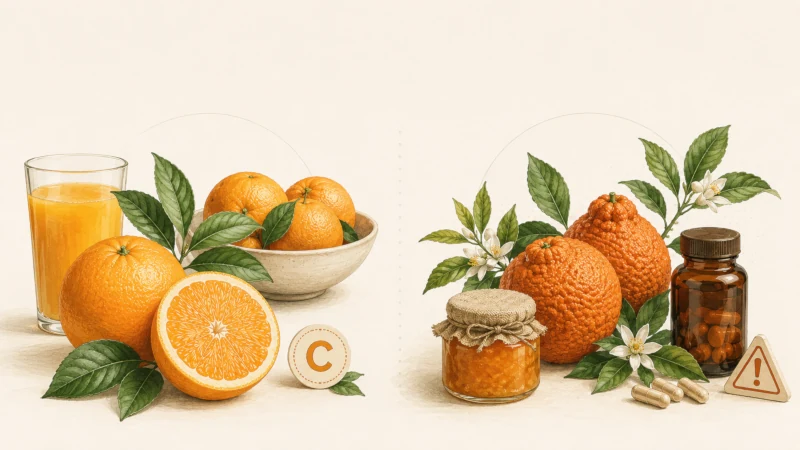
When people say orange tree, they usually mean one of two species in the citrus (Rutaceae) family, and the difference drives everything below.
The sweet orange (Citrus sinensis) is the one grown for the fruit you peel and the juice you drink. The bitter orange — also called sour or Seville orange (Citrus aurantium) — has fruit too tart to eat raw; its peel, flowers, and oils flavor marmalade, liqueurs, and perfumes, and its extracts turn up in dietary supplements [NCCIH, 2024]. Both originated in Asia and now grow across warm regions, including Florida, California, and the Mediterranean.
Here’s why that matters: most of the reassuring nutrition news belongs to the sweet orange, while most of the real safety cautions belong to bitter orange. Mixing them up is how a page ends up recommending a stimulant supplement in the same breath as a glass of juice.
| Sweet orange (Citrus sinensis) | Bitter orange (Citrus aurantium) | |
| Common names | Orange, navel, Valencia | Sour orange, Seville orange |
| Eaten raw? | Yes | Too sour; used in marmalade and liqueurs |
| Main uses | Fruit, juice | Peel, marmalade, neroli/petitgrain oils, supplements |
| Key compound of note | Vitamin C, fiber, flavonoids | p-synephrine (a stimulant) |
| Main concern | Very few for most people | Cardiovascular effects; drug interactions |
What the sweet orange actually does for you
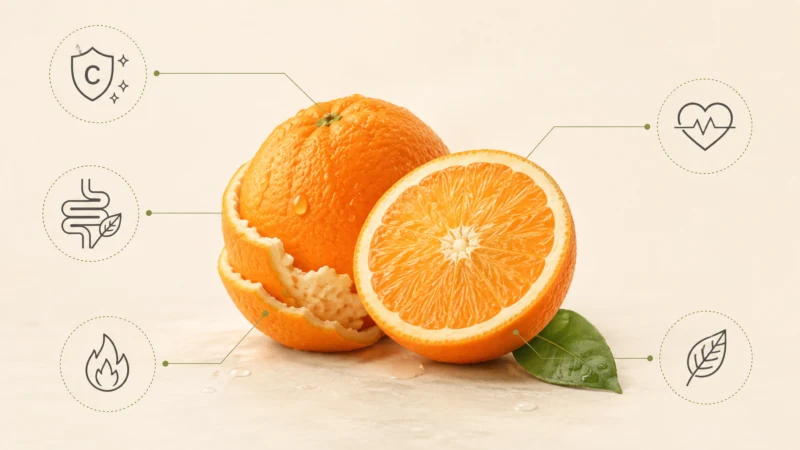
This is the part with the strongest evidence, and it’s mostly about ordinary nutrition rather than any special healing power.
A medium orange (about 130–150 grams) delivers roughly 70 mg of vitamin C — enough to cover a full day’s requirement for most adults — plus fiber, potassium, folate, and a lot of water, for about 60–70 calories. Per 100 grams, raw orange provides around 53 mg of vitamin C, 2.4 grams of fiber, and 181 mg of potassium [USDA FoodData Central]. If you’re curious how that stacks up against the vitamin-C “superfruits,” see how oranges compare with acerola cherry.
Vitamin C: what it can and can’t do
Your body can’t make vitamin C, so you have to get it from food. Adults need about 90 mg a day for men and 75 mg for women, with smokers needing an extra 35 mg [NIH Office of Dietary Supplements]. Fall far short — below roughly 10 mg a day for weeks — and you risk scurvy, which causes fatigue, swollen and bleeding gums, poor wound healing, and eventually far worse; untreated, it can be fatal [NIH ODS]. An orange or two makes that a non-issue.
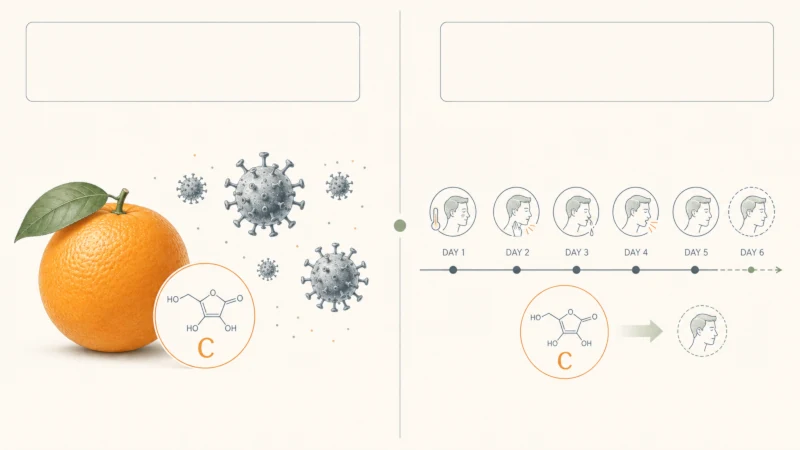
The famous cold claim deserves a straight answer. A Cochrane review of controlled trials found that taking at least 200 mg of vitamin C every day did not stop healthy people in the general population from catching colds. It did modestly shorten how long colds lasted — by about 8% in adults and 14% in children — and starting vitamin C only after symptoms appeared showed no consistent benefit. The one striking exception was people under extreme short-term physical stress, such as marathon runners and skiers, where regular vitamin C roughly halved cold risk [Cochrane review, 2013]. So an orange a day is a fine habit — just not a force field.
One more pattern worth knowing: people who eat plenty of vitamin C from fruits and vegetables tend to have a lower risk of some cancers, but taking vitamin C supplements doesn’t appear to lower that risk [NIH ODS]. The benefit rides with the whole food, not the pill.
A note on orange juice
Vitamin C is fragile — it breaks down with time, heat, and exposure to air. Fresh-squeezed juice holds the most, and it’s best drunk soon after pressing; commercial pasteurized juice loses some in processing and storage, which is why many brands add vitamin C back. Juice also concentrates the fruit’s natural sugar without the fiber of a whole orange, so if you’re watching sugar, the fruit is the steadier choice.
Orange blossom and leaves: a calming tradition, honestly assessed
The blossom gives us neroli oil and fragrant orange-blossom water; the leaves and twigs give petitgrain. For centuries these have been brewed into bedtime teas and used to settle nerves, which is where folk tradition and modern evidence part ways politely.
The honest read: bitter orange oil has been used in aromatherapy for anxiety and sleep, but it’s unclear whether it actually helps [NCCIH, 2024]. Several small trials — in settings like labor, pregnancy, and dental visits — have reported short-term drops in anxiety, but the studies are small, use different methods, and often combine oils, so the picture is promising rather than proven.
A fair way to use that: a warm cup of orange-blossom tea as part of a wind-down is a pleasant, low-risk ritual, and the ritual itself may do much of the work. Treat it that way rather than as a treatment for an anxiety disorder or ongoing insomnia. If sleep is the real problem, the approaches with the best track record are behavioral, not herbal — see what actually helps you sleep and, for another gentle aromatic in the same tradition, lavender. One firm rule: essential oils like neroli are for scent, never for swallowing.
Citrus flavonoids and the old “vitamin P” idea
Older texts call the flavonoids in citrus peel and pulp — hesperidin, naringin, rutin — “vitamin P.” They aren’t a vitamin, and the term has been abandoned. What’s left is a genuine but unsettled research question. Some trials suggest citrus flavonoids like hesperidin may nudge cholesterol, blood sugar, or inflammation markers in a helpful direction; other reviews find no effect on blood pressure or blood lipids. The evidence is genuinely mixed [systematic review, 2024].
The practical takeaway is modest: eating citrus fits comfortably into a heart-healthy diet, but oranges are not a treatment for varicose veins, blood-clotting problems, or established heart disease. If arteries are your focus, the eating pattern matters far more than any single fruit — here’s what genuinely supports your arteries.
Bitter orange supplements: where caution really matters
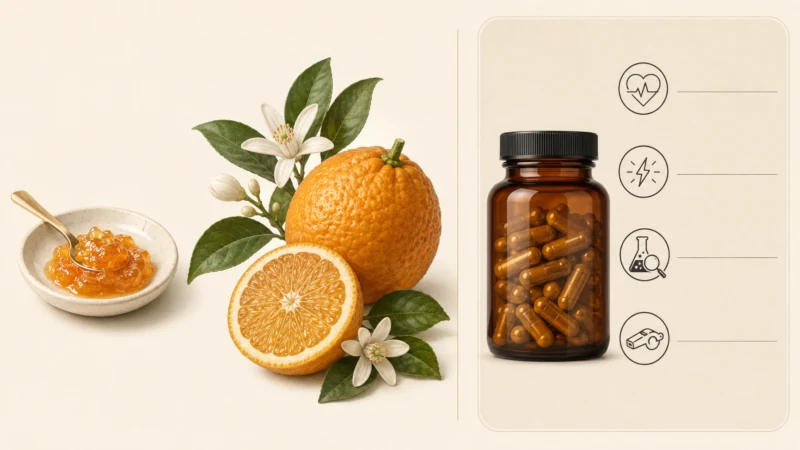
This is the part the fruit’s good reputation tends to smuggle past people. Bitter orange extract — standardized for p-synephrine — is sold for weight loss, energy, and athletic performance. It became popular as an “ephedra alternative” after the FDA banned ephedrine alkaloids from supplements in 2004, and p-synephrine is structurally similar to ephedrine [NCCIH, 2024].
What has that popularity delivered? Not much you can count on. Bitter orange has not been clearly shown to help with any health purpose, and its effect on body weight is unclear — the studies are small, usually test multi-ingredient products, and reach conflicting results [NCCIH, 2024].
The safety side is more pointed. Serious problems — abnormal heart rhythms, heart attacks, and strokes — have been reported in people taking bitter orange products, though most of those products contained several ingredients, so bitter orange can’t be pinned as the cause. The evidence on its cardiovascular effects is inconclusive: some studies show it raises blood pressure and heart rate, others don’t [NCCIH, 2024]. Product quality is its own problem. When FDA researchers analyzed 59 bitter orange supplements, several contained more stimulant amines than a natural extract would, and six were adulterated with synthetic amines that aren’t legal in US supplements at all [NCCIH, 2024]. Competitive athletes have a separate reason to steer clear: the NCAA lists synephrine as a banned stimulant [NCCIH, 2024].
Eating bitter orange as food — a spoonful of Seville marmalade — is a different matter and is generally not the concern. The worry is concentrated supplements, especially stacked with caffeine.
Safety, side effects, and who should be careful
For most people, eating sweet oranges is about as safe as food gets. Very acidic citrus can trigger heartburn or reflux symptoms in some people, so if oranges reliably upset your stomach, that’s a reasonable cue to cut back. The cautions that follow are mainly about bitter orange and its supplements.
The bitter-orange drug interaction (grapefruit-like)
Bitter (Seville) orange contains furanocoumarins — the same class of compounds that make grapefruit risky with certain medicines. They block an intestinal enzyme called CYP3A4 that normally breaks drugs down, which can let too much medication into your bloodstream [FDA, 2021]. In a controlled study, Seville orange juice raised blood levels of the blood-pressure drug felodipine by about 76% — close to grapefruit juice’s 93% — while ordinary sweet orange juice had no such effect [Malhotra et al., 2001].
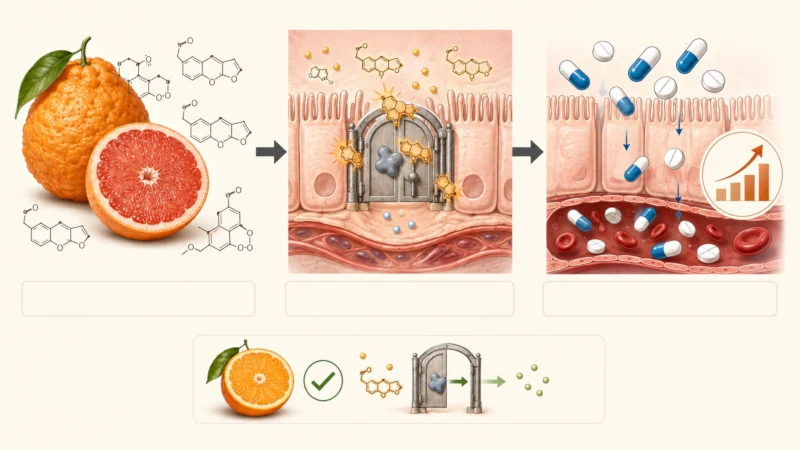
The FDA explicitly lists Seville oranges alongside grapefruit as fruits to avoid if your medicine interacts with grapefruit, a list that includes some statins (simvastatin, atorvastatin), certain blood-pressure drugs, some heart-rhythm and anti-anxiety medications, and others [FDA, 2021]. To be clear, this is a bitter/Seville orange issue — regular sweet oranges and everyday orange juice are not the grapefruit-type problem. If you take prescription medication, ask your doctor or pharmacist before using bitter orange in any concentrated form.
Pregnancy, breastfeeding, and who should avoid bitter orange
It may not be safe to use bitter orange during pregnancy or while breastfeeding, and animal data suggest substances in it might reduce milk production [NCCIH, 2024]. Because it acts as a stimulant, anyone with high blood pressure, a heart condition or rhythm problem, or who already takes stimulants or large amounts of caffeine should be especially cautious — and anyone on any medication should check with a professional first [NCCIH, 2024]. Competitive athletes subject to NCAA testing should avoid synephrine outright.
When to see a doctor
Stop and seek medical care if you develop palpitations, chest pain or pressure, fainting, severe dizziness, or shortness of breath after taking a bitter orange or synephrine supplement. Call 911 for chest pain or for stroke signs — face drooping, arm weakness, slurred speech. Before starting any bitter orange supplement, talk with a doctor or pharmacist if you have a heart condition or high blood pressure, are pregnant or breastfeeding, or take any medication. And for anxiety or insomnia that won’t quit, a clinician can help far more than any tea.
How to enjoy the orange tree safely
The simplest way to get the orange tree’s real benefits is also the least dramatic. Eat the fruit freely — it’s nutritious, hydrating, and safe for nearly everyone. Enjoy orange-blossom tea as a calming ritual rather than a medicine; a traditional infusion uses a few flowers or leaves steeped in hot water, and you can sweeten it with honey if you like. Keep neroli and petitgrain oils for their scent, not for swallowing. And skip concentrated bitter orange or synephrine supplements unless a clinician has specifically cleared them for you — the fruit’s friendly reputation doesn’t transfer to the capsule.
| Health Disclaimer: This article is for general education only. It is not medical advice and is not a substitute for diagnosis or treatment from a qualified professional. It does not diagnose, treat, cure, or prevent any disease. Talk with your doctor, pharmacist, or a registered dietitian before using bitter orange or any supplement — especially if you are pregnant or breastfeeding, take prescription medication (particularly statins, blood-pressure, heart-rhythm, or anti-anxiety drugs), or have a heart condition or high blood pressure. If you think you are having a heart attack or stroke, call 911 right away. |
Frequently Asked Questions
Are orange tree leaves good for you?
Orange leaves (and the twigs) are the source of petitgrain oil and are brewed into a traditional calming tea. People use orange-leaf tea to unwind, but solid clinical evidence that it treats anxiety or insomnia is limited [NCCIH, 2024]. It’s reasonable as a low-risk, pleasant ritual — not as a treatment. Don’t swallow concentrated leaf oil.
What is orange blossom (neroli) used for?
Neroli is the essential oil distilled from bitter orange flowers, used mainly in perfume and aromatherapy. Small studies suggest it may ease short-term anxiety in specific settings, but the overall evidence is inconclusive [NCCIH, 2024]. Enjoy it as a scent; keep it out of your mouth.
Is bitter orange safe for weight loss?
Bitter orange (synephrine) hasn’t been clearly shown to cause meaningful weight loss, and its cardiovascular safety is uncertain, with some studies showing raised blood pressure and heart rate. Many products are also mislabeled or adulterated [NCCIH, 2024]. It’s not a supplement to reach for casually, especially with caffeine or a heart condition.
Can I drink orange juice with my medications?
Ordinary sweet orange juice does not cause the grapefruit-type drug interaction. Bitter (Seville) orange is different — it can raise blood levels of some medicines the way grapefruit does [Malhotra et al., 2001] [FDA, 2021]. If your medicine carries a grapefruit warning, avoid Seville oranges and marmalade too, and ask your pharmacist.
Does vitamin C from oranges prevent colds?
Not really. Regular vitamin C doesn’t stop most people from catching colds, though it may modestly shorten how long a cold lasts [Cochrane review, 2013]. Oranges are still a great everyday source of vitamin C — just don’t rely on them as cold insurance.
Who should avoid bitter orange?
People who are pregnant or breastfeeding, anyone with high blood pressure or a heart condition, people taking medications (especially those with a grapefruit warning), and athletes subject to NCAA testing should avoid concentrated bitter orange, or use it only with a clinician’s okay [NCCIH, 2024].
References
- National Center for Complementary and Integrative Health. “Bitter Orange.” Updated November 2024. → View source
- U.S. Department of Agriculture, FoodData Central. “Oranges, raw, all commercial varieties” (FDC 169097). → View source
- NIH Office of Dietary Supplements. “Vitamin C: Fact Sheet for Consumers.” → View source
- NIH Office of Dietary Supplements. “Vitamin C: Fact Sheet for Health Professionals.” → View source
- Hemilä H, Chalker E. “Vitamin C for preventing and treating the common cold.” Cochrane Database Syst Rev. 2013;(1):CD000980. DOI: 10.1002/14651858.CD000980.pub4. → View source
- Malhotra S, Bailey DG, Paine MF, Watkins PB. “Seville orange juice–felodipine interaction.” Clin Pharmacol Ther. 2001;69(1):14–23. PMID 11180034. → View source
- U.S. Food and Drug Administration. “Grapefruit Juice and Some Drugs Don’t Mix.” Content current as of July 1, 2021. → View source
- Effects of citrus flavanone hesperidin on cardiovascular risk factors: an updated meta-analysis of RCTs. Curr Dev Nutr. 2024. PMID 39279783. → View source
